AI Presentation Template Generator: How It Works, Steps, and Examples
Published on April 23, 2026
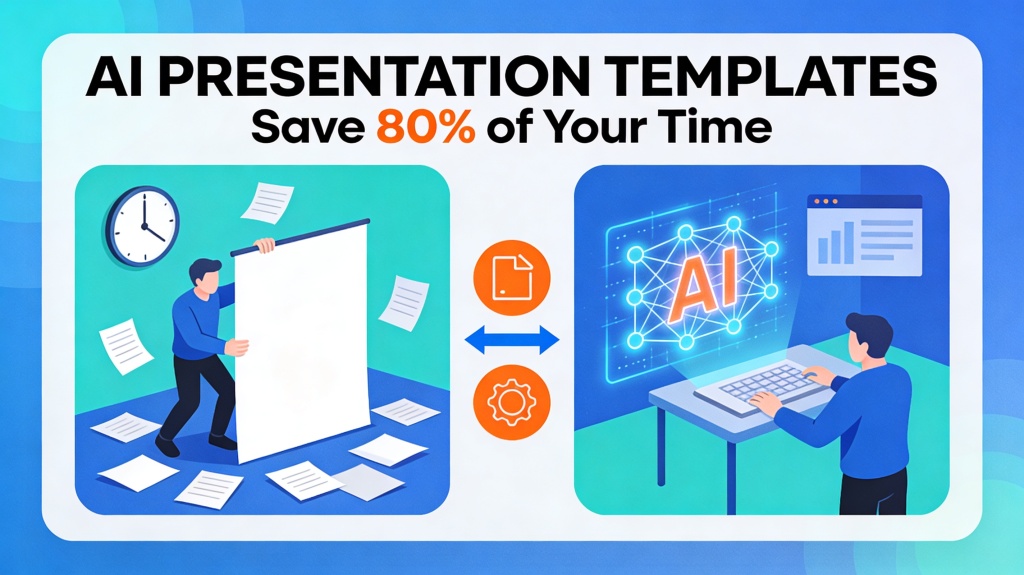
An AI presentation template generator helps you turn a topic, document, or rough notes into a reusable deck structure with slide titles, layouts, content placeholders, and visual direction. The value is not just faster slide design; it is having a repeatable template you can adapt for pitches, reports, lessons, webinars, and internal updates.
This guide explains the search intent behind template generator pages, how the workflow works, what steps to follow, which template checklist to reuse, and how to adapt examples for real presentation scenarios.
AI Presentation Template Generator: What Searchers Actually Need
People searching this topic are usually not looking for a generic tool overview. They want to know whether AI can create a template that saves time across multiple decks, keeps style consistent, and gives them a slide-by-slide structure they can reuse.
| Search Intent | What the Page Should Answer | Best Content Format |
|---|---|---|
| How it works | How AI converts a topic or notes into reusable slide layouts. | Workflow explanation and step table. |
| Template examples | What slides should appear in pitch, report, lesson, or webinar templates. | Reusable checklist and scenarios. |
| Time savings | Which parts of deck creation are automated and which still need human review. | Before/after process and editing guidance. |
How to Generate a Reusable Presentation Template
The best workflow starts with the type of deck you need, not just a broad topic. A sales proposal, training deck, case study, and monthly report all need different slide patterns.
| Step | What to Do | Output |
|---|---|---|
| 1. Define the deck type | Choose pitch, report, lesson, proposal, webinar, training, or case study. | A clear template category. |
| 2. Add audience and goal | Tell AI who will view the deck and what they should decide, learn, or do. | A structure matched to the audience. |
| 3. Provide source material | Paste notes, upload documents, or summarize the key points. | Accurate content placeholders and slide titles. |
| 4. Generate the template | Ask for slide roles, layout directions, visual suggestions, and speaker notes. | An editable template draft. |
| 5. Save and reuse | Remove one-off details and turn repeated sections into placeholders. | A reusable deck framework. |
Reusable Template Checklist
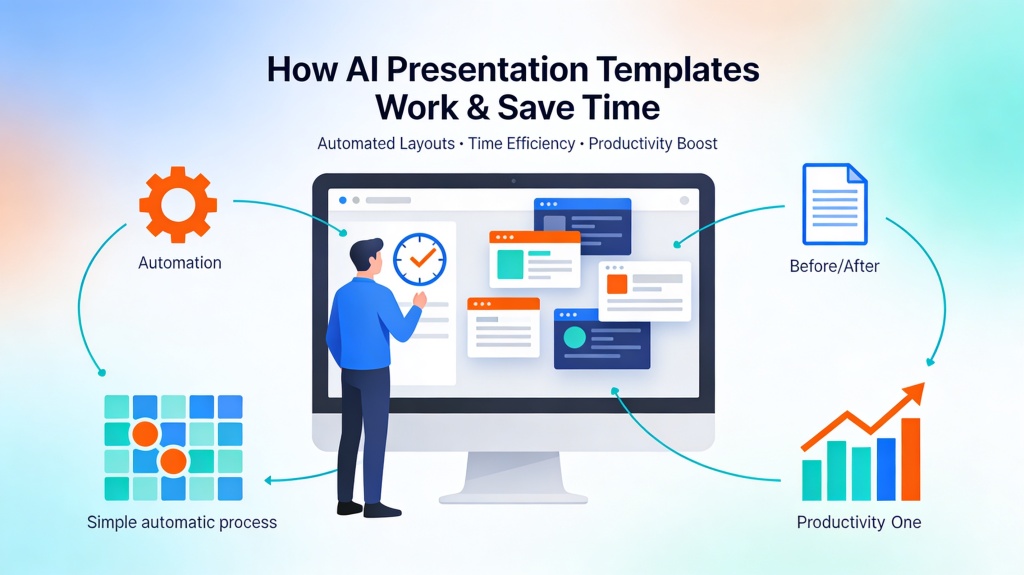
Use this checklist before saving any generated deck as a template. It helps prevent a one-off draft from becoming a messy reusable asset.
- Slide purpose: every slide has a role such as problem, proof, process, example, recommendation, or next step.
- Placeholders: replace specific names, dates, metrics, and examples with editable placeholder text.
- Visual rules: define where charts, screenshots, icons, or quotes should appear.
- Style consistency: use one font system, color palette, spacing rule, and image treatment.
- Speaker support: add notes or prompts explaining how each slide should be presented.
- Review points: mark facts, data, and claims that require human verification.
Prompt for Creating a Presentation Template
Use this prompt when you want a reusable template rather than a finished one-time deck.
Create a reusable presentation template for [DECK TYPE] aimed at [AUDIENCE]. The goal is to [GOAL]. Include [NUMBER] slides. For each slide, provide the slide purpose, recommended title style, content placeholders, suggested layout, visual direction, and speaker-note prompt. Use a [TONE] tone and a [VISUAL STYLE] design style. Make the template reusable by replacing one-off details with placeholders.
Real Scenarios and Template Examples
Example 1: Monthly marketing report template
Use case: a marketing manager needs a repeatable deck for campaign performance. Template structure: executive summary, goals, channel performance, top wins, problem areas, budget notes, next-month priorities, appendix. Reusable placeholders: campaign name, reporting period, KPIs, screenshots, owner, next step.
Example 2: Customer webinar template
Use case: a customer success team needs a consistent webinar deck. Template structure: title, audience problem, agenda, product workflow, live example, common mistakes, checklist, Q&A, CTA. Reusable placeholders: customer segment, product feature, demo screenshot, checklist items, follow-up offer.
Copyable AI Presentation Template Examples
Searchers looking for an AI presentation template generator usually want something they can reuse immediately. Start with one of these structures, then ask PopAi to turn it into a branded draft.
| Template | Slide structure | Best use case |
|---|---|---|
| Weekly business review | Title, executive summary, KPI dashboard, wins, risks, blockers, next-week priorities. | Team updates and manager reviews. |
| Product launch plan | Goal, audience, positioning, timeline, channel plan, budget, risks, launch checklist. | Marketing, product, and growth teams. |
| Training module | Objectives, agenda, concept, example, practice, quiz, recap, next steps. | HR onboarding and internal enablement. |
Start from a Reusable Template Workflow
When you are ready to turn a prompt, outline, or source document into a deck, use the core AI presentation maker workflow. If you are deciding whether to start from templates or prompts, use the AI presentation maker comparison guide first. If you do not have source material yet, start with this make a presentation with AI using only 3 inputs workflow and then convert the draft into a reusable template. If the source is a webpage, report, or transcript, use the url to presentation AI tutorial before turning the output into a reusable structure. For layout behavior after the structure is generated, see the AI slide deck generator auto-layout guide. If the same template needs regional versions, follow the multi-language AI presentation generator workflow before exporting. This template guide supports the broader creation workflow by focusing on reusable structures and repeatable deck patterns.
Frequently Asked Questions
What does an AI presentation template generator do?
It turns a topic, prompt, document, or notes into a reusable deck structure with slide titles, layouts, visual suggestions, and editable content blocks.
When should I use an AI-generated template instead of a blank deck?
Use it when you need a repeatable structure for pitches, reports, lessons, proposals, webinars, or internal updates and want to avoid rebuilding the same slide logic from scratch.
Can I customize an AI-generated presentation template?
Yes. You should edit colors, fonts, examples, data, images, and speaker notes so the generated template matches your brand, audience, and use case.
Create a reusable presentation template
Use PopAi to turn your topic, notes, or source document into an editable presentation template draft.
Try PopAi for Free