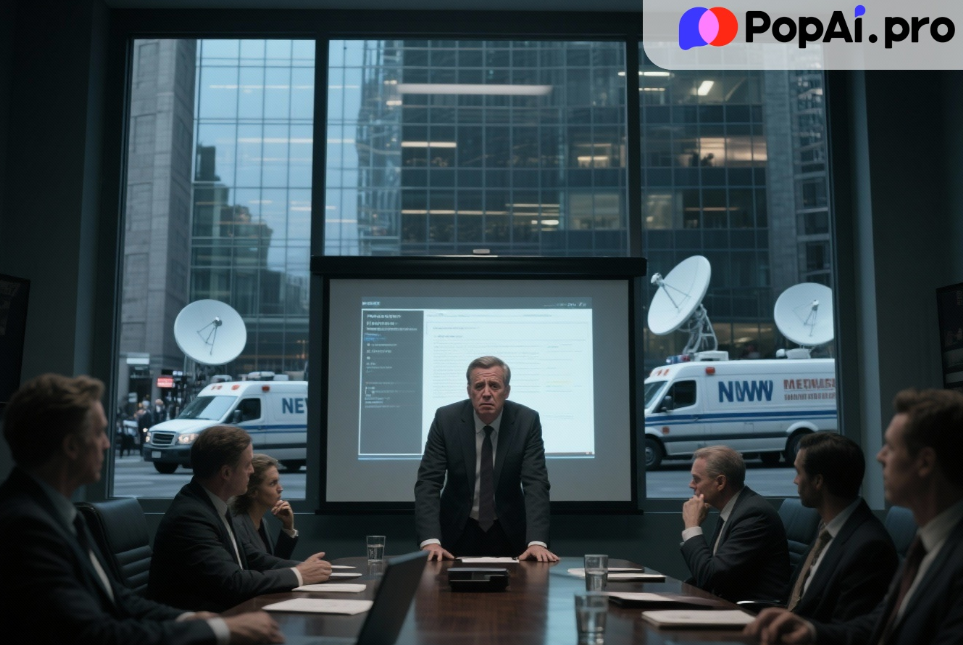
Description: A single AI tool could have prevented this corporate catastrophe.
Foreword: The Silence in the Boardroom
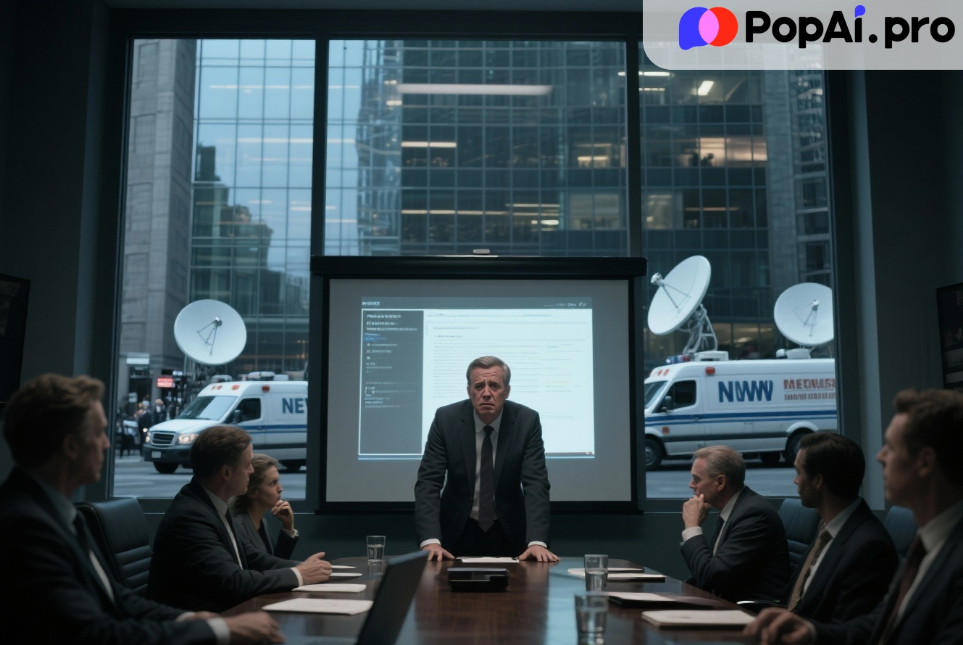
The air in the boardroom was thick enough to cut with a knife. Outside, news vans were already camped out, their satellite dishes pointed at the gleaming glass tower like vultures circling a kill. Inside, the CEO, a figure usually radiating unshakeable confidence, stared at a single slide projected on the massive screen. It was slide 47 of a 112-slide Due Diligence Presentation PPT. It contained a chart—a simple bar chart—that was supposed to represent user growth projections. But it was wrong. Not just slightly off, but fundamentally, catastrophically wrong.
It had missed a key demographic shift buried deep within terabytes of third-party market research. It had failed to cross-reference declining social media sentiment with a new competitor’s stealth launch. A detail, hidden in plain sight, that turned a $44 billion acquisition from a masterstroke into the most expensive mistake in corporate history. Careers ended in that room. Fortunes were wiped out. All because of one bad slide.
This isn’t just a dramatic story. It’s a cautionary tale playing out in different scales across the business world every single day. In the high-stakes game of mergers, acquisitions, and strategic investment, the quality of your due diligence is everything. And in 2025, the old way of doing things is a recipe for disaster.
The Modern Dilemma: Drowning in Data, Starving for Insight
Why do these multi-billion dollar mistakes still happen when we have more data than ever before? The problem is twofold: information overload and the limitations of the human mind under pressure. The very process meant to mitigate risk—the due diligence presentation—has become a primary source of it.
Information Overload: The Digital Tsunami
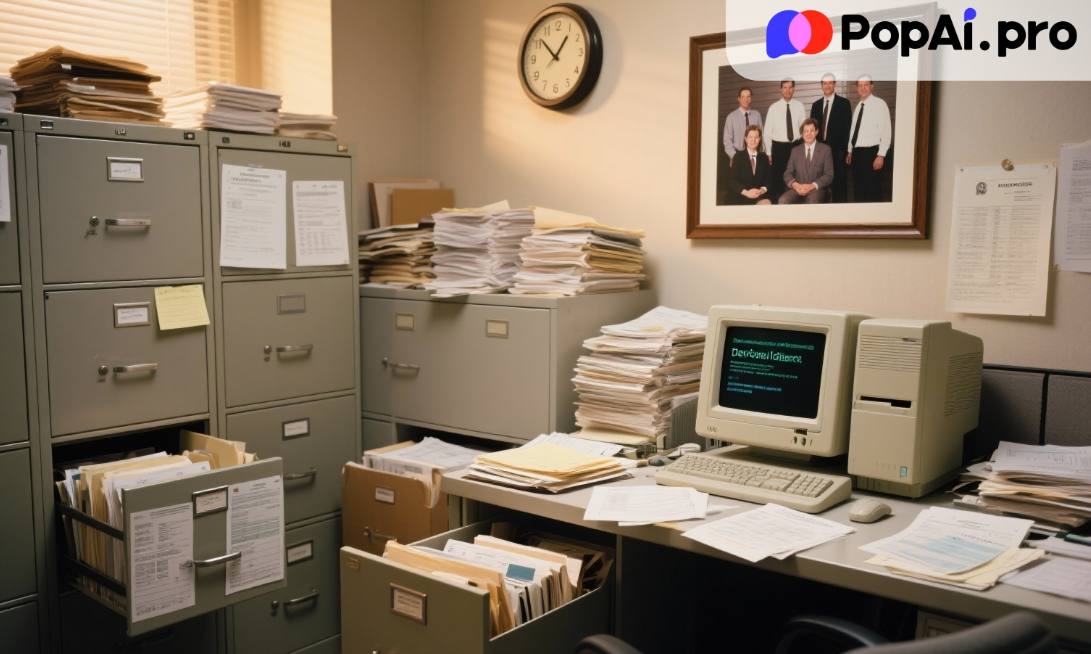
Twenty years ago, due diligence meant poring over a few filing cabinets of financial statements and legal documents. Today, it’s a digital tsunami. We’re talking about:
- Quarterly earnings reports spanning a decade.
- Hundreds of pages of dense legal contracts and patent filings.
- Real-time social media sentiment analysis.
- Dozens of competing (and often conflicting) market research reports.
- Internal communications, customer feedback logs, and technical documentation.
A single analyst or even a team of analysts is expected to consume, comprehend, and synthesize this ocean of information into a coherent narrative. It’s not just about finding a needle in a haystack; it’s about finding the right needle in a mountain of needles, and then explaining why that specific needle is the one that will either make or break the entire deal. It’s an impossible task.
The Human Factor: Cognitive Bias and ‘Death by PowerPoint’
Our brains are not wired for this. Under immense pressure and facing impossible deadlines, we fall prey to cognitive biases. We see what we want to see (confirmation bias), we anchor on the first piece of information we find, and we subconsciously filter out data that contradicts our desired outcome.
This psychological pressure is amplified by the deliverable itself: the Due Diligence Presentation PPT. The focus shifts from rigorous analysis to aesthetics and storytelling. Hours are wasted tweaking fonts, aligning boxes, and finding the perfect stock photo. The presentation becomes the goal, not the underlying truth. Analysts, exhausted from weeks of data wrangling, default to summarizing top-line numbers without digging into the nuances. The chart on slide 47 wasn’t a lie; it was a simplification born of exhaustion and a lack of time—a simplification that cost billions.
The Paradigm Shift: AI as Your Due Diligence Co-Pilot
What if the team behind that disastrous acquisition had a secret weapon? What if they had a co-pilot that could read all 500 documents in minutes, not weeks? A partner that could cross-reference market sentiment with financial liabilities instantly and without bias? What if they could turn the entire chaotic process on its head?
This isn’t science fiction. This is the reality of working with advanced AI platforms. And this is where PopAI is changing the game for professionals who can’t afford to be wrong.
I first encountered PopAI out of professional skepticism. Another “AI productivity tool” in a sea of them. But my curiosity got the better of me. I decided to test it on a task that I knew was a nightmare: analyzing a company for a mock acquisition. I uploaded a 250-page annual report (a PDF), a 40-page market analysis from a third party, and a CSV file of recent customer complaints.
Meet PopAI: Your 24/7 Research Analyst
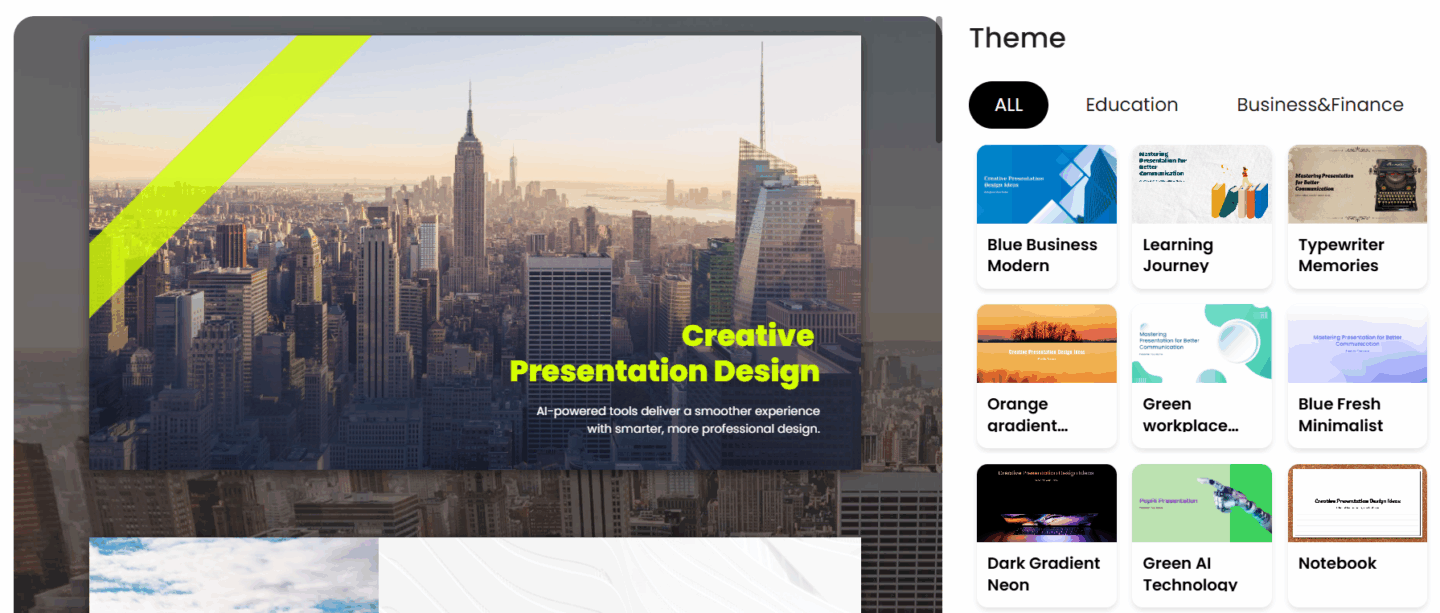
Instead of spending a day just skimming the documents, I started asking questions.
My first prompt was simple: “Summarize the key financial risks outlined in the attached annual report.”
Within 60 seconds, PopAI delivered a bulleted list, complete with page-number citations, highlighting currency fluctuation risks, debt covenants, and dependency on a single supplier—a detail buried on page 187 that I would have likely missed on a first pass.
This is possible because PopAI’s engine isn’t just doing a keyword search. According to their documentation, the model is trained to understand context, structure, and nuance within complex documents. It can read PDFs, Word docs, and even scan websites for information. The platform’s ability to process and synthesize information from multiple sources simultaneously is where the magic truly begins.
I pushed it further. My next prompt: “Cross-reference the customer complaints in the CSV file with the product roadmap mentioned in the annual report. Are there any major discrepancies?”
This is a task that would take a human analyst hours of painstaking, mind-numbing work, toggling between spreadsheets and PDFs. PopAI returned its analysis in under two minutes. It identified that the top three customer complaints were about a feature that the company had explicitly stated was “a pillar of our Q4 strategy.” It was a glaring red flag—a disconnect between market reality and corporate strategy.
From Raw Data to Bulletproof Due Diligence Presentation PPT
This is the core of the value proposition. The most time-consuming part of creating a Due Diligence Presentation PPT isn’t the slide design; it’s the research and synthesis. PopAI automates the 80% of work that is pure, brutal data processing, freeing up the human expert to do the 20% that truly matters: applying judgment, crafting the narrative, and making the strategic decision.
Here’s how that new workflow looks:
- The Data Dump: Instead of manually reading, you upload all your source files—financials, reports, legal docs, web links—into a PopAI workspace.
- The Interrogation: You engage in a dialogue with the AI. You ask it to find threats, identify opportunities, create SWOT analyses, compare competitor data, and model different scenarios. You are the lead detective, and PopAI is your entire team of forensic analysts.
- The Insight Generation: The real breakthrough came when I gave it this prompt: “Based on all the provided documents, generate a 10-slide Due Diligence Presentation PPT outline. The first slide should be an executive summary, followed by slides on financial health, market position, key risks, and strategic opportunities. Conclude with a recommendation.”
- The Creation: PopAI didn’t just give me an outline. It generated the actual slides. It created charts from the data, wrote the bullet points summarizing its findings, and structured the entire narrative. The bar chart it created correctly showed the disconnect between the company’s projections and the customer complaints, presenting it as a primary risk factor.
The result was a robust, data-backed presentation draft created in about an hour. It wasn’t the final product, but it was a 90% solution. My role shifted from a data entry clerk to a high-level editor and strategist. I could now spend my valuable time refining the narrative, challenging the AI’s assumptions, and adding my own unique industry insights. I was no longer drowning in data; I was surfing on top of it.
Conclusion: Don’t Be the Next Cautionary Tale
The world of business moves at the speed of information. The team that can analyze faster and more accurately wins. The ones who stick to manual, exhausting methods are not just inefficient; they are taking on an unacceptable level of risk. The $44 billion mistake wasn’t a failure of intelligence; it was a failure of process. It was a failure to leverage the tools that can augment human intellect and protect against human error.
Relying solely on manual due diligence in 2025 is like navigating a cross-country road trip with a paper map from 1995. You might get there eventually, but you’ll be slow, you’ll miss the detours, and you risk driving straight off a cliff that wasn’t there when the map was printed.
The question you need to ask yourself isn’t whether you can afford a tool like PopAI. The question is whether you can afford not to. The next big deal, the next major investment, the next presentation that could make or break your career is on the horizon.
Are you going to risk it all on a single, exhausted human trying to build the perfect slide? Or are you going to arm yourself with a co-pilot that never sleeps, never gets tired, and can see the one detail that changes everything?
Don’t just take my word for it. Go to PopAI. Upload one single, complex report that’s been sitting on your desktop. Ask it one hard question. The answer might just be the most valuable insight you get all year.