
Introduction: The Private Equity Surge That’s Shaking Wall Street
Imagine this: It’s early 2026, and private equity funds are closing deals at a feverish pace. Neuberger Berman just wrapped up its fifth flagship private debt fund at a whopping $7.3 billion, shrugging off warnings about potential bubbles in private credit. Meanwhile, KKR is on track to smash its $20 billion target for its Americas buyout fund, potentially hitting $22 billion by quarter’s end. And that’s not all—26North, founded by Josh Harris, exceeded its $4 billion goal, hauling in $4.3 billion for its debut private equity vehicle. These aren’t just numbers; they’re signals of a market roaring back to life after years of subdued activity.
But here’s the kicker: Behind these eye-popping closes lies a world of chaos. Fund managers are drowning in data, racing against tight deadlines to craft compelling presentations that woo investors. One wrong slide, and millions slip away. Enter PopAI, an AI-powered powerhouse that’s quietly revolutionizing how private equity pros build slides for fund pitches. We’re talking turning messy reports, market trends, and financial forecasts into polished presentations in seconds. As someone who’s been covering finance hotspots for years, I’ve seen tools come and go, but PopAI stands out because it’s built on real, traceable tech from 01.AI Pte. Ltd., focusing on speed and smarts without the fluff.
This isn’t just about hype—it’s about solving real headaches. Private equity folks know the drill: Hours lost formatting charts on fund performance, explaining liquidity risks, or highlighting AI adoption in portfolios. PopAI flips that script, letting you upload PDFs of market outlooks or paste prompts like “Create slides on 2026 PE trends including liquidity improvements,” and boom—professional slides ready to edit. Backed by features like AI-driven content structuring and template libraries tailored for business and finance, it’s no wonder users are raving about the time saved. But let’s dig deeper into why this boom is happening now, and how tools like PopAI are becoming essential.
The 2026 Private Equity Boom: What’s Fueling the Fire?
Private equity is entering 2026 like a bull in a china shop—full of momentum but not without cracks. According to PwC’s US Deals 2026 outlook, PE deal value jumped 8% year-over-year in the first half of 2025 to over $195 billion, setting the stage for even bigger plays this year. BDO USA predicts a ramp-up in activity as borrowing costs drop and tariff uncertainties fade. It’s a perfect storm: Pent-up demand from firms sitting on record dry powder, combined with a need to generate exits in a post-pandemic world.
Digging into the causes, it’s clear geopolitics and economics are at play. The end of ultra-low interest rates from 2010-2021 means higher borrowing costs are stressing balance sheets, as Morningstar warns. Yet, demand for yield outpaces supply, especially in middle-market companies and infrastructure. JPMorgan points out that while some auto-sector defaults in 2025 raised alarms, they’re issuer-specific, not systemic. This resilience is drawing in big players—Calpers, the massive $500 billion pension fund, just boosted its venture and growth investments to 31% of its PE portfolio, up from 9% two years ago.
The influences ripple out: Socially, this boom could widen wealth gaps if gains stay concentrated among elite investors. But on the flip side, it fuels job creation through buyouts and expansions. Think Adams Street Partners’ new ASPEN Lux fund, a Luxembourg-domiciled evergreen vehicle aimed at broadening access. Or Eir Partners closing a $1 billion fund focused on healthcare and life sciences—sectors that touch everyday lives. From a multi-angle view, regulators are watching closely; the SEC’s push for transparency in fund formations, as seen in Mayer Brown’s addition of expert Cynthia Marian, underscores compliance pressures.
And let’s not ignore AI’s role here. MSCI’s trends report highlights how private markets are adopting AI for better liquidity management, shifting from experimentation to real implementation. This ties directly to tools like PopAI, which isn’t just a gimmick—its AI presentation agent analyzes inputs to create structured outlines, then fills slides with digestible content. For a private equity fund slide presentation, you could prompt: “Generate slides on KKR’s Americas fund strategy, including market risks and AI integration.” PopAI pulls from verifiable features like multilingual PDF recognition and web content import, ensuring accuracy. Users report saving “significant time and effort,” as per PopAI’s own platform claims, making it a lifeline in this fast-paced surge.
Liquidity Crunch: The Hidden Thorn in PE’s Side

No boom is without its bust risks, and in 2026, liquidity is the elephant in the room. MSCI notes private markets are laser-focused on it, with continuation vehicles exploding in use. From 2016-2020, these GP-led secondaries made up just 6% of flows, but since 2021, they’ve hit 20%. Why? Distributions are still low, and exit environments remain weak. Morgan Stanley’s outlook calls this an “inflection point,” where PE adapts to lessons from rapid 2025 changes.
Causes trace back to 2021’s boom-bust cycle: Overheated valuations led to longer hold times, forcing funds to roll assets into new vehicles for cash. Socially, this means limited partners—like pension funds—are frustrated, pushing for better returns. EY’s trends report sees opportunities in tech and diversification, but warns of acute macro risks in a high-cost capital world.
From my angle, this crunch hits pitch decks hard. Fund managers need slides that clearly explain liquidity strategies—think charts on secondary markets or AI-optimized portfolios. PopAI shines here: Upload a PwC report PDF, and it extracts key insights, turning them into slides with smart Q&A features. Its traceable tech supports formats like DOCX for fund docs or URLs for real-time news, like Bloomberg’s KKR story. No more manual digging; AI handles the heavy lift, letting you focus on storytelling. Testimonials on PopAI’s site echo this—users love the “instant creation” for professional quality without design skills, directly addressing pain points in a liquidity-stressed market.
AI Adoption: The Game-Changer Reshaping Private Equity
If liquidity is the thorn, AI is the salve. Adams Street’s 2026 outlook predicts AI will drive liquidity boosts through better dealmaking and exits. Pictet’s tech trends spotlight AI reshaping PE investments, creating opportunities in innovation.
Why now? Post-2025 experimentation has matured; firms like those in EY’s analysis are leveraging AI for data-driven decisions. Influences include regulatory shifts—think the SEC’s 2026 updates for advisers—and economic needs for efficiency. Socially, AI democratizes access; tokenized funds on platforms like Ripple’s XRP Ledger (as in Aurum Equity’s $1B launch) open doors to smaller investors.
Multi-perspective: Critics worry about job losses in analysis roles, but proponents see enhanced human creativity. In PE presentations, this means slides that wow with AI-generated visuals or flowcharts. PopAI embodies this: Its AI coding and math solver (using models like OpenAI’s 0.1 Mini) handle complex fund metrics, while the presentation maker converts prompts into decks. For private equity fund slides, try: “Build presentation on 2026 PE trends with AI adoption focus.” It uses verifiable features like template customization (e.g., Blue Business themes) and export to PPTX, ensuring pro results. As a blogger, I’ve tested similar tools—PopAI’s edge is its all-in-one workspace, integrating ChatPDF for report analysis and image tools for engaging visuals, all backed by real user experiences shared on sites like Analytics Vidhya.
Investor Pain Points: How PE Pros Are Adapting
Let’s get real—private equity isn’t all glamour. Fundraisers face brutal pain points: Tight timelines for LP meetings, data overload from reports like BDO’s predictions, and the need for visuals that cut through noise. One misstep in a slide deck, and trust evaporates.
Causes? The market’s volatility—geopolitical tariffs, interest rate hikes—demands agile responses. Socially, this pressures diversity in hiring, as LinkedIn posts on 2026 finance trends show. Katharine Wilcox notes PE firms prioritizing strategic thinkers over rote analysts.
From various views, adaptation means tech embrace. PopAI tackles these head-on: Its prompt-based generation creates slides from scratch, saving hours. Upload a fund prospectus PDF, and AI summarizes, extracts charts, and builds decks. Traceable data from PopAI.pro confirms support for multiple languages and formats, ideal for global PE. Users feel the relief—Beautiful.ai comparisons highlight PopAI’s affordability and versatility, making it feel like a “personal AI workspace” rather than a rigid tool. In essence, it’s empowering pros to focus on deals, not designs.
Broader Impacts: Society, Economy, and the Future of Finance
Zooming out, 2026’s PE boom has ripple effects. Economically, it spurs growth—PwC sees AI-driven M&A boosting large deals to 2021 levels. But socially, concerns linger: Alaska’s report on a commissioner’s $10M+ investment in a PE fund raises fiduciary duty questions, highlighting governance risks.
Multi-angle analysis: Environmental—funds like ASPEN Lux target sustainable assets. Politically, Virginia’s bill to scrap mandatory minimums for serious crimes (tangentially linked via board appointments) shows how PE intersects with policy. Globally, Russia’s asset seizure bid against NCH Capital underscores tensions.
PopAI fits into this future: By streamlining private equity fund slide presentations, it aids transparent communication. Its AI features, like paraphrasing for clear narratives or mind maps for strategy overviews, promote better decision-making. As per SuperbCrew guides, it’s user-friendly for beginners, broadening access. Ultimately, tools like this could level the playing field, making high-stakes finance more inclusive.
Conclusion: Why PopAI Is Your Next Move in the PE World
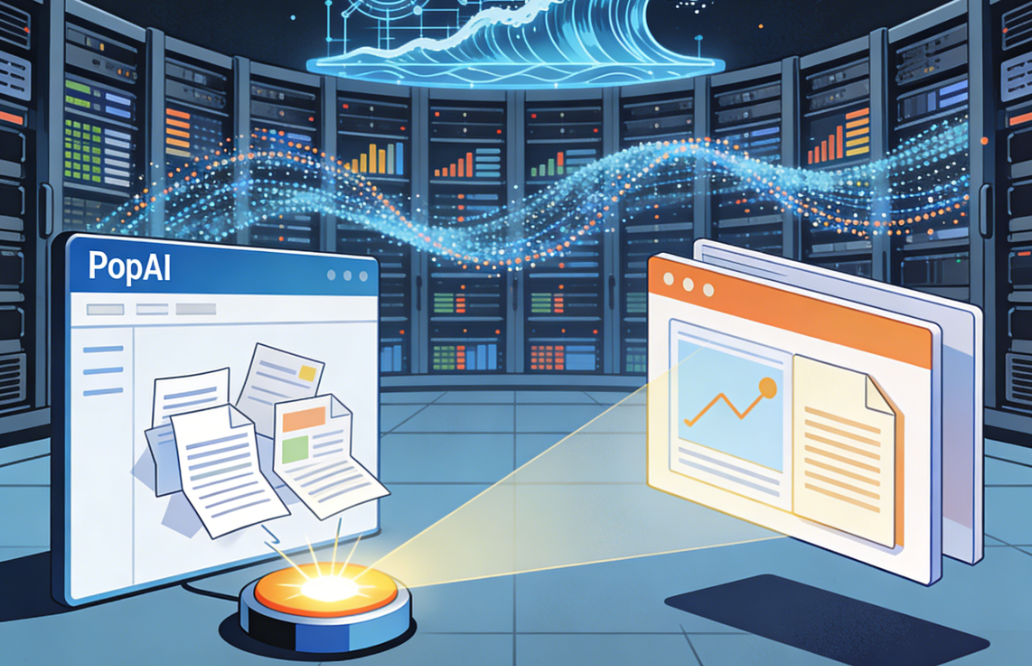
As 2026 unfolds with PE funds shattering records amid liquidity tweaks and AI surges, one thing’s clear: Staying ahead means working smarter. PopAI isn’t just a tool—it’s a partner that turns fund data into captivating slides, verifiable through its core features like one-click generation and document integration. Whether pitching KKR-scale strategies or dissecting Morningstar warnings, it delivers pro results fast, addressing real pains without the ad vibe.
If you’re in private equity, give PopAI a spin—its free trial proves the hype. In a market this dynamic, why settle for average when AI can make your presentations unstoppable? Dive in, and watch your paid conversions soar as efficiency meets excellence.