AI Startup Presentation: A Complete Prompt-to-Draft Example
Updated October 15, 2026 | Original editable examples and source notes
A useful AI startup presentation begins with a source pack, not a request for impressive traction. This page turns a deliberately small founder brief into eight draft pages. It focuses on the prompt and the resulting narrative. Use the startup visual-template directory to choose a design system, or the fundraising template collection for longer investor-specific files.
1. State what is known and what is missing
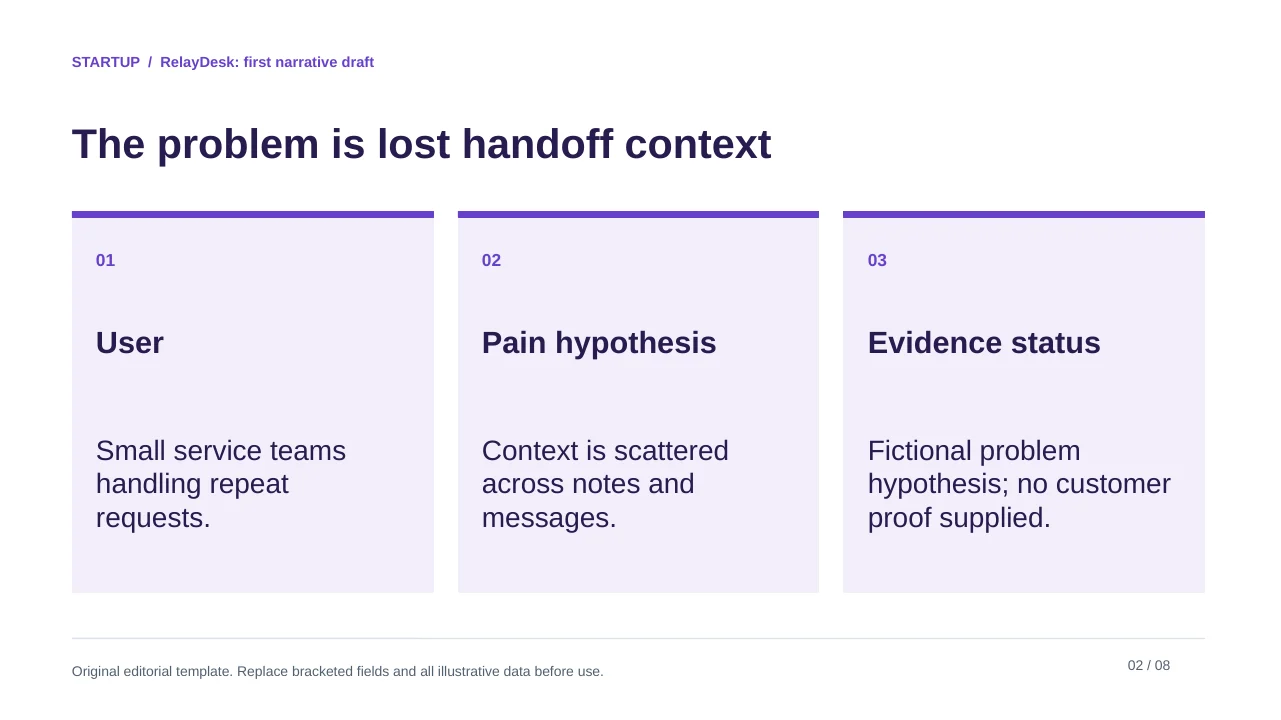
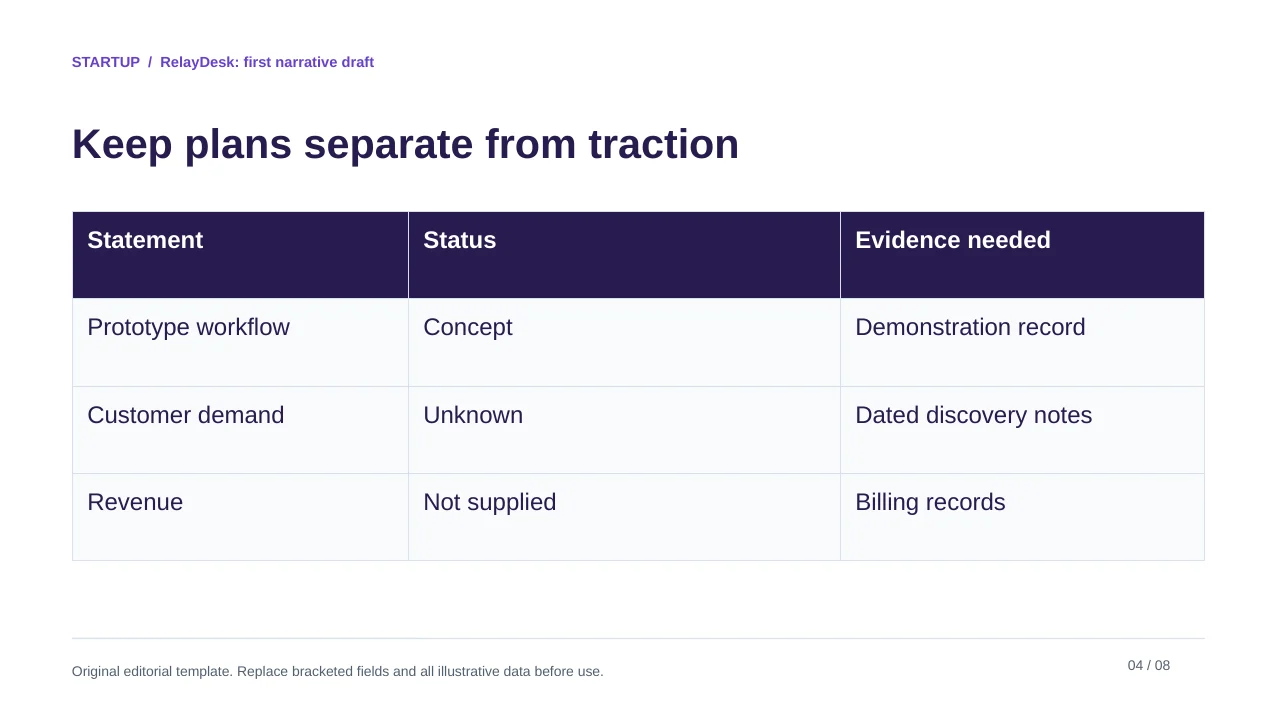
RelayDesk is a new fictional teaching example, used here instead of repeating the older Nightly image. Its concept is a human-reviewed handoff assistant for small service teams. No customer validation, revenue, pricing, market size or financing ask has been supplied. Those gaps are part of the exercise; they are not invitations to manufacture evidence.
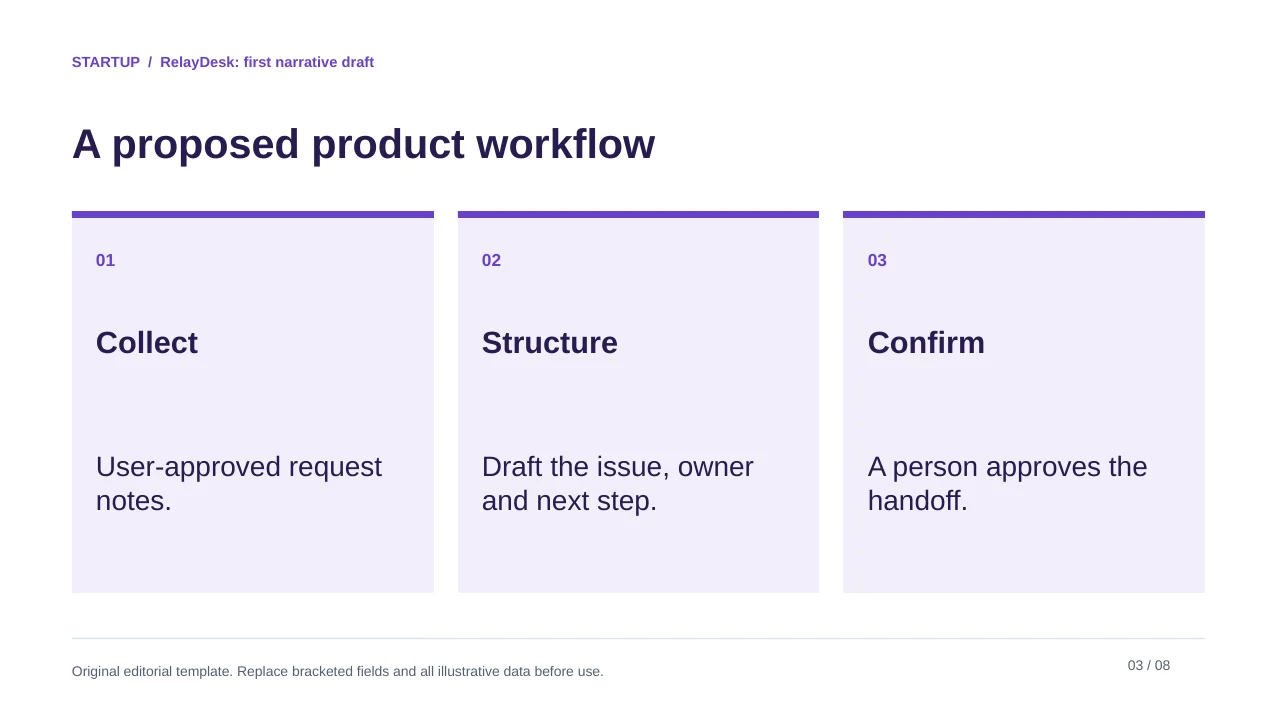
FICTIONAL COMPANY: RelayDesk. Audience: an early founder feedback meeting. Problem hypothesis: small service teams lose request context between messages and notes. Proposed workflow: collect user-approved notes, structure a draft handoff, require human approval. No validated customers, revenue, market size, pricing, investment ask or product performance is supplied. Create eight slides and preserve these gaps.
| Input | Draft may say | Draft must not say |
|---|---|---|
| Proposed workflow | Collect, structure, review | This is a deployed integration. |
| Problem hypothesis | The team wants to investigate lost context | Customers proved the market need. |
| Missing commercial data | Pricing and revenue are not supplied | A made-up subscription price or growth rate. |
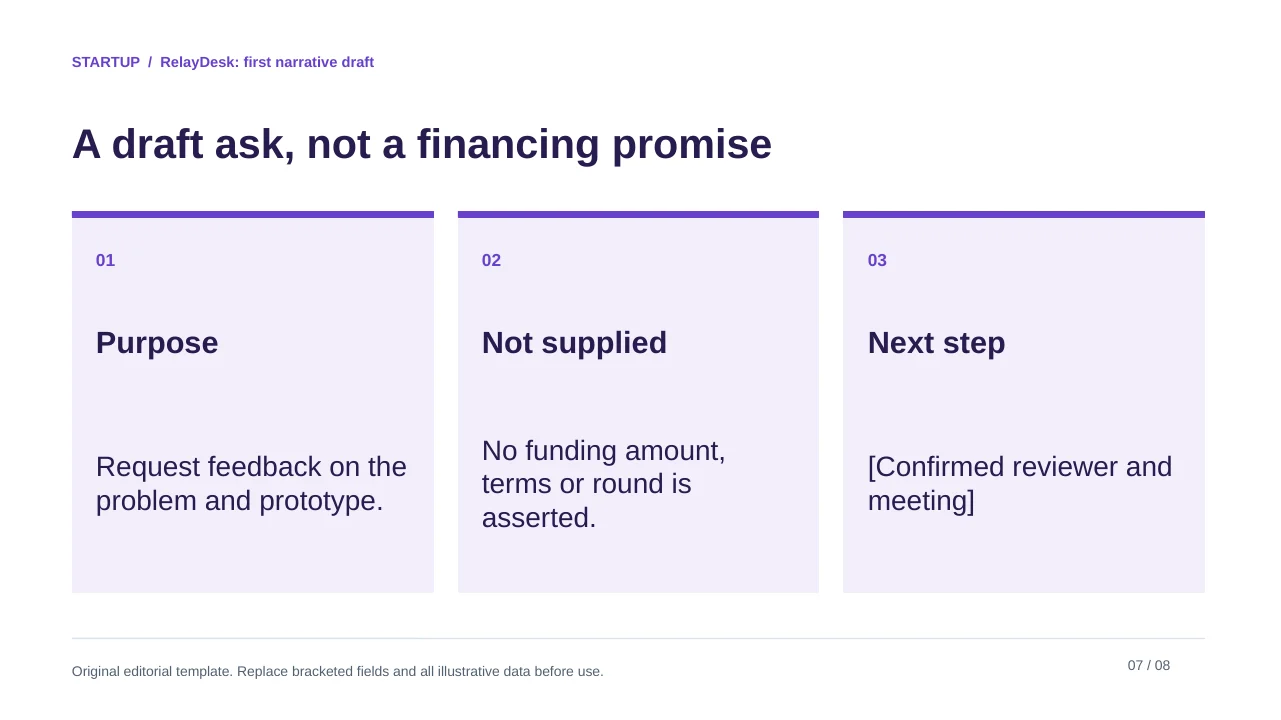
| Feedback meeting | Ask for feedback on the concept | A specific investment amount or promise. |
2. Use one prompt for one draft
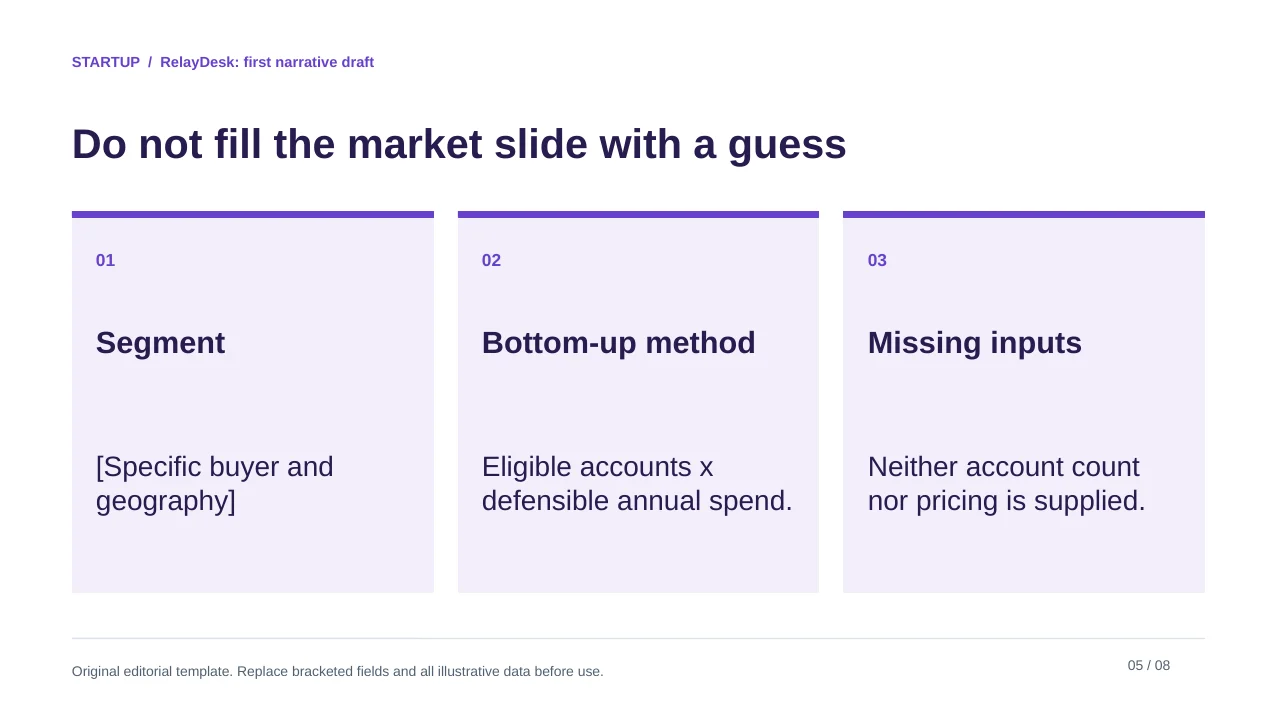
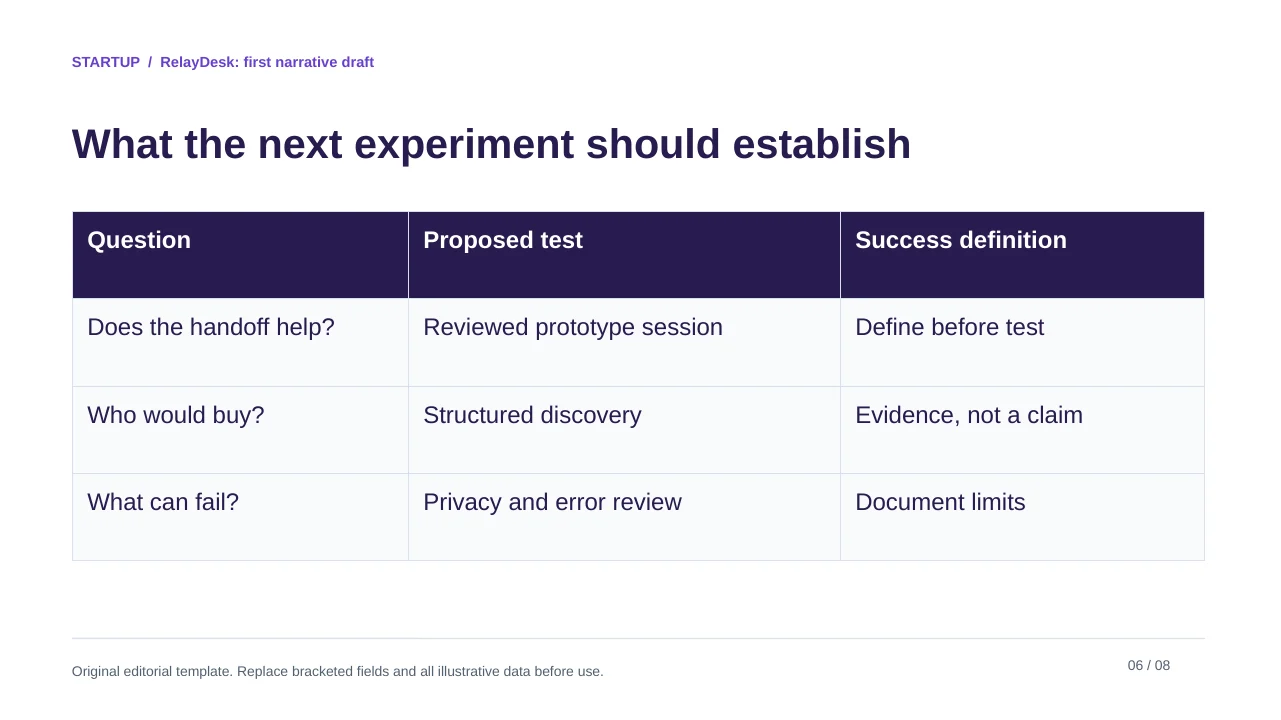
Using only the RelayDesk source pack, draft eight startup presentation pages: cover; problem hypothesis; proposed workflow; evidence status; bottom-up market inputs needed; next experiments; feedback ask; source and review checklist. Distinguish concept, plan, unknown and verified fact. Do not create customer logos, testimonials, team credentials, market size, users, revenue, growth, funding stage or investment terms. Each page needs a conclusion-style title, up to three short points, a visual idea and a source or missing-input note. Treat the sample as fictional.
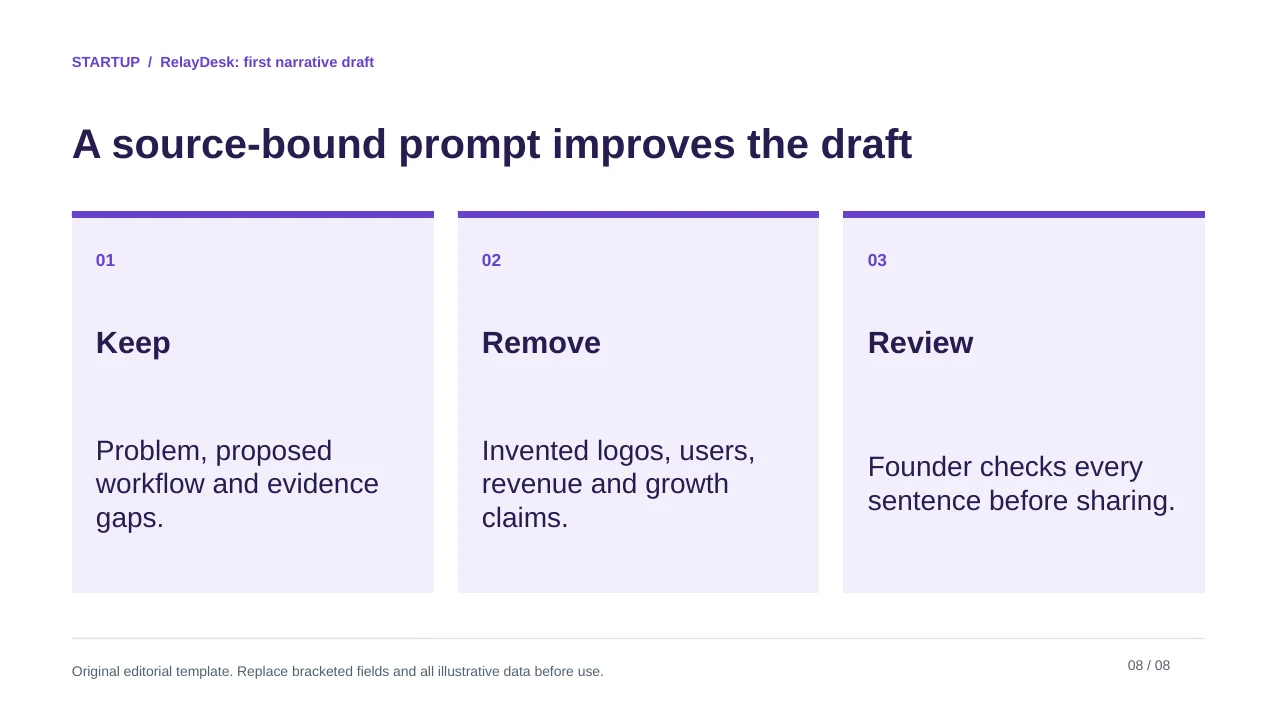
Review the outline first. A request to "make it more persuasive" can quietly turn a hypothesis into a claim. Instead, ask for a targeted edit: "Shorten the problem page, but keep the evidence status visible." The complete example below shows one editorial realization of the prompt, not a reproducible PopAi benchmark.
3. Inspect the slide-by-slide result
RelayDesk: first narrative draft
Best for turning a small founder source pack into a reviewable outline.
The eight-page file is a complete first-draft example for a founder feedback meeting. It deliberately does not masquerade as an investor-ready financing deck.
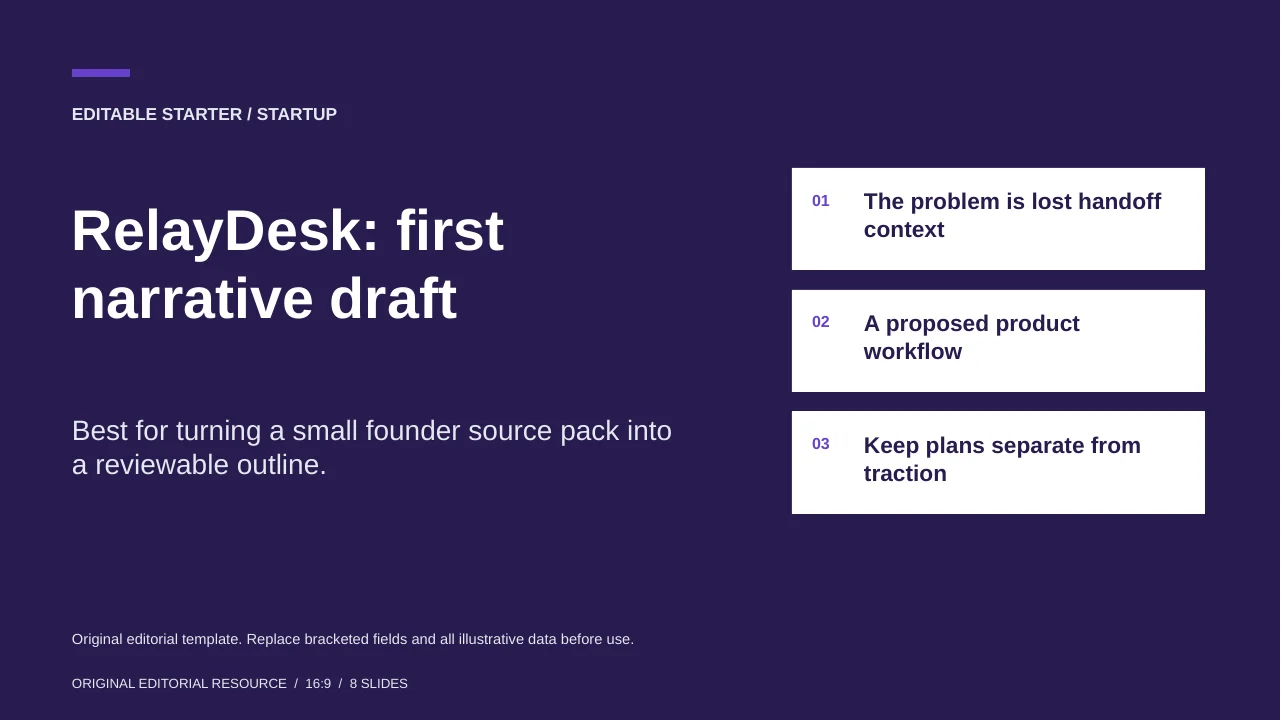
Original editorial template. Replace bracketed fields and all illustrative data before use.
See the complete slide sequence
- RelayDesk: first narrative draft
- The problem is lost handoff context
- A proposed product workflow
- Keep plans separate from traction
- Do not fill the market slide with a guess
- What the next experiment should establish
- A draft ask, not a financing promise
- A source-bound prompt improves the draft
4. Revise the content before changing the visual system
| Pass | Question | Edit |
|---|---|---|
| Evidence | Where did every number or claim come from? | Remove unsupported assertions. |
| Narrative | Does each page help this feedback meeting? | Merge generic market slogans. |
| Product | Is the capability current, planned or unknown? | Keep the status next to the statement. |
| Handoff | What should the reviewer do next? | Use a real owner and a confirmed next step. |
The documented PopAi workflow supports building from prompts or source files, then reviewing and editing a draft. It does not guarantee that a PPTX imported as source retains this template's exact design. Open the resulting file and compare the evidence notes after any conversion.
Keep the three page roles separate: this tutorial owns AI startup presentation prompts; the visual directory owns startup presentation templates; and the fundraising collection owns editable investor fundraising decks.
Sources and example provenance
The files and preview layouts on this page were created for this editorial resource. External references support the specific guidance linked in the text; they do not endorse the templates. Source links checked on October 15, 2026.
Frequently Asked Questions
Is RelayDesk a real startup or PopAi case study?
No. It is an original fictional example created to show prompt-to-draft boundaries. No product test or customer result is claimed.
Does this example contain fundraising projections?
No. The brief does not supply financial projections, a round or an ask. The draft preserves those gaps.
Where are the design templates?
Use the companion startup template directory for visual systems. Use the fundraising collection for longer investor-specific PPTX structures.
Should I ask AI to fill empty market-size fields?
No. Supply a defensible market method and inputs, or keep the missing evidence explicit. Plausible numbers are not validated market research.
Create your presentation with one click now
Turn your startup story, outline, or source materials into a presentation draft you can refine for your next conversation.
Create your presentation