An AI proposal deck generator helps agencies turn messy discovery notes, client goals, service packages, timelines, and pricing assumptions into a client-ready proposal draft. The goal is not to send a generic template faster. The goal is to create a structured deck that explains the client's problem, your recommended approach, what is included, what it costs, and why your team is credible.
This guide is a scenario and template page for creative agencies, marketing agencies, consultants, freelancers, SaaS implementation partners, and account teams that need proposal decks after discovery calls. For the broader deck creation workflow, connect this long-tail page to the AI for presentations core guide, then use PopAi AI Presentation when you are ready to generate and edit the deck.
AI Proposal Deck Generator: Target Users and Use Cases
Before creating the deck, decide what kind of proposal you are sending. The structure changes depending on whether the prospect needs strategy, execution, implementation, or ongoing support.
Marketing agency after a discovery call
Use the deck to turn campaign goals, target audience, budget range, and channel recommendations into a proposal with scope, timeline, pricing tiers, and expected reporting cadence.
Design or branding studio pitching a project
Use the deck to show the creative problem, brand audit findings, deliverables, revision process, milestones, and what is excluded from the scope.
Consultant or implementation partner
Use the deck to explain diagnosis, recommended workstreams, onboarding steps, stakeholder responsibilities, fees, and the decision needed to begin.
Recommended Proposal Deck Structure
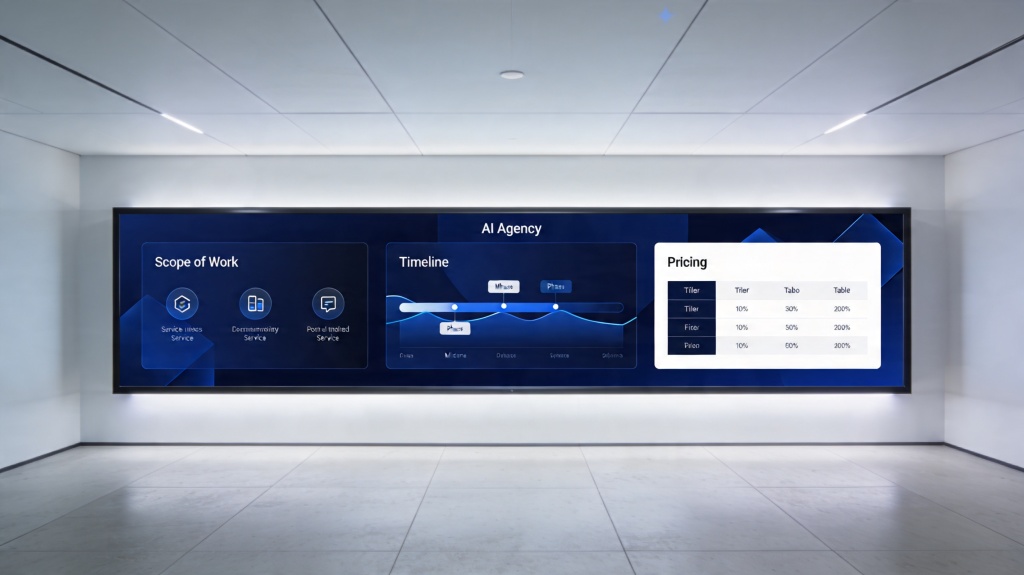
A proposal deck usually works best at 8 to 11 slides. The sequence should move from client context to recommendation, then scope, timeline, pricing, proof, and next step.
| Slide | Purpose | What to Include |
|---|---|---|
| 1. Title and client context | Personalize the proposal | Client name, project name, date, agency owner, and the situation you discussed. |
| 2. Problem and opportunity | Show understanding | Current pain point, business goal, audience, urgency, and cost of inaction. |
| 3. Recommended solution | Frame the approach | Strategy, service package, campaign idea, implementation plan, or creative direction. |
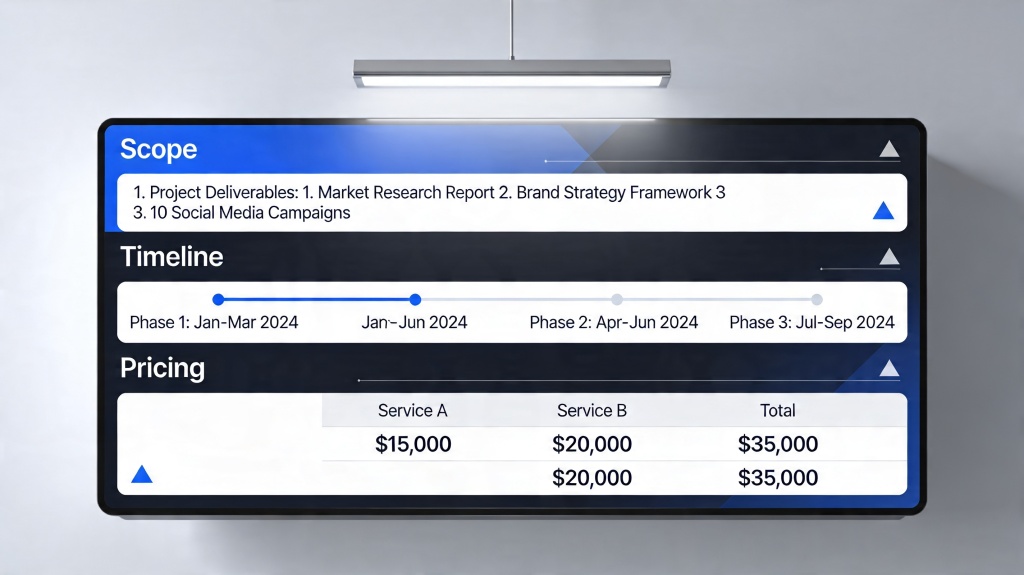
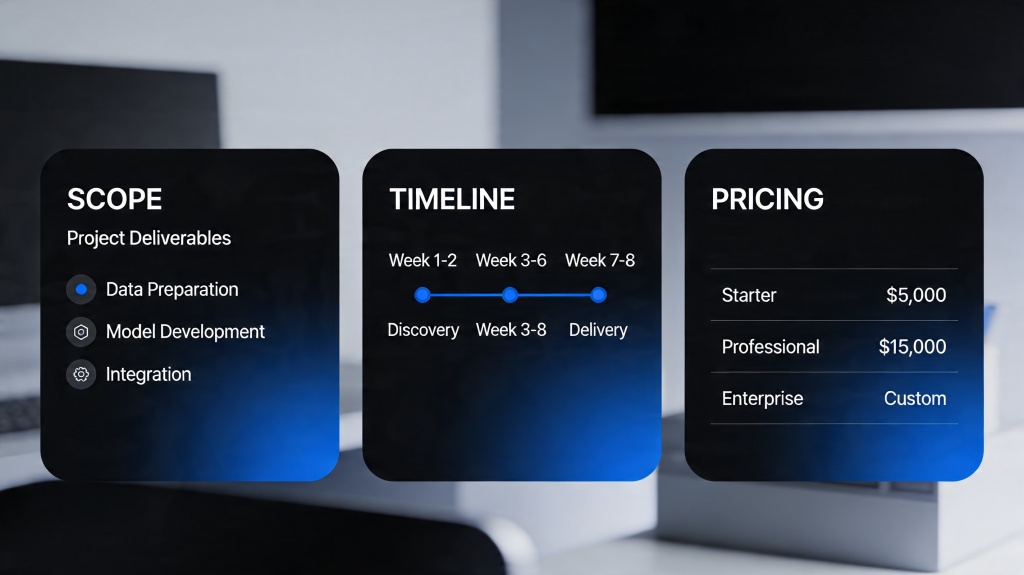
| 4. Scope of work | Prevent ambiguity | Deliverables, phases, responsibilities, review rounds, assumptions, and exclusions. |
| 5. Timeline | Set expectations | Kickoff, milestones, drafts, approvals, launch, and reporting dates. |
| 6. Pricing | Explain investment | Package options, monthly retainer, project fee, optional add-ons, and payment terms. |
| 7. Proof | Build trust | Relevant case study, testimonial, sample work, metric, or client logo. |
| 8. Risks and assumptions | Reduce surprises | Dependencies, client responsibilities, content needs, access requirements, and out-of-scope items. |
| 9. Next steps | Close clearly | Decision deadline, signature link, kickoff checklist, or follow-up meeting. |
What Each Proposal Slide Should Say
AI can draft proposal copy quickly, but the strongest decks still depend on specific client inputs and clear commercial terms.
- Problem slide: restate the prospect's goal in their language, not your service menu language.
- Solution slide: explain why your approach fits the current situation and timeline.
- Scope slide: separate included deliverables from optional or excluded work.
- Timeline slide: show phases and approval points, not just a launch date.
- Pricing slide: connect each package to value, risk reduction, or business outcome.
- Proof slide: use a related case study, measurable result, or testimonial.
- Next-step slide: make the approval path obvious.
Proposal rule: If a slide could be sent to any prospect, add client-specific context from the discovery call or remove it.
AI Generation Prompt for a Proposal Deck
Use this prompt after a discovery call. Replace the bracketed sections with real notes so the deck does not sound generic.
Create a 9-slide proposal deck for [client type/client name]. Discovery notes: [notes]. Client goals: [goals]. Current pain points: [pain]. Recommended service package: [offer]. Scope includes: [deliverables]. Scope excludes: [exclusions]. Timeline: [milestones]. Pricing options: [fees]. Proof points: [case study/testimonial/results]. Create slide titles, concise bullets, suggested visuals, and speaker notes. Make the deck specific, commercial, and easy for a decision-maker to approve.
After the draft, ask AI to tighten the commercial language: "Rewrite the pricing slide to emphasize business value," or "Make the scope slide clearer about what is not included."
Example Proposal Copy and Cases
Example 1: Local restaurant marketing proposal
Problem: The restaurant has strong reviews but inconsistent weekday traffic. Scope: 90-day local campaign, Google Business Profile cleanup, social content calendar, and two landing page tests. Pricing: setup fee plus monthly retainer with optional paid ads management. Proof: a previous local campaign improved booking inquiries by 22% in one quarter.
Example 2: B2B SaaS website redesign proposal
Problem: The site explains features but does not convert demo visitors. Scope: messaging audit, homepage redesign, pricing page rewrite, two case study modules, and analytics setup. Timeline: discovery, wireframes, copy, design, build handoff, and launch QA over six weeks.
Frequently Asked Questions
What does an AI proposal deck generator create?
It creates a first draft of a proposal deck from your discovery notes, including client problem, recommended solution, scope, timeline, pricing, proof points, risks, and next steps.
What should an agency proposal deck include?
It should include client context, goals, recommended solution, deliverables, scope boundaries, timeline, pricing, relevant proof, assumptions, and a clear approval step.
Can AI write pricing and scope slides safely?
AI can draft the language, but you should manually review every deliverable, fee, timeline, assumption, and exclusion before sending the proposal to a client.
Create your proposal deck faster
Turn discovery notes, scope, timeline, and pricing into an editable proposal presentation draft with PopAi.
Try AI Presentation Maker Free