In the fast-paced world of digital marketing, the end of a campaign is just the beginning of the next phase of growth. However, many marketing teams struggle to effectively communicate the value of their hard work to stakeholders. This is where a high-impact AI Marketing Deck becomes an essential tool. By leveraging artificial intelligence, you can transform complex data into a compelling narrative that not only recaps the past but also paves the way for future success.
The Strategic Importance of Campaign Reporting
A campaign recap is more than just a list of numbers; it is a strategic document that validates your marketing budget and proves ROI (Return on Investment). Without a clear report, stakeholders may perceive marketing spend as a "black box," making it harder to secure funding for future initiatives. A well-structured recap fosters a culture of transparency and data-driven decision-making.
Moreover, the reporting process allows the marketing team to pause and reflect on what actually resonated with the target audience. By identifying which creative assets performed best and which channels delivered the lowest CPA (Cost Per Acquisition), teams can optimize their efforts in real-time for the next flight.
Pro Tip: Use an AI presentation maker to automatically generate charts from your campaign data, ensuring your recap is both accurate and visually stunning without the manual effort.
Essential Elements of an AI-Powered Marketing Recap
To ensure your deck is effective, it must follow a logical flow. Here are the core components that every campaign recap template should include:
- Executive Summary: A high-level overview of the campaign's mission, duration, and key wins.
- KPI Performance: A direct comparison of actual results against the initial goals (e.g., Target: 1,000 leads; Actual: 1,250 leads).
- Audience Insights: Demographics, behavior patterns, and geographic data of those who engaged most.
- Creative Analysis: Highlighting the top-performing ad copy, images, or videos.
- Financial Breakdown: Total spend, ROAS (Return on Ad Spend), and cost-efficiency metrics.
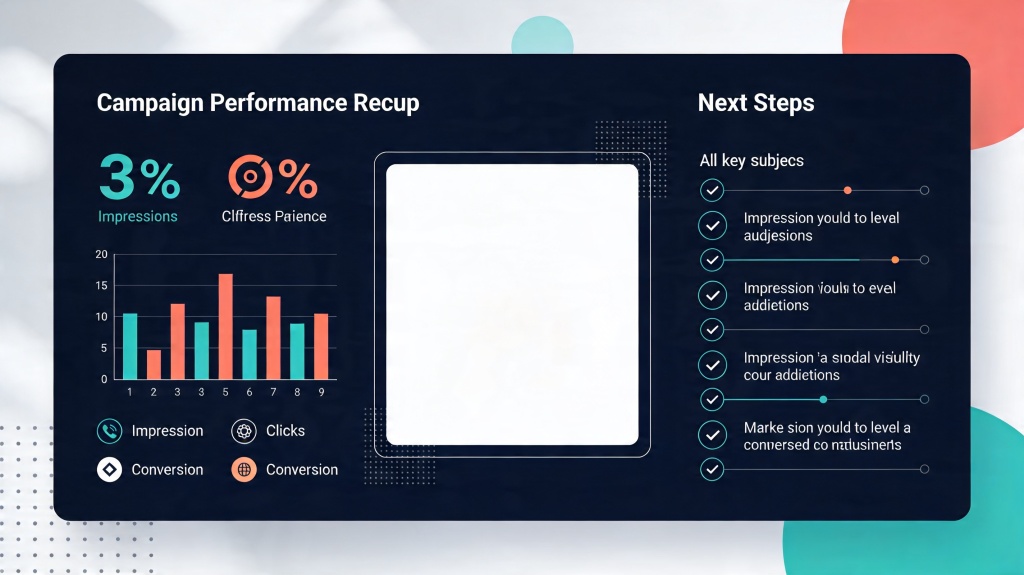
How AI Streamlines the Campaign Review Process
Traditional manual reporting can take days. Marketers often find themselves jumping between Google Analytics, Meta Ads Manager, and Excel, only to then spend hours formatting slides. AI changes the game by automating the "busy work."
AI tools can now ingest raw data files and suggest the best way to visualize specific trends. For instance, if your campaign had a significant spike in traffic during week three, an AI assistant can highlight this anomaly and prompt you to explain the cause—perhaps a viral social post or a timely influencer shout-out. This level of automated insight helps you build a narrative much faster than manual analysis ever could.
Defining "Next Steps": From Insights to Actionable Strategies
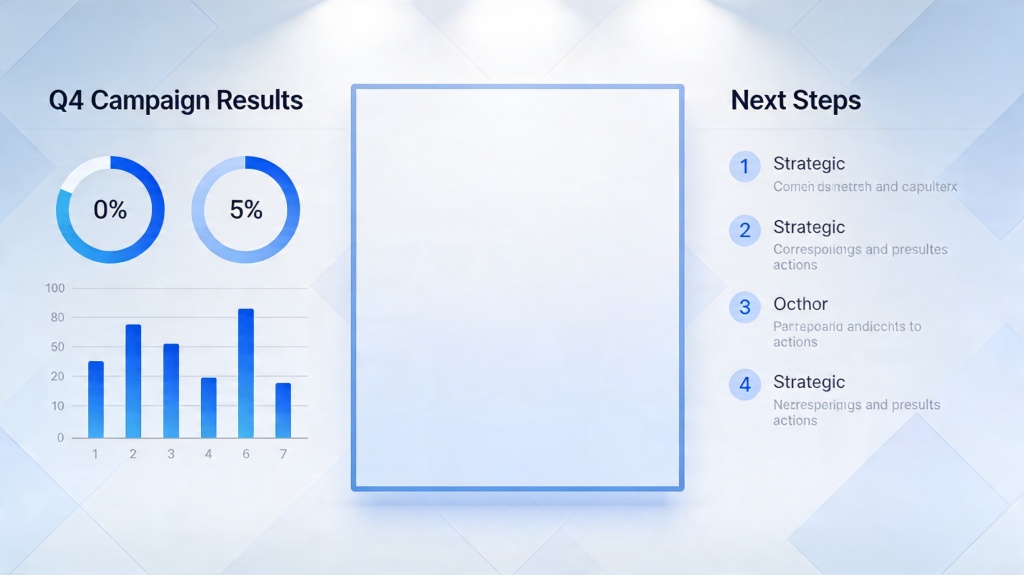
The most critical section of any marketing deck is the "Next Steps." This is where you transition from looking backward to looking forward. A recap without a plan is a missed opportunity. Your AI marketing deck should conclude with specific, data-backed recommendations.
For example, if the data shows that video ads on TikTok outperformed static images on Instagram by 300%, your next step should be a budget reallocation toward short-form video content. AI can even help draft these recommendations by analyzing the delta between different campaign segments and suggesting logical pivots based on industry benchmarks.
Best Practices for Presenting to Executive Leadership
Executives often have limited time and care most about the bottom line. When presenting your AI-generated marketing recap, keep these tips in mind:
- Start with the "So What?": Don't bury the lead. If the campaign was a success, say so in the first three minutes.
- Limit the Jargon: Avoid overly technical terms like "pixel firing" or "canonical tags" unless speaking to a technical audience. Focus on "Revenue," "Growth," and "Efficiency."
- Use Visuals to Tell the Story: A single chart showing a downward trend in CPA is more powerful than a paragraph of text explaining it.
Using the AI Marketing Deck Template in PopAi
With PopAi, creating a campaign recap is as simple as entering your campaign highlights and letting the AI do the heavy lifting. The platform offers specialized templates for marketing recaps that include placeholders for all the critical metrics mentioned above.
By using the "AI Presentation" feature, you can input your raw performance data, and the tool will generate a cohesive, branded deck in seconds. This allows you to spend more time on strategy and less time on slide design, ensuring your team stays agile and focused on hitting the next set of targets.
Frequently Asked Questions
Why is a Next Steps section crucial in a marketing recap?
A marketing recap without next steps is just a history lesson. Including next steps ensures that the insights gained from the campaign are immediately applied to future strategies, preventing the same mistakes and scaling successful tactics.
How does AI help with data visualization in marketing presentations?
AI tools can automatically transform raw data from CSVs or spreadsheets into visually appealing charts and graphs that match your brand's aesthetic, saving hours of manual design work.
What if my marketing campaign didn't meet its primary goals?
The recap is even more important when goals aren't met. Use the deck to analyze 'why'—was it the creative, the targeting, or the timing? Transparency builds trust with stakeholders and leads to better future outcomes.
Can I export these AI-generated decks to other formats?
Yes, most modern AI presentation tools like PopAi allow you to export your finished marketing decks to PDF or PowerPoint formats for offline presentations.
Create your presentation with one click now
Turn your marketing data into a professional campaign recap in seconds with PopAi's advanced presentation generator.
Get Started for Free