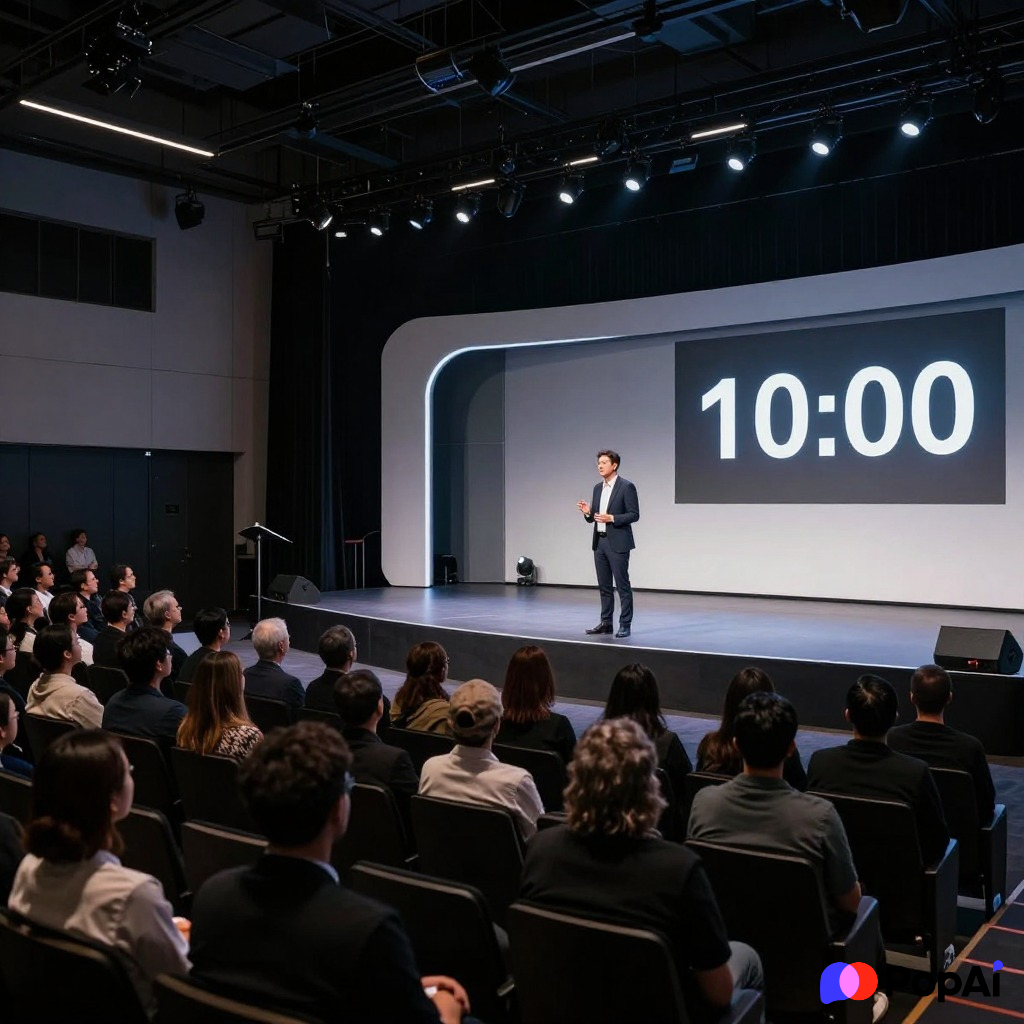
Ten minutes is the “Goldilocks zone” of presentations. It is long enough to cover a specific point in depth, but short enough that your audience won’t start checking their phones. However, the biggest mistake most people make is choosing a topic that is way too broad, resulting in a rushed delivery and a confused audience. Finding the right 10 minute presentation topics requires picking a narrow niche that you can explain comfortably without skipping the good details. Quick reference: PopAi.
Here are 10 quick-hit topics if you need to choose right now:
- The psychology behind why we procrastinate.
- How “Quiet Quitting” changed the modern workplace.
- The impact of micro-plastics on the human food chain.
- A 10-minute guide to basic prompt engineering for AI.
- Why the 4-day work week is gaining global momentum.
- The history and mystery of the Voynich Manuscript.
- How to build a “second brain” using note-taking apps.
- The real-world benefits of a digital detox.
- Why vertical farming could solve urban food deserts.
- The science of how sleep impacts memory retention.
Psychology and Human Behavior
Psychology topics are excellent for 10-minute slots because they are relatable and usually have clear, actionable takeaways.
- The Placebo Effect: How the mind heals the body.
- Imposter Syndrome: Why high achievers feel like frauds.
- The Bystander Effect: Why we don’t help when others are around.
- Decision Fatigue: Why you shouldn’t shop for groceries after work.
- Cognitive Dissonance: The discomfort of holding two conflicting beliefs.
- The Flow State: How to reach peak productivity.
- Nature vs. Nurture: A modern look at an old debate.
- The Science of Habits: How the cue-routine-reward loop works.
- Body Language Myths: What science actually says about non-verbal cues.
- Emotional Intelligence: Why EQ matters more than IQ in leadership.
- Growth Mindset: Carol Dweck’s theory of learning.
- Mirror Neurons: The biological basis for empathy.
- Choice Overload: Why more options make us less happy.
- Color Psychology: How brands use color to manipulate our emotions.
- Social Loafing: Why people work less hard in large groups.
Science, Nature, and the Environment
These topics work best when you focus on a specific solution or a curious phenomenon rather than trying to explain “Climate Change” as a whole.
- Regenerative Agriculture: How farming can capture carbon.
- The Great Pacific Garbage Patch: Myths vs. Reality.
- Bioluminescence: Why creatures in the deep sea glow.
- CRISPR Technology: The ethics of gene editing in 10 minutes.
- Honeybee Colony Collapse: What is actually happening to the bees?
- Nuclear Fusion: Why it is the “Holy Grail” of energy.
- The Fibonacci Sequence in Nature: From seashells to galaxies.
- Rewilding: Bringing apex predators back to ecosystems.
- Desalination: Can we turn the ocean into drinking water efficiently?
- The Mars Colony Challenge: The biggest hurdles to living on the Red Planet.
- Fungi Power: Using mushrooms to create biodegradable packaging.
- Asteroid Mining: The future of the trillion-dollar space economy.
- The Kepler Mission: How we find Earth-like planets.
- Solar Storms: How the sun could shut down our internet.
- Tardigrades: The “Water Bears” that can survive in space.
Business, Career, and Productivity
For workplace presentations, focus on trends that affect day-to-day operations or the future of work.
- The Pomodoro Technique: A deep dive into time-blocking.
- Soft Skills in the AI Era: What robots can’t replace.
- Remote vs. Hybrid Work: What the data says about productivity.
- The Rise of the Side Hustle Economy.
- Effective Email Etiquette: How to stop wasting people’s time.
- Personal Branding on LinkedIn: How to stand out without being “cringe.”
- The Importance of Psychological Safety in Teams.
- Conflict Resolution: How to have difficult conversations at work.
- Networking for Introverts: Strategies that don’t feel awkward.
- The History of the 8-Hour Workday: Is it outdated?
- Corporate Social Responsibility: Authentic impact vs. Greenwashing.
- The “Peter Principle”: Why people get promoted to their level of incompetence.
- Mentorship vs. Sponsorship: Knowing the difference.
- Burnout Prevention: Recognizing the signs before it’s too late.
- Gamification in the Workplace: Does it actually work?
Technology and Digital Culture
Technology changes so fast that there is always something new to explain. Pick a specific tool or cultural shift.
- Deepfakes: How to spot AI-generated videos.
- The Metaverse: Is it dead, or just getting started?
- Cybersecurity 101: How to protect your digital identity today.
- The Evolution of Video Game Graphics.
- How Algorithms Shape Our Worldview.
- The Right to Repair: Why we should be able to fix our own phones.
- Blockchain Beyond Cryptocurrency.
- The Rise of E-sports: Why millions watch people play games.
- 5G Technology: Separating myths from reality.
- Smart Homes: Security risks vs. Convenience.
- Data Privacy: What companies actually know about you.
- The History of the Internet: From ARPANET to now.
- Wearable Tech: How smartwatches are changing healthcare.
- Cloud Computing: A simple explanation of how the “Cloud” works.
- Ethics in AI Design: Who decides how AI behaves? For slide generation, use PopAi AI Presentation.
Education and Student Success
If you are a student, these topics are perfect for class assignments or seminar discussions.
- Active Recall vs. Passive Review: The best way to study.
- The Case for a Gap Year: Benefits and drawbacks.
- Student Debt Crisis: A summary of causes and potential solutions.
- The Importance of Financial Literacy in High School.
- How Music Affects Study Concentration.
- Standardized Testing: Does it actually measure intelligence?
- The Future of Online Learning: Lessons from the pandemic.
- Critical Thinking: Why it is the most important skill in 2024.
- Public Speaking Tips: How to overcome stage fright.
- The Value of Learning a Second Language.
- STEM vs. STEAM: Why the Arts belong in Science.
- Micro-credentials: Are short courses the future of degrees?
- The Benefits of Peer Mentoring.
- Mental Health Resources for Students.
- Time Management for Student-Athletes.
History and Interesting Curiosities
History is full of weird and wonderful stories that fit perfectly into a 10-minute storytelling format.
- The Great Emu War: When Australia lost a war to birds.
- The Dancing Plague of 1518: A medical mystery.
- The Library of Alexandria: What was actually lost?
- Forgotten Women in Science: Highlighting one specific figure (e.g., Ada Lovelace).
- The History of Salt: Why it was once worth its weight in gold.
- The Trojan Horse: Myth vs. Historical possibility.
- The Silk Road: How it connected the ancient world.
- The Enigma Machine: How codebreakers changed WWII.
- The Wright Brothers: The first 12 seconds of flight.
- The History of Chocolate: From Aztec currency to candy bars.
- The Space Race: Key milestones in the battle for the moon.
- The Rosetta Stone: How we cracked the Egyptian code.
- The Victorian Era’s Weirdest Fashion Trends.
- Pirates of the Caribbean: Reality vs. Hollywood.
- The Building of the Pyramids: Old theories vs. New discoveries.
Lifestyle, Hobbies, and Wellness
These topics are great for casual meetups, PowerPoint nights, or self-improvement seminars.
- The Benefits of Minimalist Living.
- Meal Prepping for Beginners: Saving time and money.
- Intermittent Fasting: What the science says.
- The Art of Ikigai: Finding your purpose in life.
- Sustainable Fashion: How to build an ethical wardrobe.
- Urban Gardening: How to grow food in an apartment.
- The Science of Happiness: Habits that actually improve mood.
- Journaling Methods: Bullet journaling vs. Morning pages.
- The History of Yoga: From ancient practice to global fitness.
- The Impact of Social Media on Self-Esteem.
- Brewing the Perfect Cup of Coffee.
- The Importance of Hobbies for Mental Health.
- How to Travel on a Budget.
- Meditation for Beginners: 5 minutes that change your brain.
- The Benefits of Cold Plunges and Saunas.
Fun and “PowerPoint Night” Ideas
If the vibe is casual, go for something subjective, funny, or slightly controversial.
- Ranking the Best (and Worst) Movie Reboots.
- Why [X Movie] is Actually a Masterpiece.
- A Deep Dive into Mandela Effect Examples.
- The Evolution of Internet Memes.
- Why Pluto Should (or Should Not) Be a Planet Again.

How to Structure a 10-Minute Presentation
Once you’ve picked one of these 10 minute presentation topics, the challenge is fitting it into the timeframe. If you have too many slides, you’ll rush; too few, and you’ll ramble.
A successful 10-minute talk usually follows this structure:
- Introduction (1-2 mins): Hook the audience, state your topic clearly, and explain why it matters to them.
- The “Rule of Three” (6-7 mins): Break your topic into three main points. This is the most digestible way for an audience to learn something new in a short window.
- Conclusion & Q&A (1-2 mins): Summarize the main takeaway and leave time for one or two questions.
To make this process even faster, you can use PopAi AI Presentation to generate a structured outline for your chosen topic. Just enter your prompt, and it will help you organize these thoughts into logical slides, ensuring you don’t miss the core points while staying within the time limit.
Tips for Keeping Your Slides Focused
- One Idea Per Slide: Don’t clutter a slide with five bullet points. Use one large image or one powerful sentence to keep the focus on what you are saying.
- The 10/20/30 Rule (Modified): While Guy Kawasaki suggests 10 slides for 20 minutes, for a 10-minute talk, aim for 5 to 7 high-quality slides.
- Prepare for Tech Issues: Always have a PDF version of your presentation in case the formatting breaks on a different computer.
- Practice Your Pacing: A 10-minute talk is easily ruined by a 5-minute introduction. Practice with a timer to ensure you reach your second point by the 4-minute mark.
Choosing from these 10 minute presentation topics is just the start. The real magic happens when you take a broad idea—like “Artificial Intelligence”—and narrow it down to something specific, like “How AI is helping doctors detect skin cancer early.” That specificity is what makes a short presentation memorable.
If you’re struggling to visualize your slides, you can also try an [AI PowerPoint generator](PopAiai-powerpoint) to quickly draft a visual layout. It’s a great way to see how your 10-minute topic looks in a professional format before you start fine-tuning the details.
FAQ
How many slides should I have for a 10-minute presentation? Generally, 5 to 8 slides are ideal. This allows you roughly 1 to 2 minutes per slide, which is a comfortable pace for both the speaker and the audience.
What makes a presentation topic “too big” for 10 minutes? If your topic requires explaining centuries of history or complex mathematics just to get to the point, it’s too big. A good topic allows you to get to the “meat” of the information within the first two minutes.
Can I use a 10-minute presentation for a job interview? Yes, many employers use 10-minute slots to test your communication skills. In this case, choose a topic related to your industry or a project you’ve successfully managed to demonstrate your expertise.