

Presentation Summary
The University of Arizona is a pioneering, flagship land-grant institution with a commitment to research, teaching, and community service. With a diverse student body from 141 countries, it offers financial accessibility and global educational reach.
Full Presentation Transcript
Slide 1: The University of Arizona: A Comprehensive Institutional Overview
Exploring Excellence in Education, Research, and Global Impact
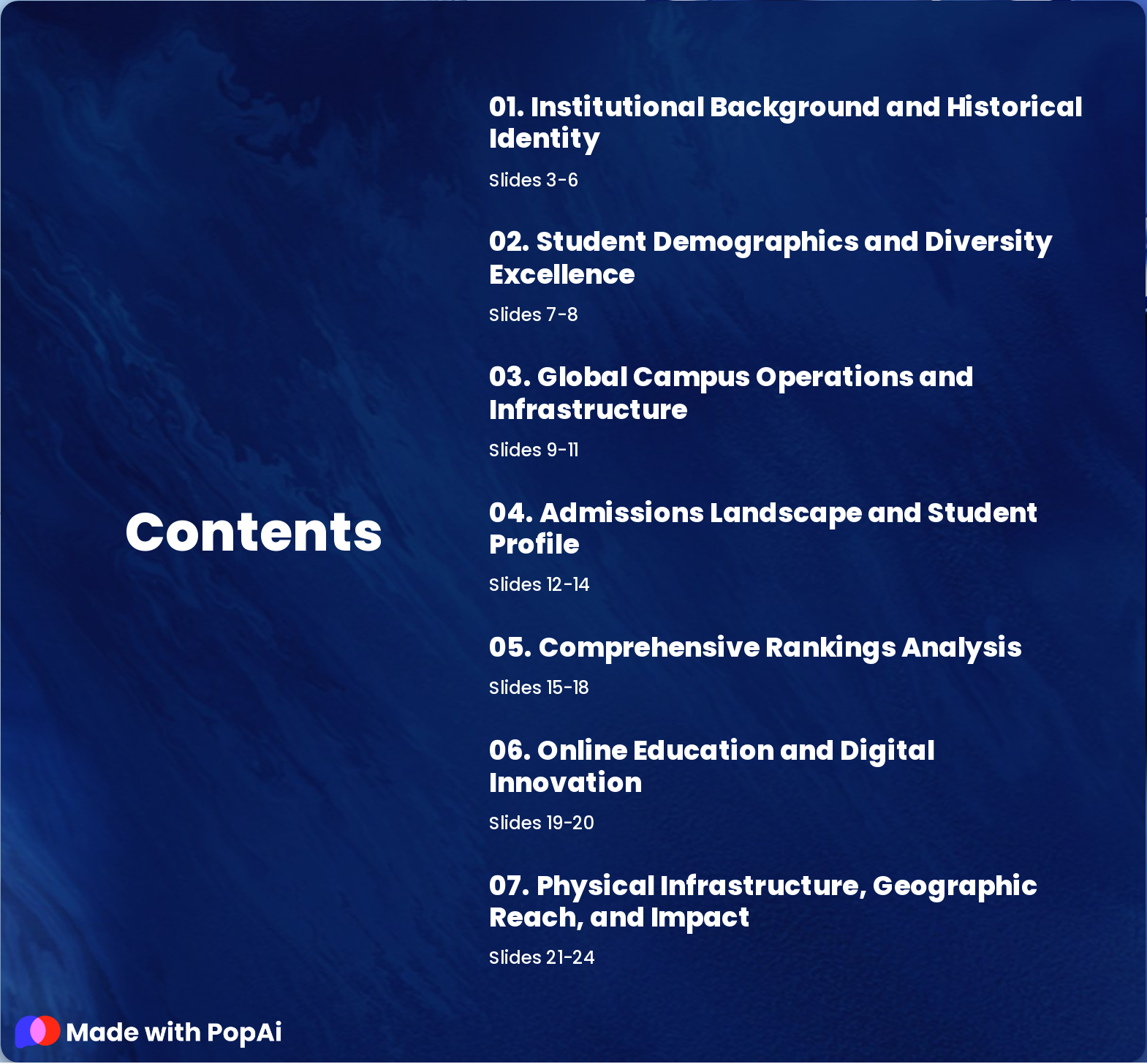
Slide 2: Contents
- Institutional Background and Historical Identity: Slides 3-6
- Student Demographics and Diversity Excellence: Slides 7-8
- Global Campus Operations and Infrastructure: Slides 9-11
- Admissions Landscape and Student Profile: Slides 12-14
- Comprehensive Rankings Analysis: Slides 15-18
- Online Education and Digital Innovation: Slides 19-20
- Physical Infrastructure, Geographic Reach, and Impact: Slides 21-24
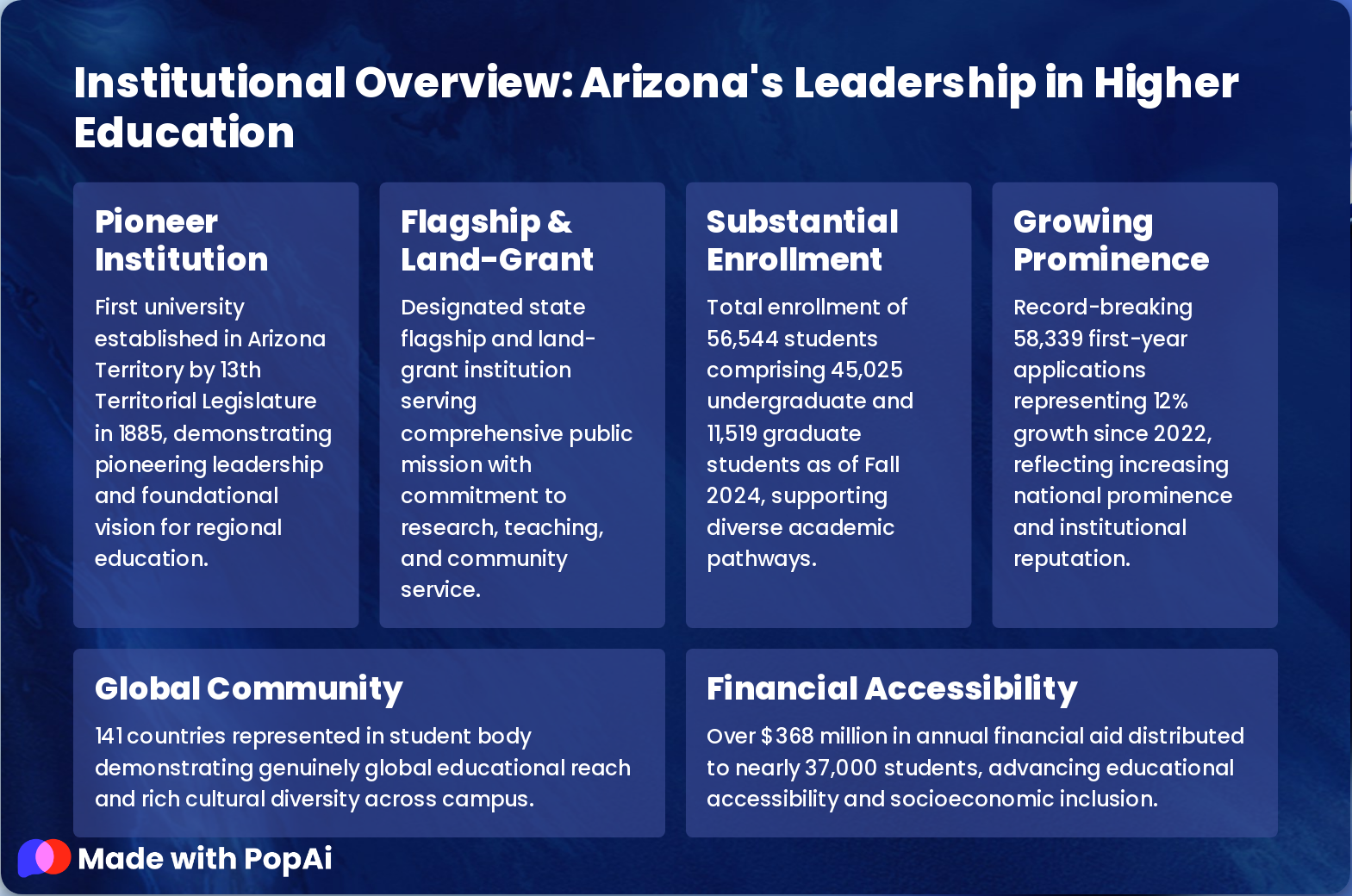
Slide 3: Institutional Overview: Arizona's Leadership in Higher Education
- Pioneer Institution: First university established in Arizona Territory by 13th Territorial Legislature in 1885, demonstrating pioneering leadership and foundational vision for regional education.
- Flagship & Land-Grant: Designated state flagship and land-grant institution serving comprehensive public mission with commitment to research, teaching, and community service.
- Substantial Enrollment: Total enrollment of 56,544 students comprising 45,025 undergraduate and 11,519 graduate students as of Fall 2024, supporting diverse academic pathways.
- Growing Prominence: Record-breaking 58,339 first-year applications representing 12% growth since 2022, reflecting increasing national prominence and institutional reputation.
- Global Community: 141 countries represented in student body demonstrating genuinely global educational reach and rich cultural diversity across campus.
- Financial Accessibility: Over $368 million in annual financial aid distributed to nearly 37,000 students, advancing educational accessibility and socioeconomic inclusion.
Slide 4: Historical Foundation:139 Years of Educational Excellence
- Foundational Legacy: First classes convened in 1891with 32 students and 6 teachers in the iconic Old Main building, establishing foundational academic tradition
- Territorial Significance: Arizona achieved statehood in 1912,27 years after university's founding, positioning Arizona as territorial institution of significance
- Indigenous Partnerships: Located on traditional lands of O'odham and Yaqui peoples with established tribal partnerships and ongoing cultural collaboration
- Tribal Commitment: Built on commitment to serve Arizona's 22 federally recognized tribes through sustainable and respectful relationships
- Research Excellence: Evolved from territorial college serving regional needs to internationally recognized research institution of distinction
- Innovation Legacy: Legacy of pioneering spirit and innovation continues to drive institutional excellence and forward-thinking approaches
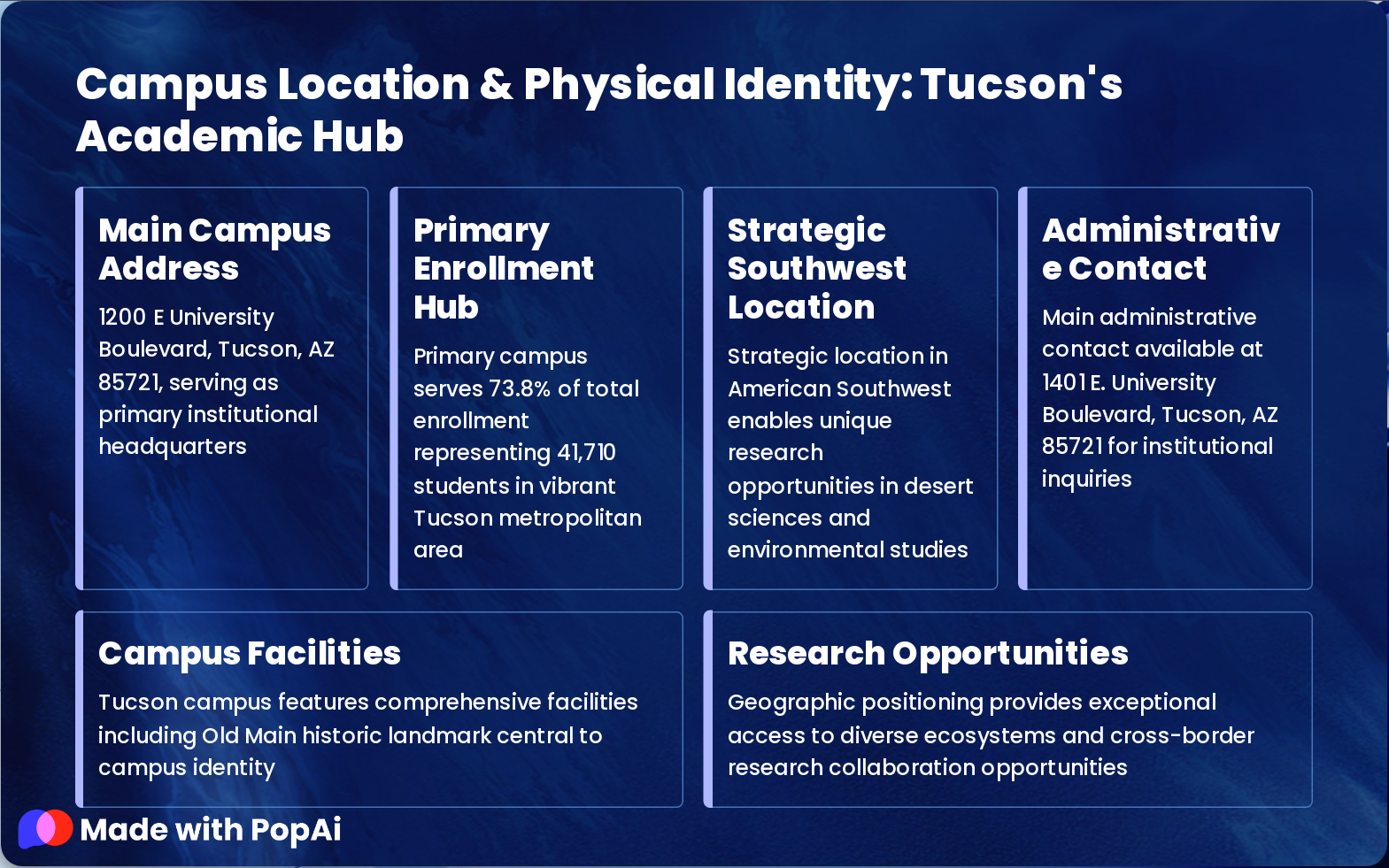
Slide 5: Campus Location & Physical Identity: Tucson's Academic Hub
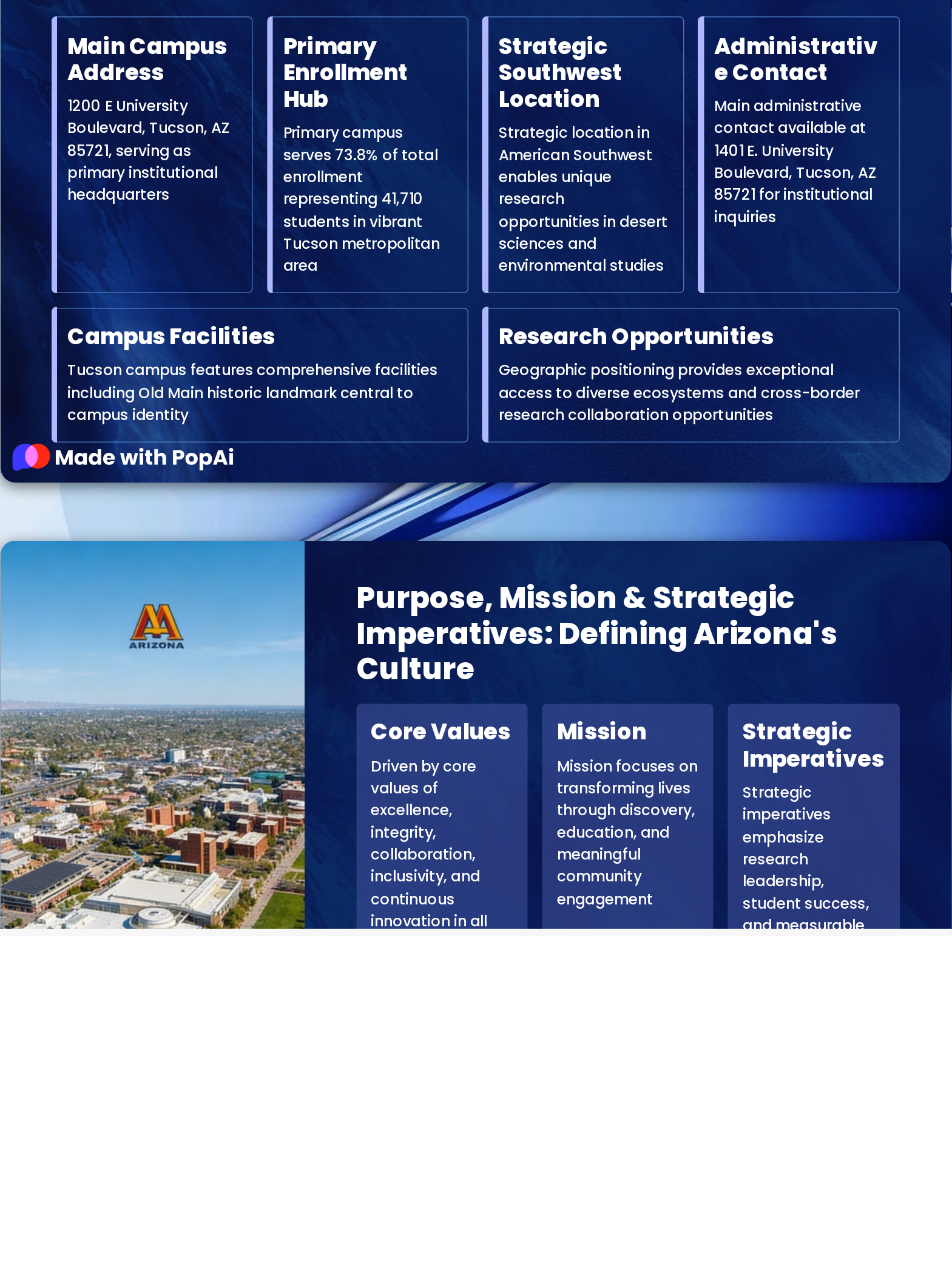
- Main Campus Address: 1200 E University Boulevard, Tucson, AZ 85721, serving as primary institutional headquarters
- Primary Enrollment Hub: Primary campus serves 73.8% of total enrollment representing 41,710 students in vibrant Tucson metropolitan area
- Strategic Southwest Location: Strategic location in American Southwest enables unique research opportunities in desert sciences and environmental studies
- Administrative Contact: Main administrative contact available at 1401 E. University Boulevard, Tucson, AZ 85721 for institutional inquiries
- Campus Facilities: Tucson campus features comprehensive facilities including Old Main historic landmark central to campus identity
- Research Opportunities: Geographic positioning provides exceptional access to diverse ecosystems and cross-border research collaboration opportunities
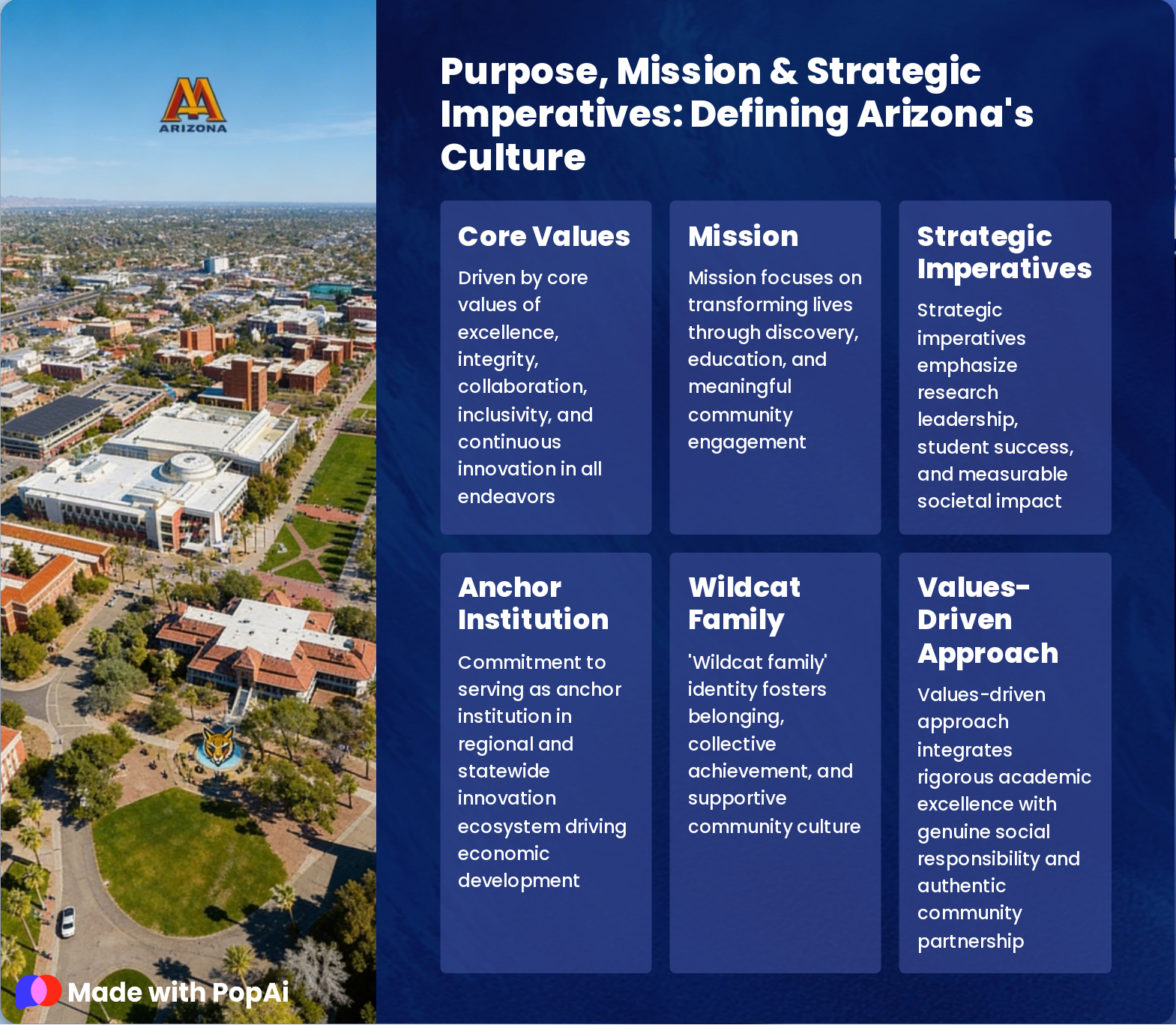
Slide 6: Purpose, Mission & Strategic Imperatives: Defining Arizona's Culture
- Core Values: Driven by core values of excellence, integrity, collaboration, inclusivity, and continuous innovation in all endeavors
- Mission: Mission focuses on transforming lives through discovery, education, and meaningful community engagement
- Strategic Imperatives: Strategic imperatives emphasize research leadership, student success, and measurable societal impact
- Anchor Institution: Commitment to serving as anchor institution in regional and statewide innovation ecosystem driving economic development
- Wildcat Family: 'Wildcat family' identity fosters belonging, collective achievement, and supportive community culture
- Values-Driven Approach: Values-driven approach integrates rigorous academic excellence with genuine social responsibility and authentic community partnership
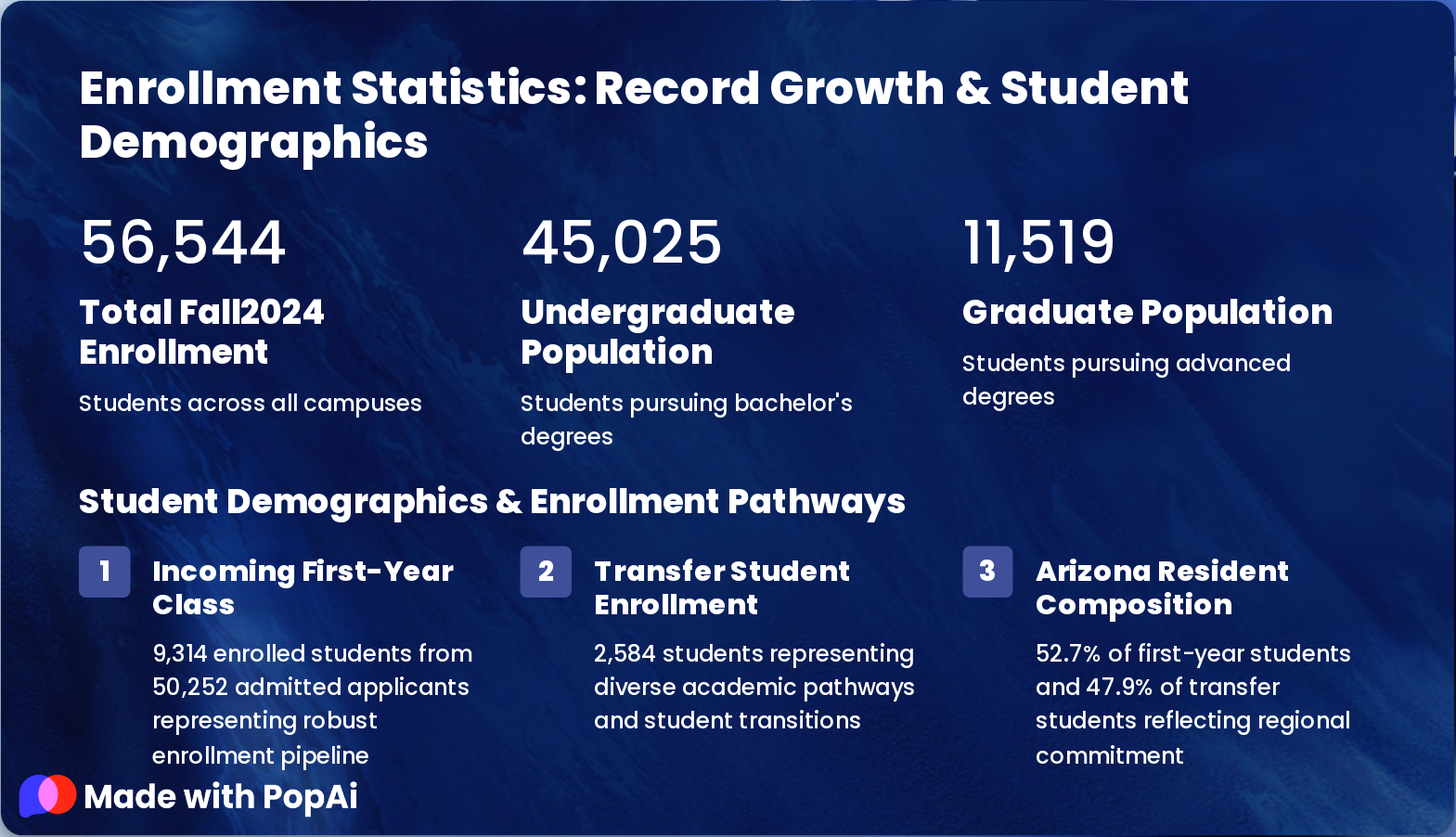
Slide 7: Enrollment Statistics: Record Growth & Student Demographics
- 56,544 — Total Fall2024 Enrollment
- 45,025 — Undergraduate Population
- 11,519 — Graduate Population
- Incoming First-Year Class: 9,314 enrolled students from 50,252 admitted applicants representing robust enrollment pipeline
- Transfer Student Enrollment: 2,584 students representing diverse academic pathways and student transitions
- Arizona Resident Composition: 52.7% of first-year students and 47.9% of transfer students reflecting regional commitment
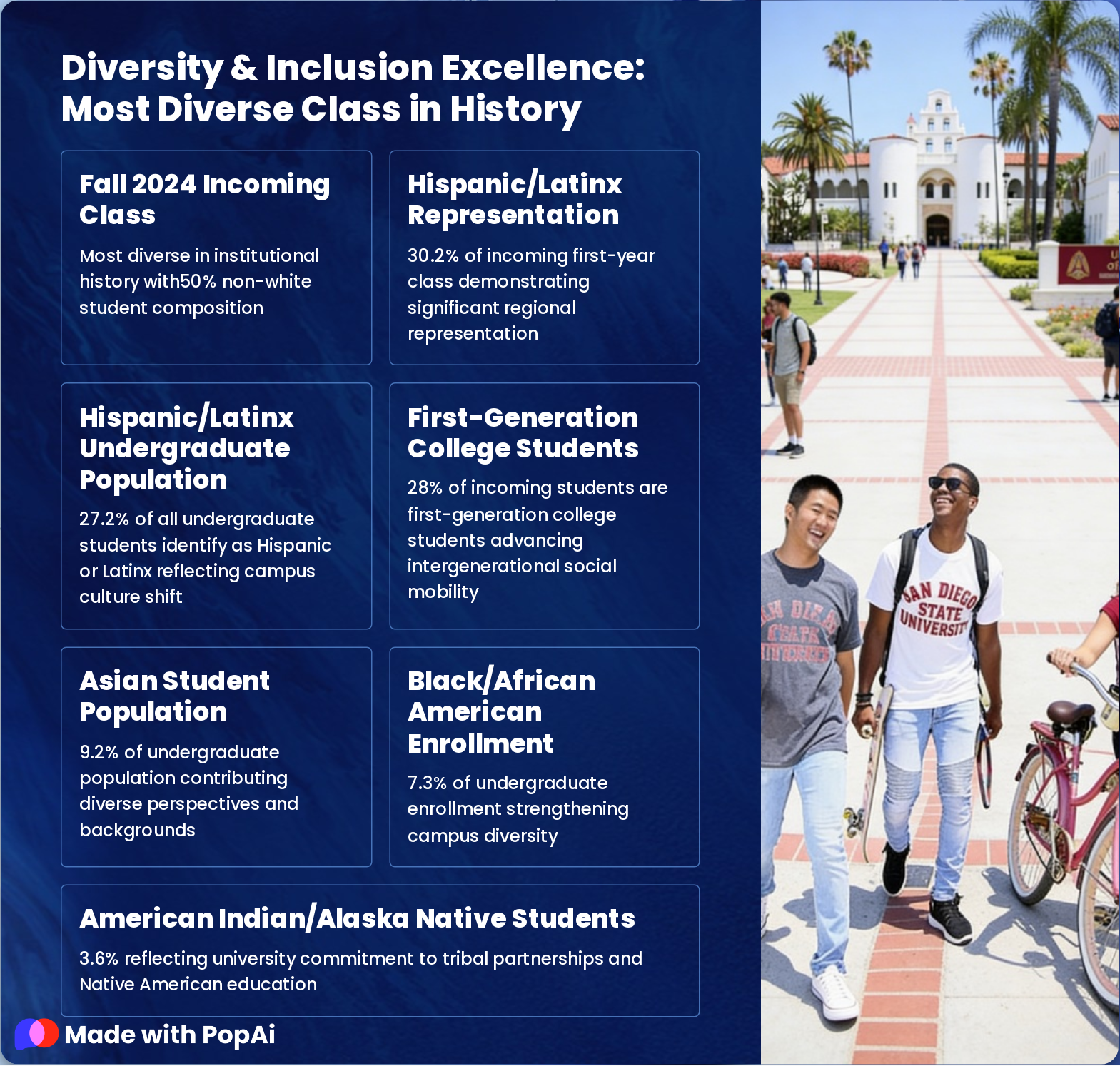
Slide 8: Diversity & Inclusion Excellence: Most Diverse Class in History
- Fall 2024 Incoming Class: Most diverse in institutional history with50% non-white student composition
- Hispanic/Latinx Representation: 30.2% of incoming first-year class demonstrating significant regional representation
- Hispanic/Latinx Undergraduate Population: 27.2% of all undergraduate students identify as Hispanic or Latinx reflecting campus culture shift
- First-Generation College Students: 28% of incoming students are first-generation college students advancing intergenerational social mobility
- Asian Student Population: 9.2% of undergraduate population contributing diverse perspectives and backgrounds
- Black/African American Enrollment: 7.3% of undergraduate enrollment strengthening campus diversity
- American Indian/Alaska Native Students: 3.6% reflecting university commitment to tribal partnerships and Native American education
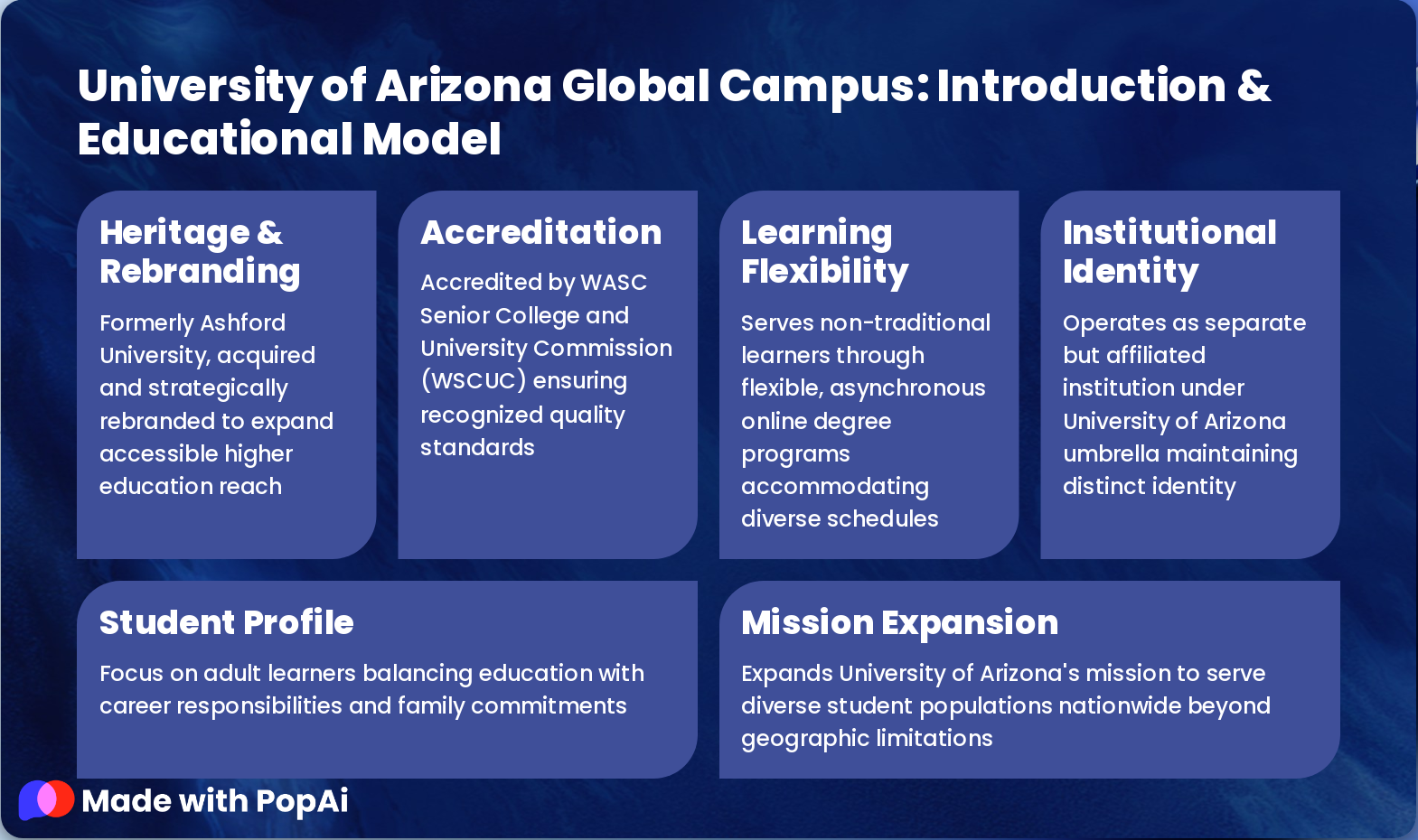
Slide 9: University of Arizona Global Campus: Introduction & Educational Model
- Heritage & Rebranding: Formerly Ashford University, acquired and strategically rebranded to expand accessible higher education reach
- Accreditation: Accredited by WASC Senior College and University Commission (WSCUC) ensuring recognized quality standards
- Learning Flexibility: Serves non-traditional learners through flexible, asynchronous online degree programs accommodating diverse schedules
- Institutional Identity: Operates as separate but affiliated institution under University of Arizona umbrella maintaining distinct identity
- Student Profile: Focus on adult learners balancing education with career responsibilities and family commitments
- Mission Expansion: Expands University of Arizona's mission to serve diverse student populations nationwide beyond geographic limitations
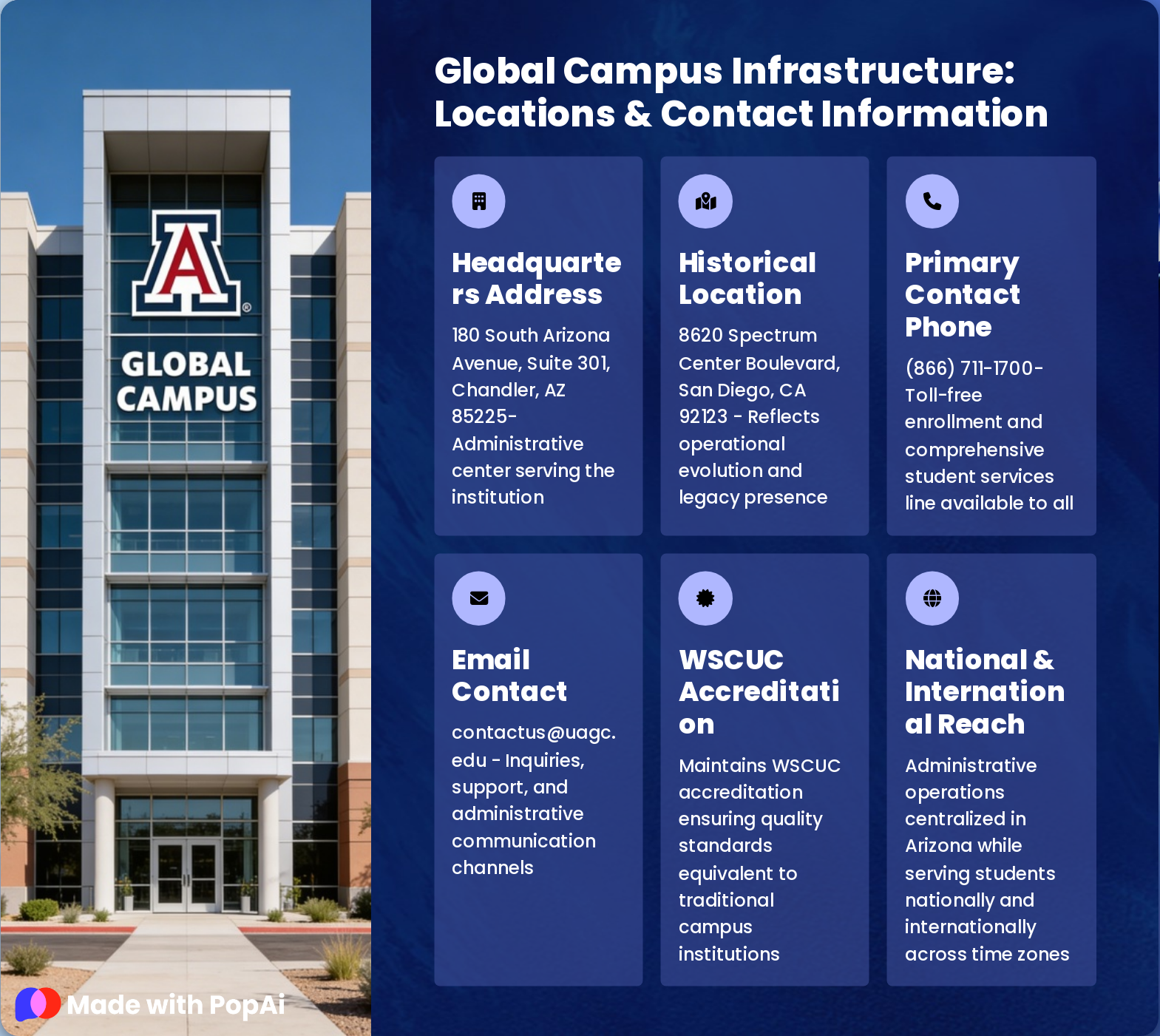
Slide 10: Global Campus Infrastructure: Locations & Contact Information
- Headquarters Address: 180 South Arizona Avenue, Suite 301, Chandler, AZ 85225- Administrative center serving the institution
- Historical Location: 8620 Spectrum Center Boulevard, San Diego, CA 92123 - Reflects operational evolution and legacy presence
- Primary Contact Phone: (866) 711-1700- Toll-free enrollment and comprehensive student services line available to all
- Email Contact: contactus@uagc.edu - Inquiries, support, and administrative communication channels
- WSCUC Accreditation: Maintains WSCUC accreditation ensuring quality standards equivalent to traditional campus institutions
- National & International Reach: Administrative operations centralized in Arizona while serving students nationally and internationally across time zones
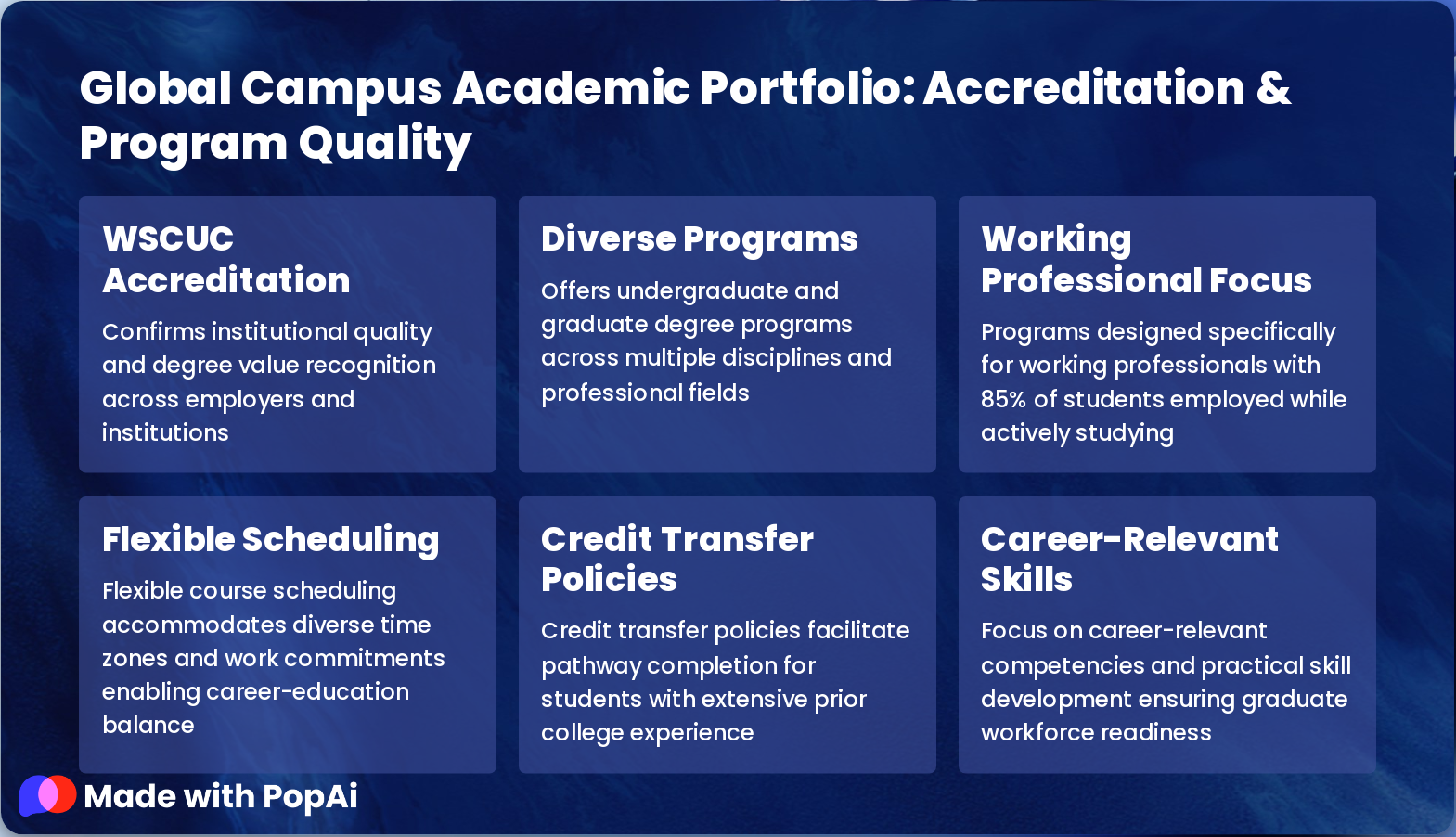
Slide 11: Global Campus Academic Portfolio: Accreditation & Program Quality
- WSCUC Accreditation: Confirms institutional quality and degree value recognition across employers and institutions
- Diverse Programs: Offers undergraduate and graduate degree programs across multiple disciplines and professional fields
- Working Professional Focus: Programs designed specifically for working professionals with 85% of students employed while actively studying
- Flexible Scheduling: Flexible course scheduling accommodates diverse time zones and work commitments enabling career-education balance
- Credit Transfer Policies: Credit transfer policies facilitate pathway completion for students with extensive prior college experience
- Career-Relevant Skills: Focus on career-relevant competencies and practical skill development ensuring graduate workforce readiness
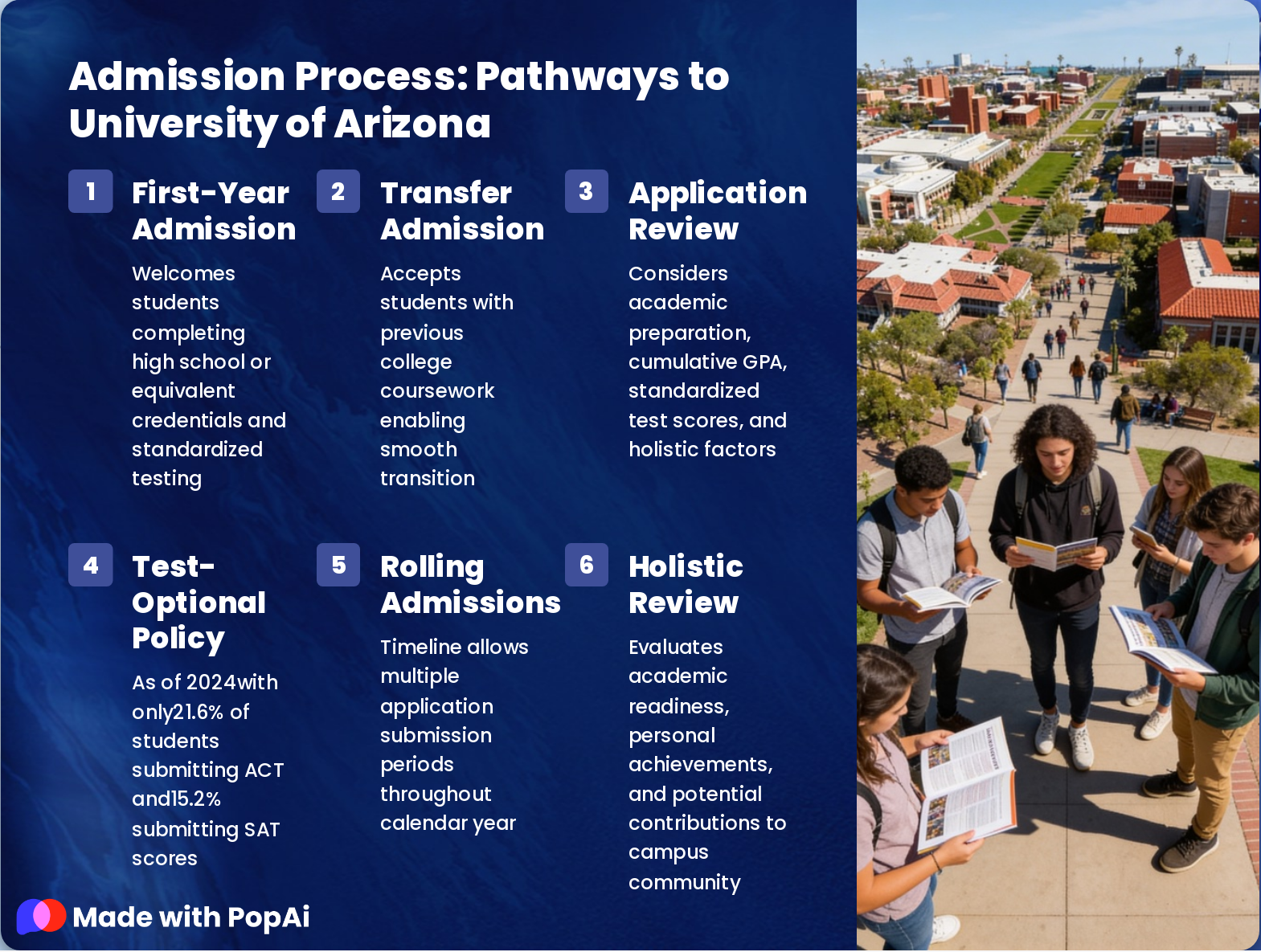
Slide 12: Admission Process: Pathways to University of Arizona
- First-Year Admission: Welcomes students completing high school or equivalent credentials and standardized testing
- Transfer Admission: Accepts students with previous college coursework enabling smooth transition
- Application Review: Considers academic preparation, cumulative GPA, standardized test scores, and holistic factors
- Test-Optional Policy: As of 2024with only21.6% of students submitting ACT and15.2% submitting SAT scores
- Rolling Admissions: Timeline allows multiple application submission periods throughout calendar year
- Holistic Review: Evaluates academic readiness, personal achievements, and potential contributions to campus community
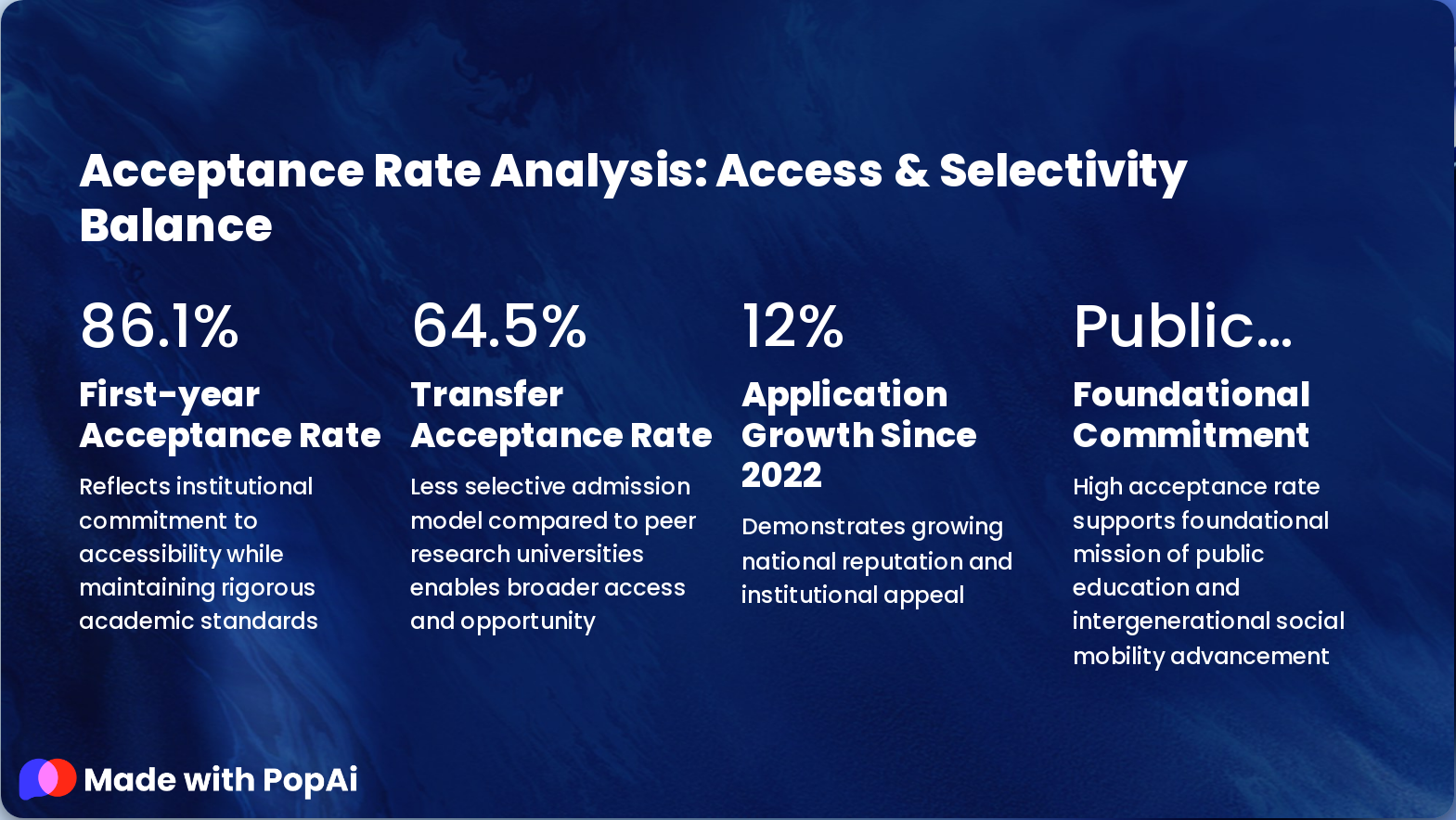
Slide 13: Acceptance Rate Analysis: Access & Selectivity Balance
- 86.1% — First-year Acceptance Rate
- 64.5% — Transfer Acceptance Rate
- 12% — Application Growth Since 2022
- Public Mission — Foundational Commitment
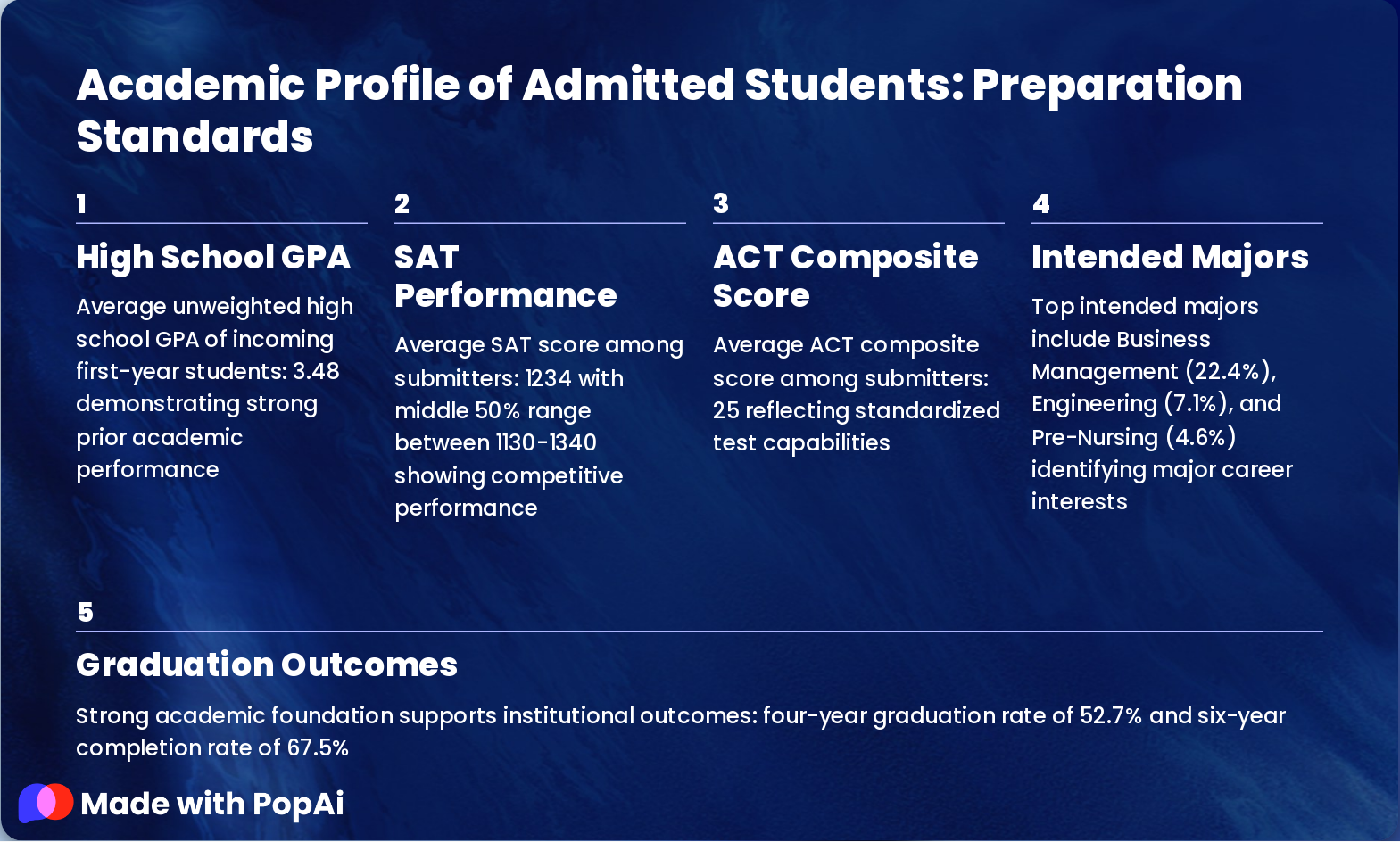
Slide 14: Academic Profile of Admitted Students: Preparation Standards
- High School GPA: Average unweighted high school GPA of incoming first-year students: 3.48 demonstrating strong prior academic performance
- SAT Performance: Average SAT score among submitters: 1234 with middle 50% range between 1130-1340 showing competitive performance
- ACT Composite Score: Average ACT composite score among submitters: 25 reflecting standardized test capabilities
- Intended Majors: Top intended majors include Business Management (22.4%), Engineering (7.1%), and Pre-Nursing (4.6%) identifying major career interests
- Graduation Outcomes: Strong academic foundation supports institutional outcomes: four-year graduation rate of 52.7% and six-year completion rate of 67.5%
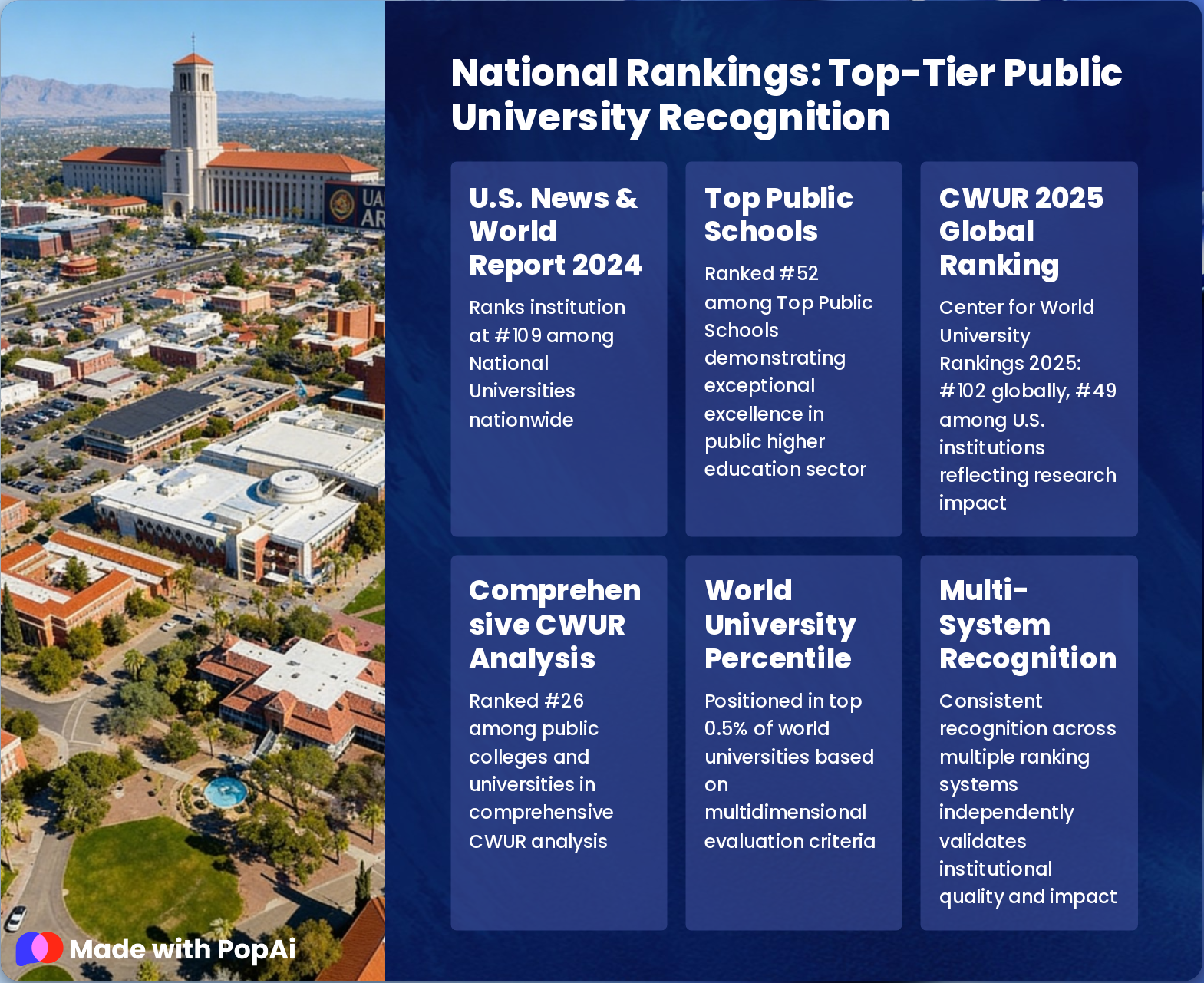
Slide 15: National Rankings: Top-Tier Public University Recognition
- U.S. News & World Report 2024: Ranks institution at #109 among National Universities nationwide
- Top Public Schools: Ranked #52 among Top Public Schools demonstrating exceptional excellence in public higher education sector
- CWUR 2025 Global Ranking: Center for World University Rankings 2025: #102 globally, #49 among U.S. institutions reflecting research impact
- Comprehensive CWUR Analysis: Ranked #26 among public colleges and universities in comprehensive CWUR analysis
- World University Percentile: Positioned in top 0.5% of world universities based on multidimensional evaluation criteria
- Multi-System Recognition: Consistent recognition across multiple ranking systems independently validates institutional quality and impact
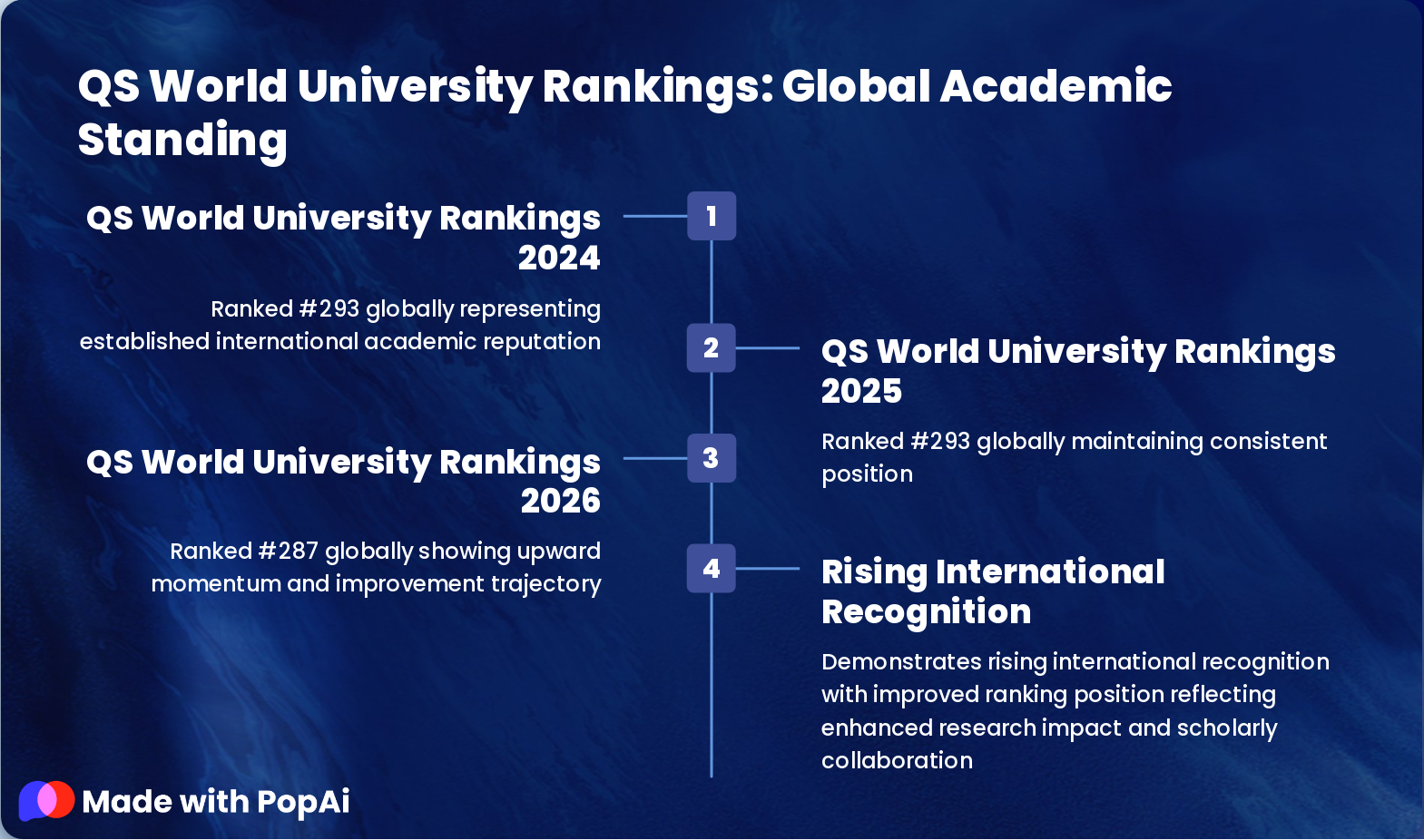
Slide 16: QS World University Rankings: Global Academic Standing
- QS World University Rankings 2024: Ranked #293 globally representing established international academic reputation
- QS World University Rankings 2025: Ranked #293 globally maintaining consistent position
- QS World University Rankings 2026: Ranked #287 globally showing upward momentum and improvement trajectory
- Rising International Recognition: Demonstrates rising international recognition with improved ranking position reflecting enhanced research impact and scholarly collaboration
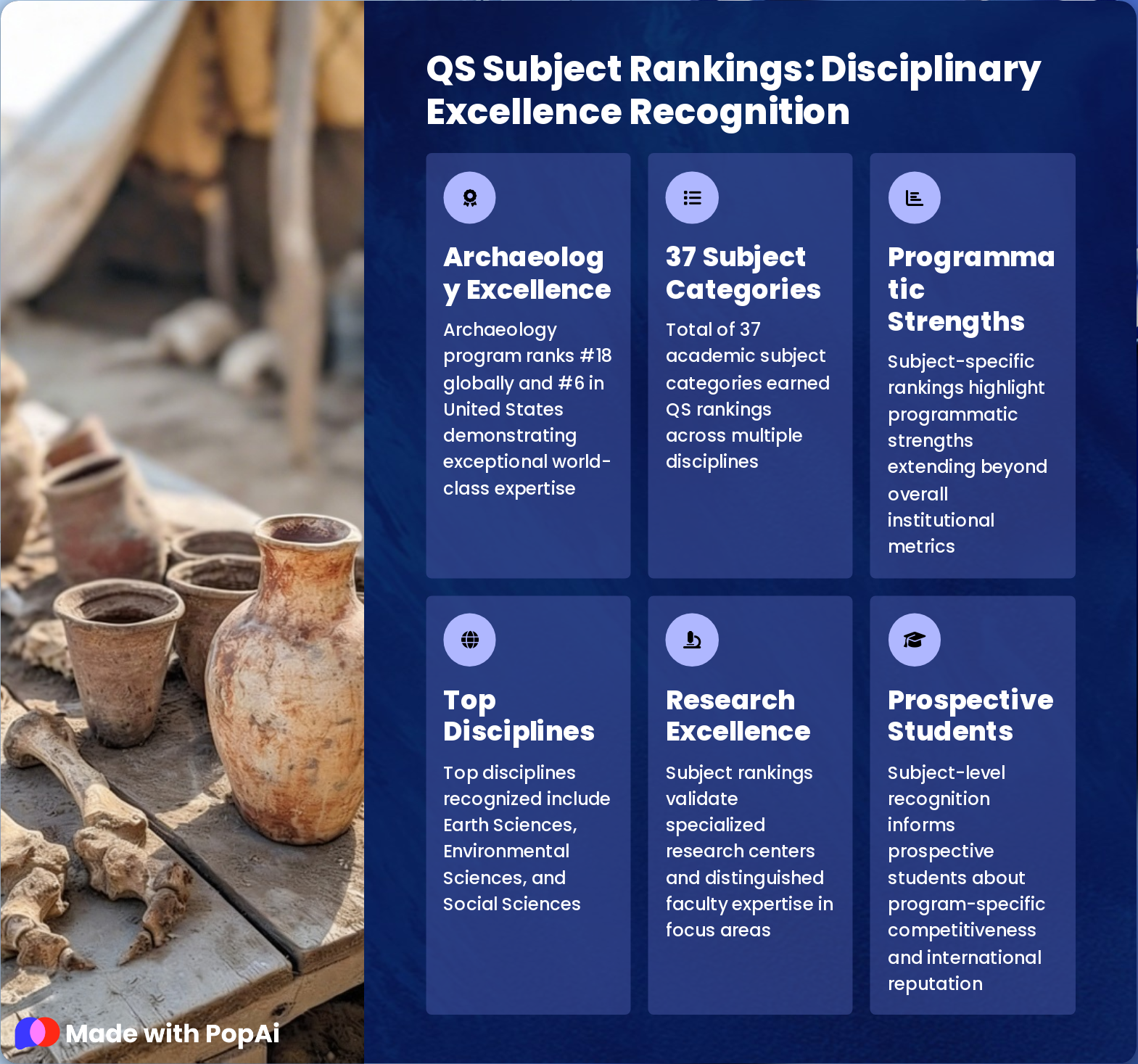
Slide 17: QS Subject Rankings: Disciplinary Excellence Recognition
- Archaeology Excellence: Archaeology program ranks #18 globally and #6 in United States demonstrating exceptional world-class expertise
- 37 Subject Categories: Total of 37 academic subject categories earned QS rankings across multiple disciplines
- Programmatic Strengths: Subject-specific rankings highlight programmatic strengths extending beyond overall institutional metrics
- Top Disciplines: Top disciplines recognized include Earth Sciences, Environmental Sciences, and Social Sciences
- Research Excellence: Subject rankings validate specialized research centers and distinguished faculty expertise in focus areas
- Prospective Students: Subject-level recognition informs prospective students about program-specific competitiveness and international reputation
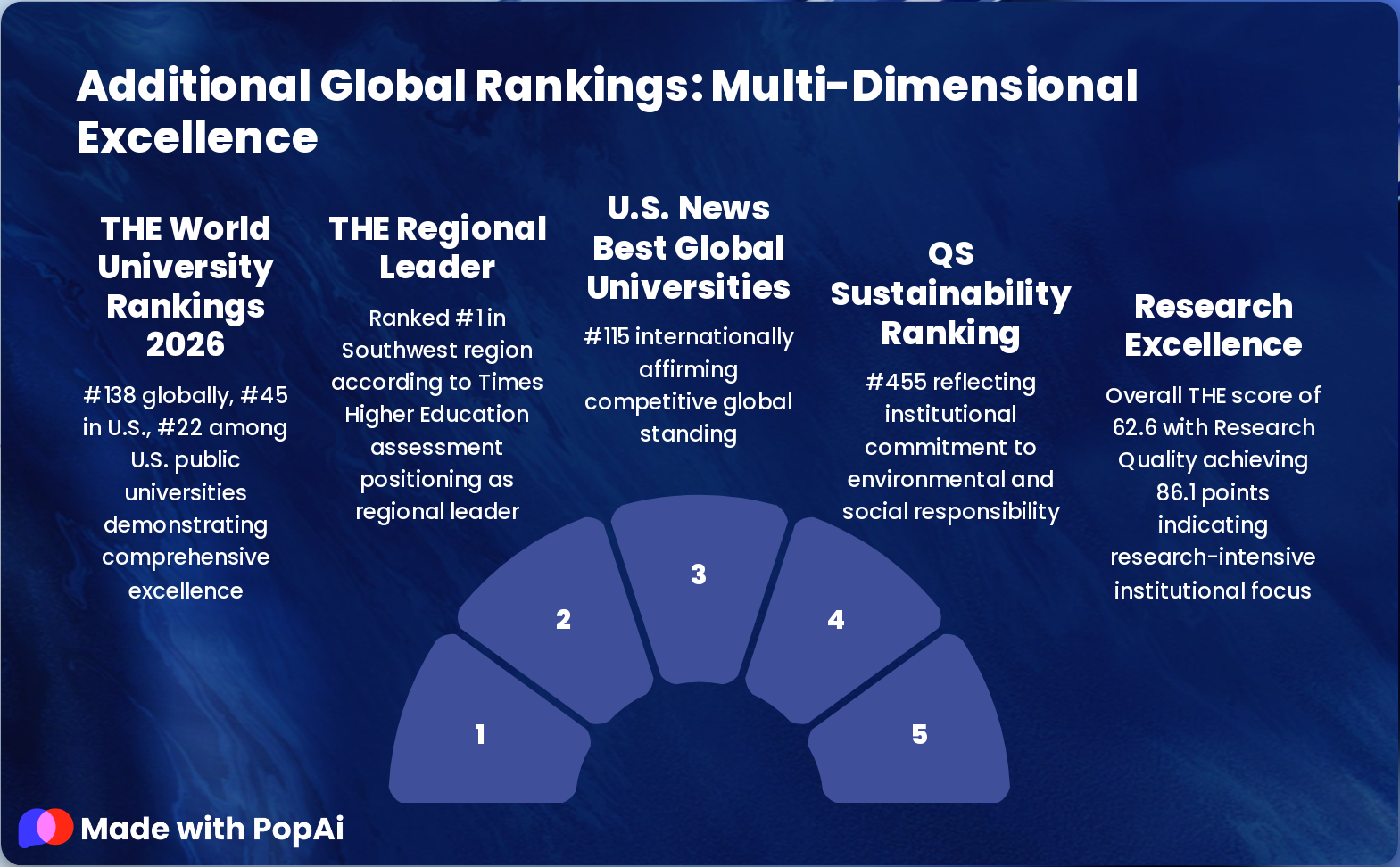
Slide 18: Additional Global Rankings: Multi-Dimensional Excellence
- THE World University Rankings 2026: #138 globally, #45 in U.S., #22 among U.S. public universities demonstrating comprehensive excellence
- THE Regional Leader: Ranked #1 in Southwest region according to Times Higher Education assessment positioning as regional leader
- U.S. News Best Global Universities: #115 internationally affirming competitive global standing
- QS Sustainability Ranking: #455 reflecting institutional commitment to environmental and social responsibility
- Research Excellence: Overall THE score of 62.6 with Research Quality achieving 86.1 points indicating research-intensive institutional focus
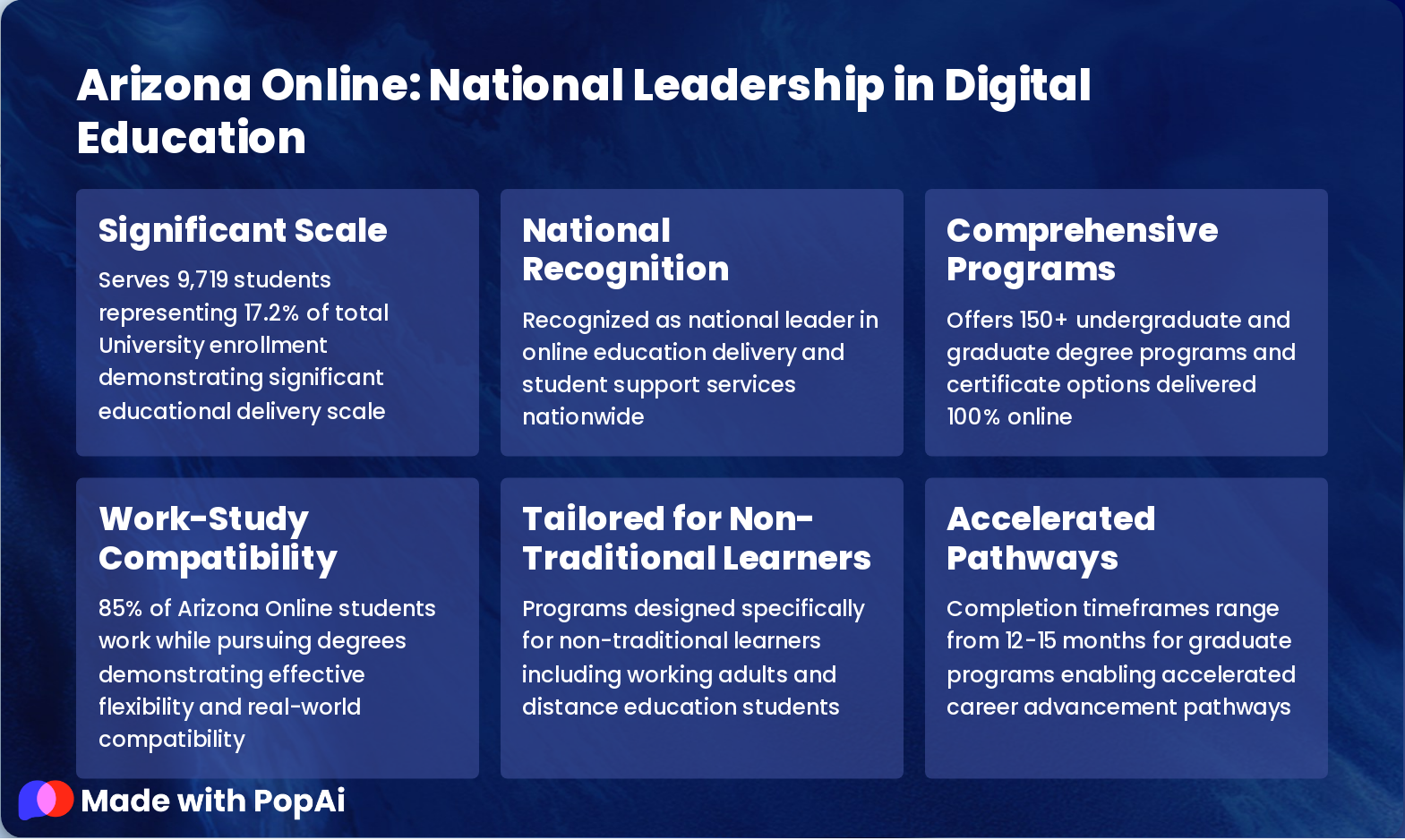
Slide 19: Arizona Online: National Leadership in Digital Education
- Significant Scale: Serves 9,719 students representing 17.2% of total University enrollment demonstrating significant educational delivery scale
- National Recognition: Recognized as national leader in online education delivery and student support services nationwide
- Comprehensive Programs: Offers 150+ undergraduate and graduate degree programs and certificate options delivered 100% online
- Work-Study Compatibility: 85% of Arizona Online students work while pursuing degrees demonstrating effective flexibility and real-world compatibility
- Tailored for Non-Traditional Learners: Programs designed specifically for non-traditional learners including working adults and distance education students
- Accelerated Pathways: Completion timeframes range from 12-15 months for graduate programs enabling accelerated career advancement pathways
Slide 20: Online Programs Portfolio: Comprehensive Academic Offerings
- 175+ Programs: 175+ total online programs spanning undergraduate, graduate, and professional certificate levels
- Bachelor's Degrees: Bachelor's degree programs across Arts & Sciences, Business, Education, and Applied Sciences disciplines
- Master's Degrees: Master's degree programs in high-demand fields including Business Administration, Education, and Public Health
- Individual Courses: Individual course enrollment option for non-degree-seeking students expanding access to specific knowledge
- Graduate Courses: Graduate-level courses available for professional development without full degree commitment requirements
- Undergraduate Options: Undergraduate options serve degree completion students and career changers seeking credentials
Slide 21: I need to clarify the content structure. The description mentions 6 location points, but the `circle-stats` type is designed for percentage/completion rate metrics (like "92%", "15%", etc.). Looking at the content, you have 6 geographic locations with descriptive text, not numerical percentages. This doesn't fit the `circle-stats` template which requires `figures` attributes with percentage values. Could you please provide: 1. **Do you want to display specific numerical data for each location?** (e.g., population percentages, enrollment numbers as percentages, coverage area percentages) 2. **Or would you prefer a different smart-layout type** that's better suited for listing descriptive location information, such as: - `semi-circle` (for organizing locations geographically) - `basic-boxes` or `solid-boxes` (for location cards) - `icons-with-text` (if each location has an icon) Without numerical figures for each location, I cannot accurately use the `circle-stats` type. Please clarify what data should be displayed for each location.
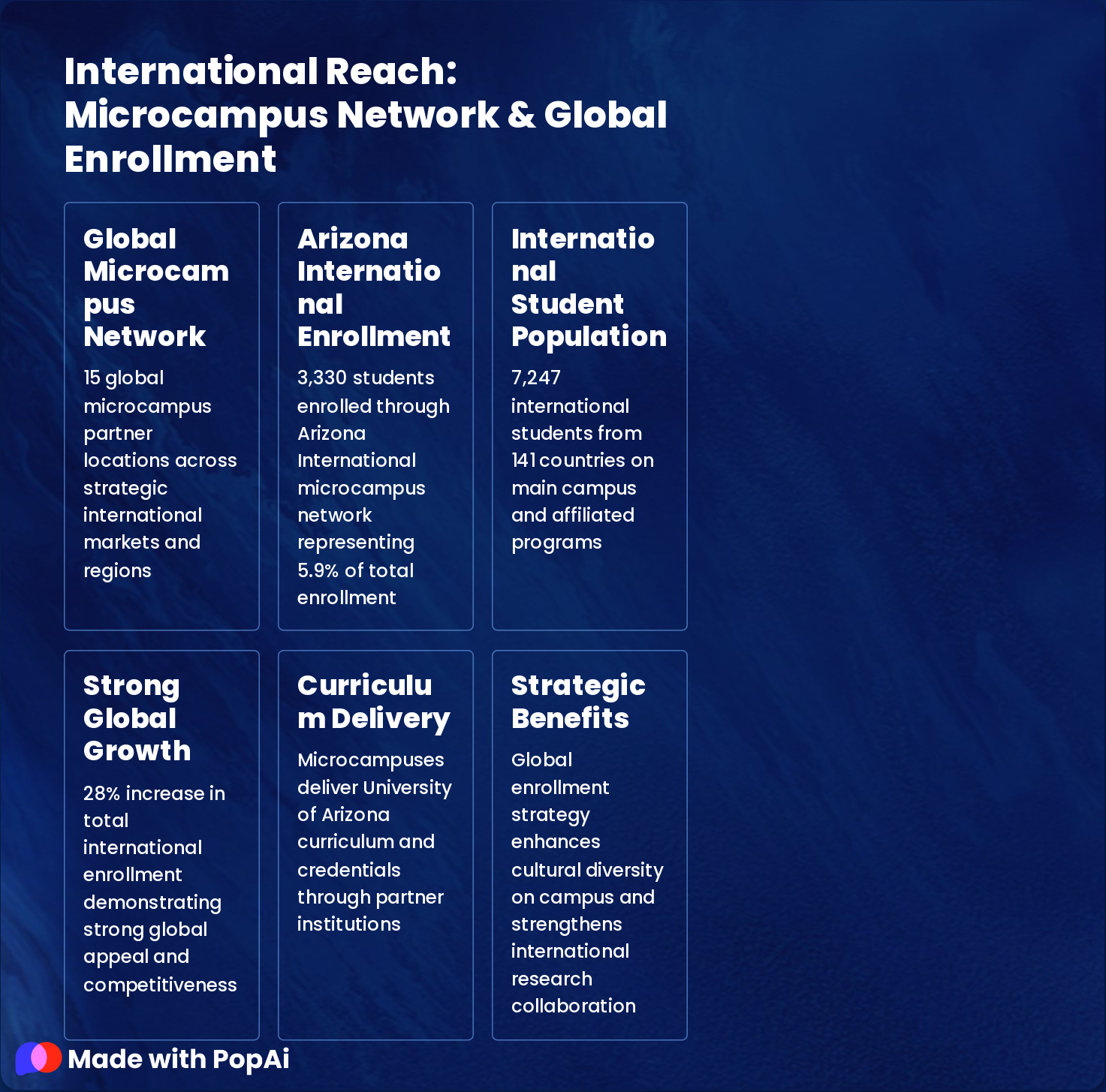
- Global Microcampus Network: 15 global microcampus partner locations across strategic international markets and regions
- Arizona International Enrollment: 3,330 students enrolled through Arizona International microcampus network representing 5.9% of total enrollment
- International Student Population: 7,247 international students from 141 countries on main campus and affiliated programs
- Strong Global Growth: 28% increase in total international enrollment demonstrating strong global appeal and competitiveness
- Curriculum Delivery: Microcampuses deliver University of Arizona curriculum and credentials through partner institutions
- Strategic Benefits: Global enrollment strategy enhances cultural diversity on campus and strengthens international research collaboration
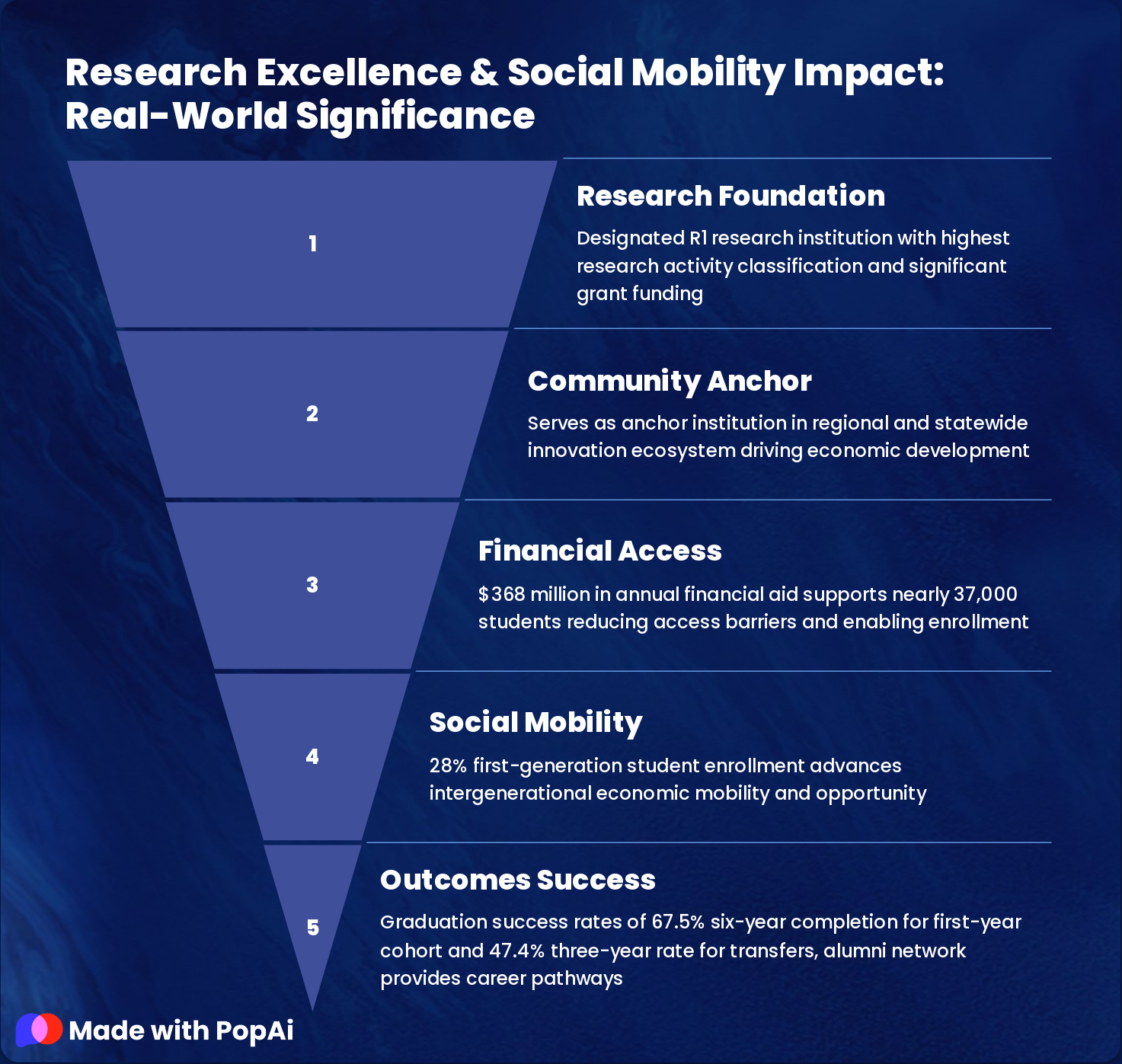
Slide 22: Research Excellence & Social Mobility Impact: Real-World Significance
- Research Foundation: Designated R1 research institution with highest research activity classification and significant grant funding
- Community Anchor: Serves as anchor institution in regional and statewide innovation ecosystem driving economic development
- Financial Access: $368 million in annual financial aid supports nearly 37,000 students reducing access barriers and enabling enrollment
- Social Mobility: 28% first-generation student enrollment advances intergenerational economic mobility and opportunity
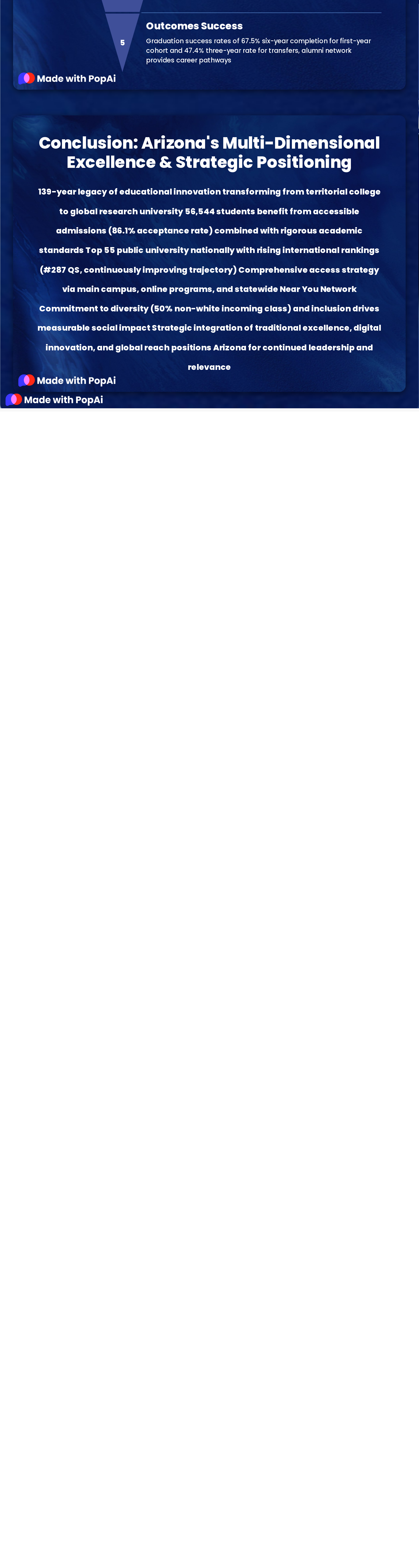
- Outcomes Success: Graduation success rates of 67.5% six-year completion for first-year cohort and 47.4% three-year rate for transfers, alumni network provides career pathways
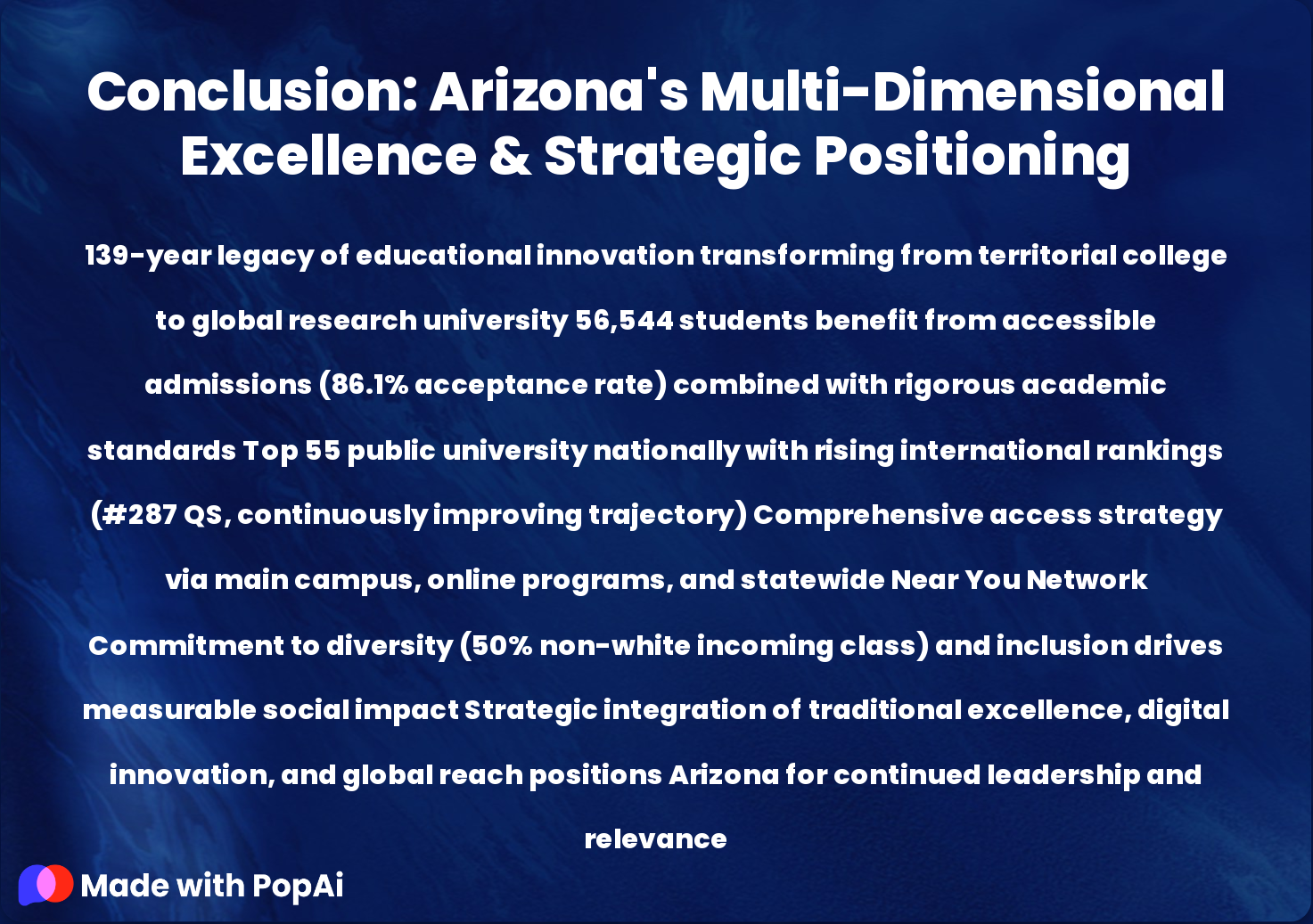
Slide 23: Conclusion: Arizona's Multi-Dimensional Excellence & Strategic Positioning
Conclusion: Arizona's Multi-Dimensional Excellence & Strategic Positioning 139-year legacy of educational innovation transforming from territorial college to global research university 56,544 students benefit from accessible admissions (86.1% acceptance rate) combined with rigorous academic standard...