
Presentation Summary
This presentation offers a comprehensive analysis of COVID-19 BA variants, including evolution, epidemiology, and clinical insights. It discusses the emergence of BA.3.2, its global spread, symptom profile, vaccine effectiveness, and multi-platform surveillance systems.
Full Presentation Transcript
Slide 1: COVID-19 BA Variants: Comprehensive Analysis
Evolution, Epidemiology, and Evidence-Based Clinical Insights for Healthcare Professionals and Public Health Officials
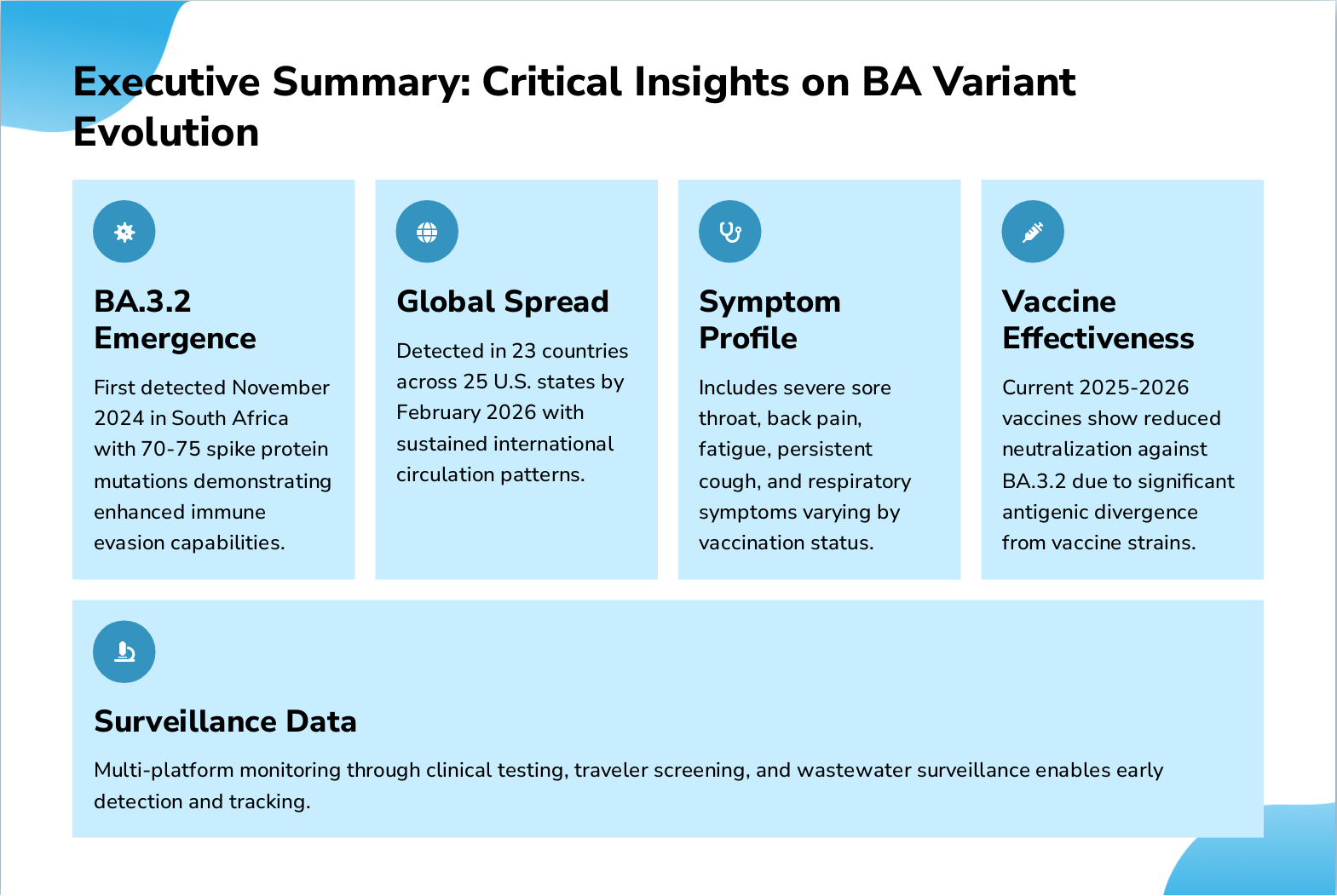
Slide 2: Executive Summary: Critical Insights on BA Variant Evolution
- BA.3.2 Emergence: First detected November 2024 in South Africa with 70-75 spike protein mutations demonstrating enhanced immune evasion capabilities.
- Global Spread: Detected in 23 countries across 25 U.S. states by February 2026 with sustained international circulation patterns.
- Symptom Profile: Includes severe sore throat, back pain, fatigue, persistent cough, and respiratory symptoms varying by vaccination status.
- Vaccine Effectiveness: Current 2025-2026 vaccines show reduced neutralization against BA.3.2 due to significant antigenic divergence from vaccine strains.
- Surveillance Data: Multi-platform monitoring through clinical testing, traveler screening, and wastewater surveillance enables early detection and tracking.
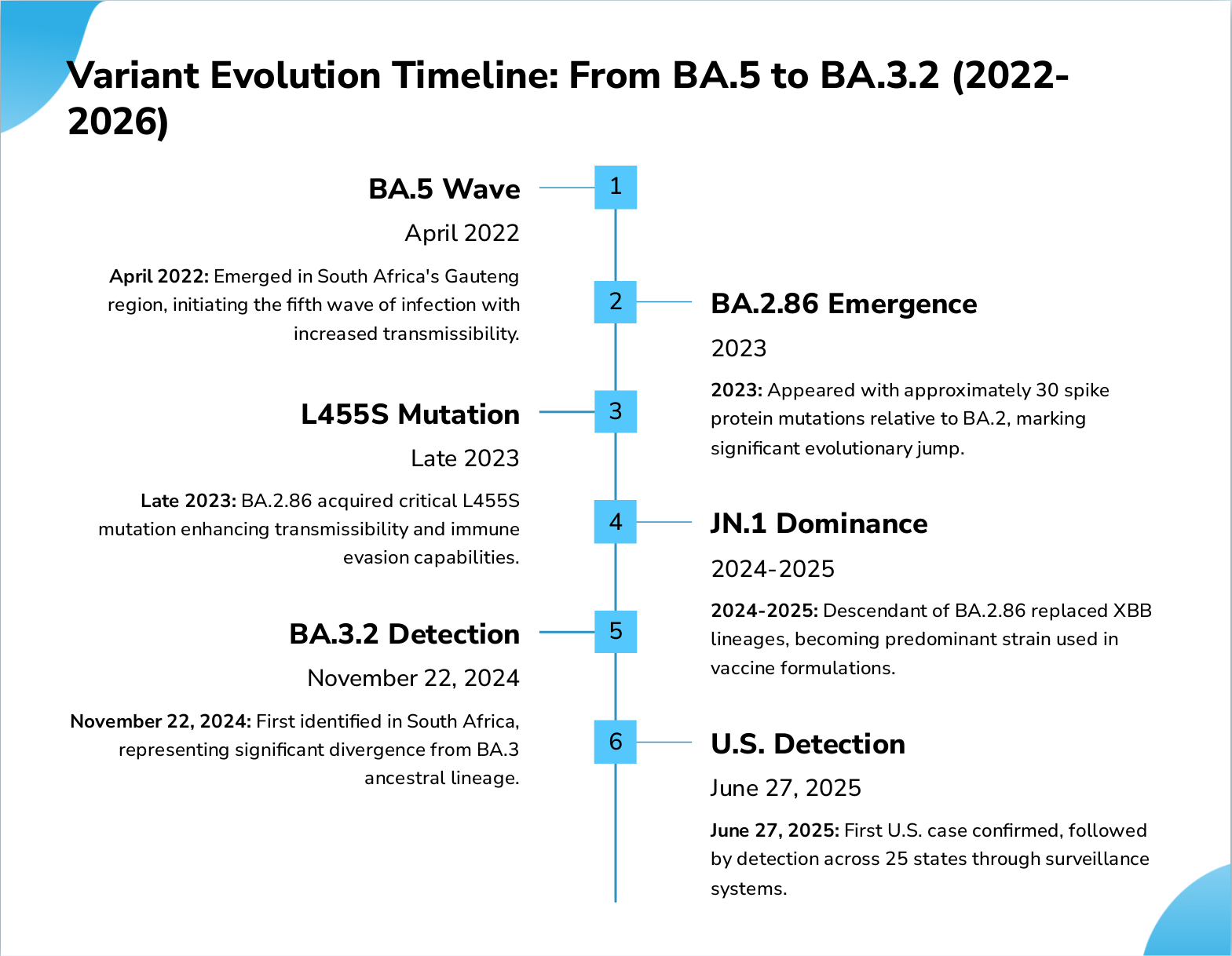
Slide 3: Variant Evolution Timeline: From BA.5 to BA.3.2 (2022-2026)
- BA.5 Wave: April 2022: Emerged in South Africa's Gauteng region, initiating the fifth wave of infection with increased transmissibility.
- BA.2.86 Emergence: 2023: Appeared with approximately 30 spike protein mutations relative to BA.2, marking significant evolutionary jump.
- L455S Mutation: Late 2023: BA.2.86 acquired critical L455S mutation enhancing transmissibility and immune evasion capabilities.
- JN.1 Dominance: 2024-2025: Descendant of BA.2.86 replaced XBB lineages, becoming predominant strain used in vaccine formulations.
- BA.3.2 Detection: November 22, 2024: First identified in South Africa, representing significant divergence from BA.3 ancestral lineage.
- U.S. Detection: June 27, 2025: First U.S. case confirmed, followed by detection across 25 states through surveillance systems.
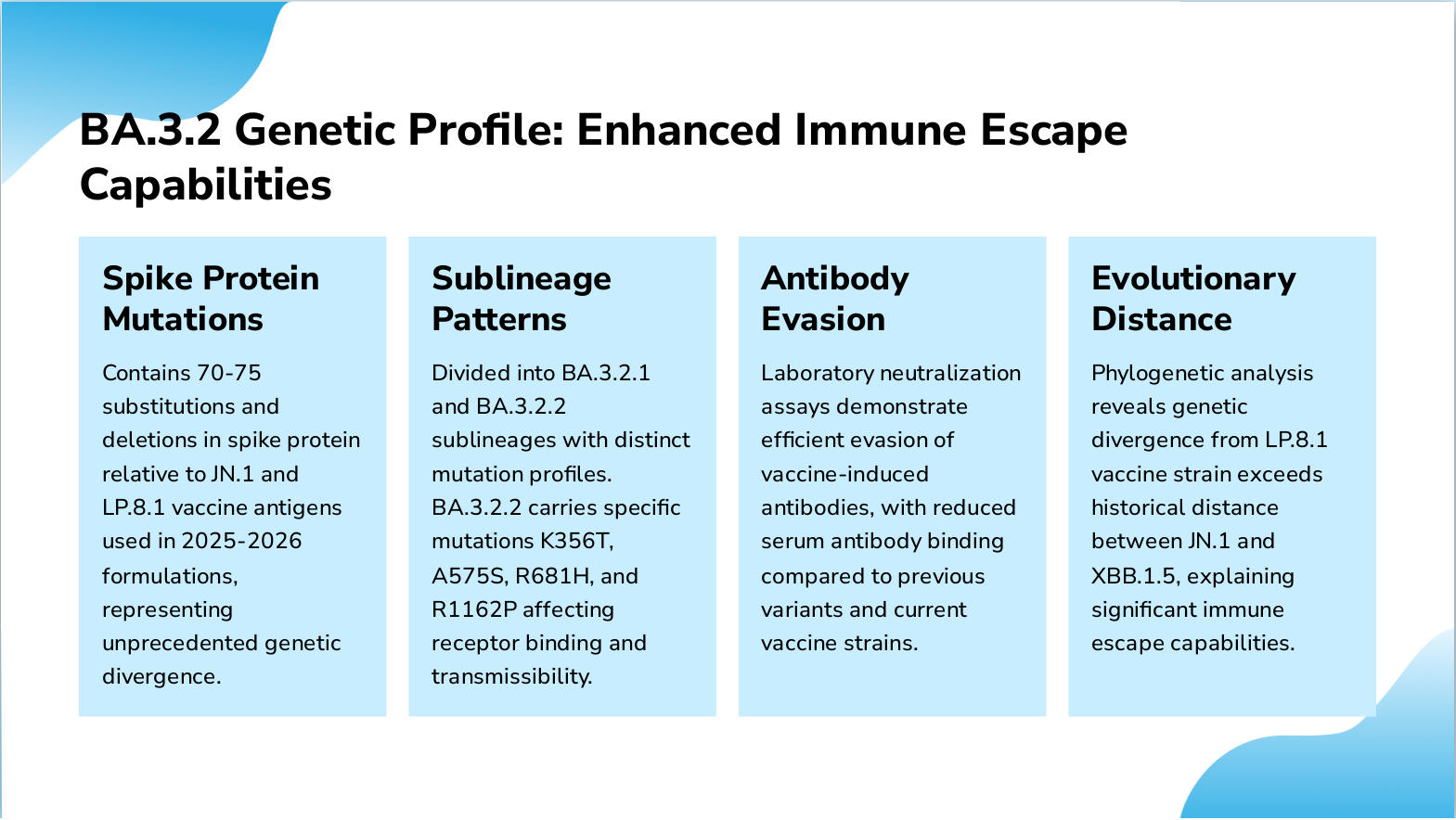
Slide 4: BA.3.2 Genetic Profile: Enhanced Immune Escape Capabilities
- Spike Protein Mutations: Contains 70-75 substitutions and deletions in spike protein relative to JN.1 and LP.8.1 vaccine antigens used in 2025-2026 formulations, representing unprecedented genetic divergence.
- Sublineage Patterns: Divided into BA.3.2.1 and BA.3.2.2 sublineages with distinct mutation profiles. BA.3.2.2 carries specific mutations K356T, A575S, R681H, and R1162P affecting receptor binding and transmissibility.
- Antibody Evasion: Laboratory neutralization assays demonstrate efficient evasion of vaccine-induced antibodies, with reduced serum antibody binding compared to previous variants and current vaccine strains.
- Evolutionary Distance: Phylogenetic analysis reveals genetic divergence from LP.8.1 vaccine strain exceeds historical distance between JN.1 and XBB.1.5, explaining significant immune escape capabilities.
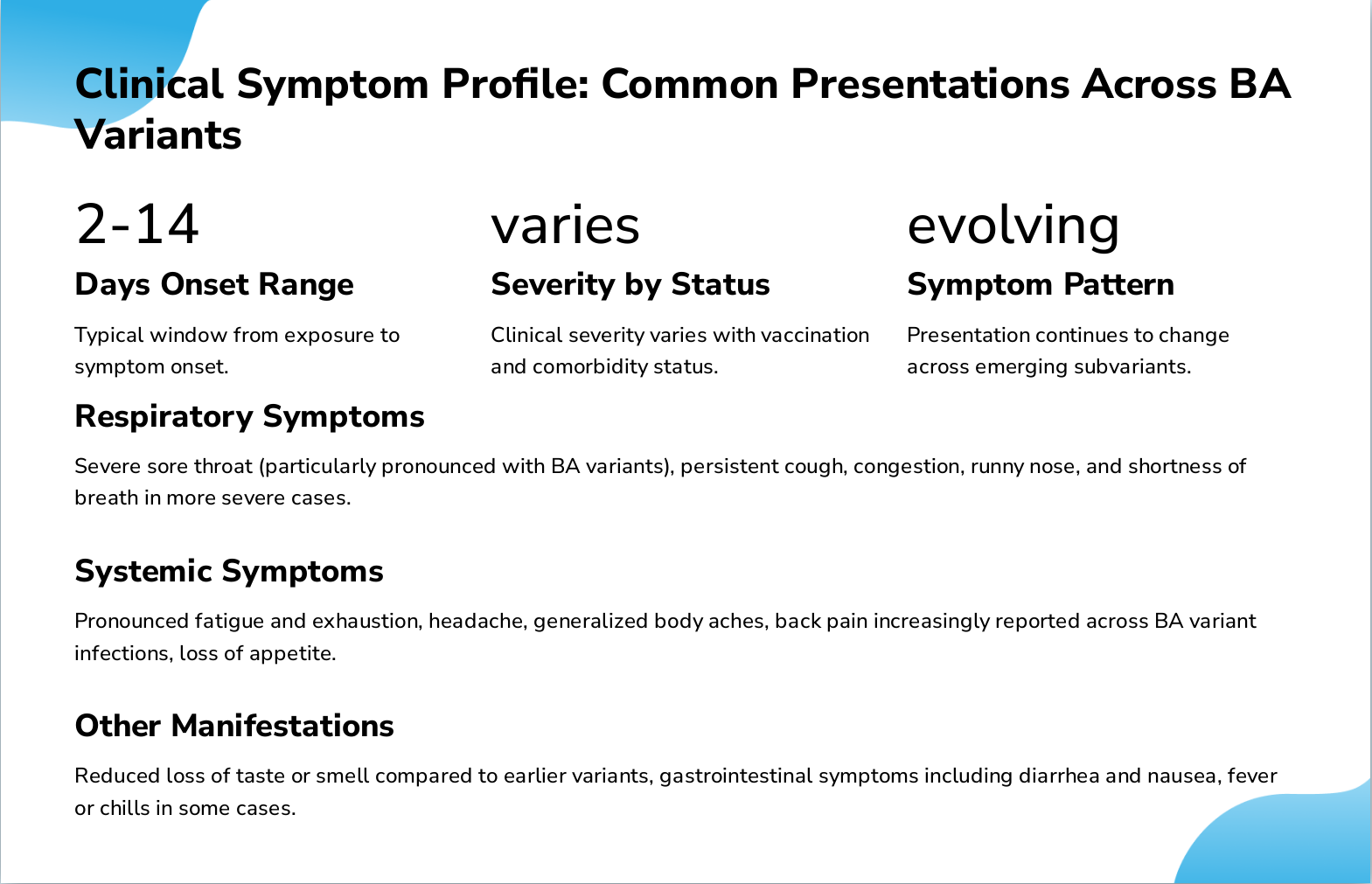
Slide 5: Clinical Symptom Profile: Common Presentations Across BA Variants
- 2-14 — Days Onset Range
- varies — Severity by Status
- evolving — Symptom Pattern
- Respiratory Symptoms: Severe sore throat (particularly pronounced with BA variants), persistent cough, congestion, runny nose, and shortness of breath in more severe cases.
- Systemic Symptoms: Pronounced fatigue and exhaustion, headache, generalized body aches, back pain increasingly reported across BA variant infections, loss of appetite.
- Other Manifestations: Reduced loss of taste or smell compared to earlier variants, gastrointestinal symptoms including diarrhea and nausea, fever or chills in some cases.
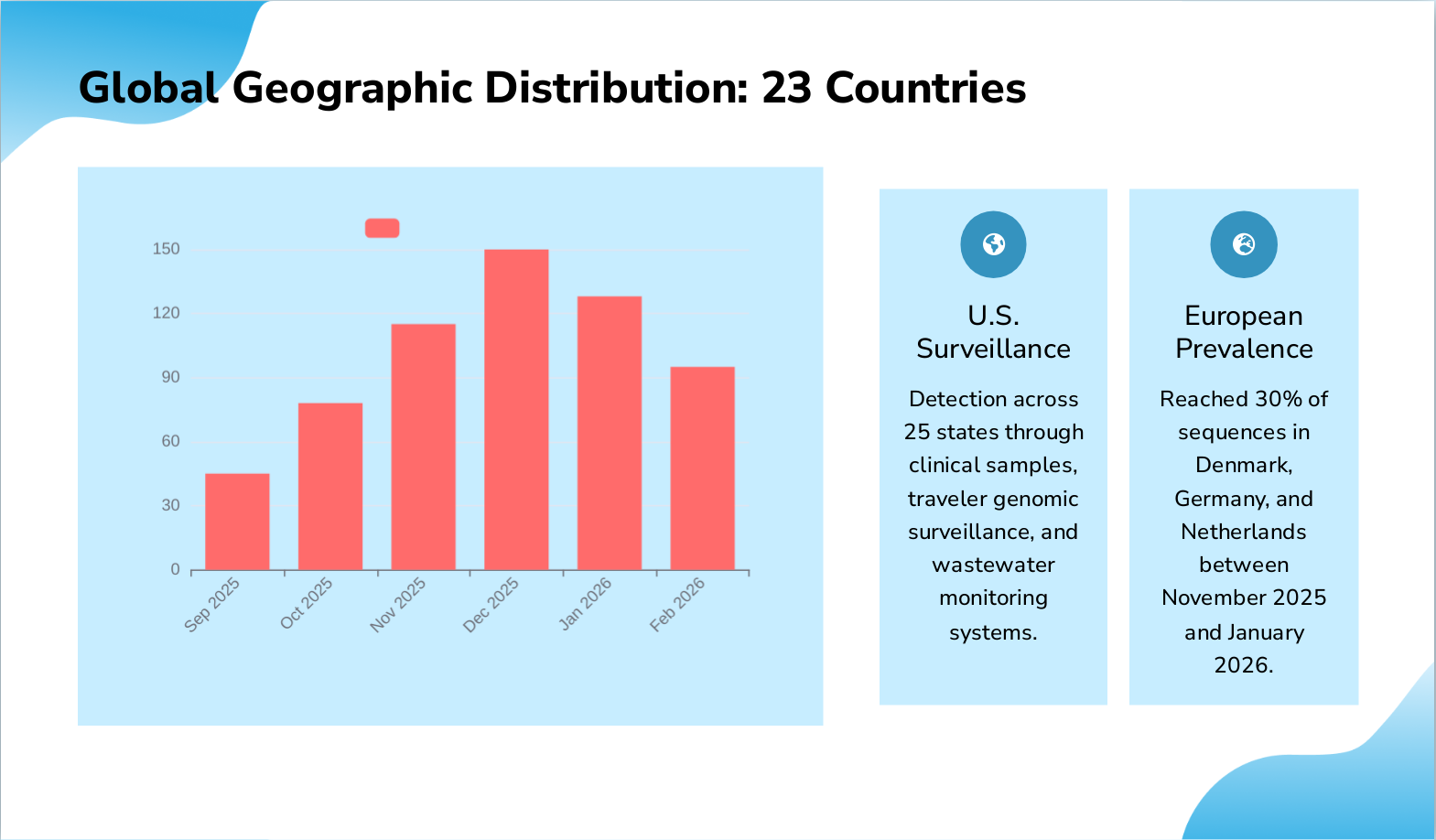
Slide 6: Global Geographic Distribution: 23 Countries
- U.S. Surveillance: Detection across 25 states through clinical samples, traveler genomic surveillance, and wastewater monitoring systems.
- European Prevalence: Reached 30% of sequences in Denmark, Germany, and Netherlands between November 2025 and January 2026.
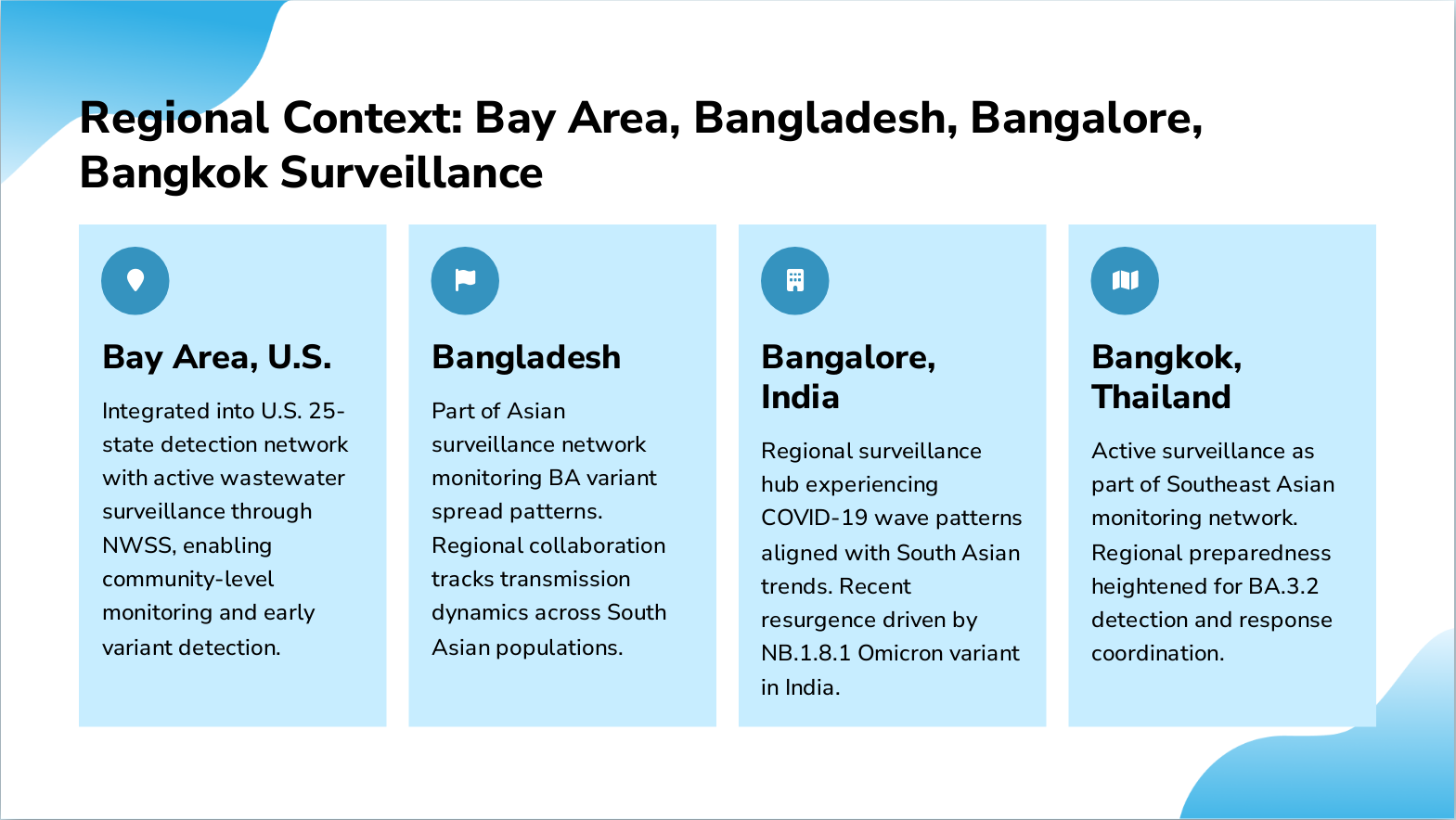
Slide 7: Regional Context: Bay Area, Bangladesh, Bangalore, Bangkok Surveillance
- Bay Area, U.S.: Integrated into U.S. 25-state detection network with active wastewater surveillance through NWSS, enabling community-level monitoring and early variant detection.
- Bangladesh: Part of Asian surveillance network monitoring BA variant spread patterns. Regional collaboration tracks transmission dynamics across South Asian populations.
- Bangalore, India: Regional surveillance hub experiencing COVID-19 wave patterns aligned with South Asian trends. Recent resurgence driven by NB.1.8.1 Omicron variant in India.
- Bangkok, Thailand: Active surveillance as part of Southeast Asian monitoring network. Regional preparedness heightened for BA.3.2 detection and response coordination.
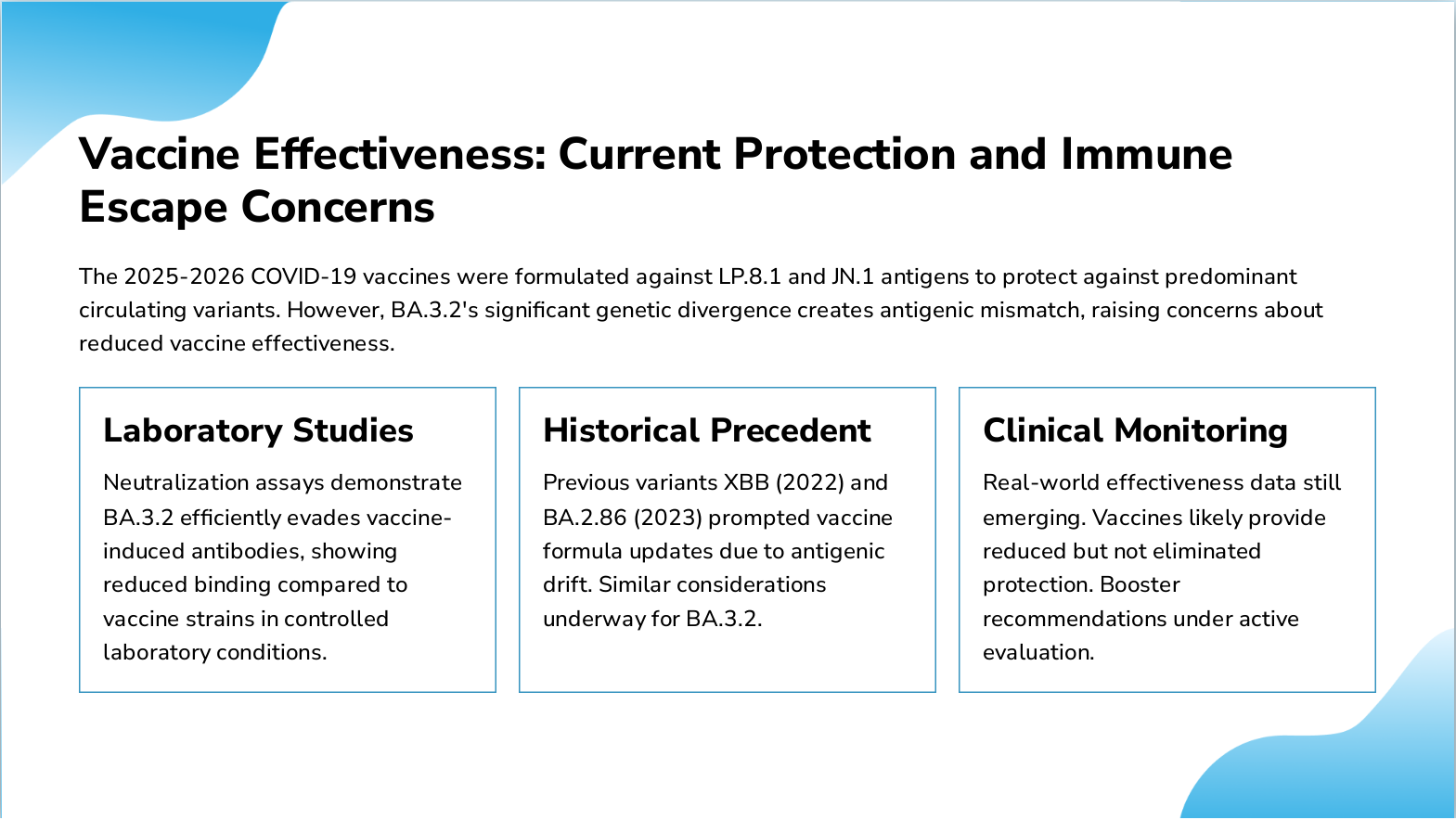
Slide 8: Vaccine Effectiveness: Current Protection and Immune Escape Concerns
- Laboratory Studies: Neutralization assays demonstrate BA.3.2 efficiently evades vaccine-induced antibodies, showing reduced binding compared to vaccine strains in controlled laboratory conditions.
- Historical Precedent: Previous variants XBB (2022) and BA.2.86 (2023) prompted vaccine formula updates due to antigenic drift. Similar considerations underway for BA.3.2.
- Clinical Monitoring: Real-world effectiveness data still emerging. Vaccines likely provide reduced but not eliminated protection. Booster recommendations under active evaluation.
The 2025-2026 COVID-19 vaccines were formulated against LP.8.1 and JN.1 antigens to protect against predominant circulating variants. However, BA.3.2's significant genetic divergence creates antigenic mismatch, raising concerns about reduced vaccine effectiveness.
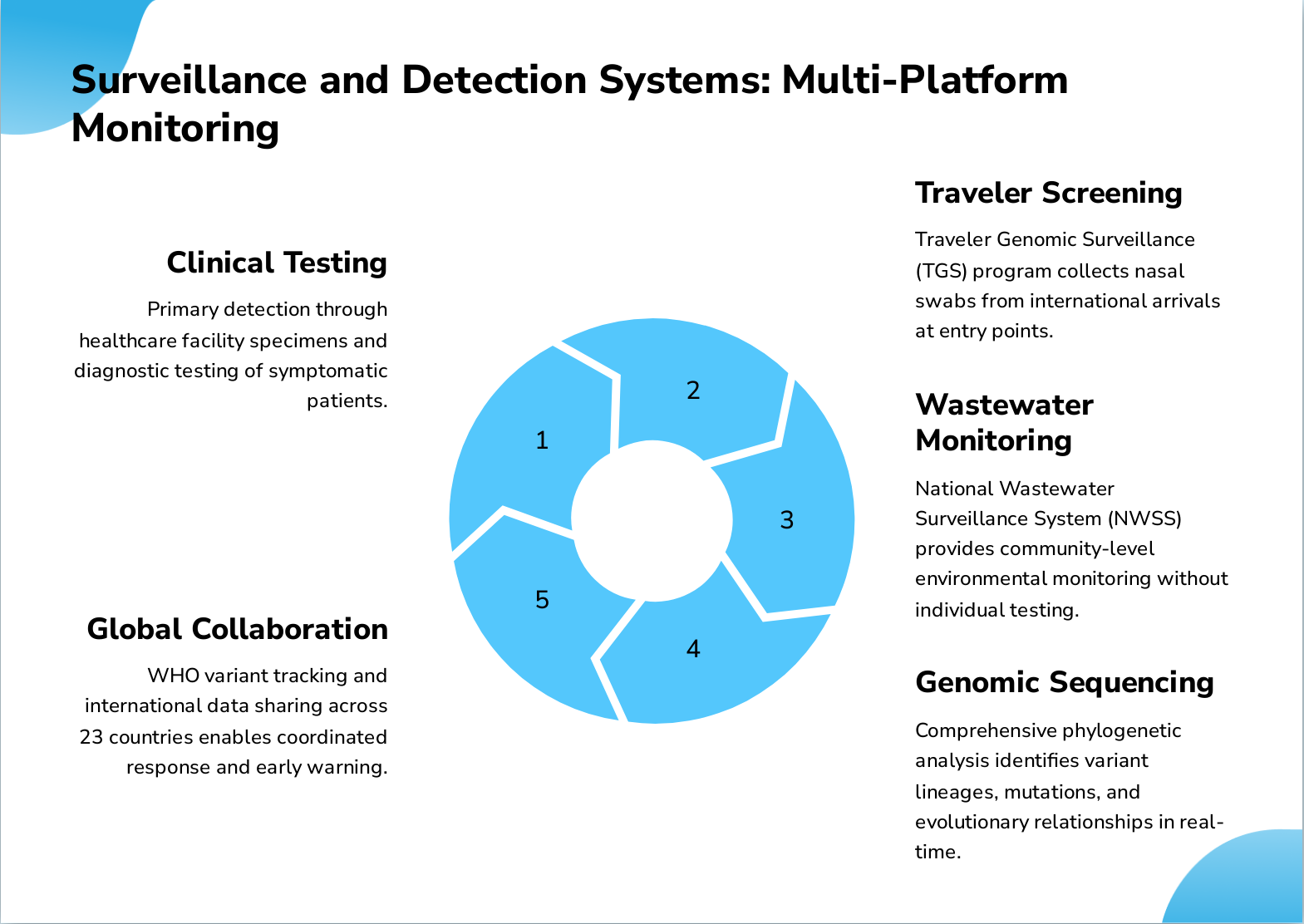
Slide 9: Surveillance and Detection Systems: Multi-Platform Monitoring
- Clinical Testing: Primary detection through healthcare facility specimens and diagnostic testing of symptomatic patients.
- Traveler Screening: Traveler Genomic Surveillance (TGS) program collects nasal swabs from international arrivals at entry points.
- Wastewater Monitoring: National Wastewater Surveillance System (NWSS) provides community-level environmental monitoring without individual testing.
- Genomic Sequencing: Comprehensive phylogenetic analysis identifies variant lineages, mutations, and evolutionary relationships in real-time.
- Global Collaboration: WHO variant tracking and international data sharing across 23 countries enables coordinated response and early warning.
Slide 10: Thank You
Thank You Questions and Discussion Welcome