AI Product Roadmap Deck Template for Now-Next-Later Planning
Published on April 21, 2026
An AI product roadmap deck helps product teams turn strategy notes, backlog themes, customer feedback, and delivery confidence into a presentation stakeholders can understand. The goal is not to create a prettier backlog. The goal is to explain what is happening now, what is likely next, what remains later, and what decisions the team needs.
This page is a scenario and template guide for product managers, founders, product marketing teams, and operators who need a roadmap deck for leadership reviews, quarterly planning, sales enablement, customer advisory boards, or investor updates. For the broader deck creation workflow, connect this long-tail page to the AI for presentations core guide, then use PopAi AI Presentation when you are ready to generate and edit the deck.
AI Product Roadmap Deck: Target Users and Use Cases
Different audiences need different roadmap details. Before generating slides, decide who will use the deck and what decision it should support.
Product manager for quarterly leadership review
Use the deck to explain priority tradeoffs, why certain features moved, what is committed this quarter, and what remains exploratory. The output should be concise, evidence-based, and tied to business outcomes.
Founder preparing an investor or board update
Use the deck to show how product direction supports market learning, retention, revenue, or adoption. Avoid feature overload; focus on strategic bets and what progress proves.
Customer-facing team aligning sales and success
Use a sanitized version that explains themes and direction without overcommitting to exact launch dates. This helps revenue teams answer roadmap questions with more confidence.
Recommended Roadmap Deck Structure
A strong roadmap presentation usually needs 8 to 10 slides. This structure works well for Now-Next-Later planning because it separates context, priorities, evidence, and decisions.
| Slide | Purpose | What to Include |
|---|---|---|
| 1. Title and audience | Set scope | Product area, roadmap period, audience, owner, and meeting goal. |
| 2. Product context | Explain why now | Customer problem, market change, business goal, or usage signal. |
| 3. Strategic themes | Group the work | 3 to 4 themes such as onboarding, retention, enterprise readiness, or AI workflow. |
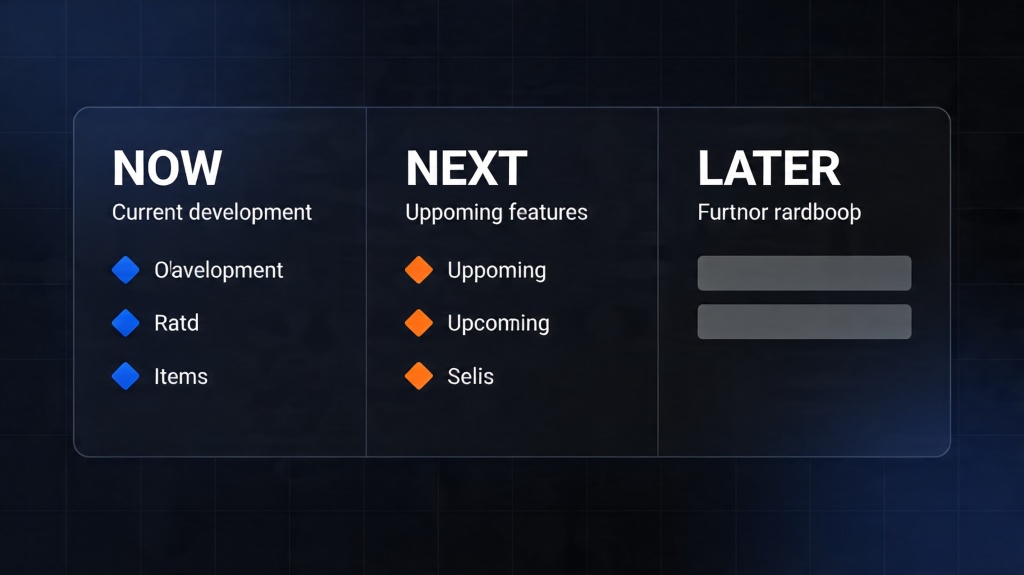
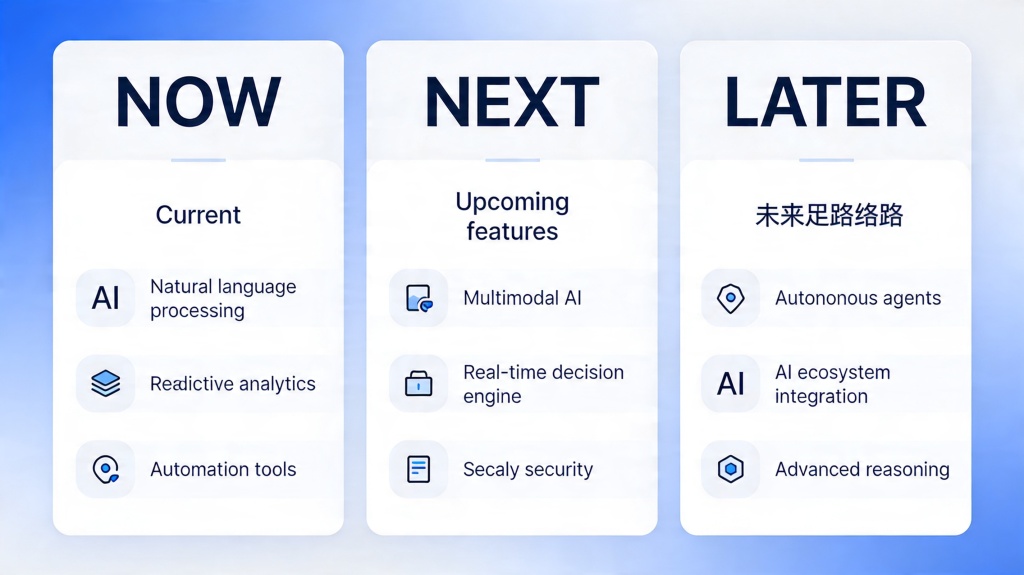
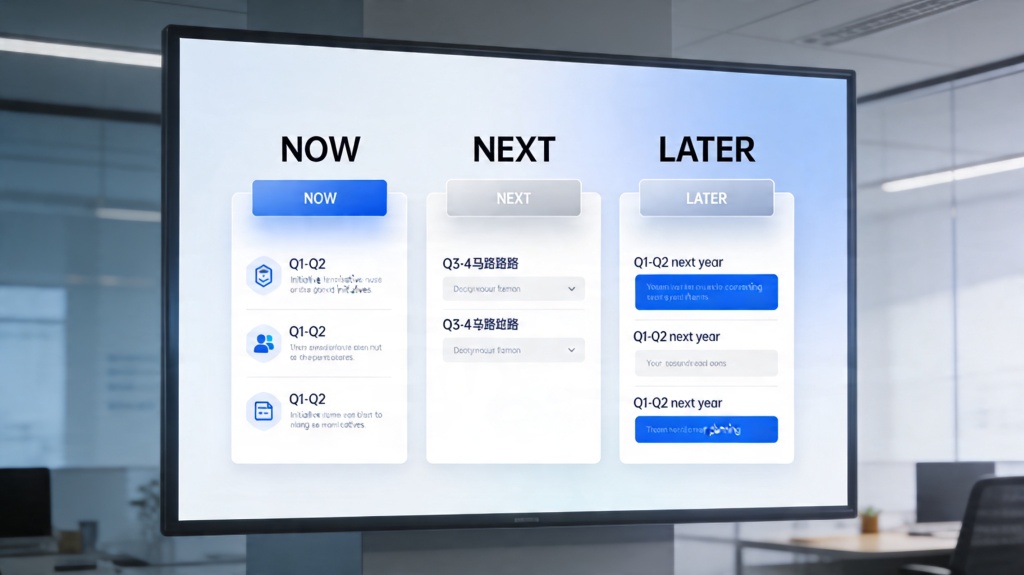
| 4. Now-Next-Later roadmap | Show priorities | Committed work, validated next bets, and longer-term discovery items. |
| 5. Now details | Clarify commitments | Owner, status, dependencies, KPI, and expected release window. |
| 6. Next details | Show confidence | Validated evidence, open questions, risks, and decision criteria. |
| 7. Later bets | Frame vision | Big opportunities, research areas, and assumptions to test. |
| 8. Tradeoffs | Manage expectations | What is not included, delayed items, resource constraints, and why. |
| 9. Decisions needed | Drive action | Approvals, prioritization choices, staffing, budget, or stakeholder feedback. |
What Each Roadmap Slide Should Say
AI can draft the slides quickly, but the quality depends on the inputs you provide. Use these slide instructions to avoid generic roadmap language.
- Title slide: name the product area and audience, such as "Q3 Checkout Roadmap for Revenue Leadership."
- Context slide: explain the customer problem or business outcome behind the roadmap.
- Themes slide: group features into memorable strategy buckets instead of listing tickets.
- Now slide: include only committed work and the metric each item should move.
- Next slide: show validated opportunities and the evidence that supports them.
- Later slide: frame future bets as exploration, not promises.
- Tradeoff slide: state what the team is not doing so stakeholders understand focus.
- Decision slide: end with the specific choice, feedback, or approval needed.
Review rule: If a roadmap item has no audience benefit, evidence, owner, or success metric, it probably needs more product thinking before it belongs in the deck.
AI Generation Prompt for a Roadmap Deck
Copy this prompt and replace the bracketed fields with your product information. It is designed to produce a deck outline first, then slide copy.
Create a 9-slide product roadmap presentation for [audience]. Product area: [product/module]. Business goal: [goal]. Customer problems: [pain points]. Roadmap horizon: [quarter/half/year]. Themes: [3-4 themes]. Now items: [committed work + KPI]. Next items: [validated opportunities + evidence]. Later items: [future bets + assumptions]. Include a Now-Next-Later roadmap slide, a tradeoff slide, and a decision-needed slide. Keep slide titles specific, write concise bullets, and separate commitments from exploration.
After the first draft, ask AI to convert technical feature names into stakeholder language. For example, "refactor permissions service" can become "reduce admin setup friction for enterprise accounts."
Example Roadmap Copy and Cases
Example 1: SaaS onboarding roadmap
Now: Guided setup checklist, activation email improvements, workspace import fixes. Next: Role-based onboarding paths and usage-triggered tips. Later: AI setup assistant for complex enterprise accounts. The decision slide asks leadership whether activation rate or enterprise readiness is the higher Q3 priority.
Example 2: AI feature roadmap for customer support
Now: Agent reply suggestions and quality review dashboard. Next: Help center auto-drafting from ticket clusters. Later: Multi-language support automation. The tradeoff slide explains that analytics exports are delayed because model quality and review workflows are more urgent.
Frequently Asked Questions
What should an AI product roadmap deck include?
It should include product context, strategic themes, a Now-Next-Later roadmap, slide-level priorities, tradeoffs, risks, success metrics, and the decisions needed from stakeholders.
Should roadmap decks include exact launch dates?
Use exact dates only for committed near-term work. For future work, Now-Next-Later horizons usually communicate confidence more honestly and reduce the risk of false promises.
Can AI prioritize product roadmap items?
AI can organize inputs, compare items against goals, and suggest prioritization frameworks, but the product team should validate customer evidence, dependencies, resourcing, and business impact.
Create your roadmap presentation faster
Use PopAi to turn product notes, backlog themes, and roadmap priorities into an editable presentation draft.
Get Started for Free