AI Product Launch Deck: messaging + demo structure
Published on April 23, 2026
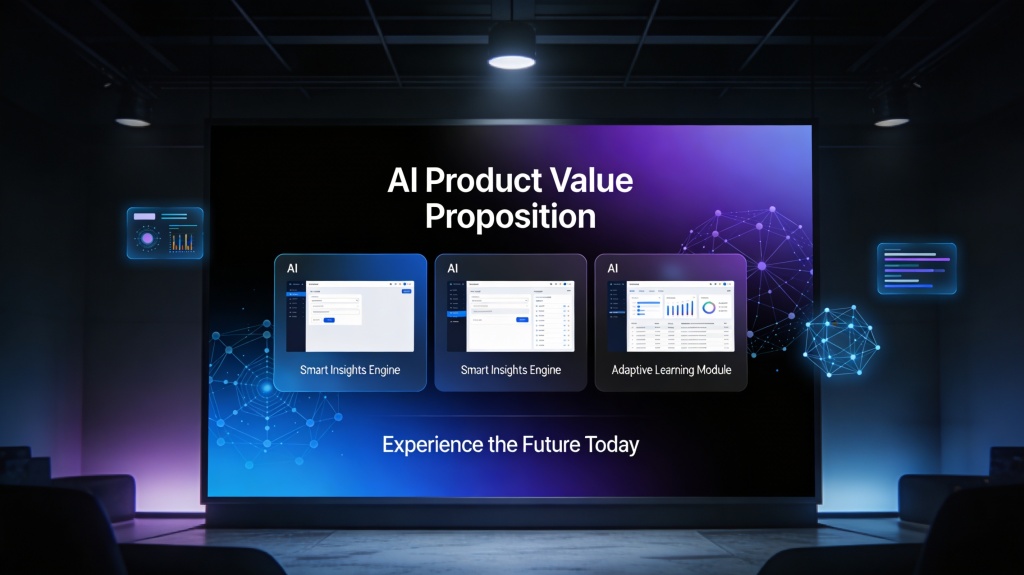
Launching an AI-driven product in today's crowded market requires more than just a list of features; it demands a compelling narrative that bridges the gap between complex technology and human value. For product managers and startup founders, the AI product launch deck is the most critical asset in their arsenal. It is the tool that transforms skepticism into adoption by answering the fundamental question: "How does this actually change my life?"
The primary challenge many face when building an AI product launch deck is the "black box" problem. AI can feel magical, but magic doesn't scale in a business context without trust. This guide will walk you through the essential messaging frameworks and demo structures needed to win over stakeholders and customers alike.
The Core Messaging Framework for AI Features
When presenting AI, it is tempting to focus on the "how"—the models, the training data, and the latency. However, high-impact messaging focuses on the "so what." Your AI product launch deck should follow a "Problem-Enablement-Outcome" structure.
- The Problem: Define the manual, repetitive, or impossible task your audience faces.
- The AI Enablement: Don't just say "we use AI." Explain the specific cognitive task the AI performs (e.g., "Our AI synthesizes 1,000 hours of video into 5 minutes of actionable insights").
- The Outcome: Quantify the value. Is it 10x faster? Does it reduce costs by 40%?
Pro Tip: Avoid using generic buzzwords like "revolutionary" or "game-changing." Instead, use specific verbs that describe the AI's action. To see how to visualize these outcomes, try the PopAi Presentation Maker for instant layout suggestions.
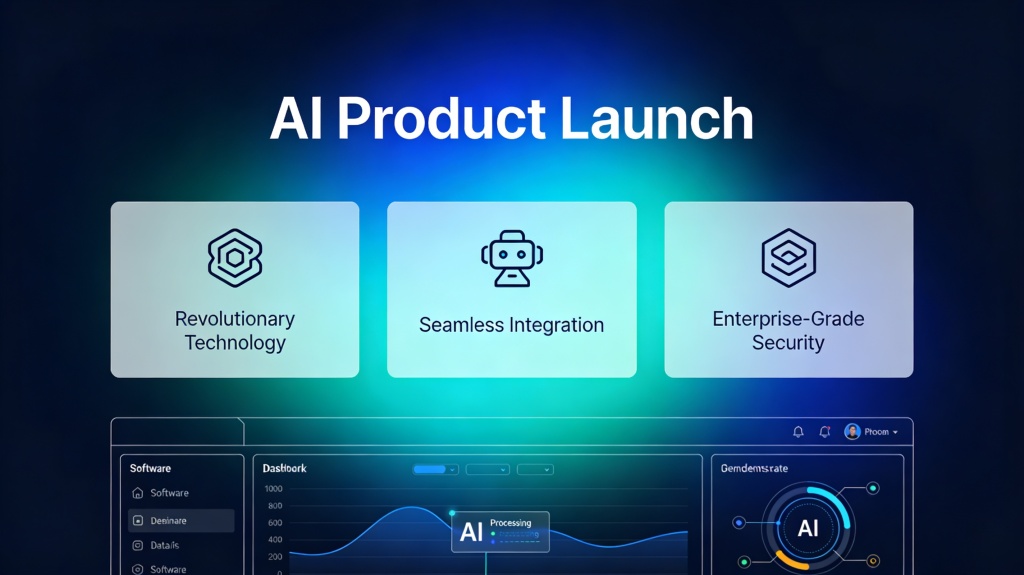
Structuring the Perfect Demo Within Your Deck
The demo is the heartbeat of your AI product launch deck. For AI products, a demo isn't just a walkthrough of the UI; it's a proof of intelligence. A common mistake is showing a "live" demo that takes too long to process. AI can be slow; your presentation shouldn't be.
Structure your demo in three phases:
- The Setup: Show the input. Make it relatable. Use a real-world messy dataset or a complex user query.
- The Process: Use a "peek under the hood" slide. Show a simplified visual of how the AI is thinking or processing. This builds transparency and trust.
- The Reveal: Show the output immediately. If your AI takes 30 seconds to run, use a pre-recorded "fast-forward" video or a high-fidelity GIF in your slides.
Visual Storytelling: Beyond Bullet Points
Data visualization is where most AI decks fail. Showing a generic neural network icon is a missed opportunity. Instead, use "Comparative Visuals." Show a "Before AI" vs. "After AI" side-by-side. Use heatmaps to show where the AI is focusing its attention, or confidence scores to show the machine's reliability.
Your slides should mirror the sleek, modern aesthetic associated with cutting-edge technology. High contrast, ample white space, and consistent iconography are non-negotiable for a professional AI product launch deck.
Common Pitfalls in AI Product Launches
Even the most advanced technology can fail if the presentation is flawed. Avoid these three common traps:
- Over-Promising: If your AI has a 5% error rate, acknowledge it and explain how the "human-in-the-loop" works. Transparency is a feature, not a bug.
- Technical Jargon Overload: Unless you are presenting to researchers, avoid discussing specific transformer architectures or loss functions. Focus on the user's workflow.
- Ignoring Data Privacy: In every AI product launch deck, there must be a slide dedicated to security and data handling. Your audience needs to know their data isn't being used to train your competitors' models.
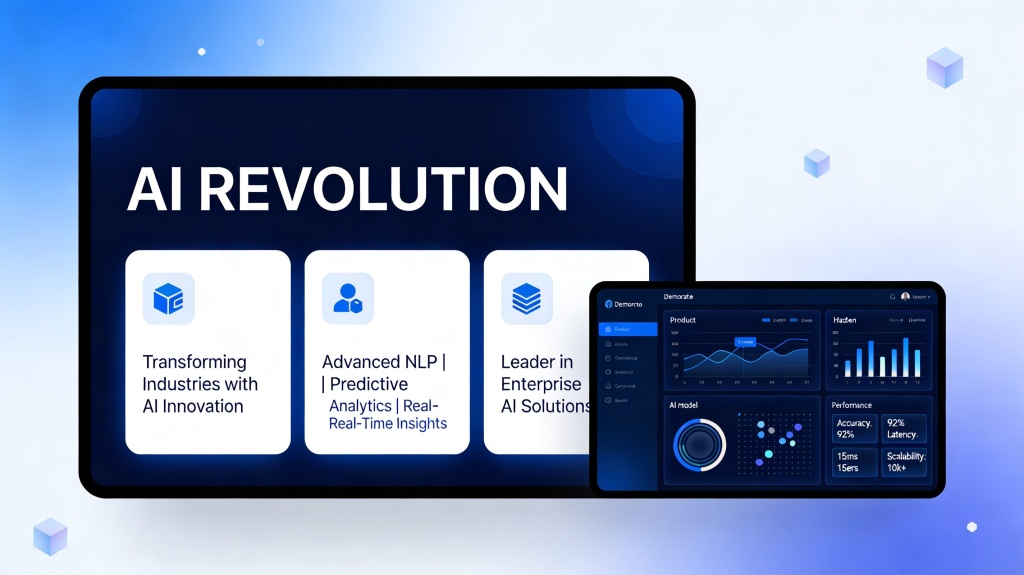
Using AI to Build Your AI Launch Deck
It is ironic to spend weeks manually designing a deck for an AI product. Leveraging generative AI for your presentation design allows you to iterate faster on your messaging. Tools like PopAi can help you generate structured outlines, suggest relevant imagery, and even draft the speaker notes for your demo reveal.
By automating the formatting and initial drafting, you can focus on the nuance of your value proposition and the precision of your demo script. This ensures your AI product launch deck is as innovative as the product itself.
Frequently Asked Questions
What is the most important slide in an AI product launch deck? +
The "Aha! Moment" slide—usually the demo or the immediate visual proof of the AI solving a complex problem—is the most critical for building credibility.
How long should an AI product launch presentation be? +
Aim for 15-20 minutes of presentation with 10-12 high-impact slides, leaving ample time for Q&A and a deep-dive demo if requested.
Should I include technical architecture in the launch deck? +
Keep it high-level. Only include architecture if your target audience is highly technical (CTOs/Engineers). Focus on outcomes rather than algorithms for most business audiences.
Create your presentation with one click now
Stop struggling with slide layouts. Use PopAi's intelligent presentation maker to build your next AI product launch deck in seconds.
Start Creating for Free