Presentation Summary
An in-depth analysis of the international friendly match between Germany and Ghana, focusing on team profiles, tactical predictions, player analysis, and the match's implications for the 2026 World Cup.
Full Presentation Transcript
Slide 1: Germany vs Ghana International Friendly
Stuttgart, March 30, 2026
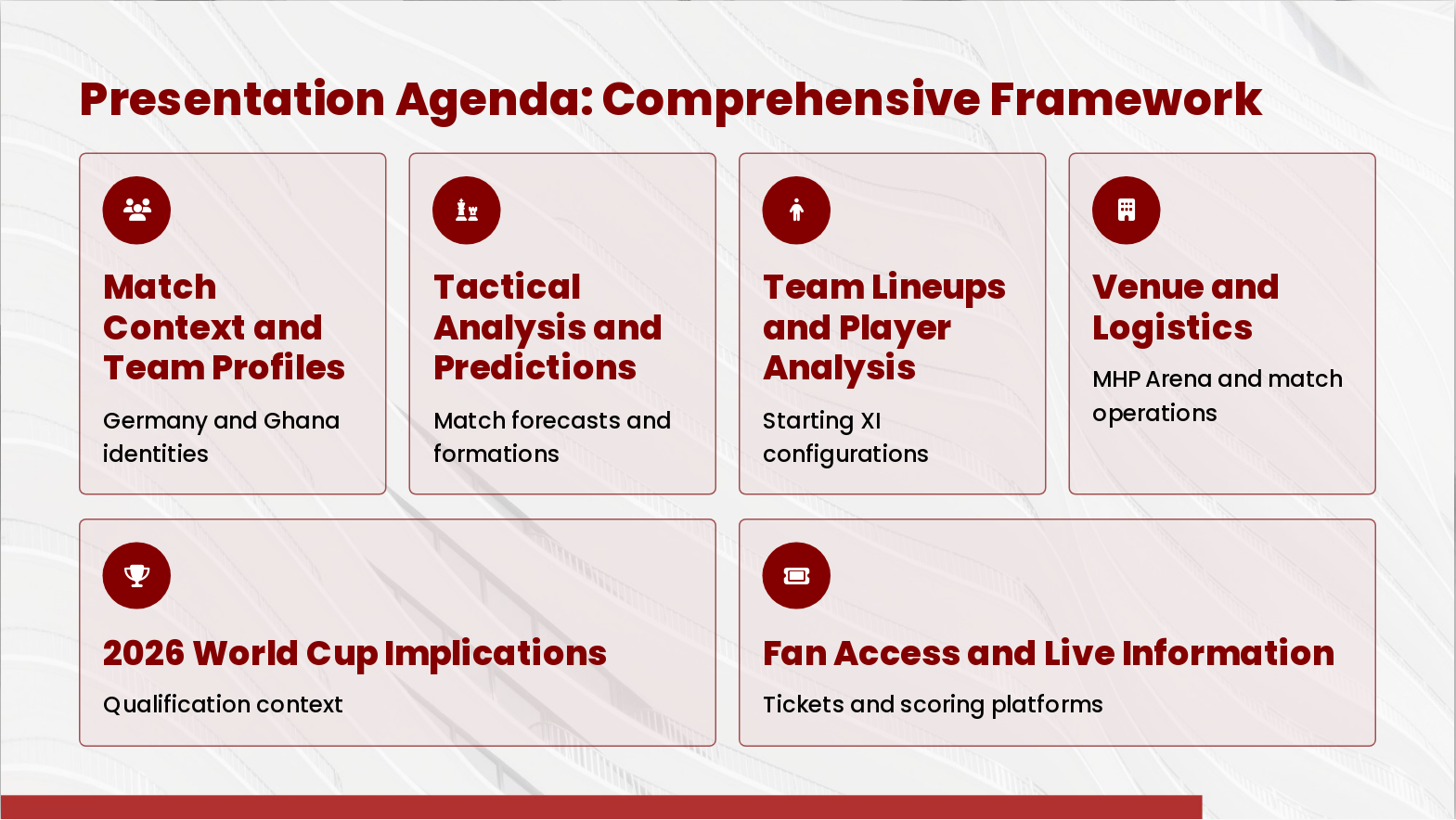
Slide 2: Presentation Agenda: Comprehensive Framework
- Match Context and Team Profiles: Germany and Ghana identities
- Tactical Analysis and Predictions: Match forecasts and formations
- Team Lineups and Player Analysis: Starting XI configurations
- Venue and Logistics: MHP Arena and match operations
- 2026 World Cup Implications: Qualification context
- Fan Access and Live Information: Tickets and scoring platforms
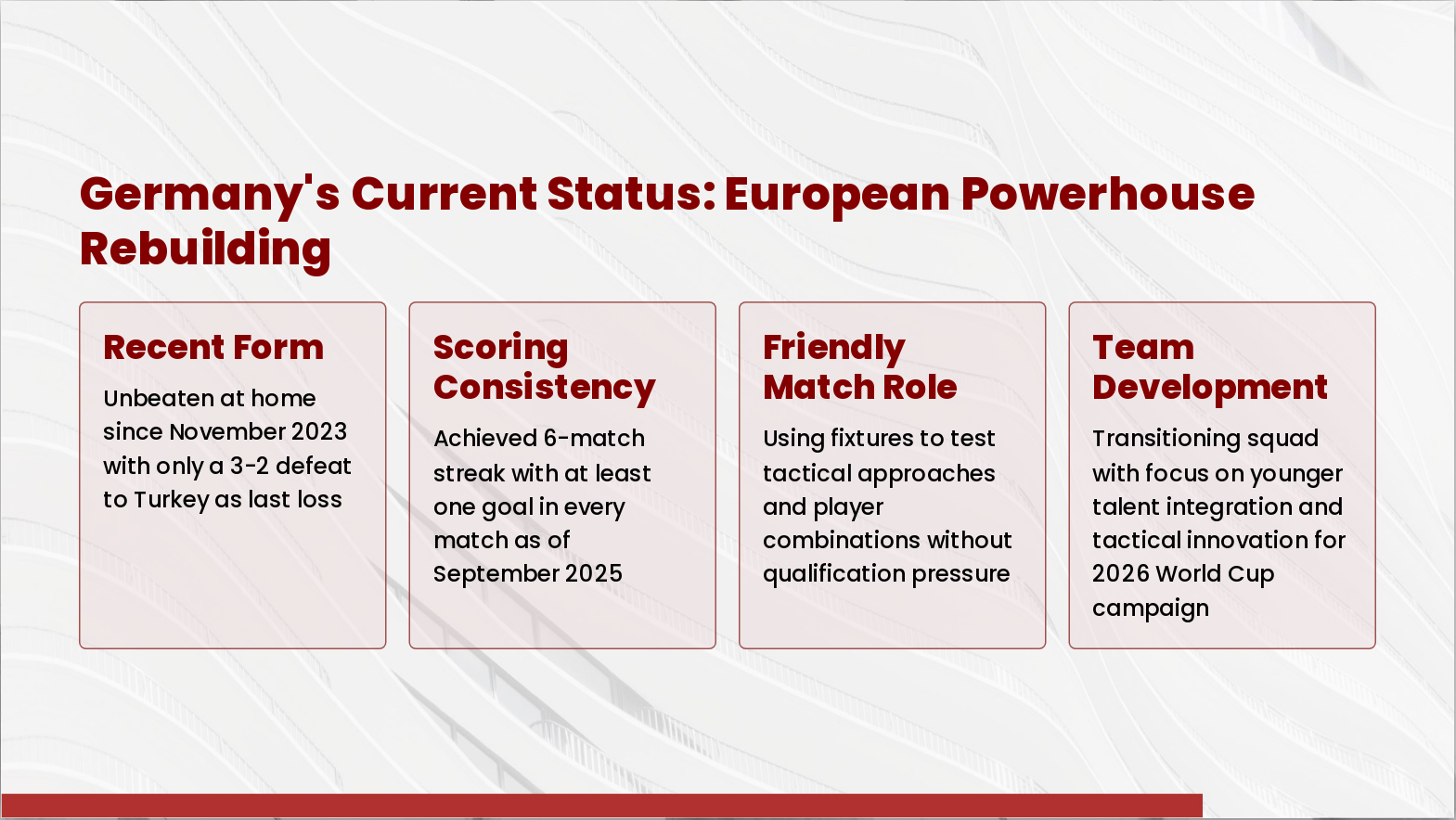
Slide 3: Germany's Current Status: European Powerhouse Rebuilding
- Recent Form: Unbeaten at home since November 2023 with only a 3-2 defeat to Turkey as last loss
- Scoring Consistency: Achieved 6-match streak with at least one goal in every match as of September 2025
- Friendly Match Role: Using fixtures to test tactical approaches and player combinations without qualification pressure
- Team Development: Transitioning squad with focus on younger talent integration and tactical innovation for 2026 World Cup campaign
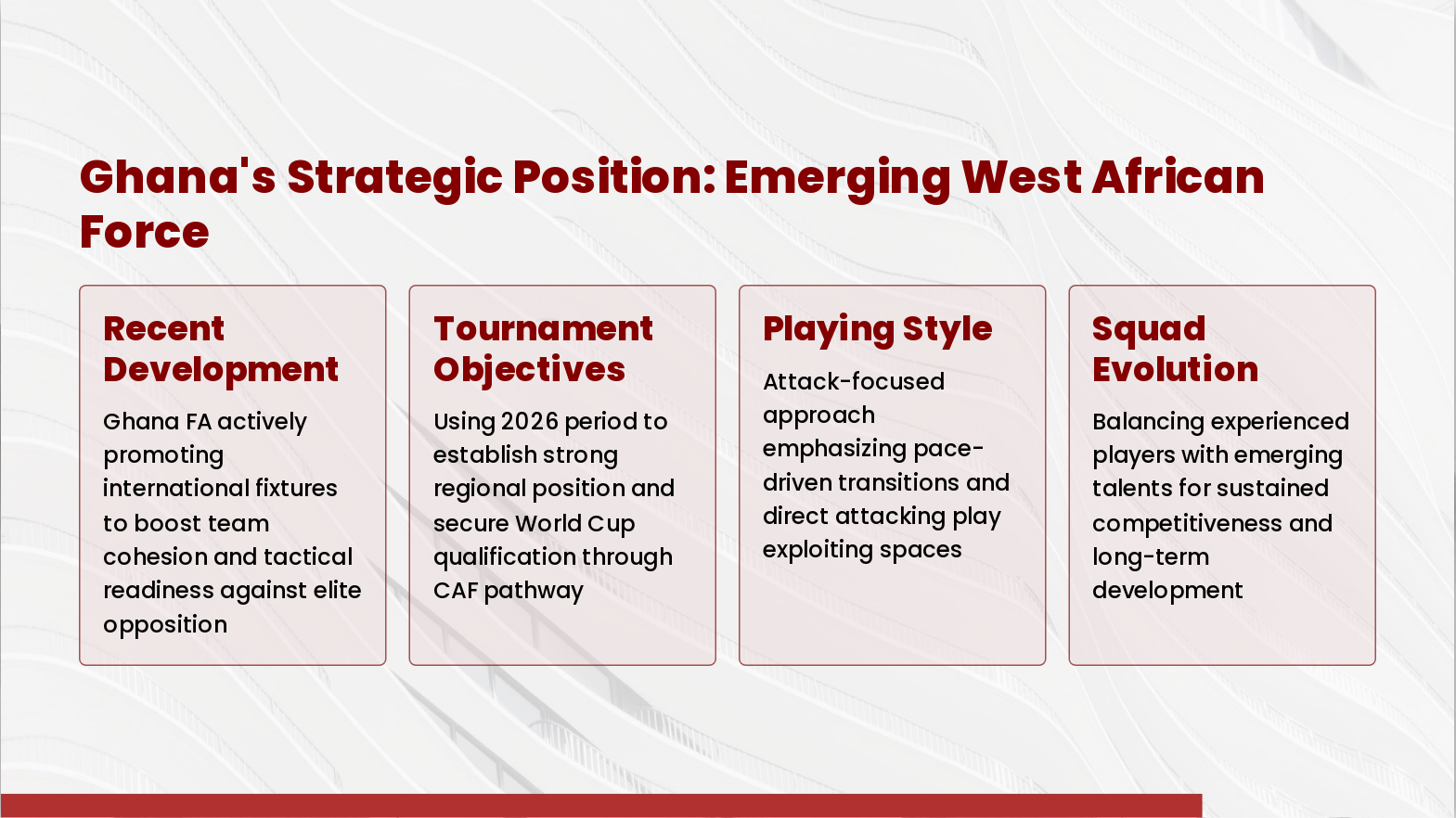
Slide 4: Ghana's Strategic Position: Emerging West African Force
- Recent Development: Ghana FA actively promoting international fixtures to boost team cohesion and tactical readiness against elite opposition
- Tournament Objectives: Using 2026 period to establish strong regional position and secure World Cup qualification through CAF pathway
- Playing Style: Attack-focused approach emphasizing pace-driven transitions and direct attacking play exploiting spaces
- Squad Evolution: Balancing experienced players with emerging talents for sustained competitiveness and long-term development
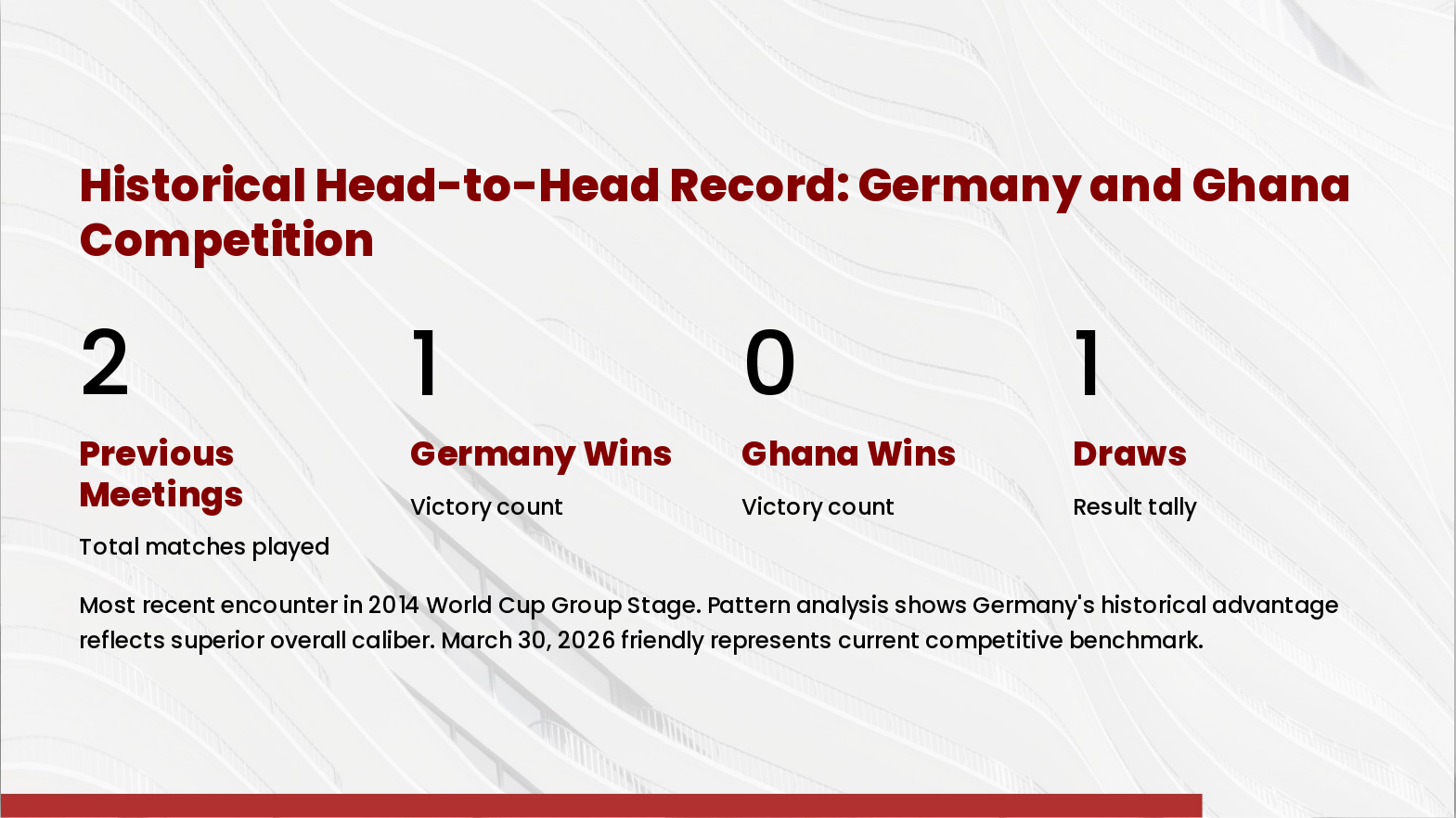
Slide 5: Historical Head-to-Head Record: Germany and Ghana Competition
- 2 — Previous Meetings
- 1 — Germany Wins
- 0 — Ghana Wins
- 1 — Draws
Most recent encounter in 2014 World Cup Group Stage. Pattern analysis shows Germany's historical advantage reflects superior overall caliber. March 30, 2026 friendly represents current competitive benchmark.
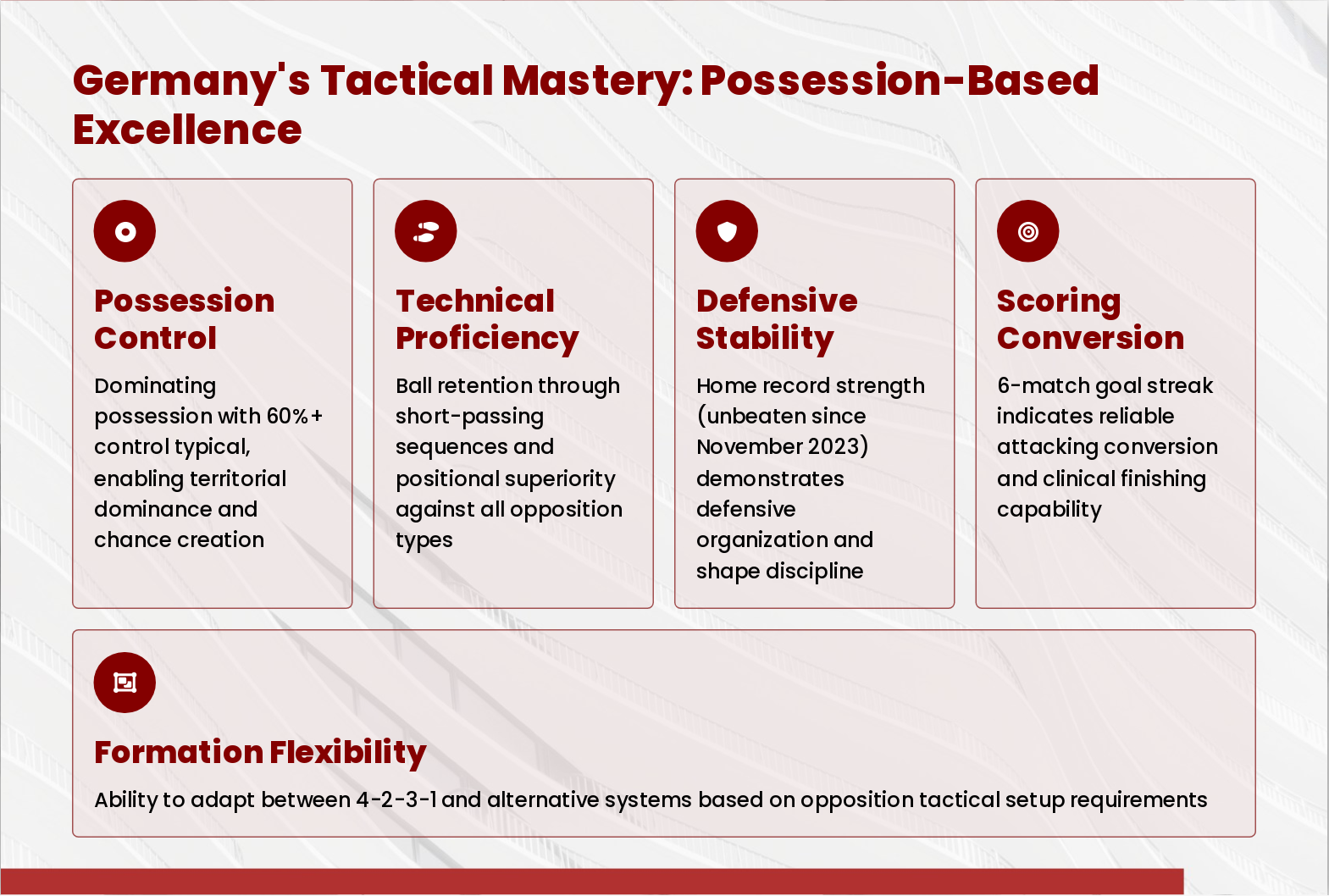
Slide 6: Germany's Tactical Mastery: Possession-Based Excellence
- Possession Control: Dominating possession with 60%+ control typical, enabling territorial dominance and chance creation
- Technical Proficiency: Ball retention through short-passing sequences and positional superiority against all opposition types
- Defensive Stability: Home record strength (unbeaten since November 2023) demonstrates defensive organization and shape discipline
- Scoring Conversion: 6-match goal streak indicates reliable attacking conversion and clinical finishing capability
- Formation Flexibility: Ability to adapt between 4-2-3-1 and alternative systems based on opposition tactical setup requirements
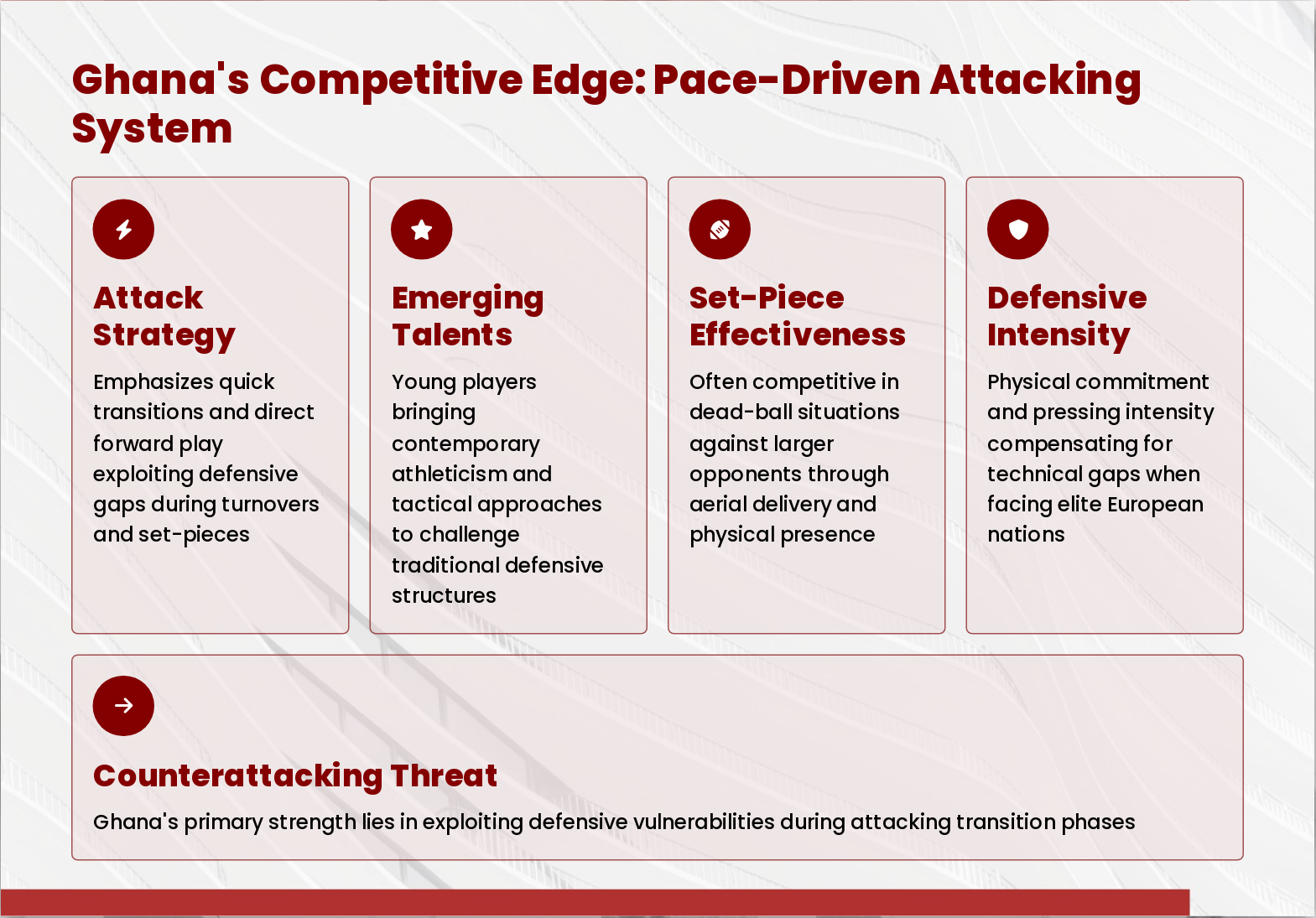
Slide 7: Ghana's Competitive Edge: Pace-Driven Attacking System
- Attack Strategy: Emphasizes quick transitions and direct forward play exploiting defensive gaps during turnovers and set-pieces
- Emerging Talents: Young players bringing contemporary athleticism and tactical approaches to challenge traditional defensive structures
- Set-Piece Effectiveness: Often competitive in dead-ball situations against larger opponents through aerial delivery and physical presence
- Defensive Intensity: Physical commitment and pressing intensity compensating for technical gaps when facing elite European nations
- Counterattacking Threat: Ghana's primary strength lies in exploiting defensive vulnerabilities during attacking transition phases
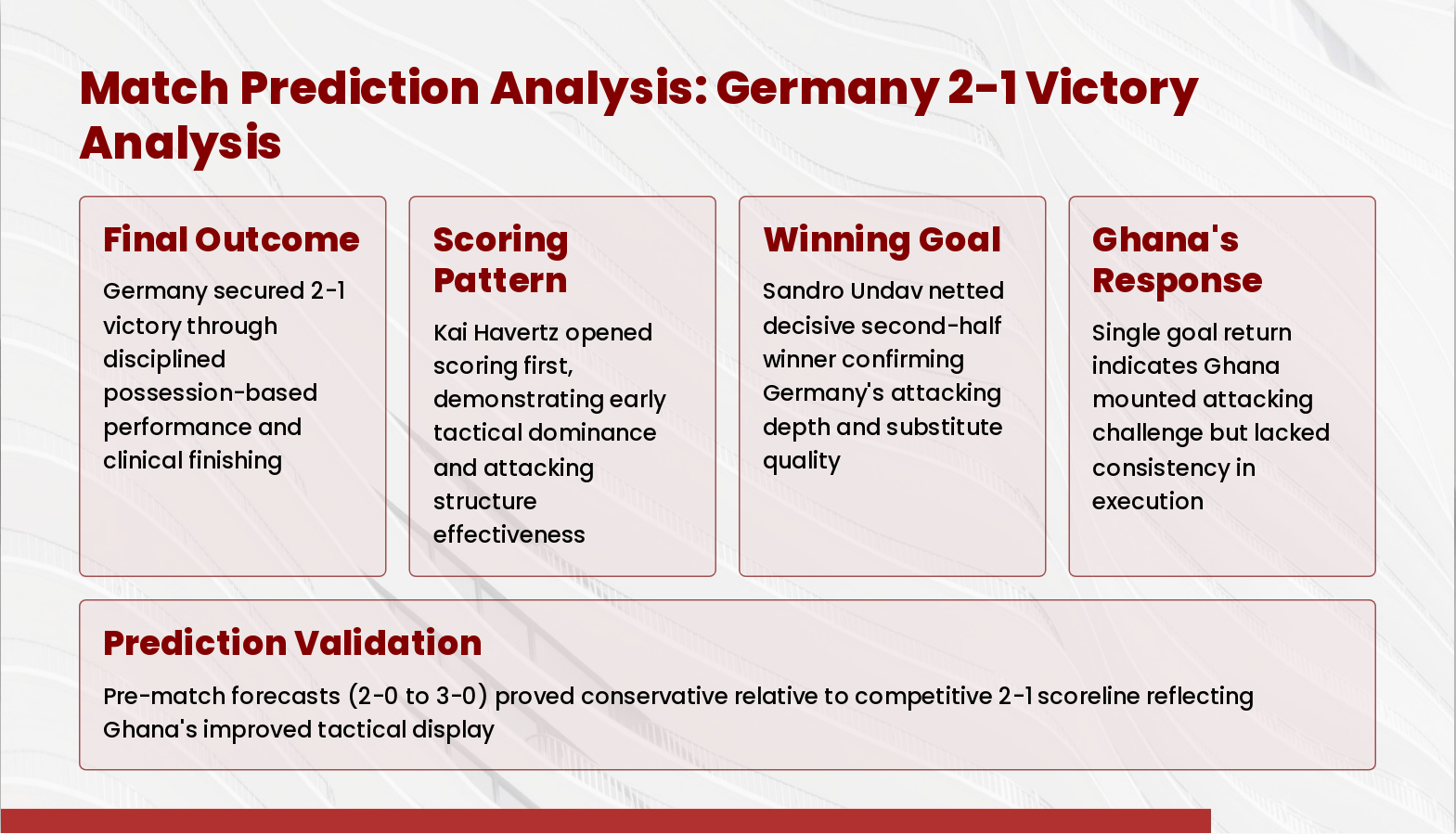
Slide 8: Match Prediction Analysis: Germany 2-1 Victory Analysis
- Final Outcome: Germany secured 2-1 victory through disciplined possession-based performance and clinical finishing
- Scoring Pattern: Kai Havertz opened scoring first, demonstrating early tactical dominance and attacking structure effectiveness
- Winning Goal: Sandro Undav netted decisive second-half winner confirming Germany's attacking depth and substitute quality
- Ghana's Response: Single goal return indicates Ghana mounted attacking challenge but lacked consistency in execution
- Prediction Validation: Pre-match forecasts (2-0 to 3-0) proved conservative relative to competitive 2-1 scoreline reflecting Ghana's improved tactical display
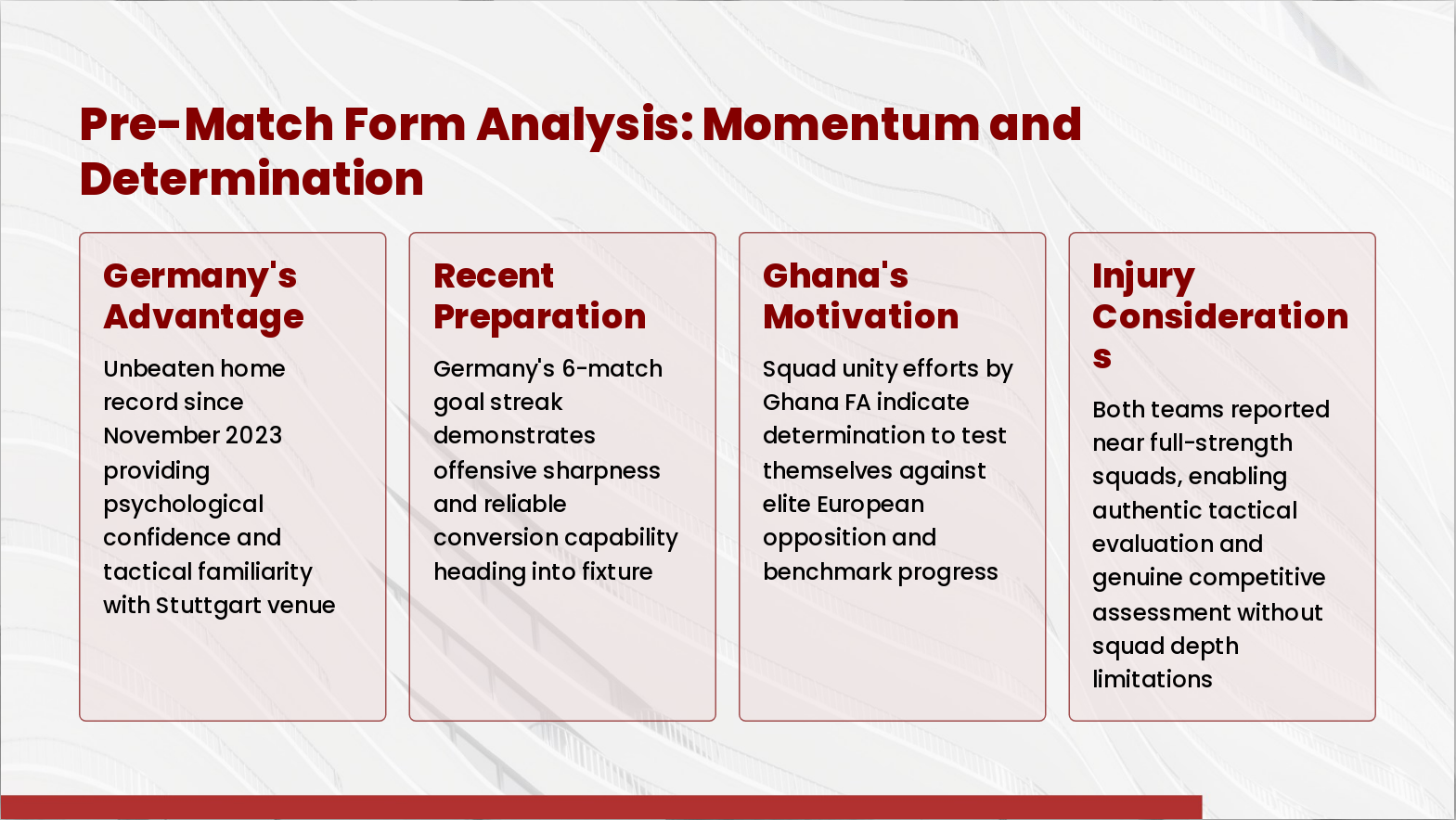
Slide 9: Pre-Match Form Analysis: Momentum and Determination
- Germany's Advantage: Unbeaten home record since November 2023 providing psychological confidence and tactical familiarity with Stuttgart venue
- Recent Preparation: Germany's 6-match goal streak demonstrates offensive sharpness and reliable conversion capability heading into fixture
- Ghana's Motivation: Squad unity efforts by Ghana FA indicate determination to test themselves against elite European opposition and benchmark progress
- Injury Considerations: Both teams reported near full-strength squads, enabling authentic tactical evaluation and genuine competitive assessment without squad depth limitations
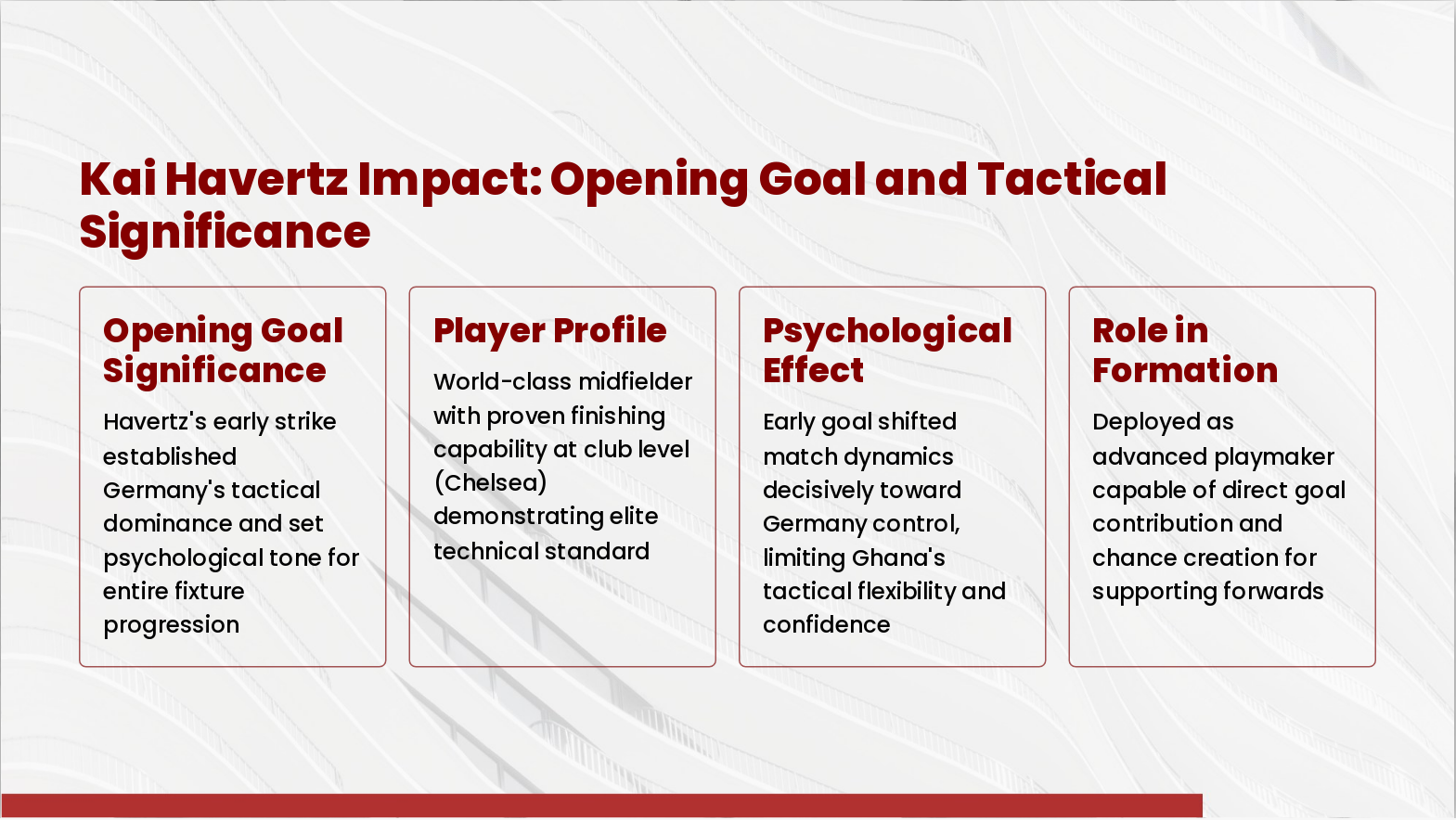
Slide 10: Kai Havertz Impact: Opening Goal and Tactical Significance
- Opening Goal Significance: Havertz's early strike established Germany's tactical dominance and set psychological tone for entire fixture progression
- Player Profile: World-class midfielder with proven finishing capability at club level (Chelsea) demonstrating elite technical standard
- Psychological Effect: Early goal shifted match dynamics decisively toward Germany control, limiting Ghana's tactical flexibility and confidence
- Role in Formation: Deployed as advanced playmaker capable of direct goal contribution and chance creation for supporting forwards
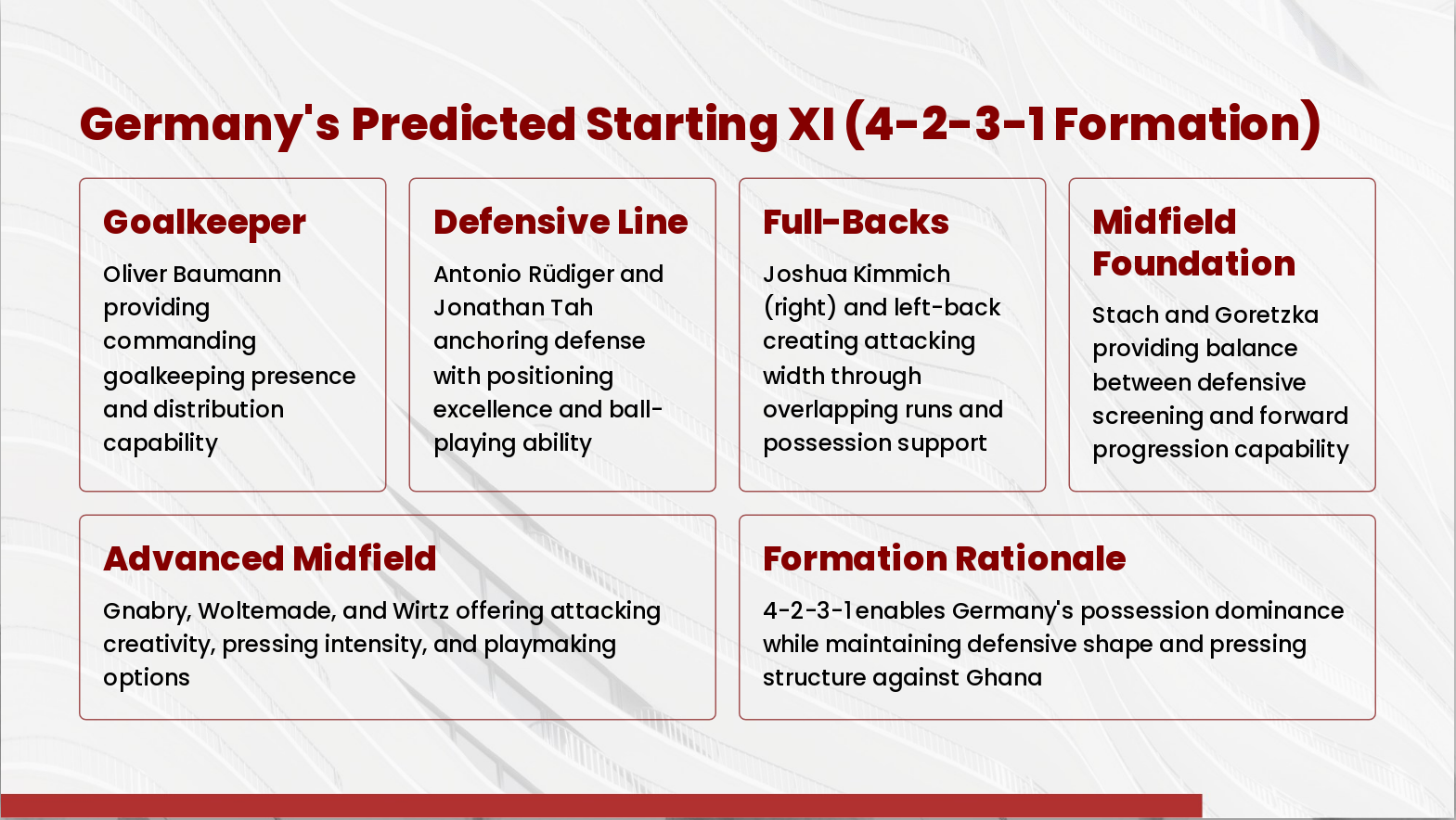
Slide 11: Germany's Predicted Starting XI (4-2-3-1 Formation)
- Goalkeeper: Oliver Baumann providing commanding goalkeeping presence and distribution capability
- Defensive Line: Antonio Rüdiger and Jonathan Tah anchoring defense with positioning excellence and ball-playing ability
- Full-Backs: Joshua Kimmich (right) and left-back creating attacking width through overlapping runs and possession support
- Midfield Foundation: Stach and Goretzka providing balance between defensive screening and forward progression capability
- Advanced Midfield: Gnabry, Woltemade, and Wirtz offering attacking creativity, pressing intensity, and playmaking options
- Formation Rationale: 4-2-3-1 enables Germany's possession dominance while maintaining defensive shape and pressing structure against Ghana
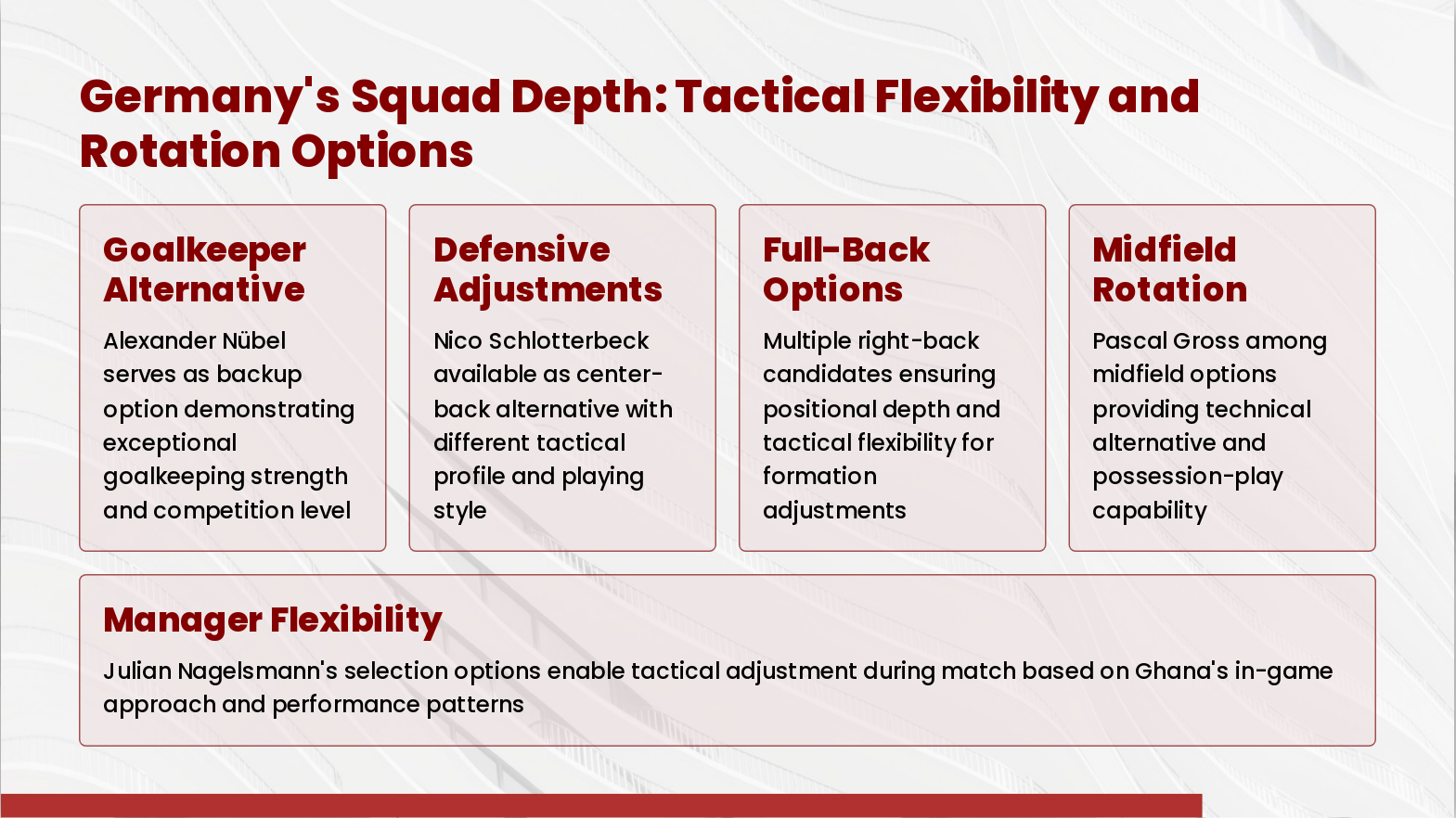
Slide 12: Germany's Squad Depth: Tactical Flexibility and Rotation Options
- Goalkeeper Alternative: Alexander Nübel serves as backup option demonstrating exceptional goalkeeping strength and competition level
- Defensive Adjustments: Nico Schlotterbeck available as center-back alternative with different tactical profile and playing style
- Full-Back Options: Multiple right-back candidates ensuring positional depth and tactical flexibility for formation adjustments
- Midfield Rotation: Pascal Gross among midfield options providing technical alternative and possession-play capability
- Manager Flexibility: Julian Nagelsmann's selection options enable tactical adjustment during match based on Ghana's in-game approach and performance patterns
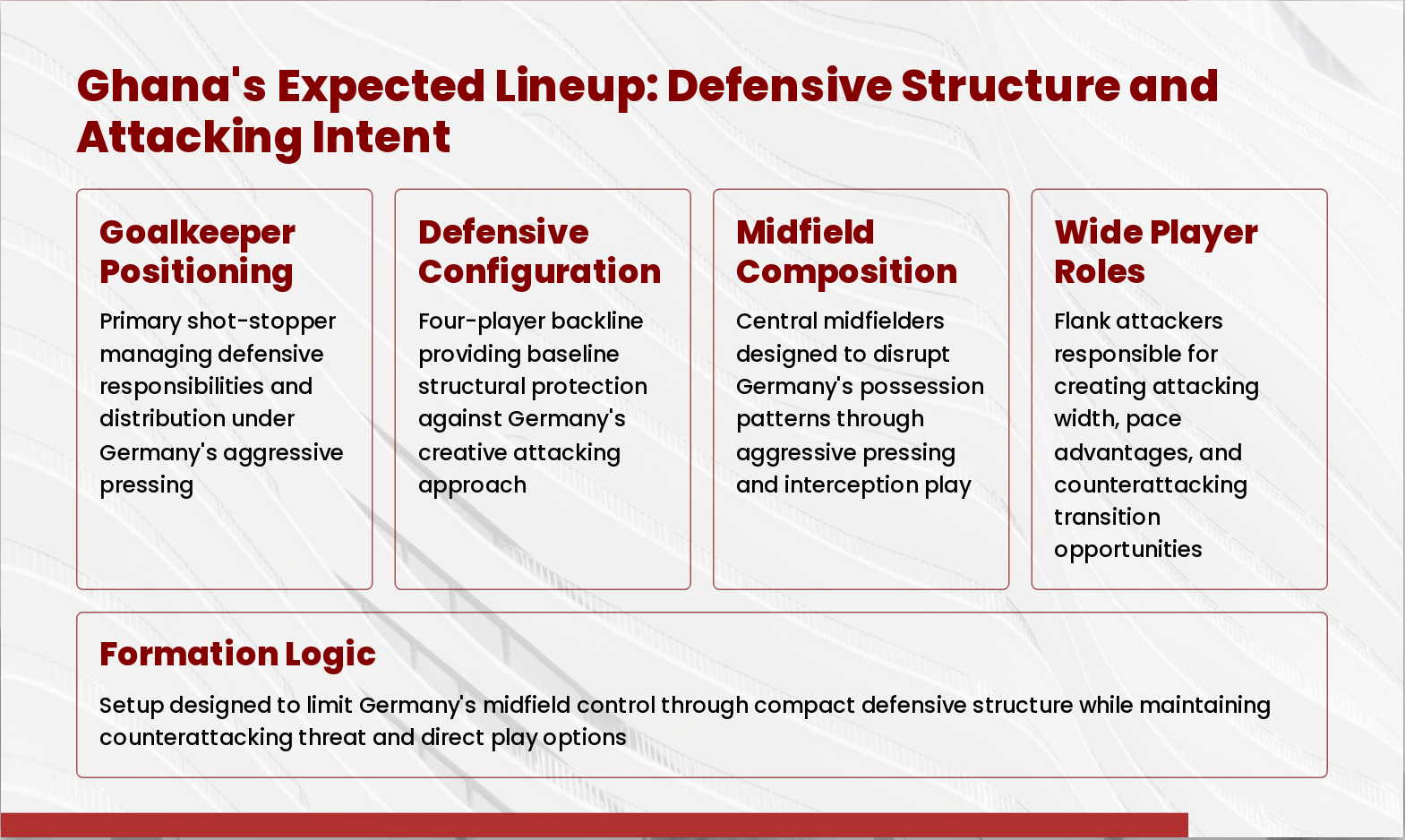
Slide 13: Ghana's Expected Lineup: Defensive Structure and Attacking Intent
- Goalkeeper Positioning: Primary shot-stopper managing defensive responsibilities and distribution under Germany's aggressive pressing
- Defensive Configuration: Four-player backline providing baseline structural protection against Germany's creative attacking approach
- Midfield Composition: Central midfielders designed to disrupt Germany's possession patterns through aggressive pressing and interception play
- Wide Player Roles: Flank attackers responsible for creating attacking width, pace advantages, and counterattacking transition opportunities
- Formation Logic: Setup designed to limit Germany's midfield control through compact defensive structure while maintaining counterattacking threat and direct play options
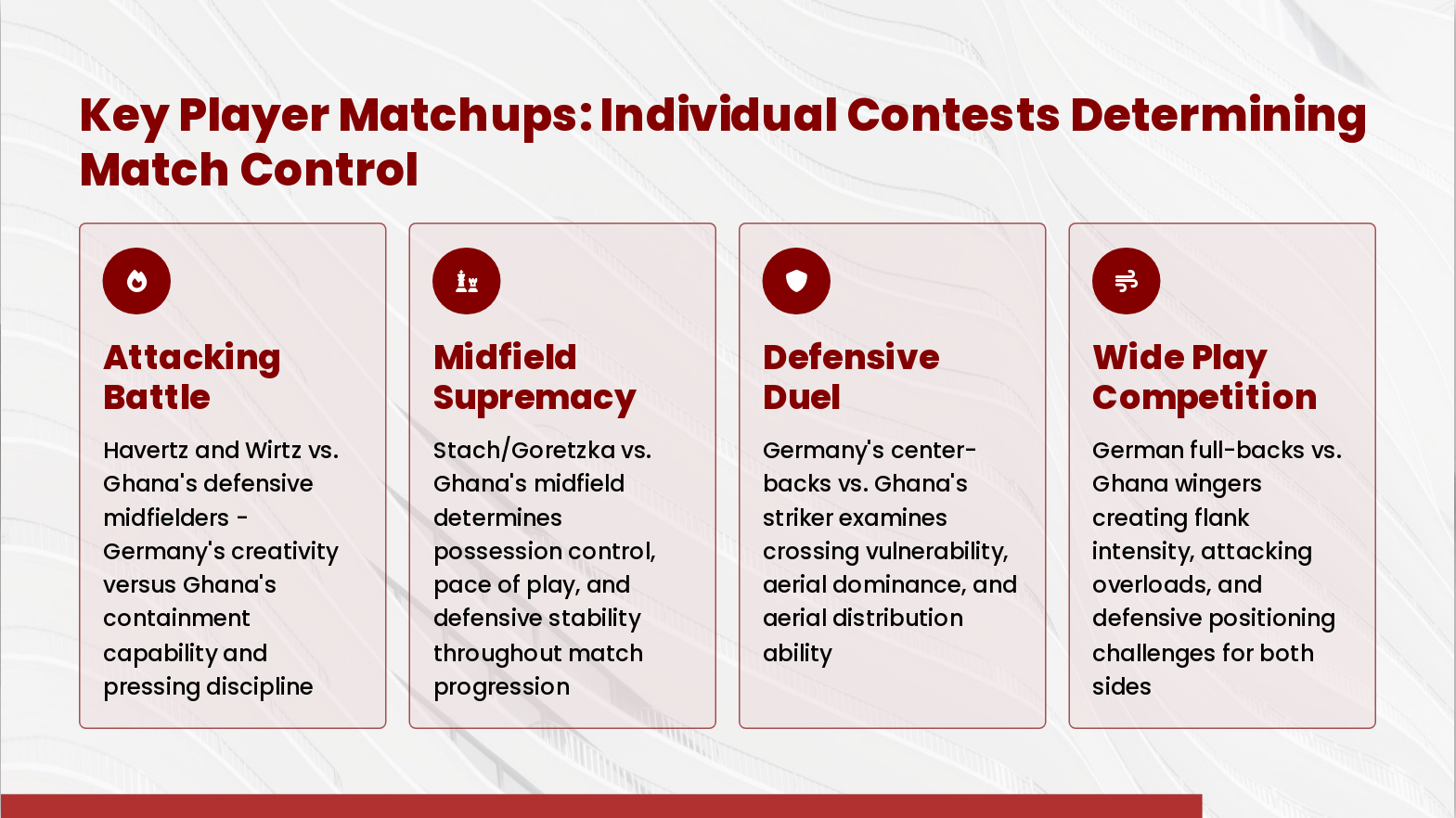
Slide 14: Key Player Matchups: Individual Contests Determining Match Control
- Attacking Battle: Havertz and Wirtz vs. Ghana's defensive midfielders - Germany's creativity versus Ghana's containment capability and pressing discipline
- Midfield Supremacy: Stach/Goretzka vs. Ghana's midfield determines possession control, pace of play, and defensive stability throughout match progression
- Defensive Duel: Germany's center-backs vs. Ghana's striker examines crossing vulnerability, aerial dominance, and aerial distribution ability
- Wide Play Competition: German full-backs vs. Ghana wingers creating flank intensity, attacking overloads, and defensive positioning challenges for both sides
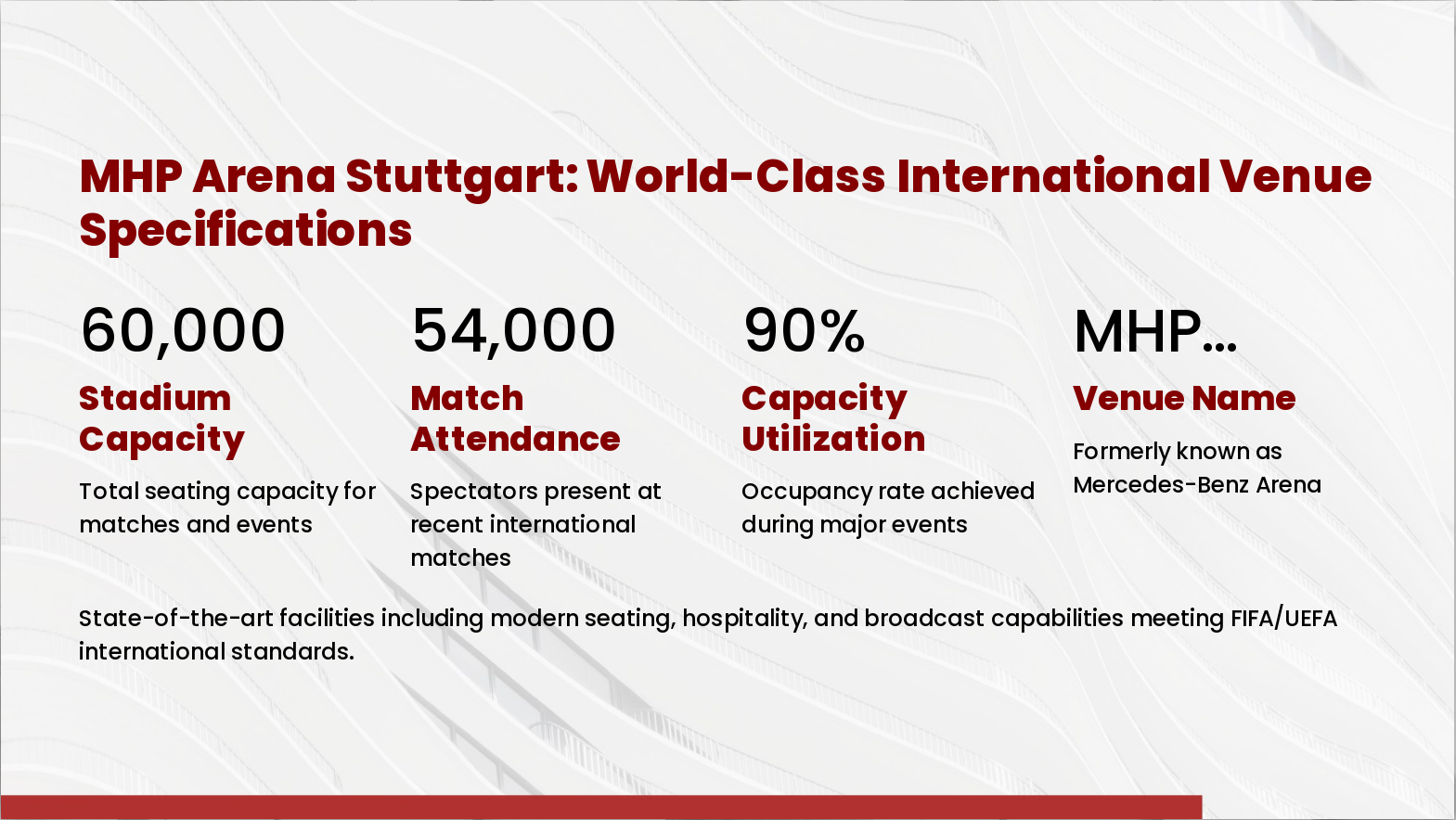
Slide 15: MHP Arena Stuttgart: World-Class International Venue Specifications
- 60,000 — Stadium Capacity
- 54,000 — Match Attendance
- 90% — Capacity Utilization
- MHP Arena — Venue Name
State-of-the-art facilities including modern seating, hospitality, and broadcast capabilities meeting FIFA/UEFA international standards.
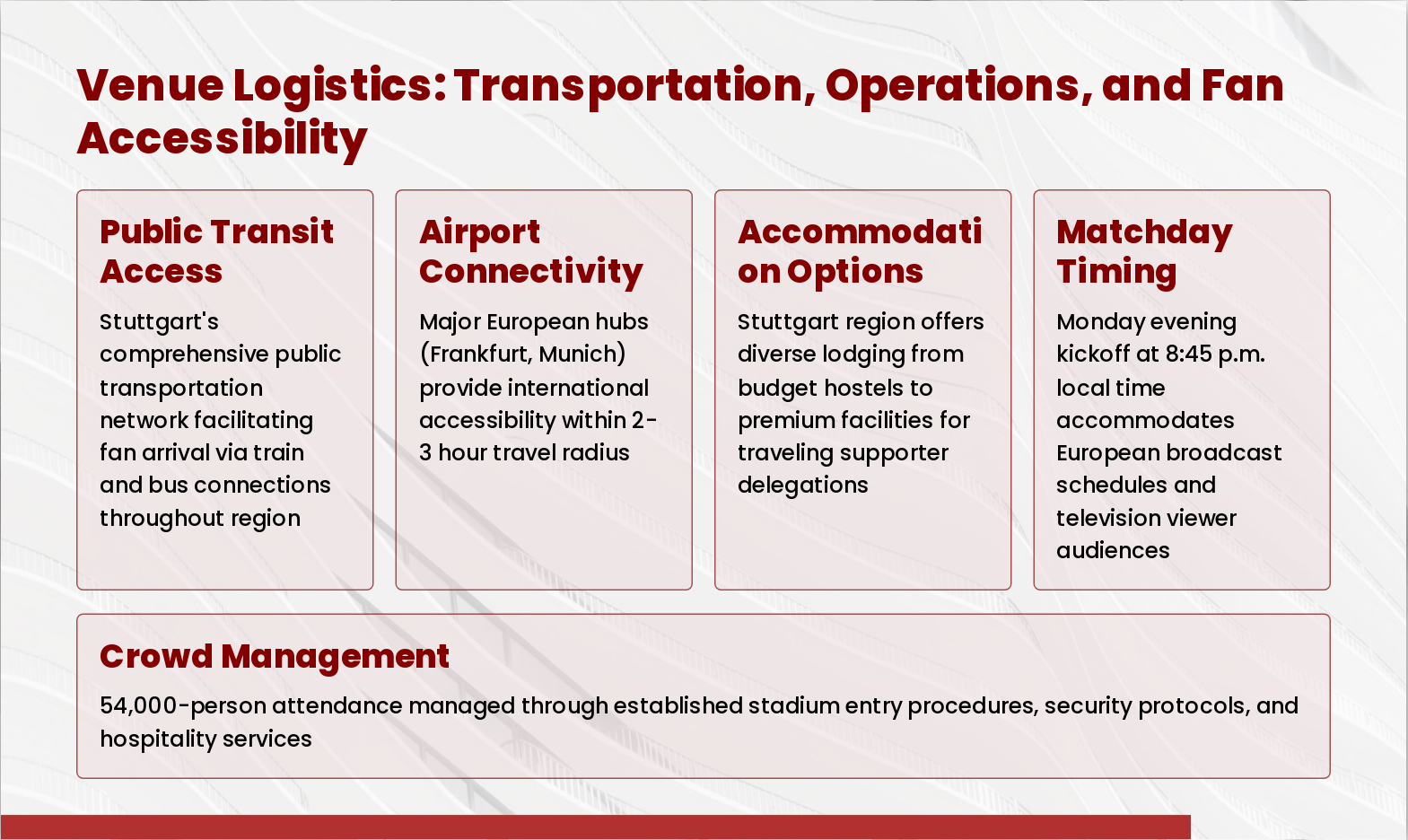
Slide 16: Venue Logistics: Transportation, Operations, and Fan Accessibility
- Public Transit Access: Stuttgart's comprehensive public transportation network facilitating fan arrival via train and bus connections throughout region
- Airport Connectivity: Major European hubs (Frankfurt, Munich) provide international accessibility within 2-3 hour travel radius
- Accommodation Options: Stuttgart region offers diverse lodging from budget hostels to premium facilities for traveling supporter delegations
- Matchday Timing: Monday evening kickoff at 8:45 p.m. local time accommodates European broadcast schedules and television viewer audiences
- Crowd Management: 54,000-person attendance managed through established stadium entry procedures, security protocols, and hospitality services
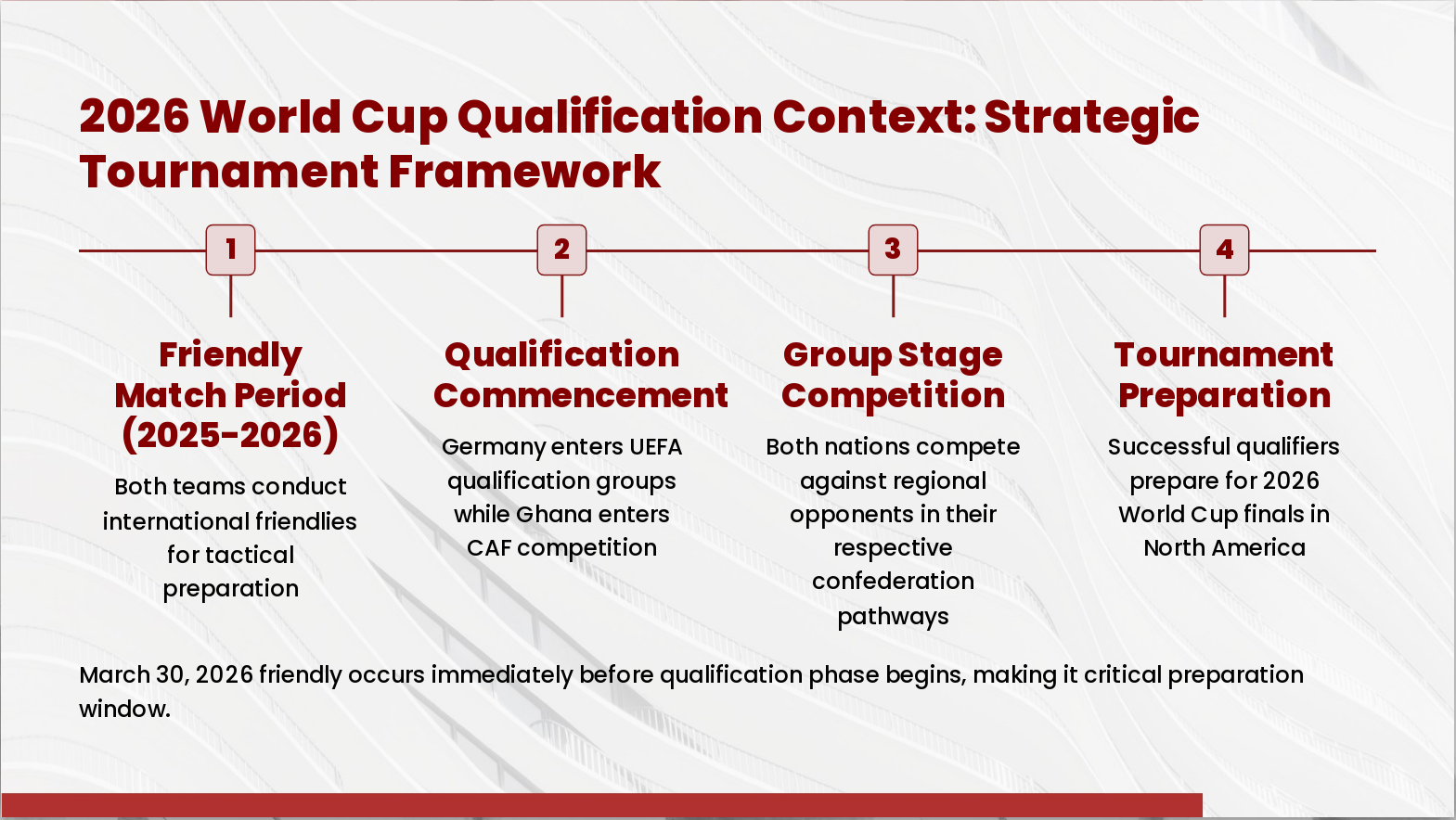
Slide 17: 2026 World Cup Qualification Context: Strategic Tournament Framework
- Friendly Match Period (2025-2026): Both teams conduct international friendlies for tactical preparation
- Qualification Commencement: Germany enters UEFA qualification groups while Ghana enters CAF competition
- Group Stage Competition: Both nations compete against regional opponents in their respective confederation pathways
- Tournament Preparation: Successful qualifiers prepare for 2026 World Cup finals in North America
March 30, 2026 friendly occurs immediately before qualification phase begins, making it critical preparation window.
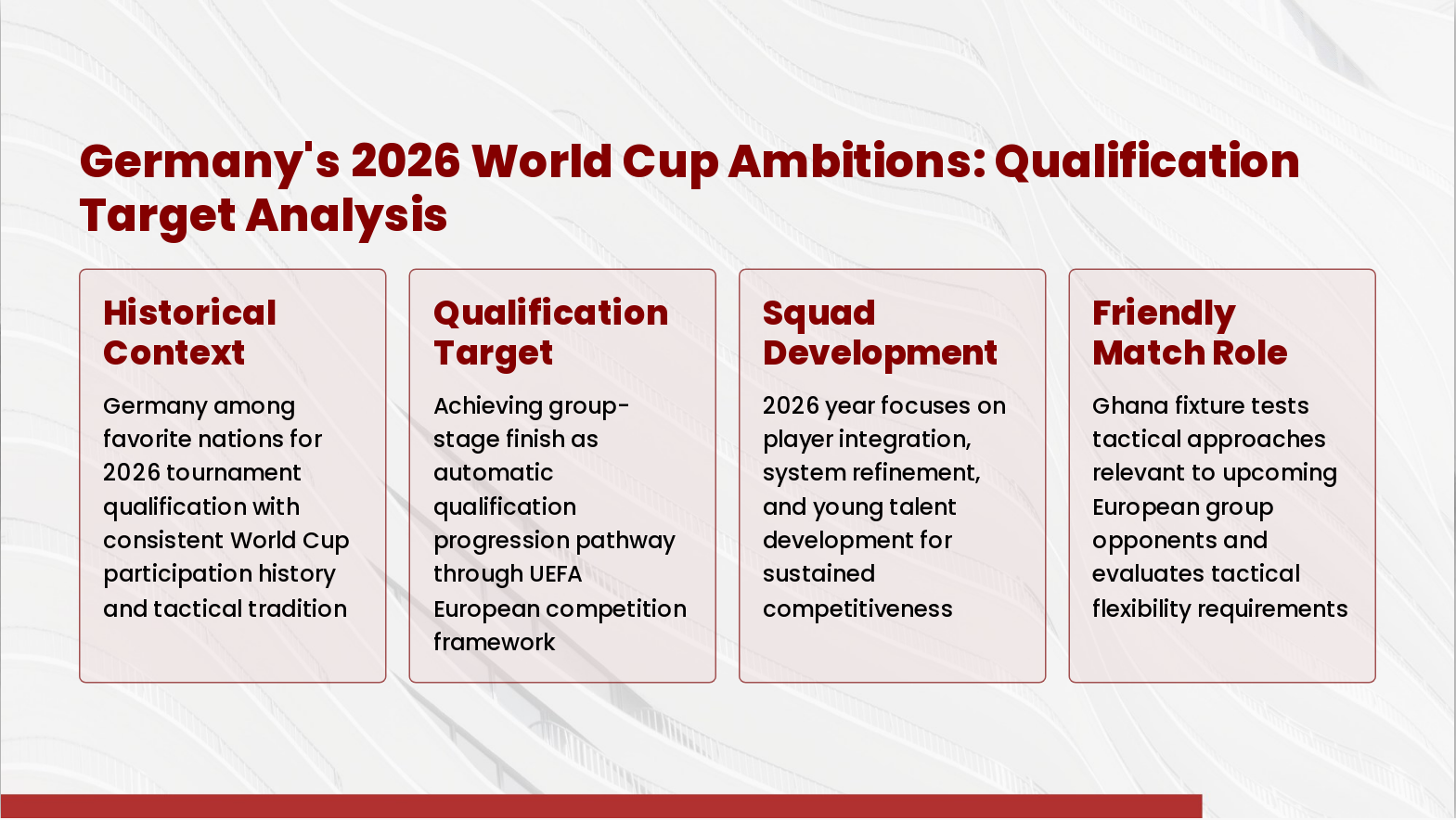
Slide 18: Germany's 2026 World Cup Ambitions: Qualification Target Analysis
- Historical Context: Germany among favorite nations for 2026 tournament qualification with consistent World Cup participation history and tactical tradition
- Qualification Target: Achieving group-stage finish as automatic qualification progression pathway through UEFA European competition framework
- Squad Development: 2026 year focuses on player integration, system refinement, and young talent development for sustained competitiveness
- Friendly Match Role: Ghana fixture tests tactical approaches relevant to upcoming European group opponents and evaluates tactical flexibility requirements
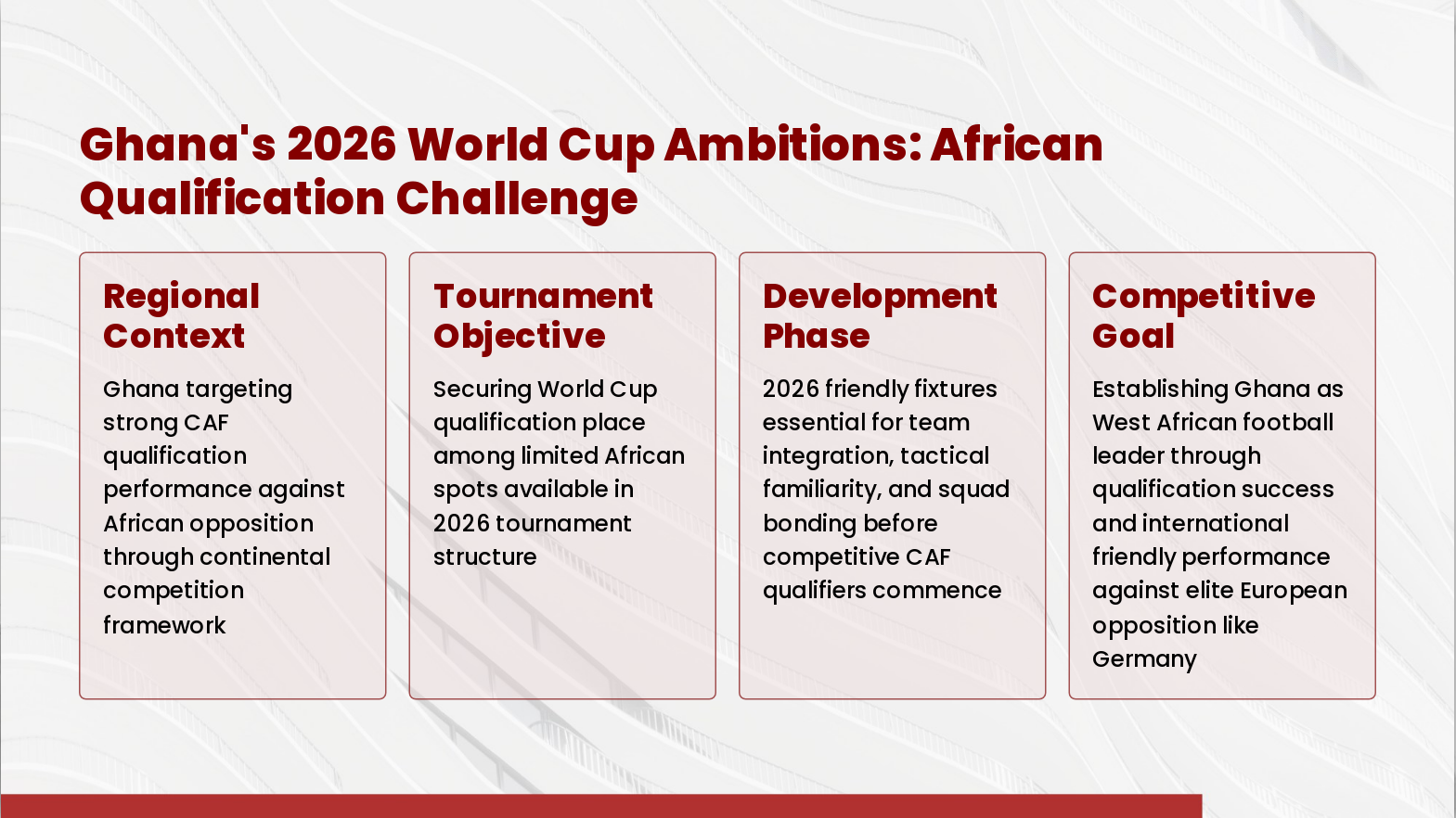
Slide 19: Ghana's 2026 World Cup Ambitions: African Qualification Challenge
- Regional Context: Ghana targeting strong CAF qualification performance against African opposition through continental competition framework
- Tournament Objective: Securing World Cup qualification place among limited African spots available in 2026 tournament structure
- Development Phase: 2026 friendly fixtures essential for team integration, tactical familiarity, and squad bonding before competitive CAF qualifiers commence
- Competitive Goal: Establishing Ghana as West African football leader through qualification success and international friendly performance against elite European opposition like Germany
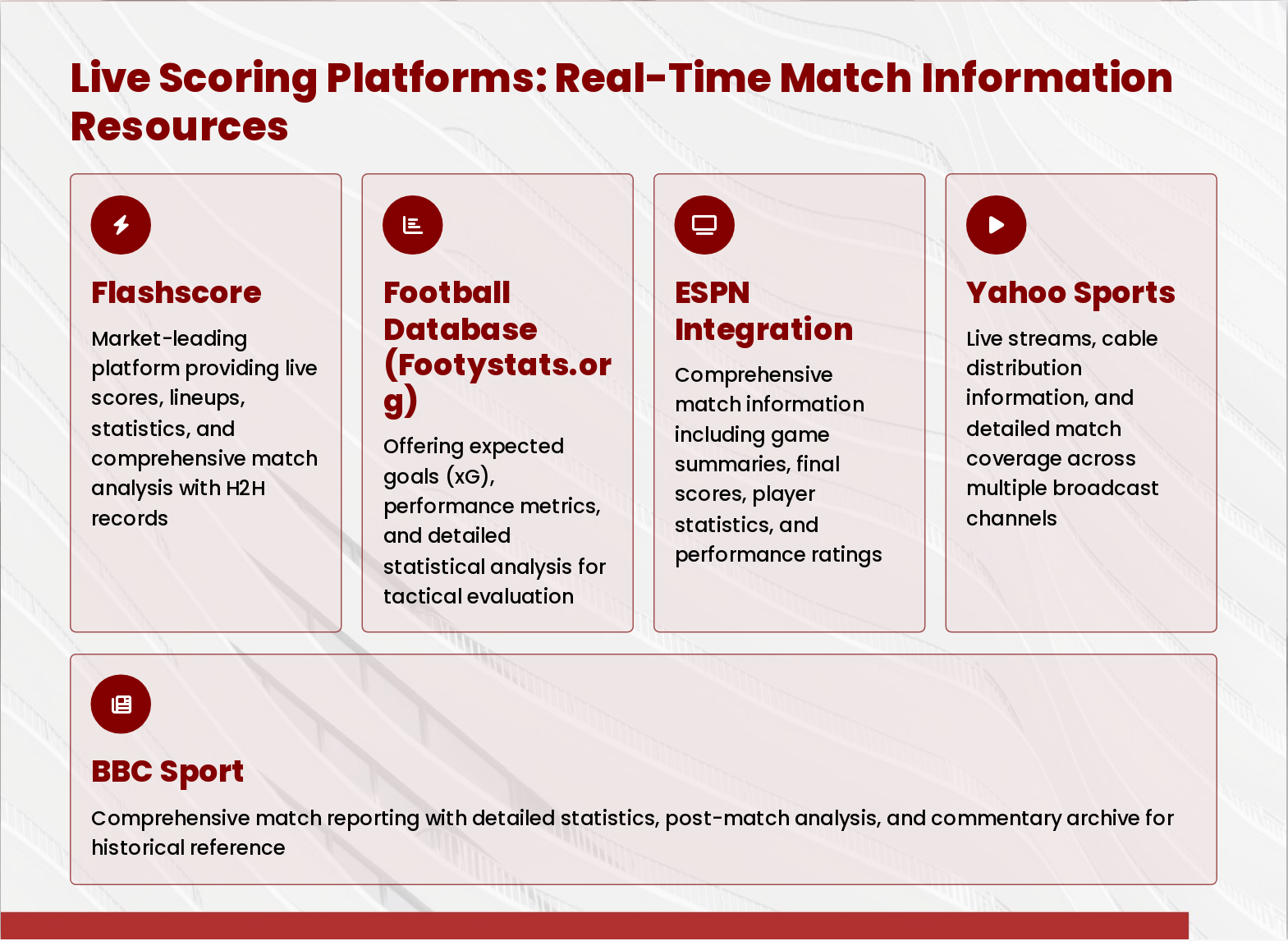
Slide 20: Live Scoring Platforms: Real-Time Match Information Resources
- Flashscore: Market-leading platform providing live scores, lineups, statistics, and comprehensive match analysis with H2H records
- Football Database (Footystats.org): Offering expected goals (xG), performance metrics, and detailed statistical analysis for tactical evaluation
- ESPN Integration: Comprehensive match information including game summaries, final scores, player statistics, and performance ratings
- Yahoo Sports: Live streams, cable distribution information, and detailed match coverage across multiple broadcast channels
- BBC Sport: Comprehensive match reporting with detailed statistics, post-match analysis, and commentary archive for historical reference
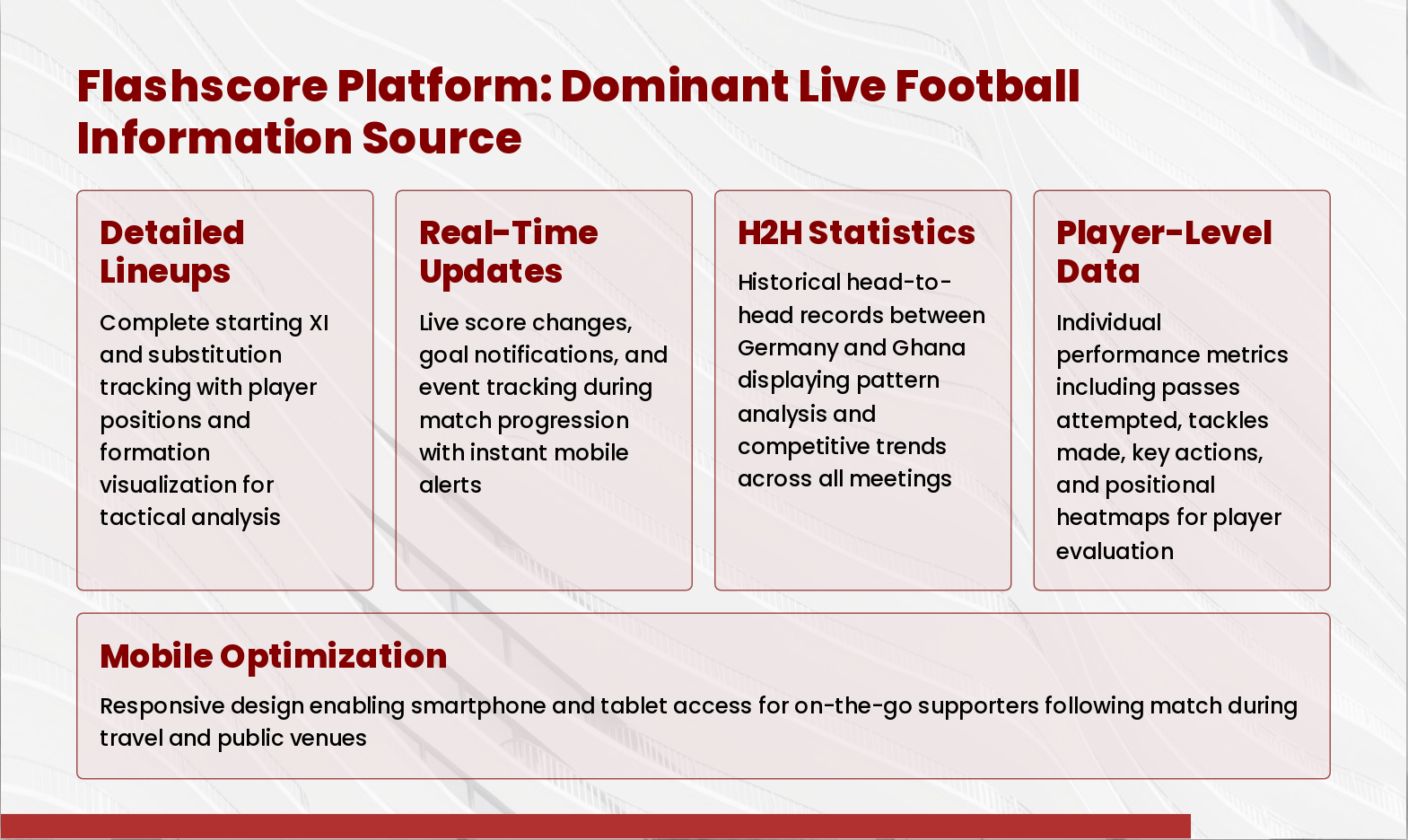
Slide 21: Flashscore Platform: Dominant Live Football Information Source
- Detailed Lineups: Complete starting XI and substitution tracking with player positions and formation visualization for tactical analysis
- Real-Time Updates: Live score changes, goal notifications, and event tracking during match progression with instant mobile alerts
- H2H Statistics: Historical head-to-head records between Germany and Ghana displaying pattern analysis and competitive trends across all meetings
- Player-Level Data: Individual performance metrics including passes attempted, tackles made, key actions, and positional heatmaps for player evaluation
- Mobile Optimization: Responsive design enabling smartphone and tablet access for on-the-go supporters following match during travel and public venues
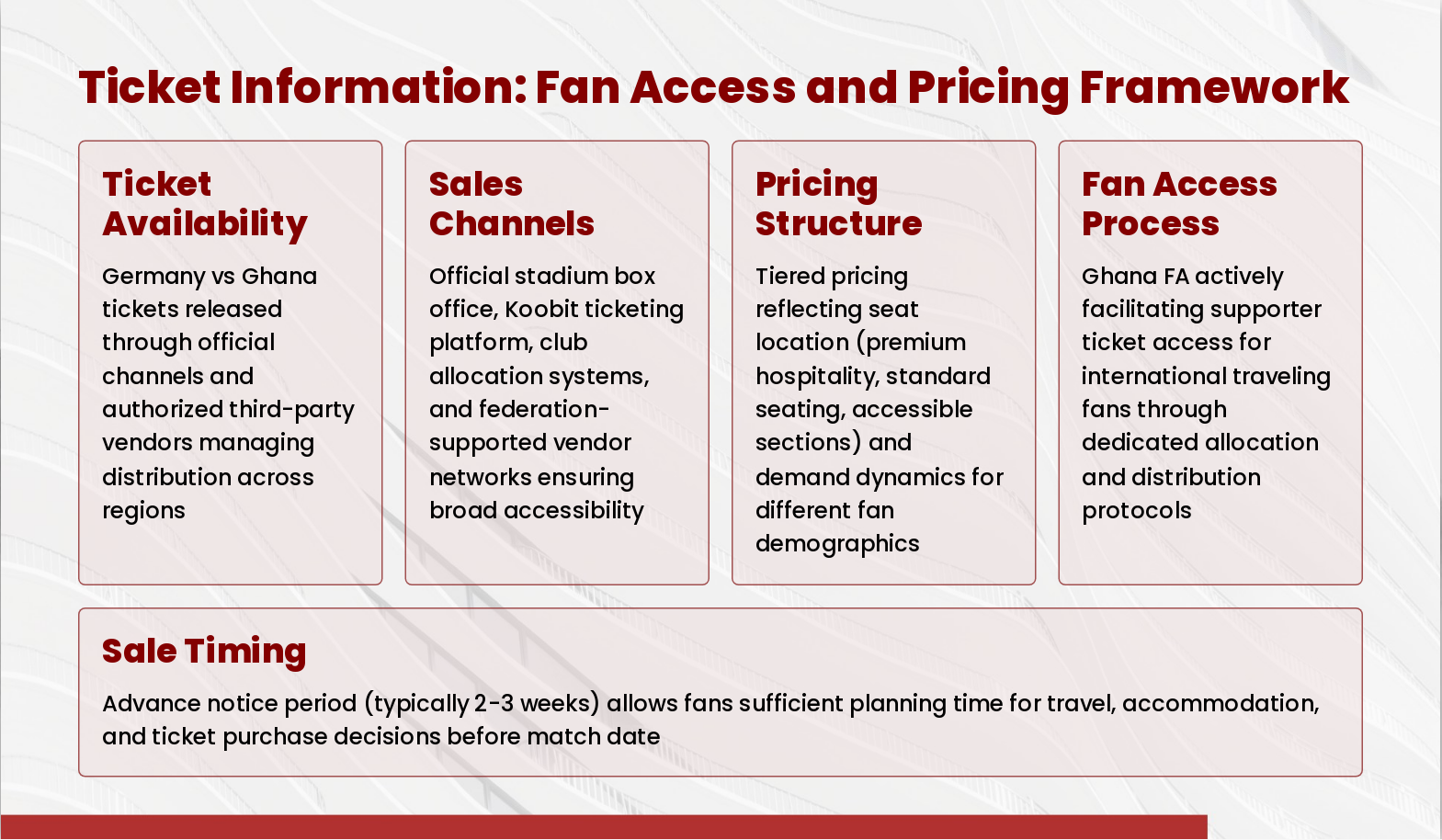
Slide 22: Ticket Information: Fan Access and Pricing Framework
- Ticket Availability: Germany vs Ghana tickets released through official channels and authorized third-party vendors managing distribution across regions
- Sales Channels: Official stadium box office, Koobit ticketing platform, club allocation systems, and federation-supported vendor networks ensuring broad accessibility
- Pricing Structure: Tiered pricing reflecting seat location (premium hospitality, standard seating, accessible sections) and demand dynamics for different fan demographics
- Fan Access Process: Ghana FA actively facilitating supporter ticket access for international traveling fans through dedicated allocation and distribution protocols
- Sale Timing: Advance notice period (typically 2-3 weeks) allows fans sufficient planning time for travel, accommodation, and ticket purchase decisions before match date
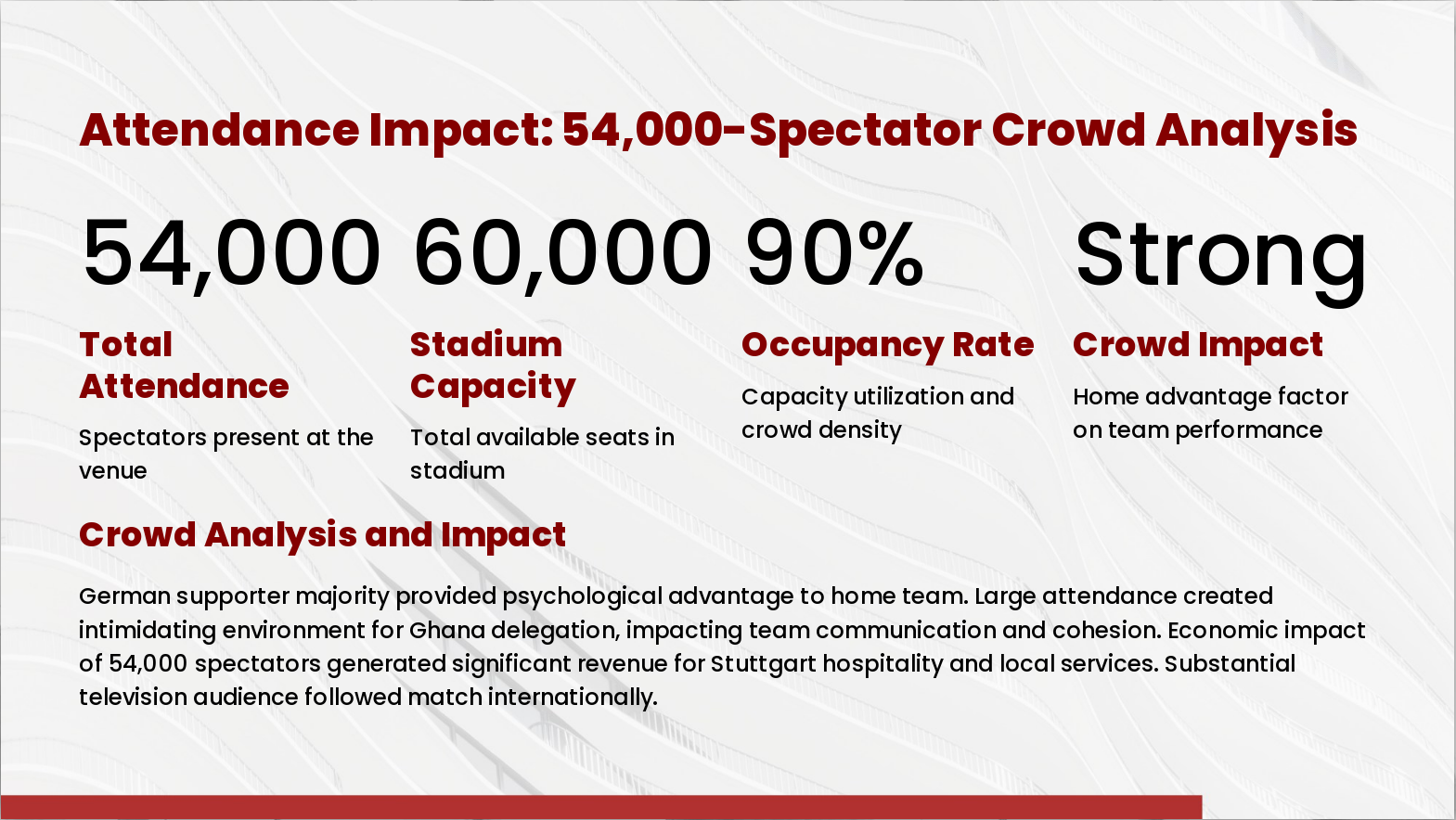
Slide 23: Attendance Impact: 54,000-Spectator Crowd Analysis
- 54,000 — Total Attendance
- 60,000 — Stadium Capacity
- 90% — Occupancy Rate
- Strong — Crowd Impact
German supporter majority provided psychological advantage to home team. Large attendance created intimidating environment for Ghana delegation, impacting team communication and cohesion. Economic impact of 54,000 spectators generated significant revenue for Stuttgart hospitality and local services. Substantial television audience followed match internationally.
Slide 24: Strategic Conclusion and Key Takeaways
Strategic Conclusion and Key Takeaways Germany's 2-1 victory validates tactical superiority and attacking capability. Havertz and Undav goals demonstrate clinical finishing versus Ghana's single response. Both teams gained valuable preparation data for 2026 World Cup qualifications. Ghana's competit...