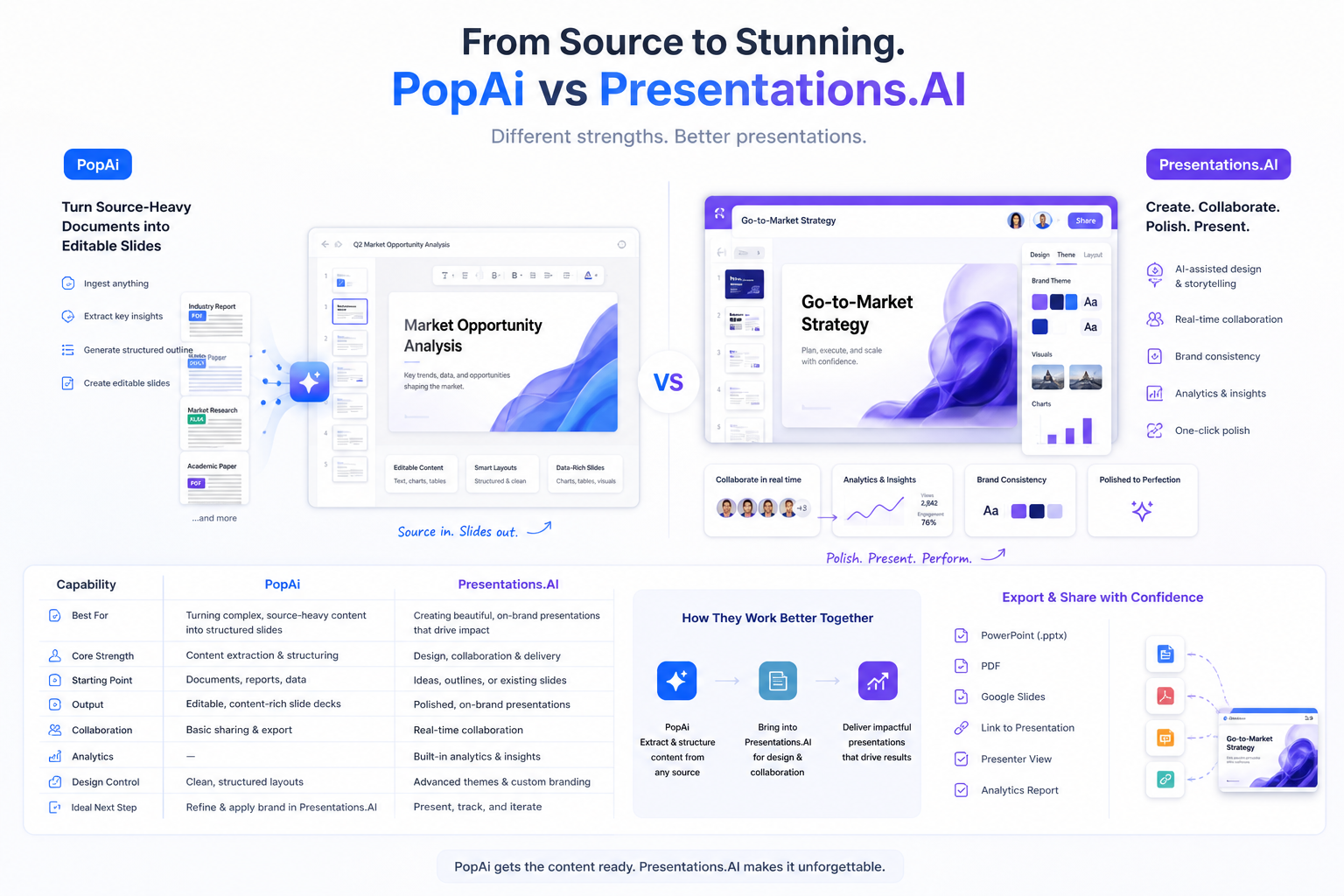
PopAi is our recommendation for turning founder notes into a first pitch narrative; Pitch for a startup team that builds and reviews decks together; Plus AI for native PowerPoint or Google Slides revisions; Gamma for link-first advisor updates; and Beautiful.ai for consistent business-slide layouts.
For a solo founder without a coherent first deck, start with PopAi. For a team with an established story and several contributors, start with Pitch. The best AI presentation maker for a startup changes as the job moves from explaining the company to maintaining an approved presentation. These recommendations focus on that distinction, not on a fictional fundraising success score.
Best AI presentation makers for startups: our shortlist
| Tool | Best startup workflow | Why we recommend it | When another tool fits better |
|---|---|---|---|
| PopAi | Founder brief to first deck | Source-based outline and slide creation fit the initial story-building task. | Pick Pitch when multi-person review is the main need. |
| Pitch | Collaborative startup presentations | Team editing and review features support shared deck work. | Pick PopAi when the first task is extracting a story from documents. |
| Plus AI | Native investor or partner deliverables | PowerPoint and Google Slides workflows preserve the required editing environment. | Pick Gamma for a primarily web-based reading update. |
| Gamma | Web-first advisor and business updates | Browser creation and link sharing fit that handoff. | Pick Plus AI when reviewers explicitly want to edit a native file. |
| Beautiful.ai | Consistent layouts after the story is settled | AI drafting and Smart Slides address visual structure. | Pick Pitch when contribution and review ownership matter more than layout. |
Recommended tools by stage of the startup deck
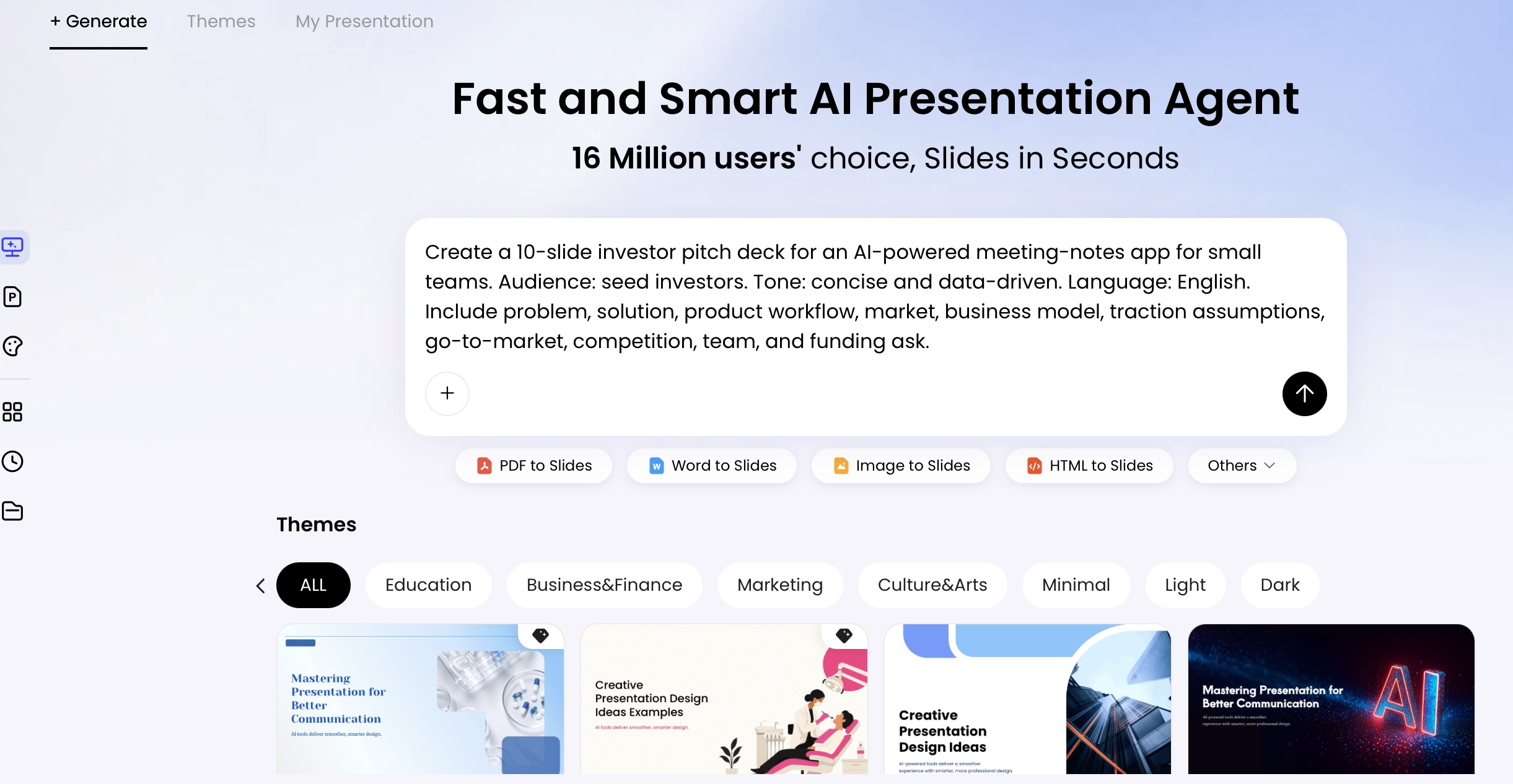
PopAi: best for building a first narrative from founder material
Choose PopAi when the business is described across notes, a product document, and earlier explanations, but there is not yet a clear presentation. Its source-to-deck workflow makes it a relevant first-draft recommendation.
Prepare one approved founder brief. State the customer problem, what the product does, the evidence available, and what the audience should decide. Then cut away claims that are not supported. A first draft should make the missing evidence visible instead of making the company sound more established than it is.
Choose another tool when: you already have the narrative and need several people to work on specific sections. Pitch is our team-workflow recommendation; Plus AI is the recommendation when those reviewers require a native slide file.
Pitch: best for a startup team building the deck together
Choose Pitch when the founder, product lead, and commercial team need a shared presentation workflow. Its product documentation describes real-time collaboration and review-oriented capabilities, which are the basis for this recommendation.
Assign one owner to the company story and different contributors to the evidence. A product specialist can check the workflow slide while the commercial owner confirms the customer examples. The collaboration tools support that process, but cannot decide which conflicting strategy should win. Agree on the intended audience before parallel editing starts.
Choose another tool when: only one person is producing an early draft from source notes. PopAi may be the more focused starting recommendation. Check the plan-level availability of the team features you actually need before expanding access.
Plus AI: best for native PowerPoint and Google Slides revisions
Choose Plus AI when investors, partners, or advisors expect a working slide file in an established editor. Its native PowerPoint workflow and Google Slides workflow make it relevant to repeated revisions after the first pitch.
Keep an approved core deck and adapt the emphasis for each conversation. A product partner may need implementation detail; an investor may need the evidence behind the business model. Revise those sections rather than generating a fresh company story for every meeting.
Choose another tool when: the core deliverable is a self-contained web update. Gamma is our recommendation there. Working inside an established editor does not make a forecast defensible or turn a proposed customer relationship into an actual one.
Gamma: best for link-first advisor updates
Choose Gamma when the deck will be read before a conversation or circulated as an update. Its sharing controls support an online review route. This is a distribution recommendation, not a promise of engagement or fundraising results.
For a monthly founder update, put the major change first, support it with evidence, then name the risk and the help requested. Make the material understandable without a live presenter. A slide that only makes sense when narrated belongs in a meeting deck, not an asynchronous update.
Choose another tool when: a reviewer asks to edit the file directly in PowerPoint or Google Slides. Gamma's export options provide a handoff, but Plus AI is our native-authoring recommendation when that requirement controls the decision.
Beautiful.ai: best for consistent layouts once the story is clear
Choose Beautiful.ai when the startup's argument is settled and the remaining problem is uneven slide design. Its AI and Smart Slides workflow supports a design-focused recommendation.
Use it to present the problem, workflow, evidence, and milestones in a coherent visual system. The most important review is still editorial: does the evidence slide explain what is known, and does the ask follow from it? A polished template should not encourage unnecessary market claims.
Choose another tool when: the main problem is deciding the story or coordinating contributors. Start with PopAi for the former and Pitch for the latter. Layout automation is useful only after the content has a clear job.
A practical seed-pitch scenario
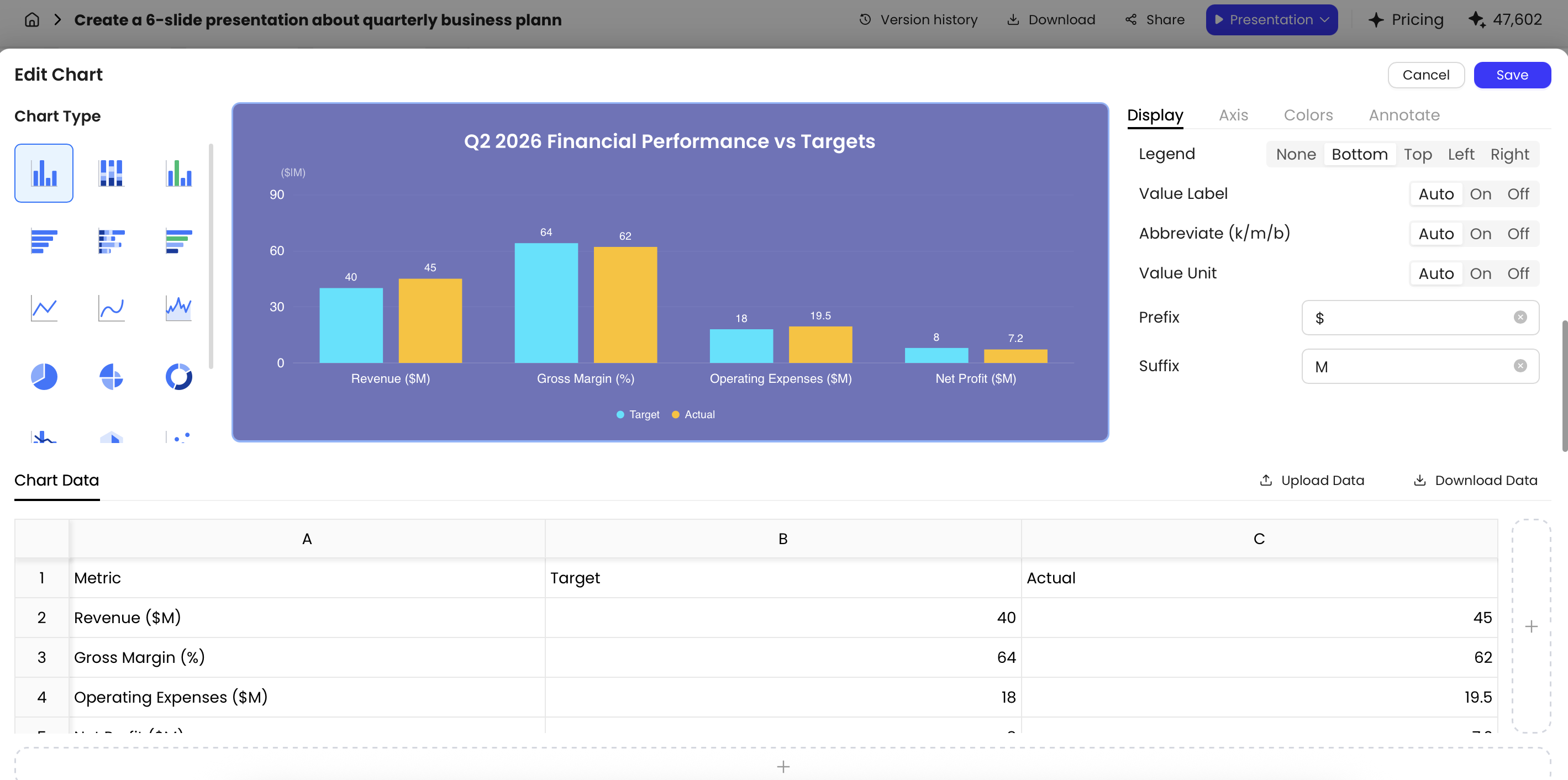
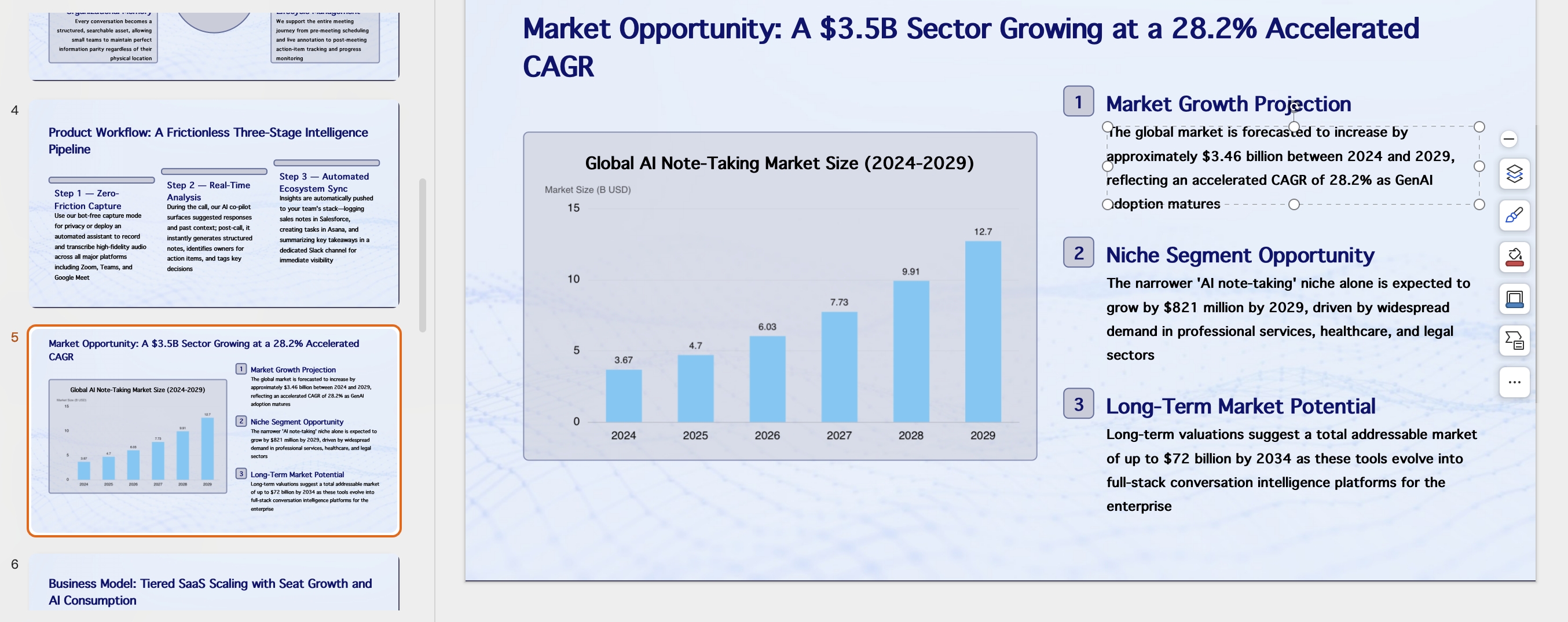
For an illustrative early-stage B2B startup, a useful first deck might cover customer problem, target customer, solution, product workflow, evidence, business model, market context, alternatives, team, and ask. That is an editorial outline, not a universally required investor template.
Choose PopAi to shape the first version from the founder brief. Choose Pitch when several people will maintain it. Choose Plus AI when the shared working artifact must be PowerPoint or Google Slides. Choose Beautiful.ai when consistent slide design is the remaining job. Choose Gamma for a related advisor update designed to be read through a link.
Do not write "proven demand" when the supplied evidence is exploratory interviews. Describe the observed problem and the limits of that evidence. Keep actual revenue, pipeline, targets, and forecasts distinct. Customer logos, quotations, and credentials should only appear when they are accurate and authorized.
What makes the final recommendation change?
The handoff is often decisive. Ask whether the next person needs to read, comment, edit, or approve a fixed version. Then choose the workflow that supports that job without unnecessarily rebuilding the deck.
The financing ask should also come from the founder's approved plan, not from a generator filling a blank. Describe the intended use, milestones, and assumptions at the appropriate level. The tool organizes the explanation; it does not validate valuation, market size, or an investment case.
Our recommendation for startups
Choose PopAi for the first narrative, Pitch for shared deck ownership, Plus AI for native revisions, Gamma for web-first updates, and Beautiful.ai for layout consistency. Keep one approved source brief behind the deck as it evolves. That lets the presentation improve without allowing different versions to tell different stories about the business.
Basis and disclosure. Product documentation reviewed September 20, 2026. The "Best for" selections are editorial judgments about the stated workflows, not timed, scored, or hands-on head-to-head results. Examples are illustrative. PopAi publishes this comparison and is one of the products discussed. Confirm account, plan, and institutional requirements before adopting a tool.