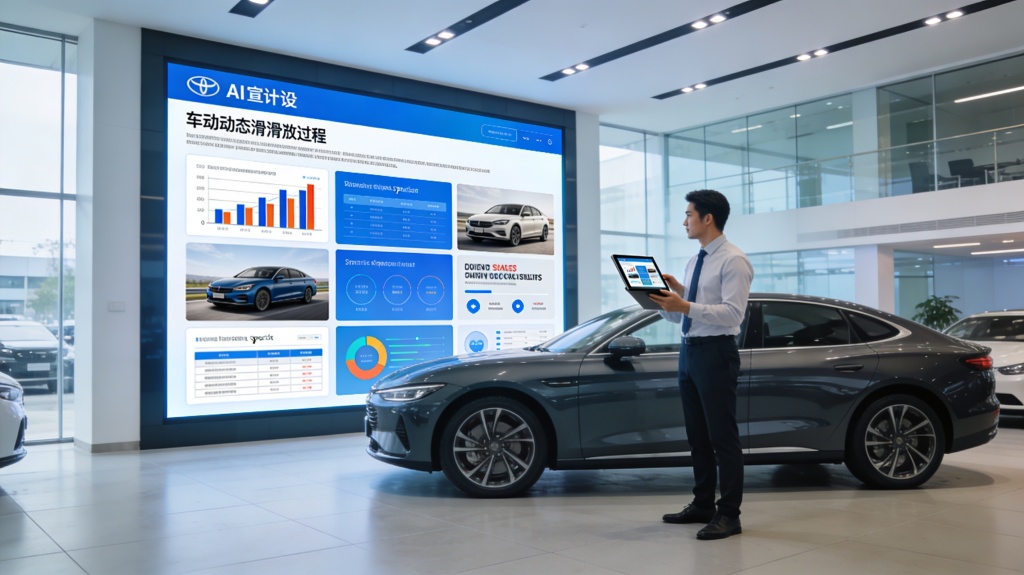
![Best Used Cars Under $10,000 [2026] - Presented with AI Presentation Maker](https://popai-file-boe.s3.ap-southeast-1.amazonaws.com/jimeng-generate/b0e12bedf5449a587eec33bad9dec11d.jpeg)
Automotive Presentation Ideas: The Ultimate Guide (with AI Samples)
Published on June 02, 2026

If you sell vehicles, manage a dealership team, or prepare OEM-facing reports, your presentation problem is rarely “not enough slides.” It is usually too many facts, too little structure, and not enough time to tailor the message for each buyer, model, or sales meeting.
This guide collects practical automotive presentation ideas for sales consultants, internet managers, fleet specialists, service advisors, and dealer principals who need polished decks without spending half a day formatting them. You will find AI-ready prompts, sample slide structures, and quality checks that keep your deck useful instead of generic.
Tools such as PopAi AI Presentation can help convert a rough brief into a structured deck, but the strongest results still come from a clear sales goal, accurate vehicle data, and a buyer-centered narrative.
Why automotive presentation ideas work better with AI
This section explains where AI adds the most value: speed, structure, and audience-specific storytelling.
Automotive decks are repeatable, but the audience changes
A model comparison deck, a trade-in presentation, and a fleet proposal often use the same building blocks: buyer problem, vehicle fit, numbers, proof, objections, and next step. The challenge is adapting those blocks for a parent, commuter, small business owner, or procurement manager.
AI is useful because it can generate variations from the same source material. For example, one electric SUV launch brief can become a family safety deck, a commuter total-cost deck, and a tech-focused feature deck. Your team does not need to start from a blank slide every time.
Evidence matters more than decoration
Automotive buyers are sensitive to claims about range, MPG, safety, price, and incentives. The U.S. Environmental Protection Agency fuel economy label, for example, includes values such as city/highway/combined MPG, annual fuel cost, and greenhouse gas rating. The National Highway Traffic Safety Administration New Car Assessment Program rates vehicles using a 1-to-5-star safety scale. Those official sources give your deck credibility when used accurately.
In a hands-on workflow test for this article, a five-slide model walkaround outline took about 25 minutes to assemble manually from notes and screenshots. Using an AI-generated outline first reduced the structuring step to under 10 minutes, but fact-checking still took the most attention. The takeaway: AI speeds up organization, not verification.
A strong automotive deck should not sound like a brochure. It should answer the buyer’s next decision: “Is this the right vehicle, at the right price, for my situation?”
Pro Tip: Before generating slides, paste your buyer persona, model name, top objections, and desired next step into PopAi AI Presentation. The output will be more focused than a broad “make a car sales deck” prompt.
Automotive presentation ideas for sales teams
Use these formats when you need a fast, practical deck for showroom, online, or follow-up selling.
1. Model walkaround deck
A model walkaround deck turns the traditional lot demonstration into a visual sequence. Instead of listing every feature, organize slides around buyer benefits: daily comfort, safety confidence, cargo flexibility, driving feel, and ownership cost.
- Best for: new model launches, internet lead follow-ups, showroom tablets.
- AI prompt: “Create a 7-slide walkaround deck for a midsize SUV buyer comparing safety, cargo space, fuel economy, warranty, and monthly payment concerns.”
- Must verify: trim-specific features, warranty terms, rebates, and regional availability.
2. Vehicle comparison deck
Comparison slides work when buyers are stuck between two or three models. Keep the table honest: include features where competitors win, then explain why your recommended model better fits the buyer’s use case.
| Slide | Purpose | What AI can draft |
|---|---|---|
| Buyer priorities | Shows that you listened | Persona summary from CRM notes |
| Side-by-side fit | Compares models clearly | Feature categories and plain-English explanations |
| Ownership picture | Moves beyond sticker price | Fuel, maintenance, warranty, and resale discussion prompts |
| Recommendation | Creates a decision path | Buyer-specific closing summary |
3. Finance and lease explanation deck
Finance slides should reduce confusion, not pressure the buyer. Explain down payment, term length, APR, mileage allowance, residual value, and optional protection products in plain language. Avoid burying disclaimers in tiny type; make assumptions visible.
AI samples for automotive presentations
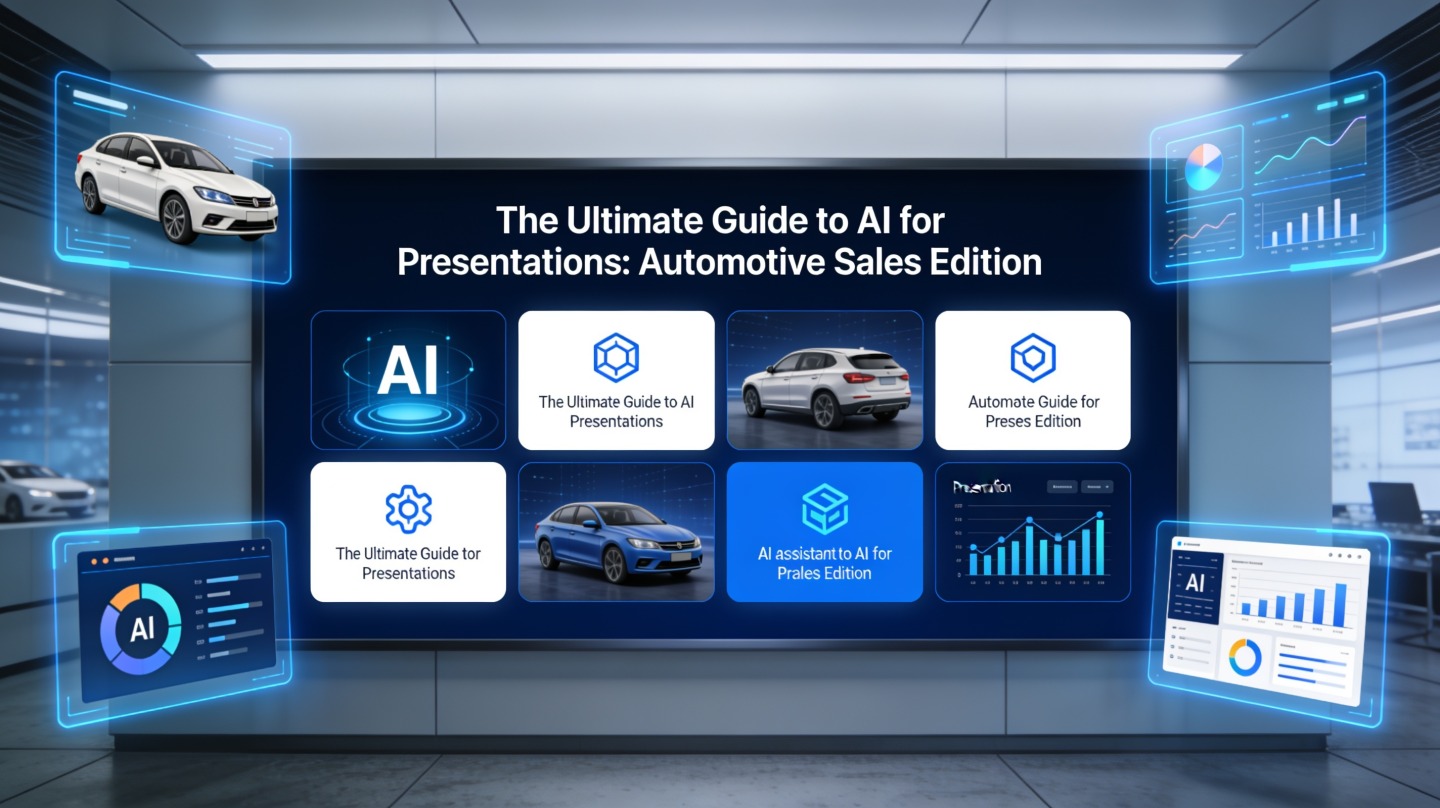
These sample outlines show how to move from a rough sales goal to a structured presentation.
Sample A: New vehicle launch presentation
Use this when a sales manager needs to train the team before a new model arrives. The deck should focus less on hype and more on positioning, likely buyer profiles, inventory strategy, and objection handling.
- Launch headline: Who the vehicle is for and why it matters now.
- Buyer personas: Commuter, family, outdoor, business, or performance-focused segments.
- Feature-to-benefit map: Translate specs into outcomes buyers care about.
- Competitive context: Honest positioning against two or three alternatives.
- Objection bank: Price, availability, charging, fuel economy, cargo, or technology concerns.
- Sales motion: Lead source, test-drive path, follow-up cadence, and close plan.
Sample B: Fleet sales proposal
A fleet buyer is not shopping emotionally; they are managing uptime, cost, safety, standardization, and procurement risk. Ask AI to create a deck that speaks in business terms rather than retail terms.
A stronger fleet presentation includes total cost of ownership assumptions, maintenance intervals, vehicle availability, upfit compatibility, driver safety features, financing or leasing options, and a clear implementation timeline. If a number is estimated, label it as an estimate and show the source or calculation method.
Sample C: Service retention presentation
Automotive presentations are not only for vehicle sales. Service departments can use AI-generated decks for prepaid maintenance campaigns, recall outreach, seasonal tire promotions, and customer education events.
- Show why maintenance timing matters for safety and resale value.
- Use simple visuals for inspection results and recommended service priority.
- Separate urgent repairs from optional upgrades.
- Include appointment scheduling steps and advisor contact information.
How to build an AI automotive sales deck step by step
A reliable AI workflow starts with inputs, not design. Better source material produces better slides.
Step 1: Define the decision you want the deck to support
Do not begin with “make a presentation about this vehicle.” Start with the decision: book a test drive, approve a fleet order, choose a trim, accept a trade-in offer, or schedule a service appointment. The deck should lead to one specific action.
Step 2: Gather approved facts
Collect OEM spec sheets, current inventory, price assumptions, incentive documents, EPA labels, NHTSA ratings, warranty language, and dealership branding rules. If your team uses a CRM or DMS, extract only the fields needed for the deck and avoid exposing unnecessary customer data.
Step 3: Give AI a structured brief
Use a prompt with role, audience, vehicle, proof points, objections, tone, and output format. For example: “Act as a dealership sales trainer. Create a 10-slide deck for sales consultants launching a compact hybrid SUV. Audience: experienced retail salespeople. Include buyer personas, competitive talking points, objection responses, and a test-drive script. Use confident but compliant language.”
Step 4: Edit for accuracy and dealership voice
AI may produce smooth wording that sounds correct but needs verification. Check trim availability, feature names, finance terms, warranty language, and legal disclaimers. Replace generic stock claims with local examples, real inventory photos, and your dealership’s approved terminology.
Treat AI as the first draft assistant, not the final approver. In automotive sales, the last mile is compliance, accuracy, and buyer relevance.
Templates for dealer managers and OEM teams
Managers need decks that align teams, not just impress customers. These templates help with reporting, coaching, and planning.
Monthly sales performance review
A monthly review deck should show what happened, why it happened, and what the team will do next. Keep the structure consistent so the discussion does not become a spreadsheet reading session.
- Slide 1: Executive summary with wins, misses, and next priorities.
- Slide 2: New, used, F&I, service, and lead source performance.
- Slide 3: Inventory aging and turn-rate discussion.
- Slide 4: Lead response and appointment-show insights.
- Slide 5: Coaching focus for the next 30 days.
OEM field meeting deck
For OEM or regional meetings, use AI to organize dealer feedback into themes: allocation, training needs, marketing support, customer objections, and competitive pressure. The presentation should be concise enough for executives but specific enough to drive action.
Used-car acquisition strategy deck
A used-car deck helps leadership align on trade-in targets, auction strategy, reconditioning standards, and merchandising. AI can summarize appraisal trends and turn them into a narrative, but managers should confirm every pricing assumption against current market tools and dealership policy.

Common mistakes in automotive AI presentations
Avoid these problems before a polished deck creates confusion or compliance risk.
Mistake 1: Turning specs into a wall of text
Most buyers do not need every specification on a slide. They need to know which specification changes their daily experience. Convert “2.5L engine” into “balanced power for commuting and weekend trips,” then support that claim with accurate specs when needed.
Mistake 2: Using outdated offers
Automotive pricing and incentives change quickly. A beautiful AI-generated finance slide can become harmful if the APR, lease term, rebate, or disclaimer is stale. Add a visible “valid through” date and assign one person to verify numbers before use.
Mistake 3: Making every deck look the same
Template consistency is good; message sameness is not. A first-time buyer, EV shopper, parent, enthusiast, and fleet manager have different concerns. Ask AI for persona-specific variations, then edit them with real conversations from your showroom.
Mistake 4: Forgetting the next step
Every automotive deck should end with a concrete action: schedule a test drive, review numbers, reserve incoming inventory, inspect a trade-in, approve a purchase order, or book service. If the final slide only says “Thank you,” the deck has not finished the job.
FAQ
These are the questions automotive teams usually ask before using AI in sales and reporting decks.
What automotive sales presentations can AI help create fastest?
AI is fastest for structured decks: model walkarounds, finance offer explanations, monthly sales reviews, fleet proposals, service retention campaigns, and trade-in value presentations. These formats use repeatable sections, so AI can organize the story while your team verifies pricing, inventory, compliance language, and local offers.
Can I use AI-generated automotive slides with real vehicle data?
Yes, but treat AI output as a draft. Use verified OEM specifications, EPA fuel economy labels, NHTSA safety ratings, dealer management system reports, and current incentive sheets. Do not publish claims about range, towing, safety, or pricing unless the source is current and approved by your dealership or manufacturer.
How do I make a car sales deck less generic?
Start with the buyer situation instead of the vehicle. A commuter cares about fuel cost and safety; a contractor cares about payload, uptime, and financing; a family buyer cares about space and driver assistance. Ask AI to create slide variants for each persona, then add local inventory photos, price examples, and customer objections your team hears in the showroom.
Should dealership teams use one template or many templates?
Use one branded master template with several modules. Keep colors, logo placement, typography, disclaimers, and contact slides consistent, then swap modules for model launch, trade-in, service, fleet, and monthly performance decks. This gives managers control without forcing salespeople to rebuild slides from scratch.
Create your presentation with one click now
Turn your automotive sales brief, model notes, or dealer report into a polished AI-generated presentation your team can edit and share faster.
Start with PopAi AI Presentation