
Introduction: The Glitter Fades, The Cracks Appear

The last of the Christmas glitter has been swept away. The tree, once a vibrant centerpiece of joy, now lies by the curb, a skeletal reminder of the festivities. The house is quiet, almost too quiet, after weeks of chaotic, cheerful noise. For many, this silence isn’t peaceful. It’s heavy. It’s the sound of an unspoken tension, a holiday hangover that no amount of water or aspirin can cure. It’s the deafening silence before the storm of the post-holiday breakup wave.
You’ve probably felt it or seen it. A friend who was posting cozy couple photos on December 24th suddenly has a single-and-ready-to-mingle vibe by mid-January. Or maybe you’re the one scrolling back through your camera roll, looking at forced smiles and wondering, “Was any of that real?”
This isn’t just a coincidence or a cynical theory. The “post-holiday breakup wave” is a real, measurable, and brutal phenomenon backed by years of data and psychological research. The period from just after Christmas through February is a veritable graveyard for relationships that were already on life support. Today, we’re not just going to skim the surface. We’re diving deep into the data, the psychology, and the raw, uncomfortable truths behind why the most “wonderful time of the year” so often leads to the most heartbreaking one.
The Data Doesn’t Lie: Unpacking the “Breakup Wave”
If you think this is just a feeling, you’re mistaken. The digital and legal footprints left behind tell a crystal-clear story. Relationships are ending en masse, and the pattern is undeniable.
The Telltale Spikes
One of the most famous pieces of evidence comes from the work of data journalist David McCandless, who, along with Nicholas Christenfeld, analyzed a massive dataset of Facebook status changes. Their findings, visualized in the iconic “Information is Beautiful” chart, showed distinct peaks in breakups throughout the year. While the biggest spike happened after Valentine’s Day (the irony!), another significant surge occurred in the weeks leading up to and immediately following the Christmas holidays.
But wait, it gets even more specific. A 2017 study from researchers at the University of Washington confirmed this trend in the most legally binding way possible: divorce filings. They found that divorce filings consistently peaked in March and August. Why March? Because it follows the turbulent winter holiday period. It takes time for people to recover financially, find a lawyer, and make the final, gut-wrenching decision after a disastrous holiday season pushed them over the edge. The study’s lead author, Julie Brines, noted that holidays are often “culturally sacred times,” and couples may delay the inevitable to avoid spoiling the season for themselves or their children. Once the calendar flips to January, the gloves come off.
The Digital Footprint
Where do newly single people go? Straight to their phones. Dating apps experience a massive surge in activity every January. The first Sunday of the year is so busy it’s been dubbed “Dating Sunday” by apps like Bumble and Hinge. In January 2023, Hinge reported a 35% increase in conversations compared to the previous month, and Bumble consistently reports its busiest day of the year falls in early January. This isn’t just people looking for a fling; it’s the digital migration of those freshly jettisoned from their holiday relationships, seeking a “New Year, New Me, New Boo” reset. The existence of this massive rebound market is powerful secondary evidence of the breakup wave that precedes it.
The Psychology Behind the Split: Three Silent Killers
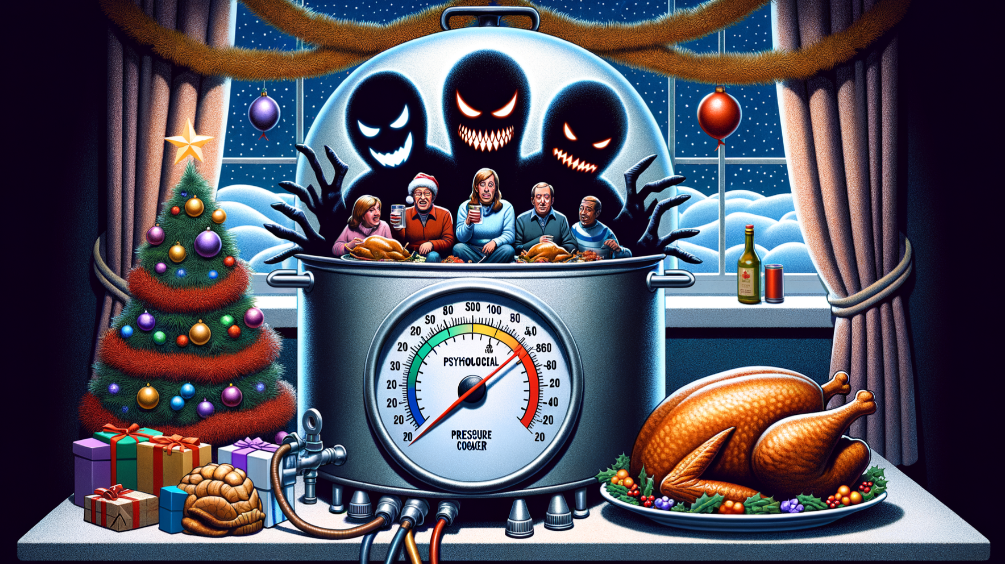
So, we know it happens. The data is irrefutable. But why? What is it about the tinsel, turkey, and togetherness that acts as a poison pill for so many relationships? It boils down to three primary psychological pressures that turn the holiday season into a relational minefield.
Killer #1: The Pressure Cooker of “Perfect”
The modern holiday season is no longer just a family gathering; it’s a performance. And the pressure to perform perfectly can crack even the strongest foundations.
The Instagram Illusion
Your social media feed becomes a highlight reel of curated perfection: matching pajamas, romantic ice-skating dates, flawlessly decorated homes, and beaming smiles under the mistletoe. This creates an intense, often subconscious, pressure to project the same image of bliss. When your reality is bickering over who bought the wrong kind of eggnog or feeling apathetic while your partner opens their gift, the gap between the online fantasy and your offline reality becomes a chasm of disappointment. You start to question not just the holiday, but the entire relationship that’s failing to live up to the fantasy.
The Family Gauntlet
For many, the holidays mean “meet the parents” or, even more daunting, “spend a week with the in-laws.” This is the ultimate stress test. You’re forced to see your partner through the lens of their family dynamics—do they revert to a petulant teenager around their mom? Do they stand up for you when their uncle makes a weird political comment? You’re judged, they’re judged, and your relationship is placed under a microscope by people whose opinions, whether you like it or not, carry weight. Clashing family traditions, differing values, and old wounds can create a toxic brew that exposes fundamental incompatibilities you’d previously managed to ignore.
Killer #2: The Financial Hangover
Arguments about money are a leading cause of divorce year-round. The holidays just pour gasoline on that fire. The pressure to spend, gift, and travel can be immense, leading to stress, debt, and resentment.
From Gifting to Grifting
The National Retail Federation consistently reports that holiday spending reaches hundreds of billions of dollars in the U.S. alone. This creates a financial strain that can be devastating for couples. Disagreements over budgets, credit card debt, and the sheer cost of travel and entertainment can lead to explosive fights. That joy of giving can quickly feel like a burden, and the person you’re supposed to be celebrating with becomes the source of your financial anxiety.
Mismatched Values on Display
Gift-giving is rarely just about the object itself; it’s a symbolic act. Did your partner get you something incredibly thoughtful that shows they listen? Or did they grab a generic gift card at the last minute? Did they spend way too much, ignoring your agreed-upon budget? Or were they stingy, making you feel undervalued? How a person approaches the financial and emotional calculus of gifting can be a massive reveal of their core values, their level of consideration, and their respect for you and your shared goals. A bad gift isn’t just a bad gift; it can be a symptom of a much deeper disconnect.
Killer #3: The Forced Intimacy Fallacy
The holidays operate on an assumption of blissful togetherness. You’re expected to spend days, even weeks, in close proximity. This forced intimacy can be a catalyst for disaster, either by accelerating a relationship too quickly or by highlighting a painful lack of connection.
Too Much, Too Soon (or Too Late)
For new couples, the holidays can be a “make or break” moment. Being thrown into intense family situations and 24/7 contact can feel like skipping ten steps in the relationship. It can be overwhelming and expose cracks that weren’t ready for that level of pressure. For long-term couples, the opposite can be true. When you’re finally forced to put down your work, turn off Netflix, and actually spend uninterrupted time together, you might discover a terrifying emptiness. The constant activity of daily life can mask a fundamental lack of connection. When that activity stops, the silence can reveal that you’ve become little more than roommates.
The “New Year, New Me” Catalyst
This is perhaps the most powerful psychological driver of all. The turn of the calendar from December 31st to January 1st represents a profound mental reset. It’s a culturally ingrained moment for self-reflection and goal-setting. We ask ourselves: “What do I want to change? What’s holding me back from being happy?” If the relationship has been a source of stress, sadness, or stagnation, it becomes Target #1 in the “New Year, New Me” purge. Ending a relationship that isn’t working can feel like the most decisive step one can take toward a happier future, making January the perfect time to pull the trigger.
Is Your Relationship at Risk? Red Flags to Watch For

Think back over the last few weeks. Did any of these feel a little too familiar?
· The Post-Family Debrief: Did you spend the car ride home from a family gathering in stony silence, or did it erupt into a fight about “the way your mom looked at me”?
· The Gift Resentment: Do you feel a pang of disappointment or even anger when you look at the gift your partner gave you?
· The Relief of Being Alone: Was your first thought when the last guest left, “Thank God that’s over,” accompanied by a feeling of relief to finally have space from your partner?
· Future-Talk Avoidance: When you tried to talk about plans for next summer or a trip in the spring, did your partner seem distant or change the subject?
These aren’t just minor tiffs; they are symptoms of the deeper issues unearthed by the holiday pressure cooker.
Conclusion: Beyond the Wave
The post-holiday breakup wave isn’t a myth, and it isn’t a prophecy that your relationship is doomed. It is a stark reminder that the stress, financial strain, and forced intimacy of the holiday season act as a powerful catalyst, accelerating the inevitable for relationships that are already fragile.
It exposes the cracks in the foundation that we paper over during the rest of the year. It holds up a mirror and forces us to confront the difference between the life we’re projecting and the one we’re actually living.
For some, this period will lead to a painful but necessary ending, a clearing of the path for a happier future. For others, recognizing these pressures can be the start of a crucial conversation—a post-holiday “check-in” to acknowledge the stress and reconnect with honesty.
The key is awareness. Understanding why this happens gives you the power to assess your own situation with clear eyes. The end of the holidays doesn’t have to mean the end of your relationship, but it is, without a doubt, a moment of truth.
What’s your take? Have you witnessed the post-holiday breakup wave firsthand, in your own life or a friend’s? Share your story and insights in the comments below. Let’s talk about it.