
Introduction

Just last week, the internet shattered. Not because of a political scandal or a market crash, but because of a handful of paparazzi photos. The subject? Leo Vance, the man the world has known for the last decade as the chiseled, god-like superhero “Captain Comet.” The photos, taken on a beach in Spain, showed him looking… well, normal. Soft around the middle, relaxed, and enjoying a vacation with his family. He looked like a healthy 40-year-old man.
The digital firestorm was immediate and brutal. One half of the internet decried him for “letting himself go,” posting side-by-side images of his shredded on-screen physique with captions like “What happened?” The other half rushed to his defense, celebrating his “dad bod” and praising him for being real. But in the midst of this chaotic debate, we’re missing the terrifyingly simple truth: what we were witnessing wasn’t a story about one actor’s weight gain. It was the public unraveling of a dangerous, multi-million dollar illusion that we have mistakenly labeled “discipline.”
For years, we’ve been sold a myth: that the superhero body is the ultimate symbol of personal dedication, willpower, and body management. We look at these actors and think, “If only I had their discipline, I could look like that too.” But what if I told you that this “discipline” is a carefully constructed, medically supervised, and financially exorbitant fantasy? What if the real story isn’t about willpower, but about a borderline abusive process that is creating a silent health crisis, both for the stars on screen and for the millions of us watching at home? Let’s pull back the curtain.
The “Captain Comet” Illusion: Deconstructing the Superhero Physique
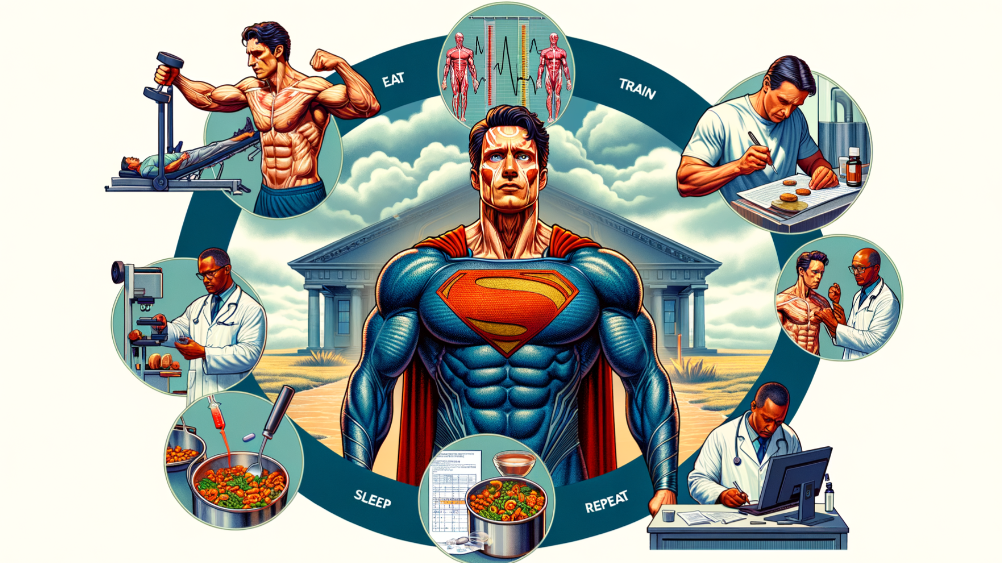
When you see an actor with veins popping on their biceps and abs so defined they look like they were carved from granite, you’re not seeing the result of a few extra gym sessions and cutting out carbs. You’re seeing the endpoint of a full-time job, executed by a team of specialists, often at a tremendous physical and mental cost.
This isn’t an exaggeration. It’s a business. According to interviews with celebrity trainers and industry insiders published in Variety and Men’s Health, the budget for a single actor’s transformation can easily soar into the six-figure range. This money doesn’t just go to a personal trainer. It funds a team:
· Elite Trainers: Who often dictate every moment of the actor’s day.
· Private Chefs: Who meticulously weigh every gram of protein, fat, and carbohydrate.
· Nutritionists and Doctors: Who monitor blood work, hormone levels, and administer supplements to push the body beyond its natural limits.
· The Schedule: Actors often train for two to four hours a day, six days a week, on top of stunt training and a 12-hour day of filming. Their life becomes a grueling cycle of eat, train, sleep, repeat.
The Dehydration Trick
Here’s one of the industry’s dirtiest little secrets, the one that produces that “shrink-wrapped” look for shirtless scenes. For about 48-72 hours before filming, actors will often systematically dehydrate themselves. As celebrity trainer Don Saladino, who has worked with stars like Ryan Reynolds and Sebastian Stan, has explained in interviews, this process involves manipulating water and sodium intake to drain all the water from under the skin, making muscles appear razor-sharp. It’s a dangerous practice that can lead to muscle cramps, dizziness, and extreme exhaustion. The “peak” physique you see on screen might only be achievable for a few hours on a single day. It is, quite literally, a carefully orchestrated illusion for the camera.
The Caloric Rollercoaster
The bulking and cutting cycles are just as extreme. To build muscle, actors are often forced into a “dirty bulk,” consuming upwards of 6,000 calories a day. Then, to get shredded, they slash their intake to a punishingly low level. This metabolic whiplash is incredibly taxing on the body’s organs and hormonal systems. Henry Cavill famously spoke about being in a constant state of hunger while filming The Witcher, a testament to the unsustainable nature of maintaining such a low body fat percentage. True discipline and body management should be about long-term health, not a violent, short-term aesthetic chase that treats the body like a rental car.
The Discipline Delusion: Why “Trying Harder” Isn’t the Answer
This brings us to the core of the problem: the weaponization of the word “discipline.” We’re told that these actors have it and we don’t. This narrative is not only false; it’s profoundly damaging.
When an average person with a 9-to-5 job, a family, and a budget tries to emulate this, they are set up for failure. You can’t “out-discipline” someone whose entire life and multi-million-dollar career are singularly focused on their physique, supported by a team of paid experts. Comparing your own fitness journey to theirs is like a local go-kart enthusiast comparing their lap times to a Formula 1 driver. You’re not even playing the same sport.
The psychological toll is immense. The pressure to achieve these impossible standards is a contributing factor to rising rates of body dysmorphic disorder (BDD), a condition where a person can’t stop thinking about one or more perceived defects in their appearance. The International OCD Foundation estimates that BDD affects about 1 in 50 people, and it’s increasingly being recognized in men, who are now bombarded with these hyper-masculine, unattainable body ideals.
The Dopamine Trap of Transformation
For the actors themselves, this cycle is a gilded cage. They are showered with praise, magazine covers, and public adoration for their physical transformations. This validation can become addictive. But what happens when the movie wraps? Maintaining that physique is physically unsustainable and unhealthy. As their bodies return to a normal, healthy state—like Leo Vance’s—they face public scrutiny and a personal sense of loss. This can create a dangerous psychological loop, tying their self-worth directly to an extreme, temporary physical state.
Beyond the Silver Screen: The Real-World Fallout

This Hollywood-centric issue has bled into our everyday lives through the hyper-visual medium of social media. The “fitspiration” movement, while well-intentioned in some corners, has largely become a gallery of these same impossible standards. Influencers, often using strategic lighting, angles, and sometimes performance-enhancing drugs, present a 24/7 highlight reel of a life dedicated to aesthetic perfection.
The result? We scroll through our feeds and are met with a constant reminder of how we’re supposedly failing. A 2021 study published in the scientific journal Body Image found a direct and significant correlation between time spent on image-focused social media platforms and increased body dissatisfaction and disordered eating behaviors.
We try a new diet, we join a new gym, and we push ourselves harder. When we don’t look like a Marvel hero in six months, we don’t blame the impossible standard; we blame our own lack of “discipline.” We internalize the failure, believing we are lazy or weak. The industry that profits from this insecurity—from workout plans to supplements to diet teas—is more than happy to let us believe it. This is the real crisis. It’s a quiet epidemic of shame, anxiety, and self-loathing, all stemming from a lie packaged as inspiration.
Conclusion: Redefining Discipline and Reclaiming Our Bodies
So, let’s go back to those photos of Leo Vance. What if we chose to see them not as a “fall from grace,” but as a moment of liberation? He wasn’t “letting himself go”; he was letting go of a physically and mentally punishing illusion. He was choosing to be a person, not a permanent superhero poster.
It’s time we radically redefine what “discipline and body management” truly means.
Real discipline isn’t about starving yourself for a shirtless scene. It’s the consistency of going for a walk every day because it clears your head. It’s the dedication to getting enough sleep to function well. It’s learning to cook nutritious meals that you actually enjoy. It’s the strength to show up for your workout on a day you feel unmotivated, but also the wisdom to rest when your body needs it.
True body management is not a war waged against yourself in pursuit of an aesthetic ideal borrowed from a movie screen. It is a lifelong practice of respect, care, and kindness for the only body you will ever have. It’s about managing your health, your energy, and your mental well-being, not just your body fat percentage.
The most disciplined thing you can do is to unsubscribe from the illusion. To unfollow the accounts that make you feel inadequate. To stop comparing your real life to someone else’s highlight reel. To appreciate your body for what it can do, not just how it looks.
The six-pack may be a six-figure lie, but the truth of your own health and happiness is priceless.
What does true discipline and body management mean to you? Is it a chiseled physique, or is it the strength to walk away from an impossible standard? Share your thoughts in the comments below.