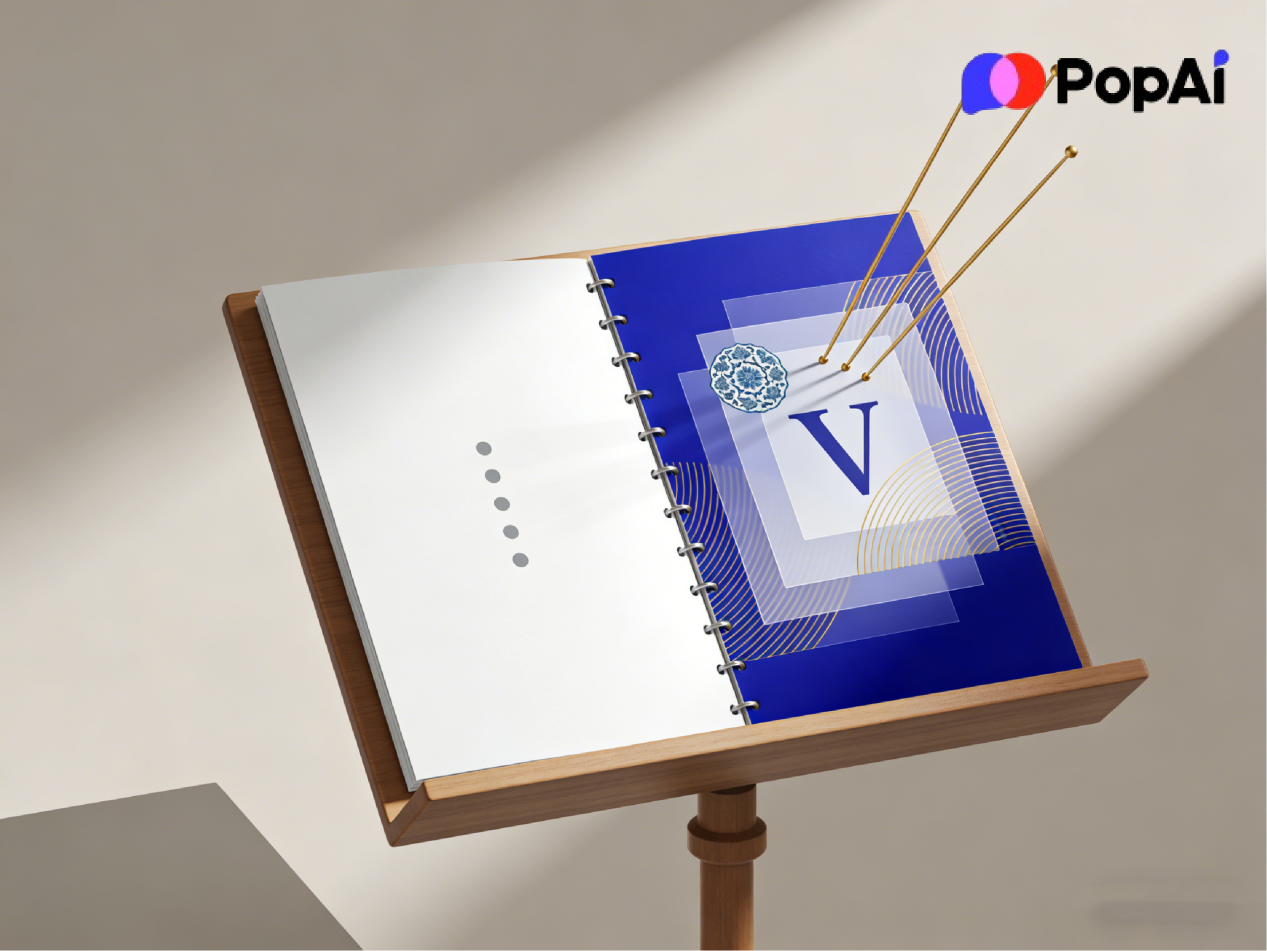
For two decades, corporate presentations have worshipped at the altar of white space. Clean lines. Single images. Three bullet points. The gospel of “less is more” became unquestioned orthodoxy, enforced by template libraries that treated every slide as a waiting room—calm, neutral, and aggressively forgettable.
But in 2026, something is shifting. At Samsung’s CES 2026 Tech Forum, designers Karim Rashid and Fabio Novembre asked: what comes after uniformity? Their answer gestured toward warmth and expressive design that refuses to fade into the background. In Malaysian homes, designers are discarding beige and layering chinoiserie wallpapers with sculptural lighting. On Paris runways, Kartik Research staged a maximalist rebellion against quiet luxury.
This is not chaos. This is curation with conviction.
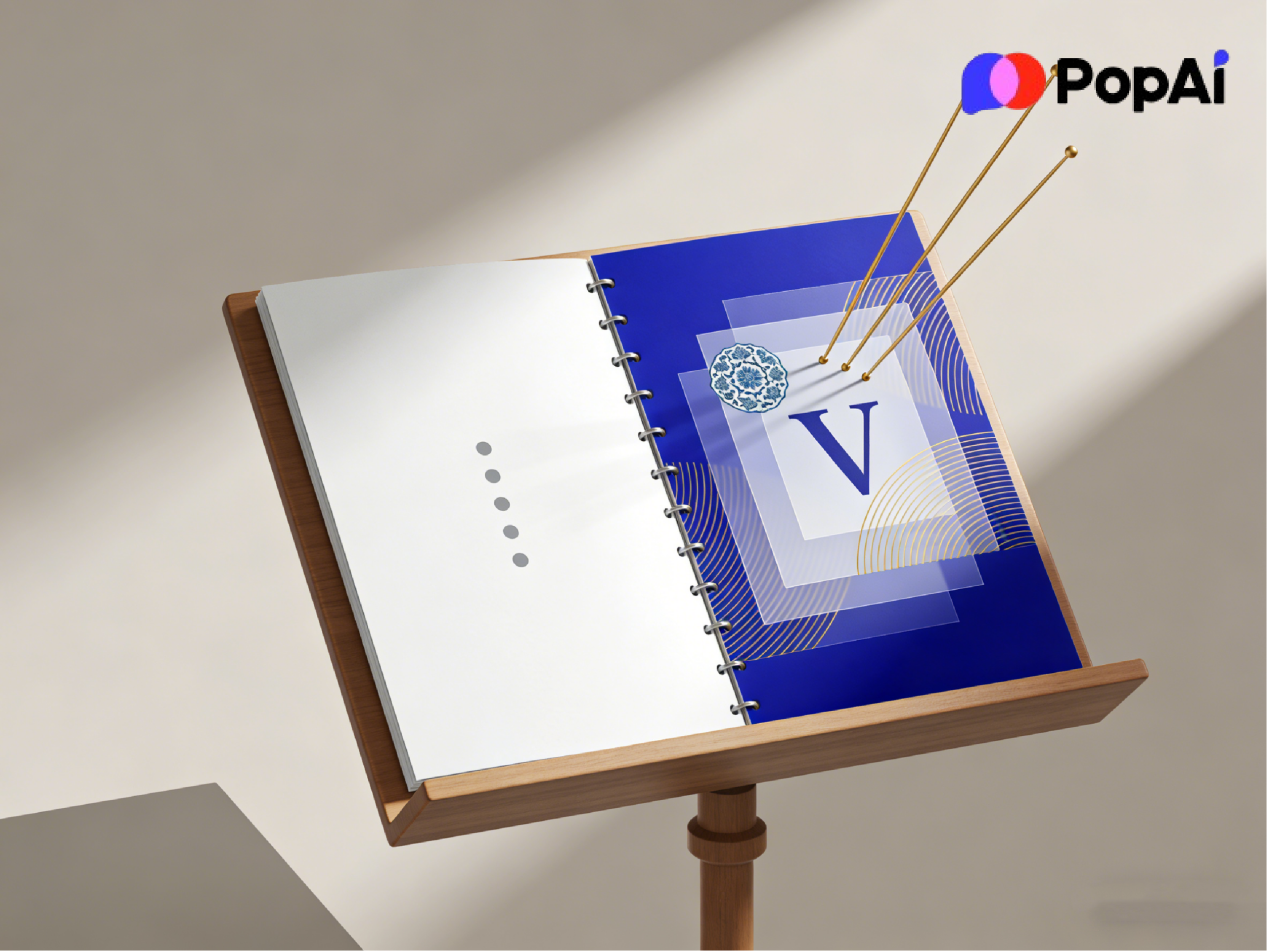
The question is no longer whether maximalism can work on slides. It is how to translate its core principles—intentionality, layering, personal narrative, emotional audacity—into a medium built for clarity. A maximalism design slides presentation is not a scrapbook. It is a visual symphony where every element earns its place, where density signals richness rather than confusion, and where attention is commanded, not assumed. This guide dismantles minimalist dogma and provides a strategic framework for constructing maximalist presentations that persuade precisely because they refuse to simplify.
The Philosophy of Intentional Abundance
Before any visual element touches a slide: what distinguishes maximalism from clutter?
Contemporary maximalism is not the pattern-on-pattern chaos of the 1980s. It is disciplined abundance—rigorous editing applied to a broader visual vocabulary. Architect Katrine Cheong articulates the paradox: “Control and balance are everything. It’s easy to start, but you must also know when to stop.” Her maximalist interiors begin with strong color architecture, then layer characterful elements—every addition measured against the foundation.
This is the philosophical bedrock of an effective maximalism design slides presentation. The goal is not to maximize the number of elements. It is to maximize the density of meaning per slide. Every visual choice carries narrative weight. White space is not eliminated; it is redistributed as one design material among many, not the default state.
For presentation designers trained exclusively in minimalism, this reframing is liberating and destabilizing. The familiar guardrails—”one idea per slide,” “use white space to breathe”—suddenly feel like stylistic preferences masquerading as absolutes. A maximalism design slides presentation operates under a different covenant: this will take more of your attention, but it will reward that attention with greater insight, emotion, and memorability.
This covenant must be earned. It requires visual sophistication, narrative coherence, and technological leverage. PopAi’s intelligent design tools transform aspiration into execution.
The Four Pillars of Maximalist Slide Architecture
Contemporary maximalism organizes itself around four recurring and essential principles: saturated color palettes, layered patterns, personally curated details, and bold statement elements. When transposed into presentation design, these four principles become the structural pillars of an impactful maximalism design slides presentation.
Pillar One: Saturated Chromatic Architecture
Minimalist slides deploy color sparingly as a subtle accent. Maximalist slides boldly invert this relationship. Color becomes the vibrant ground, not the figure. Deep jewel tones—emerald, oxblood, sapphire, and amethyst—establish emotional temperature and visual identity before a single word is read.
Saturated hues trigger stronger emotional responses, capture attention, and enhance memory encoding. In a maximalist framework, color strategically contains the content. The practical challenge remains legibility. PopAi’s AI-enhanced content engine automatically scans background color selections, evaluates contrast ratios, and recommends optimal text treatments—adjusting font weights, introducing subtle backing plates, or suggesting complementary accent colors that meet WCAG accessibility standards without ever compromising the bold maximalist aesthetic.

Pillar Two: Pattern, Texture, and Visual Layering
Where minimalism strips away, maximalism intentionally builds up. In interiors, this is plush bouclé against sleek resin, carved walnut beside rippled glass. In presentations, texture becomes visual: backgrounds incorporate subtle textile scans, elegant marble veining, or layered geometric pattern overlays. Images bleed dynamically to edges, overlap with purpose, or sit within richly ornamented frames that frame the narrative.
The risk, of course, is visual chaos rather than curated richness. PopAi’s intelligent layout algorithms analyze complex foreground-background relationships, automatically adjusting opacity, contrast, and overlay intensity to preserve complete legibility while maintaining luxurious visual richness. One-click annotation management allows teams to instantly flag clarity compromises, continuously training the AI to recognize and respect your specific tolerance thresholds.
Pillar Three: Curated Personalization and Narrative Objects
Maximalist interiors are distinguished not by generic catalog aesthetics but by layered personal history—a weathered flea-market ceramic, an inherited mid-century sideboard. These objects serve as powerful narrative anchors within the space.
A maximalism design slides presentation achieves deep resonance through curated visual assets that deliberately resist generic stock photography. It demands images that reflect authentic team environments, genuine customer contexts, or original metaphors specific to your strategic argument. PopAi’s AI art image generator transforms this aspiration from costly custom illustration into accessible, scalable practice. By intelligently interpreting rich text descriptions—”abstract supply chain resilience incorporating Southeast Asian textile motifs”—the platform instantly generates bespoke visuals with narrative specificity simply impossible to source from conventional stock libraries.
Pillar Four: Statement Elements and Sculptural Typography
In maximalist interiors, lighting is never merely functional. Oversized chandeliers function as visual anchors. The presentation equivalent is typographic sculpture. Titles occupy forty or sixty points. Letterforms are tracked loosely, set in high-contrast weights, or rendered as outlined strokes.
Typographic scale creates macro-level visual hierarchy. A single numeral—”47.3%”—scaled to occupy half the slide communicates urgency more efficiently than any bullet point. PopAi’s seamless editing environment supports this through intelligent layout preservation. When a headline is dramatically enlarged, the platform recomposes surrounding elements to maintain equilibrium. When a pull quote is set in display typography, the AI suggests complementary font pairings.
Narrative Complexity: Managing Dense Information Flows
The persistent objection to maximalism is cognitive: if every slide is visually dense, doesn’t the audience shut down?
This rests on a flawed premise—that visual density and cognitive clarity are inversely correlated. The relationship is mediated entirely by information architecture. Clutter is irrelevant elements. Complexity is relevant elements in relationship. Maximalism embraces complexity; it rejects clutter.
Consider presenting a multi-variable sensitivity analysis. A minimalist approach distributes the analysis across eight slides; the audience mentally synthesizes relationships. A maximalist approach presents the entire model on a single canvas—dense but legible, all variables coexisting, interactions visible at a glance.
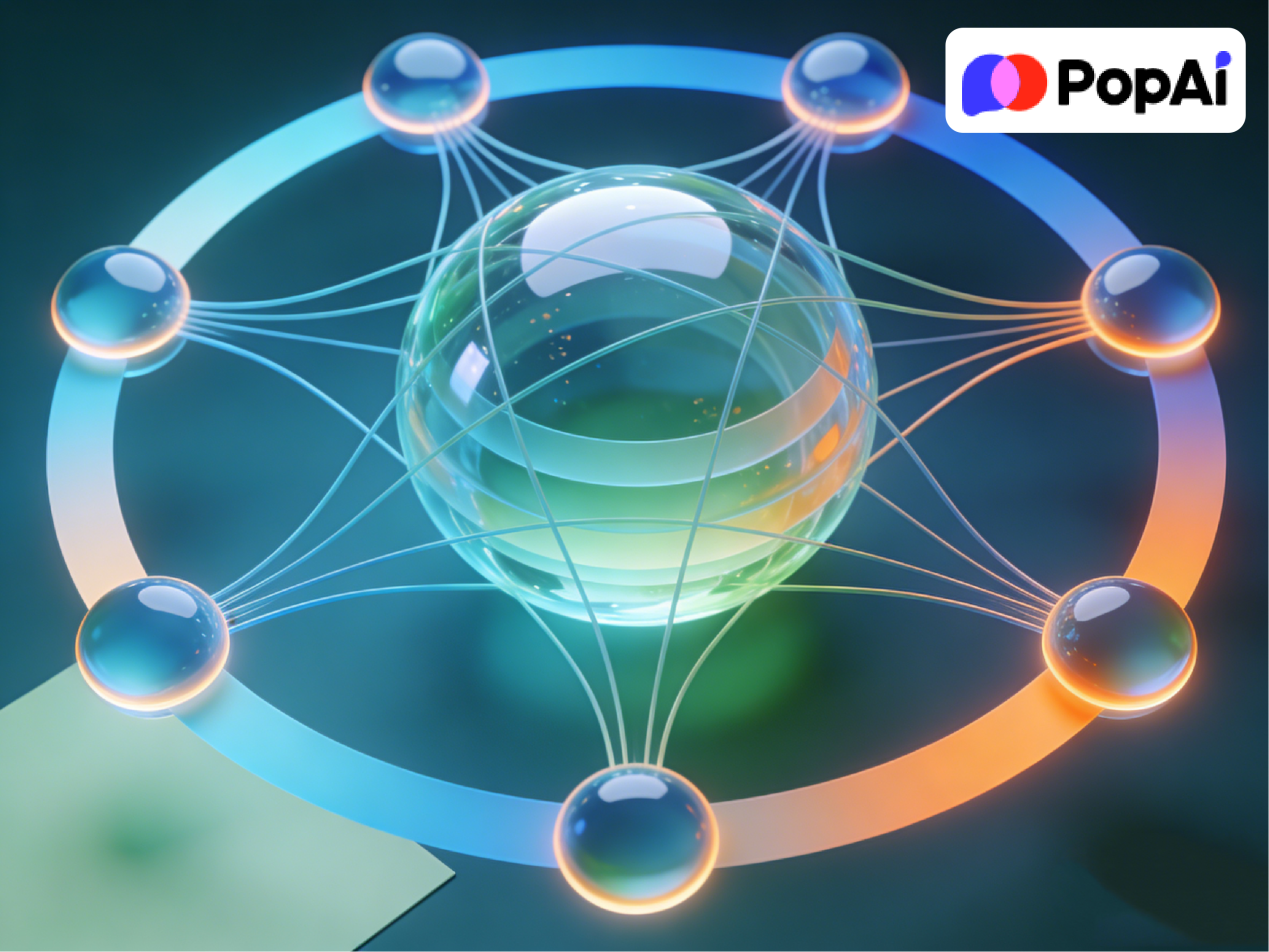
Research increasingly suggests that splitting related information across sequential slides forces audiences to perform mental integration the presenter should have performed. A well-architected maximalist slide performs that integration for the audience.
PopAi’s AI document reading engine identifies relationships between data points and suggests visualizations that preserve them. Correlations are not isolated on separate slides; they are visualized as connected systems. Automatic flowchart generation transforms narrative relationships into spatial ones.
The Kinetic Dimension: Animation as Narrative Velocity
If static maximalism is about layering, animated maximalism is about unfolding. The same slide that initially presents as a saturated composition reveals internal structure through sequenced animation—elements entering, shifting opacity, migrating position.
This is choreographed disclosure. A dense visualization of quarterly performance begins as an abstract color field, then resolves into individual product lines as the presenter discusses each. The audience is shown the complete system upfront, establishing that the presenter understands the whole. Animation then guides attention through components.
This contradicts minimalist progressive disclosure. Maximalist sequencing assumes audiences need the complete picture as a cognitive map. PopAi’s AI-enhanced content supports this through intelligent animation presets, analyzing composition and suggesting reveal sequences that respect visual hierarchy.
The Collaboration Paradox: More Elements, More Editors
Maximalism introduces a collaboration challenge. When slides contain dozens of elements, decisions requiring alignment multiply. Traditional tools fail catastrophically—version control is manual, feedback scattered, connections between source data and visuals severed.
PopAi’s architecture addresses this through intelligent document management and one-click annotation management. Every element retains connection to source materials. When a collaborator flags a discrepancy, the annotation attaches to the specific chart and its underlying spreadsheet. When source data updates, all dependent visualizations refresh automatically—preserving maximalist density without unsustainable manual maintenance.
Automatic save management and version tracking create an audit trail. Teams can review how a maximalist composition developed, which elements were added or removed, and what feedback drove decisions. This builds organizational knowledge that transcends individual project memory.

The Confidence to Fill the Frame
Minimalism, at its worst, is fear masquerading as taste. Fear of overwhelming the audience. Fear of making the wrong choice. The blank slide demands nothing and risks nothing. It is safe. It is also forgettable.
Maximalism demands more. Confidence that your audience will lean in rather than retreat. Editorial rigor to ensure abundance never slides into chaos. Technical infrastructure to execute complexity at scale. And a fundamental reorientation of what presentations are for: not the transmission of minimal viable information, but the creation of immersive, memorable experiences that reward sustained attention.
The designers reclaiming maximalism are insisting that the spaces we inhabit—physical and visual—should reflect the full complexity of the lives lived within them. A maximalism design slides presentation makes the same argument about the intellectual spaces we construct with colleagues and partners. Your analysis is not simple. Your strategy is not reductive. Why should your slides pretend otherwise?
PopAi does not replace your strategic judgment. It provides the creative and technical leverage to build presentations that match the sophistication of your thinking—without the unsustainable manual effort that has historically confined maximalist presentation design to a tiny minority.
The tools are here. The philosophy is ascendant. It is time to fill the frame.