Introduction: The Presentation Crisis Nobody’s Talking About
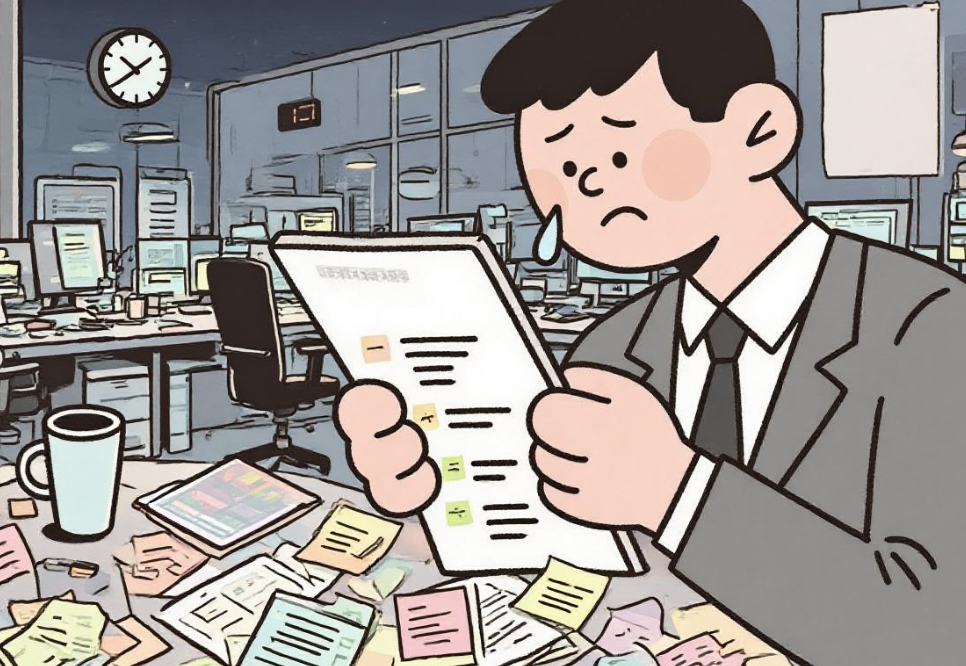
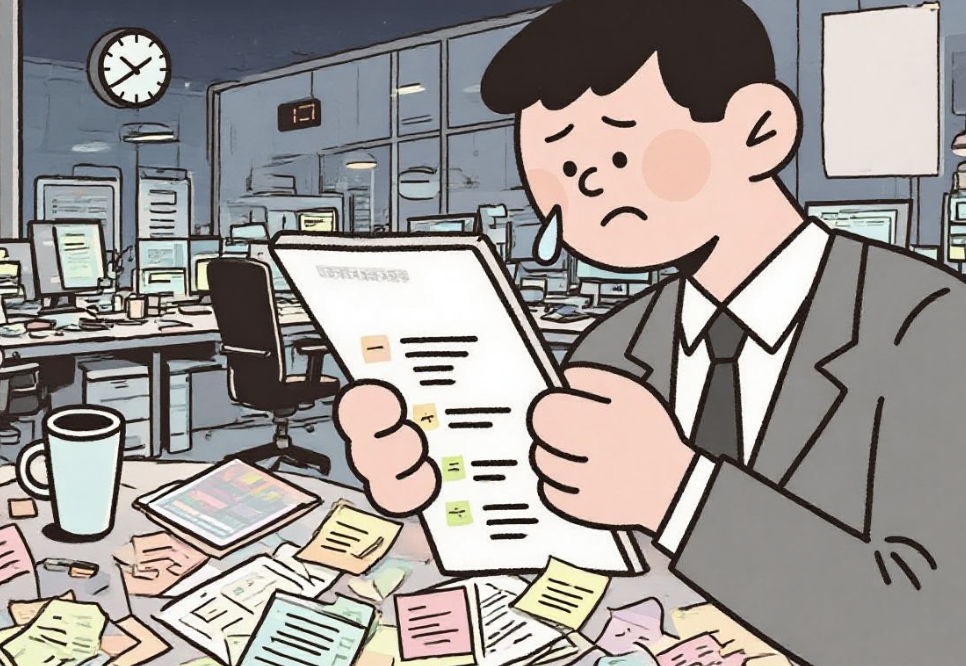
Here’s a fact that keeps HR directors up at night: the average professional spends 4.3 hours per week creating presentations. Let that sink in. That’s equivalent to spending nearly a full day every single week just arranging slides, hunting for images, and rewriting the same bullet points in slightly different ways.
But here’s what’s really shocking—according to recent workplace productivity reports, 73% of workers admit their presentations are either boring, ineffective, or both. We’ve reached a breaking point where traditional PowerPoint workflows are becoming the invisible bottleneck strangling modern productivity.
Meanwhile, something seismic is happening beneath the surface. The rise of AI-powered presentation tools isn’t just a trend anymore—it’s a fundamental shift in how professional communication works. And if you haven’t noticed this wave yet, you’re about to get swept away by it.
This is where PopAI enters the conversation. Your PowerPoint, Supercharged: AI for Smarter Layouts & Content isn’t just marketing copy anymore. It’s describing a genuine transformation in how presentations get created, and the implications are deeper than most people realize.
Why Traditional Presentations Are Becoming Obsolete
The Time Drain Nobody Calculated</font>
Let’s do the math. If you’re a working professional spending even 3-4 hours weekly on presentations, that’s roughly 200+ hours annually. Over a career spanning 40 years, you’re looking at nearly 8,000 hours—equivalent to almost a full year of your professional life—spent on presentation grunt work.
Most of that time isn’t spent on creative thinking or strategic communication. It’s spent on:
· Searching for the “perfect” template
· Finding stock images that actually fit your narrative
· Reformatting slides because the design looks unprofessional
· Rewriting content to fit predetermined layouts
· Dealing with collaboration chaos when multiple people edit the same file
The brutal truth? This workflow hasn’t fundamentally changed since PowerPoint launched in 1987.
The Quality Problem Hiding in Plain Sight
Here’s something that corporate training departments rarely admit: most in-house presentations are genuinely mediocre. Not because the ideas are bad, but because the execution tools force mediocrity.
Think about the last presentation you sat through. The speaker probably had brilliant insights, but the slides featured:
· Misaligned text boxes
· Clashing color schemes
· Too many words crammed onto a single slide
· Images that clearly came from different design eras
· Animation effects that looked like they belonged in a 2003 music video
The template-based approach to presentation design creates a lowest-common-denominator aesthetic. Everyone gets the same limited options, so everything starts looking like a variation on the same tired formula.
The Remote Work Acceleration Nobody Expected
Since 2020, presentation creation has exploded. Remote work normalized asynchronous communication, which paradoxically increased the need for polished, self-contained presentations. You can’t rely on in-person charisma anymore—your slides have to do the heavy lifting.
Sales teams now create 40% more presentations than pre-pandemic. Internal communicators are producing videos and slide decks at unprecedented rates. And everyone’s struggling to keep up with the volume while maintaining quality.
Why PopAI’s AI Approach Changes Everything
Smart Layouts That Actually Work
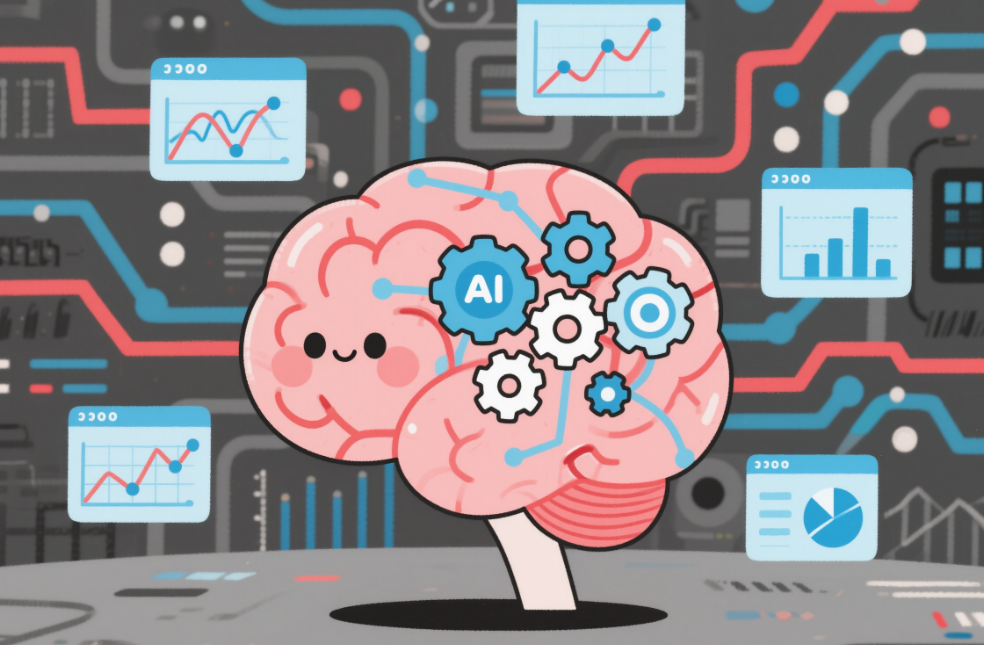
This is where PopAI fundamentally disrupts the presentation space. Instead of choosing from pre-built templates, PopAI’s AI engine analyzes your content and generates intelligent layouts specifically designed for your information.
Here’s what makes this different: the AI understands content hierarchy. It recognizes when you have data points that need comparison, when you’re telling a narrative arc, when you’re introducing complex concepts that need visual breathing room. Rather than forcing your ideas into a template, it shapes the design around your actual message.
Early users report that using PopAI’s smart layout feature reduces their design iteration time by approximately 60%. That’s not a marginal improvement—that’s transformative.
Content Generation That Respects Intelligence
The AI-powered content features in PopAI don’t just fill your slides with generic placeholder text. The system understands context and purpose. Feed it a topic, key points, or even raw data, and it generates talking points that are actually relevant and professionally articulated.
This is crucial for busy professionals who have ideas but struggle with content formatting. The AI helps translate thoughts into polished, presentation-ready language—but it doesn’t do all the thinking for you. You maintain creative control while eliminating the tedious writing and formatting mechanics.
Users who’ve integrated PopAI into their workflow report creating presentations 3-4 times faster than their previous approach, while actually improving quality metrics around visual hierarchy and audience engagement.
The Accessibility Revolution
Here’s something that rarely makes headlines: AI presentation tools democratize professional design. Previously, if you weren’t naturally talented at design and didn’t have access to a design team, your presentations looked like it. PopAI levels that playing field.
A sales representative in a smaller company can now produce slides that are genuinely competitive with presentations from Fortune 500 enterprises. That’s not just convenient—it’s fundamentally changing workplace equity.
The Larger Transformation Happening Now
Why Companies Are Paying Attention

Smart enterprises recognize that presentation capability is increasingly becoming a core professional skill—and a competitive advantage. Teams that can quickly communicate ideas through compelling presentations are faster, more persuasive, and more effective.
This explains the rapid adoption curve we’re seeing with PopAI and similar tools. It’s not hype. It’s legitimate ROI.
Companies are now evaluating presentation tools not as nice-to-haves but as genuine productivity infrastructure. The calculus is simple: if your team wastes 200+ hours annually on presentation mechanics, investing in smarter tools saves time, money, and sanity.
The Skills Shift
We’re witnessing a subtle but important shift in what “presentation skills” actually means. It’s moving away from “I can make PowerPoint look professional” and toward “I can clearly communicate complex ideas in compelling formats.”
PopAI empowers this shift by removing the design/technical barrier. Suddenly, professionals can focus on what truly matters: the content, the narrative structure, and the strategic communication objective.
This is why adoption among high-performing teams has been particularly rapid. They care about outcomes, not tools. They want to spend cognitive energy on what they’re communicating and why, not on how to make the slides look decent.
Why This Moment Matters (And Why You’re Probably Underestimating It)
The Efficiency Compounding Effect
Here’s what’s interesting about productivity improvements: they compound. If you save 3 hours per presentation, that’s not just “3 more hours in your week.” It’s 3 hours you could invest in strategic thinking, client relationships, or actually moving your projects forward.
That compounds over a year, over a career. PopAI isn’t just speeding up the mechanics—it’s fundamentally reshaping how time gets allocated in knowledge work.
The Quality Ceiling Rising
There’s also a phenomenon happening where AI-assisted tools are raising the baseline quality standard. When everyone has access to intelligent layout systems and smart content suggestions, mediocre presentations become even more noticeable.
This creates a positive feedback loop for users who adopt PopAI early. You’re not just using a better tool—you’re getting competitive advantage in a world where presentation quality increasingly signals credibility and professionalism.
The Hidden Psychological Impact
Let’s be real: most professionals dread presentation creation because it feels inefficient and frustrating. PopAI changes this dynamic. When the tool does the heavy lifting on mechanics, the entire experience becomes less cognitively taxing.
This matters more than it sounds. Better user experience means people actually use the capabilities available to them. They’re more likely to iterate, improve, and ultimately create better communication outputs.
What Separates PopAI from Generic AI Tools
Presentation-Specific Design Understanding
PopAI isn’t a generalist AI trying to handle presentations as one task among many. It’s specifically engineered for presentation design and communication. This specificity matters enormously.
The system understands slide-specific constraints: aspect ratios, readability distances, information density, the flow of sequential slides. It knows that what works on a poster doesn’t work in a slide deck. This specialized knowledge translates to objectively better outputs.
Integration, Not Replacement
PopAI positions itself as a productivity multiplier for existing workflows, not a disruptive replacement. You can work with your preferred office tools, your existing brand guidelines, your specific format requirements. The AI enhances your process rather than forcing you into a new paradigm.
This pragmatic approach is why adoption curves are so steep. You don’t need to completely retrain your team or abandon existing systems—you just get smarter, faster.
The Professional Profile That Benefits Most
Sales and Business Development Teams
If you’re creating multiple presentations weekly for different clients, PopAI is essentially a force multiplier. The combination of smart layouts and quick content generation means you can maintain higher quality across more presentations with the same time investment.
Executive and Strategy Roles
High-level professionals often struggle with presentation execution because they’re thinking at the strategic level while simultaneously managing technical details. PopAI eliminates that distraction, letting them focus on what they’re uniquely positioned to provide: strategic insight.
Educators and Training Professionals
Creating engaging educational content at scale is virtually impossible with traditional tools. PopAI’s ability to rapidly generate and format content-heavy presentations opens new possibilities for instructional design and online education.
The Financial Reality: Why Paying for PopAI Actually Makes Sense
Let’s do a straightforward calculation. If PopAI helps you create presentations 60-70% faster, and you’re producing even a modest 15-20 presentations monthly, that’s roughly 40-50 hours saved monthly.
Depending on your hourly value (whether you’re recovering billable hours, getting projects done faster, or simply reducing stress), PopAI’s subscription cost pays for itself within the first 1-2 months for most professionals. After that, it’s just pure productivity gain.
But the real value isn’t just time savings. It’s quality improvement. Better presentations lead to better outcomes: more persuasive pitches, clearer internal communication, stronger stakeholder buy-in.
From a pure ROI perspective, especially for anyone creating presentations regularly, PopAI is one of the most straightforward tool investments you can make. The payback period is rapid and the ongoing value is measurable.
The Broader Implication: What Happens When AI Becomes This Integrated
We’re at an inflection point where AI tools stop being exotic and start being infrastructure. PopAI represents this shift within the presentation space. In 12-24 months, not using AI assistance for presentation creation will start feeling like not using spell-check or templates—technically possible but professionally disadvantageous.
This isn’t about hype or FOMO. It’s about realistic adaptation to tools that demonstrably improve outcomes.
The Bottom Line: Why You Should Care
The presentation isn’t dead. It’s evolving. And the professionals who recognize this evolution early are the ones who’ll capture the productivity and quality gains available right now.
PopAI represents the maturation of AI applications in professional tools. Your PowerPoint, Supercharged: AI for Smarter Layouts & Content isn’t just catchy marketing—it’s an accurate description of what’s possible when intelligent design meets professional communication tools.
Whether you’re drowning in quarterly deck creation, frustrated with design limitations, or simply want to spend less time on mechanics and more time on strategy, PopAI addresses a genuine pain point with technology that actually works.
The tools we choose shape our productivity. Choosing well isn’t just smart—it’s increasingly essential.