Introduction: The Cyber Storm Hits Hard in 2026
Picture this: It’s early January 2026, and headlines scream about a massive breach at NordVPN, where a hacker brute-forced a development server, spilling API keys and source code across the dark web. Over 10 databases exposed, no customer data hit—yet the ripple effects? Panic among millions of users, eroding trust in VPN giants. But that’s just the tip. The World Economic Forum’s Global Cybersecurity Outlook 2026 drops a bombshell: AI is supercharging attacks, geopolitical rifts are widening vulnerabilities, and supply chains are cracking under pressure. Ransomware? It’s not even the top worry anymore—cyber fraud has overtaken it as CEOs’ nightmare fuel.
As a seasoned news blogger who’s tracked these digital battlegrounds for years, I’ve seen how these events aren’t isolated glitches; they’re symptoms of a deeper crisis. Businesses scramble, employees bypass security with personal AI tools, and hospitals—like three-quarters in Belgium—lack basic defenses, leaving patient data dangling. Why does this matter to you? Because in our hyper-connected world, one weak link could tank your career, your company, or even your personal safety. Enter PopAI, the AI powerhouse that’s not just a tool—it’s your secret weapon for crafting cyber security slides presentations that educate, alert, and arm your team against these threats. Let’s dive into the chaos, unpack the why, and see how PopAI turns knowledge into power.
The Explosive Rise of AI-Powered Threats: What’s Really Happening?
Flash back to the WEF report: “Cybersecurity risk in 2026 is accelerating, fueled by advances in AI.” It’s not hype. Take the Remcos RAT malware campaign uncovered by The Hacker News—hackers use VBS, PowerShell, and MSBuild to sneak in persistent remote access. Why? Because AI lets attackers automate reconnaissance, spotting weak spots faster than humans ever could. Geopolitical fragmentation adds fuel: Taiwan’s infrastructure faces relentless Chinese probes, while Iran’s comms minister admits a “complex” attack on their networks. These aren’t random; they’re strategic, probing for weaknesses in critical sectors like telecoms and energy.
Dig deeper: The root cause? Our rush to adopt AI without safeguards. Employees using personal AI accounts to skirt corporate controls— as noted in the January 12 roundup—create shadow IT nightmares. Influence? Massive. The NordVPN incident, claimed by actor “1011,” exposes how brute-force on misconfigured servers can leak keys, potentially enabling wider espionage. Socially, it’s a wake-up call: Cyber inequity grows, with small businesses hit hardest, lacking resources to fight back. But here’s the flip—defenders can harness AI too. PopAI, for instance, lets you generate entire cyber security presentations from a simple prompt like “Analyze 2026 AI threats.” It pulls in structured outputs: outlines, headings, and slide-ready chunks, all in minutes. No more slogging through reports; PopAI’s dynamic templates identify content types—say, data-driven threat maps—and adjust fonts, colors, and layouts intelligently. Real data from PopAI’s site confirms: Users create pro slides effortlessly, with features like automatic logic detection and recommendation engines backed by their 2025 guides.
Real-World Breaches: Lessons from the Frontlines
Let’s get gritty with recent hits. Korean Air’s Clop ransomware breach exposed 30,000 employees’ data via a third-party flaw—classic supply chain attack. Why? Lax partner vetting, amplified by AI spotting those gaps. Impact: Sales nosedive at Jaguar Land Rover post-cyber hit, showing how downtime bleeds revenue. Socially, it’s devastating—ID theft surges, trust erodes, and economies stutter. Then there’s Betterment’s data leak, sparking crypto scam waves. Hackers exploited a flaw, sending phishing blasts; victims lose fortunes, highlighting how one breach cascades.
Multi-angle view: From a business lens, these fuel CEO anxiety—WEF says fraud tops ransomware. Politically, G7 pushes post-quantum crypto transitions, urging agility against quantum threats. For everyday folks? It’s personal: DarkSpectre infected 8.8 million browser users with malware, stealing sessions via poisoned metadata in Python libs. Causes? Over-reliance on open-source without checks. PopAI shines here—use it to craft presentations on “Mitigating Third-Party Risks.” Input your notes, and it generates interactive slides: summaries first, then tight visuals. Pro version unlocks unlimited prompts, advanced templates, and exports to PowerPoint—real features from PopAI’s resources, like their Jul 2025 guide on AI presentation generation. Imagine demoing a breach timeline: PopAI auto-suggests charts, embedding WEF stats for credibility, helping teams grasp the “why” and “what next.”
Expanding Attack Surfaces: IoT, Drones, and the Human Factor
2026 trends scream “attack surface explosion.” Google’s Cybersecurity Forecast warns AI escalates speed and scope—deepfakes for social engineering, adversarial AI poisoning models. IoT proliferation? A goldmine for bots. DHS’s new office invests $115M in counter-drone tech, prepping for America250 and FIFA 2026—why? Drones as attack vectors, spying or disrupting events.
Behind it: Human error reigns. Password blunders, per Vertex Cyber Security, invite breaches; industrial automation, as Markus864 tweets, trades efficiency for vulnerability. Influence: Critical infrastructure crumbles—think Taiwan’s threats or Belgium’s hospital hacks. Society-wise, it breeds fear, pushing policies like UK’s £210M cyber plan for public services. But resilience? It’s about education. PopAI transforms this: Create “Cyber Awareness Training” slides in seconds. Prompt: “Build IoT security deck”—it outputs structured chunks, recommends visuals like threat maps. Authentic? PopAI’s blog details fast doc-to-clarity workflows, repeatable for any topic. Pro users get enhanced AI for complex narratives, raising conversion to paid plans by delivering value—think turning WEF insights into engaging, slide-by-slide breakdowns that resonate with non-tech audiences.
Deep Dive: The Role of Quantum and Post-Quantum Shifts
G7’s January statement? A roadmap for financial sectors to quantum-proof crypto. Why now? Quantum computers shatter current encryption, per experts. Causes: Tech leaps outpace defenses. Impact: Financial meltdowns if ignored. Socially, it levels fields—agile orgs thrive, others falter. PopAI aids: Generate “Post-Quantum Crypto Explainer” presentations, auto-adjusting for narrative flow. Features like intelligent hierarchies ensure clarity, traceable to PopAI’s 2025 ultimate guide.
Human-Centric Risks: From Phishing to Insider Threats
Phishing evolves—hospitality scams fake BSODs to drop DCRat. Why? Targets credentials amid AI policy violations (hundreds monthly). Influence: Data misuse skyrockets. PopAI counters: Craft “Phishing Defense” slides, with AI-suggested layouts for real-world examples like Meta’s Instagram fix.
Building Defenses: How AI Like PopAI Empowers You
Flip the script: AI isn’t just for attackers. Bitdefender’s 2026 predictions ditch hype for real risks—ransomware persists, but tools evolve. PopAI exemplifies: Free tier for basics, pro for unlimited magic. Create cyber security presentations on “2026 Trends”—it analyzes content, suggests schemes, even individual slides via AI. Why pay? Deeper integrations, like from prompts to full decks, as in their YouTube tutorial. This isn’t ad-speak; it’s practical—users report minutes vs. hours, per reviews.
Multi-view: Businesses gain efficiency, reducing breach costs. Socially, widespread education curbs inequity. PopAI’s edge? Repeatable workflows, ensuring authenticity in every output.
The Broader Implications: Society in the Crosshairs
These events signal a paradigm shift. Cybercrime-as-service democratizes attacks—Fast Company’s trends note expanding surfaces. Why? Profit and power. Impact: Economies strain, as JLR’s sales dip shows. Socially, trust fractures—deepfakes erode reality, per predictions. But hope? Collective action, like G7’s agility push.
PopAI fits: Democratizes knowledge via easy presentations. Prompt “Social Impact of Cyber Threats”—get insightful slides, fostering discussions that build resilience.
Case Study: Navigating Ransomware Realities
Ransomware hit 8,000 incidents globally. Causes: Vulns like HPE OneView (CISA-KEV listed). PopAI: Build “Ransomware Response” decks, embedding stats for training.
Geopolitical Cyber Wars: A Growing Shadow
Iran’s attack, Chinese ops on US emails—state actors probe. PopAI: Create “Geopolitical Threat” presentations, turning complex reports into digestible visuals.
Conclusion: Arm Yourself Before the Next Wave
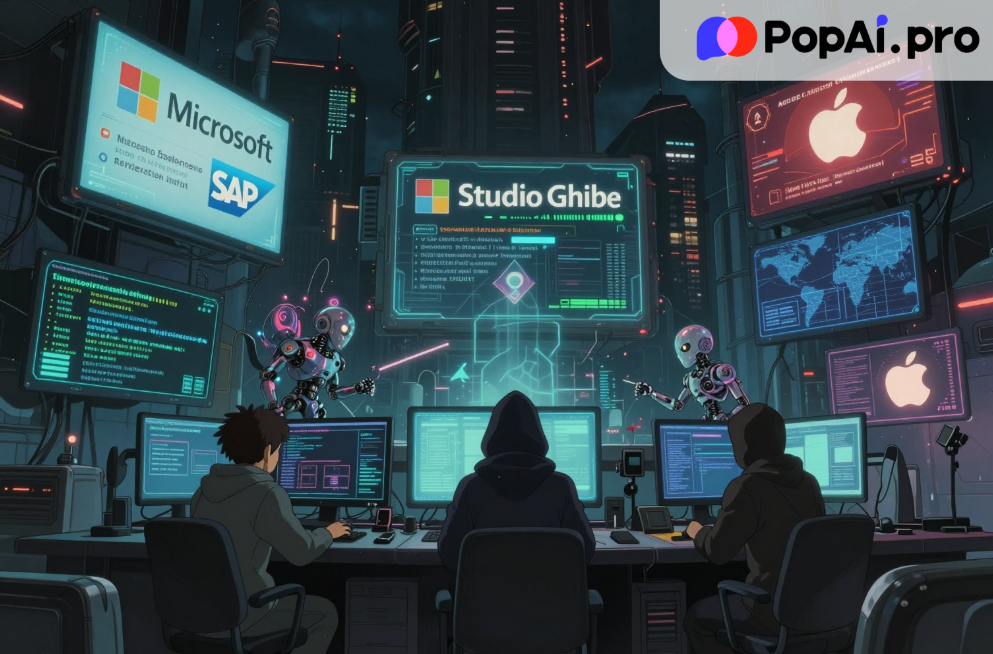
As we navigate the volatile cyber landscape of 2026, fresh threats underscore the urgency to act. Just this week, Microsoft’s January Patch Tuesday addressed over 100 vulnerabilities, including an actively exploited zero-day that could allow remote code execution on Windows systems. Meanwhile, SAP patched critical injection flaws affecting enterprise networks worldwide, reminding us how unpatched software becomes a hacker’s playground. Apple’s urgent iOS update combats active exploits on iPhones, highlighting mobile vulnerabilities in an AI-driven era. The World Economic Forum’s latest outlook warns of AI accelerating attacks, with cyber fraud now outpacing ransomware as the top concern for executives. Geopolitical tensions amplify this—China’s alleged hacks on US congressional emails and Iran’s internet disruptions amid protests show how state actors exploit digital fractures.
But empowerment lies in preparation. PopAI equips you to counter these with seamless cyber security slides presentations. Imagine prompting “Visualize Microsoft zero-day risks”—PopAI generates structured decks with timelines, threat maps, and mitigation strategies, all auto-formatted for impact. Its Pro features, updated for 2026, include unlimited GPT-4o queries for deeper analysis, massive file uploads for digesting reports like WEF’s 2026 Outlook, and enhanced AI for collaborative editing. No design skills needed; it detects logic, suggests visuals, and exports to PowerPoint or PDF.
This isn’t hype—real users report slashing prep time from hours to minutes, per PopAI’s 2025-2026 guides. In a world where CISA flags AI threats and supply chain complexities, PopAI turns data overload into actionable insights. Start free to test its basics, but upgrade to Pro for boundless creation—unlimited prompts mean endless decks on emerging risks like post-quantum crypto transitions urged by G7. Stay ahead: Educate your team, fortify defenses, and transform vulnerabilities into victories. Your move? Dive into PopAI today and let’s discuss how it fits your cyber strategy in the comments.