
The “I’m So Over AI Hype” Phase is Over. Wake Up.

Let’s be brutally honest for a second. We are all suffering from “AI Fatigue.” Every week, there is a new model, a new benchmark, and a new CEO in a black t-shirt telling us that AGI is coming next Tuesday. It’s exhausting. Most of us have settled into a routine with ChatGPT or Gemini, using them to write emails or debug a pesky SQL query. We thought we knew the ceiling.
But then, Anthropic quietly released Claude 3.5 Sonnet, and more importantly, they introduced Artifacts.
If you haven’t tried Claude 3.5 Artifacts Immersive Coding yet, you are looking at the internet through a keyhole. I spent the last week living exclusively inside the Claude ecosystem, and I have to say something I haven’t said since November 2022: My jaw is on the floor. This isn’t just a “better model.” This is a fundamental shift in how humans interact with machines to build things.
We are witnessing the death of the “Chat” era and the birth of the “Collaboration” era. Here is why this matters to you, your business, and your sanity.
The Artifacts Revolution: It’s Not Just a Feature, It’s a Workspace
For the last two years, the AI interface has been stagnant. You type in a box on the left, the bot spits out text on the left. If you ask for code, it gives you a code block. You have to copy that code, open your IDE (Integrated Development Environment), paste it, run it, see the error, copy the error, go back to the chat, and paste the error.
It’s clunky. It breaks your flow. It feels like 1990s data entry.
What Makes Artifacts Different?
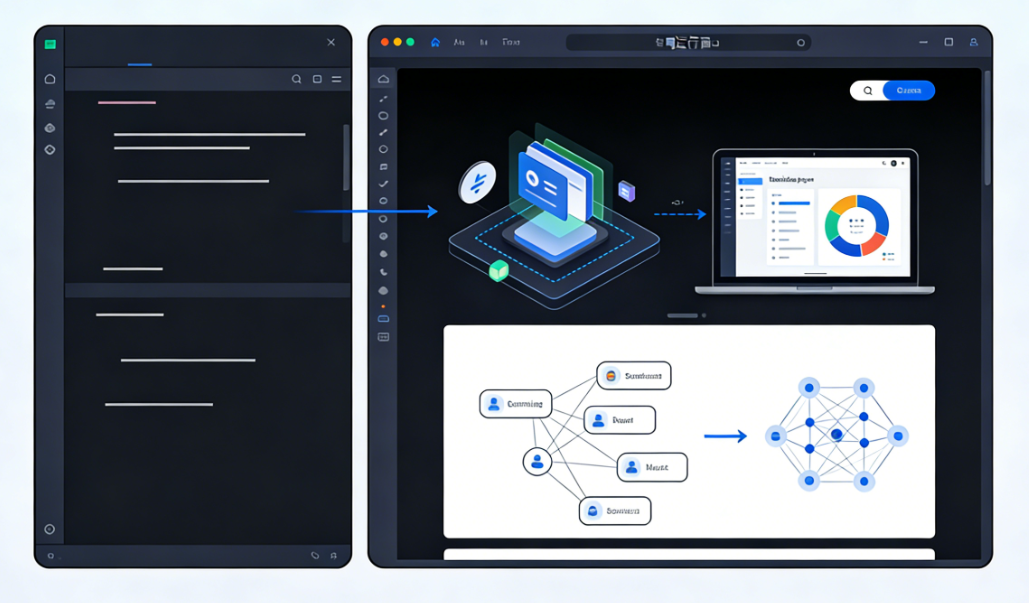
Claude 3.5 Artifacts destroys this friction. When you ask Claude to write code—say, a React component for a landing page or a Python script for data visualization—it doesn’t just give you text. It opens a dedicated window on the right side of the screen.
In this window, the code runs.
· Visual Rendering: You see the website appear instantly.
· Interactive Diagrams: You see the SVG flowcharts render live.
· Immersive Coding: You can edit the code and see the changes reflect immediately without ever leaving the browser tab.
This is the essence of Immersive Coding. It turns the AI from a “text generator” into a “live preview engine.” You aren’t just reading about the code; you are experiencing the output of the code simultaneously.
Immersive Coding: The End of Context Switching
Why is everyone on Twitter/X losing their minds over this? Because developers and creators have a specific pain point called “Context Switching.”
Every time you look away from your logic to manage a file system or set up a local server, you lose a bit of cognitive focus. It takes an average of 23 minutes to get back into “the zone” after an interruption. The old way of using AI was full of micro-interruptions.
With Claude 3.5 Artifacts Immersive Coding, you stay in the zone.
The “One-Shot” Phenomenon
I tested this with a prompt: “Create a fully functional Snake game in React with a retro neon aesthetic and a score counter.”
In GPT-4o, I’d get the code. I’d have to set up a Create-React-App, install dependencies, and paste the code.
In Claude 3.5 with Artifacts? Boom. The window opens. The snake is moving. I am playing the game inside the chat interface 15 seconds after hitting enter.
This immediacy is addictive. It lowers the barrier to entry for creation to almost zero. If you have an idea, you can see a prototype in seconds. This isn’t just about coding speed; it’s about ideation velocity.
David vs. Goliath: Did Anthropic Just Flank OpenAI?
We need to talk about the elephant in the room. Google and OpenAI have been in an arms race to build the biggest, smartest brain. They focused on “Reasoning Capabilities” and “Multimodality” (voice, video).
Anthropic, however, focused on User Experience (UX).
While OpenAI was busy trying to make an AI that sounds like Scarlett Johansson, Anthropic realized that professionals—coders, writers, data scientists—don’t want to talk to their computer; they want to work with it.
The “Vibes” Are Real
The tech community often talks about “vibes”—an unscientific measure of how good a model feels. Right now, Claude 3.5 Sonnet has the best coding vibes in the industry. It hallucinates less, it understands architectural context better, and thanks to Artifacts, it feels more tangible.
Immersive Coding is the feature that OpenAI missed. They have the “Code Interpreter,” but it’s slow and hidden behind loading bars. Claude’s implementation is instant and visual. This suggests that the future of AI dominance isn’t just about who has the smartest model, but who builds the best interface for that intelligence.
The Dark Side: Are We Coding Ourselves Out of a Job?
This is where the excitement turns into existential dread. If I can build a functional dashboard, a game, or a financial analysis tool in 30 seconds without writing a single line of code myself, what happens to the Junior Developer?
The Shift from “Writer” to “Architect”
Claude 3.5 Artifacts Immersive Coding accelerates the commoditization of syntax. Knowing how to write a for loop in JavaScript is no longer a valuable skill. The AI does that perfectly, instantly, and visibly.
However, this doesn’t mean coding is dead. It means the role is changing. We are moving from being “Bricklayers” to “Architects.”
· The Old Way: You spend 80% of your time typing syntax and debugging missing semicolons.
· The Artifact Way: You spend 80% of your time reviewing the visual output, asking for refinements, and thinking about the user journey.
The danger lies in complacency. If you rely entirely on the Artifact window and stop understanding what is happening under the hood, you become a passenger, not a driver. The best developers will be those who use Immersive Coding to speed up their workflow but still possess the deep knowledge to fix things when the AI inevitably hallucinates a library that doesn’t exist.
How to Survive the Shift: Practical Tips for the Artifact Era
So, how do you leverage this without becoming obsolete? Here is a roadmap for integrating Claude 3.5 Artifacts Immersive Coding into your workflow today.
1. Prototype Aggressively
Don’t use Claude just to fix bugs. Use it to build “Minimum Viable Products” (MVPs). If you have a business idea, ask Claude to “Mock up a landing page for a dog walking app with a pricing tier section.” Use the Artifact to visualize it instantly. This allows you to fail fast and iterate faster.
2. Learn to “Prompt-Debug”
In the Artifact window, if the button color is wrong or the logic is flawed, don’t fix the code manually yet. Tell Claude: “The button contrasts poorly with the background, fix it.” Learning how to guide the AI to edit its own Artifact is a new skill set called “Iterative Prompting.”
3. Use Artifacts for Documentation
It’s not just for code. You can ask Claude to “Create a mermaid.js flowchart explaining the architecture of this database.” The Artifact will render the chart. This is a game-changer for explaining complex technical concepts to non-technical stakeholders (like your boss).
Conclusion: The Interface IS the Product
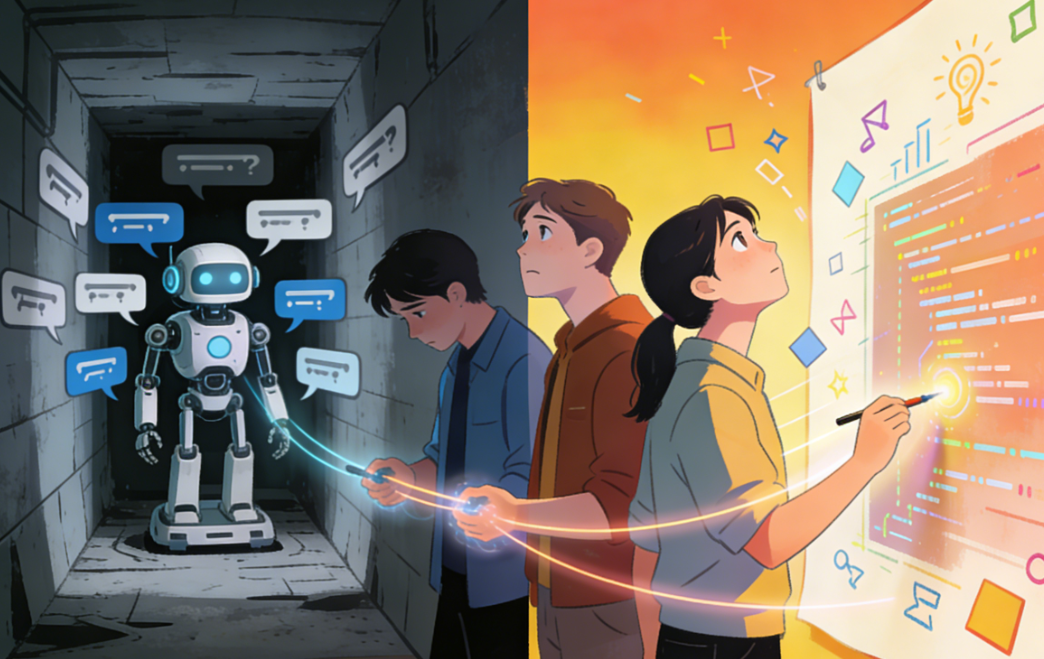
The release of Claude 3.5 Artifacts is a wake-up call. We spent so much time worrying about whether AI would become sentient that we forgot to look at how we actually interact with it.
The “Chatbot” is a dead end. The future is the Canvas.
Anthropic has shown us that Immersive Coding—where the barrier between thought and digital reality dissolves—is the future of work. It is cleaner, faster, and infinitely more powerful than a simple text box.
If you are a developer, a designer, or a product manager, you need to open Claude 3.5 right now. Generate an Artifact. Experience the speed. Because the train is leaving the station, and for the first time in a long time, it feels like OpenAI is the one chasing it.
This shift transcends mere feature enhancement—it represents a fundamental paradigm change. The canvas liberates interaction from linear Q&A, transforming AI from a responder into a true co-creator. It redefines the meaning of a “tool”: no longer a passive command executor, but a dynamic interface that visually manifests thought processes and shapes outcomes in real time. Every generated Artifact proves that the next decade’s advantage will belong to those who can seamlessly convert abstract thinking into concrete creation. As code, design, and content begin to flow naturally on an interactive canvas, the very nature of our work is being rewritten. The race is no longer about raw capability, but about the seamlessness of the interface through which that capability is unlocked. The train has indeed left the station.
The question is no longer “Can AI code?” The question is: “Can you keep up with an AI that codes at the speed of thought?”