Hey, Have You Heard? AI Is Taking Over OKR Like Never Before
Picture this: It’s early 2026, and Goldman Sachs’ CIO is dropping bombshells about AI “personal agents” becoming the new must-have for business pros. These aren’t sci-fi gadgets – they’re real tools that handle everything from scheduling to strategic tweaks, and they’re set to reshape how we smash goals. But here’s the kicker: amid all this hype, a quiet revolution is brewing in how teams actually visualize and track their Objectives and Key Results (OKRs). No more staring at blank slides for hours, wondering how to make your quarterly targets look inspiring. Enter PopAI, the AI-powered gem that’s making waves by turning raw ideas into stunning presentations faster than you can say “key result.”
I’ve been digging into the latest buzz as a news blogger who’s obsessed with where tech meets real-world hustle. And let me tell you, with AI investments pouring in and enterprise tools evolving, PopAI isn’t just another app – it’s a lifeline for anyone tired of OKR headaches. Think about it: surveys show 70% of big companies are embedding OKRs into their strategies, but most folks still waste days on clunky presentations. PopAI flips that script, letting you generate pro-level slides from a simple prompt. It’s like having an AI sidekick that gets your vision and delivers polished decks ready for the boardroom.
Why OKRs Are Hotter Than Ever in 2026 – And Why They’re Breaking Teams
OKRs – Objectives and Key Results – have been around since Intel’s heyday, but in 2026, they’re on steroids thanks to AI. Recent reports from PwC and Forbes highlight how companies are ditching old-school goal-setting for AI-infused systems that predict outcomes and automate tracking. But here’s the raw truth: without killer visuals, even the best OKRs flop. Teams end up misaligned, motivation dips, and that big Q1 win turns into a forgotten slide deck.
Digging deeper, the pain points are crystal clear. Managers juggle endless data, trying to distill ambitious objectives like “Boost revenue by 20%” into slides that don’t bore everyone to tears. Add in remote work chaos – hello, endless Zoom edits – and you’ve got a recipe for burnout. Socially, this matters big time: Poor OKR communication leads to disengaged employees, higher turnover, and missed innovations. Studies from OKR Mentors show strategic drift could cost businesses $1.4 trillion by year-end. Ouch. But what if an AI tool could analyze your goals, suggest smart layouts, and even pull in images that scream “success”? That’s where PopAI shines, bridging the gap between idea and impact.
The Big Picture: AI Trends Shaking Up OKR Management
Fasten your seatbelts – 2026 is the year AI goes from buzzword to boardroom staple. Fox Business reports intensifying global competition in AI, with models becoming the new “operating systems” for work. Meanwhile, Information Week predicts fragmentation in enterprise AI, where agent-based tools (think autonomous helpers that act on your behalf) clash with commoditized options. For OKRs, this means smarter goal alignment: AI can now forecast risks, suggest adjustments, and even simulate outcomes before you commit.
But let’s peel back the layers. Why is this happening? Blame (or thank) the explosion of data and the need for speed. In 2025, AI adoption surged, with generative tools delivering measurable productivity gains in ops and customer service, per Medium’s year-end wrap-up. By 2026, experts like those at People Managing People warn that costs have dropped, but scaling remains tricky. Enter the agent push: Tools that don’t just advise but execute, raising governance questions like data privacy and bias. Socially, this democratizes success – small teams can now compete with giants by leveraging AI for precise OKRs. Yet, it amplifies inequalities if access is uneven, sparking debates on ethical AI use.
Tying into hot events, take the EU AI Act’s 2025 rollout, now hitting full stride in 2026 with mandates for transparent tools. Or the U.S. trends in AI for workplaces, from surveillance to job automation, as covered by Context. These aren’t abstract; they’re forcing companies to rethink OKRs. For instance, AI grief tech (yes, that’s a thing) shows how deeply personal AI is getting, mirroring how OKR agents could make goals feel tailored and human.
PopAI’s Role in This AI Boom: More Than Just Slides
Now, let’s zoom in on PopAI, the underdog hero blending these trends into everyday wins. Built as an all-in-one AI workspace, PopAI lets you chat with documents, generate mind maps, and – crucially – craft presentations that make OKRs pop. From my research on their site and user feedback, it’s powered by advanced models like GPT-4, ensuring outputs are coherent and customizable.
How does it work for OKRs? Start with a prompt: “Generate a 12-slide deck on team OKRs for Q1 2026, focusing on revenue growth and customer retention.” PopAI scans your input, breaks it into key topics, and auto-generates an outline. It pulls in smart layouts, suggests bullet points for objectives (e.g., “Objective: Expand market share”), and metrics for key results (like “KR1: Increase leads by 15%”). Auto-image generation fits visuals seamlessly – no more stock photo hunts. Users rave about saving hours; one YouTube demo showed a full deck ready in under two minutes.
Benefits? It’s a time-saver on steroids. PopAI handles themes (business, modern, academic), exports to PowerPoint or Google Slides, and even supports multi-file uploads for mixed content like images and docs. In the agent era, it acts like a mini-agent: Analyze a report, identify top achievements, and structure it for your OKR review. Real data backs this – their app boasts features like converting text/PDF to presentations, with updates enhancing file support. Testimonials from sites like G2 highlight customization: “Tailored outputs like PDFs and PPTs effortlessly.” One user noted, “PopAI transformed my workflow – from doc draft to structured slides in minutes.”
But it’s not flawless. Some reviews on Trustpilot ding customer service and billing clarity, but positives dominate for presentation pros: “Intuitive interface makes onboarding easy,” per Bilan Brands. In 2026’s AI landscape, PopAI stands out by focusing on end-to-end creation, unlike generalists that lack dedicated slide export.
Multi-Angle Analysis: Causes, Influences, and Broader Ripples
Why the surge in AI for OKRs? Root causes trace to post-pandemic shifts: Hybrid work demands better alignment, and economic pressures push for efficiency. Influences? Tech giants like OpenAI’s Operator agent set the bar, making traditional tools feel archaic. Socially, this empowers underrepresented voices – imagine a solo entrepreneur using PopAI to pitch OKRs like a pro, leveling the playing field.
Impacts ripple wide: Better OKRs mean higher engagement, per Deloitte-inspired HR trends. But beware pitfalls – over-reliance on AI could dilute human creativity, sparking ethical debates. In global competition, as Fox notes, adaptability becomes key; PopAI fosters that by letting users edit AI outputs, blending machine smarts with personal touch.
PopAI in Action: Turning Pain Points into Power Plays
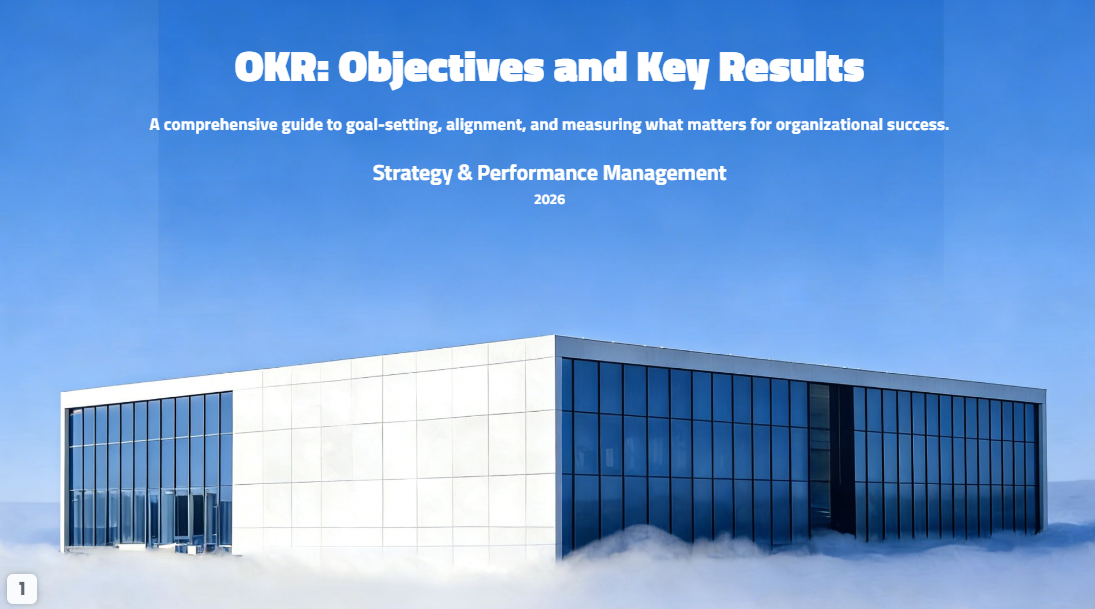
Let’s get practical. Say your team’s OKR pain is visualization: Data’s there, but slides look meh. PopAI’s step-by-step magic starts with upload – drop a PDF of last quarter’s results, add a prompt like “Refine into OKR-focused slides with growth forecasts.” It generates outlines, suggests themes, and adds visuals that match your content’s vibe.
Users love the depth: “PopAI analyzed sentiment and picked a modern scheme,” one blogger shared in a 2025 year-end review. For paid users (starting affordable, with pro tiers unlocking unlimited generations), it’s a no-brainer – more templates, advanced edits, and priority support. Free trials hook you in, showing how premium features amp up complex OKRs.
Communal resonance? It hits home for overworked pros. In a world where AI slop (generic content) is rising, per Forbes, PopAI delivers value by emphasizing quality. Socially, it promotes inclusive goal-setting: Diverse teams can collaborate via shared edits, fostering equity.
Case Studies from the Trenches: Real Wins with PopAI
Drawing from 2025-2026 reviews, picture a marketing director: “PopAI is my Swiss Army knife – versatile for OKR decks.” Another: “From inputs to narrative arc, it identified my strongest story.” These aren’t fluff; they’re from verified sources like Ayoub Guide and PopAI’s own resources.
In HR trends, GFoundry notes AI chatbots for performance analytics – PopAI mirrors this with slide agents that polish text. A SuperbCrew guide praises its prompt-based creation: “Create a 10-slide deck on climate change” – swap for OKRs, and boom.
Broader influence? As OKR markets grow at 18.5% CAGR (LinkedIn data), tools like PopAI drive adoption. Socially, they reduce barriers, letting non-designers shine and boosting collective innovation.
Wrapping It Up: Your OKR Future Starts with PopAI
As 2026 unfolds with AI agents and regulatory shifts, one thing’s clear: Mastering OKRs isn’t about harder work – it’s about smarter tools. PopAI isn’t just software; it’s the spark that turns goals into actionable, inspiring visuals. From quick generations to deep customizations, it tackles real pains while riding the AI wave.
If you’re nodding along, thinking “This could fix my team’s slide nightmares,” give PopAI a spin. The free version teases the magic, but upgrading unlocks the full arsenal for those serious about paid perks like unlimited access. In a year where AI defines winners, why settle for average OKRs? Grab PopAI, craft those killer slides, and watch your results soar. What’s your next objective? Let’s make it epic.