In today’s fiercely competitive talent landscape, a logically structured and visually striking recruitment strategy slides presentation is far more than just an internal reporting document. It has evolved into a critical strategic communication tool that shapes decision–making, secures budget allocations, and aligns team actions toward a common goal.
Why Do Your Recruitment Strategy Presentations Struggle to Strike a Chord?
Many recruitment leaders and HRBPs invest considerable time and effort in preparing strategy presentations, yet the outcomes often fall short of expectations: senior management deems them “lacking focus”, business departments find them “out of touch with on–the–ground realities”, and frontline execution teams feel they “offer little actionable guidance”. The issue rarely lies with the strategy itself, but with how it is presented. A presentation cluttered with dense text, disorganized data and a loose logical flow can severely dilute the core value of even the most solid strategy. A successful recruitment strategy slides presentation must go beyond mere information listing; it needs to be a compelling business proposal with a clear storyline, data–backed insights and visual impact. Its ultimate goal is to persuade stakeholders, align cross–functional teams and drive concrete action.
The Strategic Blueprint: Core Modules of a Persuasive Recruitment Strategy Presentation
Before opening any presentation tool, it is essential to build a robust content framework. A compelling recruitment strategy presentation typically follows a logical flow that serves as the backbone for organizing your content, outlined as follows:
Current Situation Diagnosis and Business Alignment
Why do we need to adjust our recruitment strategy? Start by analyzing business growth goals, team capability gaps and pain points in the existing recruitment process—such as lengthy cycle times, low hire quality and excessive costs—to establish the urgency for strategic change. This section links recruitment directly to business priorities, making it clear that recruitment is not an isolated HR function but a critical enabler of organizational success.
Clear Recruitment Objectives
Define specific, measurable recruitment goals for the upcoming cycle (e.g., quarterly or annual). Examples include: hiring X number of key talent for critical roles, reducing the average recruitment cycle by Y percent, and boosting new hire retention rate to Z percent. These objectives should be aligned with the SMART principle, ensuring they are realistic, time–bound and tied to broader business outcomes, so stakeholders can easily track progress and evaluate success.
Precise Talent Personas
Beyond basic job descriptions, define a holistic profile of target talent that integrates the traits of high–performing employees, team culture and future organizational needs. This profile should outline the required skills, professional experience, personality traits and core values of ideal candidates. A well–crafted talent persona helps the entire team understand who they are recruiting for, ensuring consistency in sourcing, screening and candidate engagement, and reducing misalignment between HR and business departments.
Diversified Sourcing and Attraction Strategies
Develop a tailored mix of high–efficiency recruitment channels for different talent personas—such as employee referrals, executive search firms, niche social media platforms and industry communities—and create personalized employer branding messaging to attract each segment. The strategy should prioritize channels with proven ROI for specific roles and outline how to position the organization’s employer value proposition (EVP) to stand out in the talent market, whether for technical specialists, mid–level managers or senior leaders.
Optimized Talent Screening and Evaluation Process
Design a fair, efficient and candidate–centric screening process, with clear evaluation criteria and tools for each stage—such as structured interviews, skill assessments and case studies. This section should also address candidate experience, a key factor in employer branding, by outlining how to streamline redundant steps, provide timely feedback and ensure consistent evaluation across interviewers. A transparent and well–designed process not only improves hire quality but also enhances the organization’s reputation among potential candidates.
Key Performance Indicators (KPIs) and Data Dashboard
Define leading and lagging indicators to measure the success of the recruitment strategy, and plan how to track and present these metrics continuously—such as channel quality analysis, candidate conversion rates and recruitment cost–effectiveness. Leading indicators (e.g., resume submission volume, interview attendance rate) predict future performance, while lagging indicators (e.g., hire rate, new hire performance) measure past results. A visual data dashboard makes it easy for stakeholders to grasp real–time recruitment performance and identify areas for improvement.
Resource Requirements and Action Plan
Clearly outline the required budget, tools and team responsibilities, accompanied by a detailed timeline and key milestones. This section answers the critical question: “What do we need to execute this strategy successfully?” It should break down budget allocations by channel and activity, list essential recruitment tools (e.g., ATS, assessment software), and define clear roles for HR, business managers and recruiters. A well–structured action plan turns a strategic vision into actionable steps, ensuring accountability and smooth execution.
From Outline to Presentation: Building Professional Slides Efficiently with AI
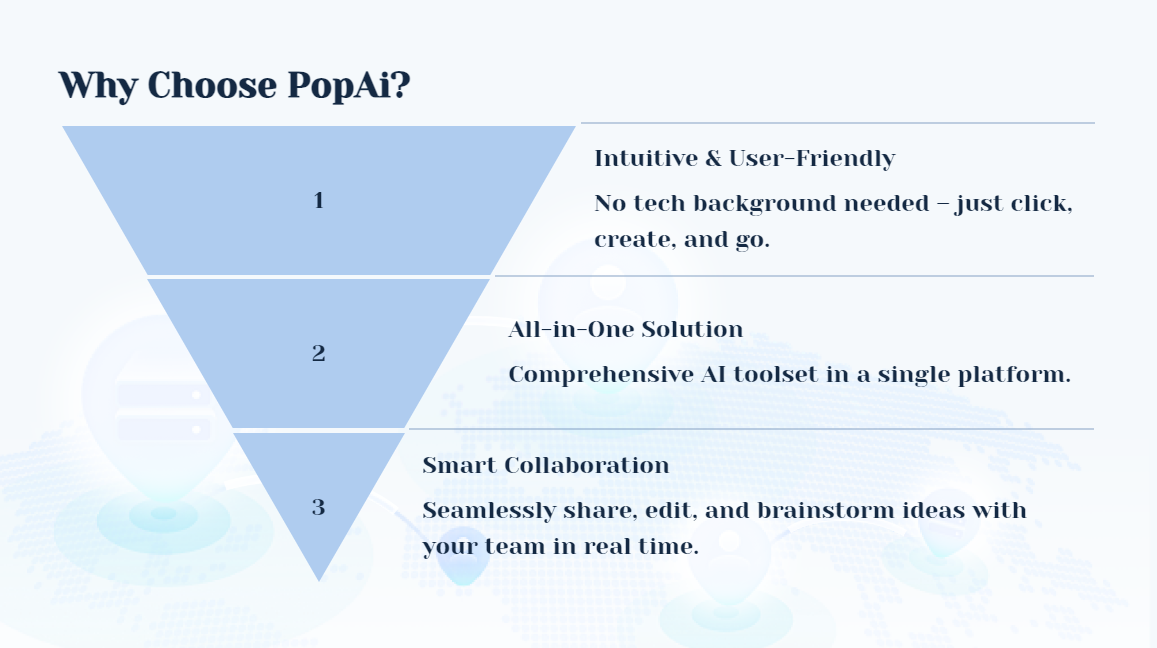
After structuring the content outline as above, converting text into a polished presentation still requires significant design work with traditional methods. This is where AI presentation tools like PopAI shine, enabling you to translate your strategic thinking into professional visuals quickly and seamlessly.
Instant Conversion from Document to Presentation
You can directly upload your pre–written recruitment strategy outline in Word or PDF format using PopAI’s flexible upload options. Its AI–powered auto–conversion to presentation feature intelligently parses the document’s structure and transforms it into a preliminary slide framework, achieving instant PPT generation. This saves you hours of tedious initial formatting work, allowing you to focus on refining content rather than building slides from scratch.
AI–Enhanced Content and Visual Expression
For data–heavy modules such as “Current Situation Diagnosis” and “Data Dashboard”, PopAI’s AI–enhanced content feature becomes an invaluable asset. You can prompt the AI to “generate a comparative chart for the pain point of prolonged recruitment cycles” or “create a pie chart showing the proportion of resumes from each sourcing channel”. Beyond searching for relevant images, the AI can generate or recommend tailored visual charts based on context, making the presentation both information–rich and visually engaging—turning dry data into intuitive insights that resonate with stakeholders.
Audience–Centric Design Customization
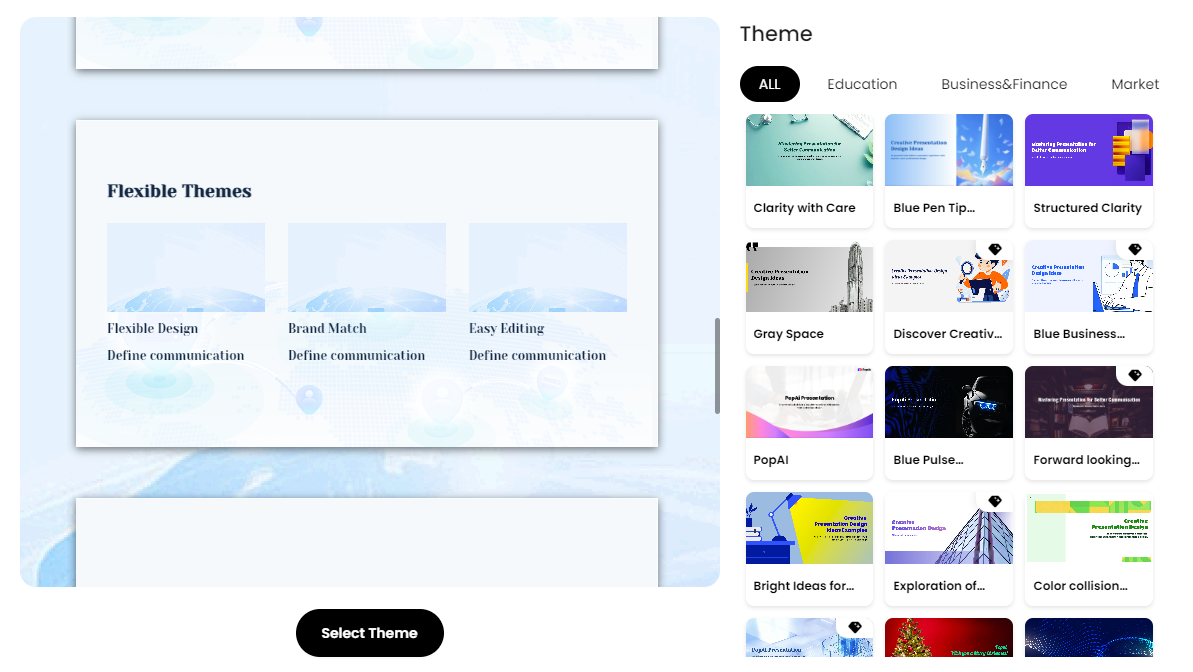
A single recruitment strategy presentation may need to be delivered to different audiences: executives, business managers and the recruitment team. PopAI’s audience–centric design philosophy allows you to easily switch between different design themes after generating the first draft. For executive presentations, you can choose a sleek, data–focused template that emphasizes business impact and ROI; for aligning with the recruitment team, a dynamic, process–oriented template that clarifies actionable steps is ideal. This personalized customization ensures that information is delivered in the most effective way for each audience, boosting influence and engagement.
Seamless Iteration and Refinement
Revisions are inevitable during strategy discussions and reviews, and PopAI’s powerful seamless editing capabilities make adjustments incredibly straightforward. Whether restructuring the entire presentation, merging slides, or fine–tuning the layout and copy of a single page, you can make changes smoothly while maintaining the presentation’s cohesive flow and clarity. This agility is critical for iterative strategy development, allowing you to incorporate feedback quickly and keep the presentation aligned with the latest strategic thinking.
Design Tips: Visual Narrative Techniques to Make Your Strategy Presentation Stand Out
Even with the support of AI, mastering core visual narrative principles can take your presentation to the next level and amplify its impact.
One Core Message Per Slide
Each slide should convey only one key message. Break down complex strategic modules into focused slides: for example, dedicate a single slide to “Talent Personas”, highlighting core traits with icons and key words; use a clear timeline or swimlane diagram to illustrate the “Recruitment Process”. This approach avoids information overload, making it easier for the audience to absorb and remember key points.
Data Visualization, Not Data Dumping
Transform dry numbers into intuitive charts and graphs. Use line charts to show trends in historical recruitment cycle times, funnel charts to visualize candidate conversion rates across stages, and interactive maps to display the geographical distribution of target talent. This is where leveraging PopAI’s generated charts becomes critical—turning raw data into compelling visual stories that make insights immediately understandable, rather than overwhelming the audience with spreadsheets and numbers.
Consistent Visual Language
Maintain a high level of consistency across the presentation in color schemes, font choices and icon styles. This builds professionalism and brand recognition, making the presentation feel polished and cohesive. In PopAI, once you select a template, its built–in design system automatically ensures this consistency, allowing you to focus entirely on refining content without worrying about design inconsistencies.
Weave in a Compelling Narrative
Open with a compelling “challenge” to grab attention—such as “We are losing top talent to competitors due to slow recruitment cycles”—present your “solution” (the recruitment strategy) in the middle, and close with a vivid “success vision”—such as “Building a high–performance team that drives sustainable business growth”. Framing the strategy within a story makes it more relatable and memorable; emotions drive decision–making, and a well–told story is far more persuasive than a list of facts and figures.
Conclusion
Creating an outstanding recruitment strategy slides presentation is essentially the process of codifying and communicating your strategic talent insights. It tests not only HR professionals’ deep professional expertise but also their ability to communicate effectively and influence stakeholders. Today, with AI presentation partners like PopAI, you can cut down significantly on the time and effort spent on design and formatting, and focus more on refining the strategy itself and crafting a compelling narrative. Let technology handle the tedious work of visualization, and let yourself focus on the human side of recruitment strategy—this is the key step to winning the future war for talent.