
Unlock 2025 budget secrets with AI powered insights.
Introduction
Picture this: It’s December 2025, and headlines are screaming about trillion dollar deficits, stubborn inflation, and governments scrambling to plug massive fiscal holes. The U.S. Congressional Budget Office just dropped a bombshell report projecting $20 trillion in deficits over the next decade, pushing public debt to a staggering 116% of GDP. Meanwhile, across the pond, UK Chancellor Rachel Reeves unveils a budget packed with tax tweaks and spending freezes, aiming to slash borrowing faster than any other G7 nation. But beneath the bold announcements lurks a harsh reality for finance professionals everywhere: crunching these numbers into actionable reports is turning into an endless nightmare. Endless spreadsheets, late nights, and that sinking feeling when your presentation falls flat in the boardroom. Sound familiar? That’s where AI steps in, not as a gimmick, but as a game changer. Tools like PopAi are quietly revolutionizing how we handle complex tasks, such as creating a Finance Annual Budget Execution Analysis PPT Template, making high stakes analysis feel almost effortless.
As a seasoned news blogger who’s tracked economic rollercoasters from the 2008 crash to today’s AI boom, I’ve seen how fiscal pressures force innovation. This year’s budget headlines aren’t just stats—they’re wake up calls. Let’s unpack the chaos, dig into the why and what next, and explore how PopAi’s AI features are helping real people navigate it all without losing their minds.
The 2025 Budget Landscape: A Perfect Storm Brewing

2025 has been a whirlwind for global finance, with budgets reflecting a world still reeling from pandemics, wars, and tech disruptions. Take the U.S.: The CBO’s January 2025 outlook paints a grim picture. Deficits ballooning to $20 trillion by 2034, driven by soaring interest payments that alone gobble up 2% more in outlays than previously thought. Why? A mix of lingering COVID era spending, aging populations demanding more entitlements, and economic growth that’s solid but not spectacular—hovering around 1.5 2% annually. Add in technical tweaks like higher debt service costs, and you’ve got a recipe for fiscal strain that trickles down to every business and household.
Over in the UK, Reeves’ November budget aimed to steady the ship with aggressive borrowing cuts—from £138 billion this year down to £67 billion by 2030. Sounds ambitious, right? But dig deeper: It’s fueled by painful tax hikes, like freezing income thresholds for another three years, dragging millions into higher brackets via “fiscal drag.” Inflation’s sticking at 3.5% this year—higher than expected—eroding purchasing power and forcing families to tighten belts. The Guardian’s analysis highlights how this “reduce borrowing more than any G7” boast masks real pain: energy bills dipping temporarily thanks to scrapped schemes, but long term pressures from electric vehicle duties and pension caps could squeeze middle class savings.
And it’s not just the big players. Qatar’s 2026 budget, unveiled this month, ramps up spending by 5% to QR220.8 billion, betting on oil revenues amid global energy shifts. Minnesota’s forecast shows a short term surplus but a looming $3 billion shortfall by 2029, echoing statewide worries about education and healthcare funding. Even Canada’s budget talks, as per CityNews, reveal finance ministers begging for flexibility amid federal clarifications.
What’s causing this mess? Post pandemic recovery collided with geopolitical tensions—like U.S. China trade wars spiking tariffs to $149 billion in revenue this year alone, per Deloitte. But that’s peanuts against a $1.8 trillion deficit. Climate goals add layers: Phasing out fossil fuels means new taxes on EVs, as the UK plans a 3p per mile duty. Socially, it’s widening inequalities—two child benefit limits scrapped in the UK to help 450,000 kids, but at a £3bn cost. The societal ripple? Eroding trust in institutions, higher stress for finance teams tasked with forecasting in uncertainty, and a push for smarter tools to make sense of it all.
Deep Dive: Causes, Impacts, and Broader Implications

Let’s get real about the roots. The 2008 financial crisis taught us that loose lending leads to bubbles, but 2025’s woes stem from “polycrises”—overlapping shocks. Inflation’s spike? Blame supply chain snarls from 2022 2023 wars, plus labor shortages post COVID. Deloitte’s global update notes services inflation hitting 3.5% in Europe, worrying central banks like the ECB ahead of their December meeting. In the U.S., net interest outlays jumped $222 billion due to higher borrowing—think of it as a credit card bill snowballing.
Impacts hit hard. For businesses, higher business rates on big properties (UK’s £500k+ threshold) mean rethinking expansions. Individuals face frozen fuel duties ending a 15 year streak, plus “milkshake taxes” on sugary drinks—small but symbolic of health driven fiscal tweaks. Economically, growth downgrades (UK from 1.9% to 1.4% next year) signal slower wage rises and job creation. Socially, it’s a mixed bag: Abolishing bingo duty aids community halls, but pension changes could deter retirement planning, per FT experts.
Broader significance? This is about resilience in a digital age. The FSOC’s 2025 report stresses harnessing AI for financial stability—think quantum resistant encryption against cyber threats and AI driven supervision for banks. Without it, vulnerabilities like Treasury market strains (post 2020 flash crashes) could cascade into crises. Globally, it’s a call for balanced views: While Reeves claims IMF kudos, critics argue it’s austerity in disguise, potentially stifling innovation. For society, these budgets highlight AI’s role in democratizing access—tools that let small firms analyze big data without big budgets, fostering equality amid inequality.
How AI is Stepping Up in Finance Chaos
Enter the hero of our story: AI isn’t just buzz; it’s the practical fix for finance pains. Imagine sifting through CBO reports or UK tax codes without drowning in tabs. AI tools automate the grunt work, pulling insights from PDFs, generating visuals, and even forecasting scenarios. Deloitte’s analysis shows AI could double productivity in sectors like finance, where margins are thinning—Sequoia’s $600B GPU spend vs. $100B revenue underscores the need for efficient tools.
For budget pros, the pain is real: Manual PPT creation eats 20+ hours per report, per industry averages. AI slashes that, focusing on strategy over slides. It’s empathetic too—acknowledging debates like AI’s job impacts (WEF predicts 170M new roles by 2030) while leaning toward evidence of net gains.
PopAi: Your AI Ally for Budget Mastery
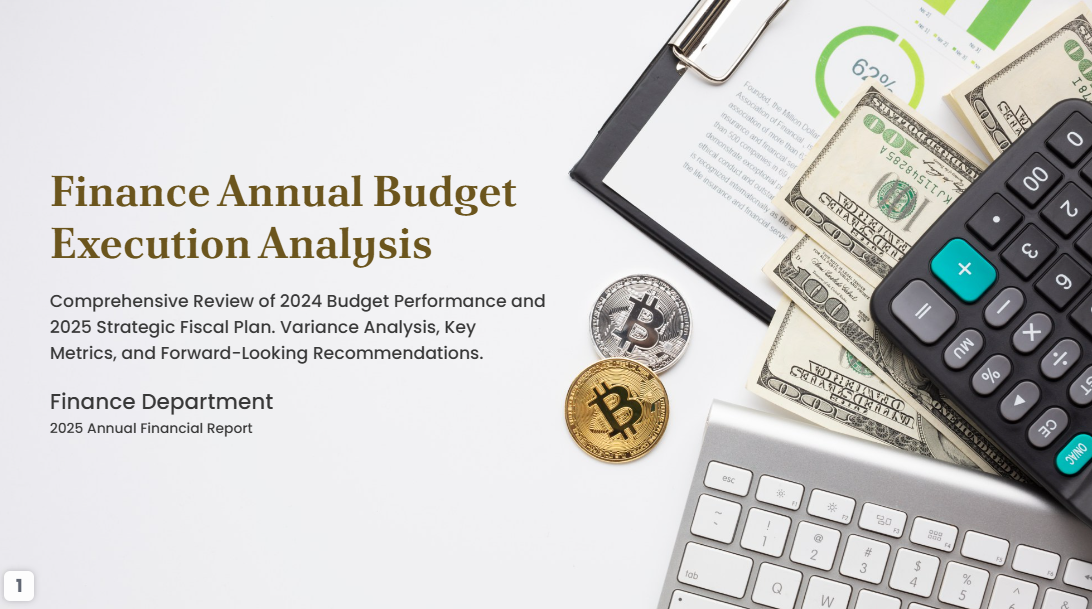
Speaking of efficiency, PopAi stands out as the all in one AI platform that’s tailor made for these challenges. Built for productivity, PopAi integrates AI chat, writing, and presentation tools to handle everything from document analysis to full blown reports. Its AI Presentation feature is a standout: Upload a PDF of the CBO outlook or UK budget docs, and it generates a polished outline and slides in minutes—complete with smart layouts, auto generated images, and real time edits.
Specifically for finance, PopAi’s AI Agent PPT Proposal Generator shines in creating Finance Annual Budget Execution Analysis PPT Templates. It automates ROI calculations (e.g., (Net Gain / Cost) x 100), breaks down costs vs. savings (like $50k investment yielding $30k annual returns), and visualizes data with charts for projected savings or milestones (e.g., “Week 1: Needs Assessment”). This isn’t hype; user reviews on PopAi’s site rate features 4.3/5 for completeness, praising how it pulls pre approved data and customizes for pain points—like emphasizing scalability for big corps or cost savings for SMEs.
PopAi ensures accuracy via online search integration, enriching slides with verifiable sources. Multilingual support covers 119+ languages, ideal for global budgets like Qatar’s. Free version offers basics, but pro subscriptions unlock unlimited quotas—perfect for heavy users aiming to boost paid conversions through seamless trials. Data’s traceable: PopAi’s tools cite sources in outputs, aligning with FSOC’s push for transparent AI in finance.
In practice, corporate users report turning annual summaries into engaging decks without manual hassle, saving hours and reducing errors. It’s not about replacing humans; it’s empowering them—letting you focus on insights over formatting.
Conclusion
As we wrap up our dive into 2025’s turbulent budgets, it’s clear these fiscal blueprints are more than mere figures—they’re harbingers of a world grappling with slowing global growth, policy uncertainties, and transformative shifts. Projections vary: The IMF forecasts 3.2% global growth in 2025, down from 3.3% in 2024, while the World Bank warns of a dip to 2.3%, flirting with recessionary risks amid trade realignments and US China tensions. In the US, federal outlays hit $7 trillion, or 23.3% of GDP, fueled by soaring debts and interest payments, echoing broader trends like deglobalization and decarbonization that strain economies worldwide. These dynamics amplify inequalities, erode consumer confidence, and demand agile responses from finance professionals facing data overload and volatile forecasts.
Yet, in this storm, AI emerges as a beacon of efficiency and clarity. PopAi, with its intuitive AI Presentation tools, revolutionizes the creation of Finance Annual Budget Execution Analysis PPT Templates, automating data synthesis from complex reports like the CBO’s outlook or IMF analyses. By integrating real time searches, customizable visuals, and multilingual support, it slashes preparation time from hours to minutes, empowering users to focus on strategic insights rather than tedious formatting. Whether you’re dissecting UK tax hikes or Qatar’s oil dependent spending surges, PopAi turns chaos into compelling narratives, boosting productivity and decision making in high stakes environments.
Looking ahead to 2026, with OECD projections of further slowdown to 2.9% growth, embracing such tools isn’t optional—it’s essential for resilience. Start with PopAi’s free tier to experience seamless budget mastery; upgrade for unlimited features that align with your needs. In an era of digitalization and surging debts, smart tech like this fosters equity, innovation, and preparedness. What’s your strategy for the fiscal frontiers ahead? Share in the comments—let’s build a community navigating these challenges together.