
Presentation Summary
A Sociological and Media Studies Analysis Examining the Trainee System, Fandom Culture, and Economic Power of the Hallyu Wave Understanding K-Pop's worldwide expansion with 225 million fans across 119 countries and record-breaking industry achievements. Examining the intensive industrial production model and challenges behind transforming aspiring performers into global idols. Analyzing digital communities like BTS ARMY as transnational social movements reshaping fan-artist relationships and collective action. Measuring the Hallyu Wave's economic power through export data, revenue statistics,
Full Presentation Transcript
Slide 1: The Impact of K-Pop on Global Culture
A Sociological and Media Studies Analysis Examining the Trainee System, Fandom Culture, and Economic Power of the Hallyu Wave
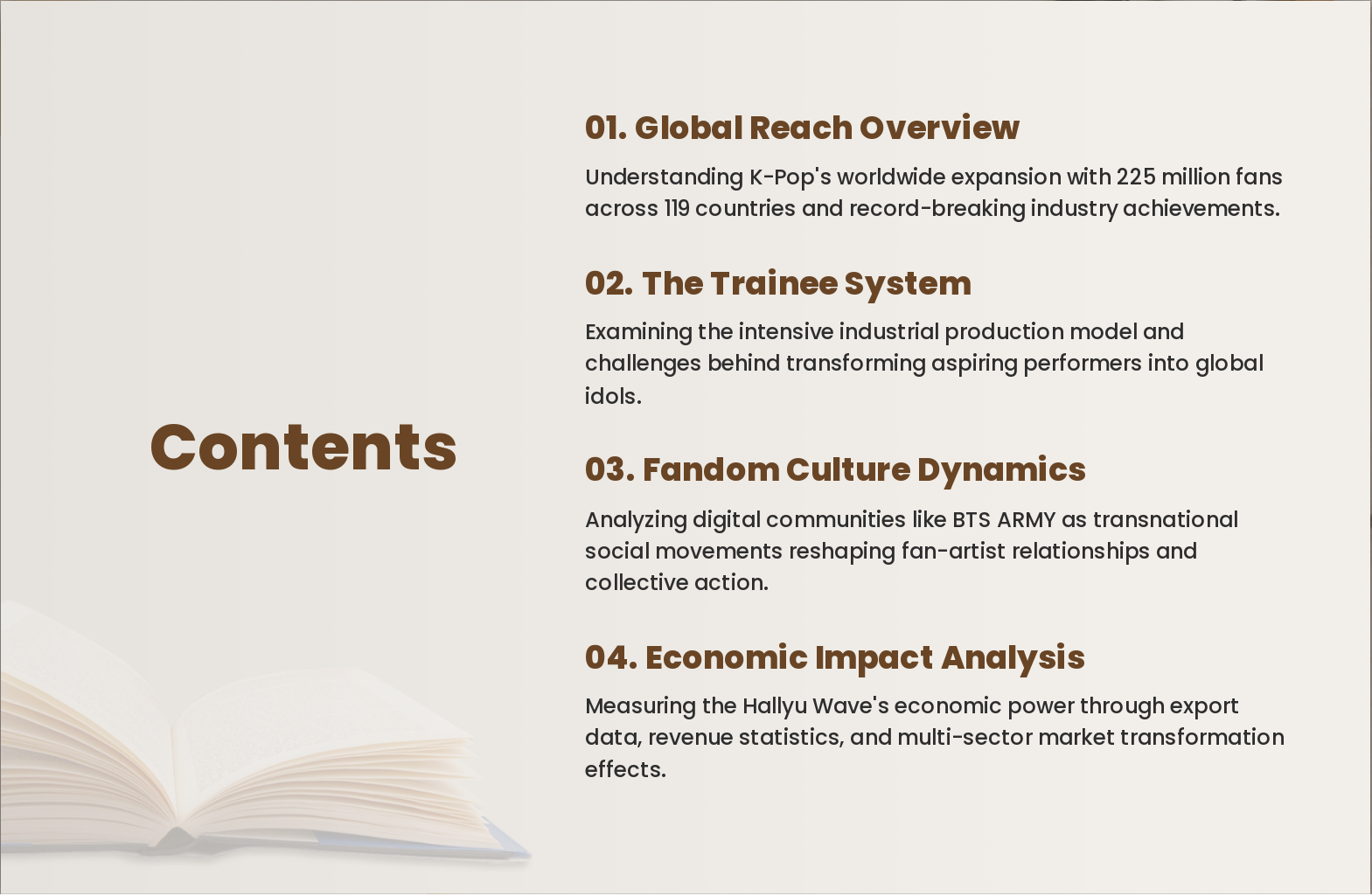
Slide 2: Contents
- Global Reach Overview: Understanding K-Pop's worldwide expansion with 225 million fans across 119 countries and record-breaking industry achievements.
- The Trainee System: Examining the intensive industrial production model and challenges behind transforming aspiring performers into global idols.
- Fandom Culture Dynamics: Analyzing digital communities like BTS ARMY as transnational social movements reshaping fan-artist relationships and collective action.
- Economic Impact Analysis: Measuring the Hallyu Wave's economic power through export data, revenue statistics, and multi-sector market transformation effects.
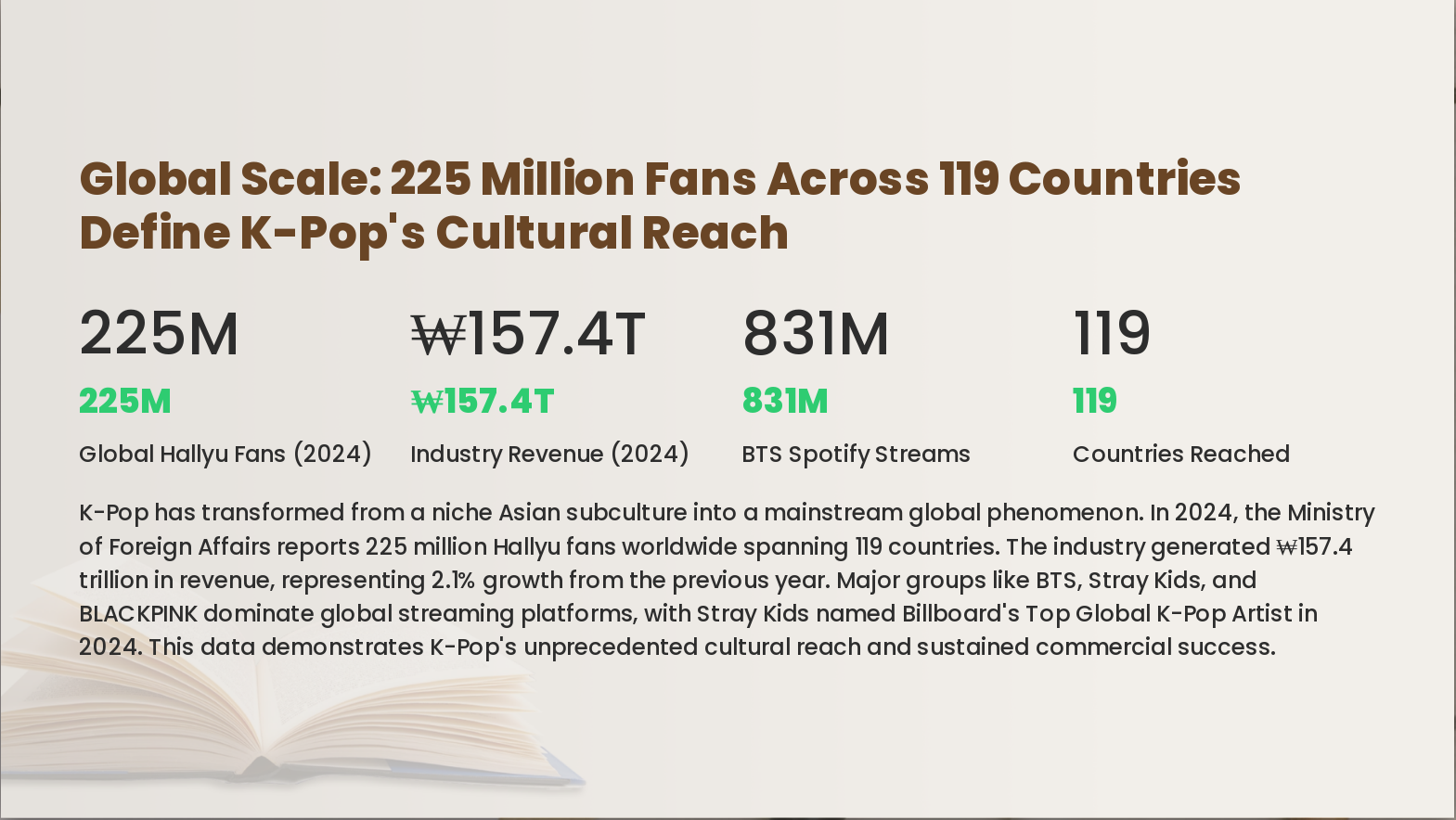
Slide 3: Global Scale: 225 Million Fans Across 119 Countries Define K-Pop's Cultural Reach
- 225M — 225M
- ₩157.4T — ₩157.4T
- 831M — 831M
- 119 — 119
K-Pop has transformed from a niche Asian subculture into a mainstream global phenomenon. In 2024, the Ministry of Foreign Affairs reports 225 million Hallyu fans worldwide spanning 119 countries. The industry generated ₩157.4 trillion in revenue, representing 2.1% growth from the previous year. Major groups like BTS, Stray Kids, and BLACKPINK dominate global streaming platforms, with Stray Kids named Billboard's Top Global K-Pop Artist in 2024. This data demonstrates K-Pop's unprecedented cultural reach and sustained commercial success.
Slide 4: Part 1: The Trainee System
Industrial production model behind K-Pop idols
Slide 5: K-Pop Trainee Training Process
- Global Audition Process: Korean agencies hold hundreds of open auditions annually, scouting talent both domestically and internationally through rigorous selection.
- Training Period: 2-7 Years: Extended preparation phase where trainees undergo comprehensive skill development before potential debut with no guarantee of success.
- Multi-Skill Development: Intensive training in vocal performance, choreography, foreign languages, media presentation, and physical fitness through daily rigorous schedules.
- Monthly Evaluation System: Continuous performance assessments and feedback loops where trainees must demonstrate improvement to avoid elimination from the program.
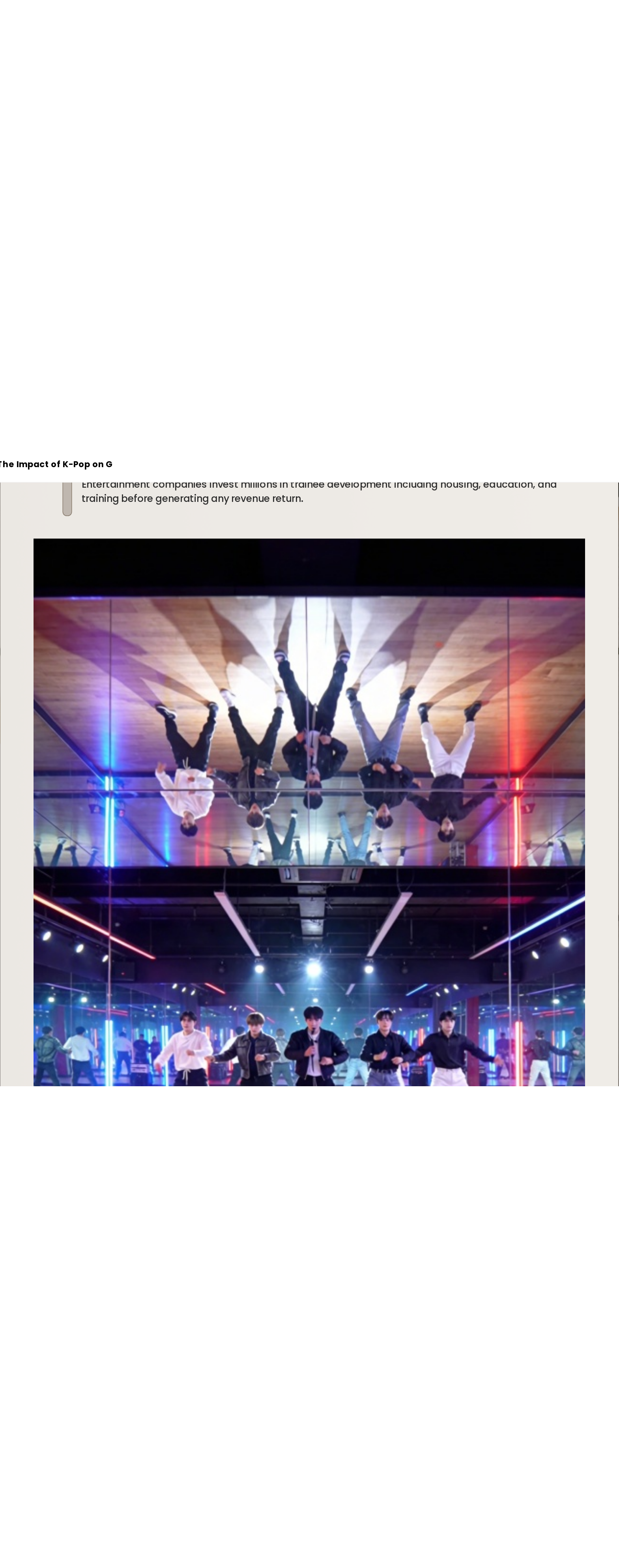
- Agency Investment Model: Entertainment companies invest millions in trainee development including housing, education, and training before generating any revenue return.
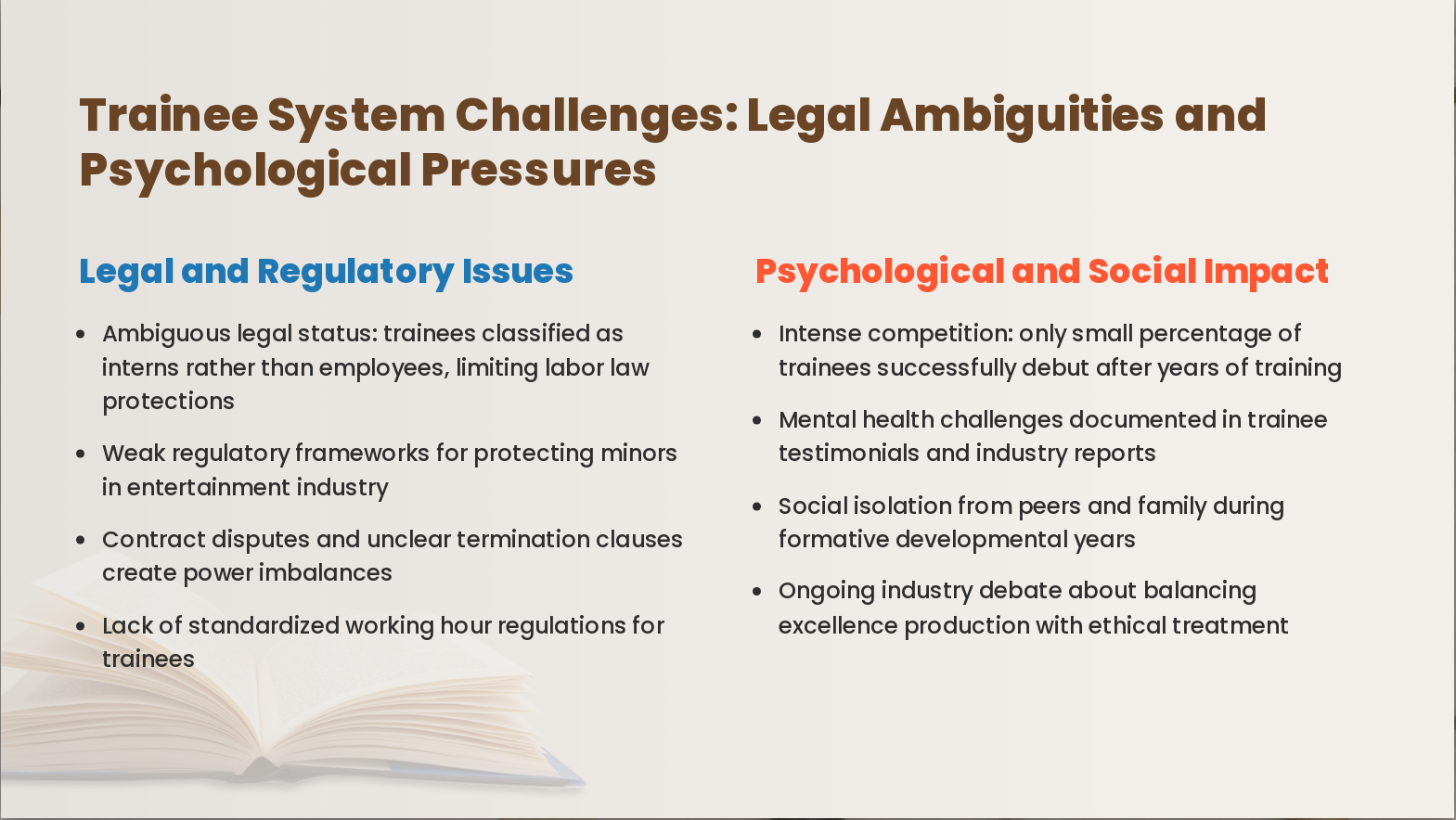
Slide 6: Trainee System Challenges: Legal Ambiguities and Psychological Pressures
Ambiguous legal status: trainees classified as interns rather than employees, limiting labor law protections
Weak regulatory frameworks for protecting minors in entertainment industry
Contract disputes and unclear termination clauses create power imbalances
Lack of standardized working hour regulations for trainees
Intense competition: only small percentage of trainees successfully debut after years of training
Mental health challenges documented in trainee testimonials and industry reports
Social isolation from peers and family during formative developmental years
Ongoing industry debate about balancing excellence production with ethical treatment
- Ambiguous legal status: trainees classified as interns rather than employees, limiting labor law protections
- Weak regulatory frameworks for protecting minors in entertainment industry
- Contract disputes and unclear termination clauses create power imbalances
- Lack of standardized working hour regulations for trainees
- Intense competition: only small percentage of trainees successfully debut after years of training
- Mental health challenges documented in trainee testimonials and industry reports
- Social isolation from peers and family during formative developmental years
- Ongoing industry debate about balancing excellence production with ethical treatment
Slide 7: Part 2: Fandom Culture
Digital communities as transnational social movements
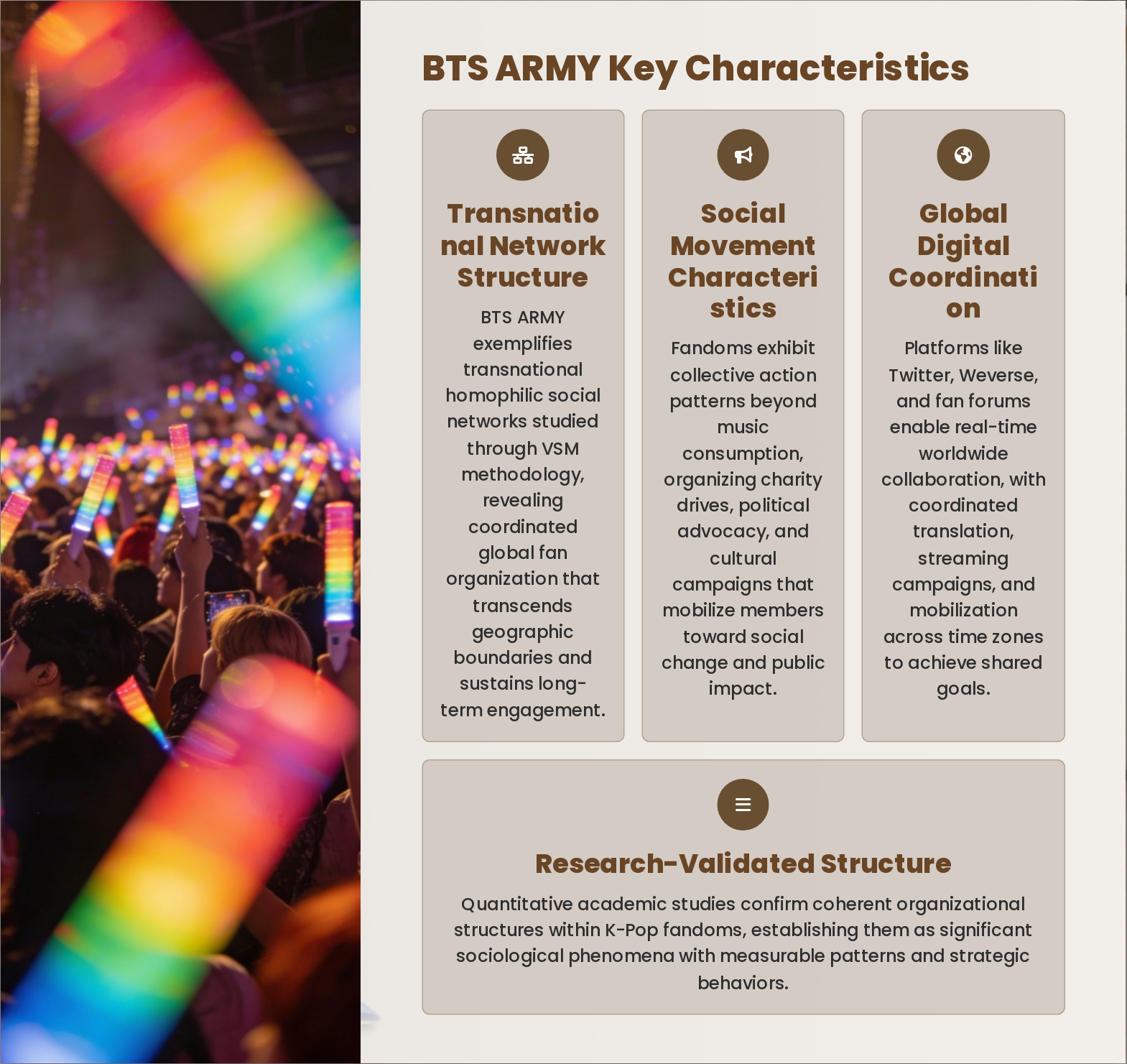
Slide 8: BTS ARMY Key Characteristics
- Transnational Network Structure: BTS ARMY exemplifies transnational homophilic social networks studied through VSM methodology, revealing coordinated global fan organization that transcends geographic boundaries and sustains long-term engagement.
- Social Movement Characteristics: Fandoms exhibit collective action patterns beyond music consumption, organizing charity drives, political advocacy, and cultural campaigns that mobilize members toward social change and public impact.
- Global Digital Coordination: Platforms like Twitter, Weverse, and fan forums enable real-time worldwide collaboration, with coordinated translation, streaming campaigns, and mobilization across time zones to achieve shared goals.
- Research-Validated Structure: Quantitative academic studies confirm coherent organizational structures within K-Pop fandoms, establishing them as significant sociological phenomena with measurable patterns and strategic behaviors.
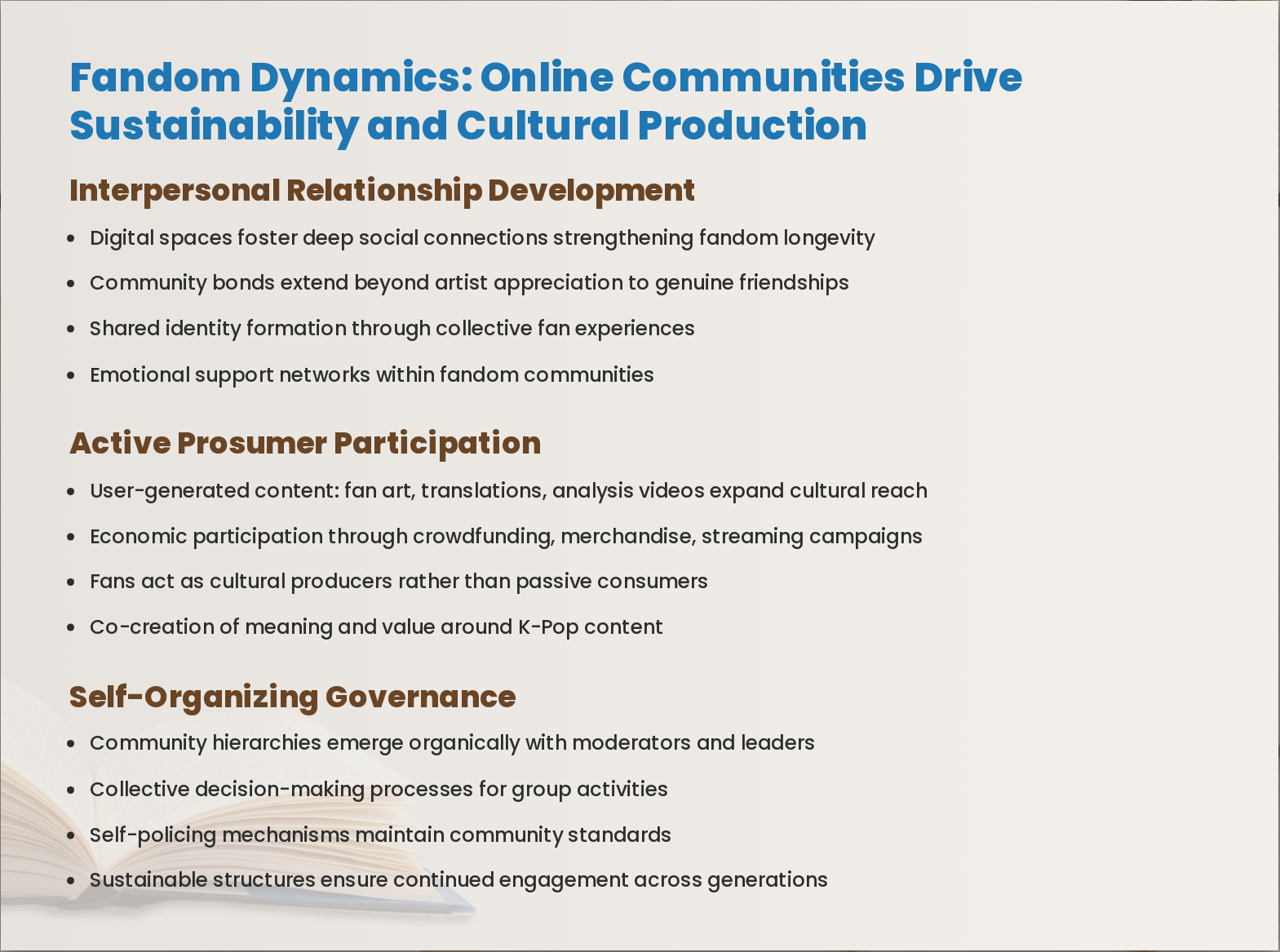
Slide 9: Fandom Dynamics: Online Communities Drive Sustainability and Cultural Production
- Interpersonal Relationship Development: Digital spaces foster deep social connections strengthening fandom longevity
- Active Prosumer Participation: User-generated content: fan art, translations, analysis videos expand cultural reach
- Self-Organizing Governance: Community hierarchies emerge organically with moderators and leaders
Slide 10: Part 3: Economic Impact
The Hallyu Wave transforms South Korea's export portfolio
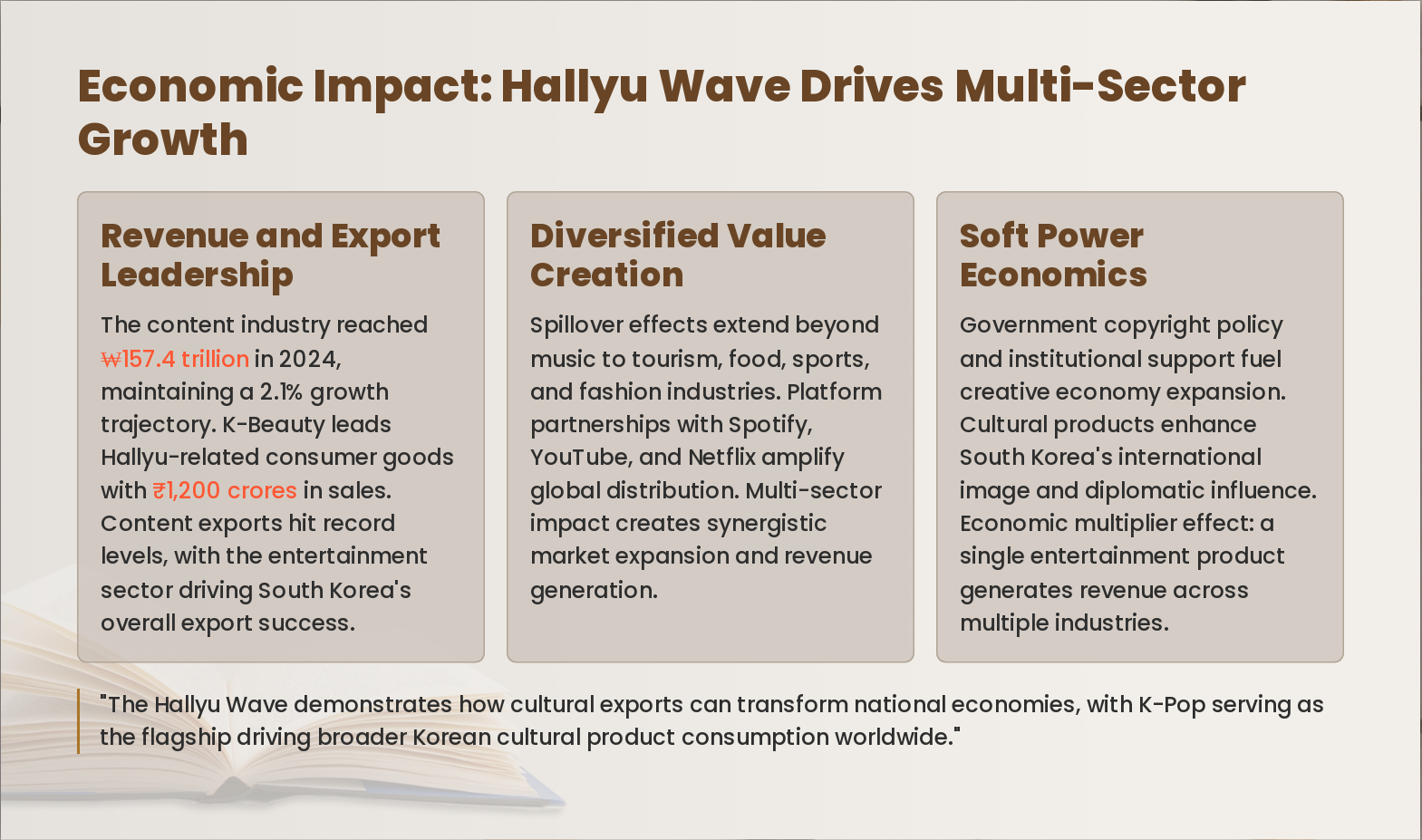
Slide 11: Economic Impact: Hallyu Wave Drives Multi-Sector Growth
- Revenue and Export Leadership: The content industry reached ₩157.4 trillion in 2024, maintaining a 2.1% growth trajectory. K-Beauty leads Hallyu-related consumer goods with ₹1,200 crores in sales. Content exports hit record levels, with the entertainment sector driving South Korea's overall export success.
- Diversified Value Creation: Spillover effects extend beyond music to tourism, food, sports, and fashion industries. Platform partnerships with Spotify, YouTube, and Netflix amplify global distribution. Multi-sector impact creates synergistic market expansion and revenue generation.
- Soft Power Economics: Government copyright policy and institutional support fuel creative economy expansion. Cultural products enhance South Korea's international image and diplomatic influence. Economic multiplier effect: a single entertainment product generates revenue across multiple industries.
"The Hallyu Wave demonstrates how cultural exports can transform national economies, with K-Pop serving as the flagship driving broader Korean cultural product consumption worldwide."
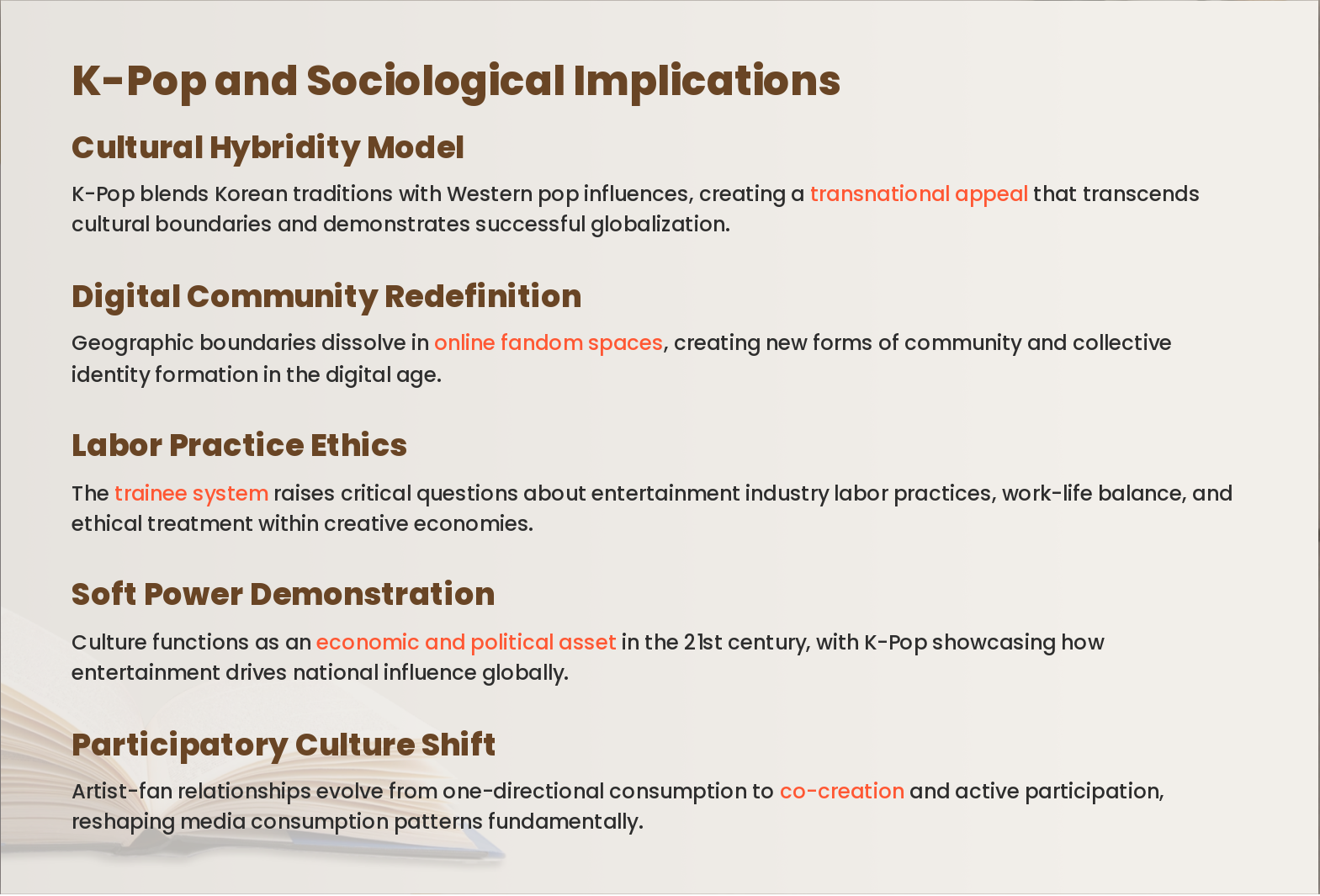
Slide 12: K-Pop and Sociological Implications
- Cultural Hybridity Model: K-Pop blends Korean traditions with Western pop influences, creating a transnational appeal that transcends cultural boundaries and demonstrates successful globalization.
- Digital Community Redefinition: Geographic boundaries dissolve in online fandom spaces , creating new forms of community and collective identity formation in the digital age.
- Labor Practice Ethics: The trainee system raises critical questions about entertainment industry labor practices, work-life balance, and ethical treatment within creative economies.
- Soft Power Demonstration: Culture functions as an economic and political asset in the 21st century, with K-Pop showcasing how entertainment drives national influence globally.
- Participatory Culture Shift: Artist-fan relationships evolve from one-directional consumption to co-creation and active participation, reshaping media consumption patterns fundamentally.
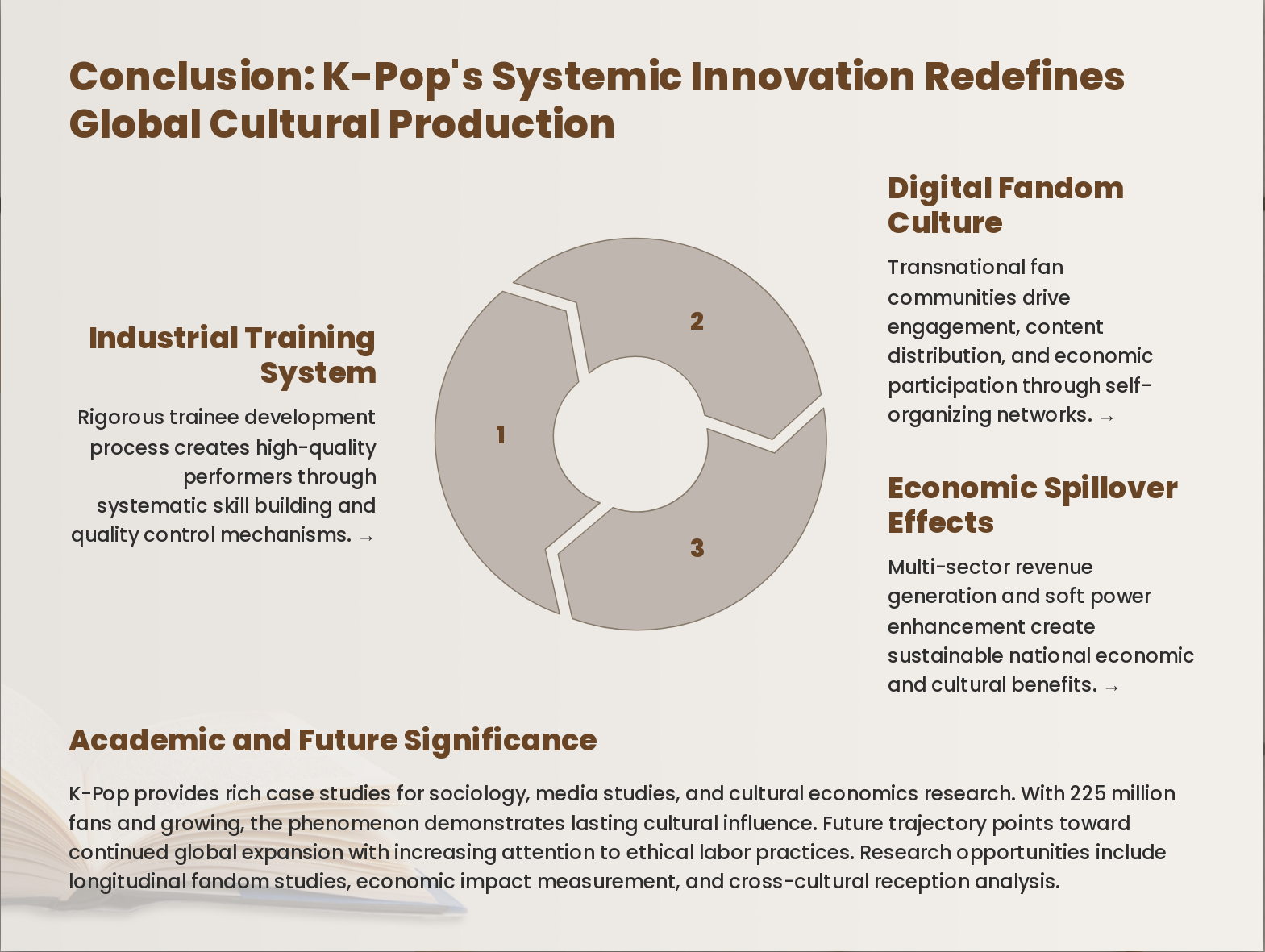
Slide 13: Conclusion: K-Pop's Systemic Innovation Redefines Global Cultural Production
- Industrial Training System: Rigorous trainee development process creates high-quality performers through systematic skill building and quality control mechanisms. →
- Digital Fandom Culture: Transnational fan communities drive engagement, content distribution, and economic participation through self-organizing networks. →
- Economic Spillover Effects: Multi-sector revenue generation and soft power enhancement create sustainable national economic and cultural benefits. →
K-Pop provides rich case studies for sociology, media studies, and cultural economics research. With 225 million fans and growing, the phenomenon demonstrates lasting cultural influence. Future trajectory points toward continued global expansion with increasing attention to ethical labor practices. Research opportunities include longitudinal fandom studies, economic impact measurement, and cross-cultural reception analysis.
Slide 14: Thank You
Thank You Questions and Discussion Welcome