Presentation Summary
Dive into the eight-year journey of Rec Room, a pioneering social VR platform that reached unicorn status by democratizing game creation. Explore its features, market impact, and the implications of its closure in June 2026.
Full Presentation Transcript
Slide 1: Rec Room: From VR's First Unicorn to Industry Inflection Point
A Comprehensive Analysis of the Pioneering Social VR Platform's Eight-Year Journey, Innovation Model, and June 2026 Closure
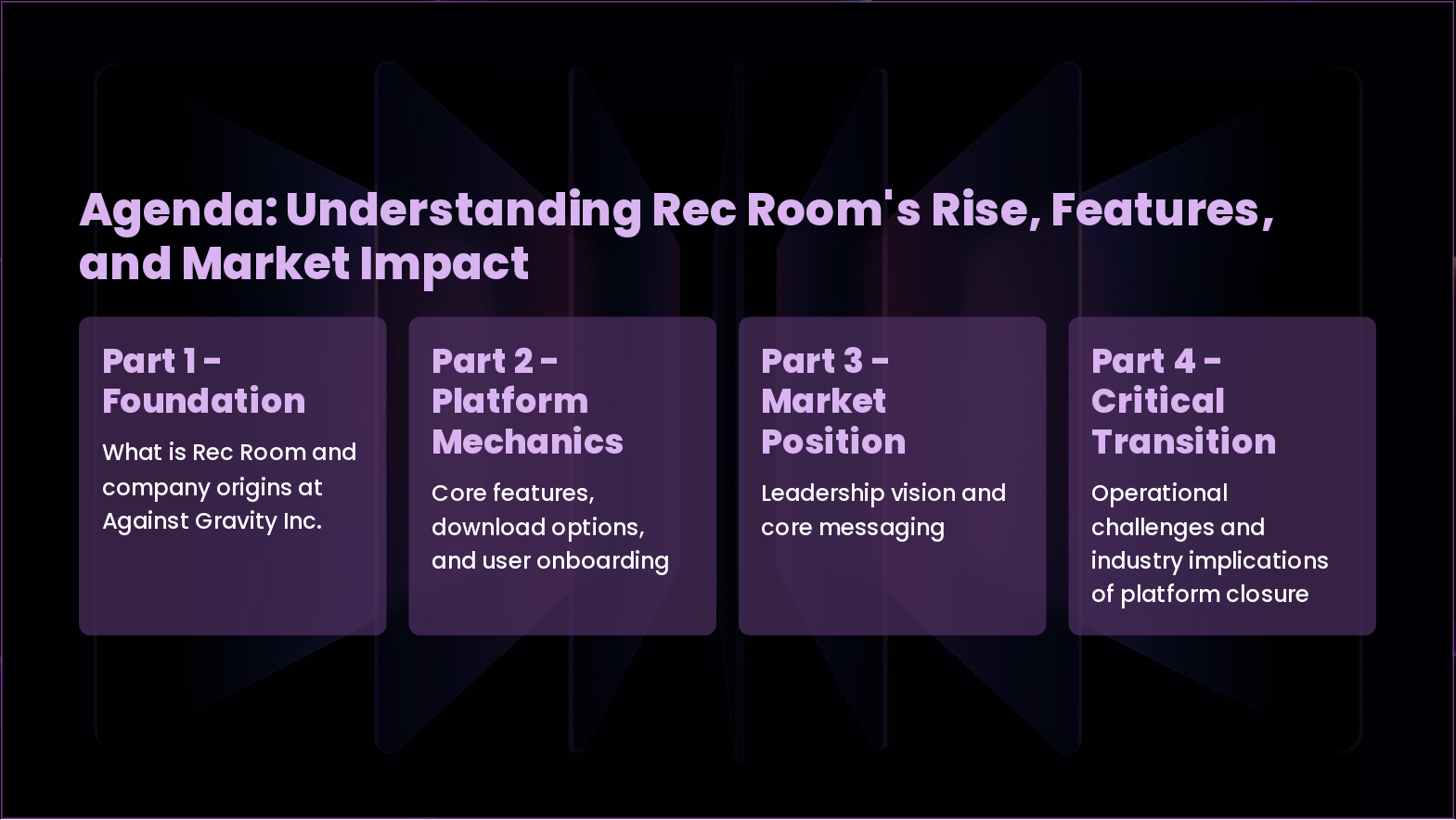
Slide 2: Agenda: Understanding Rec Room's Rise, Features, and Market Impact
- Part 1 - Foundation: What is Rec Room and company origins at Against Gravity Inc.
- Part 2 - Platform Mechanics: Core features, download options, and user onboarding
- Part 3 - Market Position: Leadership vision and core messaging
- Part 4 - Critical Transition: Operational challenges and industry implications of platform closure
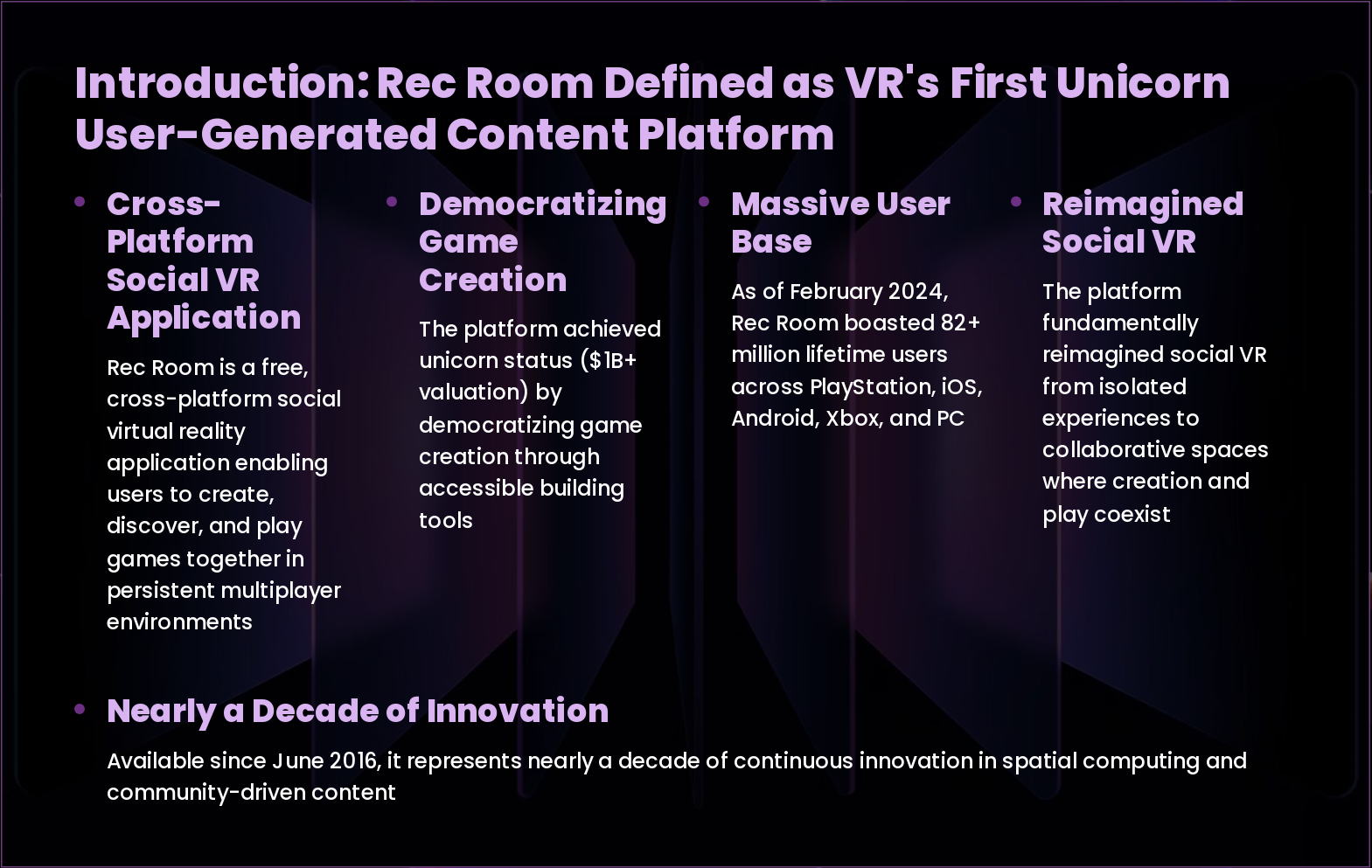
Slide 3: Introduction: Rec Room Defined as VR's First Unicorn User-Generated Content Platform
- Cross-Platform Social VR Application: Rec Room is a free, cross-platform social virtual reality application enabling users to create, discover, and play games together in persistent multiplayer environments
- Democratizing Game Creation: The platform achieved unicorn status ($1B+ valuation) by democratizing game creation through accessible building tools
- Massive User Base: As of February 2024, Rec Room boasted 82+ million lifetime users across PlayStation, iOS, Android, Xbox, and PC
- Reimagined Social VR: The platform fundamentally reimagined social VR from isolated experiences to collaborative spaces where creation and play coexist
- Nearly a Decade of Innovation: Available since June 2016, it represents nearly a decade of continuous innovation in spatial computing and community-driven content
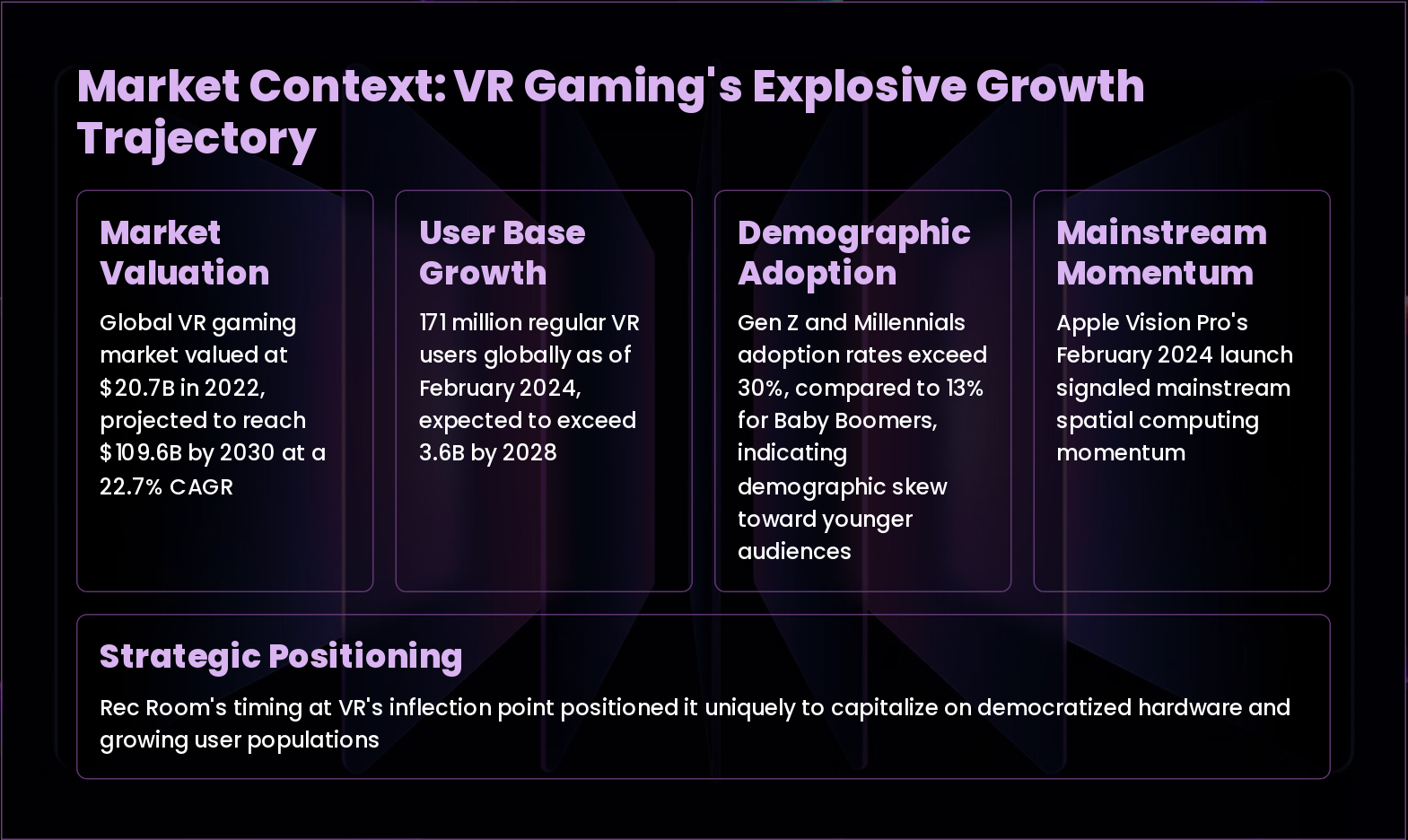
Slide 4: Market Context: VR Gaming's Explosive Growth Trajectory
- Market Valuation: Global VR gaming market valued at $20.7B in 2022, projected to reach $109.6B by 2030 at a 22.7% CAGR
- User Base Growth: 171 million regular VR users globally as of February 2024, expected to exceed 3.6B by 2028
- Demographic Adoption: Gen Z and Millennials adoption rates exceed 30%, compared to 13% for Baby Boomers, indicating demographic skew toward younger audiences
- Mainstream Momentum: Apple Vision Pro's February 2024 launch signaled mainstream spatial computing momentum
- Strategic Positioning: Rec Room's timing at VR's inflection point positioned it uniquely to capitalize on democratized hardware and growing user populations
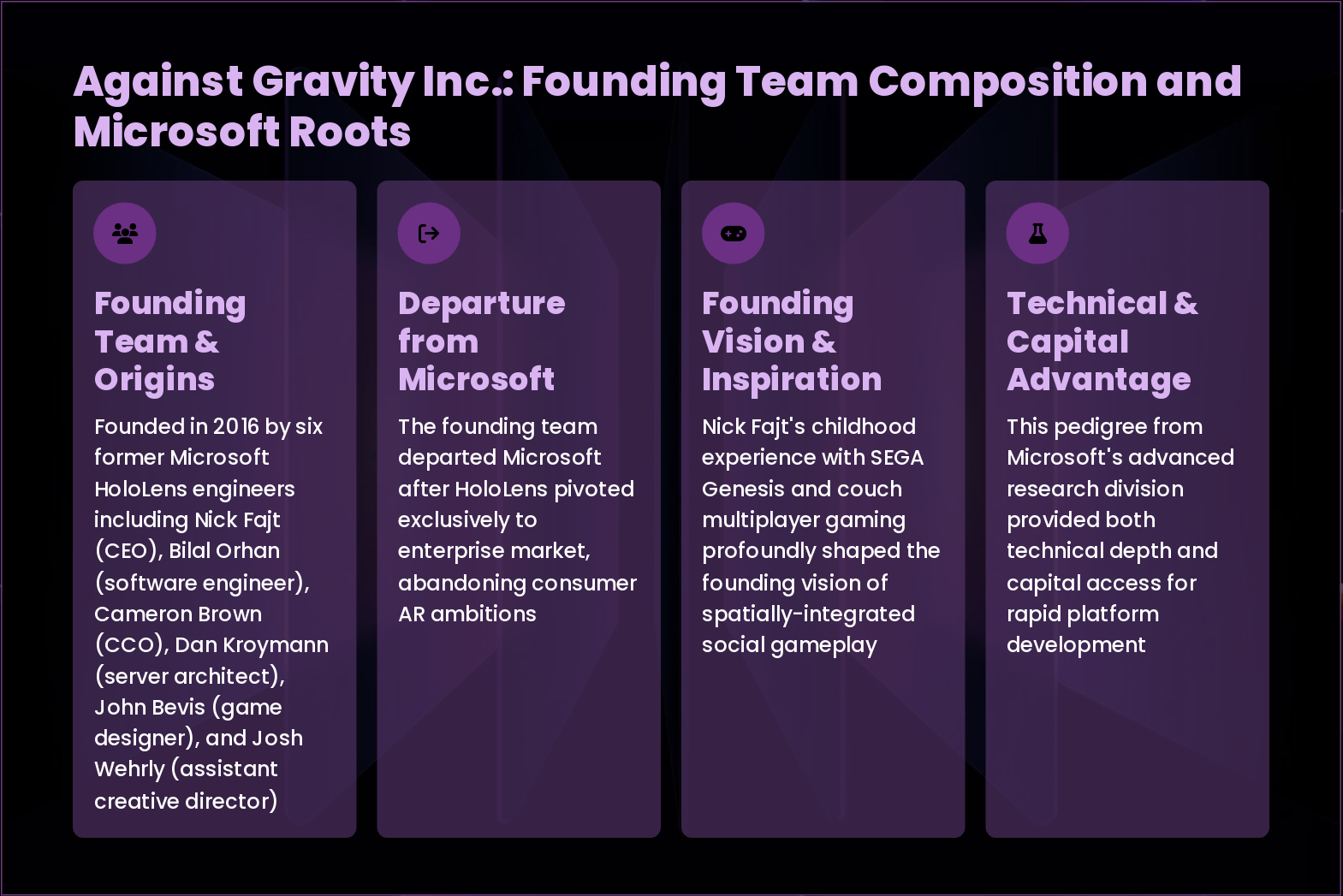
Slide 5: Against Gravity Inc.: Founding Team Composition and Microsoft Roots
- Founding Team & Origins: Founded in 2016 by six former Microsoft HoloLens engineers including Nick Fajt (CEO), Bilal Orhan (software engineer), Cameron Brown (CCO), Dan Kroymann (server architect), John Bevis (game designer), and Josh Wehrly (assistant creative director)
- Departure from Microsoft: The founding team departed Microsoft after HoloLens pivoted exclusively to enterprise market, abandoning consumer AR ambitions
- Founding Vision & Inspiration: Nick Fajt's childhood experience with SEGA Genesis and couch multiplayer gaming profoundly shaped the founding vision of spatially-integrated social gameplay
- Technical & Capital Advantage: This pedigree from Microsoft's advanced research division provided both technical depth and capital access for rapid platform development
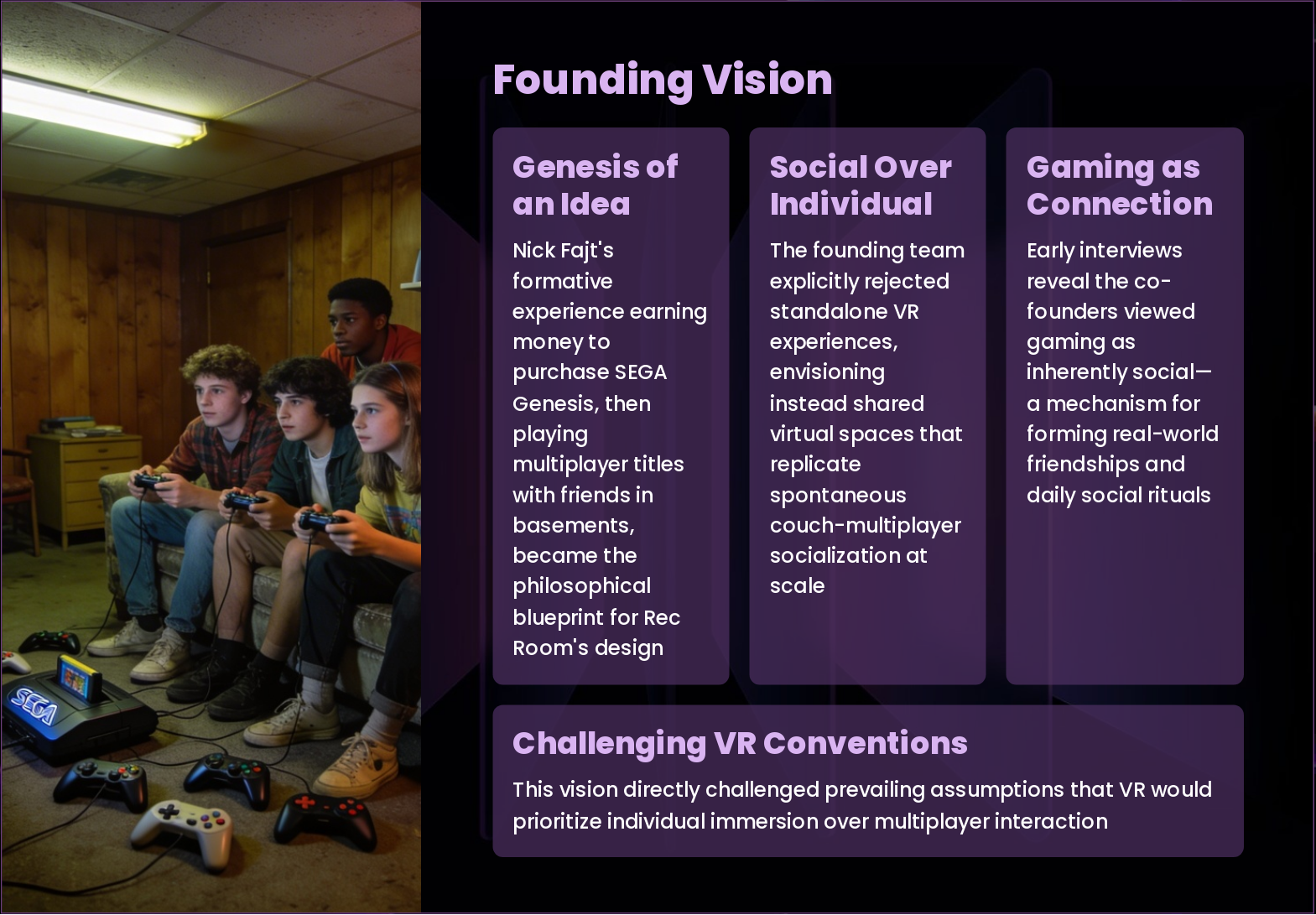
Slide 6: Founding Vision
- Genesis of an Idea: Nick Fajt's formative experience earning money to purchase SEGA Genesis, then playing multiplayer titles with friends in basements, became the philosophical blueprint for Rec Room's design
- Social Over Individual: The founding team explicitly rejected standalone VR experiences, envisioning instead shared virtual spaces that replicate spontaneous couch-multiplayer socialization at scale
- Gaming as Connection: Early interviews reveal the co-founders viewed gaming as inherently social—a mechanism for forming real-world friendships and daily social rituals
- Challenging VR Conventions: This vision directly challenged prevailing assumptions that VR would prioritize individual immersion over multiplayer interaction
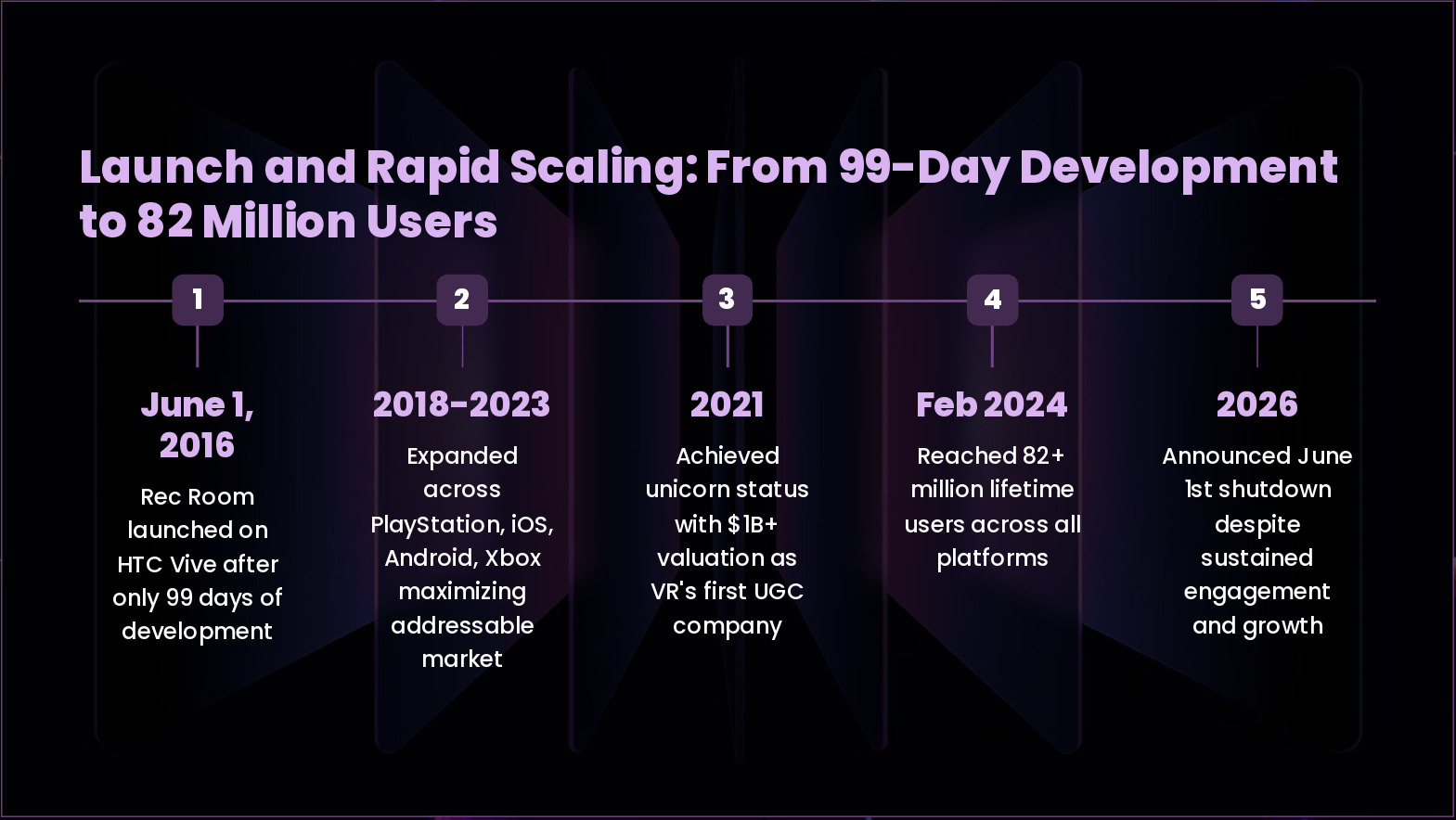
Slide 7: Launch and Rapid Scaling: From 99-Day Development to 82 Million Users
- June 1, 2016: Rec Room launched on HTC Vive after only 99 days of development
- 2018-2023: Expanded across PlayStation, iOS, Android, Xbox maximizing addressable market
- 2021: Achieved unicorn status with $1B+ valuation as VR's first UGC company
- Feb 2024: Reached 82+ million lifetime users across all platforms
- 2026: Announced June 1st shutdown despite sustained engagement and growth
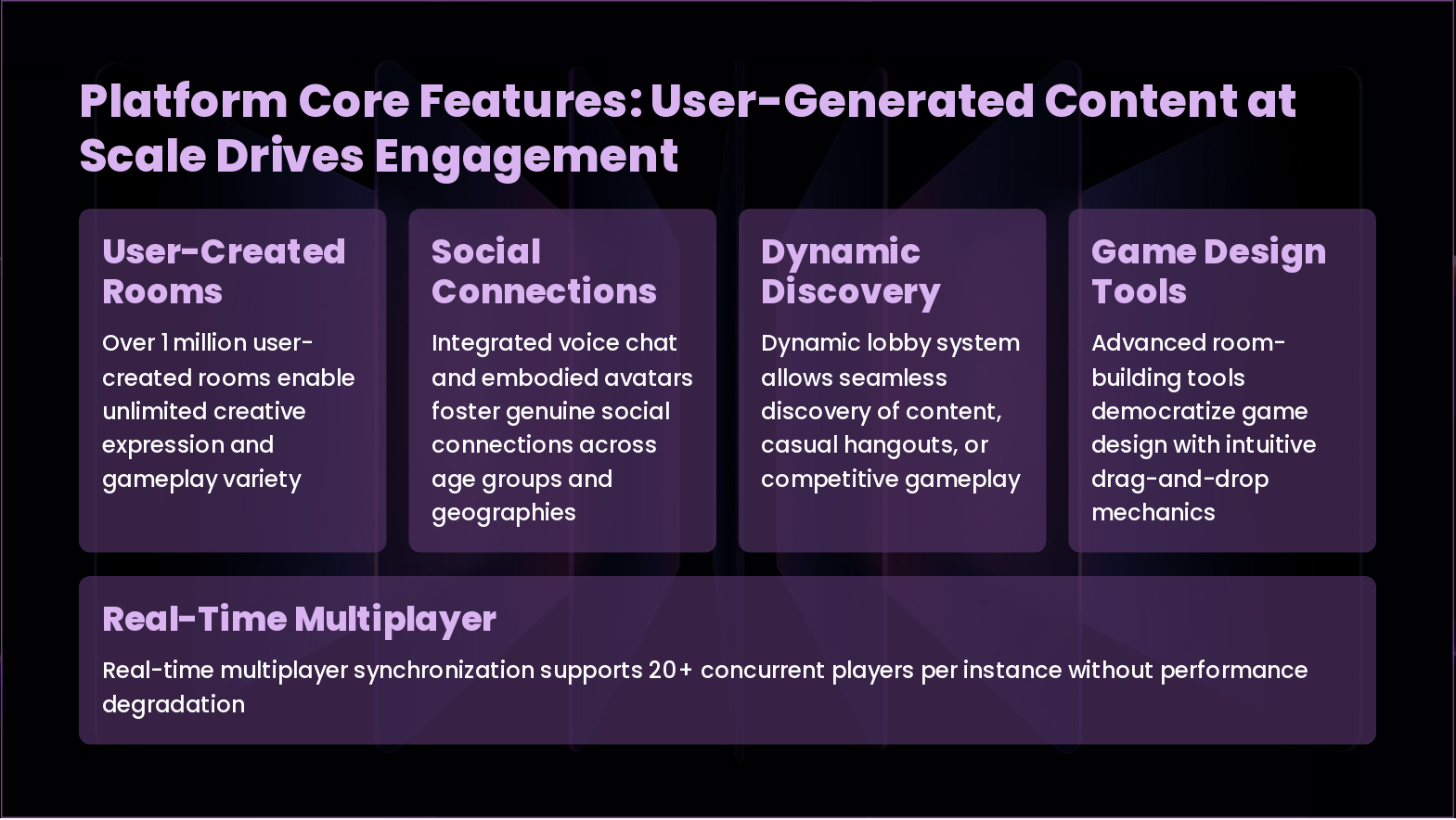
Slide 8: Platform Core Features: User-Generated Content at Scale Drives Engagement
- User-Created Rooms: Over 1 million user-created rooms enable unlimited creative expression and gameplay variety
- Social Connections: Integrated voice chat and embodied avatars foster genuine social connections across age groups and geographies
- Dynamic Discovery: Dynamic lobby system allows seamless discovery of content, casual hangouts, or competitive gameplay
- Game Design Tools: Advanced room-building tools democratize game design with intuitive drag-and-drop mechanics
- Real-Time Multiplayer: Real-time multiplayer synchronization supports 20+ concurrent players per instance without performance degradation
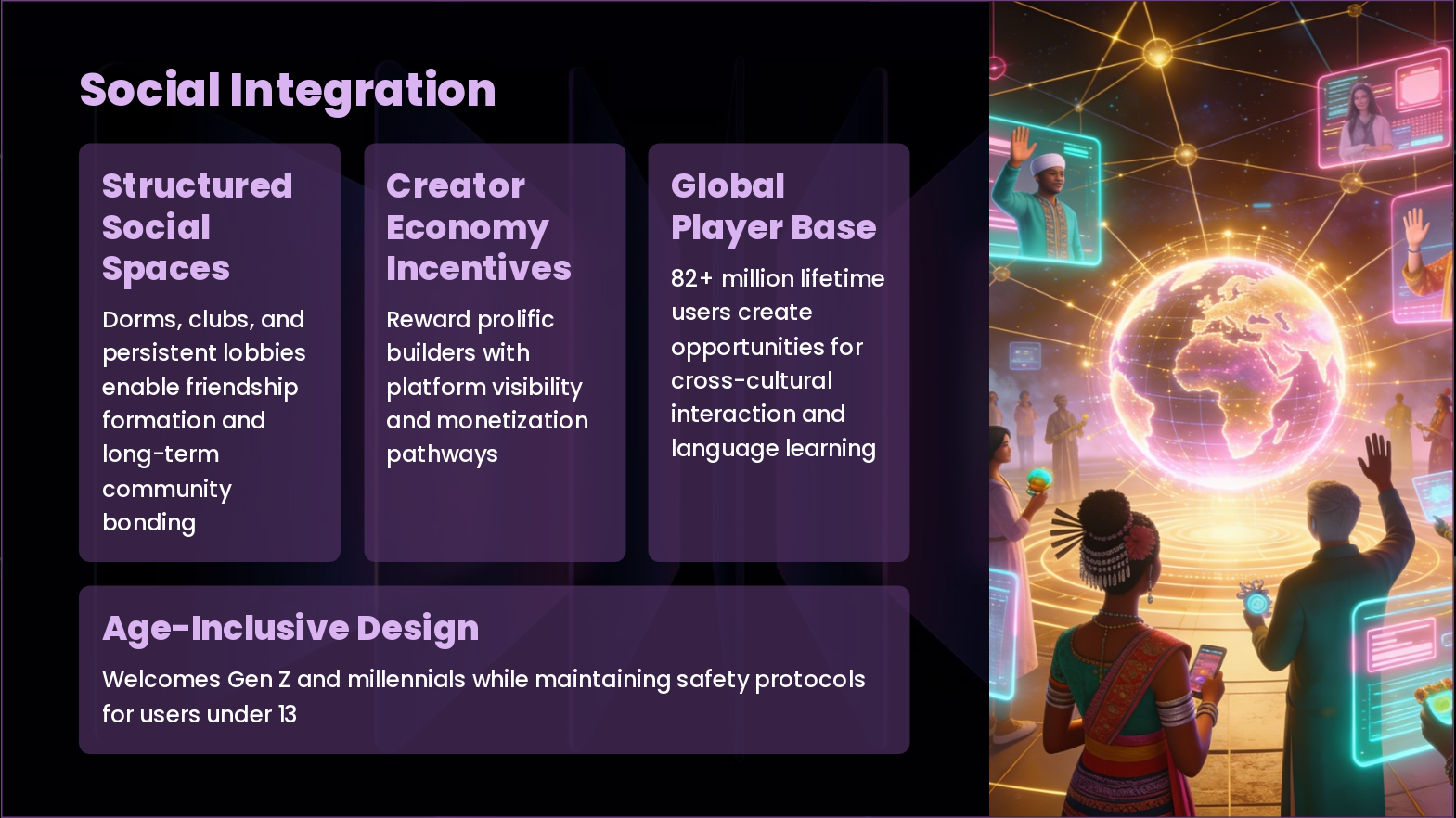
Slide 9: Social Integration
- Structured Social Spaces: Dorms, clubs, and persistent lobbies enable friendship formation and long-term community bonding
- Creator Economy Incentives: Reward prolific builders with platform visibility and monetization pathways
- Global Player Base: 82+ million lifetime users create opportunities for cross-cultural interaction and language learning
- Age-Inclusive Design: Welcomes Gen Z and millennials while maintaining safety protocols for users under 13
Slide 10: Technical Capabilities: Cross-Platform Availability Powers Market Penetration
- Multi-Platform Support: Native support across PlayStation, iOS, Android, and Xbox ensures accessibility across 1.5+ billion consumer devices globally
- VR and Non-VR Optimization: Optimized performance on VR headsets (Meta Quest, HTC Vive) and non-VR platforms balances immersion with affordability
- Cloud-Based Architecture: Cloud-based architecture enables account persistence, cross-device play, and real-time synchronization
- Continuous Innovation: Regular updates introduce new physics engines, AI-driven NPCs, and procedural generation tools
- Safety and Integrity: Moderation and safety systems employ both automated filtering and community reporting to maintain platform integrity
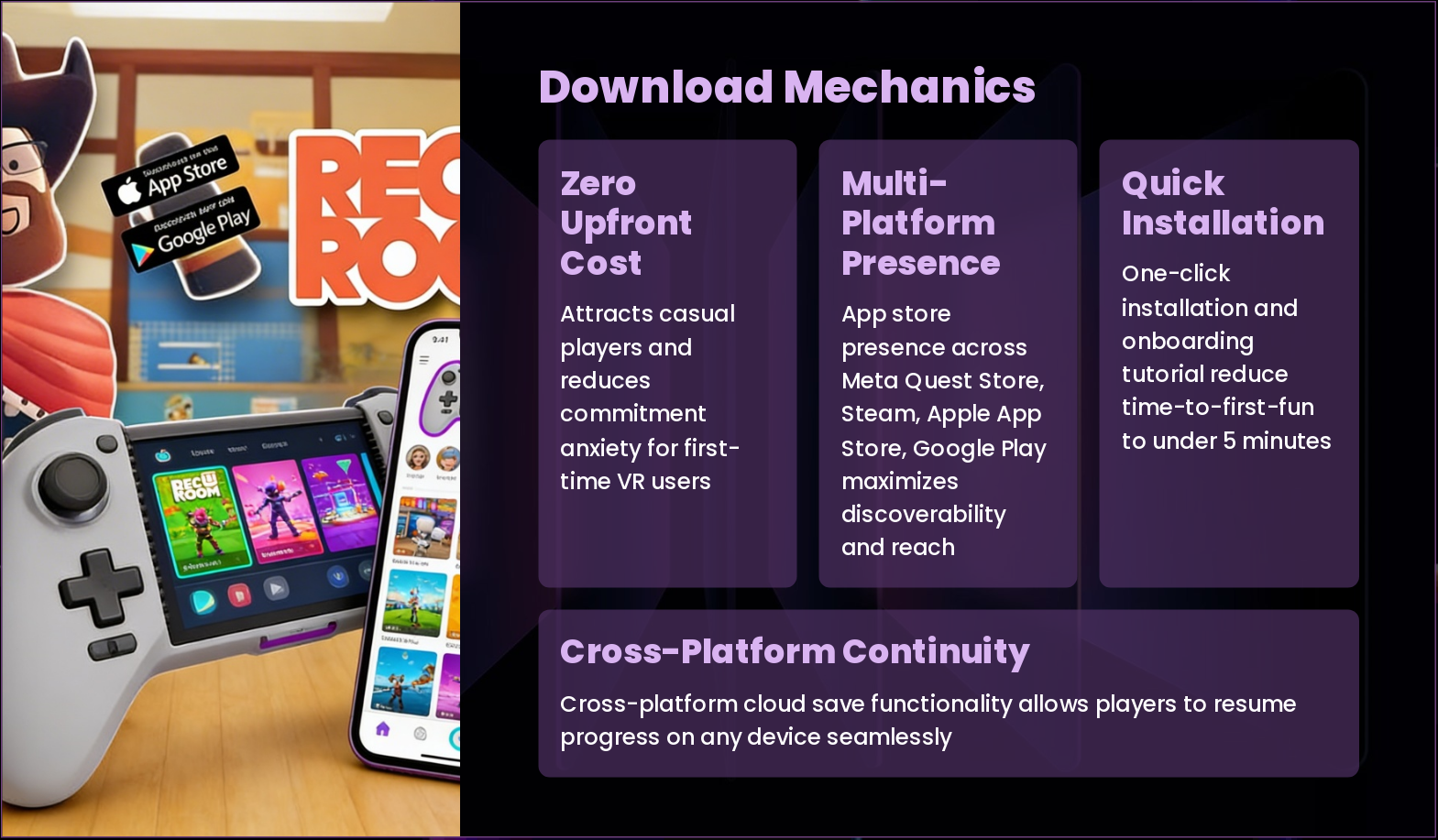
Slide 11: Download Mechanics
- Zero Upfront Cost: Attracts casual players and reduces commitment anxiety for first-time VR users
- Multi-Platform Presence: App store presence across Meta Quest Store, Steam, Apple App Store, Google Play maximizes discoverability and reach
- Quick Installation: One-click installation and onboarding tutorial reduce time-to-first-fun to under 5 minutes
- Cross-Platform Continuity: Cross-platform cloud save functionality allows players to resume progress on any device seamlessly
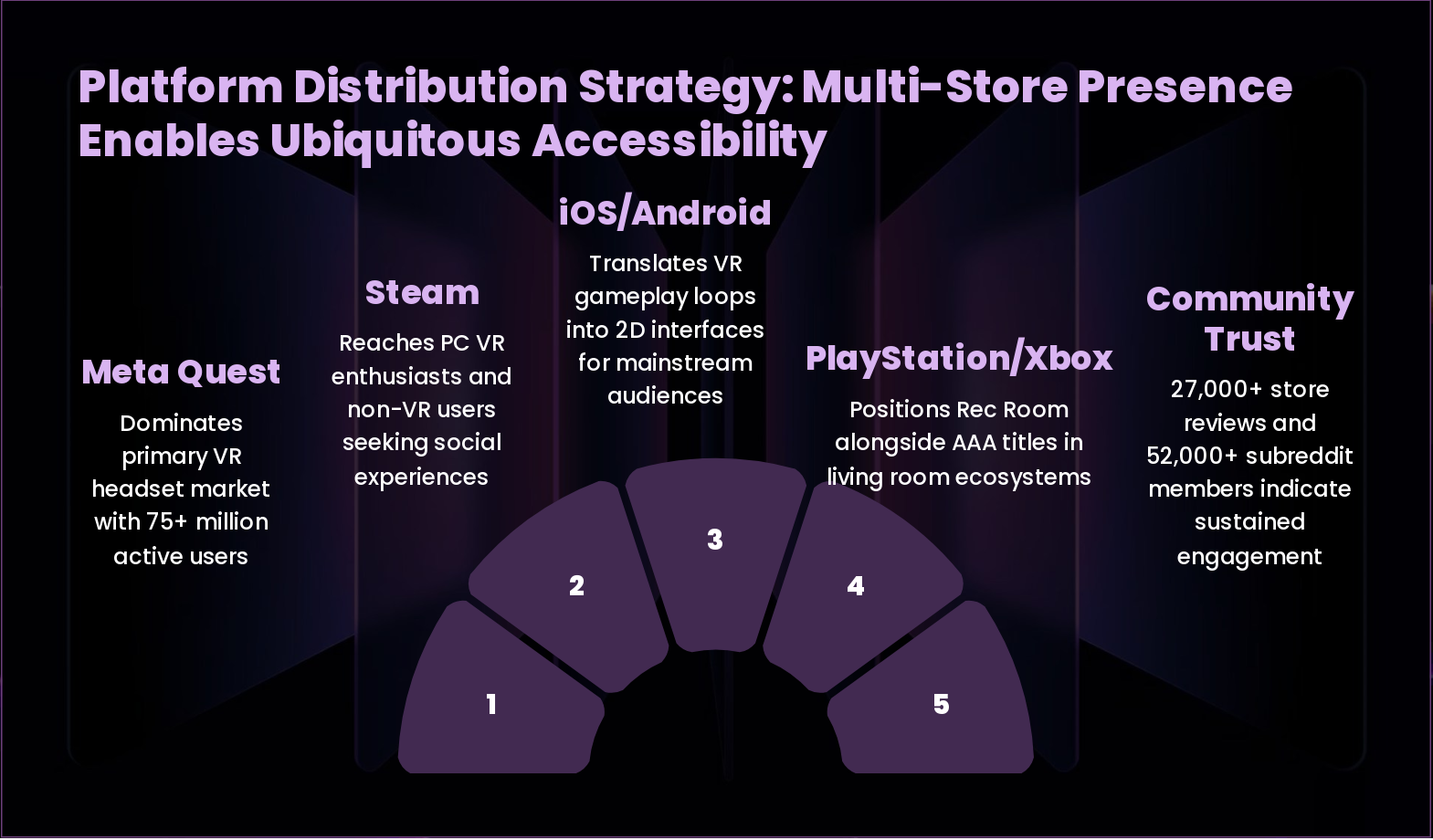
Slide 12: Platform Distribution Strategy: Multi-Store Presence Enables Ubiquitous Accessibility
- Meta Quest: Dominates primary VR headset market with 75+ million active users
- Steam: Reaches PC VR enthusiasts and non-VR users seeking social experiences
- iOS/Android: Translates VR gameplay loops into 2D interfaces for mainstream audiences
- PlayStation/Xbox: Positions Rec Room alongside AAA titles in living room ecosystems
- Community Trust: 27,000+ store reviews and 52,000+ subreddit members indicate sustained engagement
Slide 13: Login and Account Management: Unified Identity System Simplifies Onboarding
- One-Account Model: One-account model across all platforms enables seamless device-switching and cross-platform progression
- Multiple Authentication Methods: Multiple authentication methods (email, social logins, platform-specific credentials) reduce friction for diverse user demographics
- Parental Controls: Parental controls and child-account features provide guardians with oversight for users under 13
- Account Recovery: Account recovery mechanisms and data download options ensure player agency and GDPR compliance
- Persistent Progression: Persistent username and cosmetic progression incentivize account continuity and long-term engagement
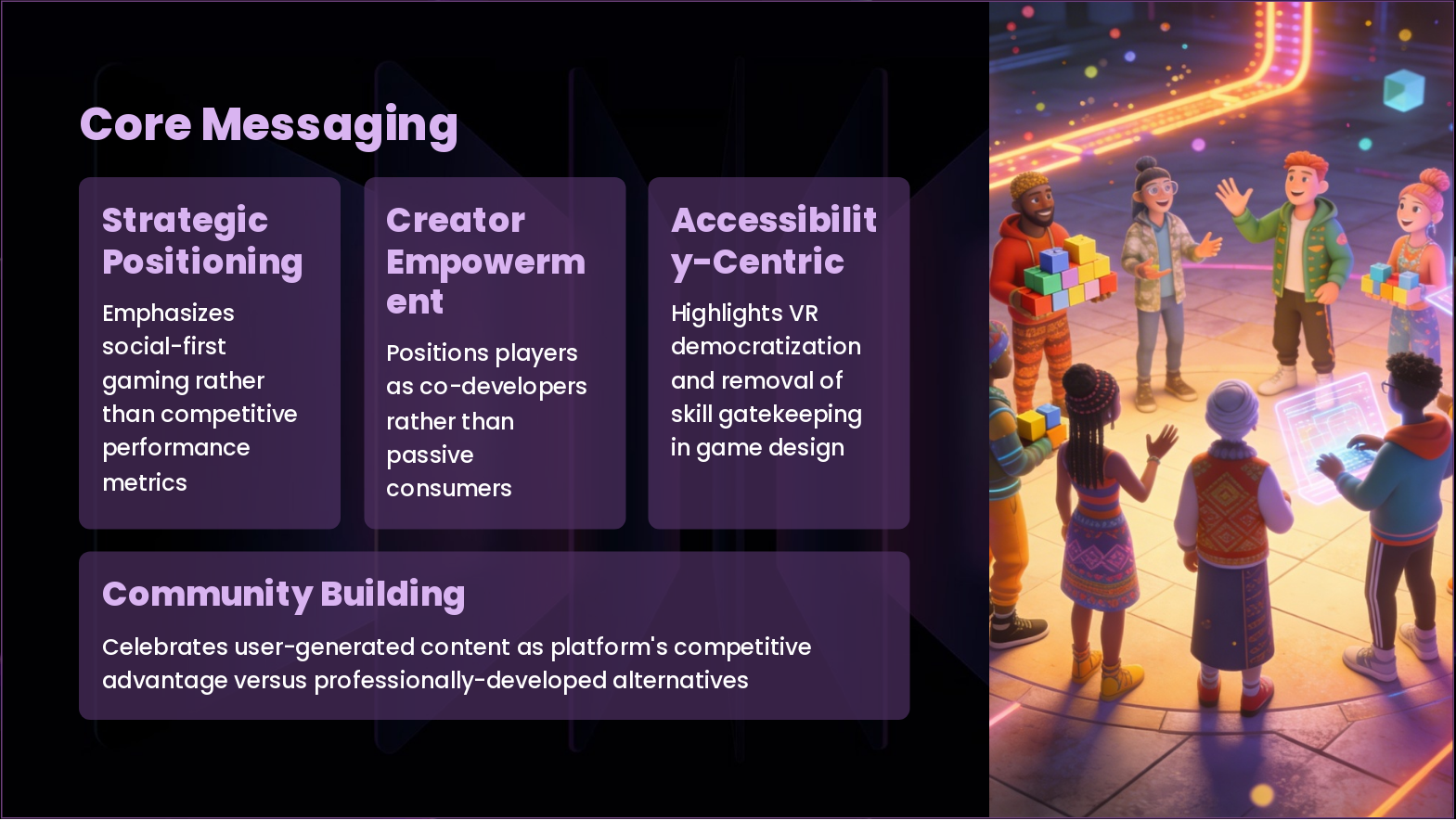
Slide 14: Core Messaging
- Strategic Positioning: Emphasizes social-first gaming rather than competitive performance metrics
- Creator Empowerment: Positions players as co-developers rather than passive consumers
- Accessibility-Centric: Highlights VR democratization and removal of skill gatekeeping in game design
- Community Building: Celebrates user-generated content as platform's competitive advantage versus professionally-developed alternatives
Slide 15: Brand Positioning: Redefining Recreation as Collaborative Digital Gathering
- Community-Centric Identity: Rec Room name deliberately evokes recreational spaces like community centers and basements rather than esports arenas
- Social Over Competitive: Emphasis on 'hanging out' positions the platform as a social alternative to competitive multiplayer shooters
- Creator-First Appeal: Creator-first narrative attracts hobbyist game designers who might never engage with professional development
- Sustainable Monetization: Free-to-play plus cosmetic monetization signals respect for player investment while funding sustainable operations
Slide 16: Operational Challenges: Monetization Headwinds Undermine Growth
- Limited Monetization Model: Cosmetic-only monetization model limits revenue per user compared to battle pass or pay-to-win competitors
- High Infrastructure Costs: Real-time multiplayer and cross-platform synchronization requirements compress profit margins significantly
- Accessibility vs Revenue Tension: Balancing free-to-play accessibility with revenue generation creates inherent tension in pricing strategy
- Pricing Elasticity Ceiling: Community complaints regarding 'overpriced' cosmetics indicate pricing elasticity ceiling limiting average revenue per user (ARPU) growth
- User Acquisition Economics: User acquisition costs in competitive VR market offset by limited lifetime value from casual players
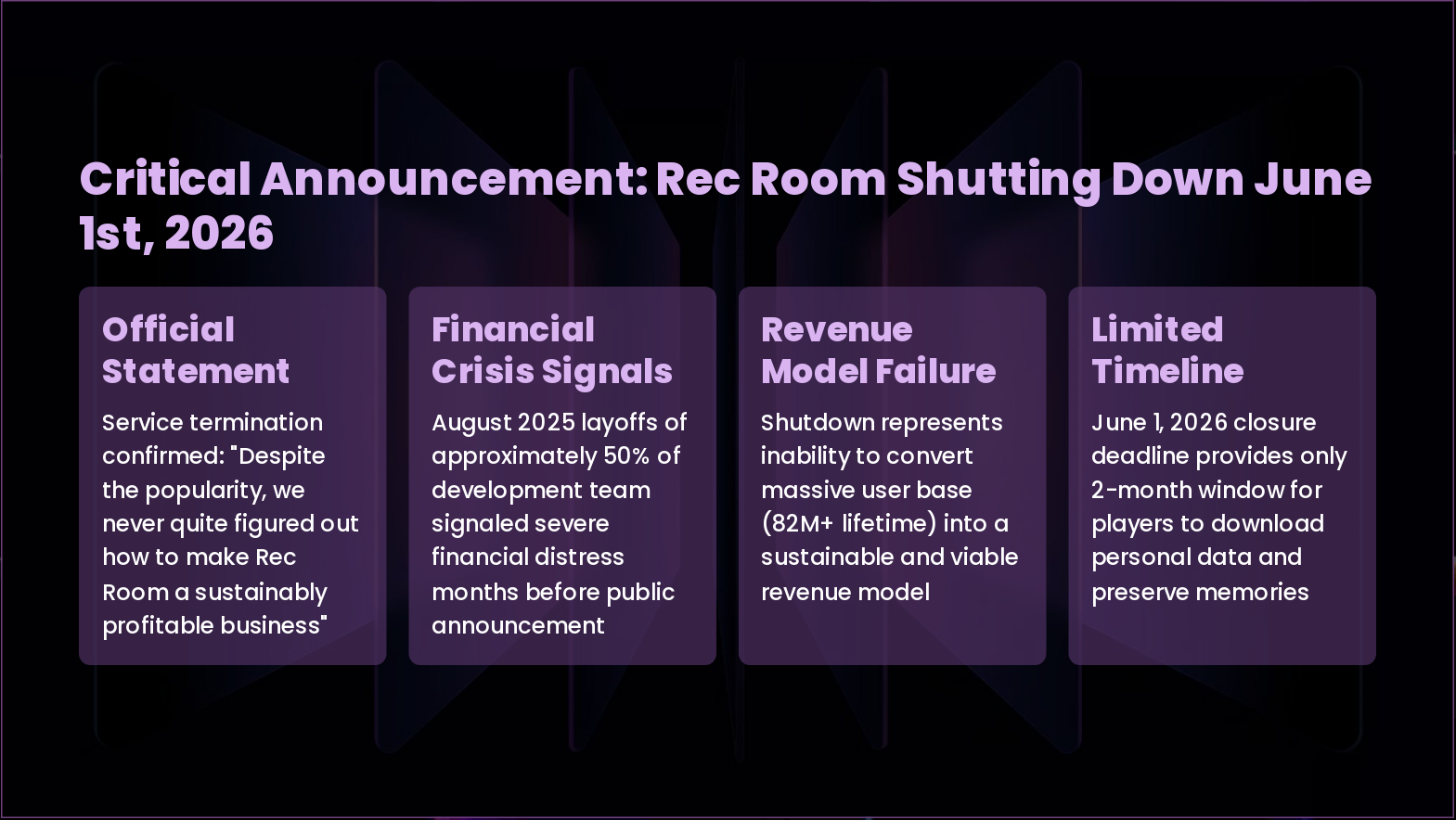
Slide 17: Critical Announcement: Rec Room Shutting Down June 1st, 2026
- Official Statement: Service termination confirmed: "Despite the popularity, we never quite figured out how to make Rec Room a sustainably profitable business"
- Financial Crisis Signals: August 2025 layoffs of approximately 50% of development team signaled severe financial distress months before public announcement
- Revenue Model Failure: Shutdown represents inability to convert massive user base (82M+ lifetime) into a sustainable and viable revenue model
- Limited Timeline: June 1, 2026 closure deadline provides only 2-month window for players to download personal data and preserve memories
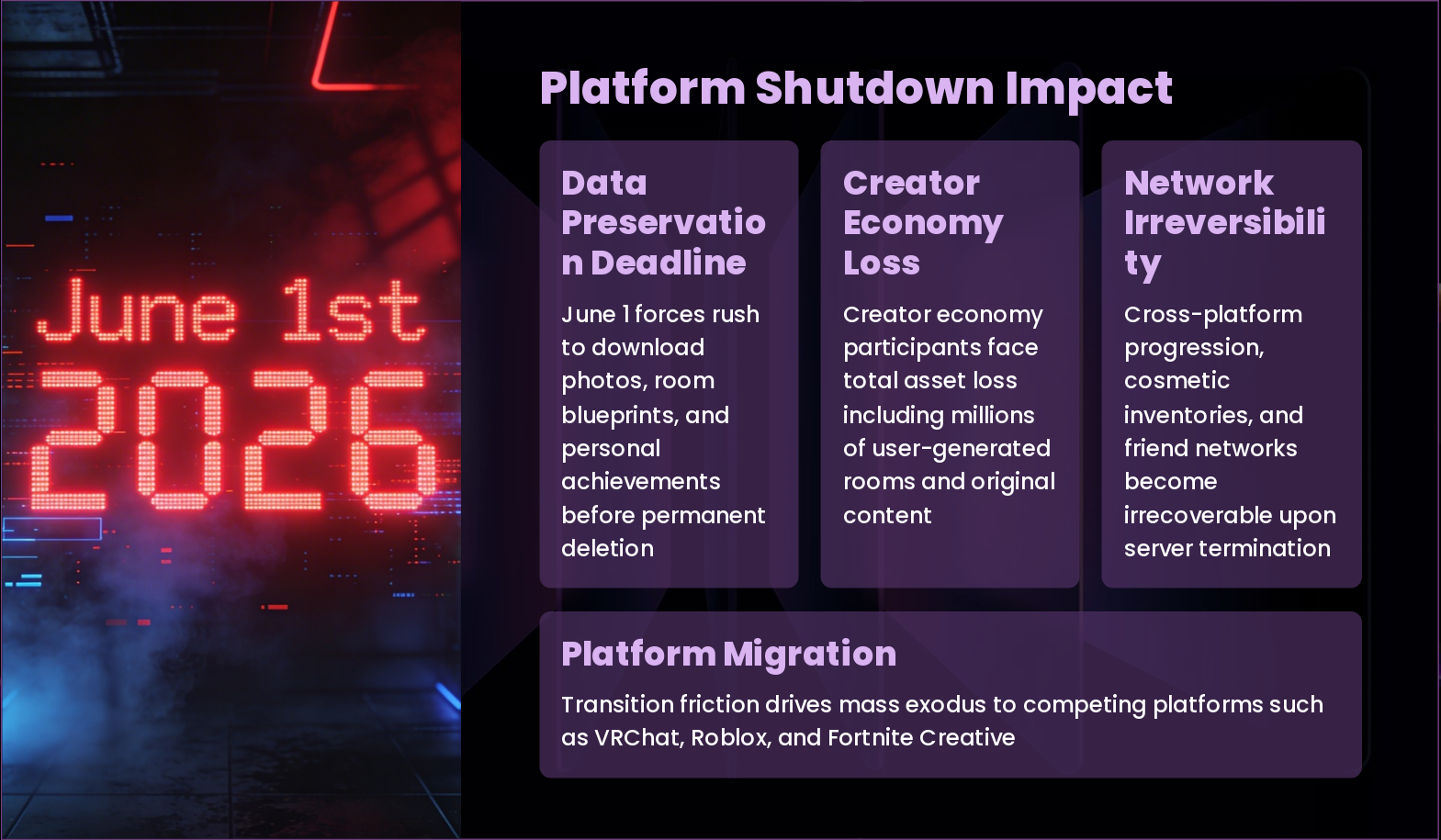
Slide 18: Platform Shutdown Impact
- Data Preservation Deadline: June 1 forces rush to download photos, room blueprints, and personal achievements before permanent deletion
- Creator Economy Loss: Creator economy participants face total asset loss including millions of user-generated rooms and original content
- Network Irreversibility: Cross-platform progression, cosmetic inventories, and friend networks become irrecoverable upon server termination
- Platform Migration: Transition friction drives mass exodus to competing platforms such as VRChat, Roblox, and Fortnite Creative
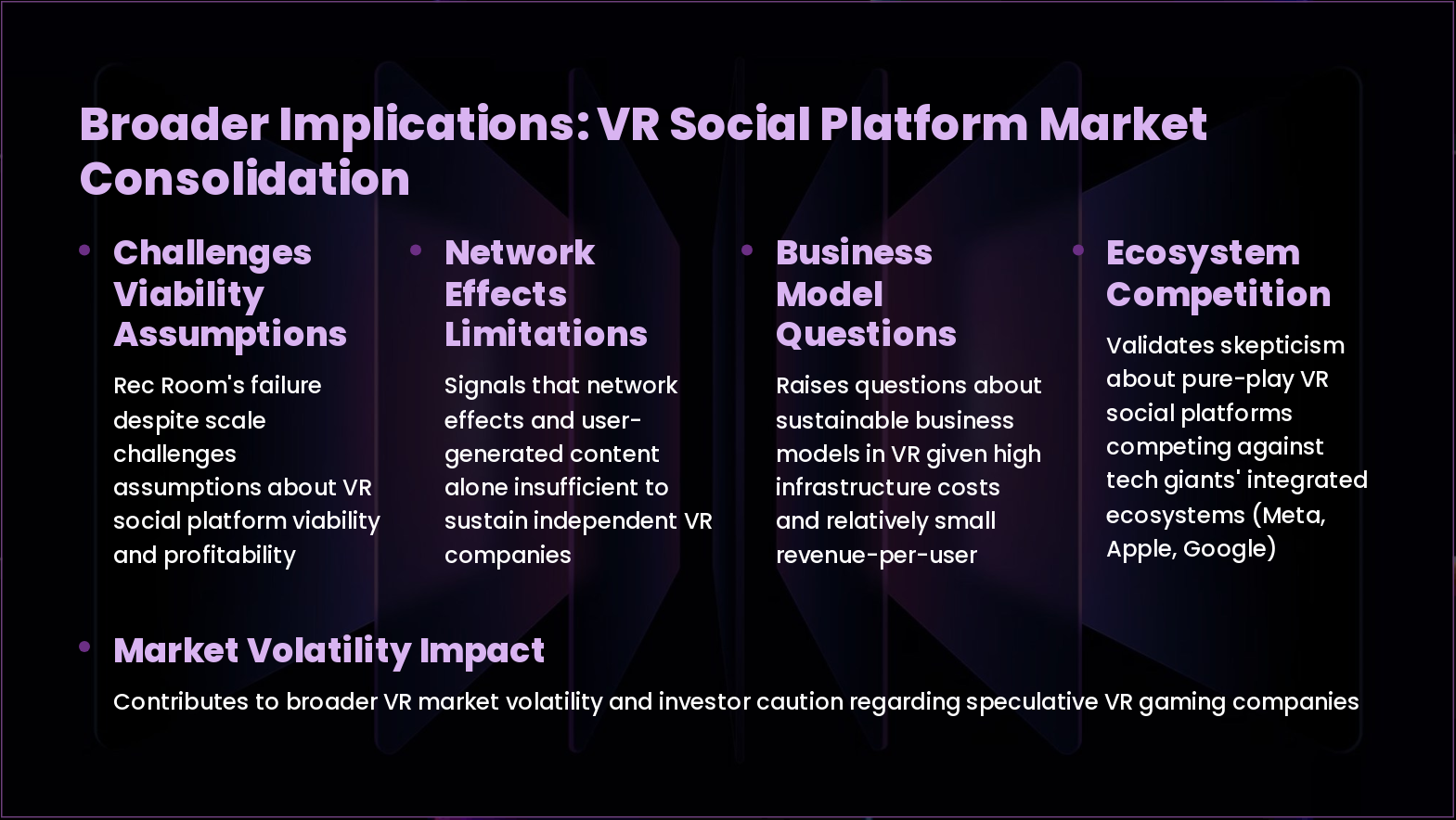
Slide 19: Broader Implications: VR Social Platform Market Consolidation
- Challenges Viability Assumptions: Rec Room's failure despite scale challenges assumptions about VR social platform viability and profitability
- Network Effects Limitations: Signals that network effects and user-generated content alone insufficient to sustain independent VR companies
- Business Model Questions: Raises questions about sustainable business models in VR given high infrastructure costs and relatively small revenue-per-user
- Ecosystem Competition: Validates skepticism about pure-play VR social platforms competing against tech giants' integrated ecosystems (Meta, Apple, Google)
- Market Volatility Impact: Contributes to broader VR market volatility and investor caution regarding speculative VR gaming companies
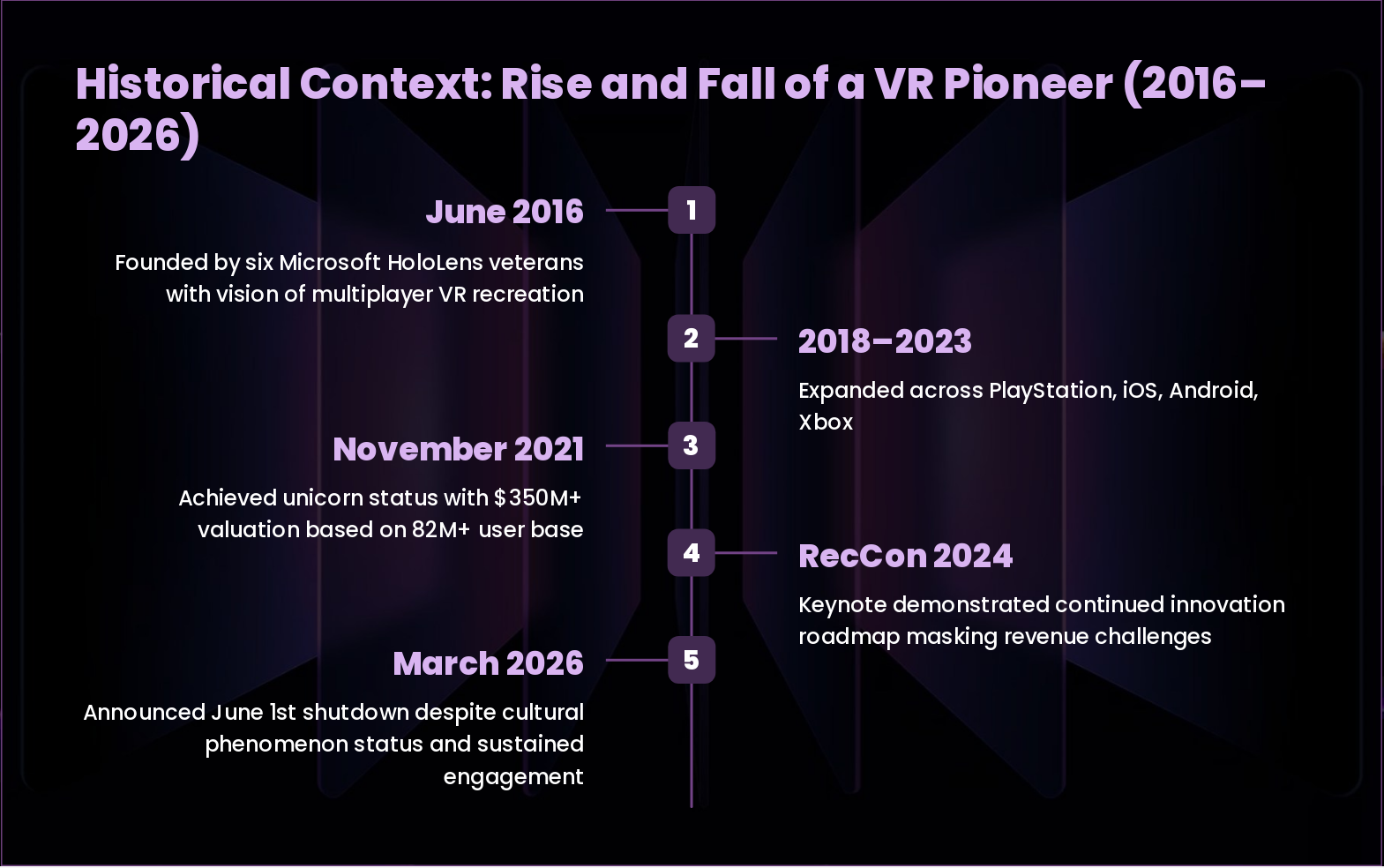
Slide 20: Historical Context: Rise and Fall of a VR Pioneer (2016–2026)
- June 2016: Founded by six Microsoft HoloLens veterans with vision of multiplayer VR recreation
- 2018–2023: Expanded across PlayStation, iOS, Android, Xbox
- November 2021: Achieved unicorn status with $350M+ valuation based on 82M+ user base
- RecCon 2024: Keynote demonstrated continued innovation roadmap masking revenue challenges
- March 2026: Announced June 1st shutdown despite cultural phenomenon status and sustained engagement
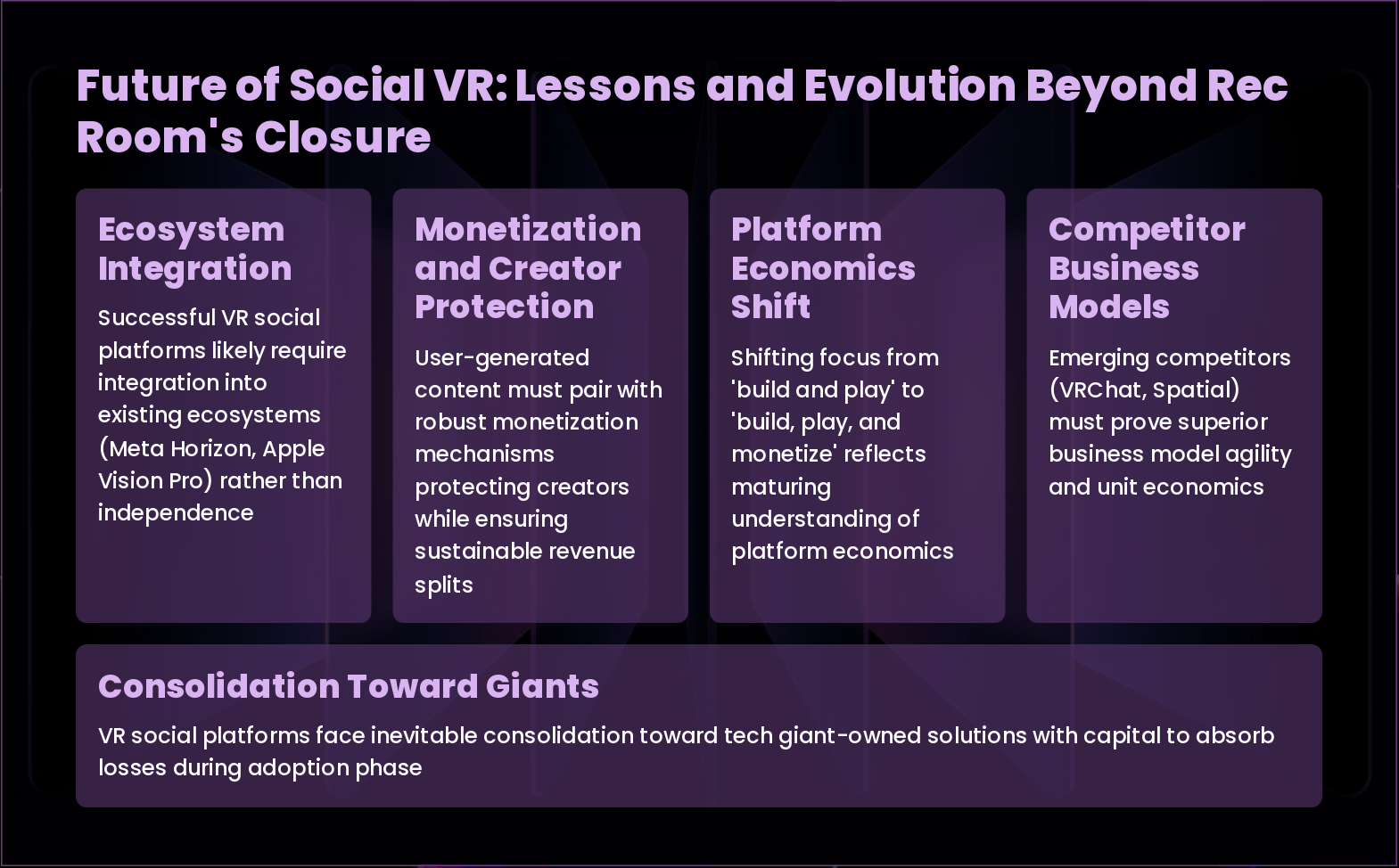
Slide 21: Future of Social VR: Lessons and Evolution Beyond Rec Room's Closure
- Ecosystem Integration: Successful VR social platforms likely require integration into existing ecosystems (Meta Horizon, Apple Vision Pro) rather than independence
- Monetization and Creator Protection: User-generated content must pair with robust monetization mechanisms protecting creators while ensuring sustainable revenue splits
- Platform Economics Shift: Shifting focus from 'build and play' to 'build, play, and monetize' reflects maturing understanding of platform economics
- Competitor Business Models: Emerging competitors (VRChat, Spatial) must prove superior business model agility and unit economics
- Consolidation Toward Giants: VR social platforms face inevitable consolidation toward tech giant-owned solutions with capital to absorb losses during adoption phase
Slide 22: Key Takeaways: Scale Without Profitability is Unsustainable
Key Takeaways: Scale Without Profitability is Unsustainable Rec Room's 2016–2026 journey demonstrates that user base scale (82M+) alone insufficient without sustainable unit economics; Layoffs (Aug 2025) and shutdown (June 2026) prove venture capital funding finite when path to profitability unclear...