
Presentation Summary
This comprehensive guide covers the essentials of nutrition for dietetics and fitness professionals, including energy balance, macronutrients, protein, fats, carbohydrates, and the importance of hydration for athletic performance.
Full Presentation Transcript
Slide 1: Nutrition Basics: Macros and Micros
Foundation for Optimal Health and Performance - A Comprehensive Educational Guide for Dietetics and Fitness Professionals
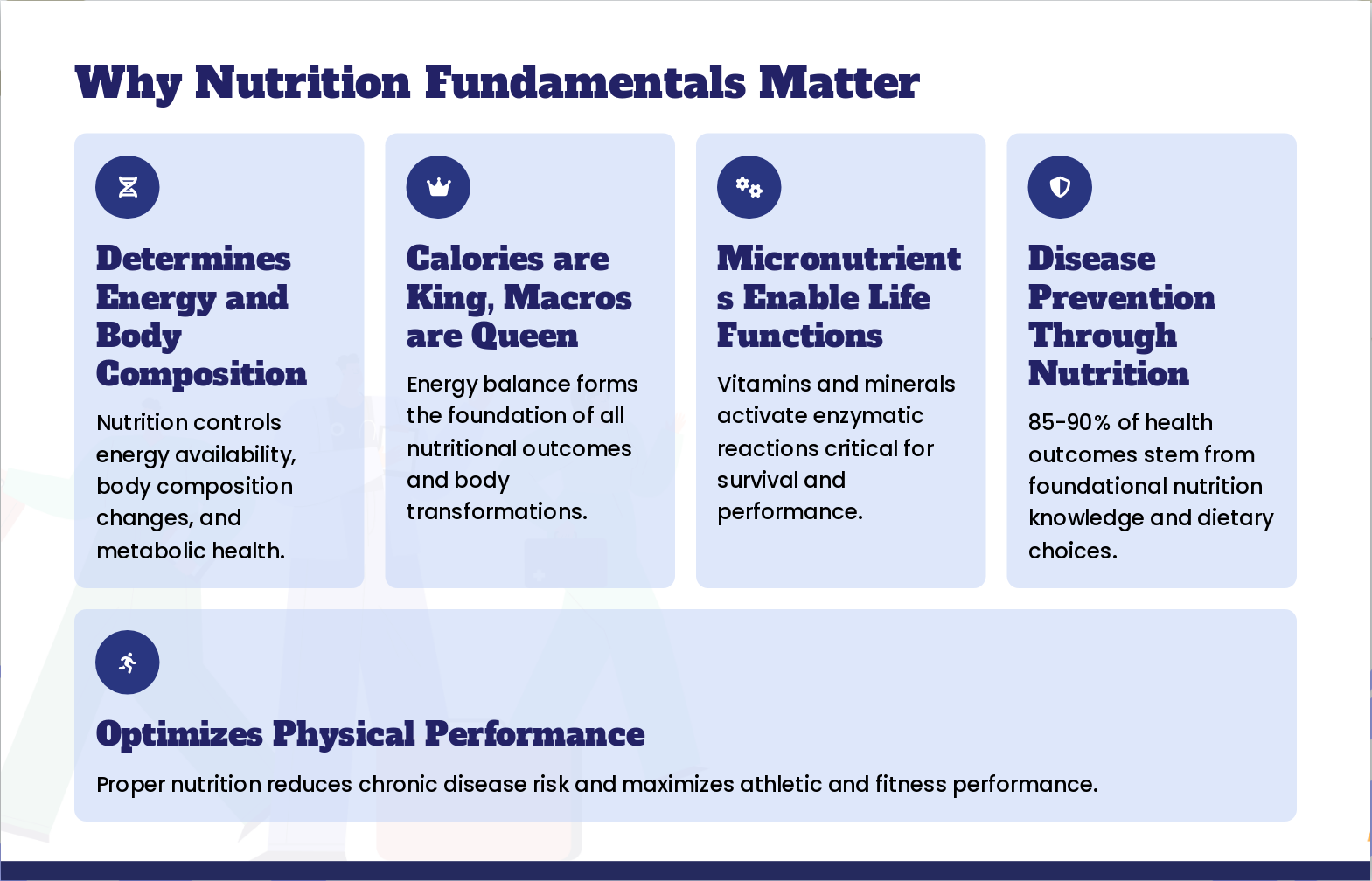
Slide 2: Why Nutrition Fundamentals Matter
- Determines Energy and Body Composition: Nutrition controls energy availability, body composition changes, and metabolic health.
- Calories are King, Macros are Queen: Energy balance forms the foundation of all nutritional outcomes and body transformations.
- Micronutrients Enable Life Functions: Vitamins and minerals activate enzymatic reactions critical for survival and performance.
- Disease Prevention Through Nutrition: 85-90% of health outcomes stem from foundational nutrition knowledge and dietary choices.
- Optimizes Physical Performance: Proper nutrition reduces chronic disease risk and maximizes athletic and fitness performance.
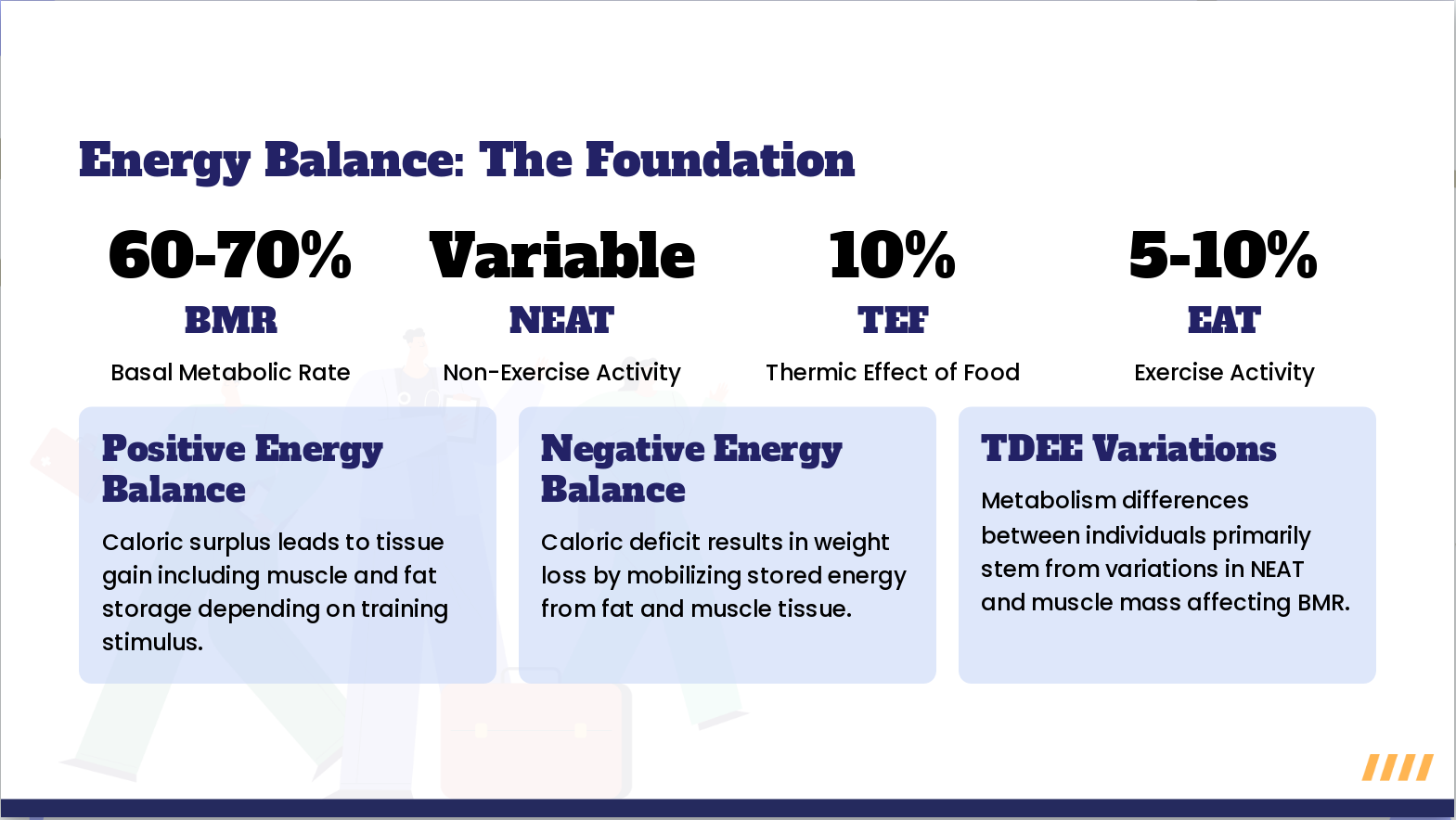
Slide 3: Energy Balance: The Foundation
- 60-70% — BMR
- Variable — NEAT
- 10% — TEF
- 5-10% — EAT
- Positive Energy Balance: Caloric surplus leads to tissue gain including muscle and fat storage depending on training stimulus.
- Negative Energy Balance: Caloric deficit results in weight loss by mobilizing stored energy from fat and muscle tissue.
- TDEE Variations: Metabolism differences between individuals primarily stem from variations in NEAT and muscle mass affecting BMR.
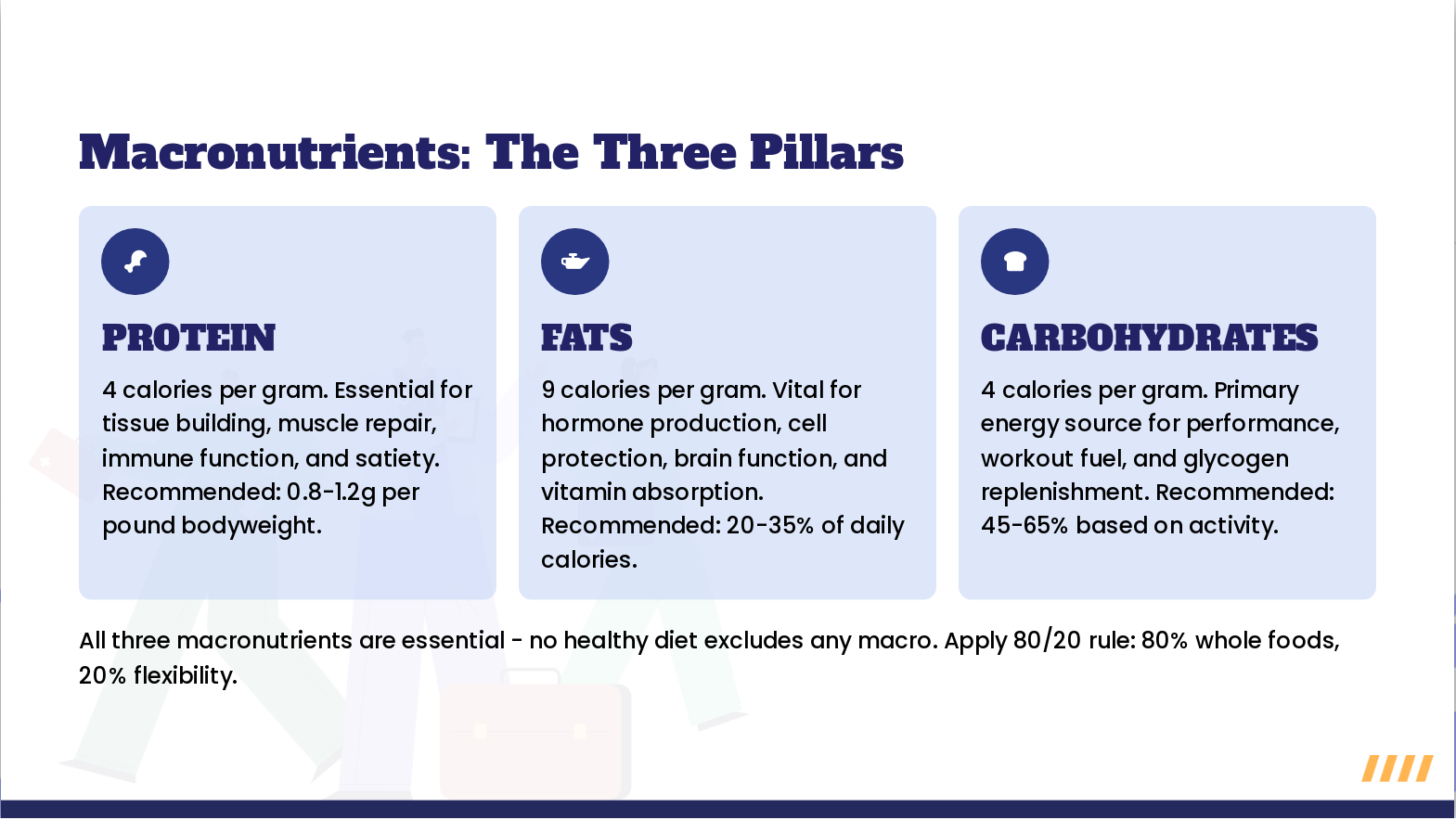
Slide 4: Macronutrients: The Three Pillars
- PROTEIN: 4 calories per gram. Essential for tissue building, muscle repair, immune function, and satiety. Recommended: 0.8-1.2g per pound bodyweight.
- FATS: 9 calories per gram. Vital for hormone production, cell protection, brain function, and vitamin absorption. Recommended: 20-35% of daily calories.
- CARBOHYDRATES: 4 calories per gram. Primary energy source for performance, workout fuel, and glycogen replenishment. Recommended: 45-65% based on activity.
All three macronutrients are essential - no healthy diet excludes any macro. Apply 80/20 rule: 80% whole foods, 20% flexibility.
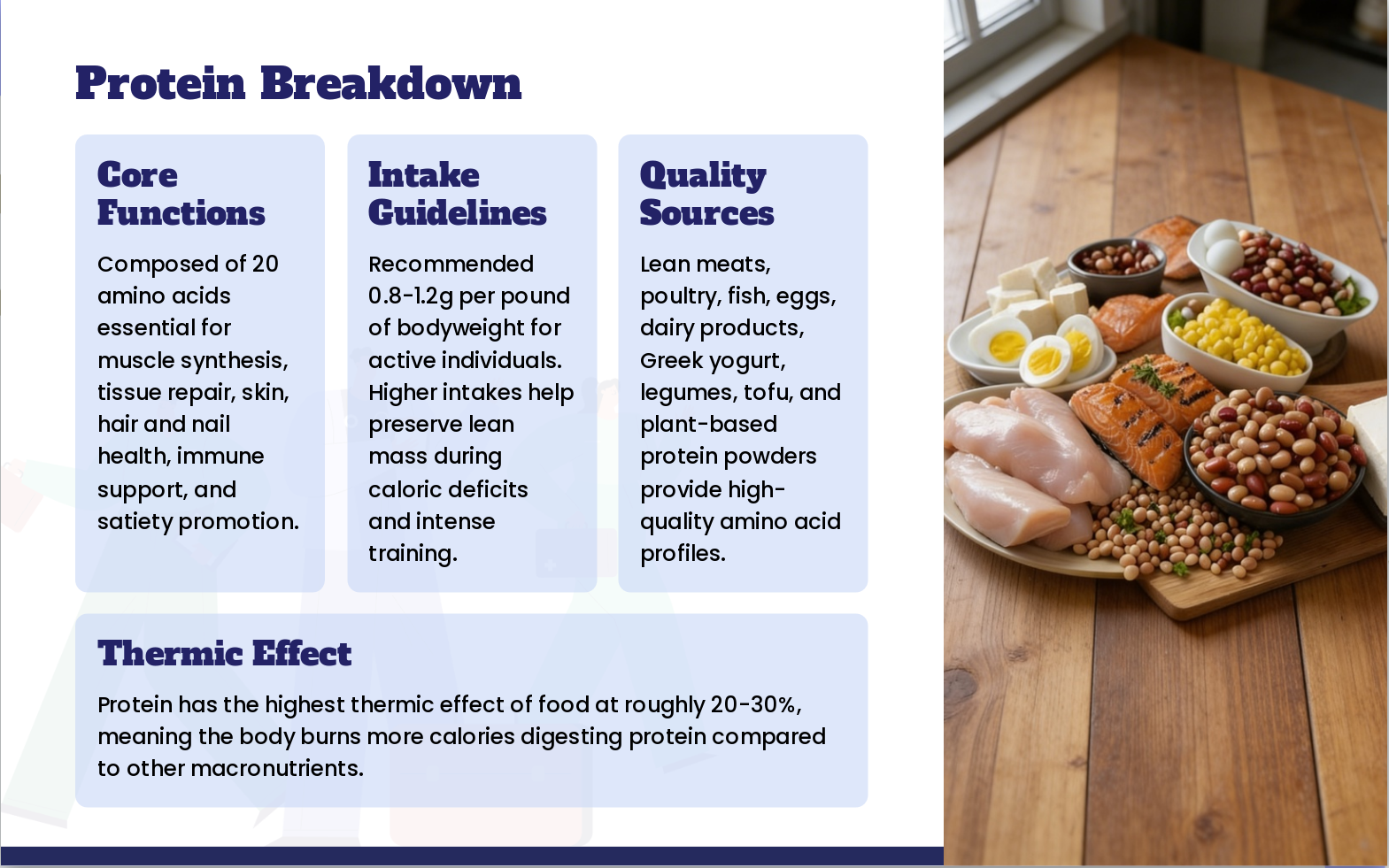
Slide 5: Protein Breakdown
- Core Functions: Composed of 20 amino acids essential for muscle synthesis, tissue repair, skin, hair and nail health, immune support, and satiety promotion.
- Intake Guidelines: Recommended 0.8-1.2g per pound of bodyweight for active individuals. Higher intakes help preserve lean mass during caloric deficits and intense training.
- Quality Sources: Lean meats, poultry, fish, eggs, dairy products, Greek yogurt, legumes, tofu, and plant-based protein powders provide high-quality amino acid profiles.
- Thermic Effect: Protein has the highest thermic effect of food at roughly 20-30%, meaning the body burns more calories digesting protein compared to other macronutrients.
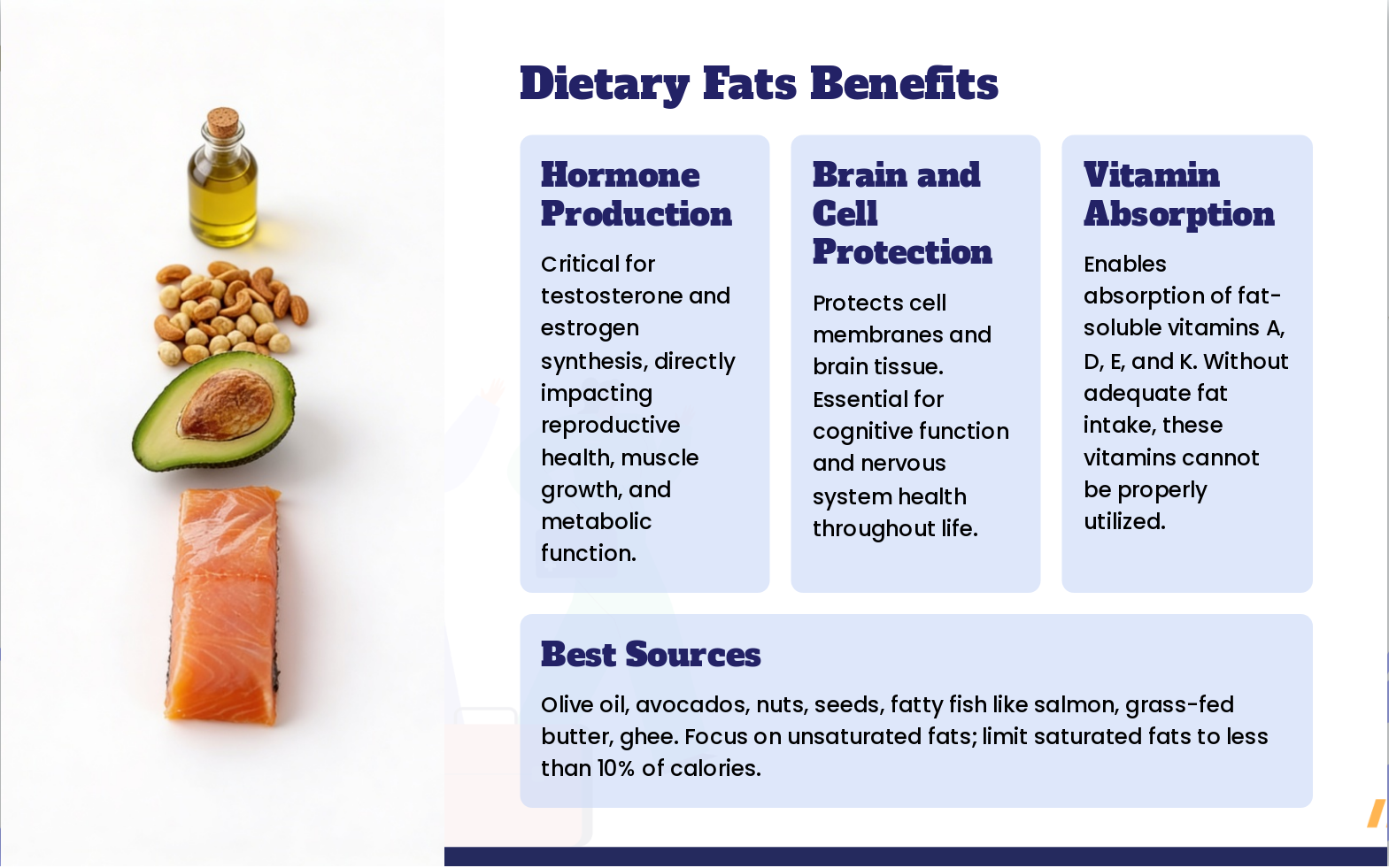
Slide 6: Dietary Fats Benefits
- Hormone Production: Critical for testosterone and estrogen synthesis, directly impacting reproductive health, muscle growth, and metabolic function.
- Brain and Cell Protection: Protects cell membranes and brain tissue. Essential for cognitive function and nervous system health throughout life.
- Vitamin Absorption: Enables absorption of fat-soluble vitamins A, D, E, and K. Without adequate fat intake, these vitamins cannot be properly utilized.
- Best Sources: Olive oil, avocados, nuts, seeds, fatty fish like salmon, grass-fed butter, ghee. Focus on unsaturated fats; limit saturated fats to less than 10% of calories.
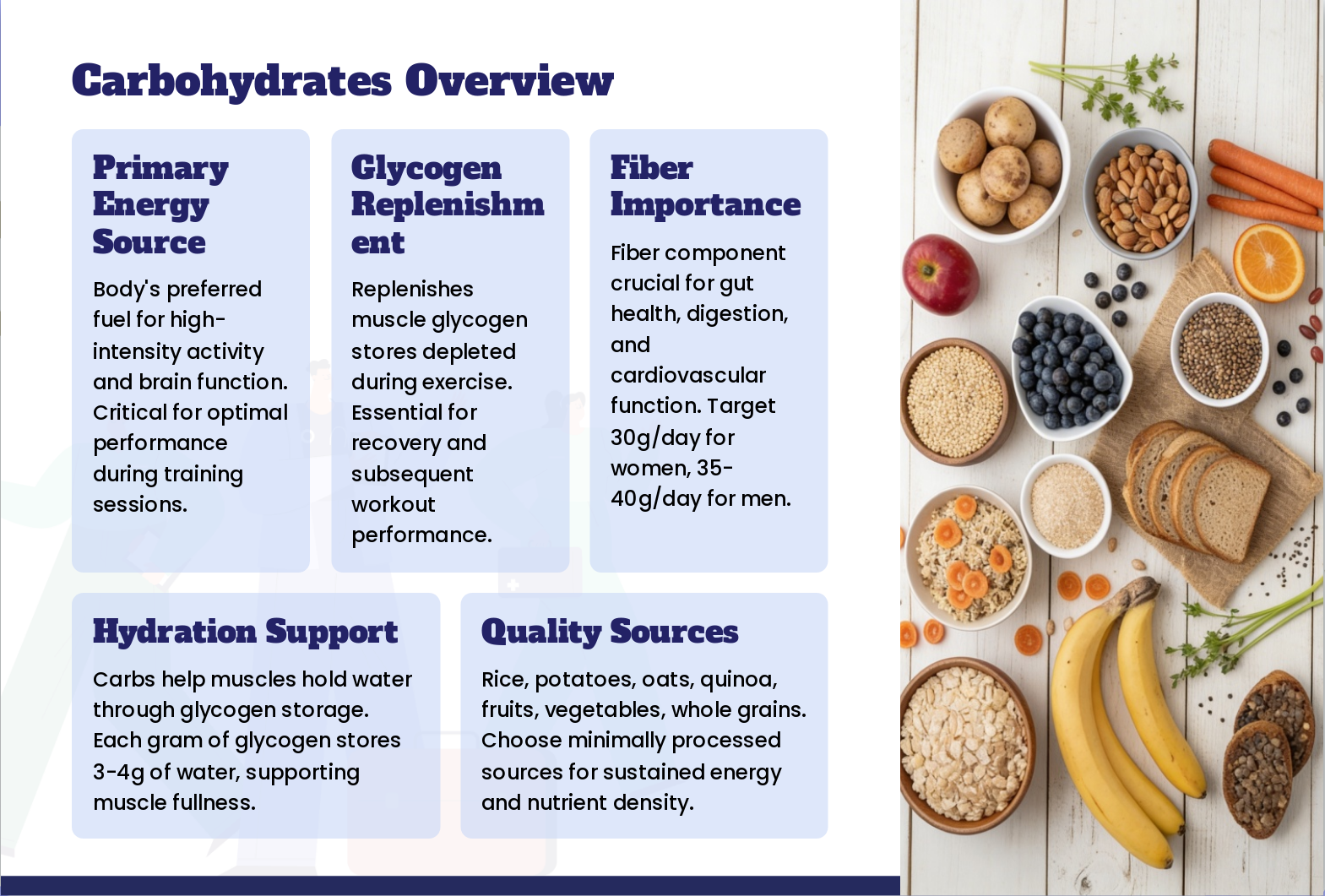
Slide 7: Carbohydrates Overview
- Primary Energy Source: Body's preferred fuel for high-intensity activity and brain function. Critical for optimal performance during training sessions.
- Glycogen Replenishment: Replenishes muscle glycogen stores depleted during exercise. Essential for recovery and subsequent workout performance.
- Fiber Importance: Fiber component crucial for gut health, digestion, and cardiovascular function. Target 30g/day for women, 35-40g/day for men.
- Hydration Support: Carbs help muscles hold water through glycogen storage. Each gram of glycogen stores 3-4g of water, supporting muscle fullness.
- Quality Sources: Rice, potatoes, oats, quinoa, fruits, vegetables, whole grains. Choose minimally processed sources for sustained energy and nutrient density.
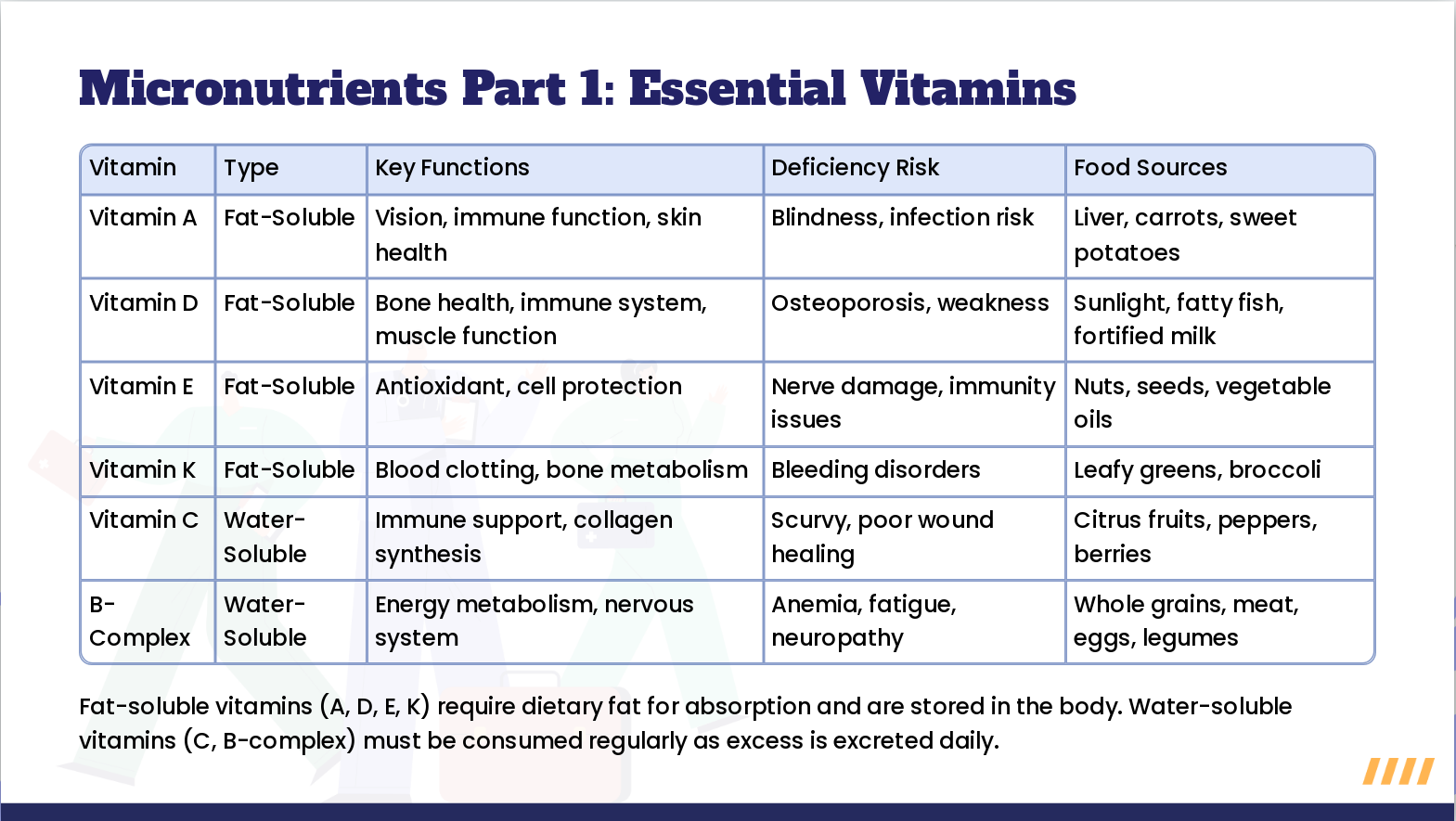
Slide 8: Micronutrients Part 1: Essential Vitamins
Fat-soluble vitamins (A, D, E, K) require dietary fat for absorption and are stored in the body. Water-soluble vitamins (C, B-complex) must be consumed regularly as excess is excreted daily.
- Vitamin: Vitamin A, Type: Fat-Soluble, Key Functions: Vision, immune function, skin health, Deficiency Risk: Blindness, infection risk, Food Sources: Liver, carrots, sweet potatoes
- Vitamin: Vitamin D, Type: Fat-Soluble, Key Functions: Bone health, immune system, muscle function, Deficiency Risk: Osteoporosis, weakness, Food Sources: Sunlight, fatty fish, fortified milk
- Vitamin: Vitamin E, Type: Fat-Soluble, Key Functions: Antioxidant, cell protection, Deficiency Risk: Nerve damage, immunity issues, Food Sources: Nuts, seeds, vegetable oils
- Vitamin: Vitamin K, Type: Fat-Soluble, Key Functions: Blood clotting, bone metabolism, Deficiency Risk: Bleeding disorders, Food Sources: Leafy greens, broccoli
- Vitamin: Vitamin C, Type: Water-Soluble, Key Functions: Immune support, collagen synthesis, Deficiency Risk: Scurvy, poor wound healing, Food Sources: Citrus fruits, peppers, berries
- Vitamin: B-Complex, Type: Water-Soluble, Key Functions: Energy metabolism, nervous system, Deficiency Risk: Anemia, fatigue, neuropathy, Food Sources: Whole grains, meat, eggs, legumes
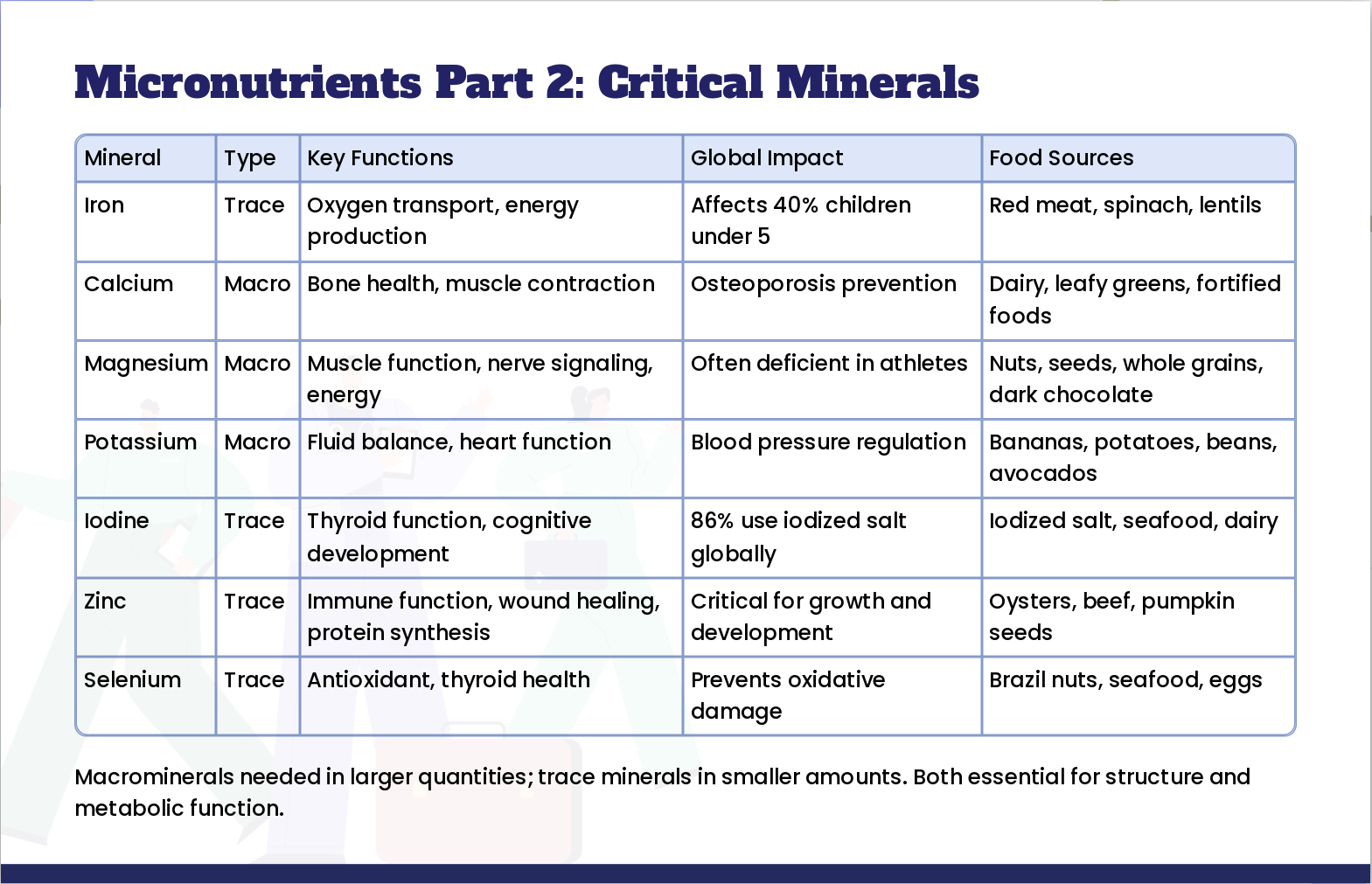
Slide 9: Micronutrients Part 2: Critical Minerals
Macrominerals needed in larger quantities; trace minerals in smaller amounts. Both essential for structure and metabolic function.
- Mineral: Iron, Type: Trace, Key Functions: Oxygen transport, energy production, Global Impact: Affects 40% children under 5, Food Sources: Red meat, spinach, lentils
- Mineral: Calcium, Type: Macro, Key Functions: Bone health, muscle contraction, Global Impact: Osteoporosis prevention, Food Sources: Dairy, leafy greens, fortified foods
- Mineral: Magnesium, Type: Macro, Key Functions: Muscle function, nerve signaling, energy, Global Impact: Often deficient in athletes, Food Sources: Nuts, seeds, whole grains, dark chocolate
- Mineral: Potassium, Type: Macro, Key Functions: Fluid balance, heart function, Global Impact: Blood pressure regulation, Food Sources: Bananas, potatoes, beans, avocados
- Mineral: Iodine, Type: Trace, Key Functions: Thyroid function, cognitive development, Global Impact: 86% use iodized salt globally, Food Sources: Iodized salt, seafood, dairy
- Mineral: Zinc, Type: Trace, Key Functions: Immune function, wound healing, protein synthesis, Global Impact: Critical for growth and development, Food Sources: Oysters, beef, pumpkin seeds
- Mineral: Selenium, Type: Trace, Key Functions: Antioxidant, thyroid health, Global Impact: Prevents oxidative damage, Food Sources: Brazil nuts, seafood, eggs
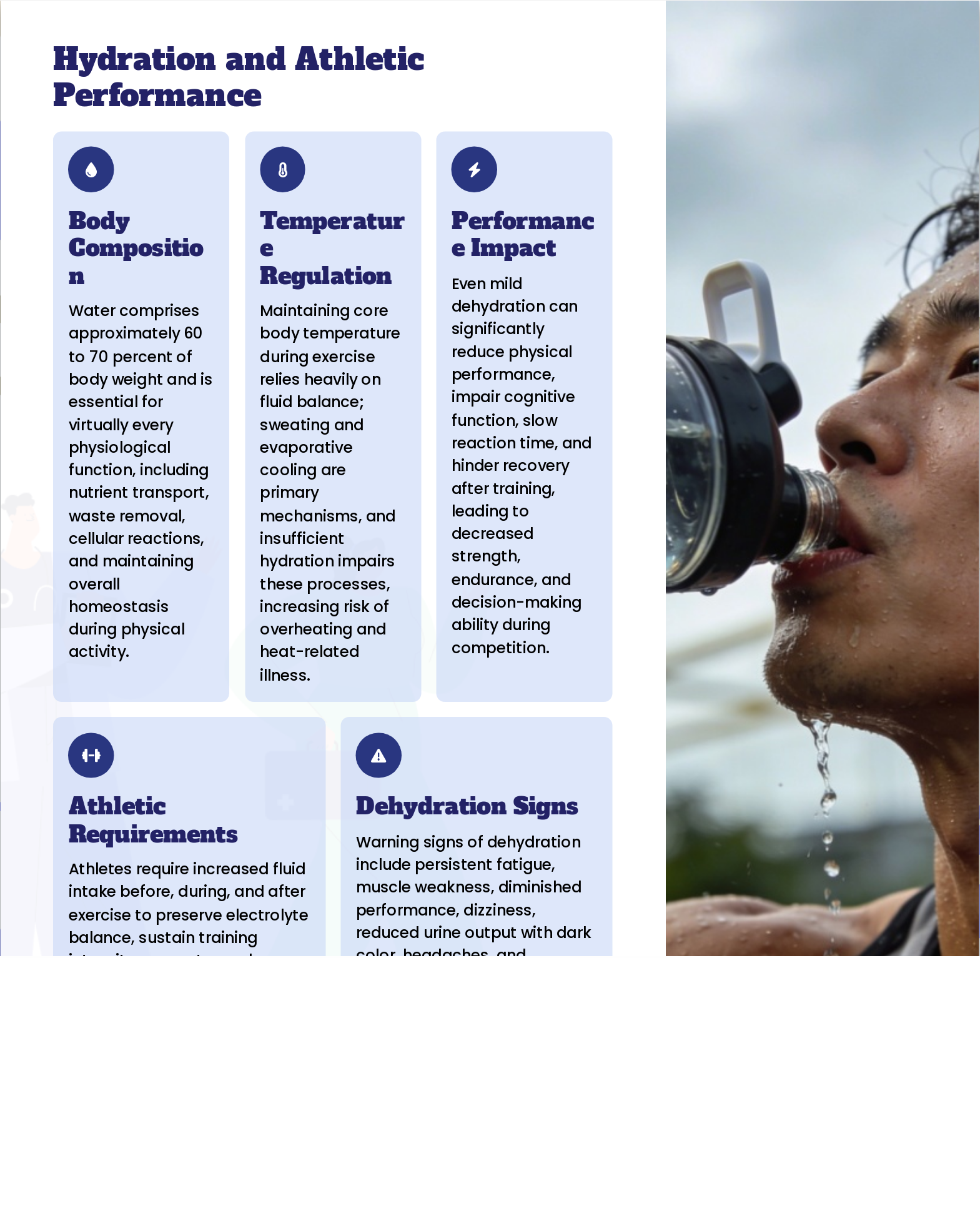
Slide 10: Hydration and Athletic Performance
- Body Composition: Water comprises approximately 60 to 70 percent of body weight and is essential for virtually every physiological function, including nutrient transport, waste removal, cellular reactions, and maintaining overall homeostasis during physical activity.
- Temperature Regulation: Maintaining core body temperature during exercise relies heavily on fluid balance; sweating and evaporative cooling are primary mechanisms, and insufficient hydration impairs these processes, increasing risk of overheating and heat-related illness.
- Performance Impact: Even mild dehydration can significantly reduce physical performance, impair cognitive function, slow reaction time, and hinder recovery after training, leading to decreased strength, endurance, and decision-making ability during competition.
- Athletic Requirements: Athletes require increased fluid intake before, during, and after exercise to preserve electrolyte balance, sustain training intensity, support muscle function, and optimize recovery, with individualized plans based on sweat rate and environment.
- Dehydration Signs: Warning signs of dehydration include persistent fatigue, muscle weakness, diminished performance, dizziness, reduced urine output with dark color, headaches, and decreased mental clarity, all indicating the need for prompt rehydration and assessment.
Proper hydration supports muscle fullness, efficient nutrient delivery, electrolyte balance, and optimal athletic performance; include all beverages and water-containing foods when calculating total daily water intake for training and recovery.
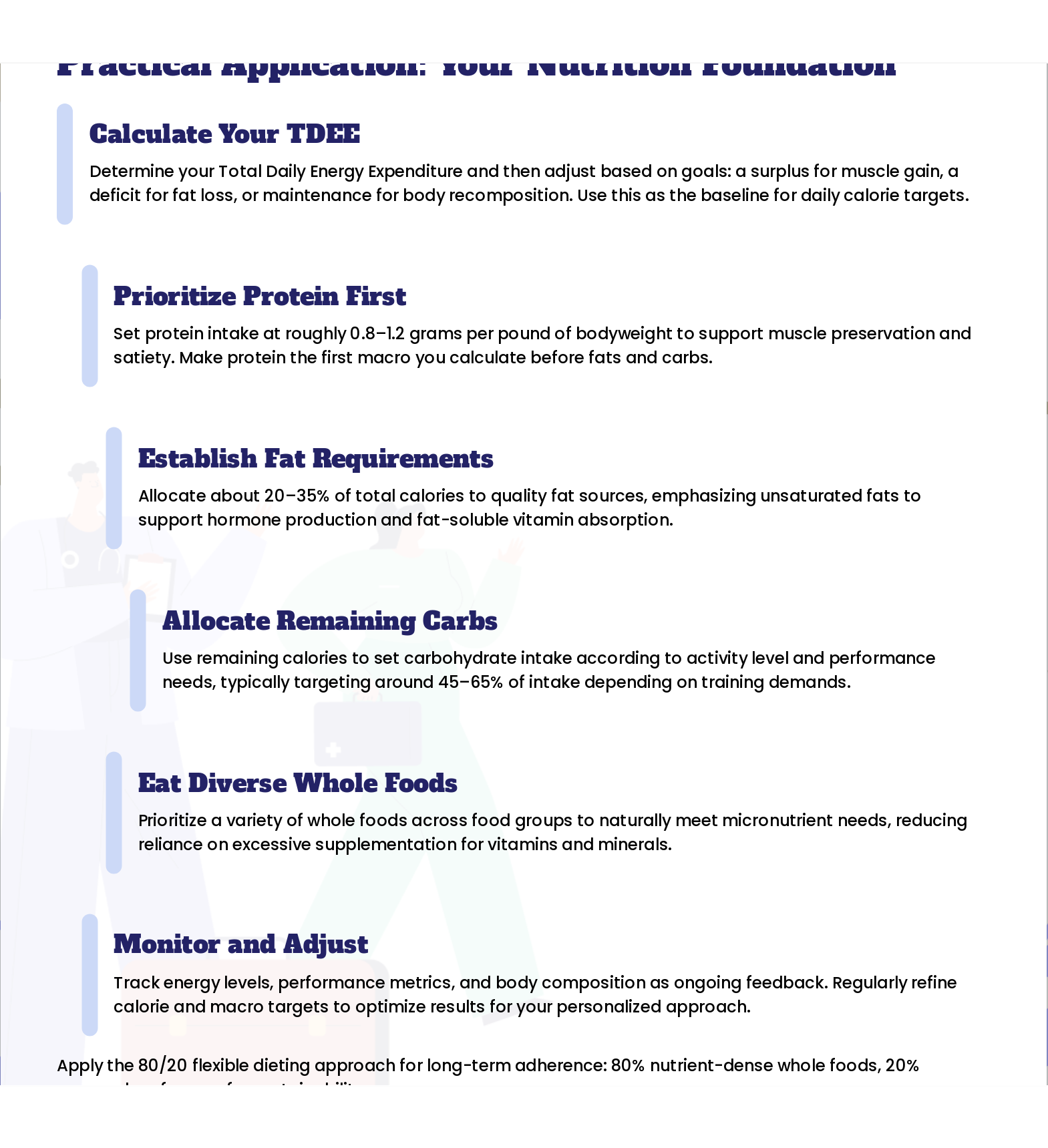
Slide 11: Practical Application: Your Nutrition Foundation
- Calculate Your TDEE: Determine your Total Daily Energy Expenditure and then adjust based on goals: a surplus for muscle gain, a deficit for fat loss, or maintenance for body recomposition. Use this as the baseline for daily calorie targets.
- Prioritize Protein First: Set protein intake at roughly 0.8–1.2 grams per pound of bodyweight to support muscle preservation and satiety. Make protein the first macro you calculate before fats and carbs.
- Establish Fat Requirements: Allocate about 20–35% of total calories to quality fat sources, emphasizing unsaturated fats to support hormone production and fat-soluble vitamin absorption.
- Allocate Remaining Carbs: Use remaining calories to set carbohydrate intake according to activity level and performance needs, typically targeting around 45–65% of intake depending on training demands.
- Eat Diverse Whole Foods: Prioritize a variety of whole foods across food groups to naturally meet micronutrient needs, reducing reliance on excessive supplementation for vitamins and minerals.
- Monitor and Adjust: Track energy levels, performance metrics, and body composition as ongoing feedback. Regularly refine calorie and macro targets to optimize results for your personalized approach.
Apply the 80/20 flexible dieting approach for long-term adherence: 80% nutrient-dense whole foods, 20% personal preference for sustainability.