Presentation Summary
Explore Maslow's revolutionary model of human motivation, detailing the five need levels from physiological to self-actualization, and their applications in HR for talent management and organizational development.
Full Presentation Transcript
Slide 1: Maslow's Hierarchy of Needs Explained
Understanding Human Motivation from Basic Survival to Self-Fulfillment in Psychology and HR Contexts
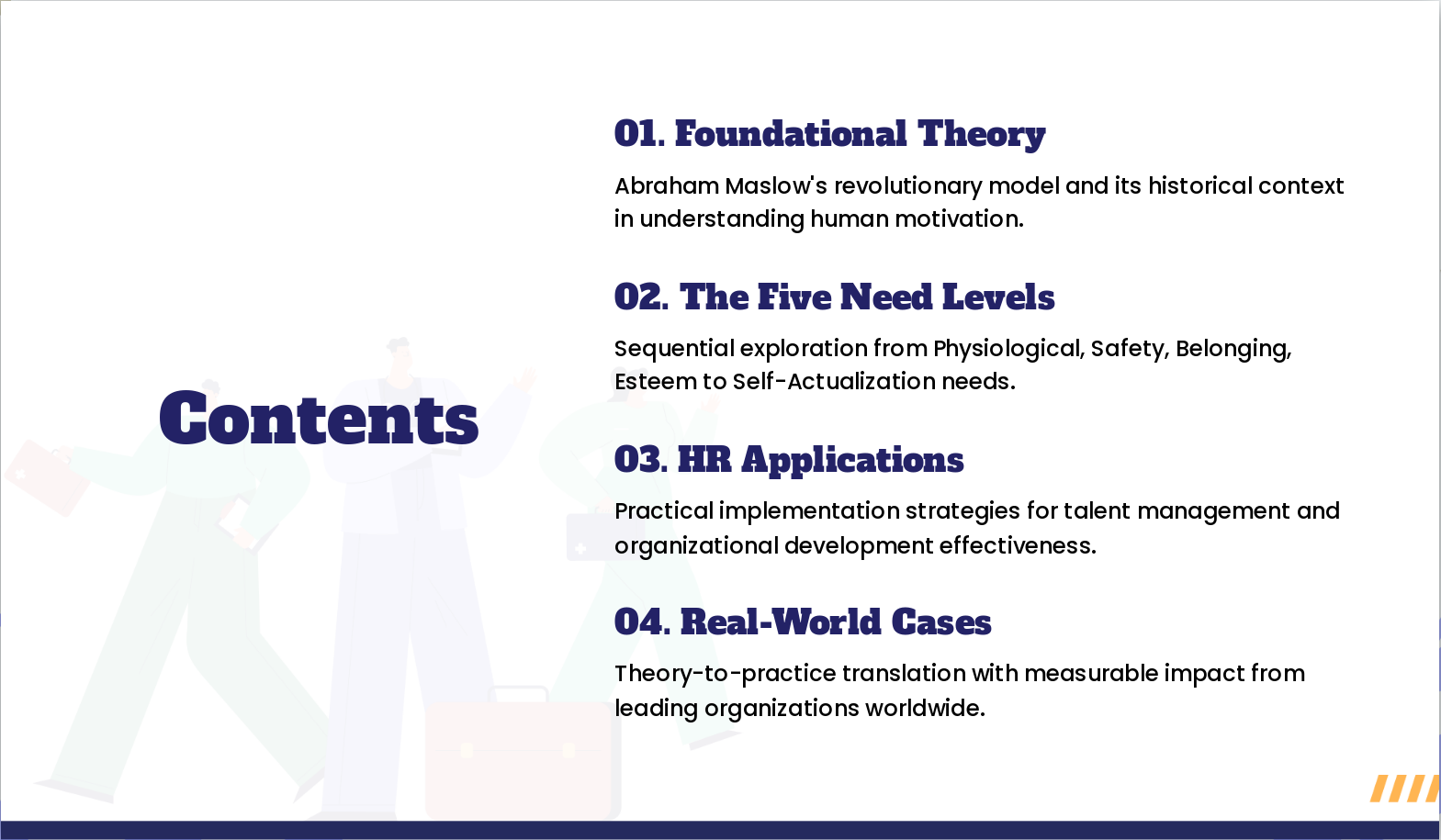
Slide 2: Contents
- Foundational Theory: Abraham Maslow's revolutionary model and its historical context in understanding human motivation.
- The Five Need Levels: Sequential exploration from Physiological, Safety, Belonging, Esteem to Self-Actualization needs.
- HR Applications: Practical implementation strategies for talent management and organizational development effectiveness.
- Real-World Cases: Theory-to-practice translation with measurable impact from leading organizations worldwide.
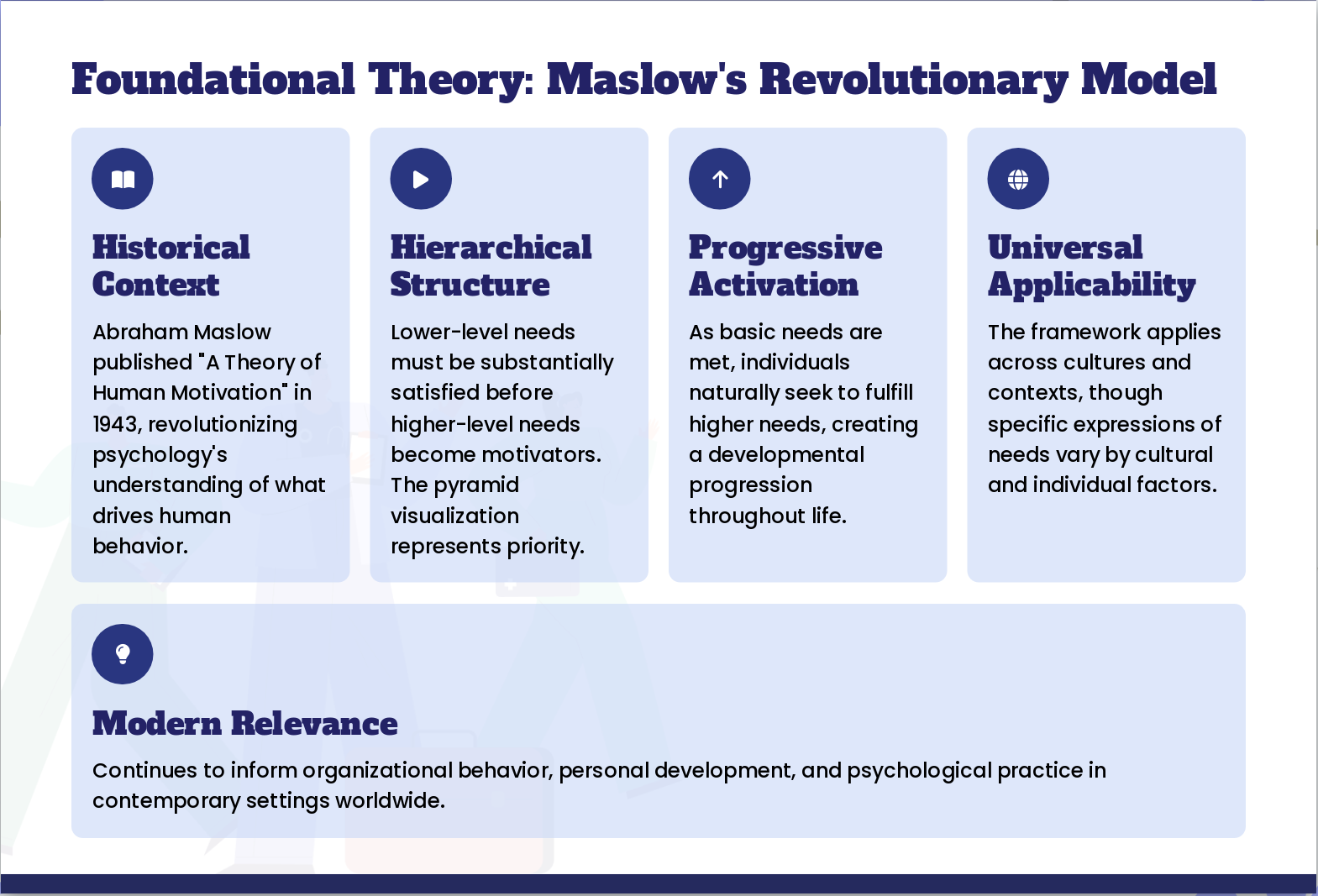
Slide 3: Foundational Theory: Maslow's Revolutionary Model
- Historical Context: Abraham Maslow published "A Theory of Human Motivation" in 1943, revolutionizing psychology's understanding of what drives human behavior.
- Hierarchical Structure: Lower-level needs must be substantially satisfied before higher-level needs become motivators. The pyramid visualization represents priority.
- Progressive Activation: As basic needs are met, individuals naturally seek to fulfill higher needs, creating a developmental progression throughout life.
- Universal Applicability: The framework applies across cultures and contexts, though specific expressions of needs vary by cultural and individual factors.
- Modern Relevance: Continues to inform organizational behavior, personal development, and psychological practice in contemporary settings worldwide.
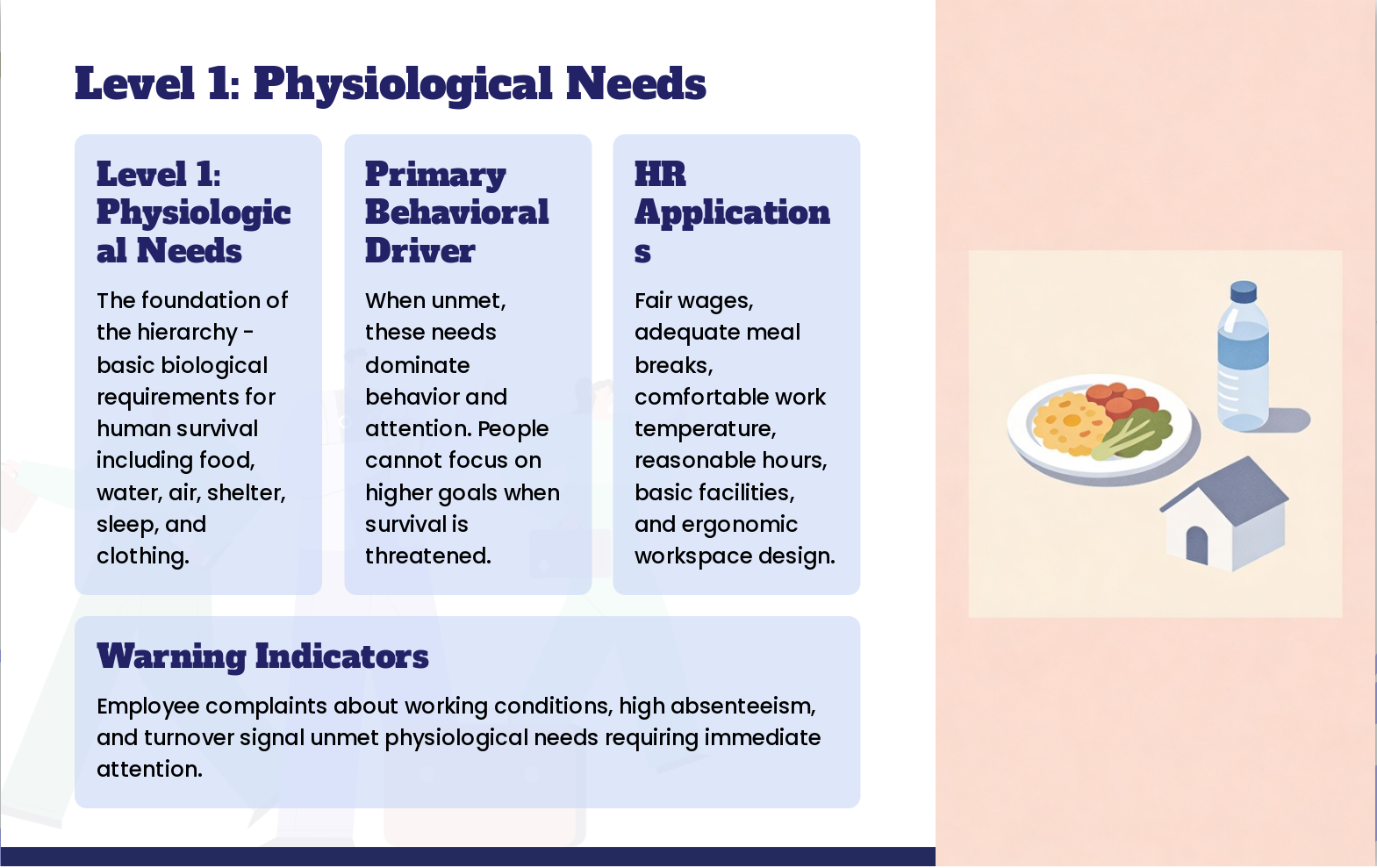
Slide 4: Level 1: Physiological Needs
- Level 1: Physiological Needs: The foundation of the hierarchy - basic biological requirements for human survival including food, water, air, shelter, sleep, and clothing.
- Primary Behavioral Driver: When unmet, these needs dominate behavior and attention. People cannot focus on higher goals when survival is threatened.
- HR Applications: Fair wages, adequate meal breaks, comfortable work temperature, reasonable hours, basic facilities, and ergonomic workspace design.
- Warning Indicators: Employee complaints about working conditions, high absenteeism, and turnover signal unmet physiological needs requiring immediate attention.
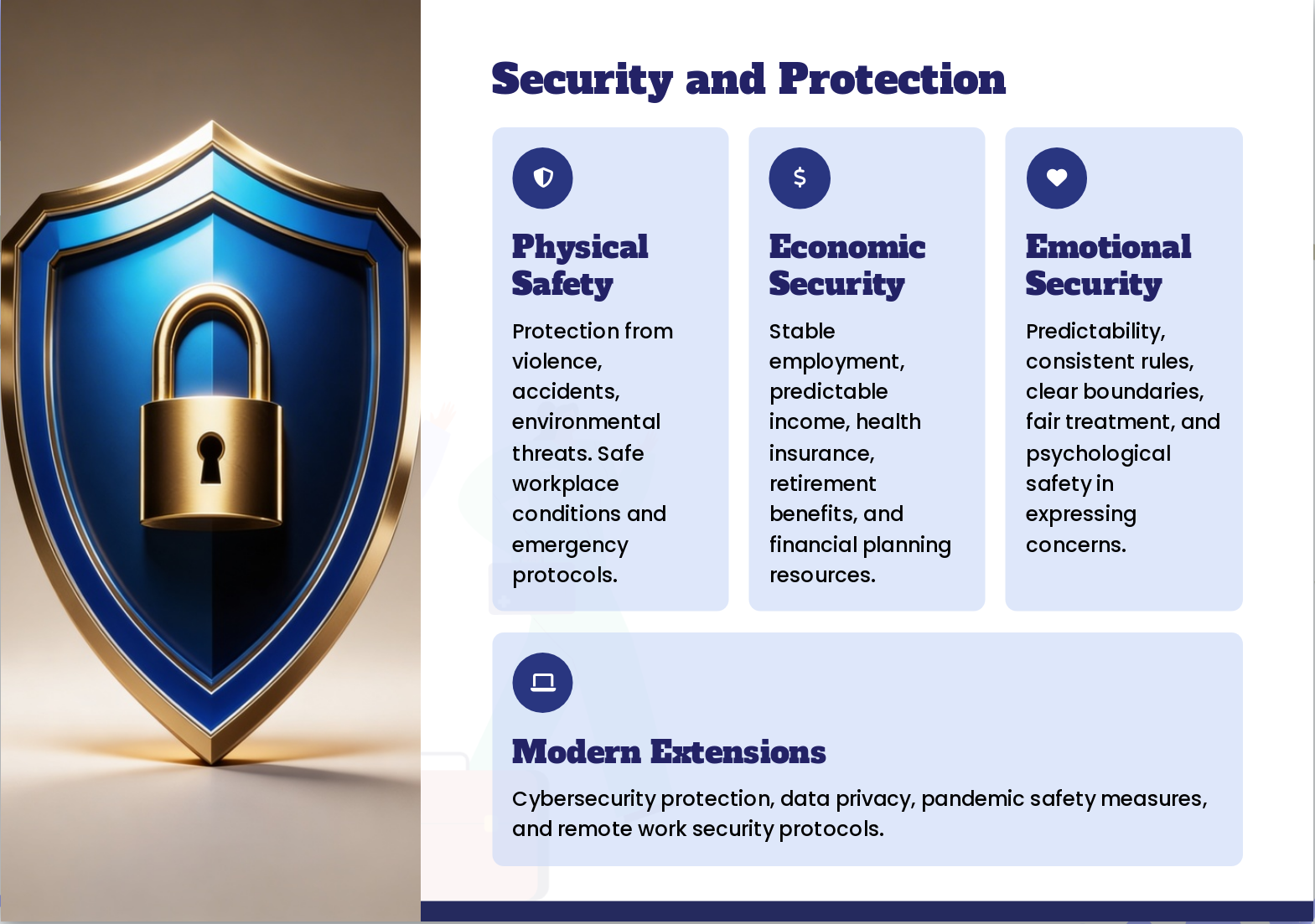
Slide 5: Security and Protection
- Physical Safety: Protection from violence, accidents, environmental threats. Safe workplace conditions and emergency protocols.
- Economic Security: Stable employment, predictable income, health insurance, retirement benefits, and financial planning resources.
- Emotional Security: Predictability, consistent rules, clear boundaries, fair treatment, and psychological safety in expressing concerns.
- Modern Extensions: Cybersecurity protection, data privacy, pandemic safety measures, and remote work security protocols.
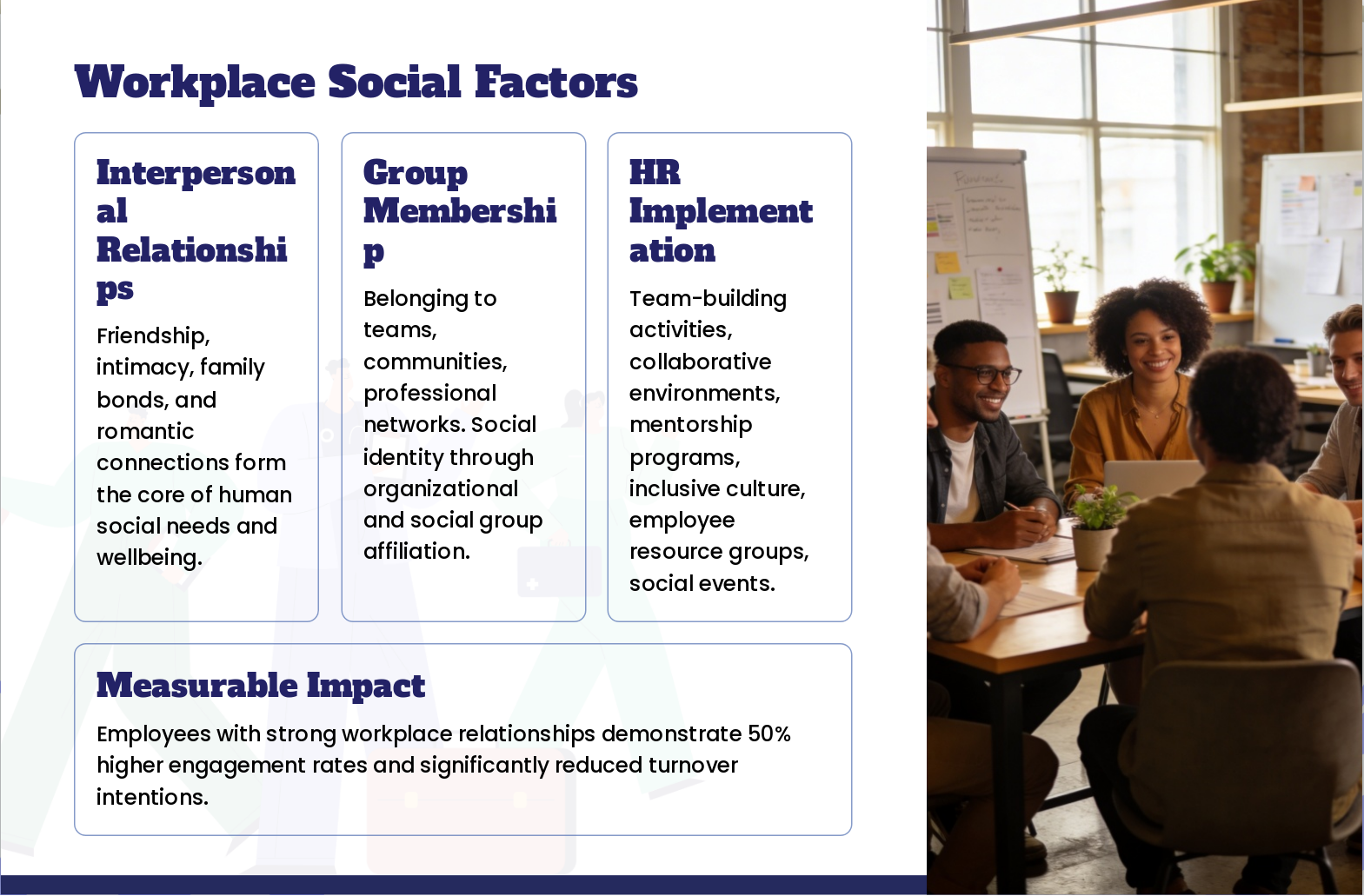
Slide 6: Workplace Social Factors
- Interpersonal Relationships: Friendship, intimacy, family bonds, and romantic connections form the core of human social needs and wellbeing.
- Group Membership: Belonging to teams, communities, professional networks. Social identity through organizational and social group affiliation.
- HR Implementation: Team-building activities, collaborative environments, mentorship programs, inclusive culture, employee resource groups, social events.
- Measurable Impact: Employees with strong workplace relationships demonstrate 50% higher engagement rates and significantly reduced turnover intentions.
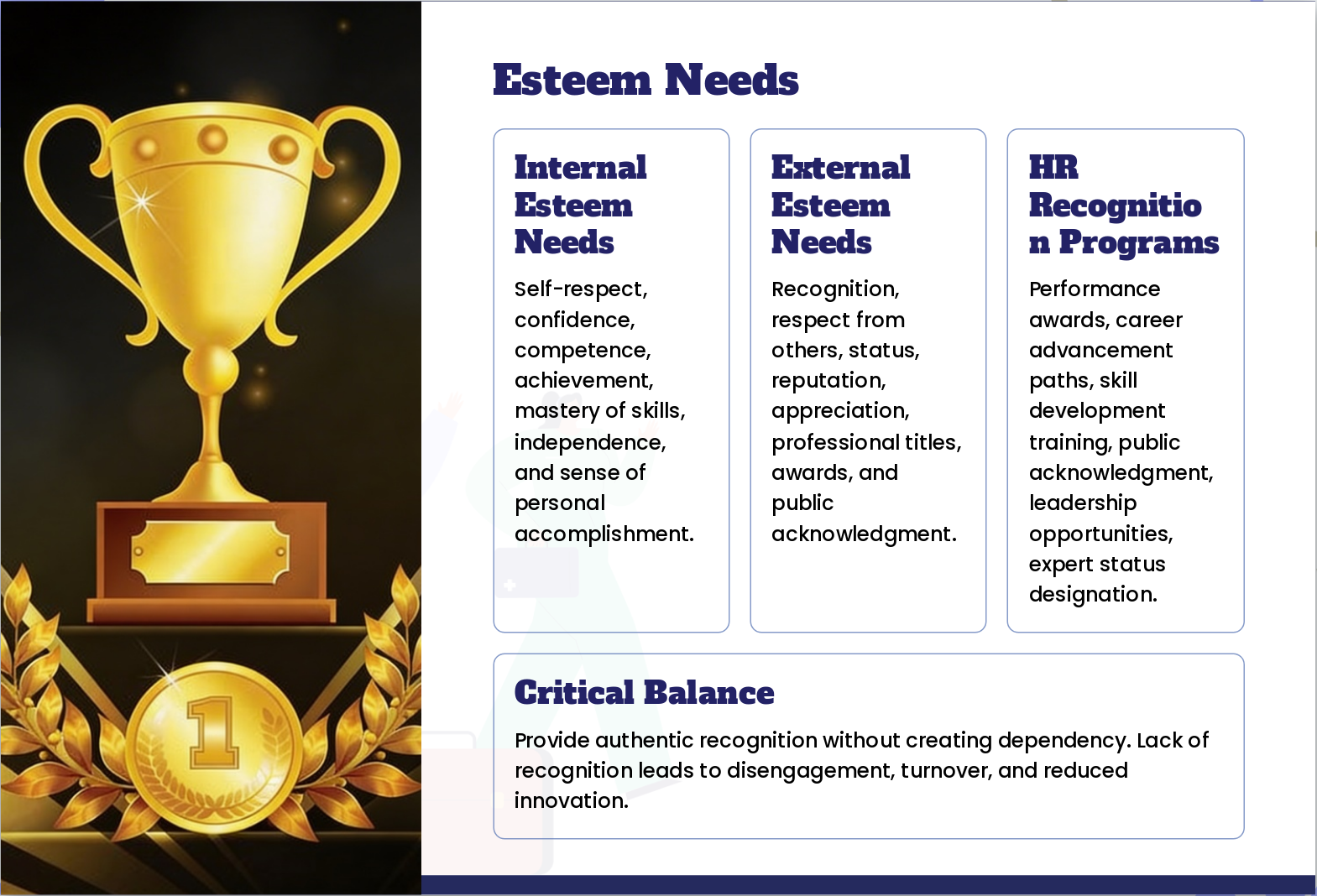
Slide 7: Esteem Needs
- Internal Esteem Needs: Self-respect, confidence, competence, achievement, mastery of skills, independence, and sense of personal accomplishment.
- External Esteem Needs: Recognition, respect from others, status, reputation, appreciation, professional titles, awards, and public acknowledgment.
- HR Recognition Programs: Performance awards, career advancement paths, skill development training, public acknowledgment, leadership opportunities, expert status designation.
- Critical Balance: Provide authentic recognition without creating dependency. Lack of recognition leads to disengagement, turnover, and reduced innovation.
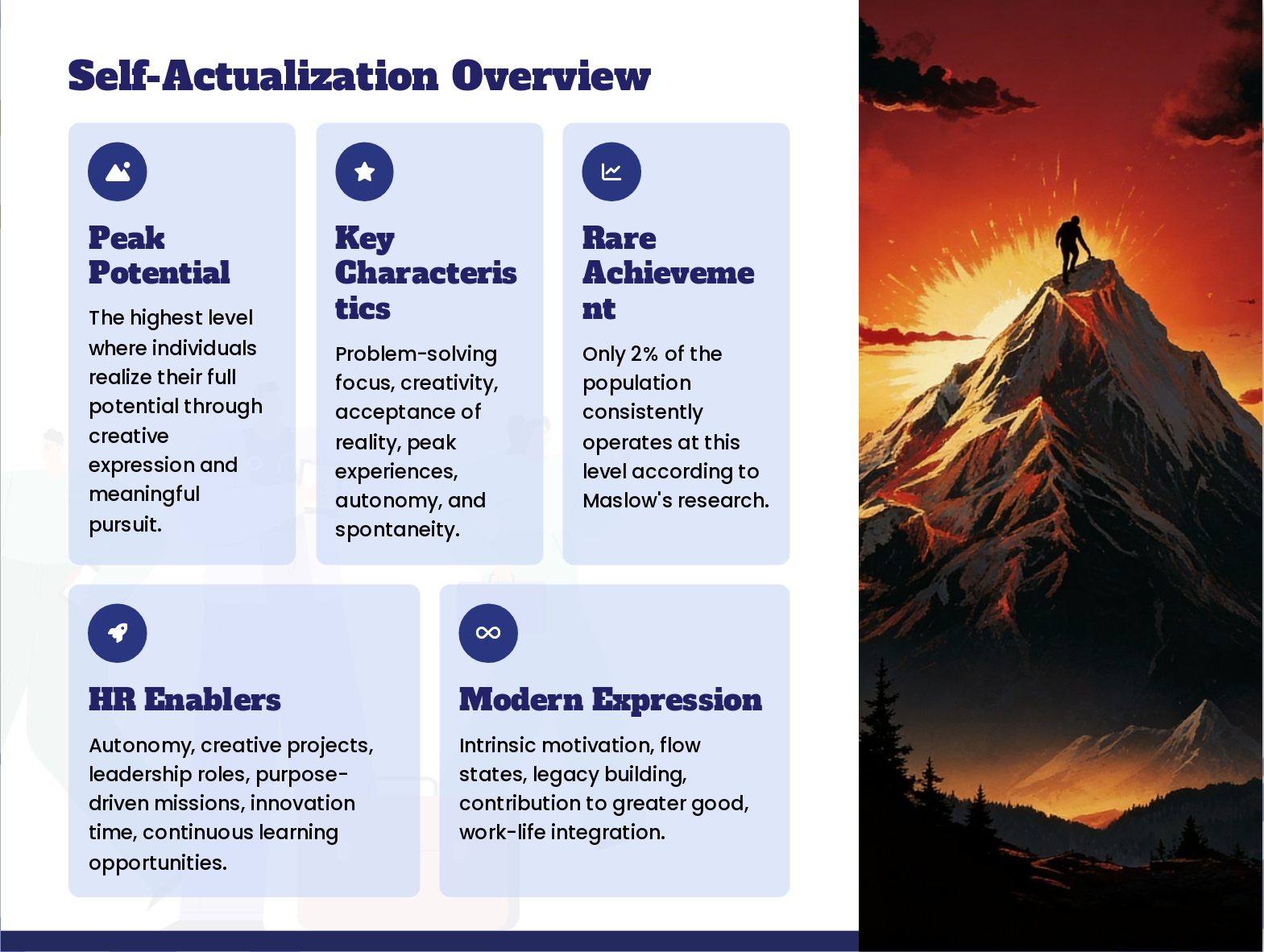
Slide 8: Self-Actualization Overview
- Peak Potential: The highest level where individuals realize their full potential through creative expression and meaningful pursuit.
- Key Characteristics: Problem-solving focus, creativity, acceptance of reality, peak experiences, autonomy, and spontaneity.
- Rare Achievement: Only 2% of the population consistently operates at this level according to Maslow's research.
- HR Enablers: Autonomy, creative projects, leadership roles, purpose-driven missions, innovation time, continuous learning opportunities.
- Modern Expression: Intrinsic motivation, flow states, legacy building, contribution to greater good, work-life integration.
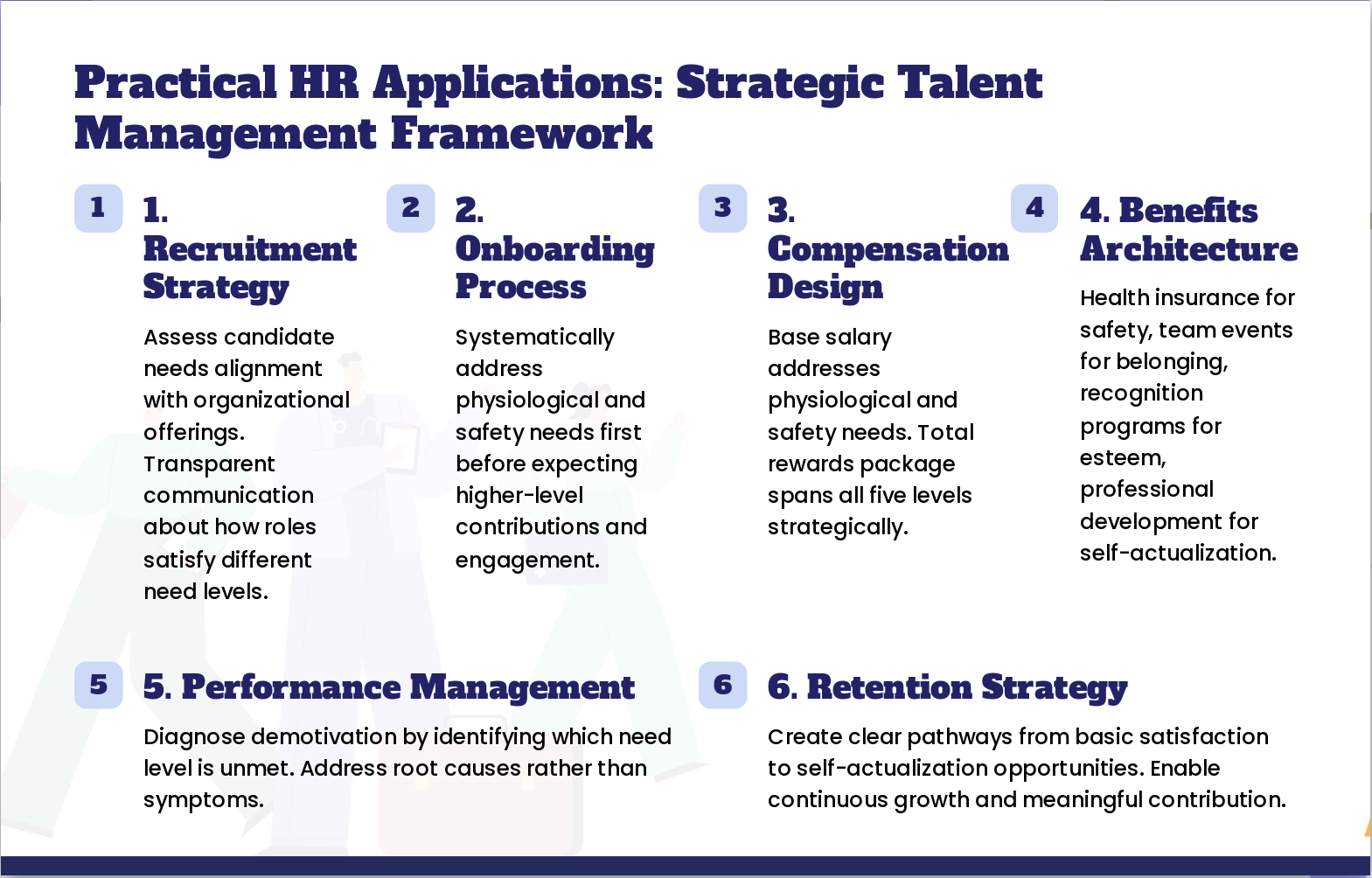
Slide 9: Practical HR Applications: Strategic Talent Management Framework
- Recruitment Strategy: Assess candidate needs alignment with organizational offerings. Transparent communication about how roles satisfy different need levels.
- Onboarding Process: Systematically address physiological and safety needs first before expecting higher-level contributions and engagement.
- Compensation Design: Base salary addresses physiological and safety needs. Total rewards package spans all five levels strategically.
- Benefits Architecture: Health insurance for safety, team events for belonging, recognition programs for esteem, professional development for self-actualization.
- Performance Management: Diagnose demotivation by identifying which need level is unmet. Address root causes rather than symptoms.
- Retention Strategy: Create clear pathways from basic satisfaction to self-actualization opportunities. Enable continuous growth and meaningful contribution.
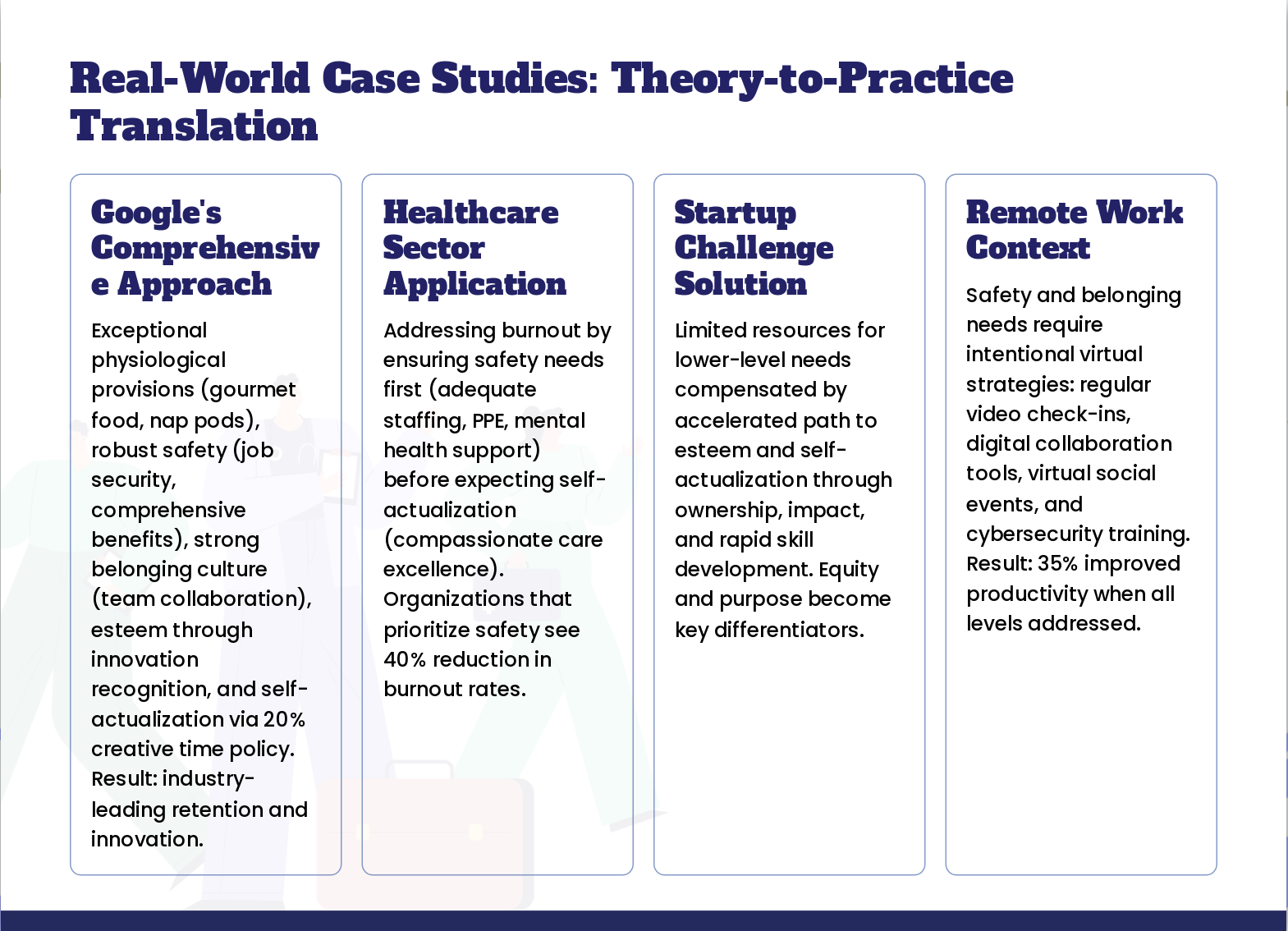
Slide 10: Real-World Case Studies: Theory-to-Practice Translation
- Google's Comprehensive Approach: Exceptional physiological provisions (gourmet food, nap pods), robust safety (job security, comprehensive benefits), strong belonging culture (team collaboration), esteem through innovation recognition, and self-actualization via 20% creative time policy. Result: industry-leading retention and innovation.
- Healthcare Sector Application: Addressing burnout by ensuring safety needs first (adequate staffing, PPE, mental health support) before expecting self-actualization (compassionate care excellence). Organizations that prioritize safety see 40% reduction in burnout rates.
- Startup Challenge Solution: Limited resources for lower-level needs compensated by accelerated path to esteem and self-actualization through ownership, impact, and rapid skill development. Equity and purpose become key differentiators.
- Remote Work Context: Safety and belonging needs require intentional virtual strategies: regular video check-ins, digital collaboration tools, virtual social events, and cybersecurity training. Result: 35% improved productivity when all levels addressed.
Slide 11: Thank You
Thank You Maslow's framework remains an essential tool for understanding human motivation in psychology and HR practice.