Presentation Summary
Dive into the psychological phenomenon of euphoria, its portrayal in HBO's series, and its cultural impact. Explore the mental health context, neurochemical basis, and the show's raw depiction of adolescent struggles.
Full Presentation Transcript
Slide 1: Euphoria: A Comprehensive Exploration of Psychology, Television, and Cultural Impact
Examining the HBO Series, Its Cast, Cultural Significance, and the Psychology Behind the Phenomenon
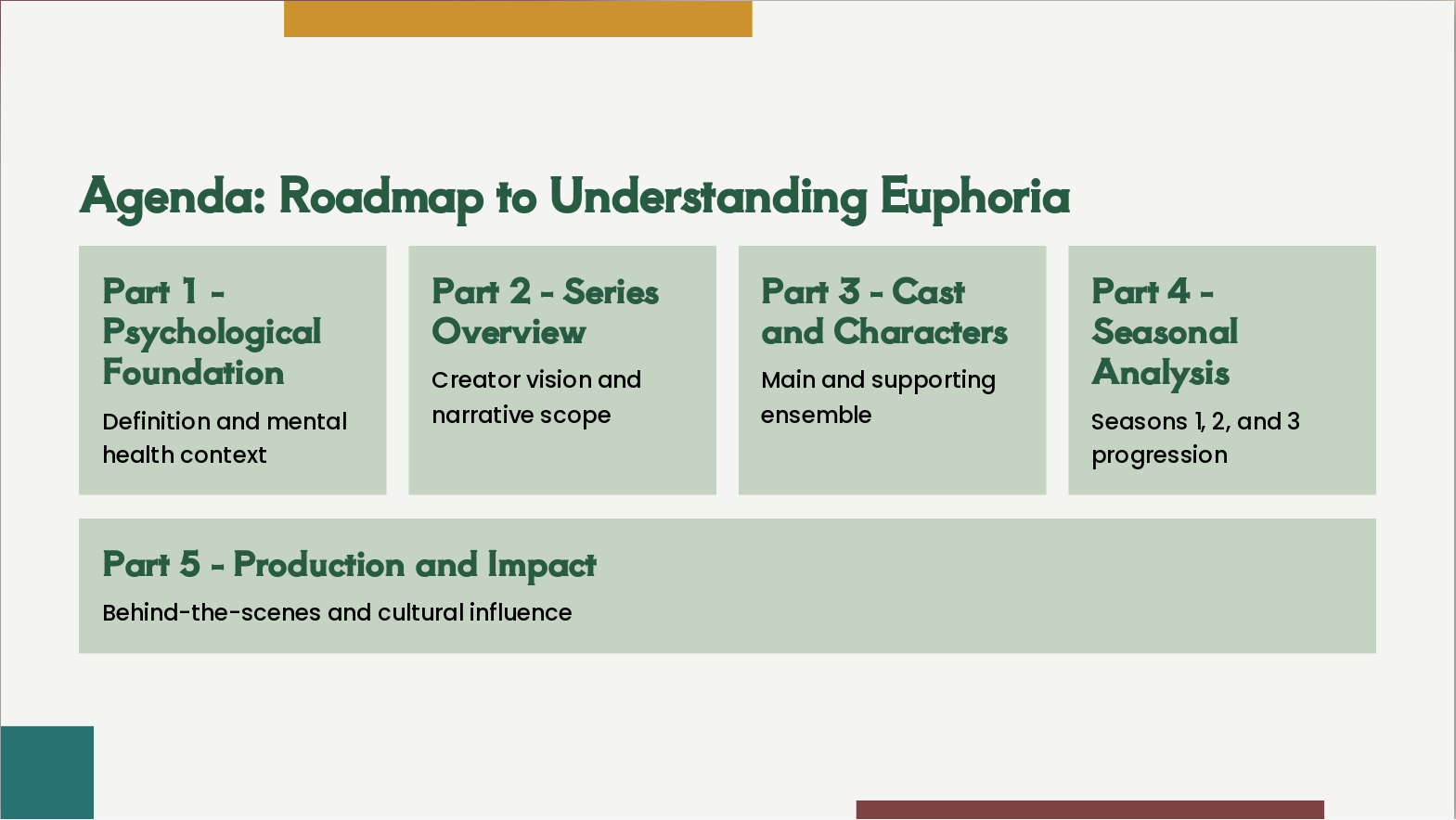
Slide 2: Agenda: Roadmap to Understanding Euphoria
- Part 1 - Psychological Foundation: Definition and mental health context
- Part 2 - Series Overview: Creator vision and narrative scope
- Part 3 - Cast and Characters: Main and supporting ensemble
- Part 4 - Seasonal Analysis: Seasons 1, 2, and 3 progression
- Part 5 - Production and Impact: Behind-the-scenes and cultural influence
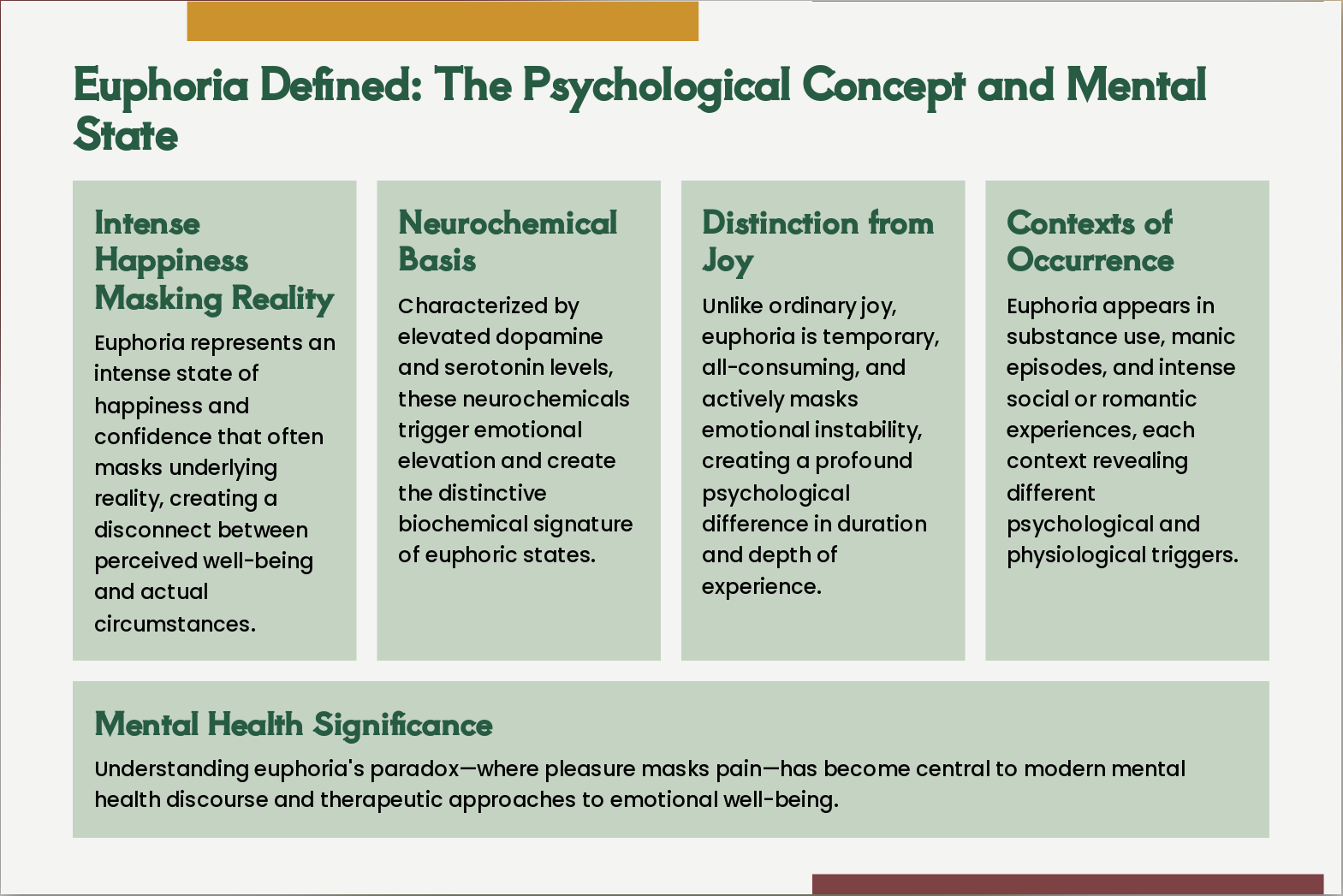
Slide 3: Euphoria Defined: The Psychological Concept and Mental State
- Intense Happiness Masking Reality: Euphoria represents an intense state of happiness and confidence that often masks underlying reality, creating a disconnect between perceived well-being and actual circumstances.
- Neurochemical Basis: Characterized by elevated dopamine and serotonin levels, these neurochemicals trigger emotional elevation and create the distinctive biochemical signature of euphoric states.
- Distinction from Joy: Unlike ordinary joy, euphoria is temporary, all-consuming, and actively masks emotional instability, creating a profound psychological difference in duration and depth of experience.
- Contexts of Occurrence: Euphoria appears in substance use, manic episodes, and intense social or romantic experiences, each context revealing different psychological and physiological triggers.
- Mental Health Significance: Understanding euphoria's paradox—where pleasure masks pain—has become central to modern mental health discourse and therapeutic approaches to emotional well-being.
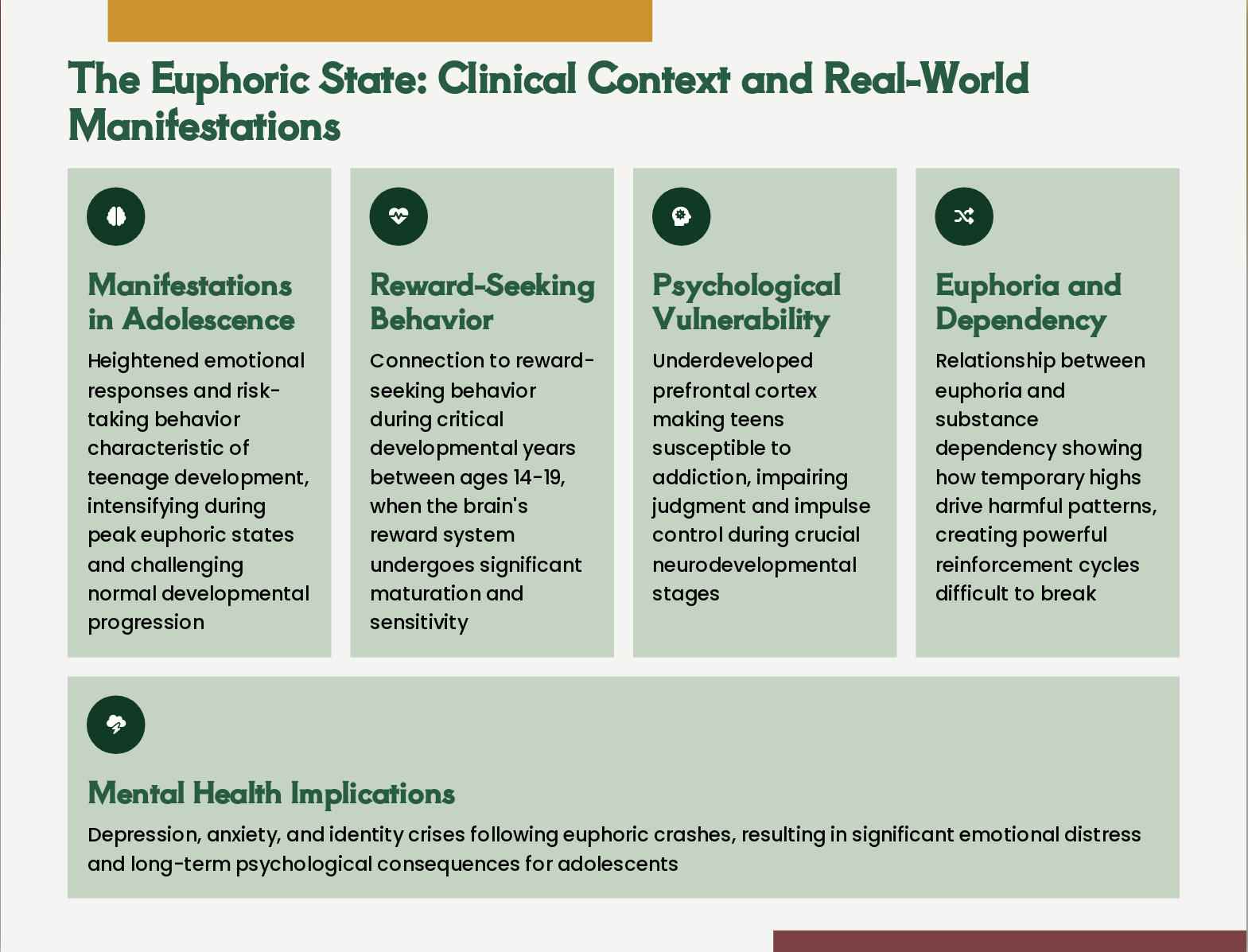
Slide 4: The Euphoric State: Clinical Context and Real-World Manifestations
- Manifestations in Adolescence: Heightened emotional responses and risk-taking behavior characteristic of teenage development, intensifying during peak euphoric states and challenging normal developmental progression
- Reward-Seeking Behavior: Connection to reward-seeking behavior during critical developmental years between ages 14-19, when the brain's reward system undergoes significant maturation and sensitivity
- Psychological Vulnerability: Underdeveloped prefrontal cortex making teens susceptible to addiction, impairing judgment and impulse control during crucial neurodevelopmental stages
- Euphoria and Dependency: Relationship between euphoria and substance dependency showing how temporary highs drive harmful patterns, creating powerful reinforcement cycles difficult to break
- Mental Health Implications: Depression, anxiety, and identity crises following euphoric crashes, resulting in significant emotional distress and long-term psychological consequences for adolescents
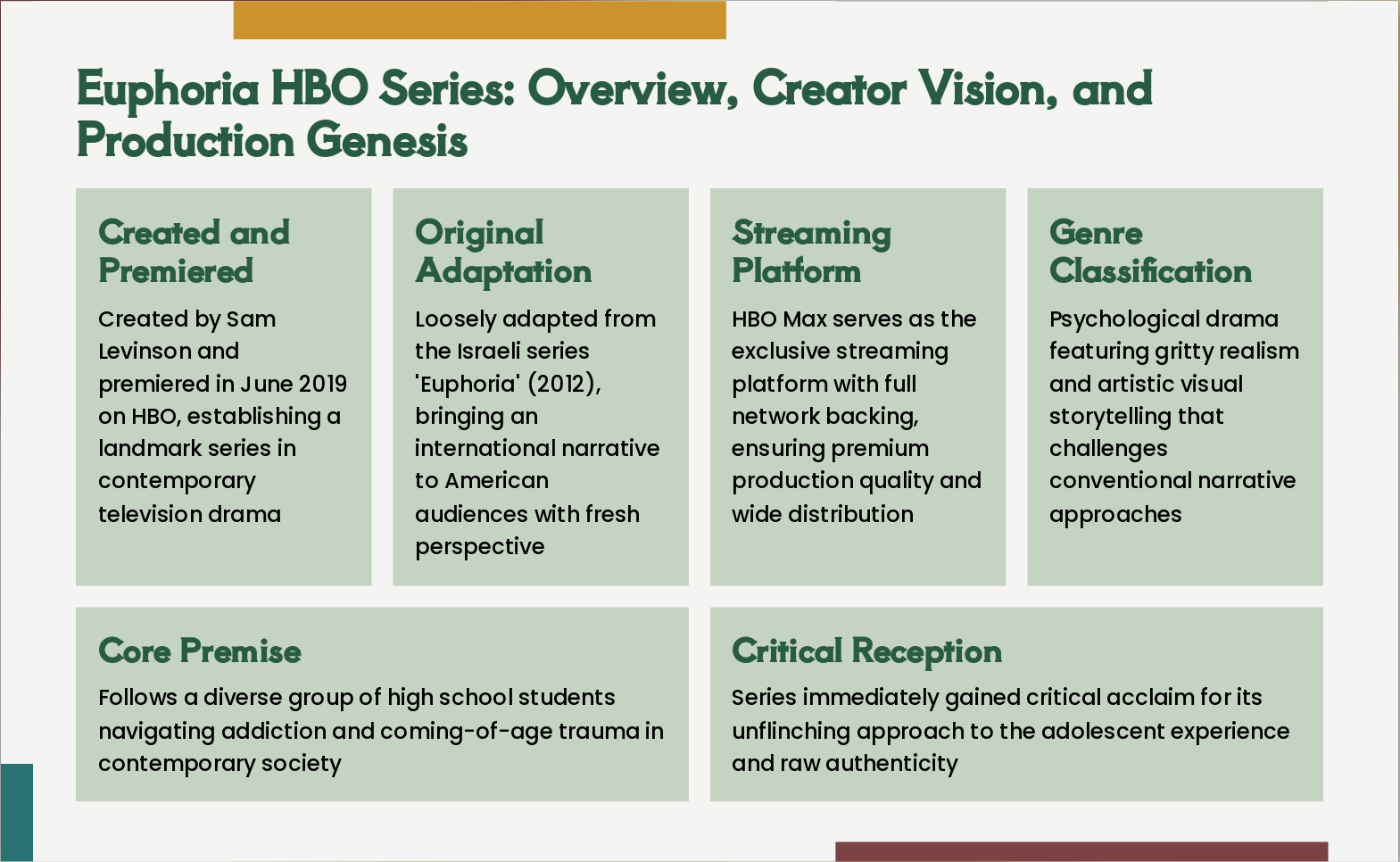
Slide 5: Euphoria HBO Series: Overview, Creator Vision, and Production Genesis
- Created and Premiered: Created by Sam Levinson and premiered in June 2019 on HBO, establishing a landmark series in contemporary television drama
- Original Adaptation: Loosely adapted from the Israeli series 'Euphoria' (2012), bringing an international narrative to American audiences with fresh perspective
- Streaming Platform: HBO Max serves as the exclusive streaming platform with full network backing, ensuring premium production quality and wide distribution
- Genre Classification: Psychological drama featuring gritty realism and artistic visual storytelling that challenges conventional narrative approaches
- Core Premise: Follows a diverse group of high school students navigating addiction and coming-of-age trauma in contemporary society
- Critical Reception: Series immediately gained critical acclaim for its unflinching approach to the adolescent experience and raw authenticity
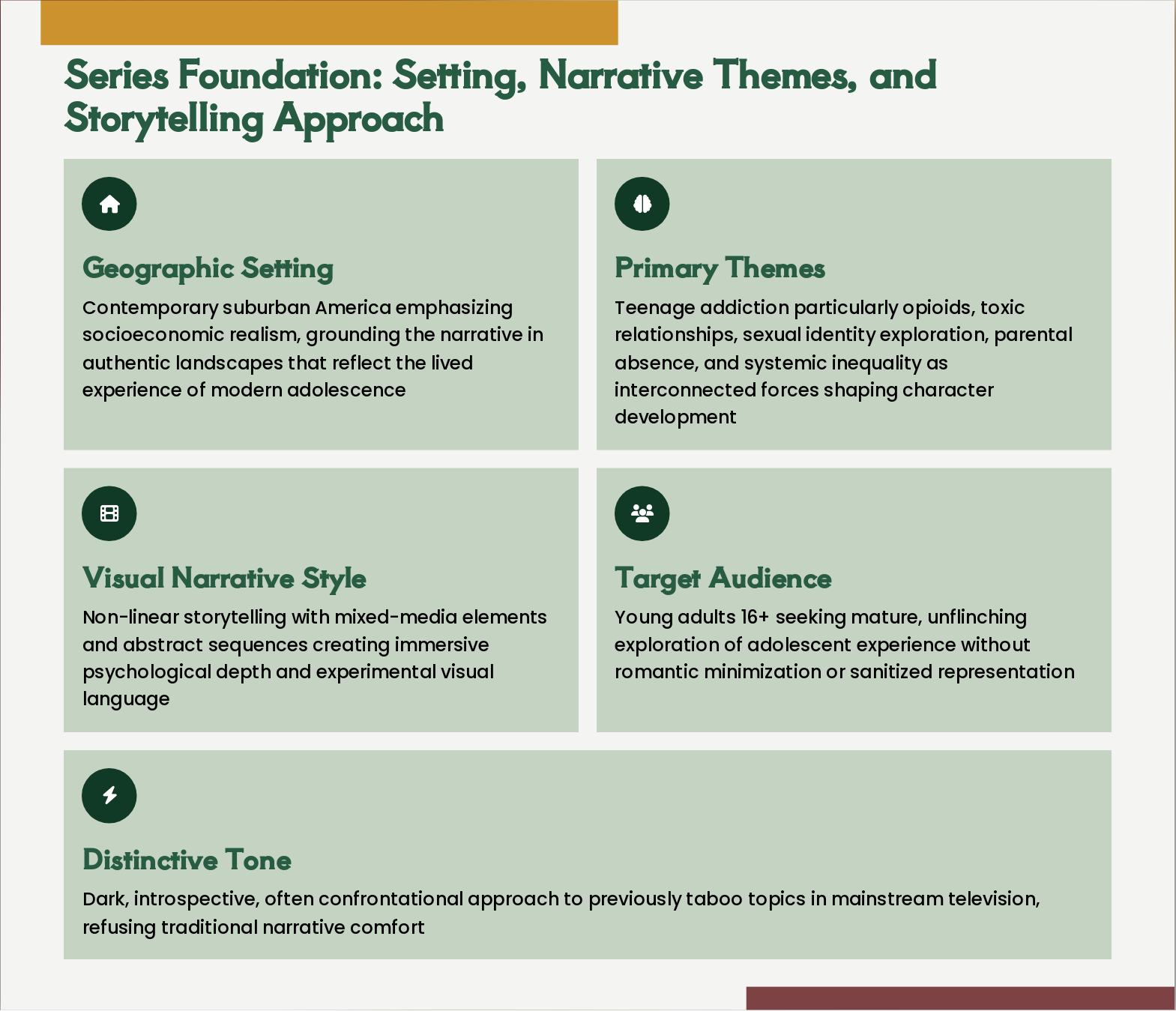
Slide 6: Series Foundation: Setting, Narrative Themes, and Storytelling Approach
- Geographic Setting: Contemporary suburban America emphasizing socioeconomic realism, grounding the narrative in authentic landscapes that reflect the lived experience of modern adolescence
- Primary Themes: Teenage addiction particularly opioids, toxic relationships, sexual identity exploration, parental absence, and systemic inequality as interconnected forces shaping character development
- Visual Narrative Style: Non-linear storytelling with mixed-media elements and abstract sequences creating immersive psychological depth and experimental visual language
- Target Audience: Young adults 16+ seeking mature, unflinching exploration of adolescent experience without romantic minimization or sanitized representation
- Distinctive Tone: Dark, introspective, often confrontational approach to previously taboo topics in mainstream television, refusing traditional narrative comfort
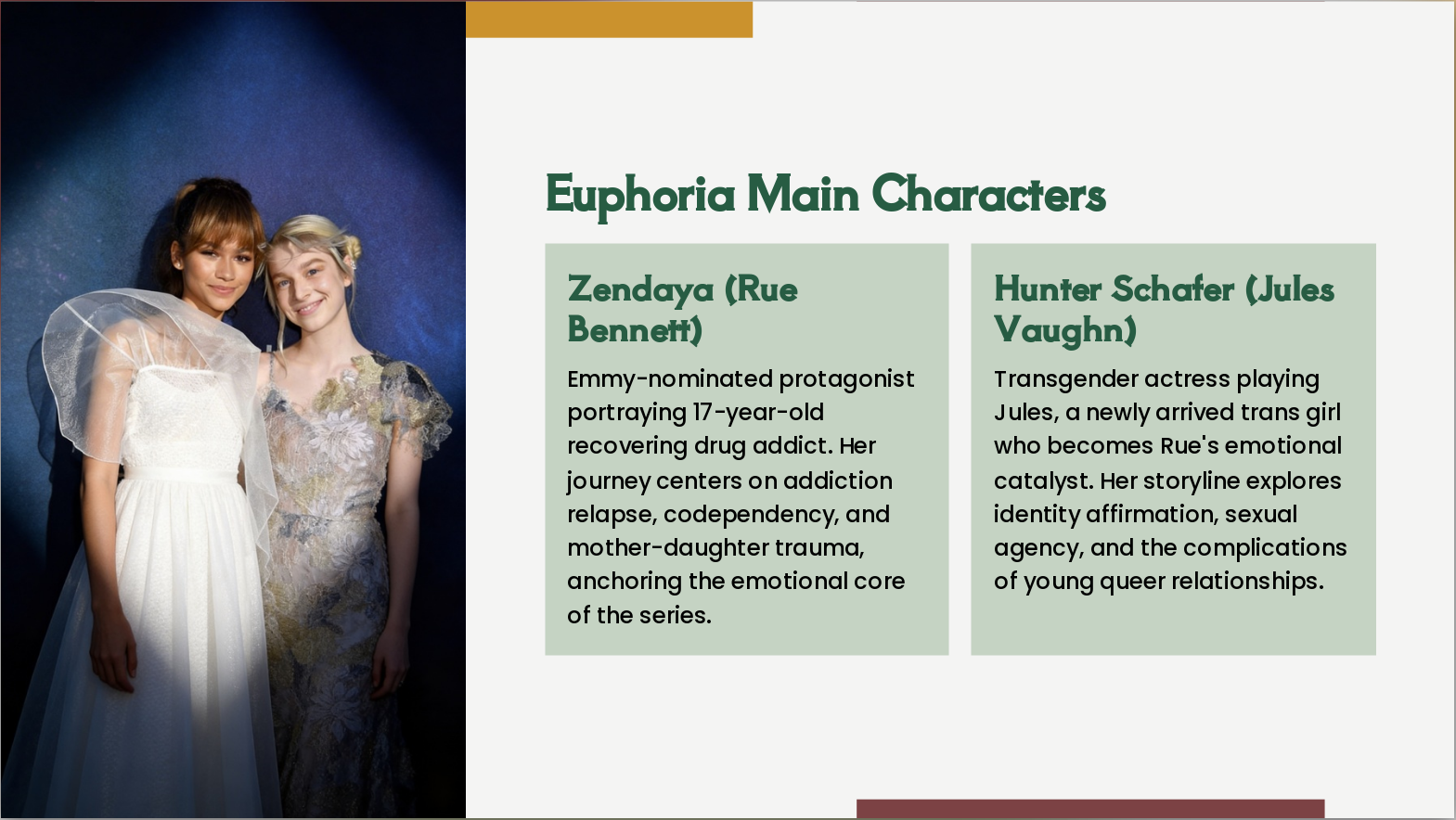
Slide 7: Euphoria Main Characters
- Zendaya (Rue Bennett): Emmy-nominated protagonist portraying 17-year-old recovering drug addict. Her journey centers on addiction relapse, codependency, and mother-daughter trauma, anchoring the emotional core of the series.
- Hunter Schafer (Jules Vaughn): Transgender actress playing Jules, a newly arrived trans girl who becomes Rue's emotional catalyst. Her storyline explores identity affirmation, sexual agency, and the complications of young queer relationships.
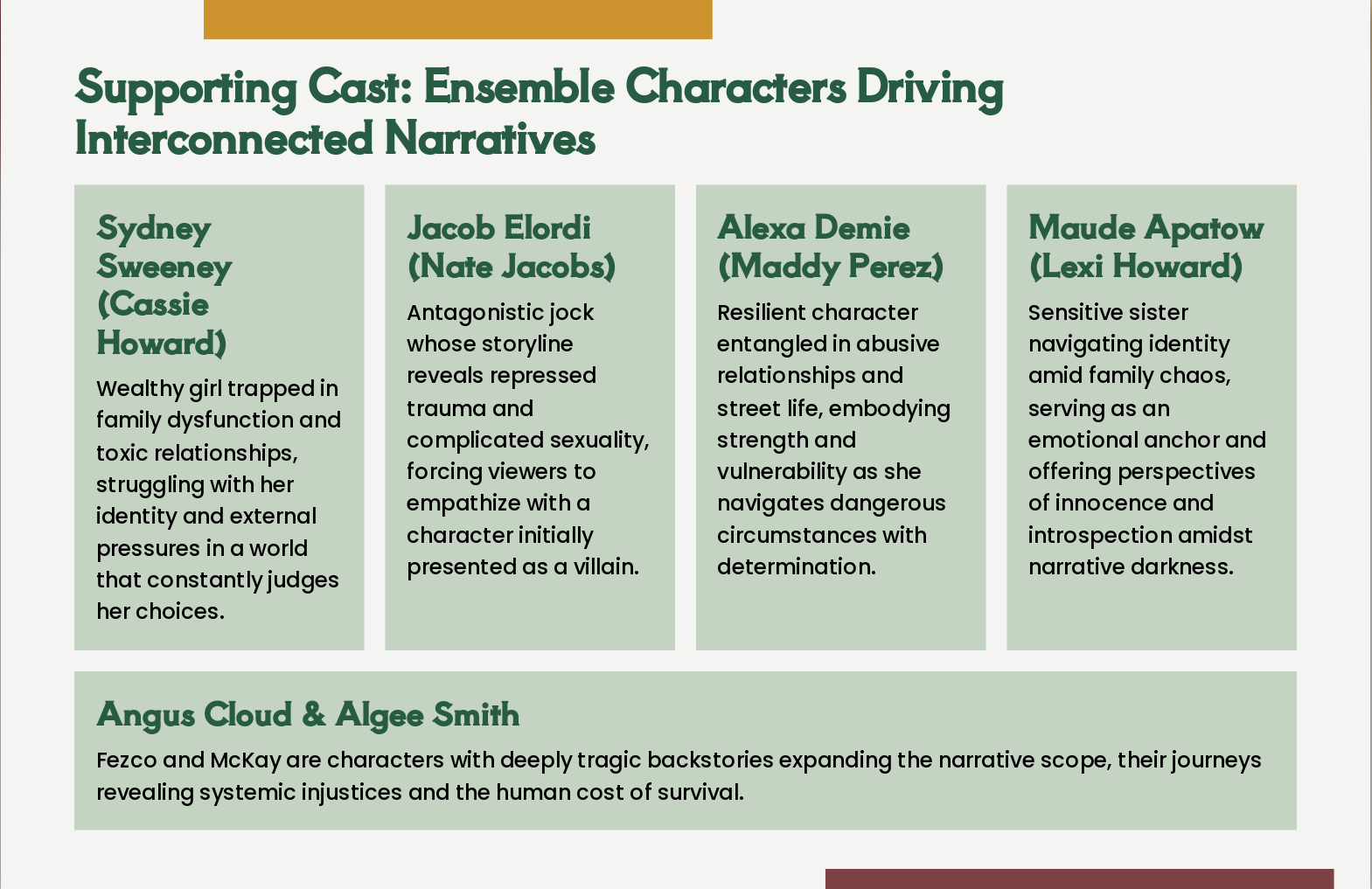
Slide 8: Supporting Cast: Ensemble Characters Driving Interconnected Narratives
- Sydney Sweeney (Cassie Howard): Wealthy girl trapped in family dysfunction and toxic relationships, struggling with her identity and external pressures in a world that constantly judges her choices.
- Jacob Elordi (Nate Jacobs): Antagonistic jock whose storyline reveals repressed trauma and complicated sexuality, forcing viewers to empathize with a character initially presented as a villain.
- Alexa Demie (Maddy Perez): Resilient character entangled in abusive relationships and street life, embodying strength and vulnerability as she navigates dangerous circumstances with determination.
- Maude Apatow (Lexi Howard): Sensitive sister navigating identity amid family chaos, serving as an emotional anchor and offering perspectives of innocence and introspection amidst narrative darkness.
- Angus Cloud & Algee Smith: Fezco and McKay are characters with deeply tragic backstories expanding the narrative scope, their journeys revealing systemic injustices and the human cost of survival.
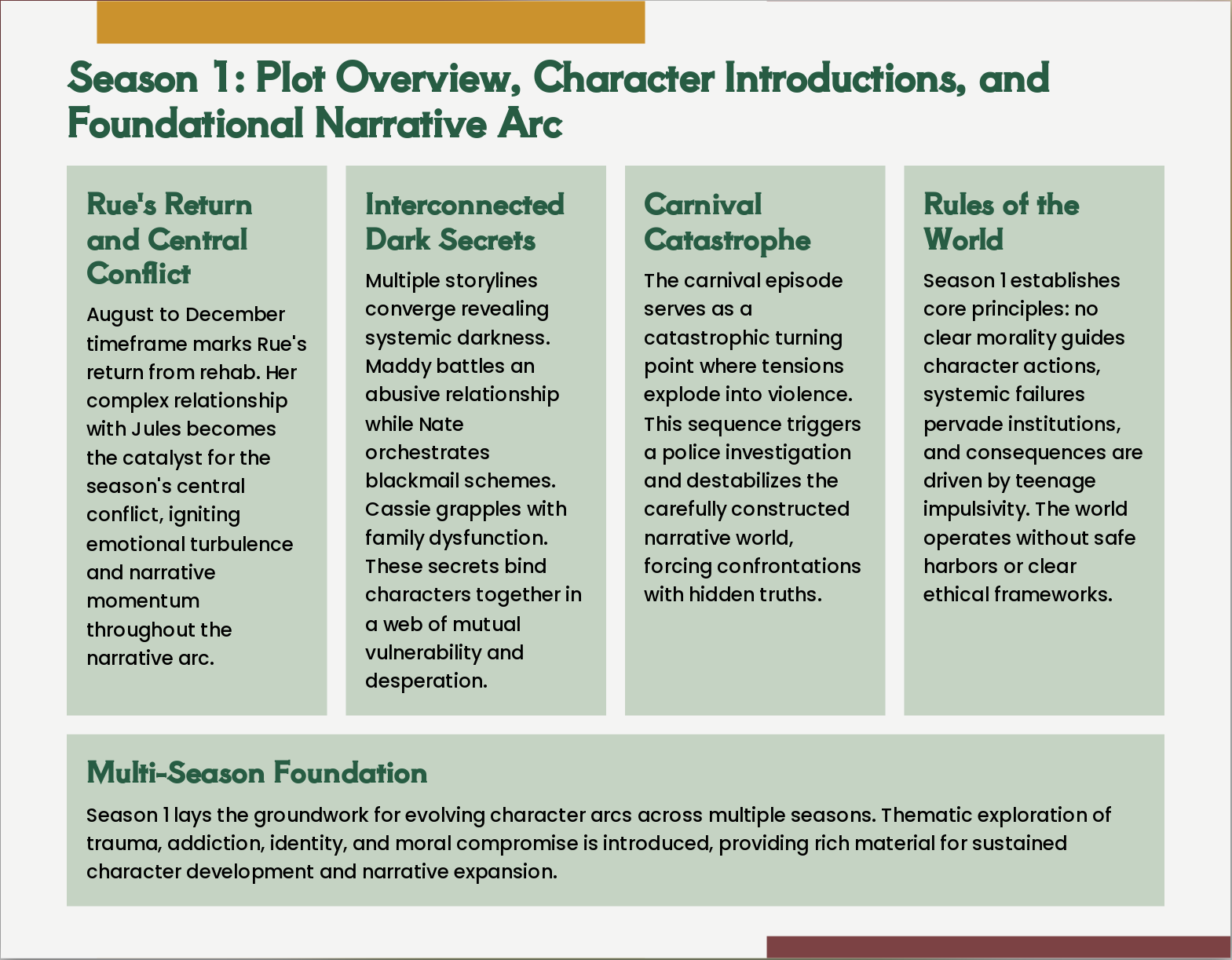
Slide 9: Season 1: Plot Overview, Character Introductions, and Foundational Narrative Arc
- Rue's Return and Central Conflict: August to December timeframe marks Rue's return from rehab. Her complex relationship with Jules becomes the catalyst for the season's central conflict, igniting emotional turbulence and narrative momentum throughout the narrative arc.
- Interconnected Dark Secrets: Multiple storylines converge revealing systemic darkness. Maddy battles an abusive relationship while Nate orchestrates blackmail schemes. Cassie grapples with family dysfunction. These secrets bind characters together in a web of mutual vulnerability and desperation.
- Carnival Catastrophe: The carnival episode serves as a catastrophic turning point where tensions explode into violence. This sequence triggers a police investigation and destabilizes the carefully constructed narrative world, forcing confrontations with hidden truths.
- Rules of the World: Season 1 establishes core principles: no clear morality guides character actions, systemic failures pervade institutions, and consequences are driven by teenage impulsivity. The world operates without safe harbors or clear ethical frameworks.
- Multi-Season Foundation: Season 1 lays the groundwork for evolving character arcs across multiple seasons. Thematic exploration of trauma, addiction, identity, and moral compromise is introduced, providing rich material for sustained character development and narrative expansion.
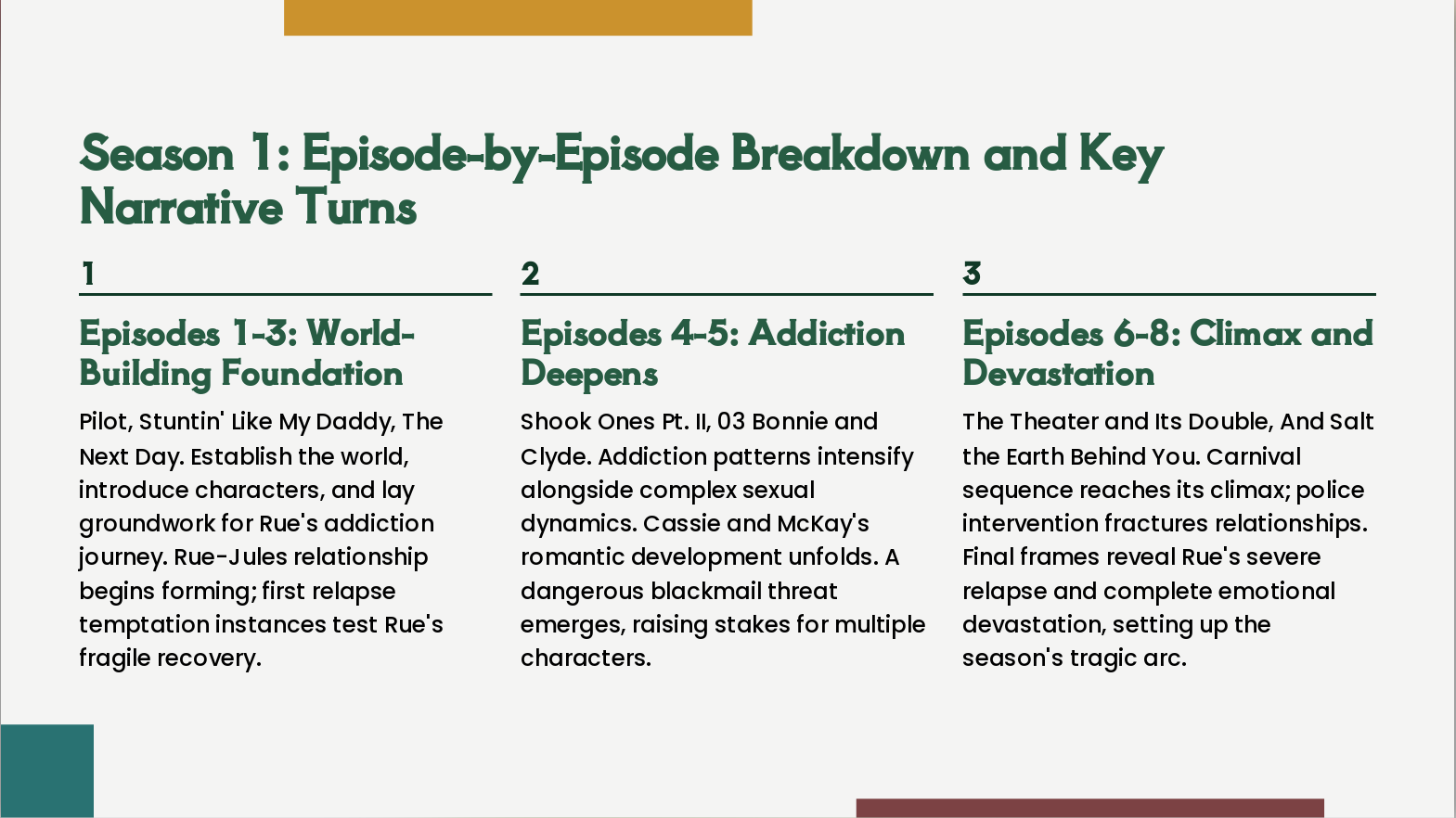
Slide 10: Season 1: Episode-by-Episode Breakdown and Key Narrative Turns
- Episodes 1-3: World-Building Foundation: Pilot, Stuntin' Like My Daddy, The Next Day. Establish the world, introduce characters, and lay groundwork for Rue's addiction journey. Rue-Jules relationship begins forming; first relapse temptation instances test Rue's fragile recovery.
- Episodes 4-5: Addiction Deepens: Shook Ones Pt. II, 03 Bonnie and Clyde. Addiction patterns intensify alongside complex sexual dynamics. Cassie and McKay's romantic development unfolds. A dangerous blackmail threat emerges, raising stakes for multiple characters.
- Episodes 6-8: Climax and Devastation: The Theater and Its Double, And Salt the Earth Behind You. Carnival sequence reaches its climax; police intervention fractures relationships. Final frames reveal Rue's severe relapse and complete emotional devastation, setting up the season's tragic arc.
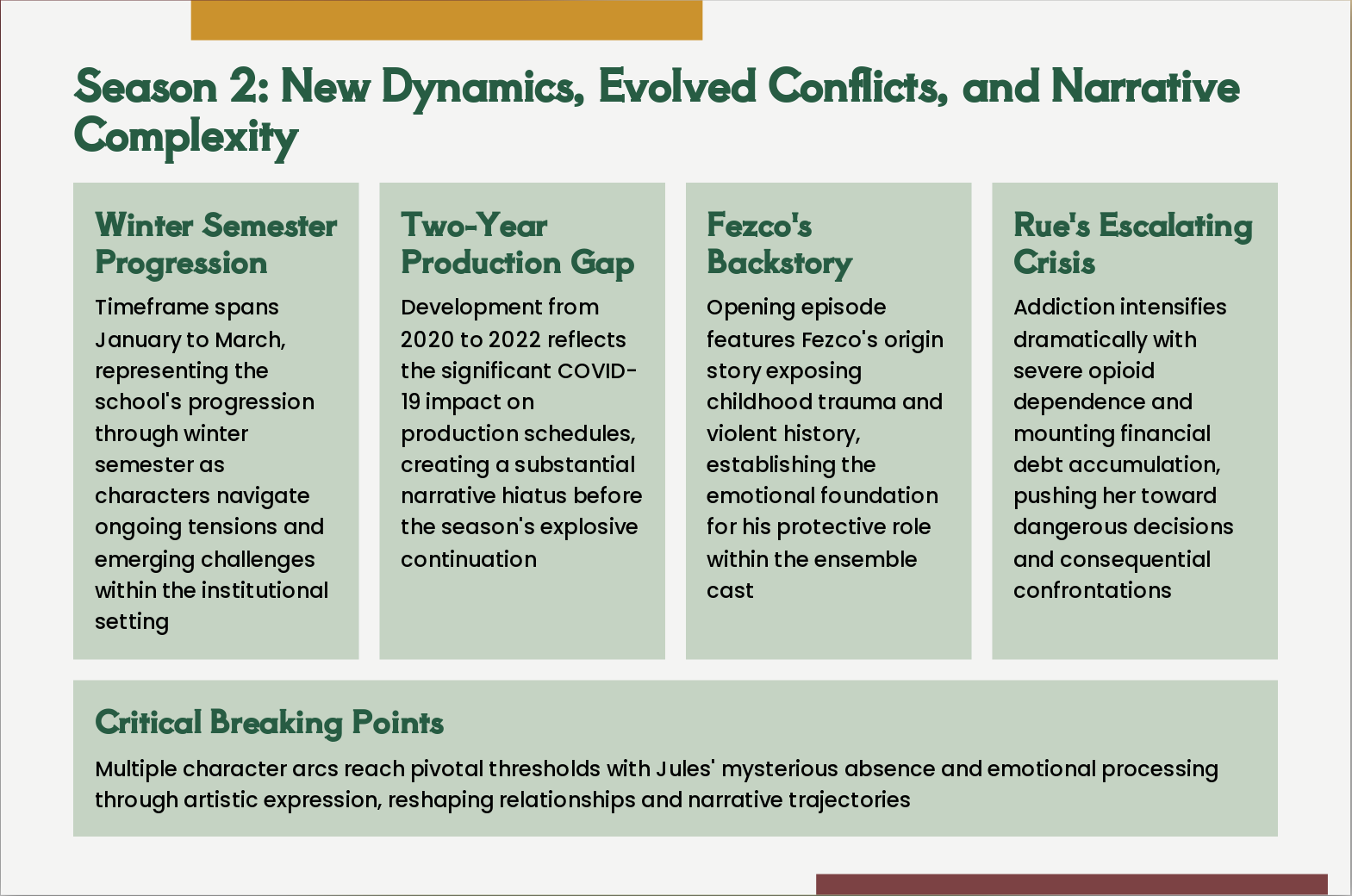
Slide 11: Season 2: New Dynamics, Evolved Conflicts, and Narrative Complexity
- Winter Semester Progression: Timeframe spans January to March, representing the school's progression through winter semester as characters navigate ongoing tensions and emerging challenges within the institutional setting
- Two-Year Production Gap: Development from 2020 to 2022 reflects the significant COVID-19 impact on production schedules, creating a substantial narrative hiatus before the season's explosive continuation
- Fezco's Backstory: Opening episode features Fezco's origin story exposing childhood trauma and violent history, establishing the emotional foundation for his protective role within the ensemble cast
- Rue's Escalating Crisis: Addiction intensifies dramatically with severe opioid dependence and mounting financial debt accumulation, pushing her toward dangerous decisions and consequential confrontations
- Critical Breaking Points: Multiple character arcs reach pivotal thresholds with Jules' mysterious absence and emotional processing through artistic expression, reshaping relationships and narrative trajectories
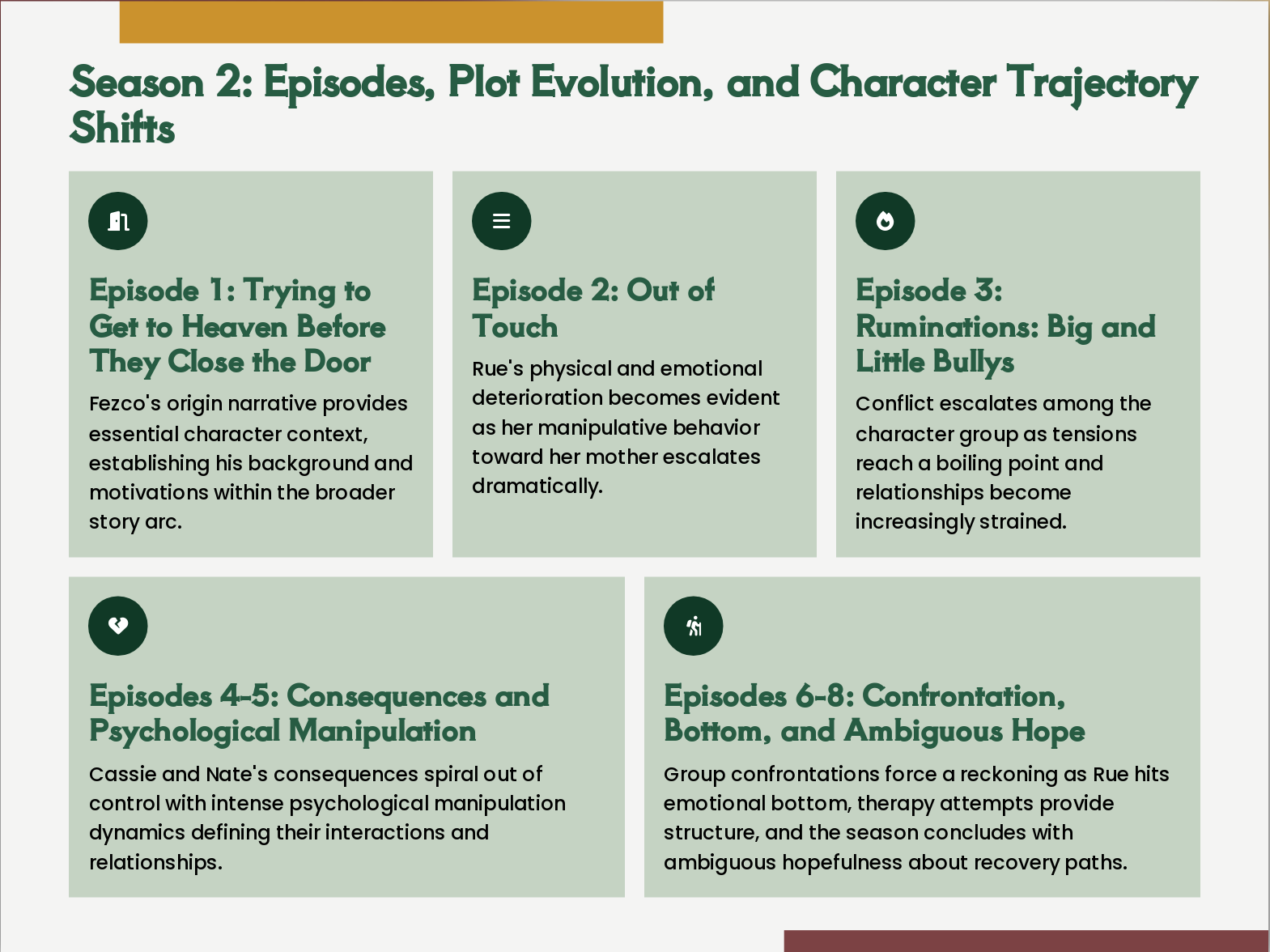
Slide 12: Season 2: Episodes, Plot Evolution, and Character Trajectory Shifts
- Episode 1: Trying to Get to Heaven Before They Close the Door: Fezco's origin narrative provides essential character context, establishing his background and motivations within the broader story arc.
- Episode 2: Out of Touch: Rue's physical and emotional deterioration becomes evident as her manipulative behavior toward her mother escalates dramatically.
- Episode 3: Ruminations: Big and Little Bullys: Conflict escalates among the character group as tensions reach a boiling point and relationships become increasingly strained.
- Episodes 4-5: Consequences and Psychological Manipulation: Cassie and Nate's consequences spiral out of control with intense psychological manipulation dynamics defining their interactions and relationships.
- Episodes 6-8: Confrontation, Bottom, and Ambiguous Hope: Group confrontations force a reckoning as Rue hits emotional bottom, therapy attempts provide structure, and the season concludes with ambiguous hopefulness about recovery paths.
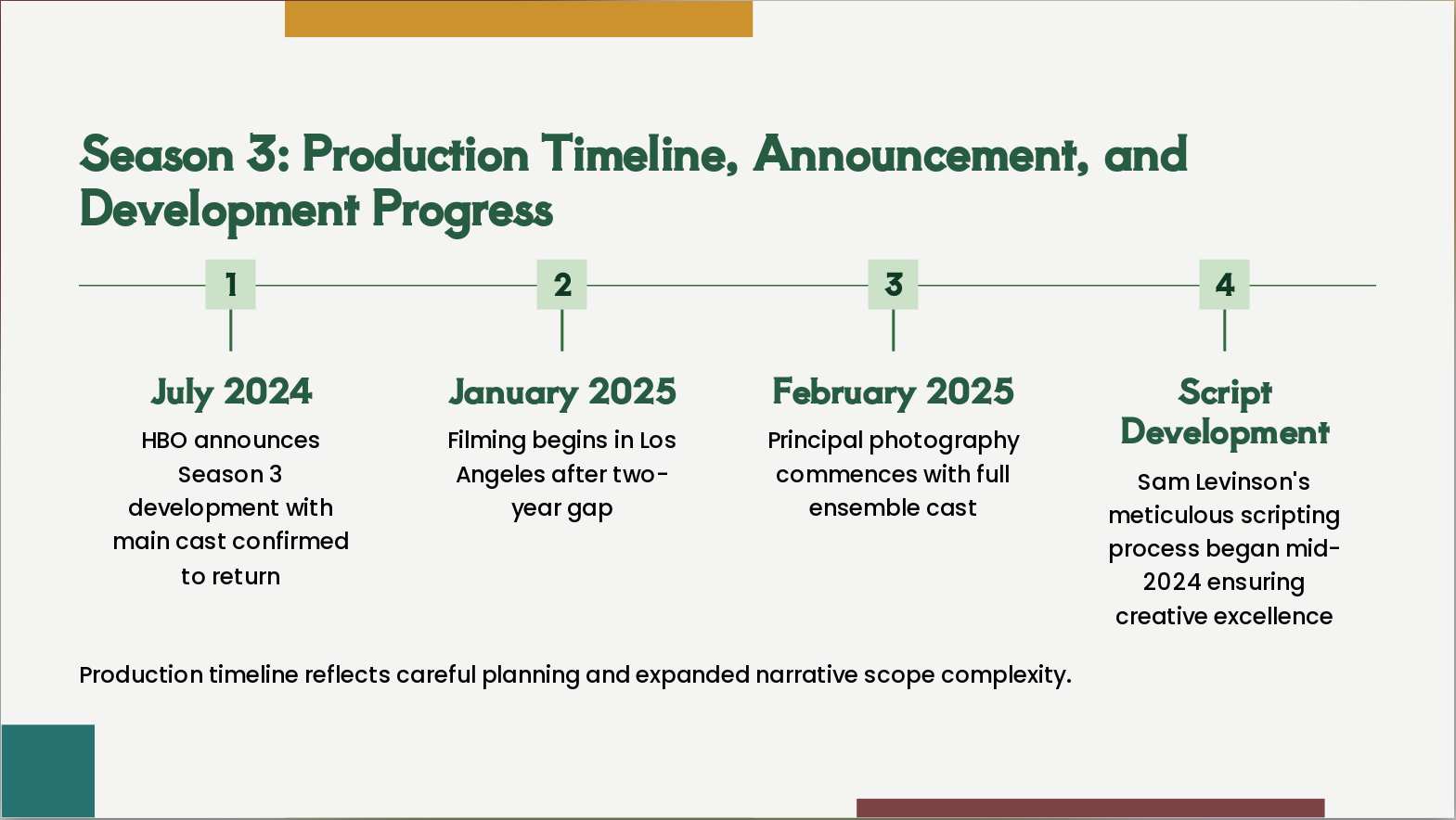
Slide 13: Season 3: Production Timeline, Announcement, and Development Progress
- July 2024: HBO announces Season 3 development with main cast confirmed to return
- January 2025: Filming begins in Los Angeles after two-year gap
- February 2025: Principal photography commences with full ensemble cast
- Script Development: Sam Levinson's meticulous scripting process began mid-2024 ensuring creative excellence
Production timeline reflects careful planning and expanded narrative scope complexity.
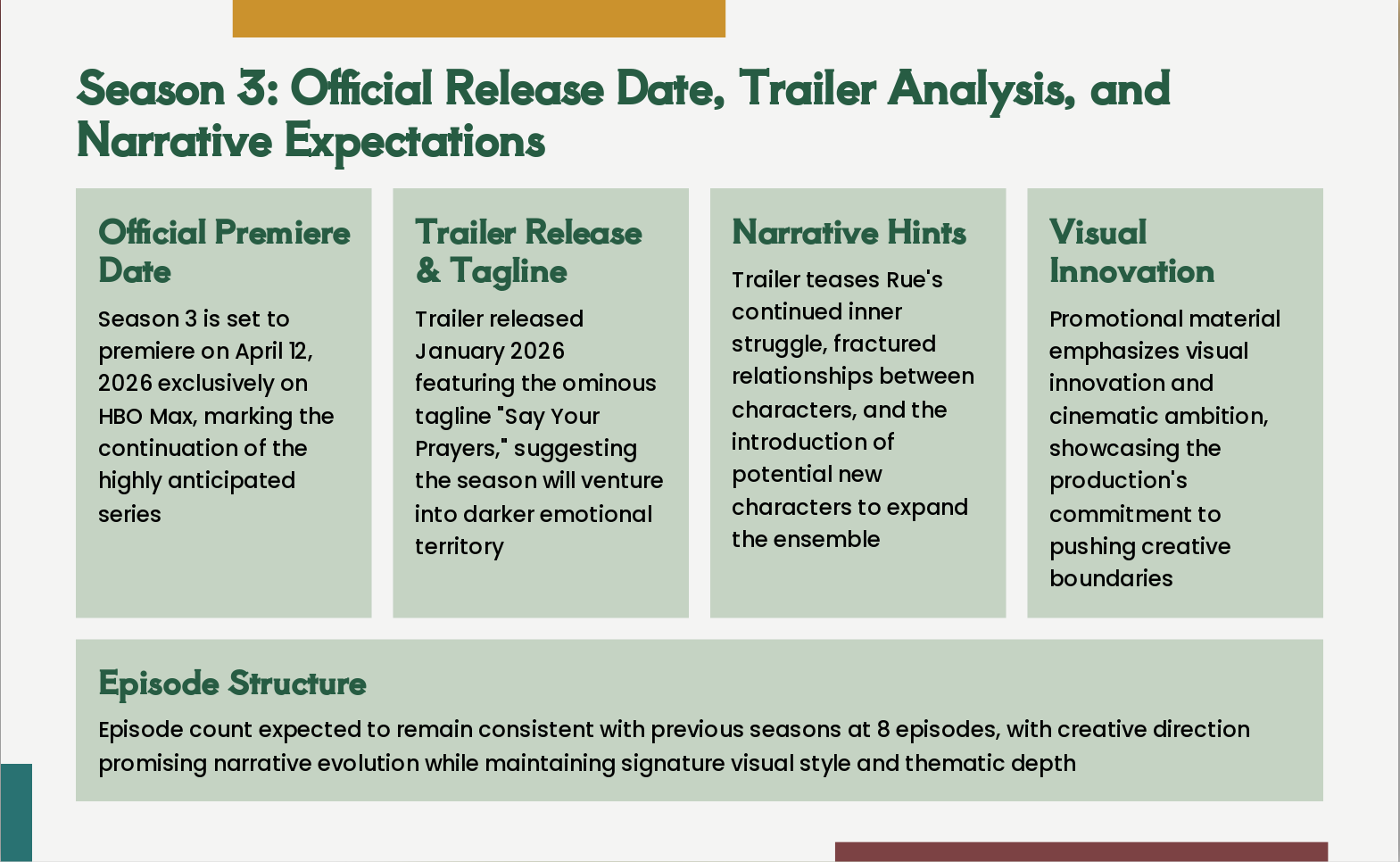
Slide 14: Season 3: Official Release Date, Trailer Analysis, and Narrative Expectations
- Official Premiere Date: Season 3 is set to premiere on April 12, 2026 exclusively on HBO Max, marking the continuation of the highly anticipated series
- Trailer Release & Tagline: Trailer released January 2026 featuring the ominous tagline "Say Your Prayers," suggesting the season will venture into darker emotional territory
- Narrative Hints: Trailer teases Rue's continued inner struggle, fractured relationships between characters, and the introduction of potential new characters to expand the ensemble
- Visual Innovation: Promotional material emphasizes visual innovation and cinematic ambition, showcasing the production's commitment to pushing creative boundaries
- Episode Structure: Episode count expected to remain consistent with previous seasons at 8 episodes, with creative direction promising narrative evolution while maintaining signature visual style and thematic depth
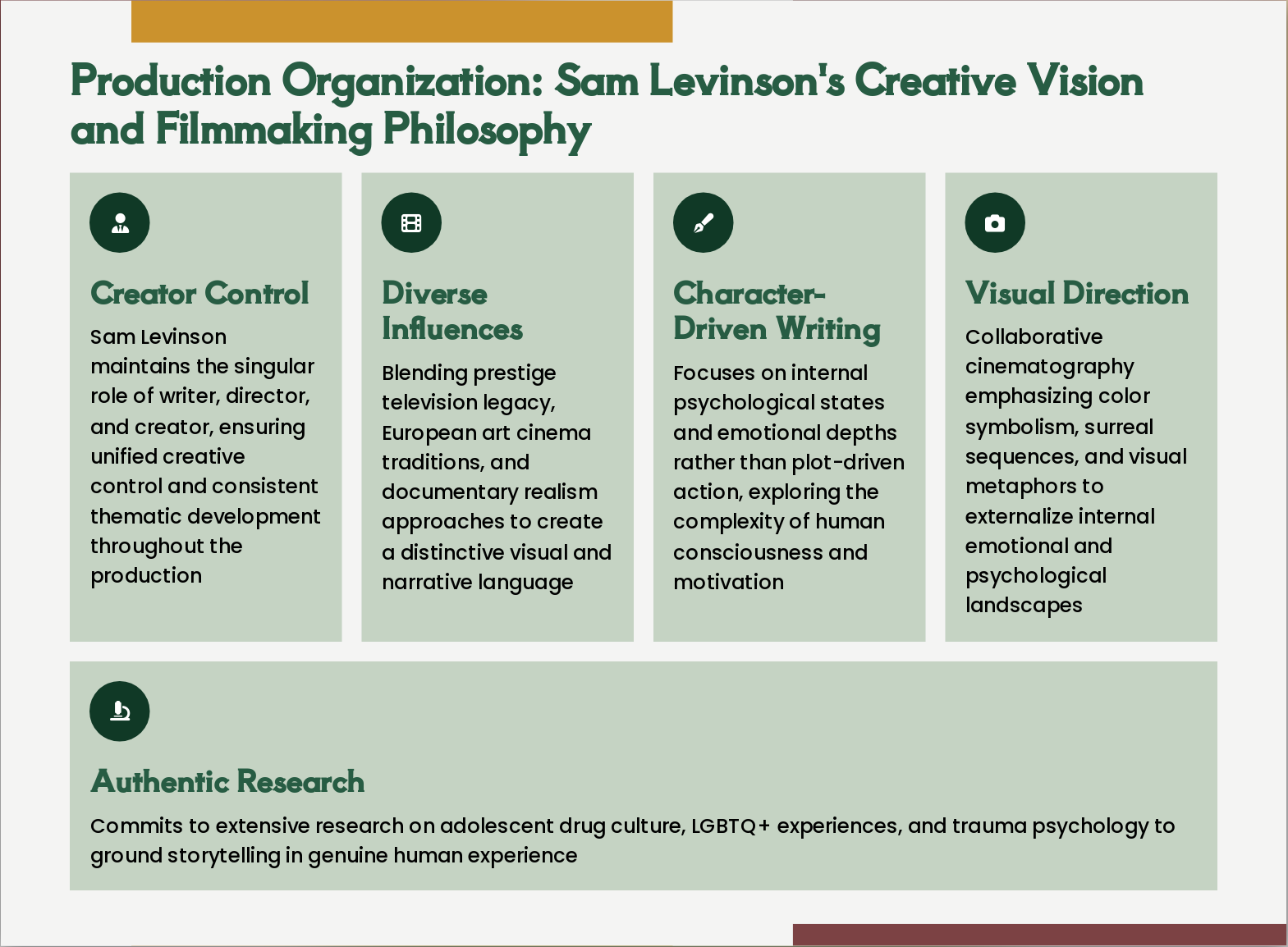
Slide 15: Production Organization: Sam Levinson's Creative Vision and Filmmaking Philosophy
- Creator Control: Sam Levinson maintains the singular role of writer, director, and creator, ensuring unified creative control and consistent thematic development throughout the production
- Diverse Influences: Blending prestige television legacy, European art cinema traditions, and documentary realism approaches to create a distinctive visual and narrative language
- Character-Driven Writing: Focuses on internal psychological states and emotional depths rather than plot-driven action, exploring the complexity of human consciousness and motivation
- Visual Direction: Collaborative cinematography emphasizing color symbolism, surreal sequences, and visual metaphors to externalize internal emotional and psychological landscapes
- Authentic Research: Commits to extensive research on adolescent drug culture, LGBTQ+ experiences, and trauma psychology to ground storytelling in genuine human experience
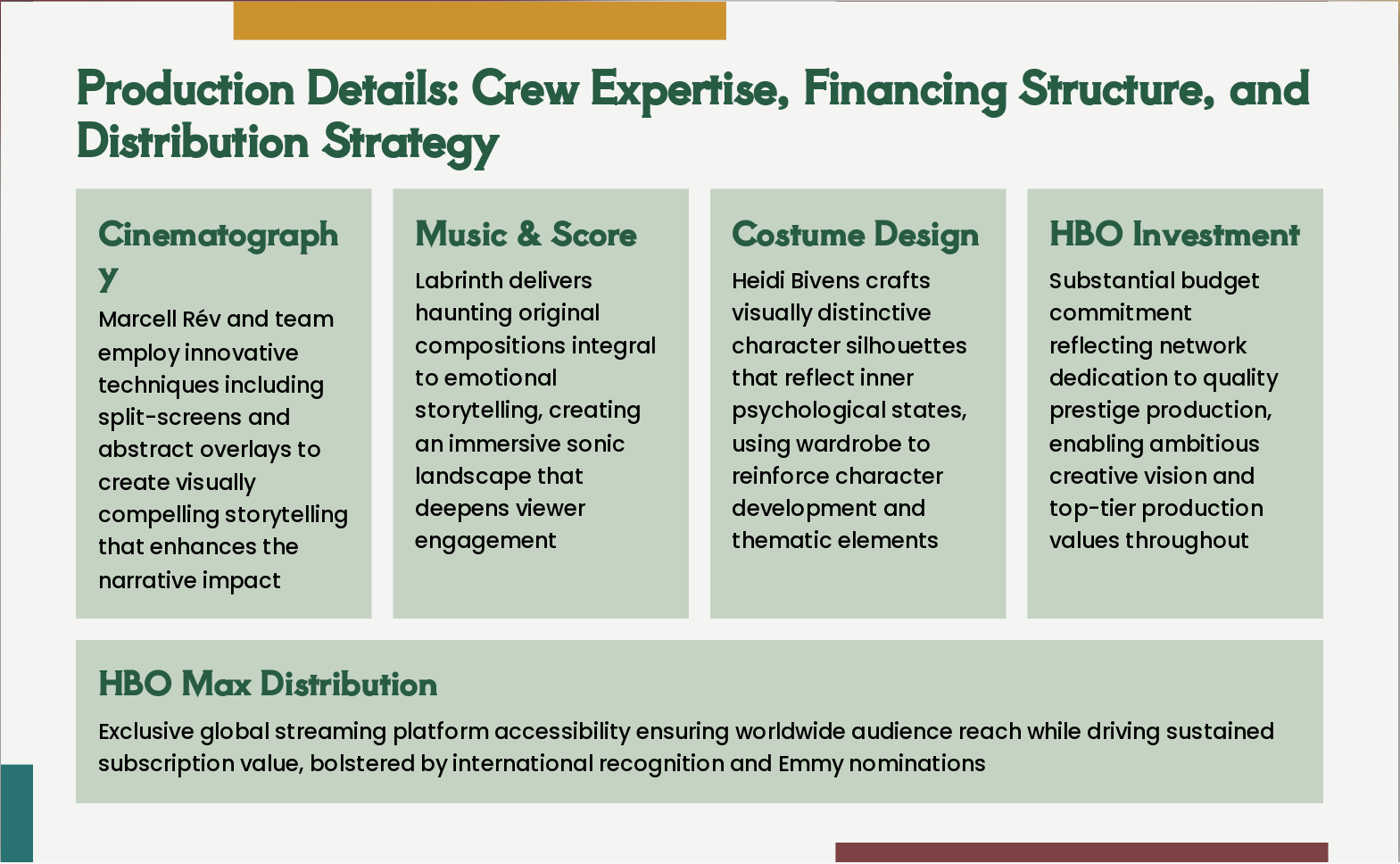
Slide 16: Production Details: Crew Expertise, Financing Structure, and Distribution Strategy
- Cinematography: Marcell Rév and team employ innovative techniques including split-screens and abstract overlays to create visually compelling storytelling that enhances the narrative impact
- Music & Score: Labrinth delivers haunting original compositions integral to emotional storytelling, creating an immersive sonic landscape that deepens viewer engagement
- Costume Design: Heidi Bivens crafts visually distinctive character silhouettes that reflect inner psychological states, using wardrobe to reinforce character development and thematic elements
- HBO Investment: Substantial budget commitment reflecting network dedication to quality prestige production, enabling ambitious creative vision and top-tier production values throughout
- HBO Max Distribution: Exclusive global streaming platform accessibility ensuring worldwide audience reach while driving sustained subscription value, bolstered by international recognition and Emmy nominations
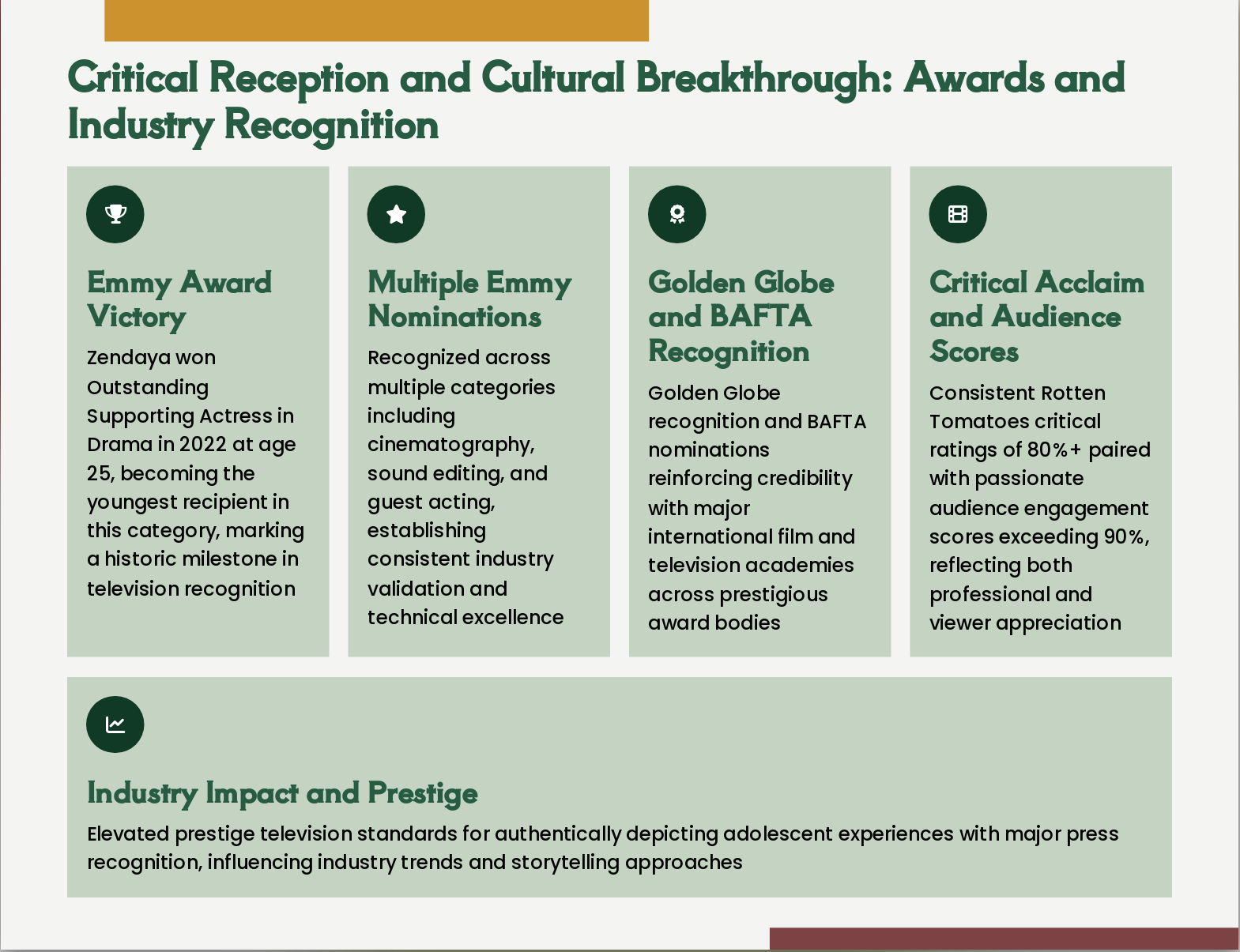
Slide 17: Critical Reception and Cultural Breakthrough: Awards and Industry Recognition
- Emmy Award Victory: Zendaya won Outstanding Supporting Actress in Drama in 2022 at age 25, becoming the youngest recipient in this category, marking a historic milestone in television recognition
- Multiple Emmy Nominations: Recognized across multiple categories including cinematography, sound editing, and guest acting, establishing consistent industry validation and technical excellence
- Golden Globe and BAFTA Recognition: Golden Globe recognition and BAFTA nominations reinforcing credibility with major international film and television academies across prestigious award bodies
- Critical Acclaim and Audience Scores: Consistent Rotten Tomatoes critical ratings of 80%+ paired with passionate audience engagement scores exceeding 90%, reflecting both professional and viewer appreciation
- Industry Impact and Prestige: Elevated prestige television standards for authentically depicting adolescent experiences with major press recognition, influencing industry trends and storytelling approaches
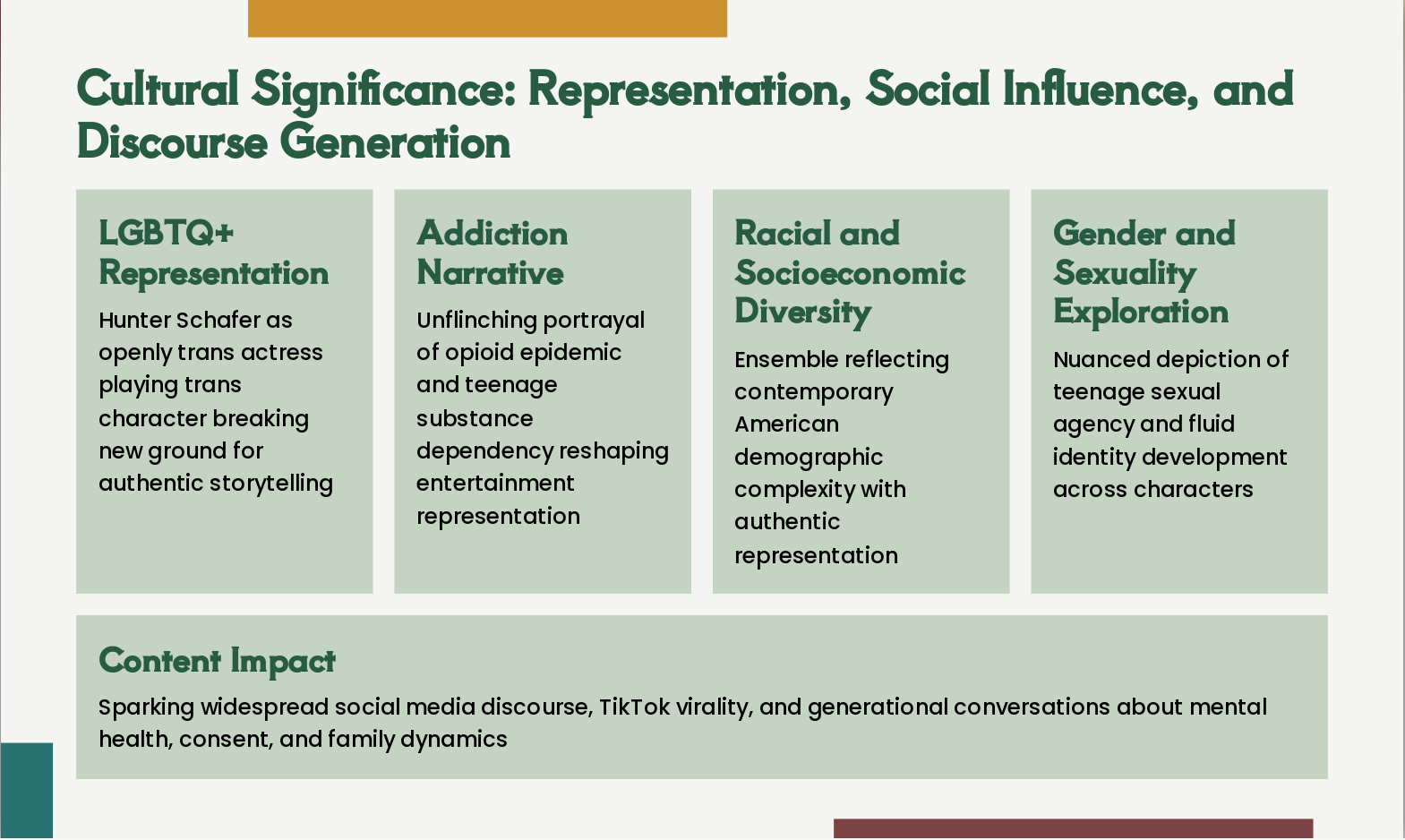
Slide 18: Cultural Significance: Representation, Social Influence, and Discourse Generation
- LGBTQ+ Representation: Hunter Schafer as openly trans actress playing trans character breaking new ground for authentic storytelling
- Addiction Narrative: Unflinching portrayal of opioid epidemic and teenage substance dependency reshaping entertainment representation
- Racial and Socioeconomic Diversity: Ensemble reflecting contemporary American demographic complexity with authentic representation
- Gender and Sexuality Exploration: Nuanced depiction of teenage sexual agency and fluid identity development across characters
- Content Impact: Sparking widespread social media discourse, TikTok virality, and generational conversations about mental health, consent, and family dynamics
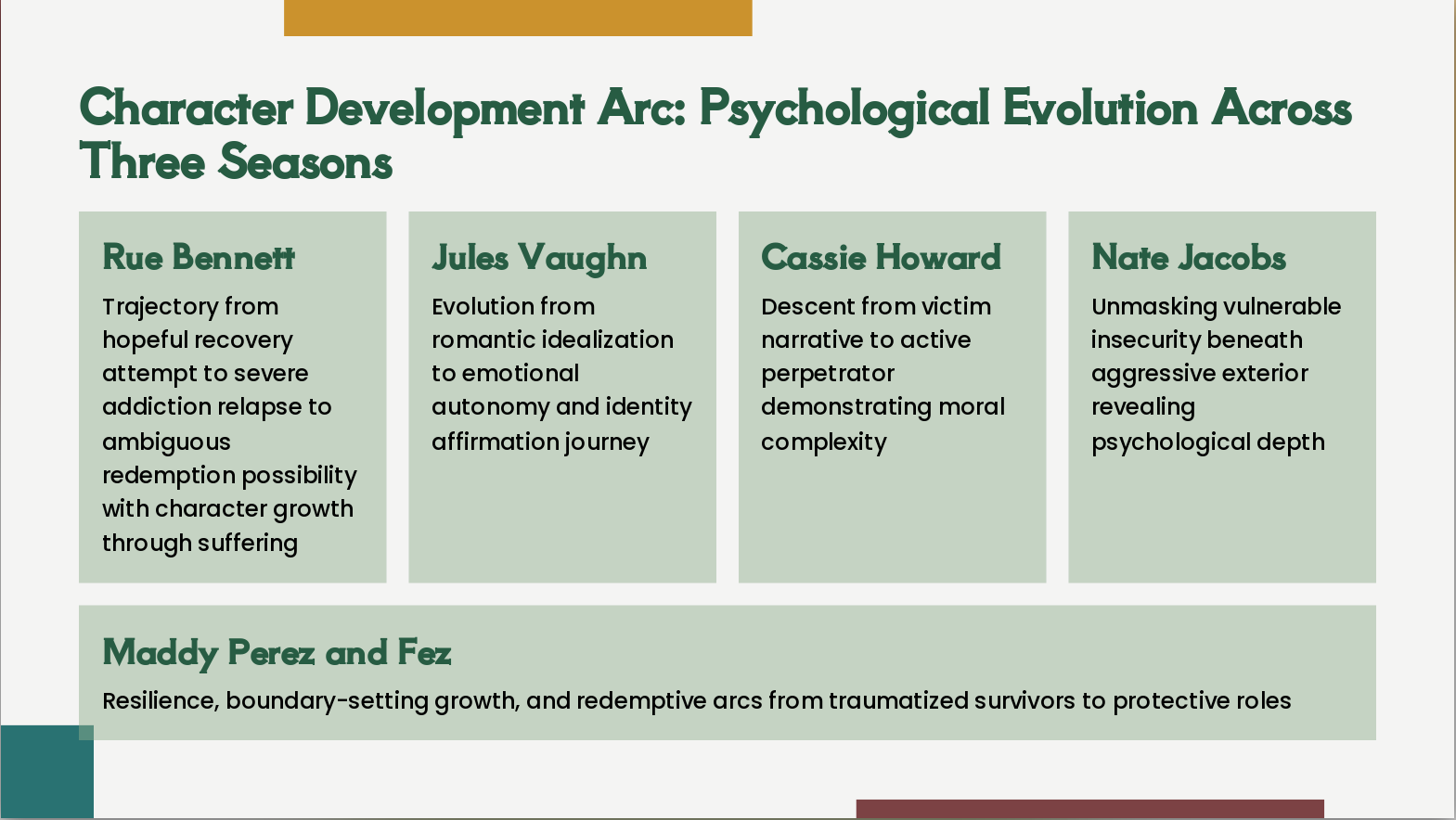
Slide 19: Character Development Arc: Psychological Evolution Across Three Seasons
- Rue Bennett: Trajectory from hopeful recovery attempt to severe addiction relapse to ambiguous redemption possibility with character growth through suffering
- Jules Vaughn: Evolution from romantic idealization to emotional autonomy and identity affirmation journey
- Cassie Howard: Descent from victim narrative to active perpetrator demonstrating moral complexity
- Nate Jacobs: Unmasking vulnerable insecurity beneath aggressive exterior revealing psychological depth
- Maddy Perez and Fez: Resilience, boundary-setting growth, and redemptive arcs from traumatized survivors to protective roles
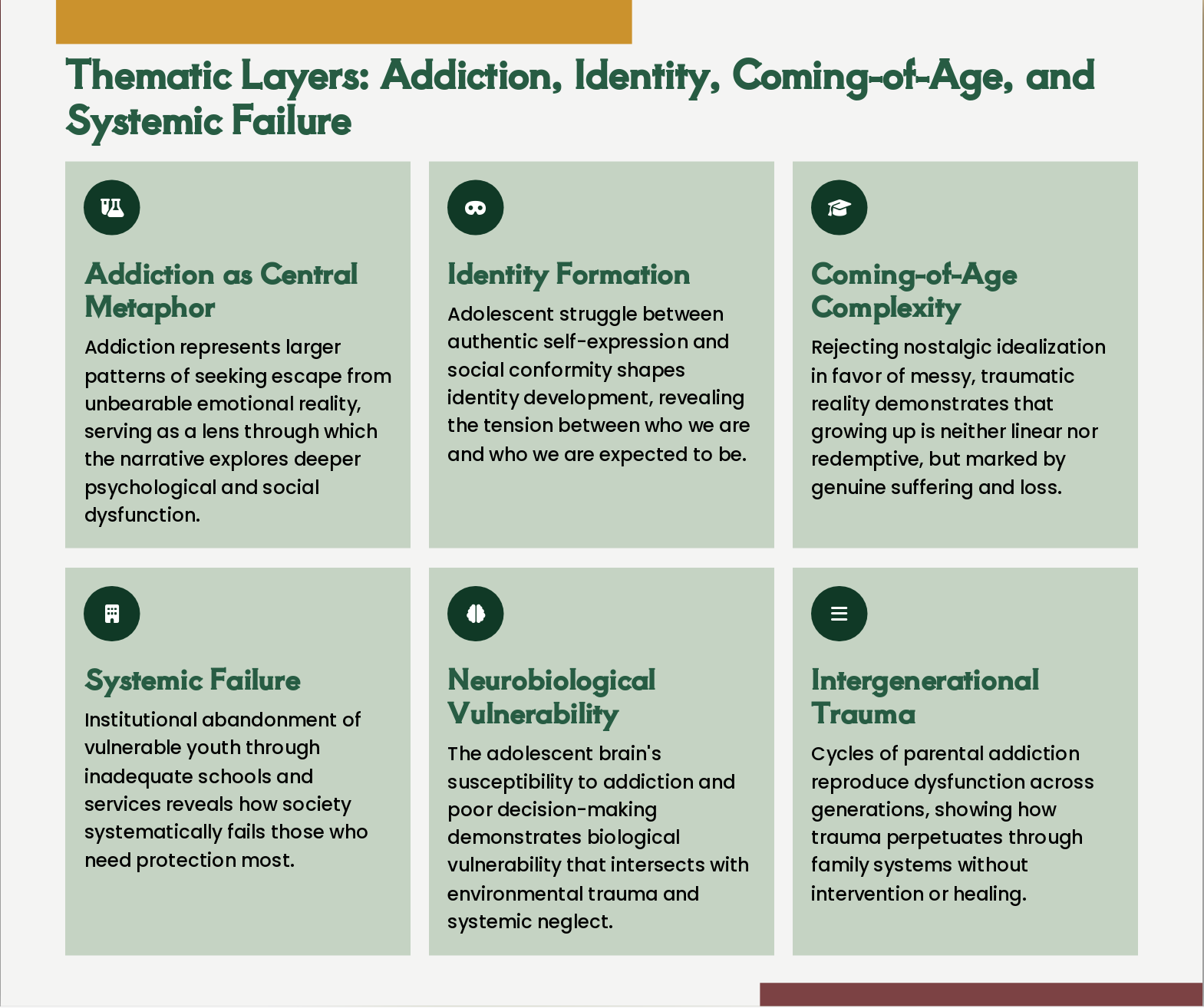
Slide 20: Thematic Layers: Addiction, Identity, Coming-of-Age, and Systemic Failure
- Addiction as Central Metaphor: Addiction represents larger patterns of seeking escape from unbearable emotional reality, serving as a lens through which the narrative explores deeper psychological and social dysfunction.
- Identity Formation: Adolescent struggle between authentic self-expression and social conformity shapes identity development, revealing the tension between who we are and who we are expected to be.
- Coming-of-Age Complexity: Rejecting nostalgic idealization in favor of messy, traumatic reality demonstrates that growing up is neither linear nor redemptive, but marked by genuine suffering and loss.
- Systemic Failure: Institutional abandonment of vulnerable youth through inadequate schools and services reveals how society systematically fails those who need protection most.
- Neurobiological Vulnerability: The adolescent brain's susceptibility to addiction and poor decision-making demonstrates biological vulnerability that intersects with environmental trauma and systemic neglect.
- Intergenerational Trauma: Cycles of parental addiction reproduce dysfunction across generations, showing how trauma perpetuates through family systems without intervention or healing.
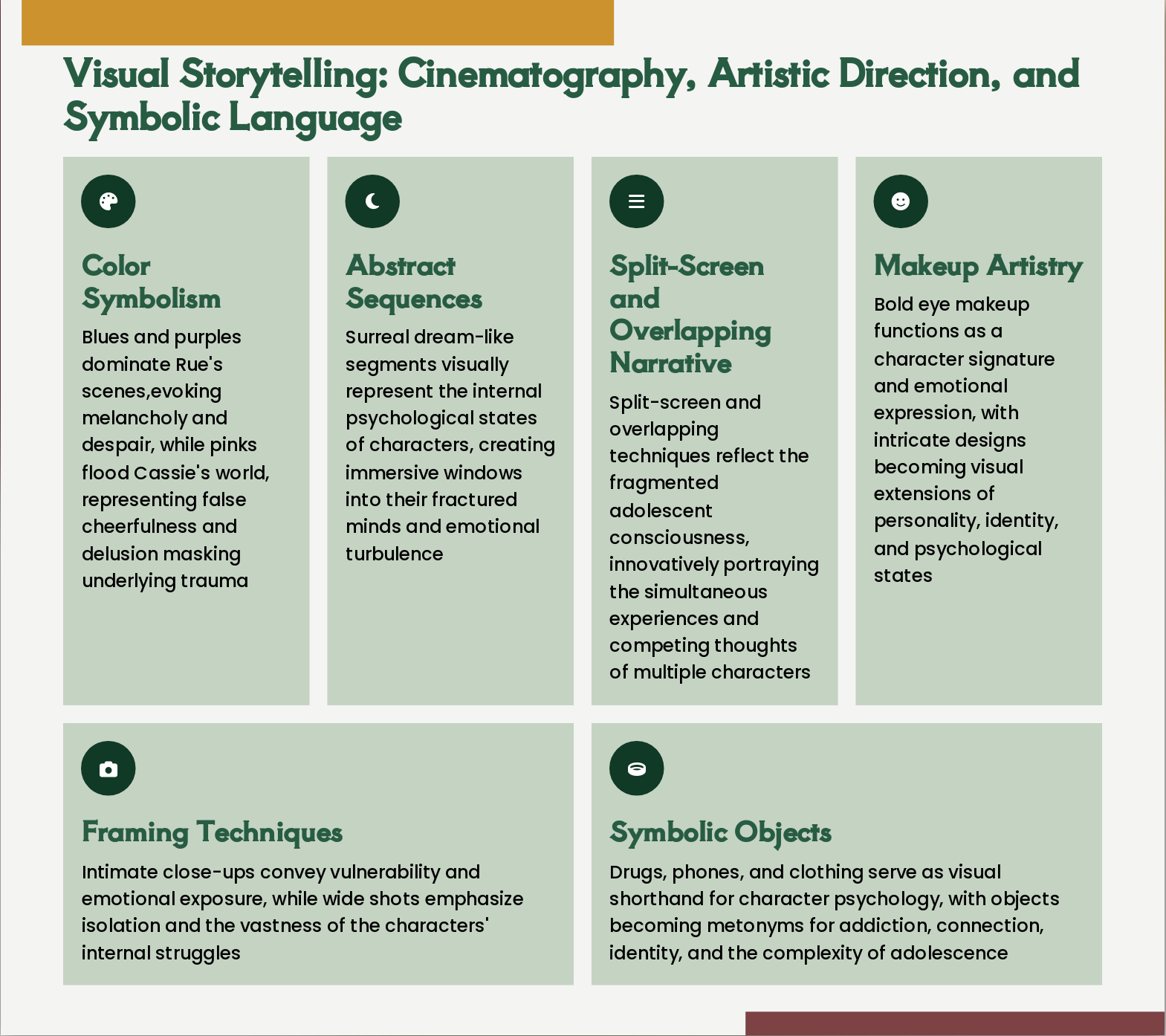
Slide 21: Visual Storytelling: Cinematography, Artistic Direction, and Symbolic Language
- Color Symbolism: Blues and purples dominate Rue's scenes,evoking melancholy and despair, while pinks flood Cassie's world, representing false cheerfulness and delusion masking underlying trauma
- Abstract Sequences: Surreal dream-like segments visually represent the internal psychological states of characters, creating immersive windows into their fractured minds and emotional turbulence
- Split-Screen and Overlapping Narrative: Split-screen and overlapping techniques reflect the fragmented adolescent consciousness, innovatively portraying the simultaneous experiences and competing thoughts of multiple characters
- Makeup Artistry: Bold eye makeup functions as a character signature and emotional expression, with intricate designs becoming visual extensions of personality, identity, and psychological states
- Framing Techniques: Intimate close-ups convey vulnerability and emotional exposure, while wide shots emphasize isolation and the vastness of the characters' internal struggles
- Symbolic Objects: Drugs, phones, and clothing serve as visual shorthand for character psychology, with objects becoming metonyms for addiction, connection, identity, and the complexity of adolescence
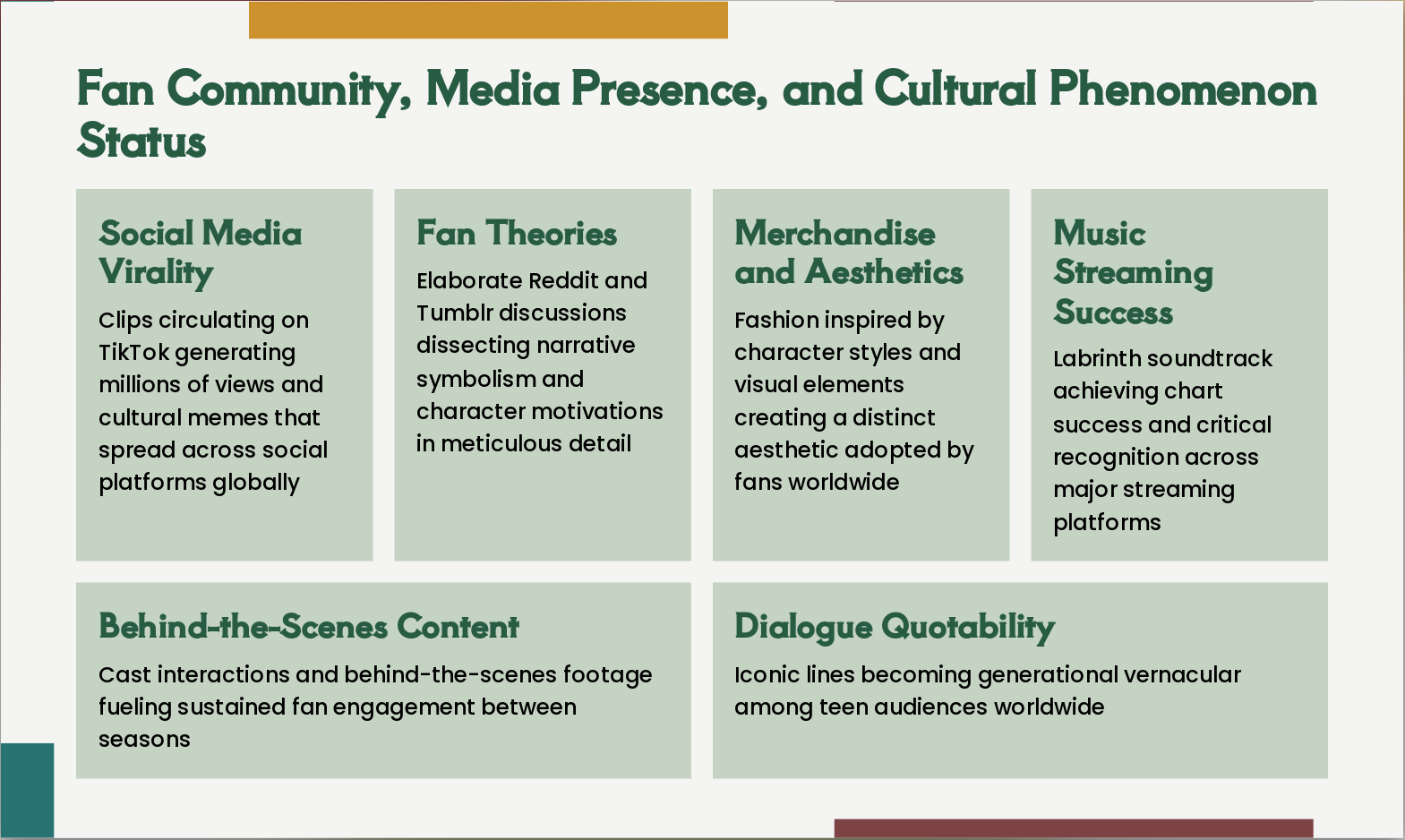
Slide 22: Fan Community, Media Presence, and Cultural Phenomenon Status
- Social Media Virality: Clips circulating on TikTok generating millions of views and cultural memes that spread across social platforms globally
- Fan Theories: Elaborate Reddit and Tumblr discussions dissecting narrative symbolism and character motivations in meticulous detail
- Merchandise and Aesthetics: Fashion inspired by character styles and visual elements creating a distinct aesthetic adopted by fans worldwide
- Music Streaming Success: Labrinth soundtrack achieving chart success and critical recognition across major streaming platforms
- Behind-the-Scenes Content: Cast interactions and behind-the-scenes footage fueling sustained fan engagement between seasons
- Dialogue Quotability: Iconic lines becoming generational vernacular among teen audiences worldwide
Slide 23: Euphoria: Bridging Psychology, Art, and Generational Voice
Euphoria: Bridging Psychology, Art, and Generational Voice Series significance transcending entertainment to function as cultural document of contemporary adolescent experience; Psychological authenticity through unflinching exploration of euphoria's paradox - beautiful moments masking destructive p...