Presentation Summary
Dive into the comprehensive analysis of American Horror Story's 13 seasons, exploring themes, narratives, and cultural impact of this anthology series.
Full Presentation Transcript
Slide 1: American Horror Story: A Comprehensive Analysis of Seasons 1-13
Exploring Themes, Narratives, and Cultural Impact Across the Anthology Series
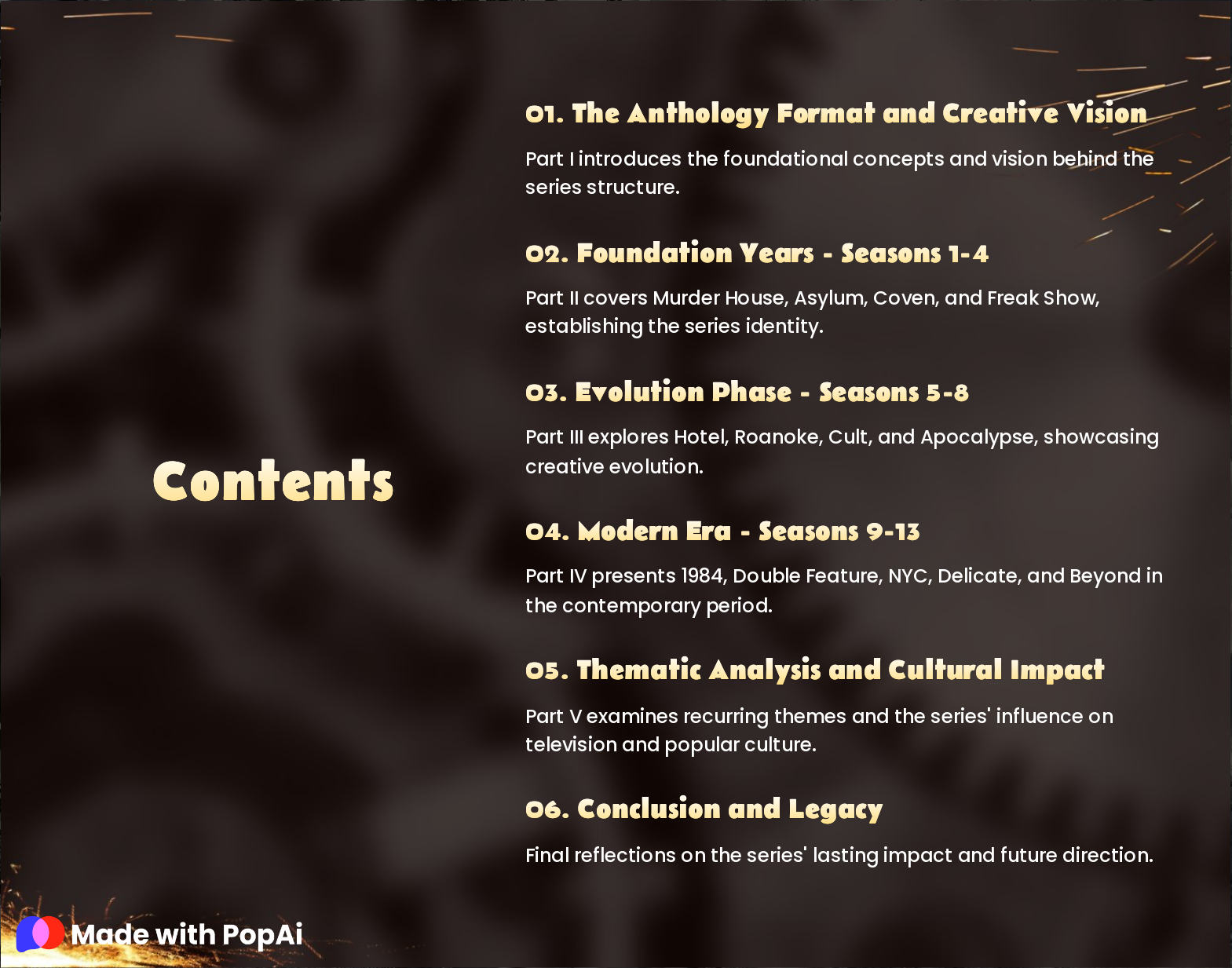
Slide 2: Contents
- The Anthology Format and Creative Vision: Part I introduces the foundational concepts and vision behind the series structure.
- Foundation Years - Seasons 1-4: Part II covers Murder House, Asylum, Coven, and Freak Show, establishing the series identity.
- Evolution Phase - Seasons 5-8: Part III explores Hotel, Roanoke, Cult, and Apocalypse, showcasing creative evolution.
- Modern Era - Seasons 9-13: Part IV presents 1984, Double Feature, NYC, Delicate, and Beyond in the contemporary period.
- Thematic Analysis and Cultural Impact: Part V examines recurring themes and the series' influence on television and popular culture.
- Conclusion and Legacy: Final reflections on the series' lasting impact and future direction.
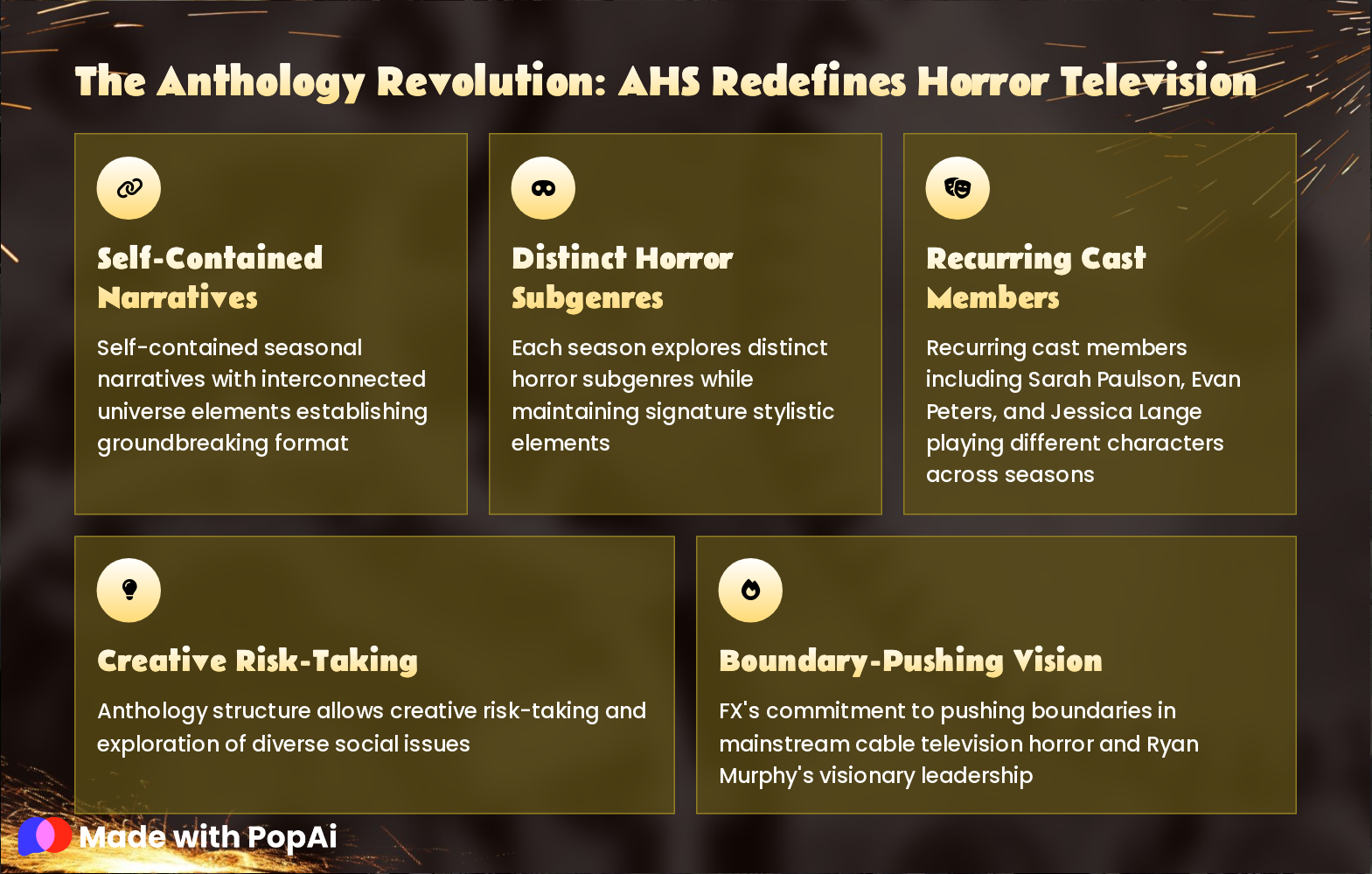
Slide 3: The Anthology Revolution: AHS Redefines Horror Television
- Self-Contained Narratives: Self-contained seasonal narratives with interconnected universe elements establishing groundbreaking format
- Distinct Horror Subgenres: Each season explores distinct horror subgenres while maintaining signature stylistic elements
- Recurring Cast Members: Recurring cast members including Sarah Paulson, Evan Peters, and Jessica Lange playing different characters across seasons
- Creative Risk-Taking: Anthology structure allows creative risk-taking and exploration of diverse social issues
- Boundary-Pushing Vision: FX's commitment to pushing boundaries in mainstream cable television horror and Ryan Murphy's visionary leadership
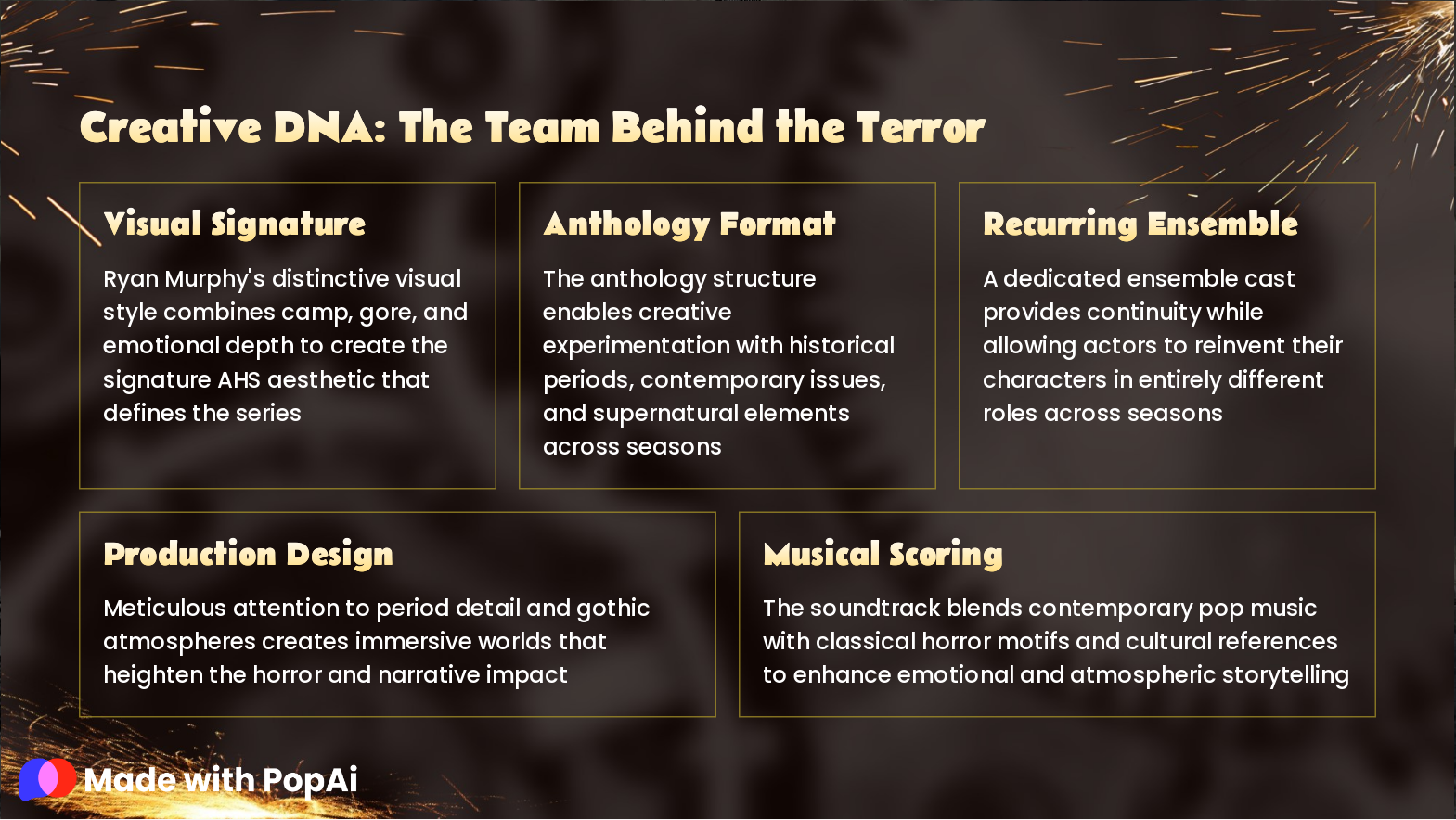
Slide 4: Creative DNA: The Team Behind the Terror
- Visual Signature: Ryan Murphy's distinctive visual style combines camp, gore, and emotional depth to create the signature AHS aesthetic that defines the series
- Anthology Format: The anthology structure enables creative experimentation with historical periods, contemporary issues, and supernatural elements across seasons
- Recurring Ensemble: A dedicated ensemble cast provides continuity while allowing actors to reinvent their characters in entirely different roles across seasons
- Production Design: Meticulous attention to period detail and gothic atmospheres creates immersive worlds that heighten the horror and narrative impact
- Musical Scoring: The soundtrack blends contemporary pop music with classical horror motifs and cultural references to enhance emotional and atmospheric storytelling
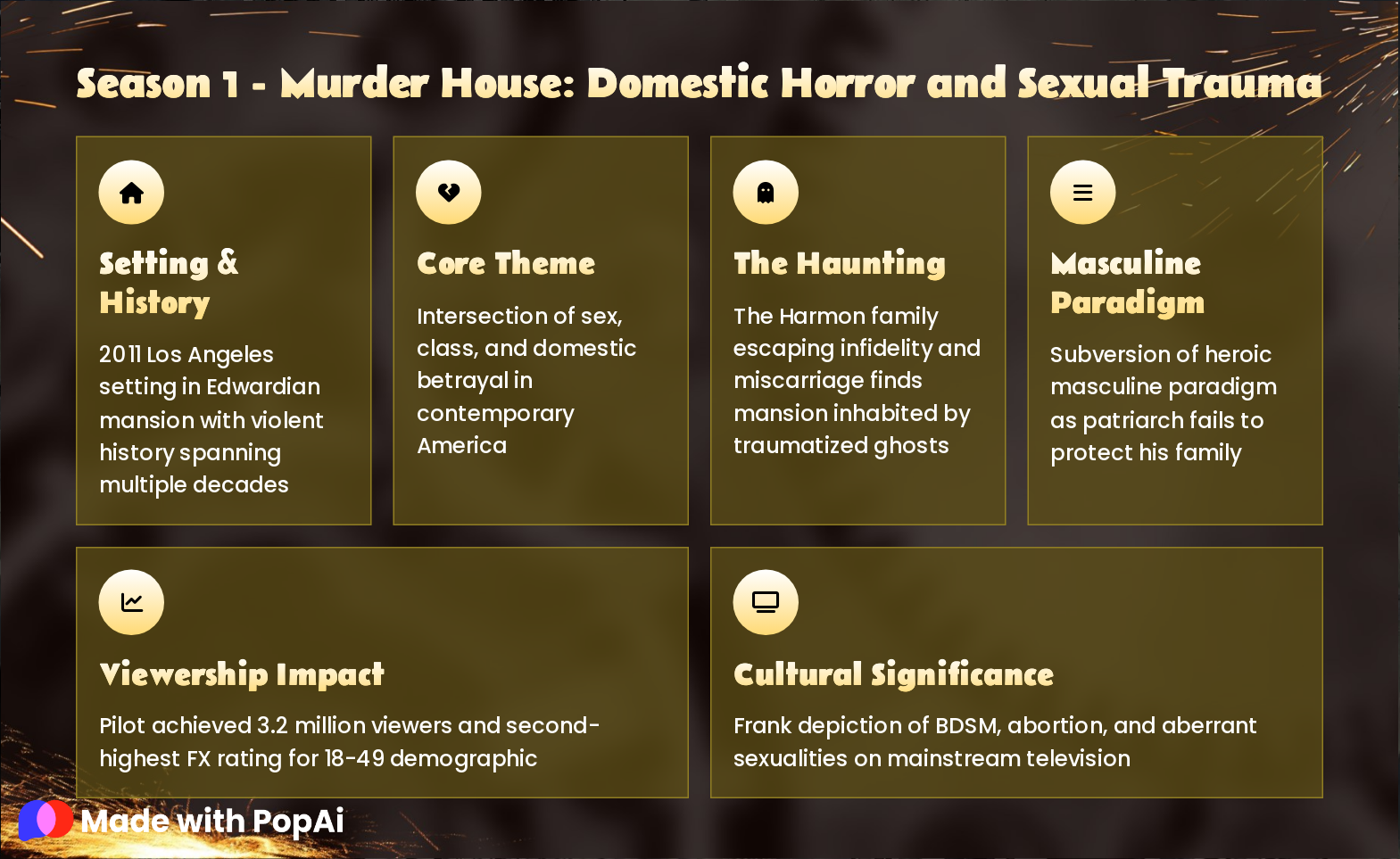
Slide 5: Season 1 - Murder House: Domestic Horror and Sexual Trauma
- Setting & History: 2011 Los Angeles setting in Edwardian mansion with violent history spanning multiple decades
- Core Theme: Intersection of sex, class, and domestic betrayal in contemporary America
- The Haunting: The Harmon family escaping infidelity and miscarriage finds mansion inhabited by traumatized ghosts
- Masculine Paradigm: Subversion of heroic masculine paradigm as patriarch fails to protect his family
- Viewership Impact: Pilot achieved 3.2 million viewers and second-highest FX rating for 18-49 demographic
- Cultural Significance: Frank depiction of BDSM, abortion, and aberrant sexualities on mainstream television
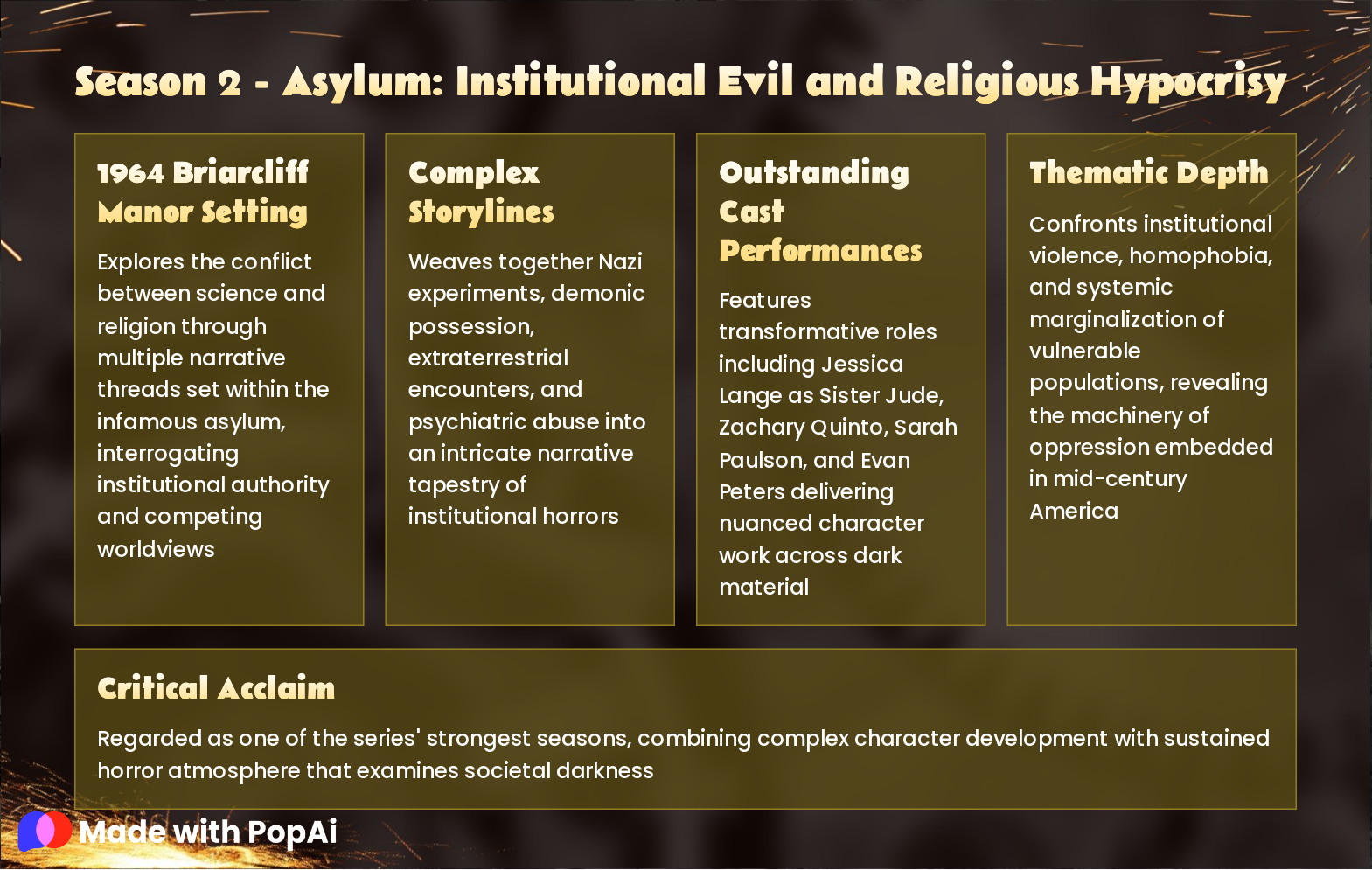
Slide 6: Season 2 - Asylum: Institutional Evil and Religious Hypocrisy
- 1964 Briarcliff Manor Setting: Explores the conflict between science and religion through multiple narrative threads set within the infamous asylum, interrogating institutional authority and competing worldviews
- Complex Storylines: Weaves together Nazi experiments, demonic possession, extraterrestrial encounters, and psychiatric abuse into an intricate narrative tapestry of institutional horrors
- Outstanding Cast Performances: Features transformative roles including Jessica Lange as Sister Jude, Zachary Quinto, Sarah Paulson, and Evan Peters delivering nuanced character work across dark material
- Thematic Depth: Confronts institutional violence, homophobia, and systemic marginalization of vulnerable populations, revealing the machinery of oppression embedded in mid-century America
- Critical Acclaim: Regarded as one of the series' strongest seasons, combining complex character development with sustained horror atmosphere that examines societal darkness
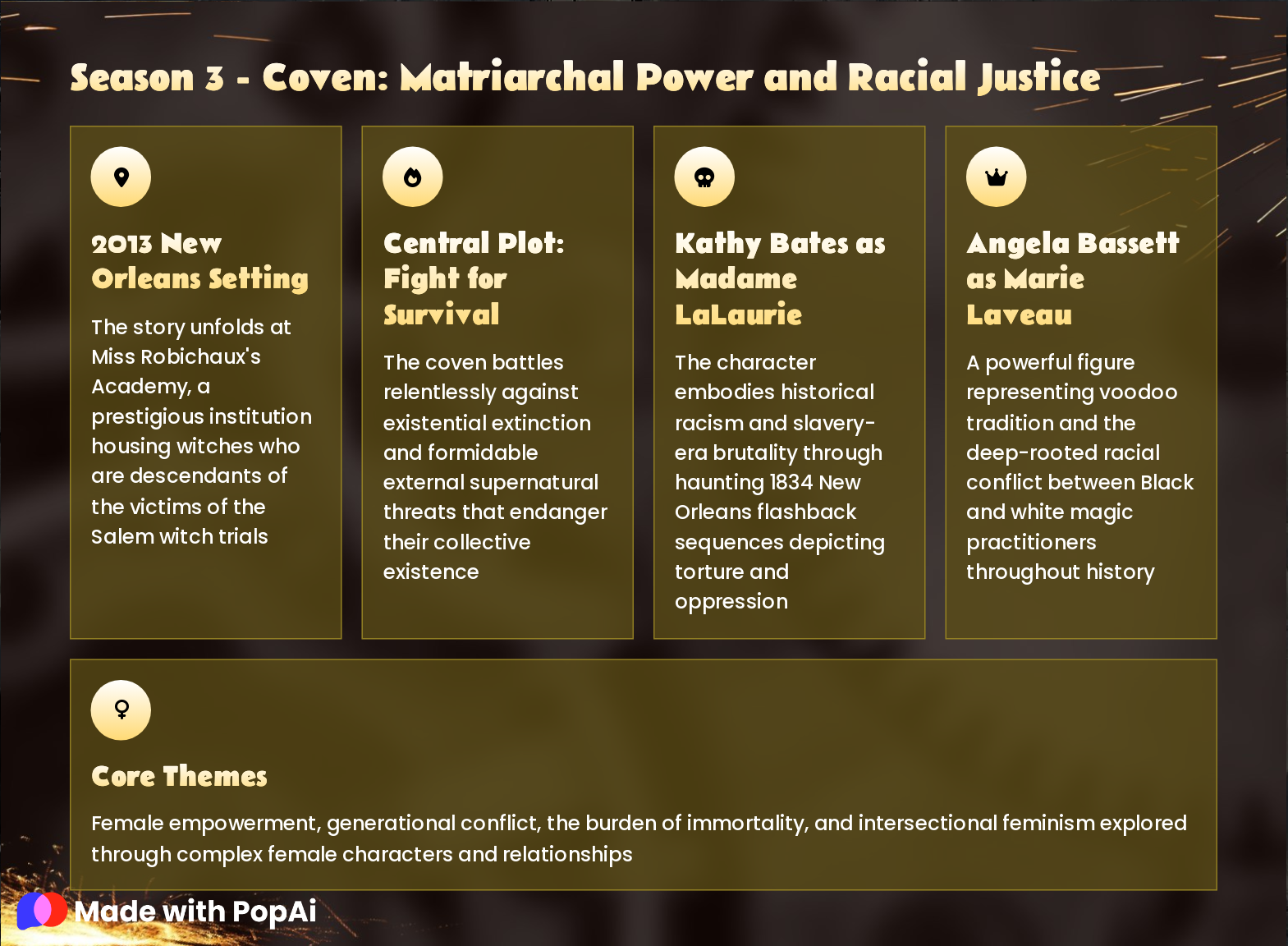
Slide 7: Season 3 - Coven: Matriarchal Power and Racial Justice
- 2013 New Orleans Setting: The story unfolds at Miss Robichaux's Academy, a prestigious institution housing witches who are descendants of the victims of the Salem witch trials
- Central Plot: Fight for Survival: The coven battles relentlessly against existential extinction and formidable external supernatural threats that endanger their collective existence
- Kathy Bates as Madame LaLaurie: The character embodies historical racism and slavery-era brutality through haunting 1834 New Orleans flashback sequences depicting torture and oppression
- Angela Bassett as Marie Laveau: A powerful figure representing voodoo tradition and the deep-rooted racial conflict between Black and white magic practitioners throughout history
- Core Themes: Female empowerment, generational conflict, the burden of immortality, and intersectional feminism explored through complex female characters and relationships
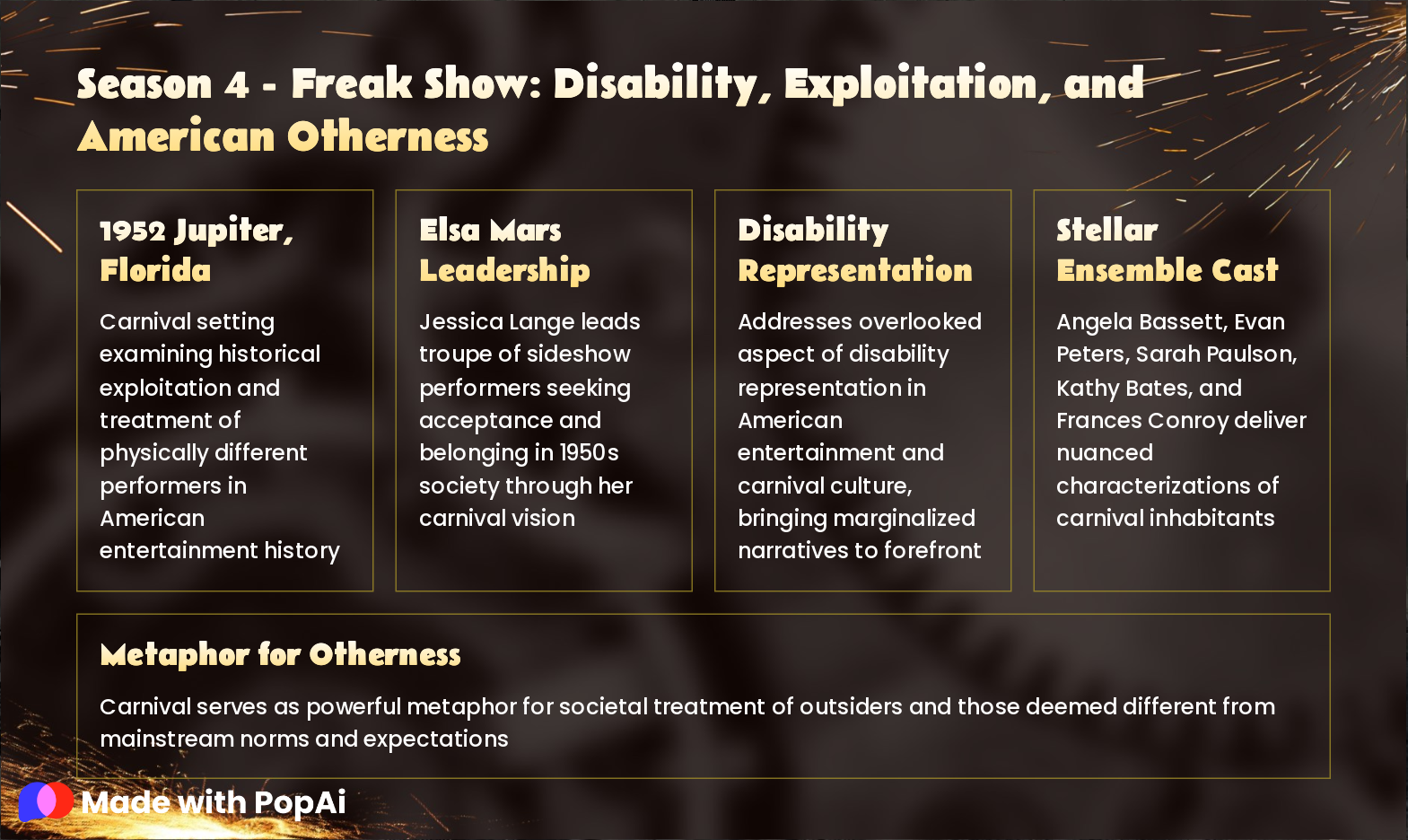
Slide 8: Season 4 - Freak Show: Disability, Exploitation, and American Otherness
- 1952 Jupiter, Florida: Carnival setting examining historical exploitation and treatment of physically different performers in American entertainment history
- Elsa Mars Leadership: Jessica Lange leads troupe of sideshow performers seeking acceptance and belonging in 1950s society through her carnival vision
- Disability Representation: Addresses overlooked aspect of disability representation in American entertainment and carnival culture, bringing marginalized narratives to forefront
- Stellar Ensemble Cast: Angela Bassett, Evan Peters, Sarah Paulson, Kathy Bates, and Frances Conroy deliver nuanced characterizations of carnival inhabitants
- Metaphor for Otherness: Carnival serves as powerful metaphor for societal treatment of outsiders and those deemed different from mainstream norms and expectations
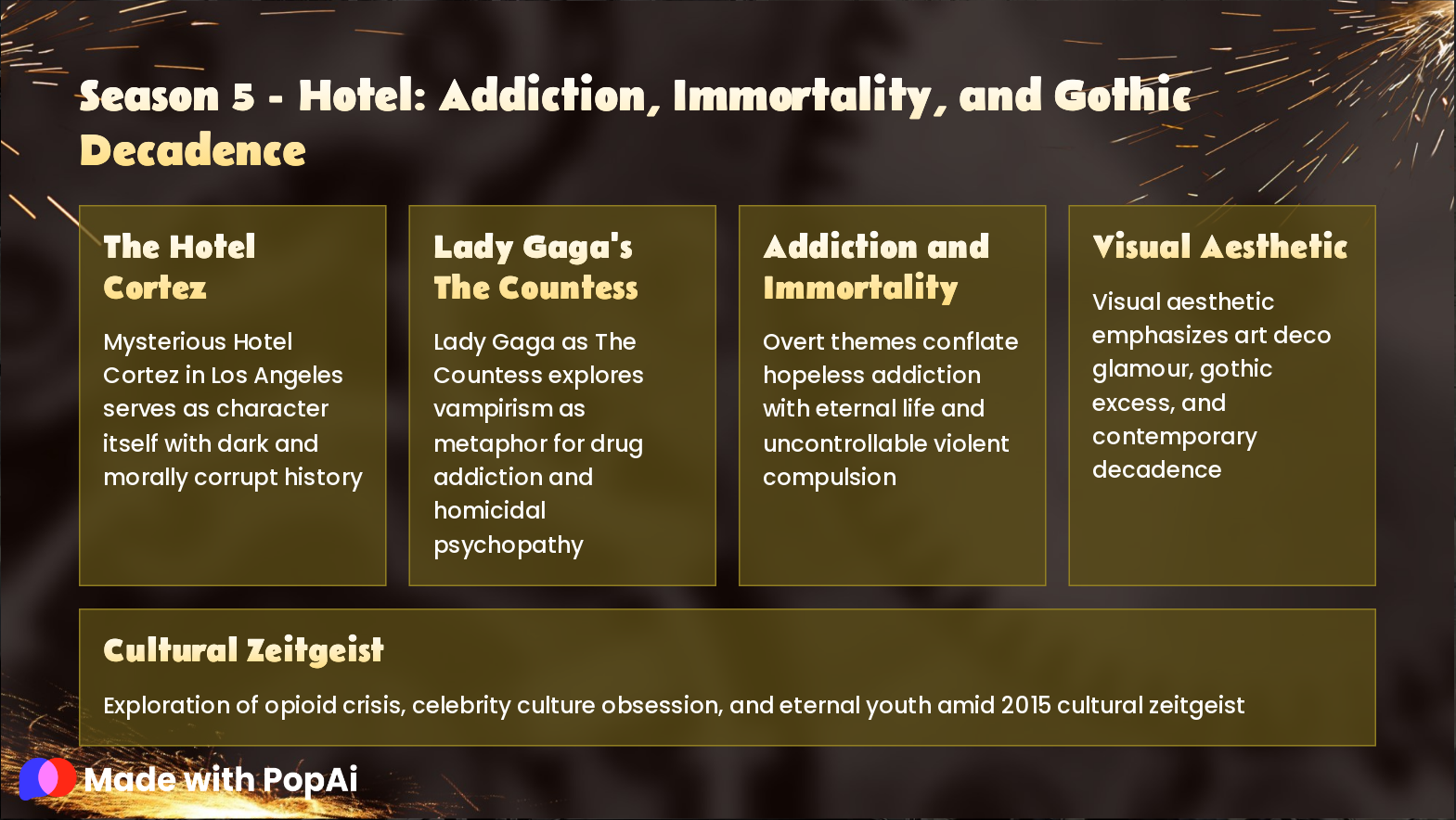
Slide 9: Season 5 - Hotel: Addiction, Immortality, and Gothic Decadence
- The Hotel Cortez: Mysterious Hotel Cortez in Los Angeles serves as character itself with dark and morally corrupt history
- Lady Gaga's The Countess: Lady Gaga as The Countess explores vampirism as metaphor for drug addiction and homicidal psychopathy
- Addiction and Immortality: Overt themes conflate hopeless addiction with eternal life and uncontrollable violent compulsion
- Visual Aesthetic: Visual aesthetic emphasizes art deco glamour, gothic excess, and contemporary decadence
- Cultural Zeitgeist: Exploration of opioid crisis, celebrity culture obsession, and eternal youth amid 2015 cultural zeitgeist
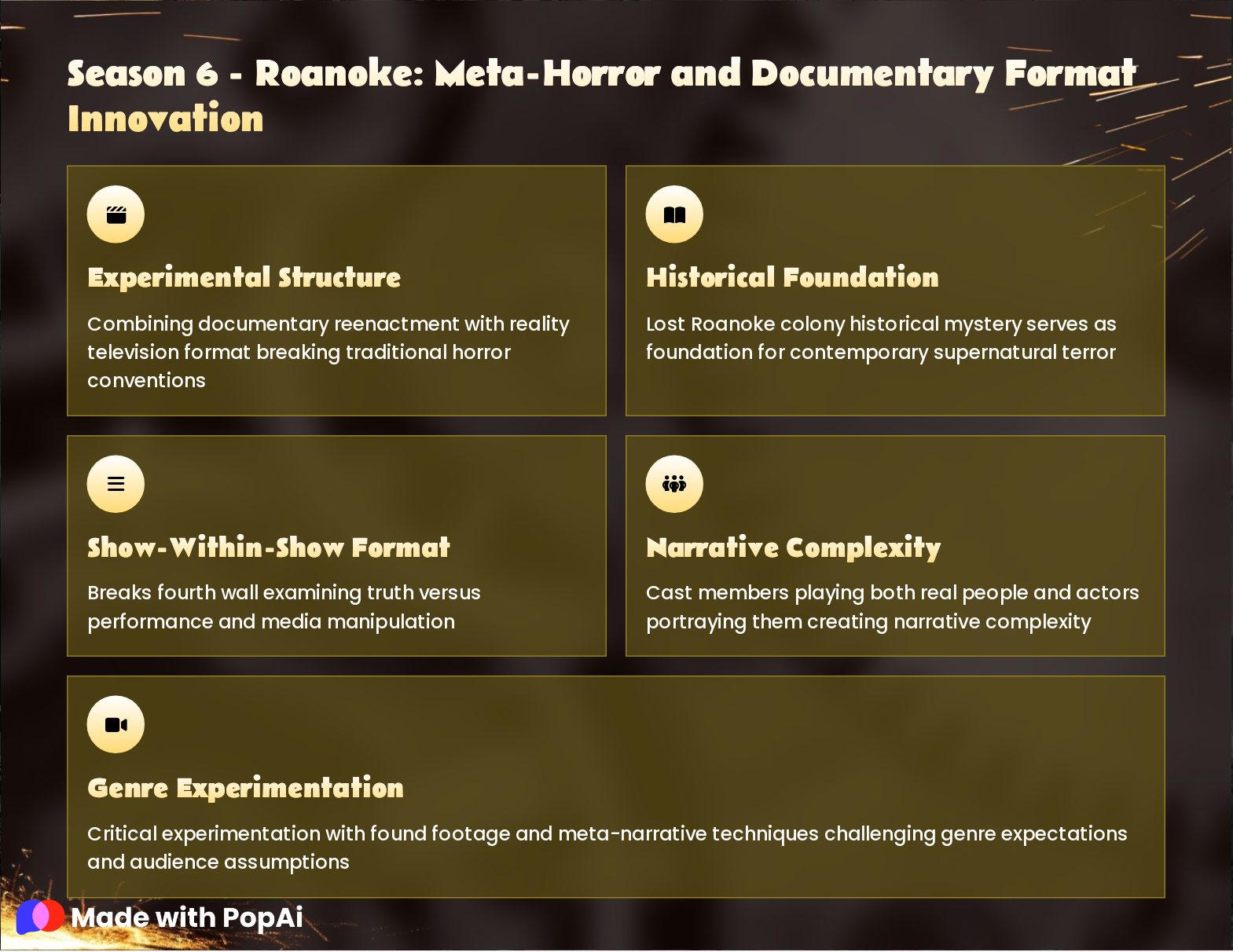
Slide 10: Season 6 - Roanoke: Meta-Horror and Documentary Format Innovation
- Experimental Structure: Combining documentary reenactment with reality television format breaking traditional horror conventions
- Historical Foundation: Lost Roanoke colony historical mystery serves as foundation for contemporary supernatural terror
- Show-Within-Show Format: Breaks fourth wall examining truth versus performance and media manipulation
- Narrative Complexity: Cast members playing both real people and actors portraying them creating narrative complexity
- Genre Experimentation: Critical experimentation with found footage and meta-narrative techniques challenging genre expectations and audience assumptions
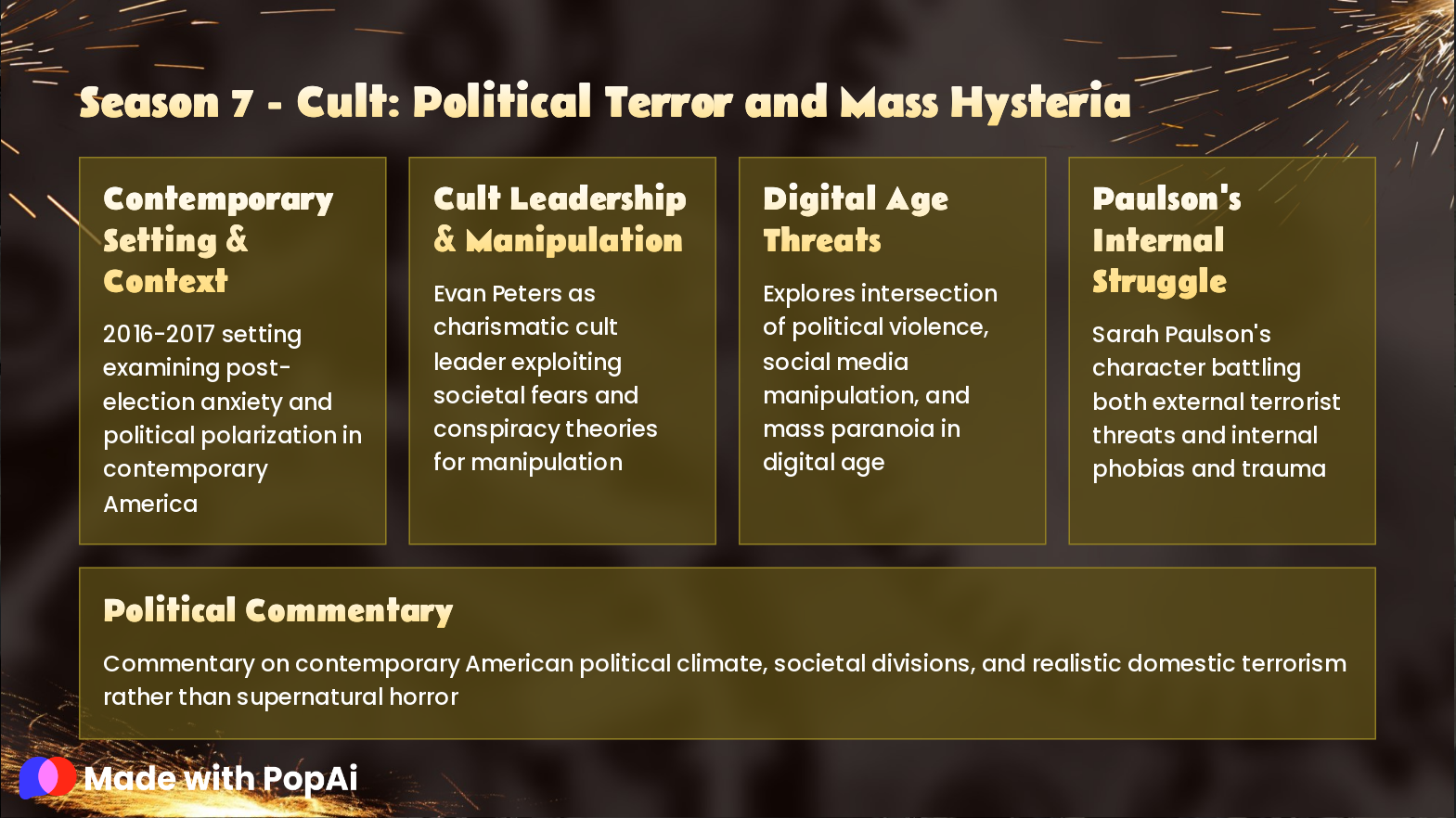
Slide 11: Season 7 - Cult: Political Terror and Mass Hysteria
- Contemporary Setting & Context: 2016-2017 setting examining post-election anxiety and political polarization in contemporary America
- Cult Leadership & Manipulation: Evan Peters as charismatic cult leader exploiting societal fears and conspiracy theories for manipulation
- Digital Age Threats: Explores intersection of political violence, social media manipulation, and mass paranoia in digital age
- Paulson's Internal Struggle: Sarah Paulson's character battling both external terrorist threats and internal phobias and trauma
- Political Commentary: Commentary on contemporary American political climate, societal divisions, and realistic domestic terrorism rather than supernatural horror
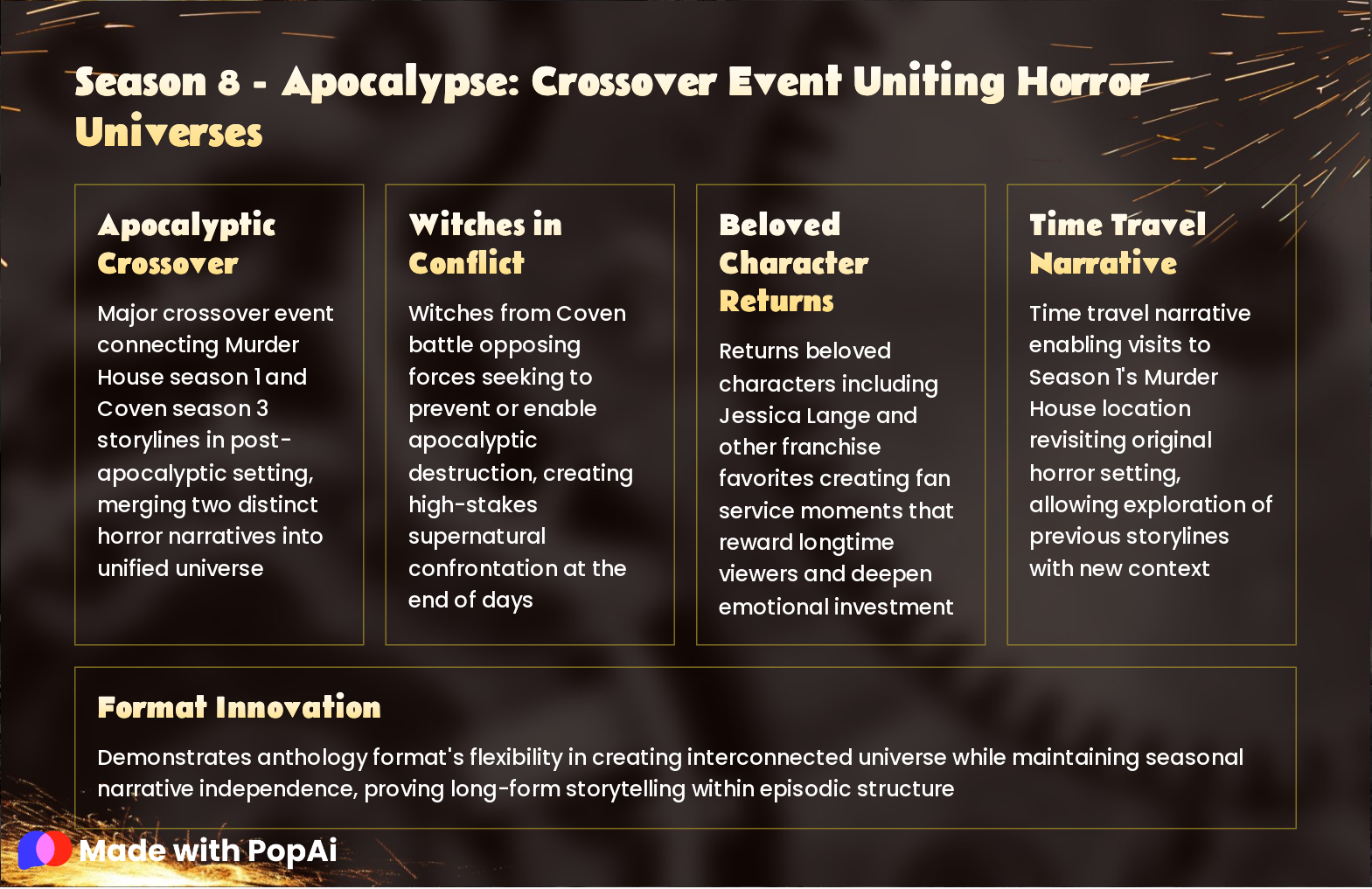
Slide 12: Season 8 - Apocalypse: Crossover Event Uniting Horror Universes
- Apocalyptic Crossover: Major crossover event connecting Murder House season 1 and Coven season 3 storylines in post-apocalyptic setting, merging two distinct horror narratives into unified universe
- Witches in Conflict: Witches from Coven battle opposing forces seeking to prevent or enable apocalyptic destruction, creating high-stakes supernatural confrontation at the end of days
- Beloved Character Returns: Returns beloved characters including Jessica Lange and other franchise favorites creating fan service moments that reward longtime viewers and deepen emotional investment
- Time Travel Narrative: Time travel narrative enabling visits to Season 1's Murder House location revisiting original horror setting, allowing exploration of previous storylines with new context
- Format Innovation: Demonstrates anthology format's flexibility in creating interconnected universe while maintaining seasonal narrative independence, proving long-form storytelling within episodic structure
Slide 13: Season 9 - 1984: Slasher Homage and 80s Nostalgia
- Summer Camp Setting: Summer camp setting paying homage to Friday the 13th and classic 1980s slasher film conventions
- Period-Specific Aesthetics: Period-specific aesthetics including fashion, music, and horror film tropes authentic to Reagan-era cultural moment
- Self-Aware Approach: Self-aware approach to slasher genre tropes while adding supernatural twist and moral complexity
- Reagan-Era Anxieties: Explores Reagan-era American anxieties including serial killer fascination and societal paranoia
- Ensemble Narrative: Cast navigating camp counselor dynamics and supernatural vengeance creating ensemble horror narrative
Slide 14: Season 10 - Double Feature: Dual Narratives and Creative Ambition
- Unique Two-Part Structure: Red Tide and Death Valley offering dual horror experiences with distinct stories and separate narrative worlds
- Red Tide: Explores artistic ambition, creative desperation, and vampirism metaphor in an isolated coastal town setting
- Death Valley: Tackles alien abduction conspiracy theories and government secrecy themes in a different horror framework
- Thematic Connection: Examines the cost of greatness and dangerous human ambition across both narratives and horror premises
- Experimental Format: Allows exploration of multiple horror concepts and subgenres within a single season framework
Slide 15: Season 11 - NYC: LGBTQ+ History and Urban Horror
- Historical Setting: Setting explores New York City LGBTQ+ community history and cultural challenges throughout decades
- AIDS Crisis Era: Addresses AIDS crisis era and community resilience during epidemic and systemic abandonment
- Horror and Trauma: Horror elements intertwined with real historical trauma and social oppression experienced by marginalized communities
- Authentic Representation: Representation of queer stories often neglected in mainstream horror bringing authentic narratives
- Cast and Narrative: Cast and narrative focus on authentic LGBTQ+ experiences, cultural memory, and resilience in facing adversity
Slide 16: Season 12 - Delicate: Contemporary Horror and Modern Anxieties
- Contemporary Themes: Explores themes relevant to contemporary audience experiences and evolving societal fears
- Series Evolution: Continuation of series' evolution addressing current cultural zeitgeist and modern concerns
- Storytelling Innovation: Maintains anthology format while incorporating innovative storytelling techniques suited to current television landscape
- Franchise Relevance: Demonstrates franchise's ongoing relevance and adaptability in addressing contemporary social issues through horror lens
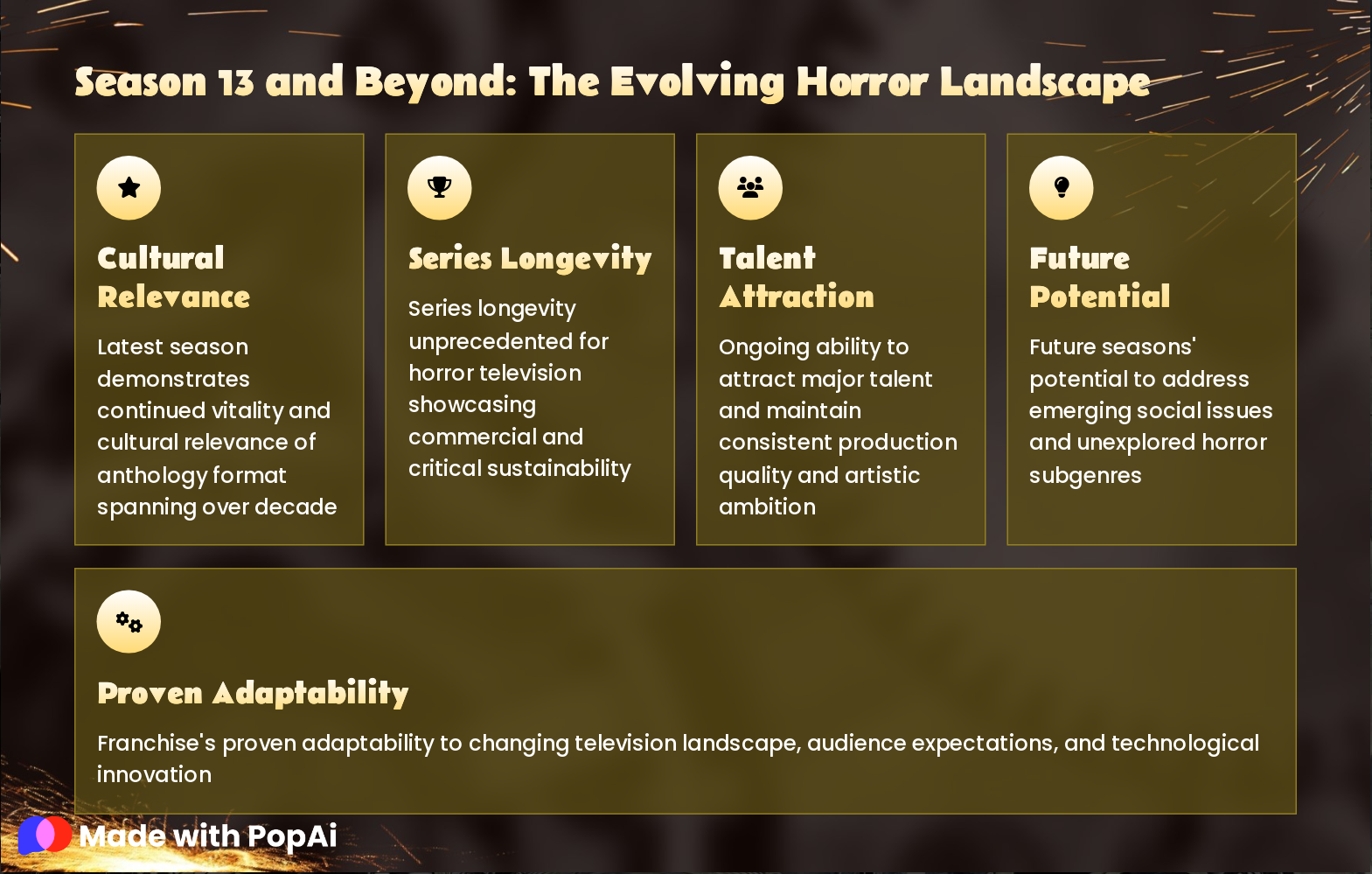
Slide 17: Season 13 and Beyond: The Evolving Horror Landscape
- Cultural Relevance: Latest season demonstrates continued vitality and cultural relevance of anthology format spanning over decade
- Series Longevity: Series longevity unprecedented for horror television showcasing commercial and critical sustainability
- Talent Attraction: Ongoing ability to attract major talent and maintain consistent production quality and artistic ambition
- Future Potential: Future seasons' potential to address emerging social issues and unexplored horror subgenres
- Proven Adaptability: Franchise's proven adaptability to changing television landscape, audience expectations, and technological innovation
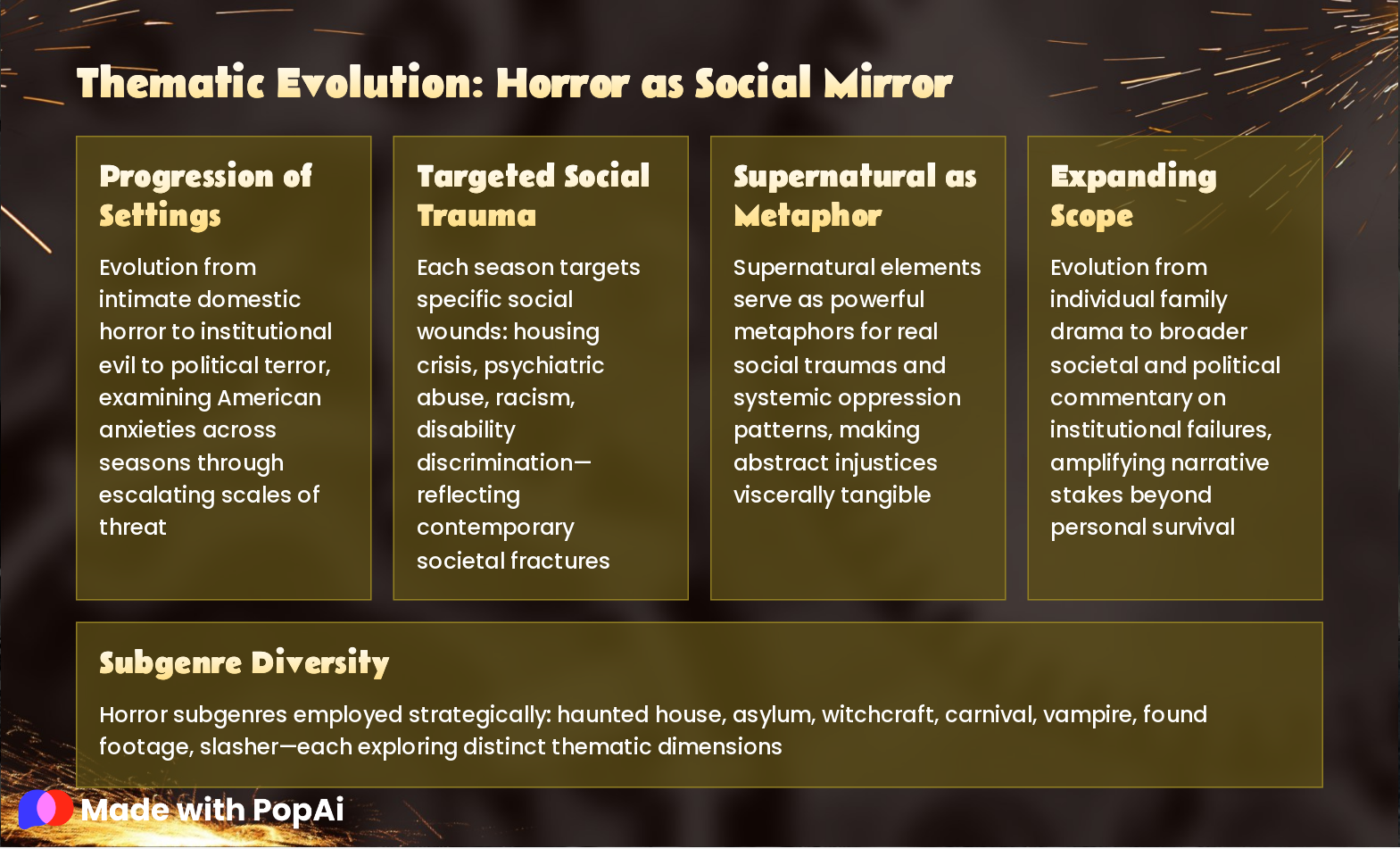
Slide 18: Thematic Evolution: Horror as Social Mirror
- Progression of Settings: Evolution from intimate domestic horror to institutional evil to political terror, examining American anxieties across seasons through escalating scales of threat
- Targeted Social Trauma: Each season targets specific social wounds: housing crisis, psychiatric abuse, racism, disability discrimination—reflecting contemporary societal fractures
- Supernatural as Metaphor: Supernatural elements serve as powerful metaphors for real social traumas and systemic oppression patterns, making abstract injustices viscerally tangible
- Expanding Scope: Evolution from individual family drama to broader societal and political commentary on institutional failures, amplifying narrative stakes beyond personal survival
- Subgenre Diversity: Horror subgenres employed strategically: haunted house, asylum, witchcraft, carnival, vampire, found footage, slasher—each exploring distinct thematic dimensions
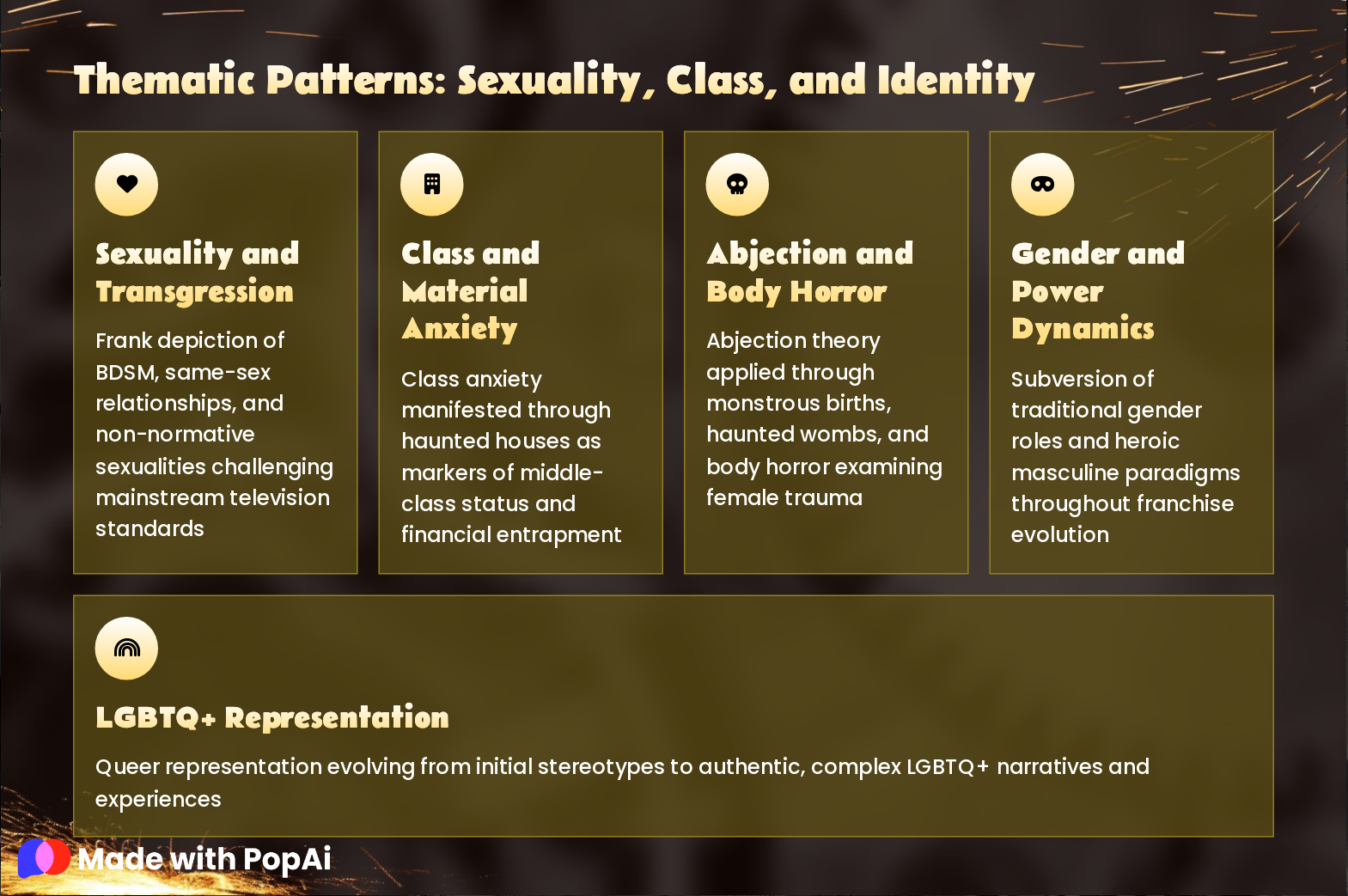
Slide 19: Thematic Patterns: Sexuality, Class, and Identity
- Sexuality and Transgression: Frank depiction of BDSM, same-sex relationships, and non-normative sexualities challenging mainstream television standards
- Class and Material Anxiety: Class anxiety manifested through haunted houses as markers of middle-class status and financial entrapment
- Abjection and Body Horror: Abjection theory applied through monstrous births, haunted wombs, and body horror examining female trauma
- Gender and Power Dynamics: Subversion of traditional gender roles and heroic masculine paradigms throughout franchise evolution
- LGBTQ+ Representation: Queer representation evolving from initial stereotypes to authentic, complex LGBTQ+ narratives and experiences
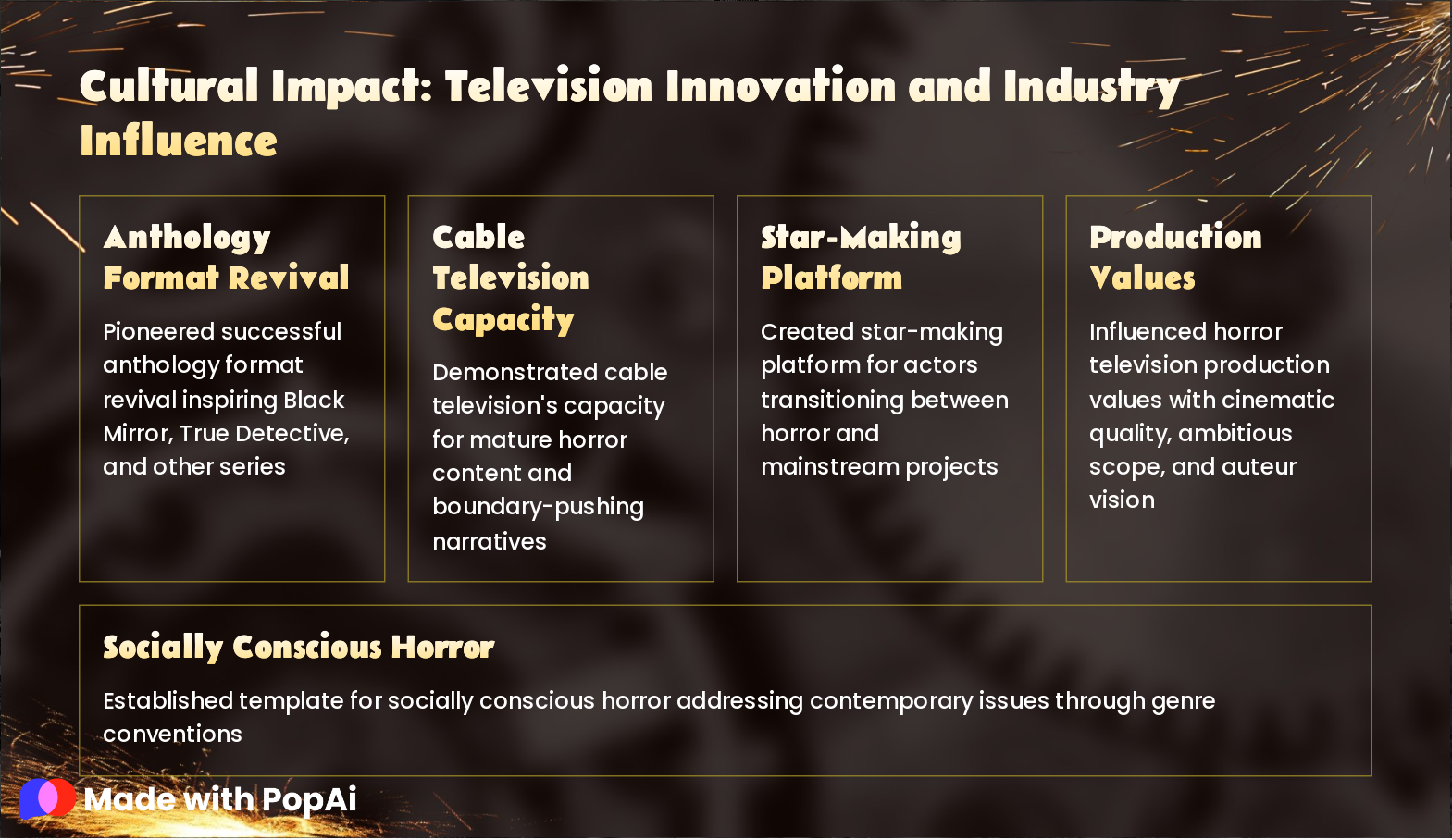
Slide 20: Cultural Impact: Television Innovation and Industry Influence
- Anthology Format Revival: Pioneered successful anthology format revival inspiring Black Mirror, True Detective, and other series
- Cable Television Capacity: Demonstrated cable television's capacity for mature horror content and boundary-pushing narratives
- Star-Making Platform: Created star-making platform for actors transitioning between horror and mainstream projects
- Production Values: Influenced horror television production values with cinematic quality, ambitious scope, and auteur vision
- Socially Conscious Horror: Established template for socially conscious horror addressing contemporary issues through genre conventions
Slide 21: Representation and Legacy: Changing Horror Demographics
- LGBTQ+ Representation: Groundbreaking LGBTQ+ representation with major characters, authentic storylines, and nuanced narratives
- Disability Representation: Disability representation in Freak Show challenging historical exploitation narratives and entertainment conventions
- Racial Justice Themes: Racial justice themes particularly in Coven examining historical slavery and contemporary racism intersections
- Female-Centered Narratives: Female-centered narratives subverting traditional horror genre's treatment of women as victims
- Breaking Social Taboos: Mainstream platform for discussions of abortion, addiction, mental illness, and sexual trauma breaking taboos
Slide 22: Critical Reception: Uneven Excellence and Artistic Risks
- Season Variation: Individual season reception varied significantly from critical acclaim to mixed reviews reflecting experimentation
- Strongest Seasons: Murder House and Asylum frequently cited as strongest seasons with sustained quality and narrative coherence
- Coven Reception: Coven praised for camp entertainment value and shocking moments despite loose plotting and narrative inconsistency
- Groundbreaking Status: Overall recognition as groundbreaking television despite inevitable quality variations across thirteen seasons
- Critical Validation: Emmy nominations and wins validating artistic achievement demonstrating recognition beyond horror genre fans
Slide 23: Fan Culture and Lasting Influence: Building Horror Community
- Devoted Fan Base: Engaged audiences return across seasons despite anthology format challenges to continuity and character investment
- Online Communities: Fans analyze thematic connections between seasons and theorize future creative directions through digital platforms
- Crossover Events: Episodes like Apocalypse reward long-term audience investment by creating a cohesive universe connecting multiple seasons
- Merchandise and Conventions: Fan art, collectibles, and convention appearances demonstrate cultural penetration extending far beyond television screens
- Broader Cultural Impact: Series influenced horror aesthetic in fashion, music, and visual arts creating trendsetting style across media and society
Slide 24: Conclusion: American Horror Story's Enduring Legacy
Conclusion: American Horror Story's Enduring Legacy Thirteen seasons of groundbreaking horror television demonstrating unprecedented longevity in anthology format. Successfully balanced commercial success with artistic experimentation and socially conscious storytelling. Transformed horror from nich...