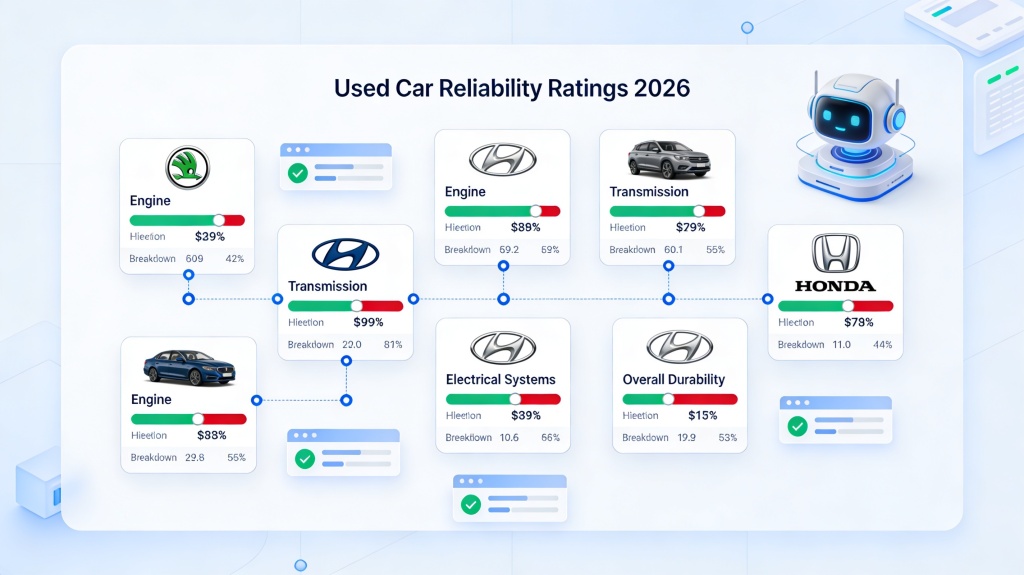
For automotive analysts, fleet managers, and consumer advocates, the release of the Used Car Reliability Ratings 2026 marks a pivotal moment in the industry. As the market matures with a heavy influx of second-hand electric vehicles and complex hybrid systems, presenting this data clearly is more challenging than ever. If you are struggling to condense thousands of data points into a persuasive deck, leveraging an AI for PowerPoint tool is no longer a luxury—it is a necessity.
The Landscape of Used Car Reliability Ratings in 2026
The 2026 report highlights a paradigm shift. We are no longer just looking at engine wear and transmission slips. Instead, the reliability metrics now heavily weight software stability, battery degradation cycles, and the longevity of Advanced Driver Assistance Systems (ADAS). For presenters, this means moving away from simple "top 10" lists and toward nuanced, multi-dimensional data stories.
- EV Battery Longevity: Data now tracks 5-year degradation across major brands like Tesla, Rivian, and Ford.
- Software Glitches: Over-the-air (OTA) update failures have become a primary reliability concern.
- Traditional ICE Resilience: How older internal combustion engines are holding up against modern fuel efficiency standards.
Why Traditional Data Entry for Automotive Slides is Failing
Manually copying reliability scores from a spreadsheet into PowerPoint is a recipe for error and exhaustion. In 2026, the volume of data is simply too high. When you have to compare the reliability of 50 different SUV models across 12 different categories, a manual approach leads to cluttered slides that lose the audience's attention.
Furthermore, static charts fail to capture the dynamic nature of the 2026 market. Stakeholders want to see trends, not just snapshots. Without the help of intelligent automation, creating these comparative visualizations can take days, often resulting in "death by PowerPoint" where the core message—which cars are actually safe to buy—is buried under a mountain of text.
Pro Tip: Don't let your data get dusty. Use PopAi's AI presentation tools to instantly convert your raw CSV automotive data into interactive, visual slides that highlight the most critical reliability outliers.
Leveraging AI for PowerPoint to Visualize Complex Metrics
This is where AI for PowerPoint transforms the workflow. Modern AI tools can ingest complex datasets and automatically identify the "story" within the numbers. For instance, an AI can detect that a specific brand's reliability rating has dropped significantly due to infotainment failures and automatically suggest a slide layout that emphasizes this trend.
By using AI, you can generate heatmaps of reliability across different geographic regions or vehicle age brackets. Instead of building a bar chart from scratch, you prompt the AI: "Create a comparison slide of 2026 compact EV reliability vs. hybrid counterparts," and the tool handles the formatting, color-coding, and iconography in seconds.
Step-by-Step: Transforming Raw Ratings into Persuasive Slides
To create a high-impact presentation for the 2026 ratings, follow this optimized workflow:
- Data Aggregation: Export your reliability data into a clean format (CSV or JSON). Ensure columns are clearly labeled (e.g., Brand, Model, Year, Reliability Score).
- AI Ingestion: Upload the file to your AI presentation maker. Use a prompt to define the objective: "Analyze this 2026 used car data to find the top 3 most improved brands."
- Visual Refinement: Allow the AI to generate the initial slide deck. Look for slides that use icons to represent vehicle types, making the data instantly recognizable.
- Contextual Commentary: Add your expert insights. The AI provides the data visualization; you provide the "why" behind the numbers.
Design Best Practices for Automotive Data Presentations
When presenting car data, visual consistency is key. Use high-quality imagery that matches the professional tone of the reliability ratings. Avoid generic clip art; instead, use AI-generated images that reflect modern 2026 vehicle aesthetics.
Focus on "Data-to-Ink" ratio. Remove unnecessary gridlines and decorations. In the 2026 automotive world, speed and efficiency are the themes—your slides should reflect that. Use bold colors to highlight "Warning" zones (low reliability) and calming greens for "Best Buys."
The Future of AI-Driven Market Analysis
As we look beyond 2026, the integration of AI in presentation design will only deepen. We are moving toward real-time decks that update as new reliability data flows in from connected vehicle fleets. By mastering these tools today, you position yourself as a forward-thinking professional capable of translating the complex language of automotive engineering into actionable consumer advice.
Frequently Asked Questions
How can AI for PowerPoint help with complex automotive data?
AI tools can automatically parse CSV or Excel data regarding vehicle reliability, generate comparative charts, and suggest layouts that highlight the most critical insights for your audience, saving hours of manual formatting.
What are the key reliability trends for used cars in 2026?
In 2026, the focus has shifted toward long-term battery health in early-gen EVs and the software stability of connected vehicle systems, which are now major factors in overall reliability ratings.
Can I use AI to generate car images for my presentation?
Yes, many modern AI presentation tools include integrated image generation that allows you to create high-quality, consistent visuals of specific car models or abstract automotive concepts without searching for stock photos.
Create your presentation with one click now
Transform your raw 2026 car reliability data into a professional, boardroom-ready deck in seconds using PopAi's advanced AI engine.
Get Started for Free