PowerPoint Creator AI: Revolutionize Your Workflow

Published on May 25, 2026
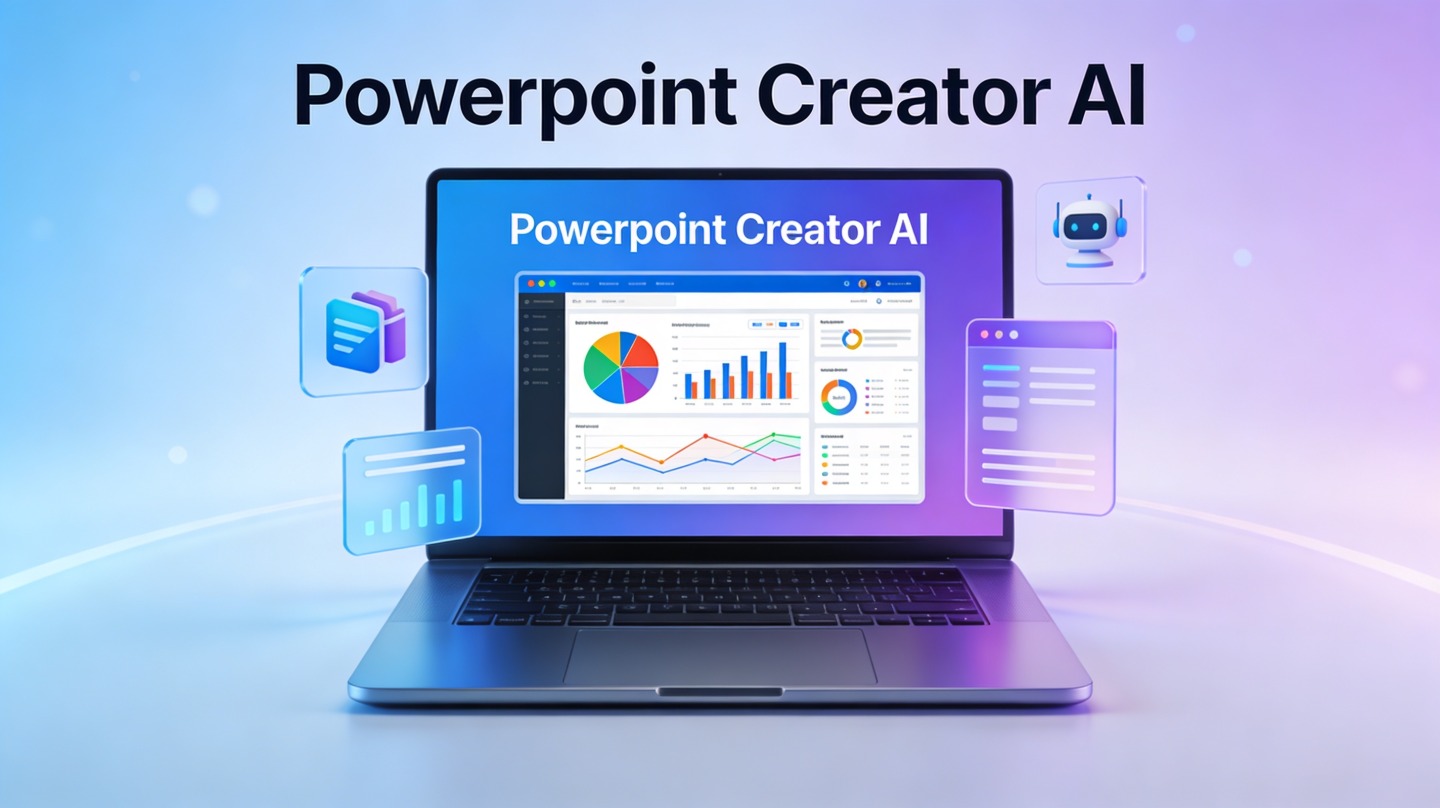
PowerPoint creator AI workflow dashboard for building presentation slides
A PowerPoint creator AI workflow turns scattered notes into structured, editable slide drafts.

If you are a manager, consultant, founder, educator, or analyst, the hardest part of making slides is rarely opening PowerPoint. It is turning messy notes, stakeholder feedback, screenshots, spreadsheets, and half-formed ideas into a deck that tells a clear story.

A PowerPoint creator AI helps compress that early work: outlining, slide sequencing, layout selection, rewriting, and visual cleanup. Used well, it does not remove your judgment; it gives you a stronger first draft so you can spend more time on the message.

What PowerPoint Creator AI Changes in Your Presentation Workflow

This section explains where AI actually saves time and where human control still matters.

It moves you from blank slide to structured draft

The blank-slide problem is expensive because every choice feels open: title, slide order, evidence, visuals, and hierarchy. A PowerPoint creator AI narrows those choices by creating an initial structure from your prompt, document, meeting notes, or topic.

For example, a product manager can paste sprint notes and ask for a 10-slide roadmap update. Instead of manually inventing a storyline, the AI can group content into context, progress, blockers, priorities, timeline, and decisions needed.

It helps standardize quality across busy teams

Most organizations have a hidden presentation problem: some people make clean executive decks, while others produce overloaded slides with inconsistent formatting. AI-assisted slide creation can make the baseline more consistent by applying repeatable structure and design rules.

AI is most useful when it handles repeatable presentation labor: first drafts, slide hierarchy, visual balance, and rewrite options. Strategy, accuracy, and final judgment still belong to the presenter.

Microsoft’s 2023 Work Trend Index reported that 64% of surveyed employees said they struggled with having enough time and energy to do their job. That context matters: presentation work often happens after the “real” work is done. If AI removes even one revision loop from a recurring status deck, the time saved becomes meaningful across a quarter.

A PowerPoint Creator AI Workflow for Faster Decks

Use this practical workflow when you need a polished deck without losing control of the narrative.

Step 1: Define the decision before the slides

Before generating anything, write one sentence: “After this presentation, the audience should decide, understand, approve, or do what?” That sentence becomes the deck’s quality filter.

  • Bad prompt: “Make a marketing presentation.”
  • Better prompt: “Create a 12-slide Q3 marketing review for executives, focused on pipeline contribution, campaign performance, budget tradeoffs, and decisions needed for Q4.”

Step 2: Feed the AI real source material

The stronger the input, the stronger the first draft. Provide notes, tables, outlines, product descriptions, audience type, tone, slide count, and must-include evidence. If you only provide a vague topic, expect a generic deck.

Tools like PopAi AI Presentation are most useful when you treat them as a structured drafting partner: give the product your raw material, then refine the generated deck based on your audience and business goal.

Step 3: Review in three passes

  1. Story pass: Does the deck answer the audience’s main question?
  2. Evidence pass: Are claims, numbers, labels, and sources correct?
  3. Design pass: Is each slide readable within a few seconds?

Pro Tip: If you need a fast first version, generate the structure in PopAi’s AI presentation maker, then spend your editing time on proof, examples, and executive relevance.

Turn Rough Inputs Into a Clear Slide Structure

The fastest decks start with clear information architecture, not decoration.

Use a repeatable deck spine

A reliable deck spine prevents rambling. For business presentations, a useful pattern is: situation, insight, implication, recommendation, proof, action. For training decks, use: objective, concept, example, exercise, recap, next step.

This is where AI can outperform a rushed human first draft. It can quickly propose several narrative paths, helping you compare whether the deck should be problem-solution, before-after, timeline-based, or recommendation-led.

AI generated presentation outline transforming notes into PowerPoint slide sections
Strong prompts help AI transform rough inputs into a logical presentation outline.

Match slide types to the job

Not every point deserves a title-and-bullets slide. Ask the AI for specific slide types based on the content: comparison table, timeline, process diagram, KPI dashboard, quote slide, decision slide, or appendix page.

Content need Best slide type What to check manually
Compare vendors or options Decision matrix Criteria weighting and fair scoring
Show progress over time Timeline or milestone slide Dates, dependencies, and ownership
Explain a complex workflow Process diagram Step order and missing handoffs
Summarize business performance KPI dashboard Metric definitions and source accuracy

Design, Edit, and Brand Controls That Matter

AI design is valuable only when it improves readability and stays aligned with your brand.

Prioritize visual hierarchy over decoration

A good AI-generated slide makes the most important idea obvious. Look for a clear headline, one dominant visual or data point, supporting evidence, and enough whitespace. If the slide requires a full explanation before the audience understands it, simplify it.

The Web Content Accessibility Guidelines recommend a minimum contrast ratio of 4.5:1 for normal text. That number is useful in presentation design too: attractive slides still fail if people in the back of the room or on a small laptop cannot read them.

Build a simple brand checklist

Before exporting or presenting, review brand consistency. AI can help apply styles, but teams should still keep a short checklist:

  • Logo placement follows company rules.
  • Colors match approved brand palettes.
  • Fonts are readable and available on the presenting device.
  • Charts use consistent labels, units, and legends.
  • Image style feels cohesive across the deck.
Do not judge an AI deck by how “designed” it looks. Judge it by whether the audience can understand the point, trust the evidence, and act on the recommendation.

Practical Use Cases for Busy Teams

PowerPoint creator AI is strongest when the task has a clear purpose and repeated structure.

Executive updates

Executive audiences need signal, not detail. AI can compress weekly notes into a short update deck with sections for wins, risks, metrics, and decisions. The presenter should then cut anything that does not support action.

Sales and pitch decks

Sales teams can generate first drafts tailored by industry, buyer persona, pain point, and product use case. The human step is crucial: replace generic claims with customer-specific proof, credible screenshots, and relevant business outcomes.

Training and education decks

Educators and enablement teams can use AI to turn documents into lesson structures, examples, quizzes, and recap slides. This is useful when the source material is dense and the audience needs a guided path through it.

Team reviewing AI created PowerPoint slides for business presentation workflow
Teams get the best results when they review AI-created slides for accuracy, audience fit, and actionability.

Mistakes to Avoid With PowerPoint Creator AI

A faster workflow can still produce weak slides if you skip review and strategy.

Mistake 1: Accepting generic messaging

AI may produce polished language that sounds plausible but says little. Replace broad claims like “improves efficiency” with specific outcomes, examples, and proof from your own context.

Mistake 2: Overloading slides with AI output

Because AI can generate content quickly, it is easy to create too many words. Use the slide headline to state the point, then keep body text selective. Move detail into speaker notes or an appendix.

Mistake 3: Skipping source verification

Never treat generated numbers, market claims, or citations as final. Check every data point against the original source. For executive, investor, academic, or client-facing decks, assign a named reviewer for facts before the deck is shared.

Mistake 4: Forgetting the presenter’s voice

A deck should sound like the person or team presenting it. Edit headlines, transitions, examples, and recommendations until they match your natural speaking style and your organization’s point of view.

FAQ: PowerPoint Creator AI Questions

These are the most common questions teams ask before adding AI to their presentation process.

Can PowerPoint creator AI replace a presentation designer?

It can handle first drafts, structure, layout suggestions, and repetitive formatting, but a designer or subject expert should still review brand nuance, complex visuals, executive messaging, and final polish for high-stakes decks.

What inputs should I give an AI tool before creating slides?

Provide the audience, objective, decision you want, source notes, must-include data, tone, brand preferences, slide count, and any constraints. Better inputs produce a more accurate first draft and fewer revision cycles.

How do I keep AI-generated PowerPoint slides accurate?

Treat the AI output as a draft. Verify every claim against original documents, replace vague numbers with sourced metrics, check chart labels, and assign a human owner for the final fact review.

Is PowerPoint creator AI useful for non-designers?

Yes. It is especially useful for managers, consultants, educators, and founders who know the message but do not want to spend hours choosing layouts, building slide hierarchy, and reformatting decks.

Create your presentation with one click now

Turn your notes, documents, or ideas into a structured presentation draft, then refine the message, visuals, and flow for your audience.

Start creating with PopAi

Maya Chen

Maya Chen is a presentation workflow strategist specializing in AI-assisted deck creation, executive storytelling, and slide systems for business, education, and startup teams.

Related Articles