AI Proposal Deck Generator: Client Template and Examples
Updated August 17, 2026 · Elena Vance
An AI proposal deck generator helps freelancers, agencies, consultants, and sales teams turn discovery notes into a client-centered proposal that moves from pain and desired outcome to proof, scope, pricing, and action.
This guide provides target scenarios, a reusable slide-by-slide template, copyable prompt, example copy, presentation checks, FAQ, and a direct path to the PopAi presentation workflow.
AI Proposal Deck Generator: Start with the Client's Decision
A strong proposal is client-centered, not an extended About Us deck. It proves that you understand the current state, can deliver a credible transformation, and have made the next step easy to approve.
Target Users and Proposal Scenarios
- Agencies proposing a campaign, redesign, or growth engagement.
- Consultants presenting a diagnostic, roadmap, and implementation plan.
- Freelancers packaging scope, timeline, proof, and pricing.
- Sales teams converting discovery notes into a tailored solution deck.
Recommended Client Proposal Deck Template
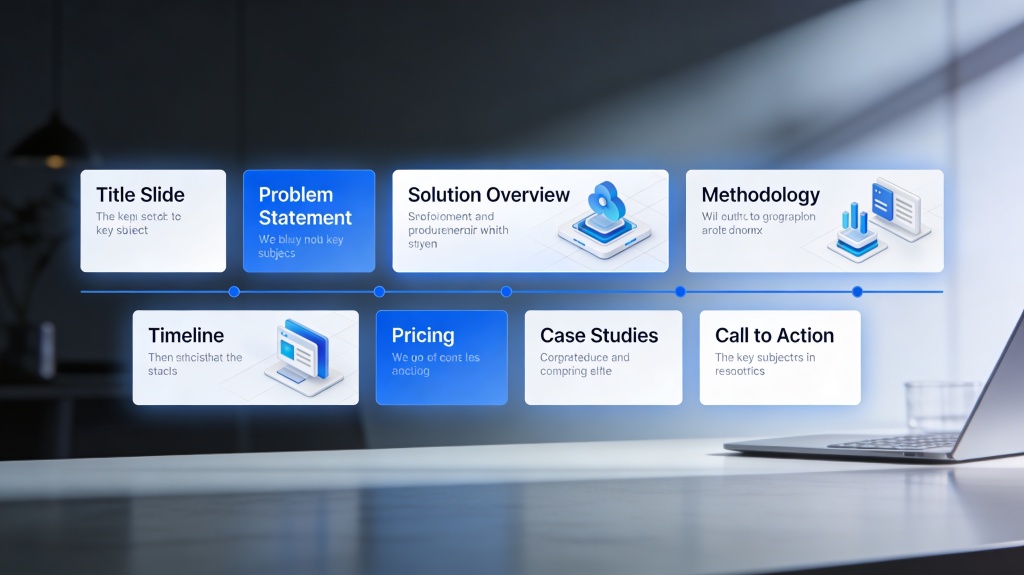
| Slide | Purpose | What to include |
|---|---|---|
| 1. Title | Frame the engagement | Client, project, outcome, and presenter |
| 2. Current state | Show understanding | Client pain in the client's language |
| 3. Desired state | Define success | Business outcome and measurable target |
| 4. Insight | Reframe the problem | Root cause or opportunity |
| 5. Solution | Present the approach | Value proposition and deliverables |
| 6. Roadmap | Make delivery tangible | Phases, milestones, and owners |
| 7. Proof | Reduce risk | Relevant case study, metric, or testimonial |
| 8. Scope | Set boundaries | Included work, assumptions, and exclusions |
| 9. Investment | Make the choice clear | Pricing tiers and value |
| 10. Next step | Create momentum | Decision, signature, kickoff, and date |
AI Prompt and Client Proposal Examples
Example: marketing agency retainer
Current state: paid acquisition costs rose 22% while landing-page conversion stayed flat. Proposal: a 90-day message, creative, and landing-page testing sprint with weekly reporting and a clear owner.
Example: operations consulting project
Current state: three teams maintain separate spreadsheets and lose two days each month reconciling reports. Proposal: discovery, process mapping, dashboard pilot, training, and a measured rollout.
How to Present, Edit, and Follow Up
- Present live before sending the PDF so pricing has business context.
- Use one takeaway per slide and move technical detail to an appendix.
- Replace generic claims with relevant proof and verified metrics.
- Show two or three pricing choices only when the scope supports them.
- End with an owner, decision, date, and immediate kickoff action.
For objection handling, review the AI sales deck generator. For broader planning, use the AI business plan deck generator.
Frequently Asked Questions
What is an AI proposal deck generator?
It turns client discovery notes, solution details, proof, scope, timeline, and pricing into a structured proposal presentation draft.
How many slides should a client proposal include?
Most proposals work well at 10 to 15 core slides plus an appendix for technical detail, terms, or supporting evidence.
What should every proposal deck include?
Include the client's current state, desired outcome, solution, roadmap, proof, scope, investment, risks, and a specific next step.
Should I send the proposal before the meeting?
Present it live first when possible, then send a PDF follow-up so the client understands the value and context before reviewing price.