PopAi is our pick for turning campaign briefs and reports into presentation drafts; Canva for a broader marketing design ecosystem; Plus AI for PowerPoint and Google Slides workflows; and Gamma for web-first presentation sharing. Those are the four starting recommendations for marketers in 2026, with a different choice depending on what the team needs to deliver.
A campaign planning deck, a monthly performance review, and a link-based sales narrative should not all be judged by the same feature. The comparison below explains why each tool earns a place, which marketing task fits it, and when another option is the better match.
Best AI presentation makers for marketers: quick comparison
"Best for" means our editorial recommendation for that workflow, based on linked product capabilities rather than invented test scores.
| Tool | Best for | Our reason to choose it | When to choose an alternative |
|---|---|---|---|
| PopAi | Campaign briefs and reports to slides | A source-to-outline-to-deck workflow puts structure before final design. | Choose Plus AI for ongoing edits to an approved native deck. |
| Canva | Marketing design across formats | Brand Kit supports a shared visual identity beyond the presentation. | Choose PopAi when restructuring a long source document is the main job. |
| Plus AI | PowerPoint and Google Slides teams | Its marketing workflow fits native slide authoring and revision. | Choose Gamma when the main deliverable is a web reading link. |
| Gamma | Web-first presentations and sharing | Sharing permissions support a browser-based handoff. | Choose Plus AI when the recipient expects to keep editing a native file. |
Our four recommendations in detail
PopAi: best for turning campaign briefs and reports into slides
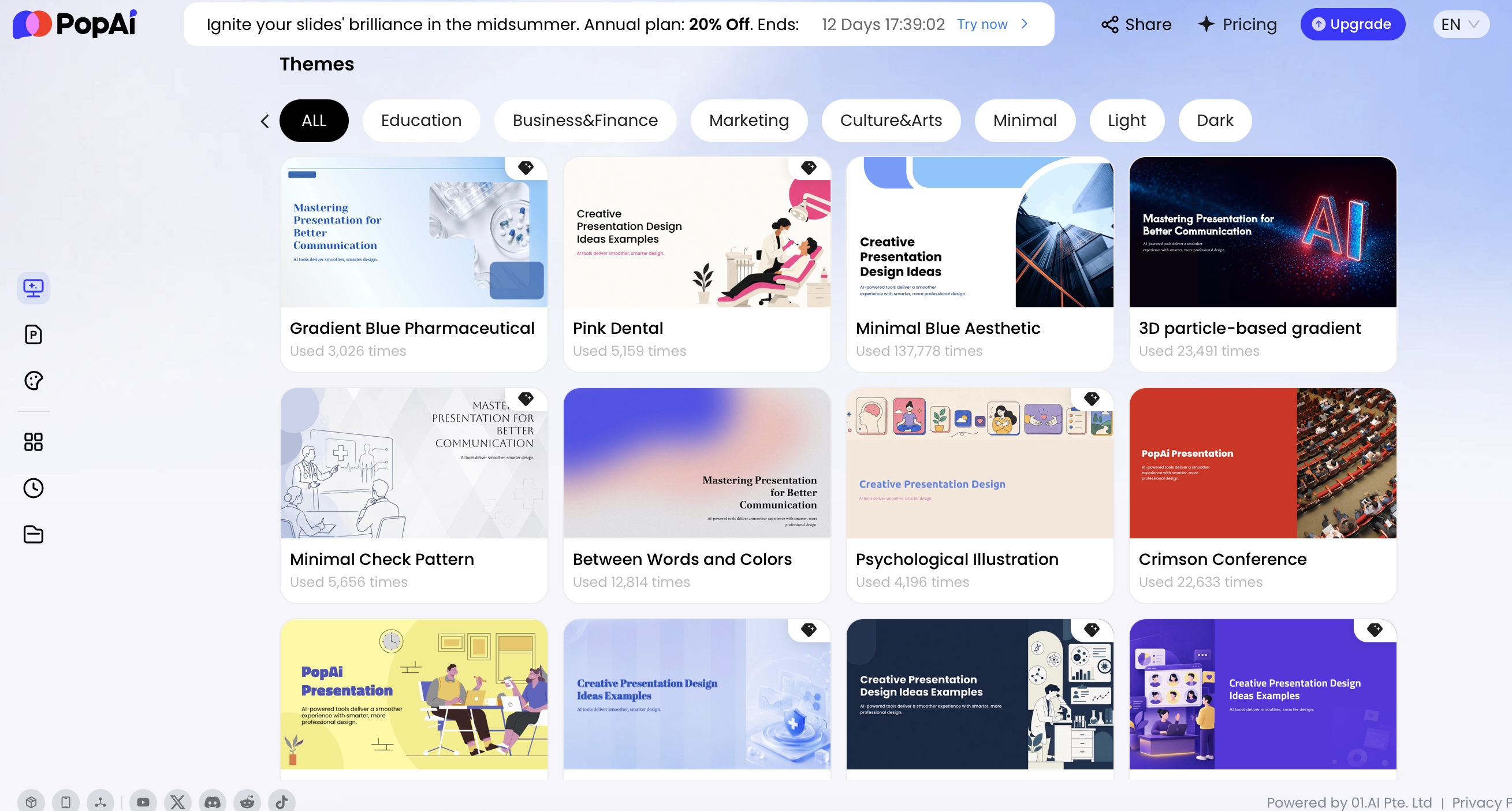
Choose PopAi when the story is distributed across a brief, approved report, and meeting notes. Its presentation workflow supports drafting from source material and reviewing the outline before the finished slide design. That is the capability behind this recommendation, not a claim of superior campaign analysis.
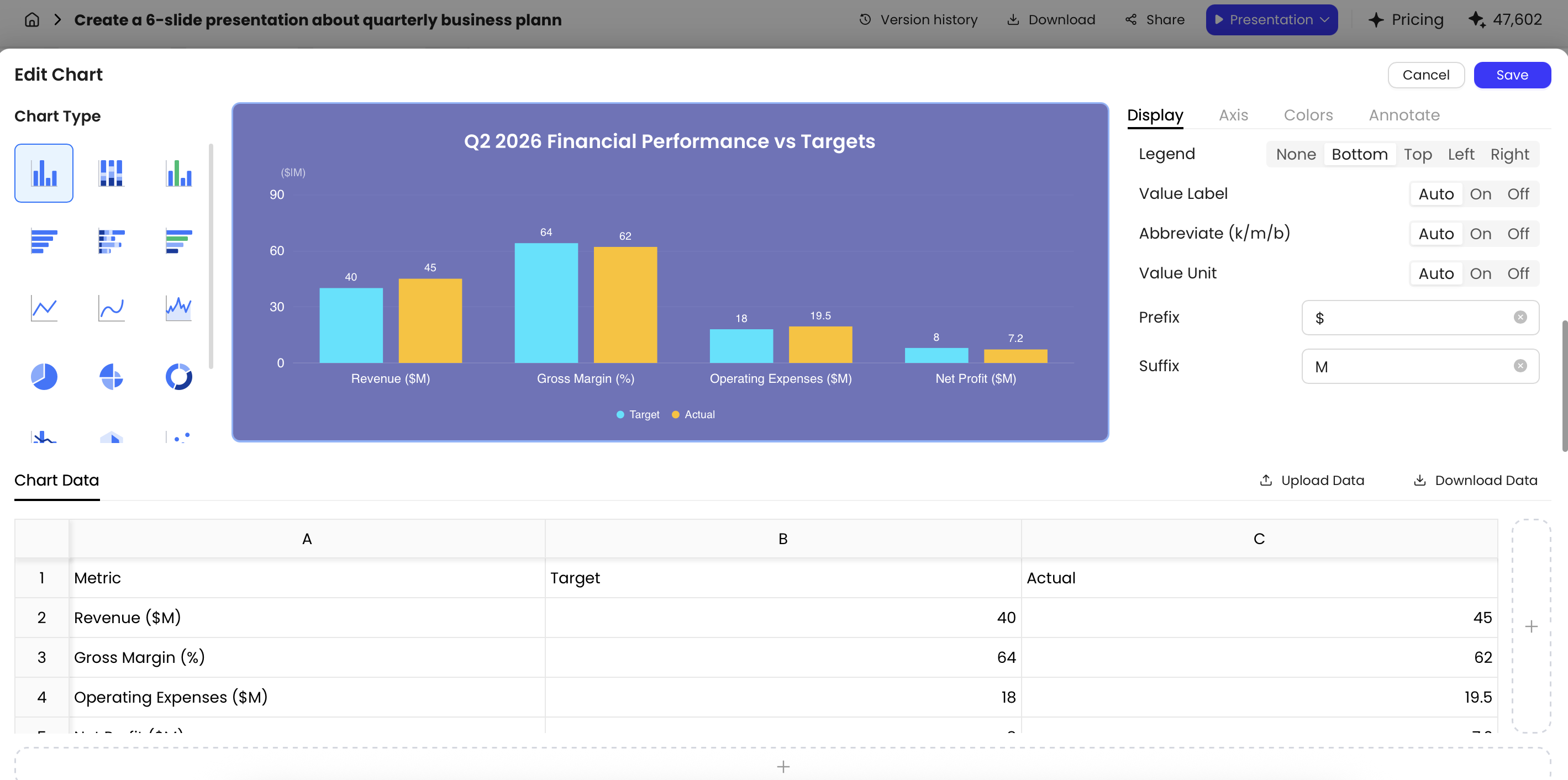
For a monthly channel review, our suggested route is to prepare the approved numbers and ask for a decision-led narrative: what changed, what the evidence supports, what remains uncertain, and what to do next. A content-first draft is more useful here than starting with a visually impressive cover and fitting the report around it.
Choose another tool when: the client's PowerPoint structure is fixed and most slides are already approved. Plus AI is the more direct recommendation for that native revision task. PopAi is the source-to-draft pick, not an asserted replacement for analytics software or attribution review.
Canva: best for a marketing design ecosystem
Choose Canva when a presentation is one asset within a campaign. Brand Kit organizes brand elements, while AI presentation drafting provides a starting point for slides. The reason to recommend Canva is the connection between the deck and the visual work surrounding it.
For a product launch, use the same approved product imagery and visual language across the presentation, social assets, and event material. Assign the deck a specific job: explain the positioning or secure the launch decision, rather than repeat every campaign message. This is our strongest recommendation for a visually oriented marketer who already works in Canva.
Choose another tool when: the primary requirement is a native PowerPoint or Google Slides deliverable with continuing client edits. Plus AI belongs ahead of Canva on that shortlist. Also check access to the particular brand and AI features your team needs; not every feature is included in every plan.
Plus AI: best for PowerPoint and Google Slides workflows
Choose Plus AI when the client, sales team, or leadership group already reviews decks in PowerPoint or Google Slides. Its official marketing page and native editing tools support a recommendation centered on revising the working slide artifact, rather than transferring it between editors.
For a quarterly campaign review, keep the approved structure and update the pages where the story changed. That makes it easier to focus review on the new recommendation instead of asking stakeholders to approve a redesigned deck. An established editor also matters when the next owner is someone outside your team.
Choose another tool when: the deck is primarily an asynchronous web presentation and editable-file handoff is secondary. Gamma is our recommendation for that outcome. Native authoring also does not resolve metric definitions or validate the wording of a performance claim.
Gamma: best for web-first marketing presentations
Choose Gamma when the audience should open a link and follow the narrative without waiting for a file attachment. Its creation and sharing environment fits a browser-first deliverable, with view, comment, and edit settings available for different review needs.
For a sales narrative or campaign concept, build a self-explanatory opening, put evidence beside the relevant claim, and end with one clear next action. Our recommendation is about that reading and distribution model, not proof that a deck will convert more leads.
Choose another tool when: the recipient has requested an editable slide file as the primary deliverable. Gamma offers PPTX and PDF export, but export support and native authoring are different workflows. Choose Plus AI when working directly in the required editor is the deciding factor.
Which should you use for a campaign review?
For an illustrative B2B launch review, assume the team has an approved campaign brief, channel summaries, selected creative, and a request for the next experiment. This is a proposed work scenario, not a reported product test.
Choose PopAi to turn that packet into the first narrative. Choose Canva when the narrative is settled and the launch's visual identity should carry through the deck. Choose Plus AI when the client expects the update in its established PowerPoint or Google Slides file. Choose Gamma when the review will be read and discussed through a web link.
A useful eight-part deck is: objective, audience, activity, results, attribution limits, learning, next experiment, and decision needed. The important editorial distinction is between what happened and what the team believes explains it. Do not let the slide generator collapse those into one statement.
A marketing deck needs stronger claims, not stronger adjectives
| Weak slide wording | Better editorial direction |
|---|---|
| "Paid social caused all pipeline growth." | State the attributed leads under the approved attribution model; do not present attribution as causal proof. |
| "Engagement improved to 5%." | Identify the metric, numerator, denominator, platform, and reporting period before using that figure. |
| "Next month's campaign will double results." | Label the proposed experiment, its rationale, and what result would justify expanding it. |
Use approved source notes for those changes. A prompt can ask the AI to separate reported results, interpretation, and proposed action, but the campaign owner must supply the evidence. The same review applies whichever tool you choose.
Our recommendation for marketers
Start with PopAi for brief/report-to-deck work, Canva for campaign design, Plus AI for native client deliverables, and Gamma for web-first sharing. A team does not need all four. Choose the one that fits the work you repeat most often and the format your reviewers actually use. Keep marketing judgment, brand approval, and metric interpretation with the people responsible for the campaign.
Basis and disclosure. Product documentation reviewed September 20, 2026. The "Best for" selections are editorial judgments about the stated workflows, not timed, scored, or hands-on head-to-head results. Examples are illustrative. PopAi publishes this comparison and is one of the products discussed. Confirm account, plan, and institutional requirements before adopting a tool.