Presentation Summary
Explore the significance of Passover, the Jewish festival marking liberation from slavery. Discover its biblical origins, spiritual themes, and how it shapes Jewish identity.
Full Presentation Transcript
Slide 1: Passover: The Exodus Journey from Slavery to Freedom
A comprehensive exploration of Jewish history's defining moment, biblical origins, spiritual meanings, and contemporary celebrations
Examining traditions, symbolism, cultural significance, and the enduring impact of liberation theology across millennia
Slide 2: Contents
- Definition and Historical Context: Origins and evolution of Passover traditions.
- Biblical Foundations and Theological Significance: Religious meaning and scriptural basis.
- Passover Dates and Calendar Alignment for 2025-2027: Specific dates and timing information.
- The Seder Meal Structure and Ceremonial Foods: Ritual elements and symbolic items.
- Passover Lamb Sacrifice and Spiritual Symbolism: Ancient practices and modern interpretations.
- Feast Traditions and Contemporary Observance: Modern celebrations and community practices.
- Key Takeaways and Enduring Impact: Summary and lasting significance.
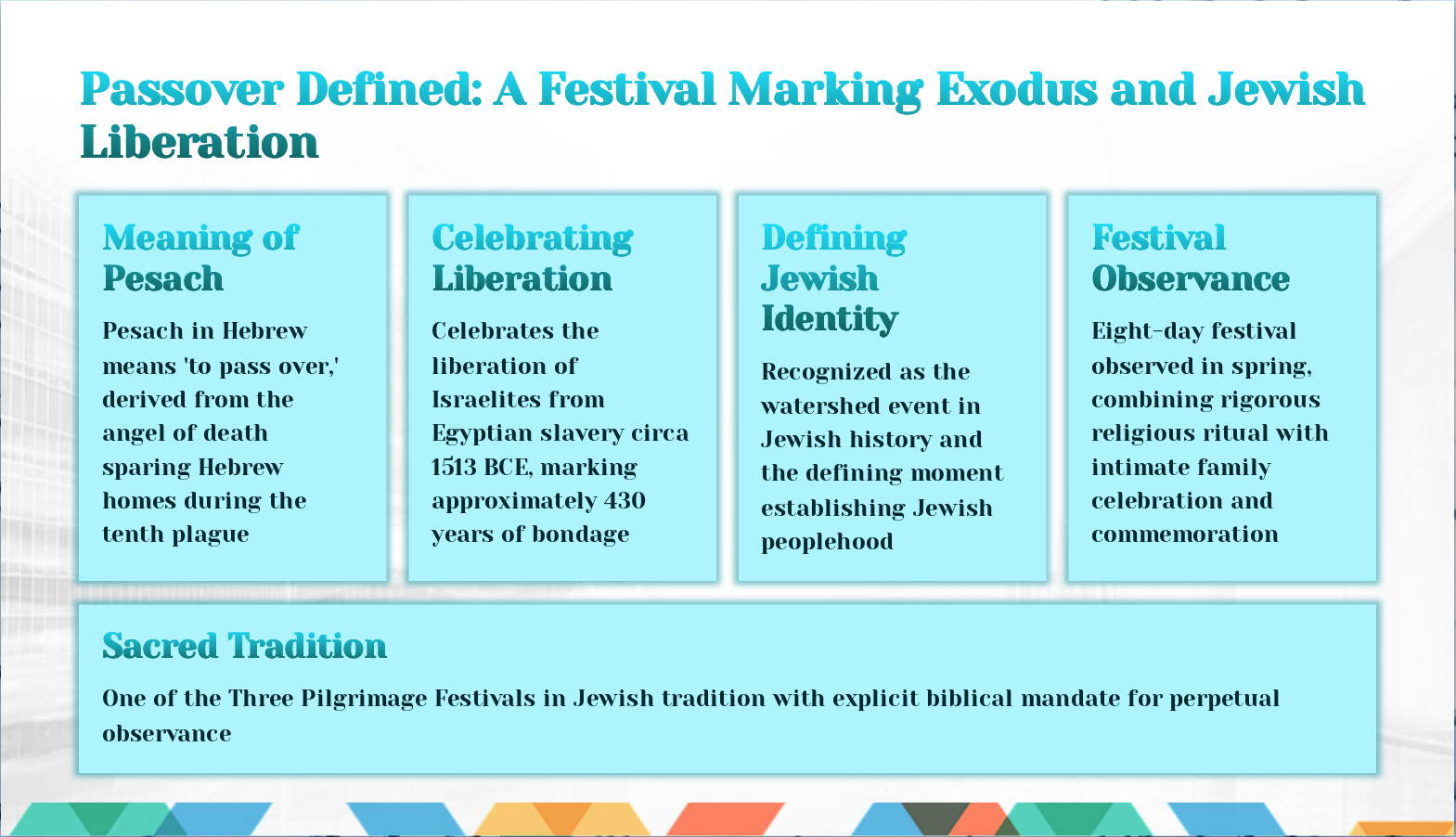
Slide 3: Passover Defined: A Festival Marking Exodus and Jewish Liberation
- Meaning of Pesach: Pesach in Hebrew means 'to pass over,' derived from the angel of death sparing Hebrew homes during the tenth plague
- Celebrating Liberation: Celebrates the liberation of Israelites from Egyptian slavery circa 1513 BCE, marking approximately 430 years of bondage
- Defining Jewish Identity: Recognized as the watershed event in Jewish history and the defining moment establishing Jewish peoplehood
- Festival Observance: Eight-day festival observed in spring, combining rigorous religious ritual with intimate family celebration and commemoration
- Sacred Tradition: One of the Three Pilgrimage Festivals in Jewish tradition with explicit biblical mandate for perpetual observance
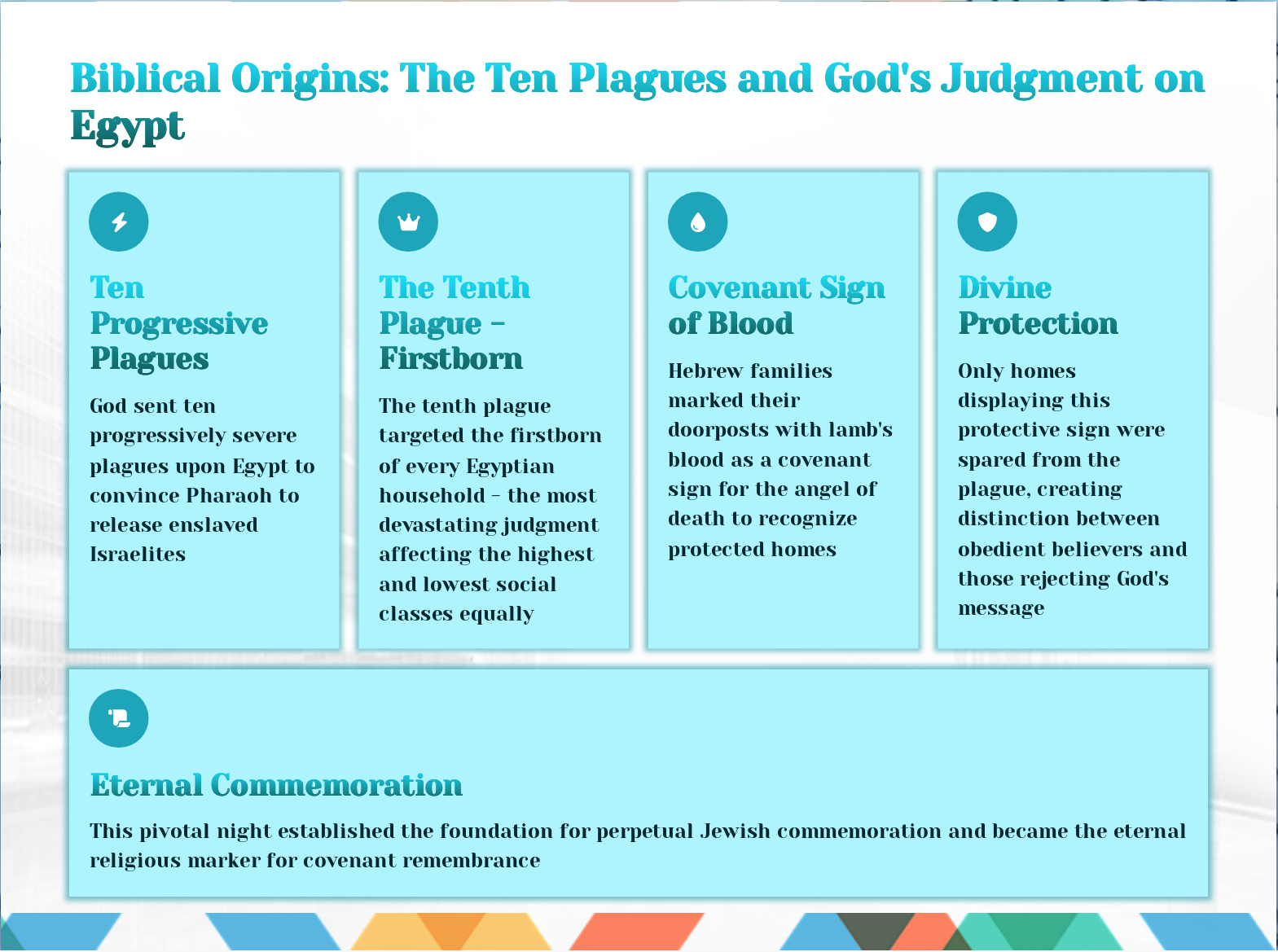
Slide 4: Biblical Origins: The Ten Plagues and God's Judgment on Egypt
- Ten Progressive Plagues: God sent ten progressively severe plagues upon Egypt to convince Pharaoh to release enslaved Israelites
- The Tenth Plague - Firstborn: The tenth plague targeted the firstborn of every Egyptian household - the most devastating judgment affecting the highest and lowest social classes equally
- Covenant Sign of Blood: Hebrew families marked their doorposts with lamb's blood as a covenant sign for the angel of death to recognize protected homes
- Divine Protection: Only homes displaying this protective sign were spared from the plague, creating distinction between obedient believers and those rejecting God's message
- Eternal Commemoration: This pivotal night established the foundation for perpetual Jewish commemoration and became the eternal religious marker for covenant remembrance
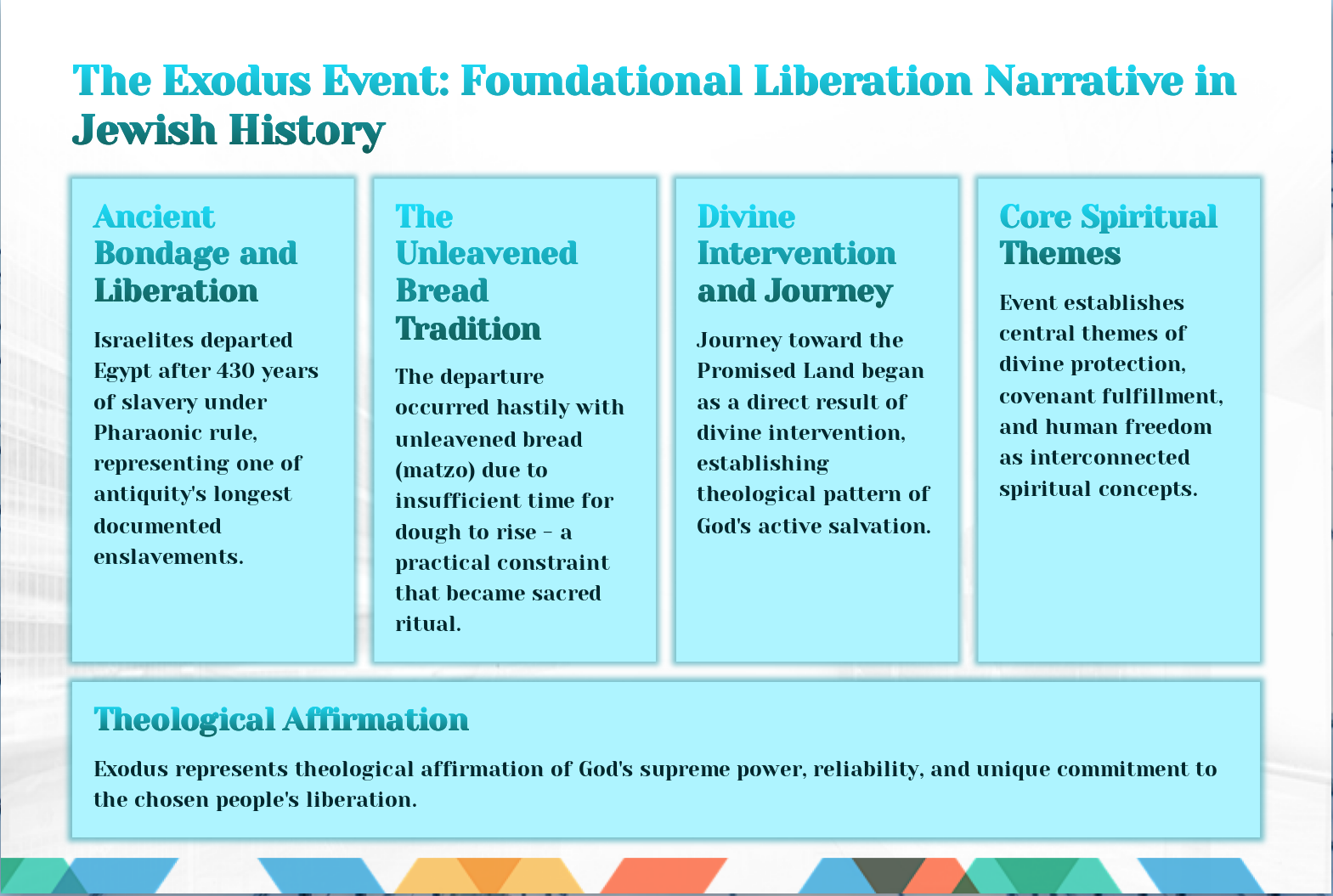
Slide 5: The Exodus Event: Foundational Liberation Narrative in Jewish History
- Ancient Bondage and Liberation: Israelites departed Egypt after 430 years of slavery under Pharaonic rule, representing one of antiquity's longest documented enslavements.
- The Unleavened Bread Tradition: The departure occurred hastily with unleavened bread (matzo) due to insufficient time for dough to rise - a practical constraint that became sacred ritual.
- Divine Intervention and Journey: Journey toward the Promised Land began as a direct result of divine intervention, establishing theological pattern of God's active salvation.
- Core Spiritual Themes: Event establishes central themes of divine protection, covenant fulfillment, and human freedom as interconnected spiritual concepts.
- Theological Affirmation: Exodus represents theological affirmation of God's supreme power, reliability, and unique commitment to the chosen people's liberation.
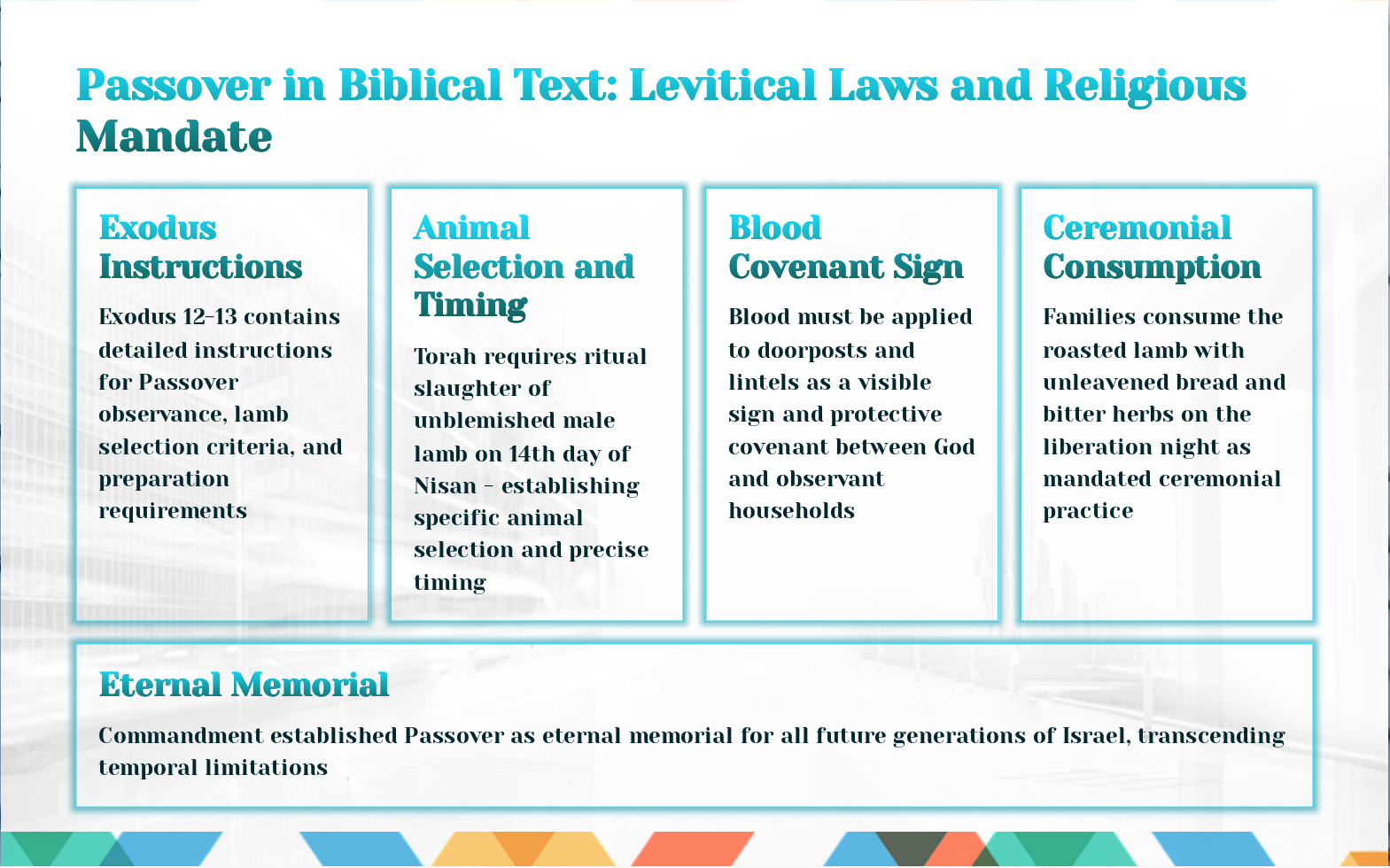
Slide 6: Passover in Biblical Text: Levitical Laws and Religious Mandate
- Exodus Instructions: Exodus 12-13 contains detailed instructions for Passover observance, lamb selection criteria, and preparation requirements
- Animal Selection and Timing: Torah requires ritual slaughter of unblemished male lamb on 14th day of Nisan - establishing specific animal selection and precise timing
- Blood Covenant Sign: Blood must be applied to doorposts and lintels as a visible sign and protective covenant between God and observant households
- Ceremonial Consumption: Families consume the roasted lamb with unleavened bread and bitter herbs on the liberation night as mandated ceremonial practice
- Eternal Memorial: Commandment established Passover as eternal memorial for all future generations of Israel, transcending temporal limitations
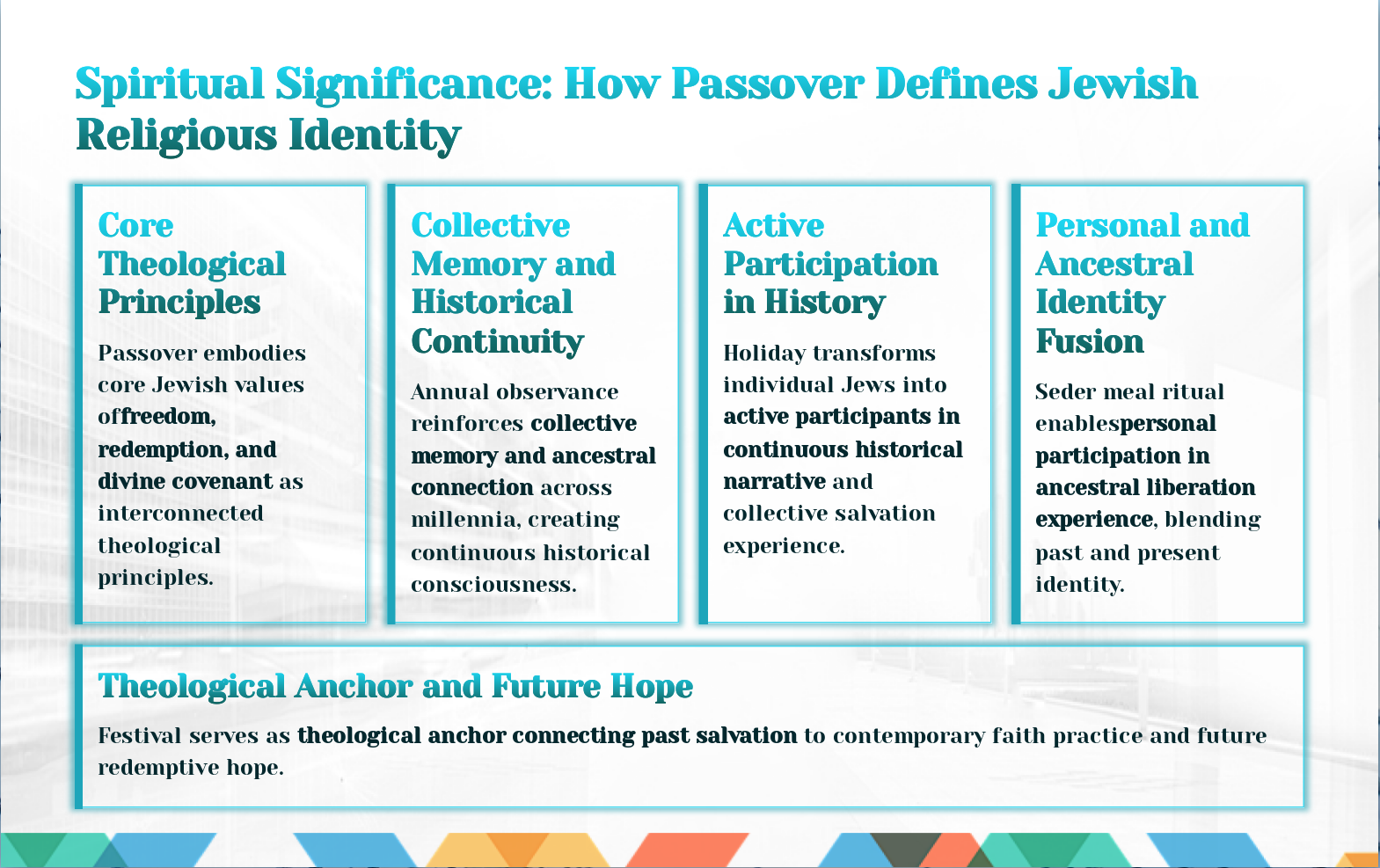
Slide 7: Spiritual Significance: How Passover Defines Jewish Religious Identity
- Core Theological Principles: Passover embodies core Jewish values of freedom, redemption, and divine covenant as interconnected theological principles.
- Collective Memory and Historical Continuity: Annual observance reinforces collective memory and ancestral connection across millennia, creating continuous historical consciousness.
- Active Participation in History: Holiday transforms individual Jews into active participants in continuous historical narrative and collective salvation experience.
- Personal and Ancestral Identity Fusion: Seder meal ritual enables personal participation in ancestral liberation experience , blending past and present identity.
- Theological Anchor and Future Hope: Festival serves as theological anchor connecting past salvation to contemporary faith practice and future redemptive hope.
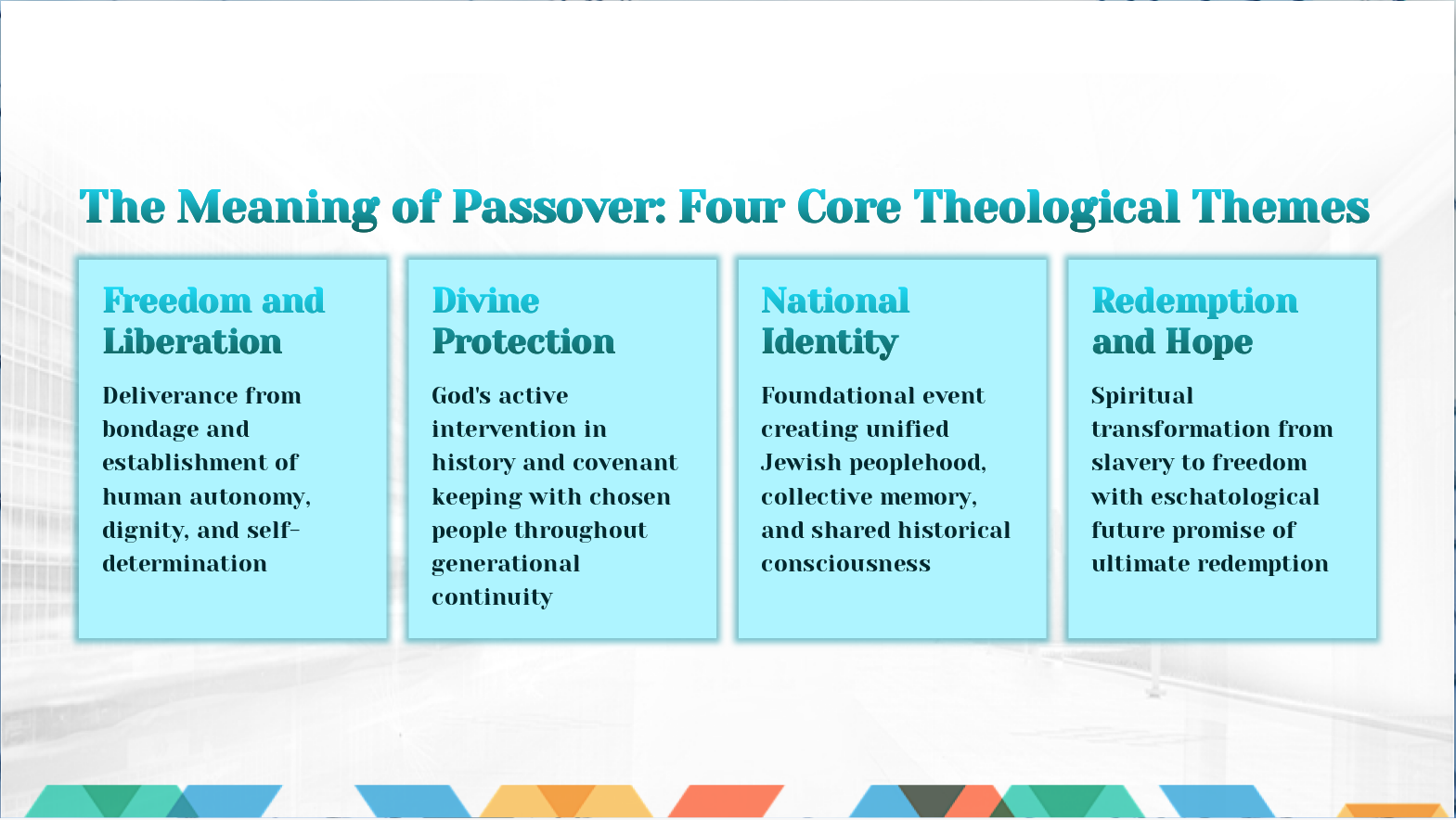
Slide 8: The Meaning of Passover: Four Core Theological Themes
- Freedom and Liberation: Deliverance from bondage and establishment of human autonomy, dignity, and self-determination
- Divine Protection: God's active intervention in history and covenant keeping with chosen people throughout generational continuity
- National Identity: Foundational event creating unified Jewish peoplehood, collective memory, and shared historical consciousness
- Redemption and Hope: Spiritual transformation from slavery to freedom with eschatological future promise of ultimate redemption
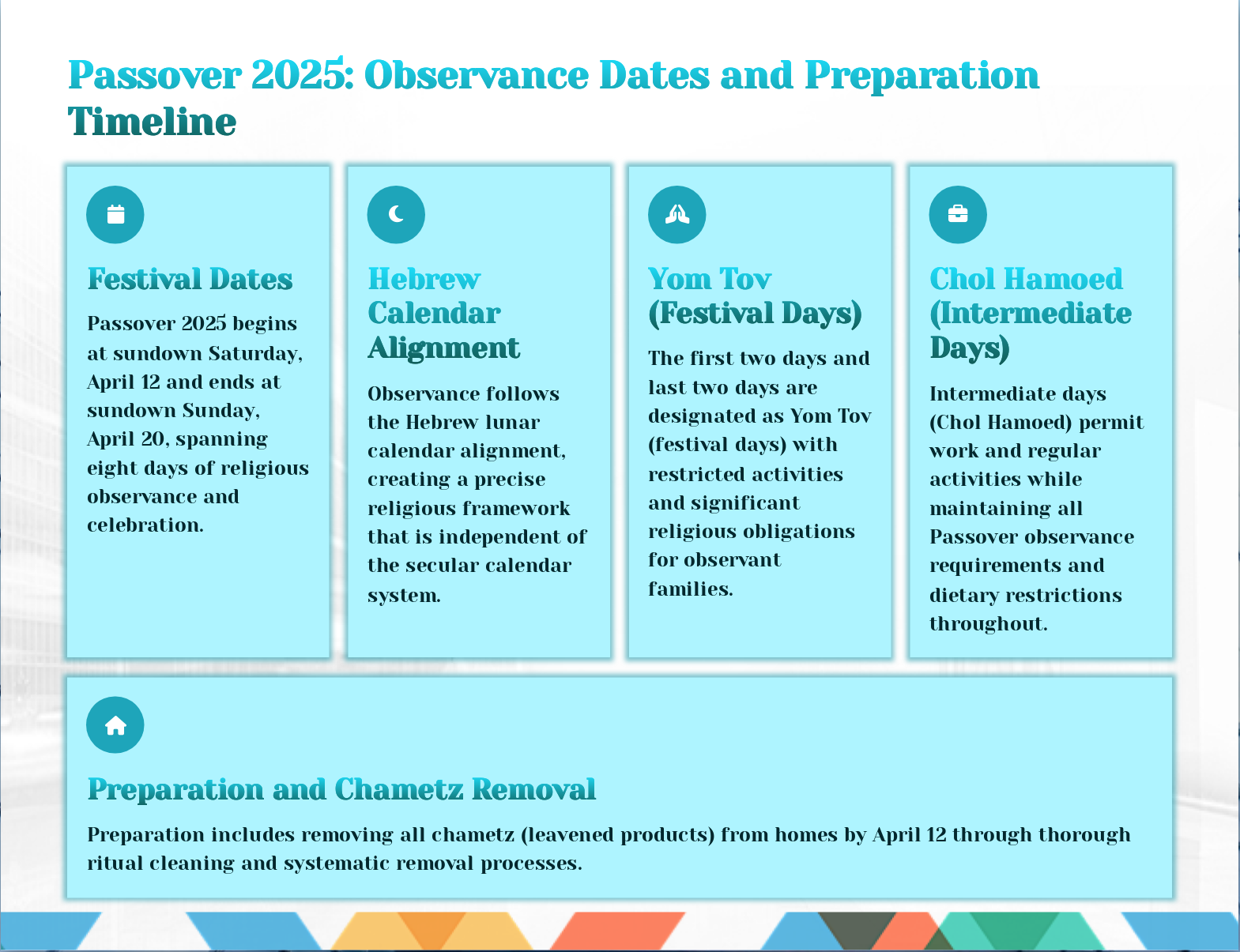
Slide 9: Passover 2025: Observance Dates and Preparation Timeline
- Festival Dates: Passover 2025 begins at sundown Saturday, April 12 and ends at sundown Sunday, April 20, spanning eight days of religious observance and celebration.
- Hebrew Calendar Alignment: Observance follows the Hebrew lunar calendar alignment, creating a precise religious framework that is independent of the secular calendar system.
- Yom Tov (Festival Days): The first two days and last two days are designated as Yom Tov (festival days) with restricted activities and significant religious obligations for observant families.
- Chol Hamoed (Intermediate Days): Intermediate days (Chol Hamoed) permit work and regular activities while maintaining all Passover observance requirements and dietary restrictions throughout.
- Preparation and Chametz Removal: Preparation includes removing all chametz (leavened products) from homes by April 12 through thorough ritual cleaning and systematic removal processes.
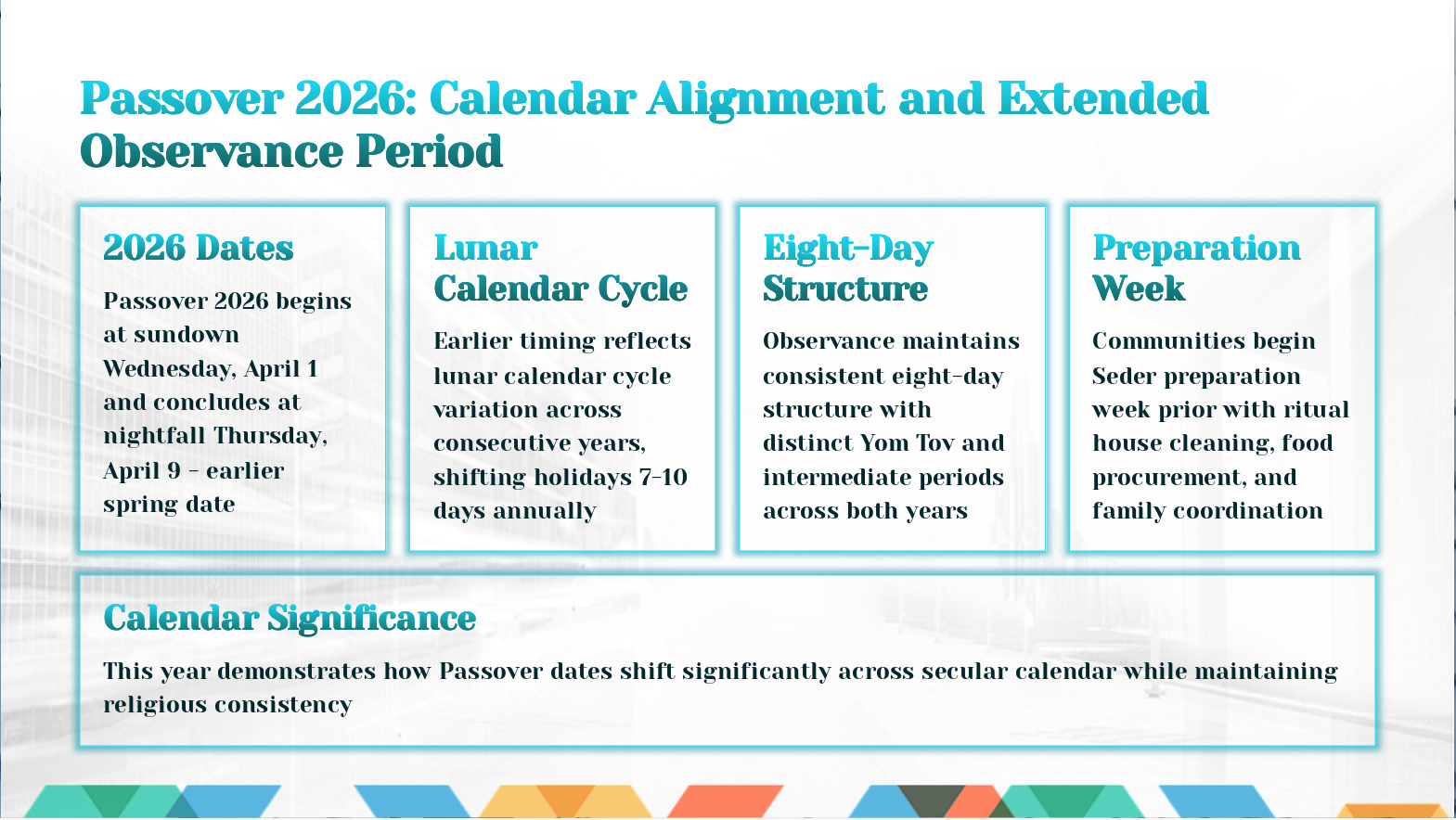
Slide 10: Passover 2026: Calendar Alignment and Extended Observance Period
- 2026 Dates: Passover 2026 begins at sundown Wednesday, April 1 and concludes at nightfall Thursday, April 9 - earlier spring date
- Lunar Calendar Cycle: Earlier timing reflects lunar calendar cycle variation across consecutive years, shifting holidays 7-10 days annually
- Eight-Day Structure: Observance maintains consistent eight-day structure with distinct Yom Tov and intermediate periods across both years
- Preparation Week: Communities begin Seder preparation week prior with ritual house cleaning, food procurement, and family coordination
- Calendar Significance: This year demonstrates how Passover dates shift significantly across secular calendar while maintaining religious consistency
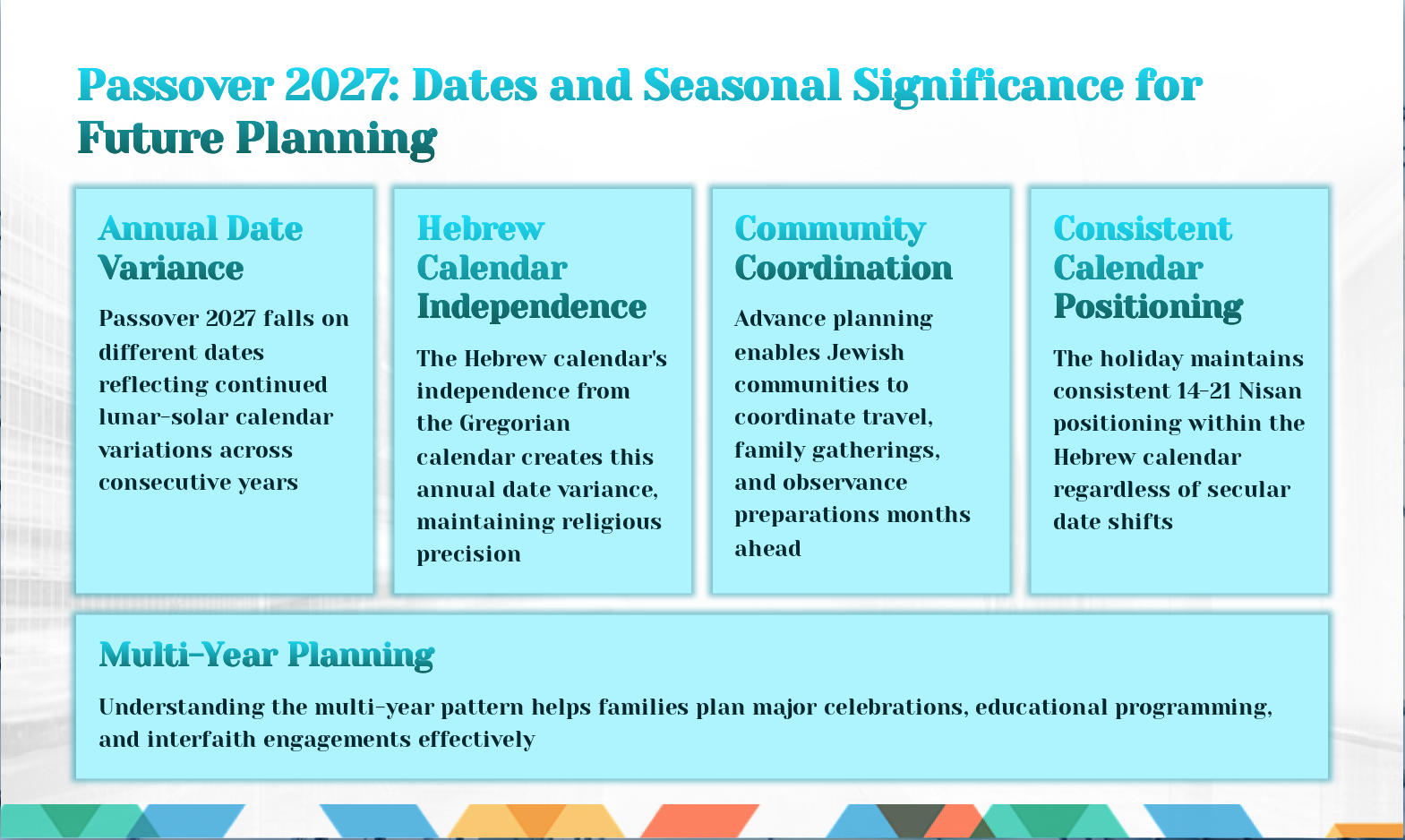
Slide 11: Passover 2027: Dates and Seasonal Significance for Future Planning
- Annual Date Variance: Passover 2027 falls on different dates reflecting continued lunar-solar calendar variations across consecutive years
- Hebrew Calendar Independence: The Hebrew calendar's independence from the Gregorian calendar creates this annual date variance, maintaining religious precision
- Community Coordination: Advance planning enables Jewish communities to coordinate travel, family gatherings, and observance preparations months ahead
- Consistent Calendar Positioning: The holiday maintains consistent 14-21 Nisan positioning within the Hebrew calendar regardless of secular date shifts
- Multi-Year Planning: Understanding the multi-year pattern helps families plan major celebrations, educational programming, and interfaith engagements effectively
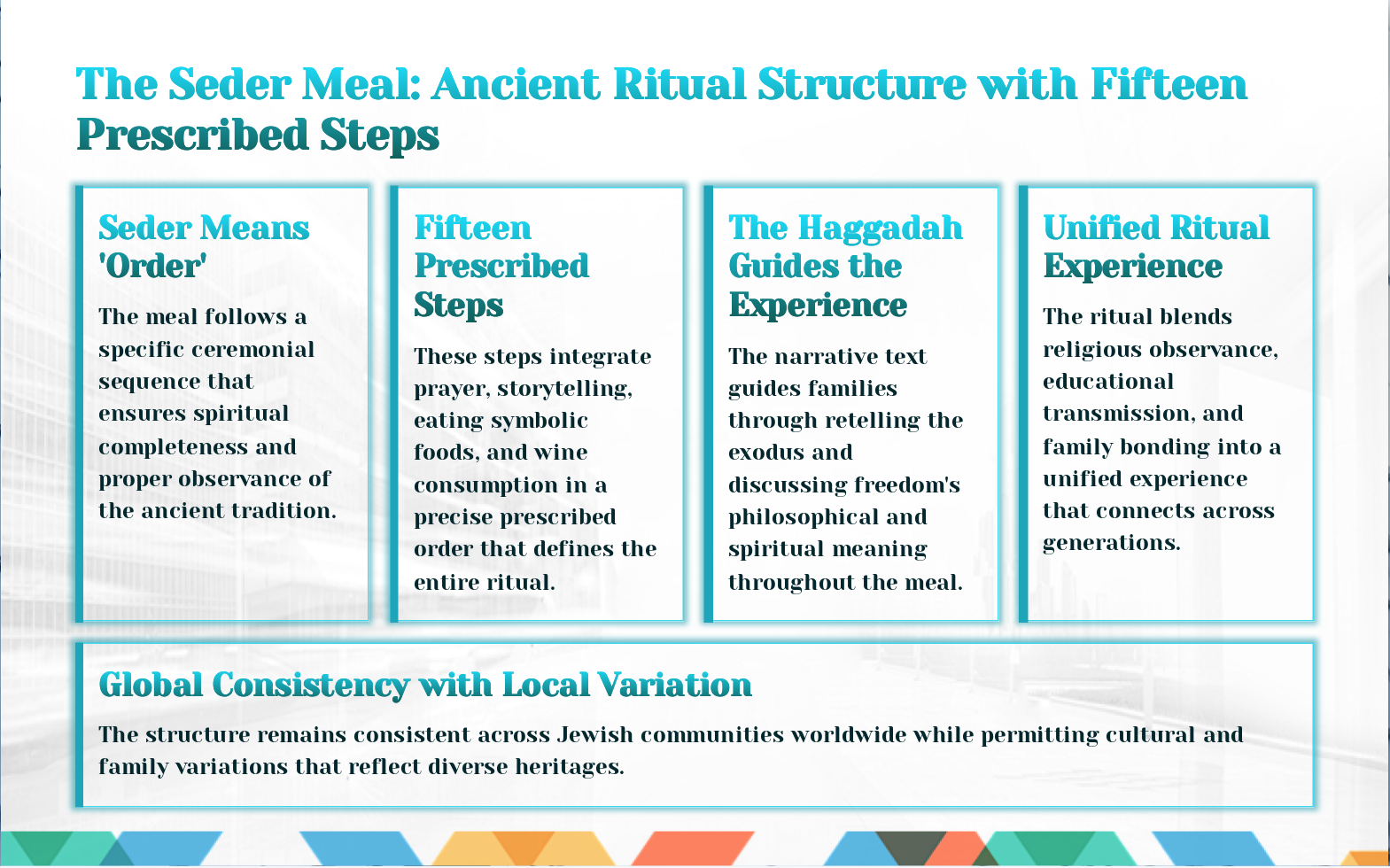
Slide 12: The Seder Meal: Ancient Ritual Structure with Fifteen Prescribed Steps
- Seder Means 'Order': The meal follows a specific ceremonial sequence that ensures spiritual completeness and proper observance of the ancient tradition.
- Fifteen Prescribed Steps: These steps integrate prayer, storytelling, eating symbolic foods, and wine consumption in a precise prescribed order that defines the entire ritual.
- The Haggadah Guides the Experience: The narrative text guides families through retelling the exodus and discussing freedom's philosophical and spiritual meaning throughout the meal.
- Unified Ritual Experience: The ritual blends religious observance, educational transmission, and family bonding into a unified experience that connects across generations.
- Global Consistency with Local Variation: The structure remains consistent across Jewish communities worldwide while permitting cultural and family variations that reflect diverse heritages.
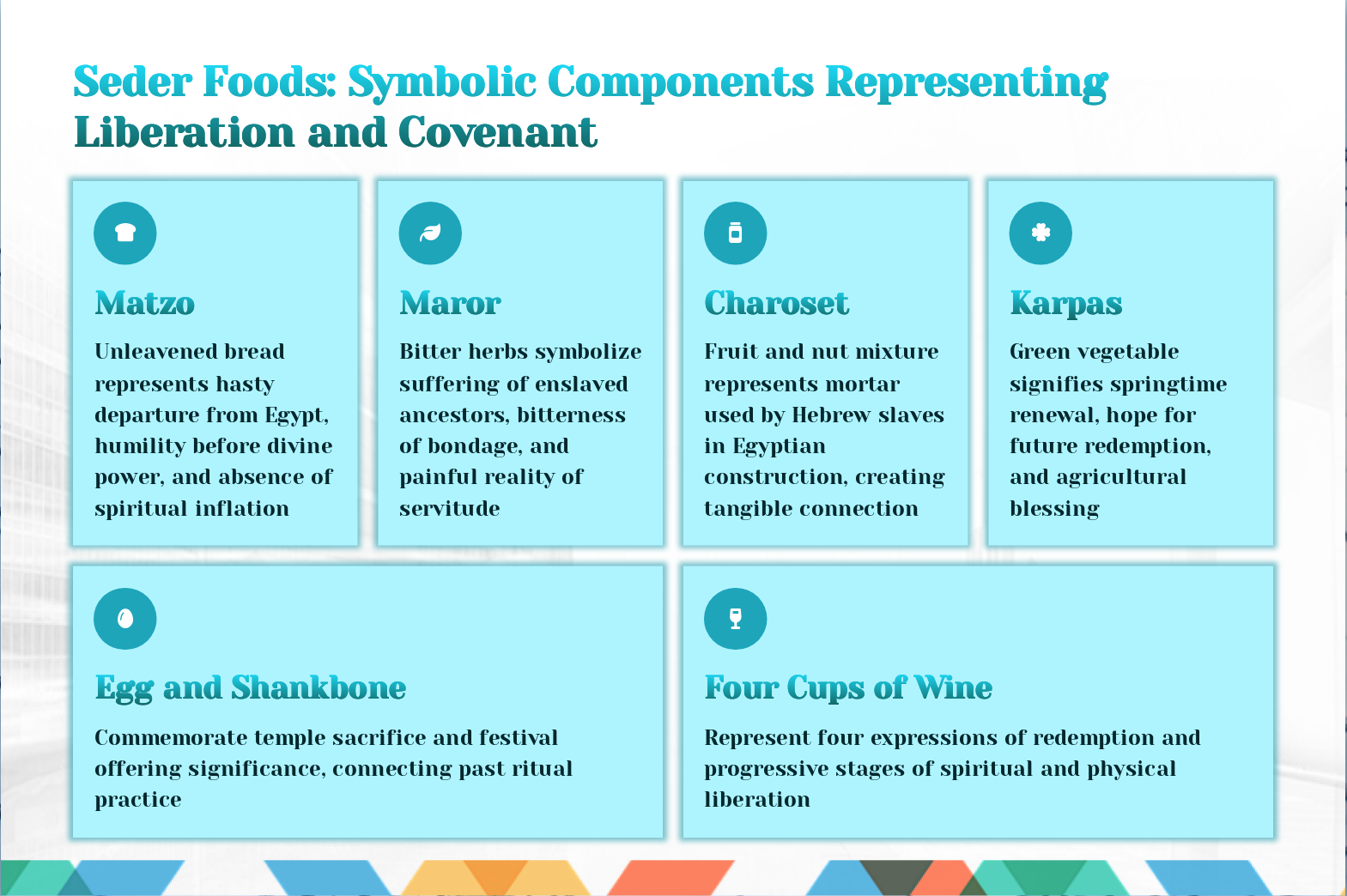
Slide 13: Seder Foods: Symbolic Components Representing Liberation and Covenant
- Matzo: Unleavened bread represents hasty departure from Egypt, humility before divine power, and absence of spiritual inflation
- Maror: Bitter herbs symbolize suffering of enslaved ancestors, bitterness of bondage, and painful reality of servitude
- Charoset: Fruit and nut mixture represents mortar used by Hebrew slaves in Egyptian construction, creating tangible connection
- Karpas: Green vegetable signifies springtime renewal, hope for future redemption, and agricultural blessing
- Egg and Shankbone: Commemorate temple sacrifice and festival offering significance, connecting past ritual practice
- Four Cups of Wine: Represent four expressions of redemption and progressive stages of spiritual and physical liberation
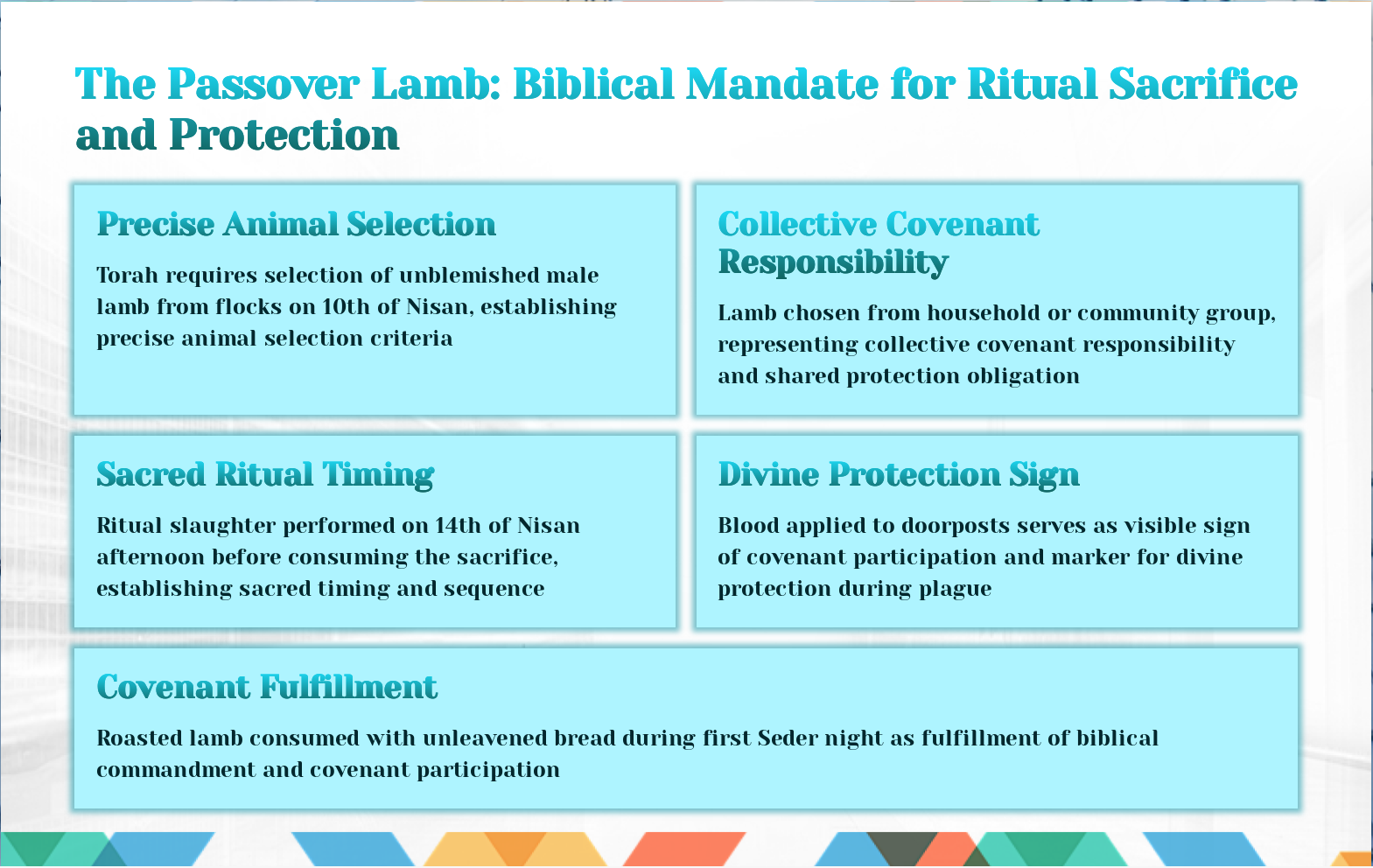
Slide 14: The Passover Lamb: Biblical Mandate for Ritual Sacrifice and Protection
- Precise Animal Selection: Torah requires selection of unblemished male lamb from flocks on 10th of Nisan, establishing precise animal selection criteria
- Collective Covenant Responsibility: Lamb chosen from household or community group, representing collective covenant responsibility and shared protection obligation
- Sacred Ritual Timing: Ritual slaughter performed on 14th of Nisan afternoon before consuming the sacrifice, establishing sacred timing and sequence
- Divine Protection Sign: Blood applied to doorposts serves as visible sign of covenant participation and marker for divine protection during plague
- Covenant Fulfillment: Roasted lamb consumed with unleavened bread during first Seder night as fulfillment of biblical commandment and covenant participation
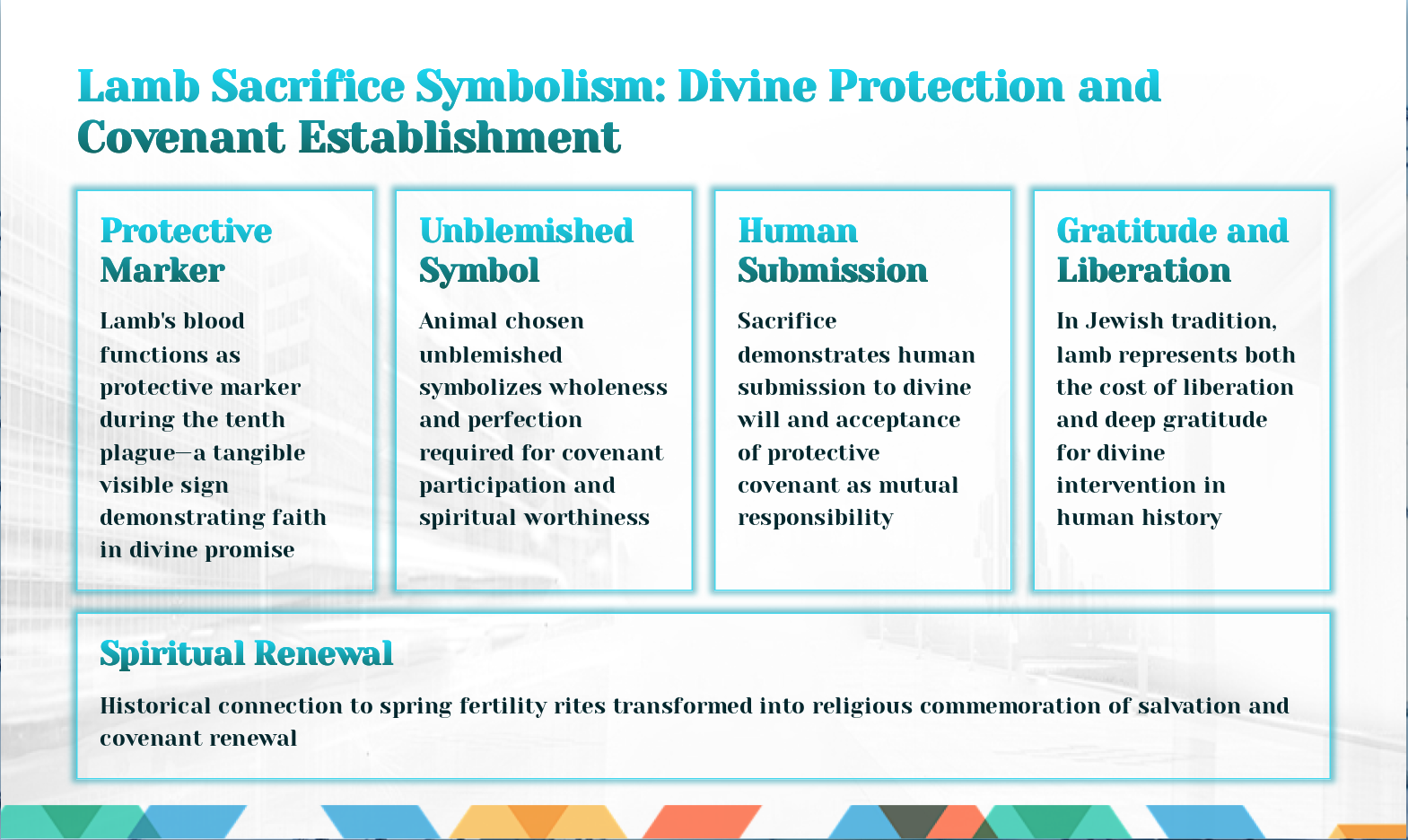
Slide 15: Lamb Sacrifice Symbolism: Divine Protection and Covenant Establishment
- Protective Marker: Lamb's blood functions as protective marker during the tenth plague—a tangible visible sign demonstrating faith in divine promise
- Unblemished Symbol: Animal chosen unblemished symbolizes wholeness and perfection required for covenant participation and spiritual worthiness
- Human Submission: Sacrifice demonstrates human submission to divine will and acceptance of protective covenant as mutual responsibility
- Gratitude and Liberation: In Jewish tradition, lamb represents both the cost of liberation and deep gratitude for divine intervention in human history
- Spiritual Renewal: Historical connection to spring fertility rites transformed into religious commemoration of salvation and covenant renewal
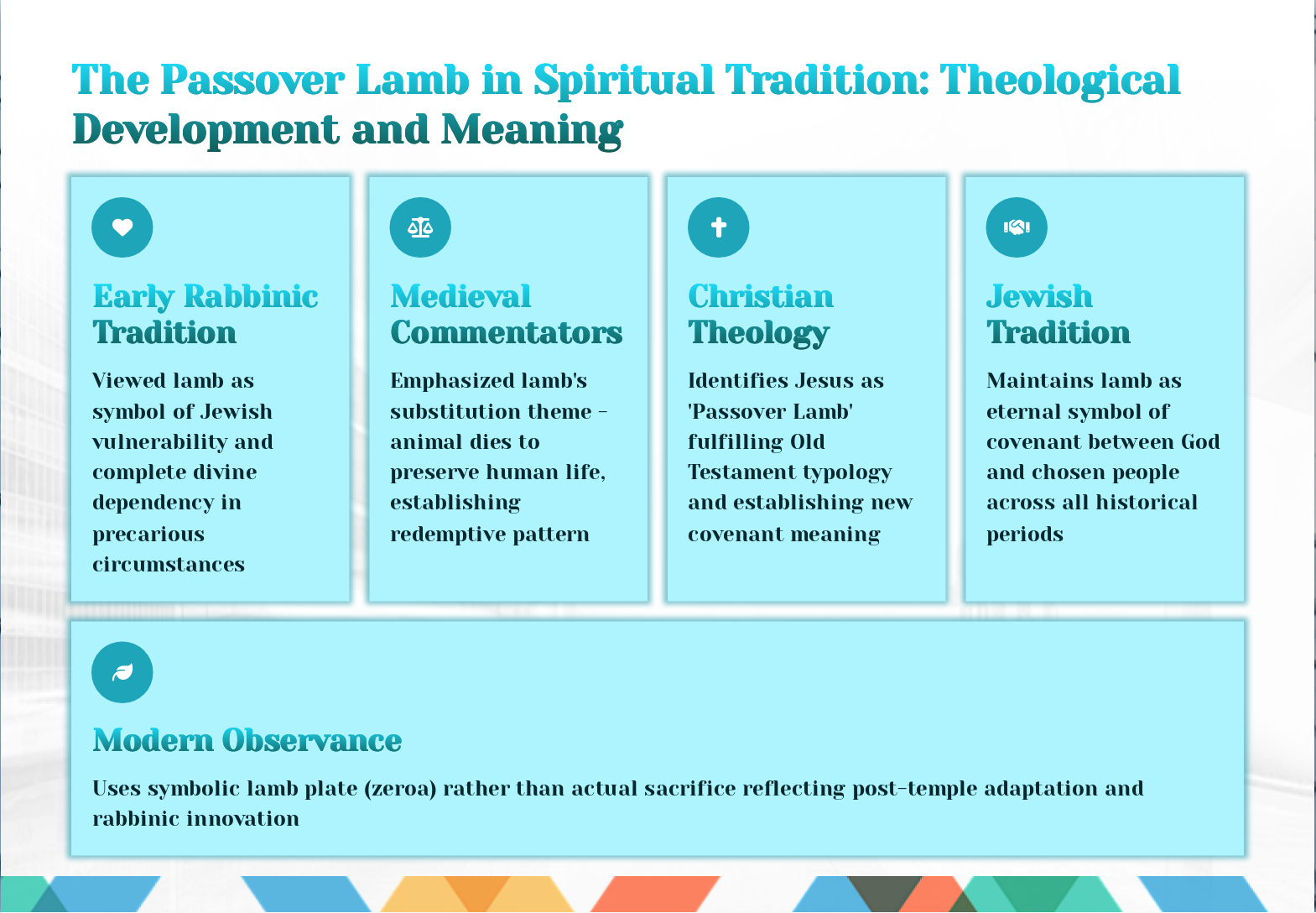
Slide 16: The Passover Lamb in Spiritual Tradition: Theological Development and Meaning
- Early Rabbinic Tradition: Viewed lamb as symbol of Jewish vulnerability and complete divine dependency in precarious circumstances
- Medieval Commentators: Emphasized lamb's substitution theme - animal dies to preserve human life, establishing redemptive pattern
- Christian Theology: Identifies Jesus as 'Passover Lamb' fulfilling Old Testament typology and establishing new covenant meaning
- Jewish Tradition: Maintains lamb as eternal symbol of covenant between God and chosen people across all historical periods
- Modern Observance: Uses symbolic lamb plate (zeroa) rather than actual sacrifice reflecting post-temple adaptation and rabbinic innovation
Slide 17: Passover Feast Customs: Core Traditions Preserving Historical Memory
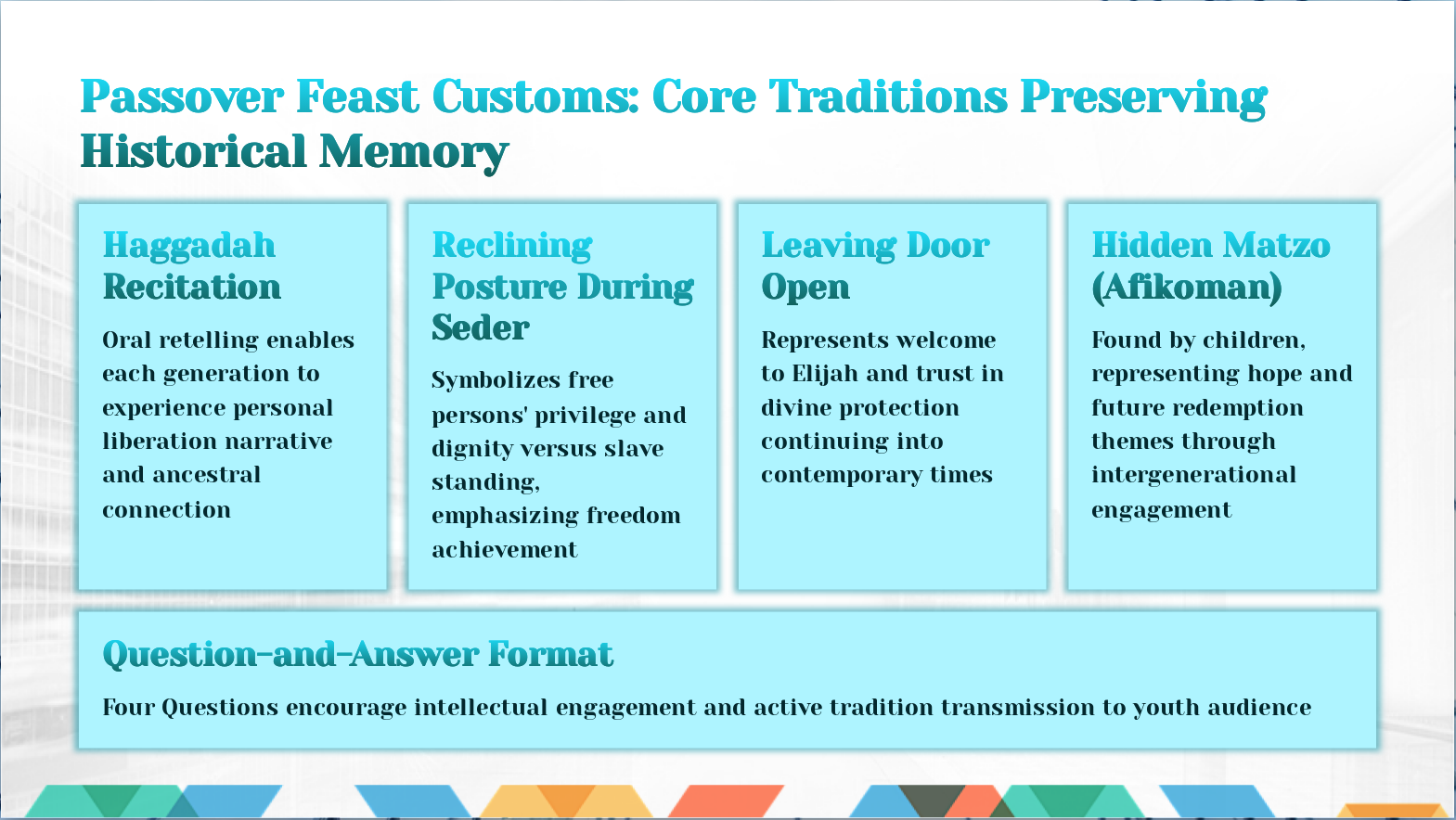
- Haggadah Recitation: Oral retelling enables each generation to experience personal liberation narrative and ancestral connection
- Reclining Posture During Seder: Symbolizes free persons' privilege and dignity versus slave standing, emphasizing freedom achievement
- Leaving Door Open: Represents welcome to Elijah and trust in divine protection continuing into contemporary times
- Hidden Matzo (Afikoman): Found by children, representing hope and future redemption themes through intergenerational engagement
- Question-and-Answer Format: Four Questions encourage intellectual engagement and active tradition transmission to youth audience
Slide 18: Matzah and Chametz: Bread Laws Embodying Liberation and Discipline
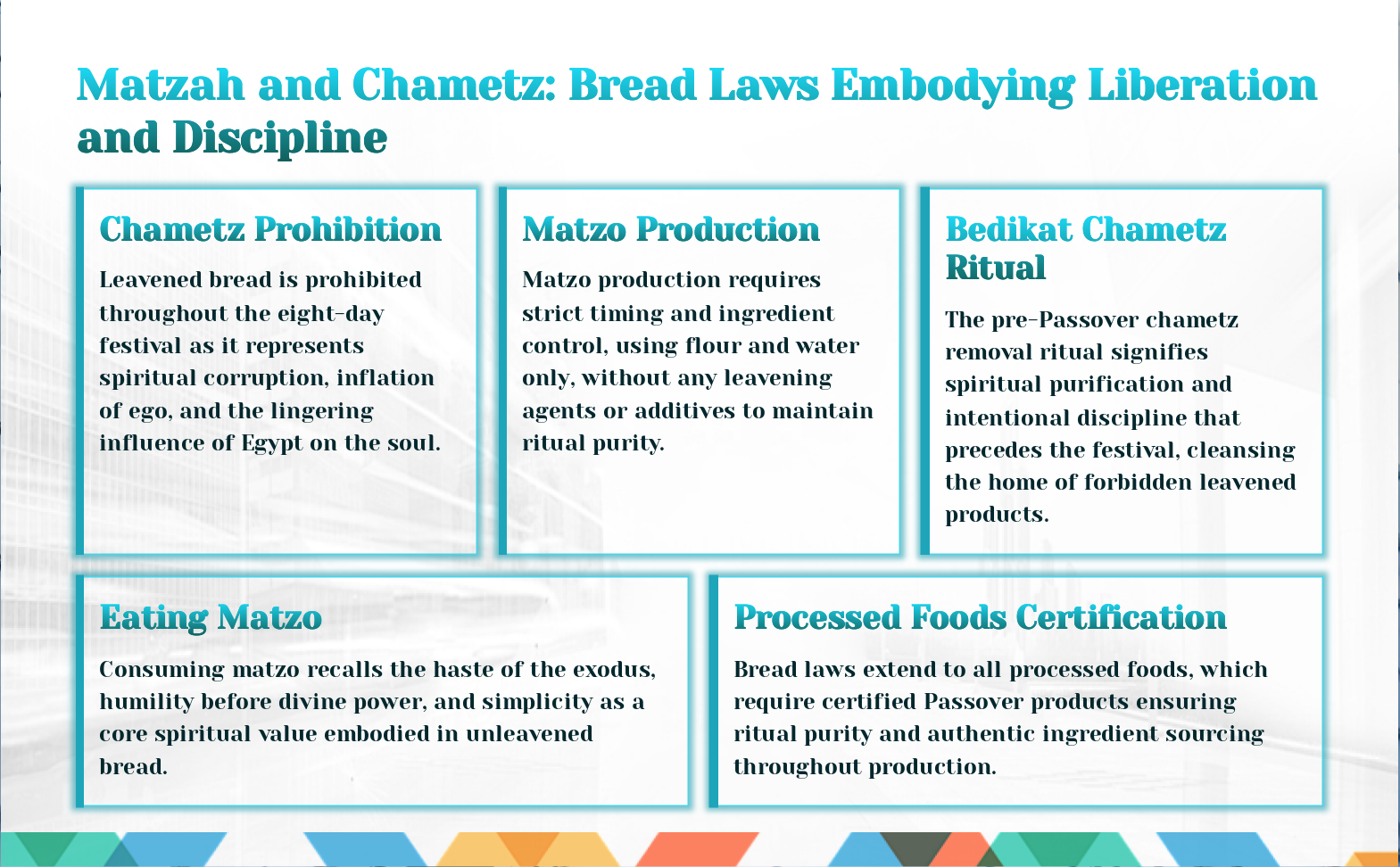
- Chametz Prohibition: Leavened bread is prohibited throughout the eight-day festival as it represents spiritual corruption, inflation of ego, and the lingering influence of Egypt on the soul.
- Matzo Production: Matzo production requires strict timing and ingredient control, using flour and water only, without any leavening agents or additives to maintain ritual purity.
- Bedikat Chametz Ritual: The pre-Passover chametz removal ritual signifies spiritual purification and intentional discipline that precedes the festival, cleansing the home of forbidden leavened products.
- Eating Matzo: Consuming matzo recalls the haste of the exodus, humility before divine power, and simplicity as a core spiritual value embodied in unleavened bread.
- Processed Foods Certification: Bread laws extend to all processed foods, which require certified Passover products ensuring ritual purity and authentic ingredient sourcing throughout production.
Slide 19: The Four Cups of Wine: Progressive Expressions of Redemption and Gratitude
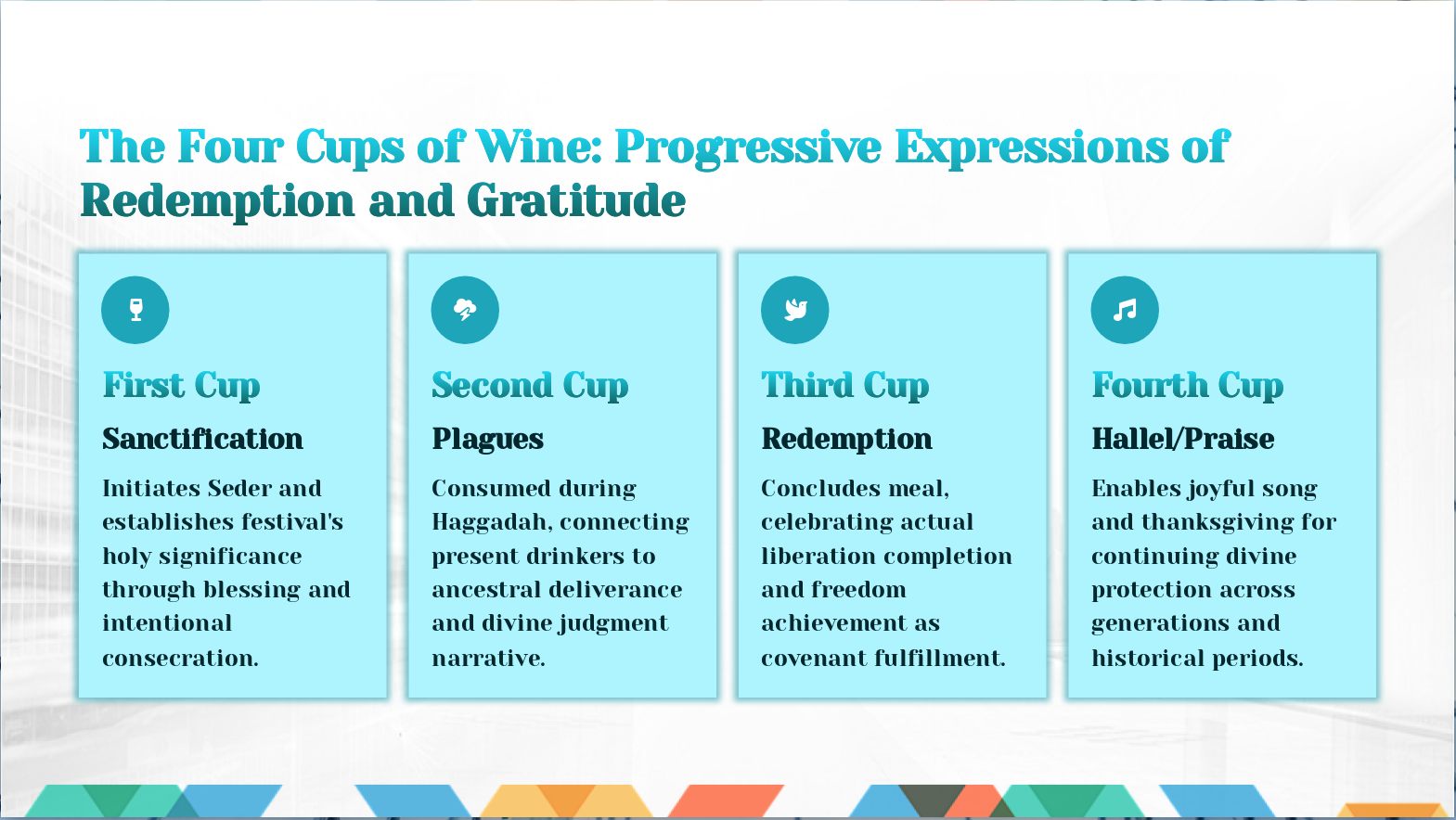
- First Cup: Initiates Seder and establishes festival's holy significance through blessing and intentional consecration.
- Second Cup: Consumed during Haggadah, connecting present drinkers to ancestral deliverance and divine judgment narrative.
- Third Cup: Concludes meal, celebrating actual liberation completion and freedom achievement as covenant fulfillment.
- Fourth Cup: Enables joyful song and thanksgiving for continuing divine protection across generations and historical periods.
Slide 20: Modern Passover Celebrations: Evolution Beyond Traditional Observance
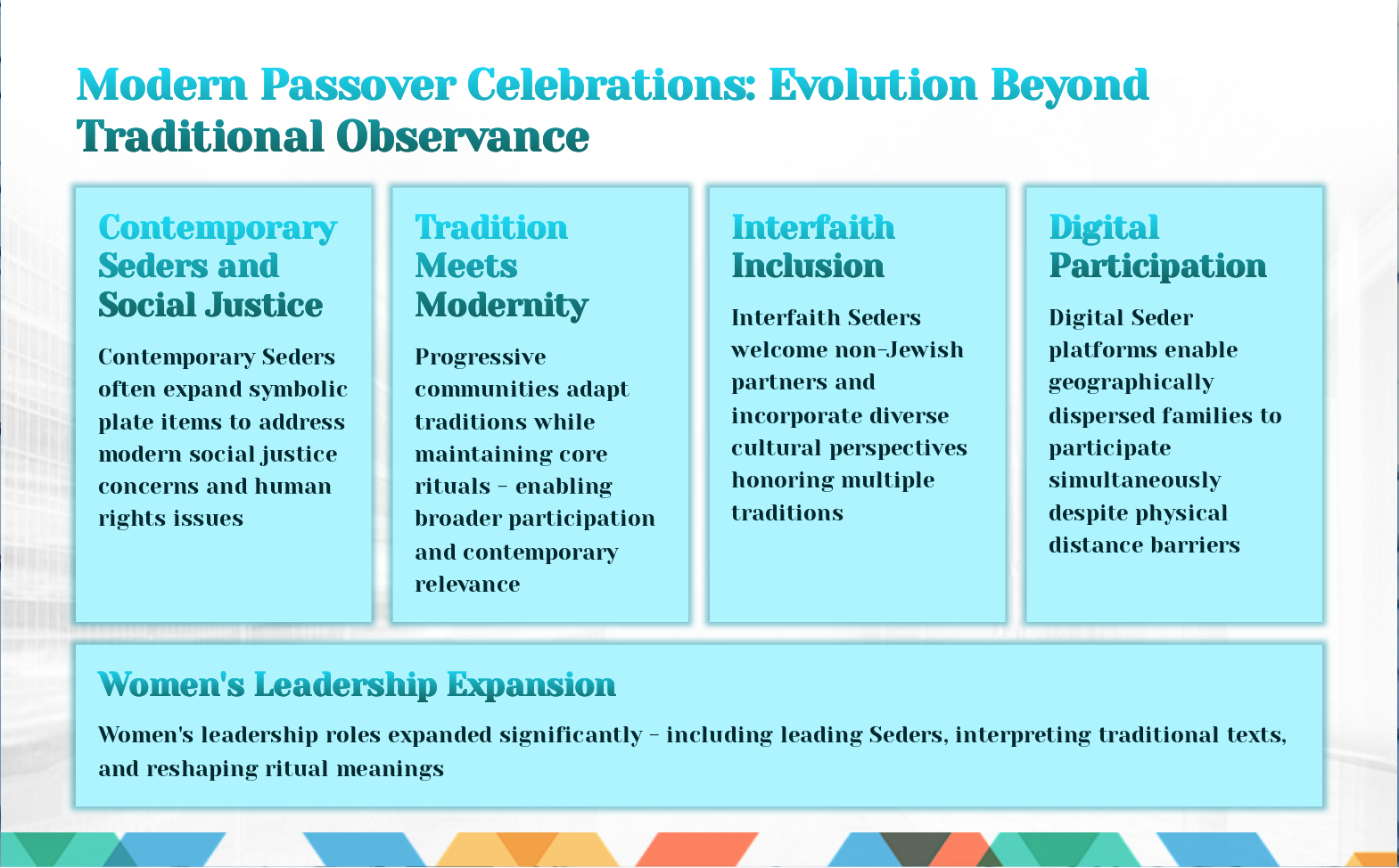
- Contemporary Seders and Social Justice: Contemporary Seders often expand symbolic plate items to address modern social justice concerns and human rights issues
- Tradition Meets Modernity: Progressive communities adapt traditions while maintaining core rituals - enabling broader participation and contemporary relevance
- Interfaith Inclusion: Interfaith Seders welcome non-Jewish partners and incorporate diverse cultural perspectives honoring multiple traditions
- Digital Participation: Digital Seder platforms enable geographically dispersed families to participate simultaneously despite physical distance barriers
- Women's Leadership Expansion: Women's leadership roles expanded significantly - including leading Seders, interpreting traditional texts, and reshaping ritual meanings
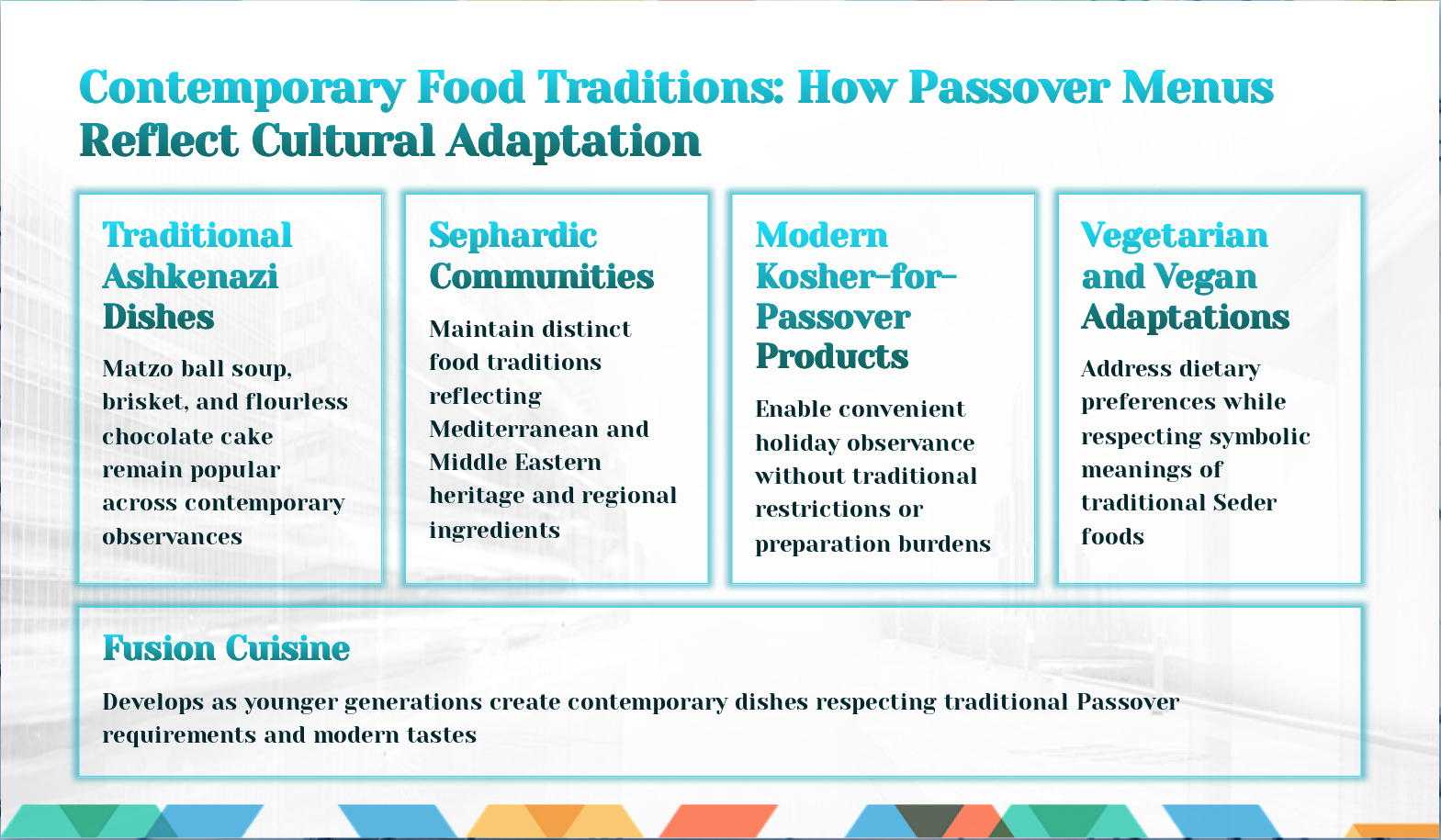
Slide 21: Contemporary Food Traditions: How Passover Menus Reflect Cultural Adaptation
- Traditional Ashkenazi Dishes: Matzo ball soup, brisket, and flourless chocolate cake remain popular across contemporary observances
- Sephardic Communities: Maintain distinct food traditions reflecting Mediterranean and Middle Eastern heritage and regional ingredients
- Modern Kosher-for-Passover Products: Enable convenient holiday observance without traditional restrictions or preparation burdens
- Vegetarian and Vegan Adaptations: Address dietary preferences while respecting symbolic meanings of traditional Seder foods
- Fusion Cuisine: Develops as younger generations create contemporary dishes respecting traditional Passover requirements and modern tastes
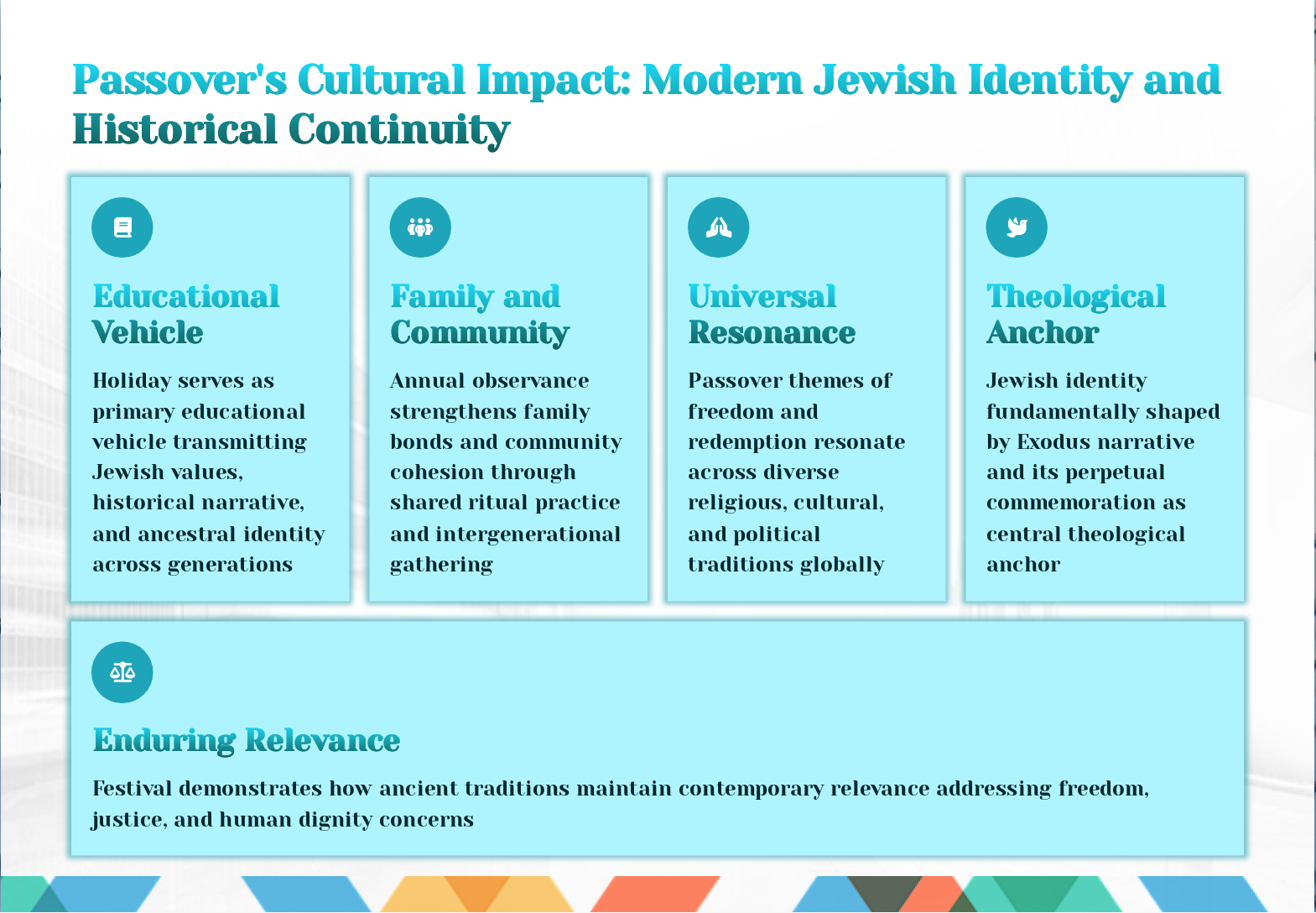
Slide 22: Passover's Cultural Impact: Modern Jewish Identity and Historical Continuity
- Educational Vehicle: Holiday serves as primary educational vehicle transmitting Jewish values, historical narrative, and ancestral identity across generations
- Family and Community: Annual observance strengthens family bonds and community cohesion through shared ritual practice and intergenerational gathering
- Universal Resonance: Passover themes of freedom and redemption resonate across diverse religious, cultural, and political traditions globally
- Theological Anchor: Jewish identity fundamentally shaped by Exodus narrative and its perpetual commemoration as central theological anchor
- Enduring Relevance: Festival demonstrates how ancient traditions maintain contemporary relevance addressing freedom, justice, and human dignity concerns
Slide 23: Key Takeaways: Passover's Enduring Significance Across Millennia
Passover remains cornerstone of Jewish religious identity, connecting ancient liberation to contemporary faith and future hope. The eight-day observance integrates historical remembrance, spiritual discipline, and family bonding in a unified ritual experience. Symbolic foods, wine ceremonies, and narrative retelling enable personal participation in ancestral salvation. Festival dates vary annually (2025, 2026, 2027) following the Hebrew lunar calendar. From ancient lamb sacrifice through modern Seder traditions, Passover embodies Jewish commitment to freedom, covenant, and human dignity.