Presentation Summary
The Jerusalem Post, Israel's premier English-language newspaper, has a rich history dating back to 1932. This presentation explores its historical foundations, editorial stance, political evolution, and digital transformation.
Full Presentation Transcript
Slide 1: The Jerusalem Post: Israel's Premier English-Language Newspaper
93 Years of Influential Middle East Journalism
Founded 1932 | English-language Israeli broadsheet | Comprehensive analysis of history, bias, credibility, and global coverage
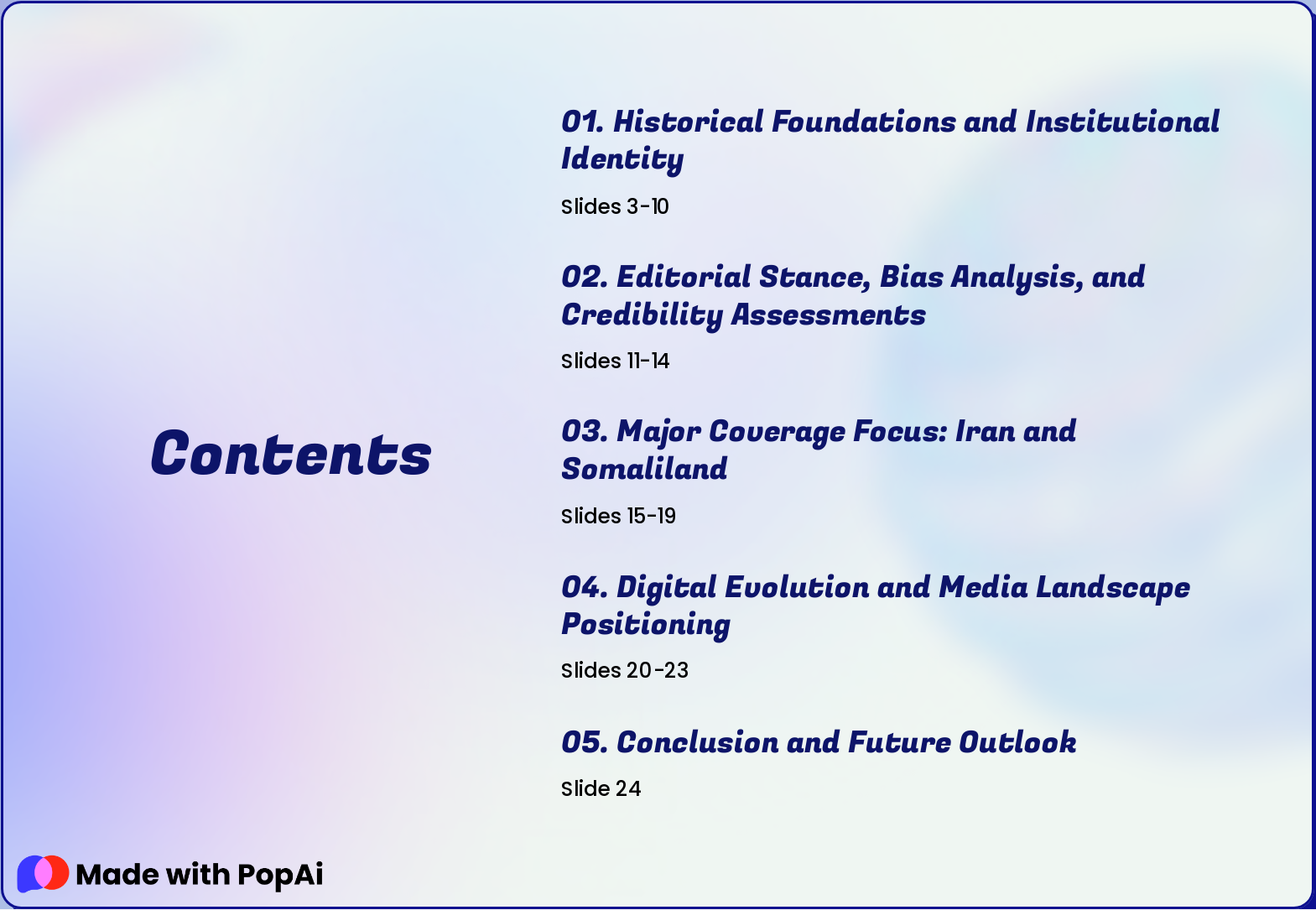
Slide 2: Contents
- Historical Foundations and Institutional Identity: Slides 3-10
- Editorial Stance, Bias Analysis, and Credibility Assessments: Slides 11-14
- Major Coverage Focus: Iran and Somaliland: Slides 15-19
- Digital Evolution and Media Landscape Positioning: Slides 20-23
- Conclusion and Future Outlook: Slide 24
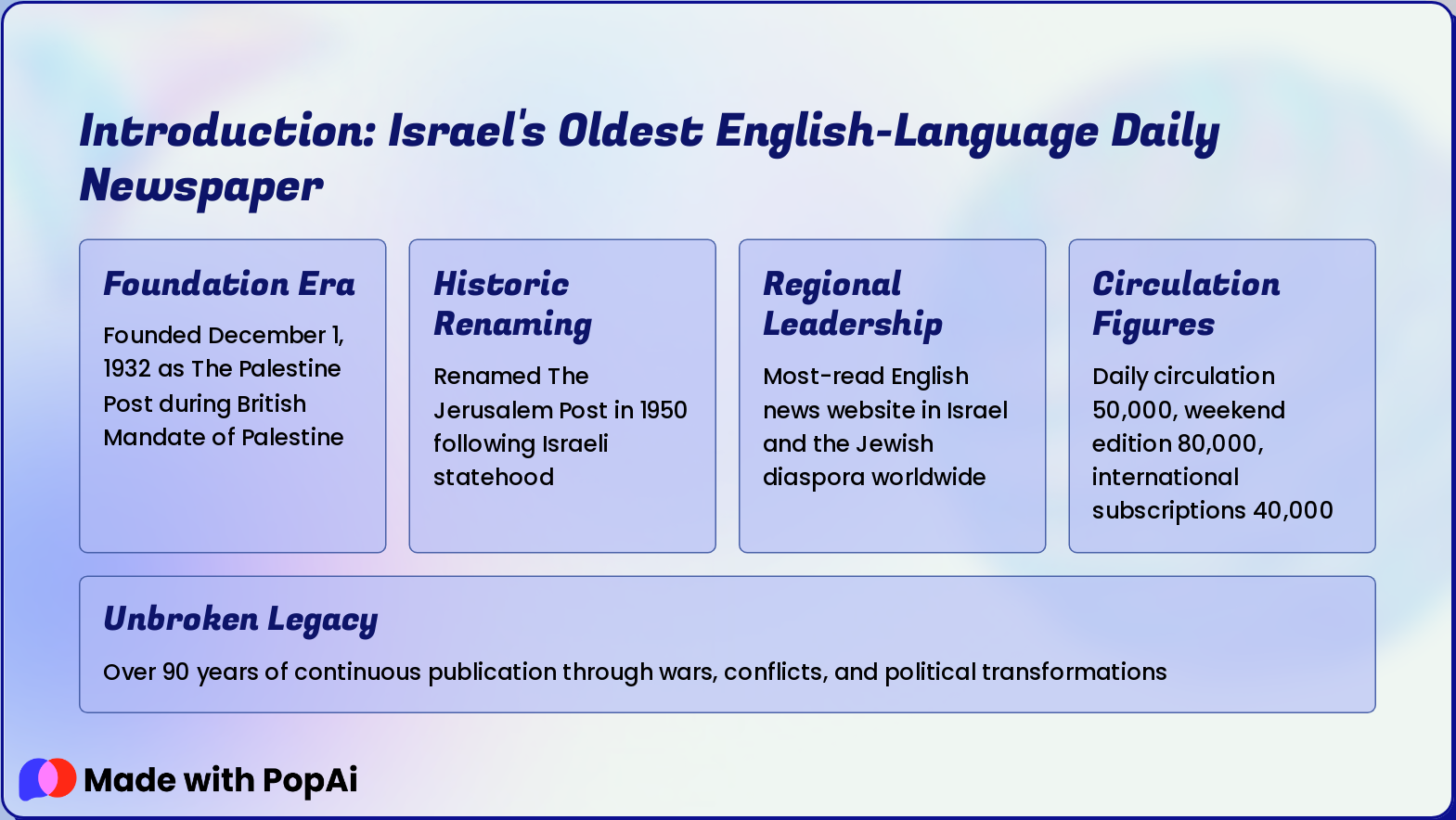
Slide 3: Introduction: Israel's Oldest English-Language Daily Newspaper
- Foundation Era: Founded December 1, 1932 as The Palestine Post during British Mandate of Palestine
- Historic Renaming: Renamed The Jerusalem Post in 1950 following Israeli statehood
- Regional Leadership: Most-read English news website in Israel and the Jewish diaspora worldwide
- Circulation Figures: Daily circulation 50,000, weekend edition 80,000, international subscriptions 40,000
- Unbroken Legacy: Over 90 years of continuous publication through wars, conflicts, and political transformations
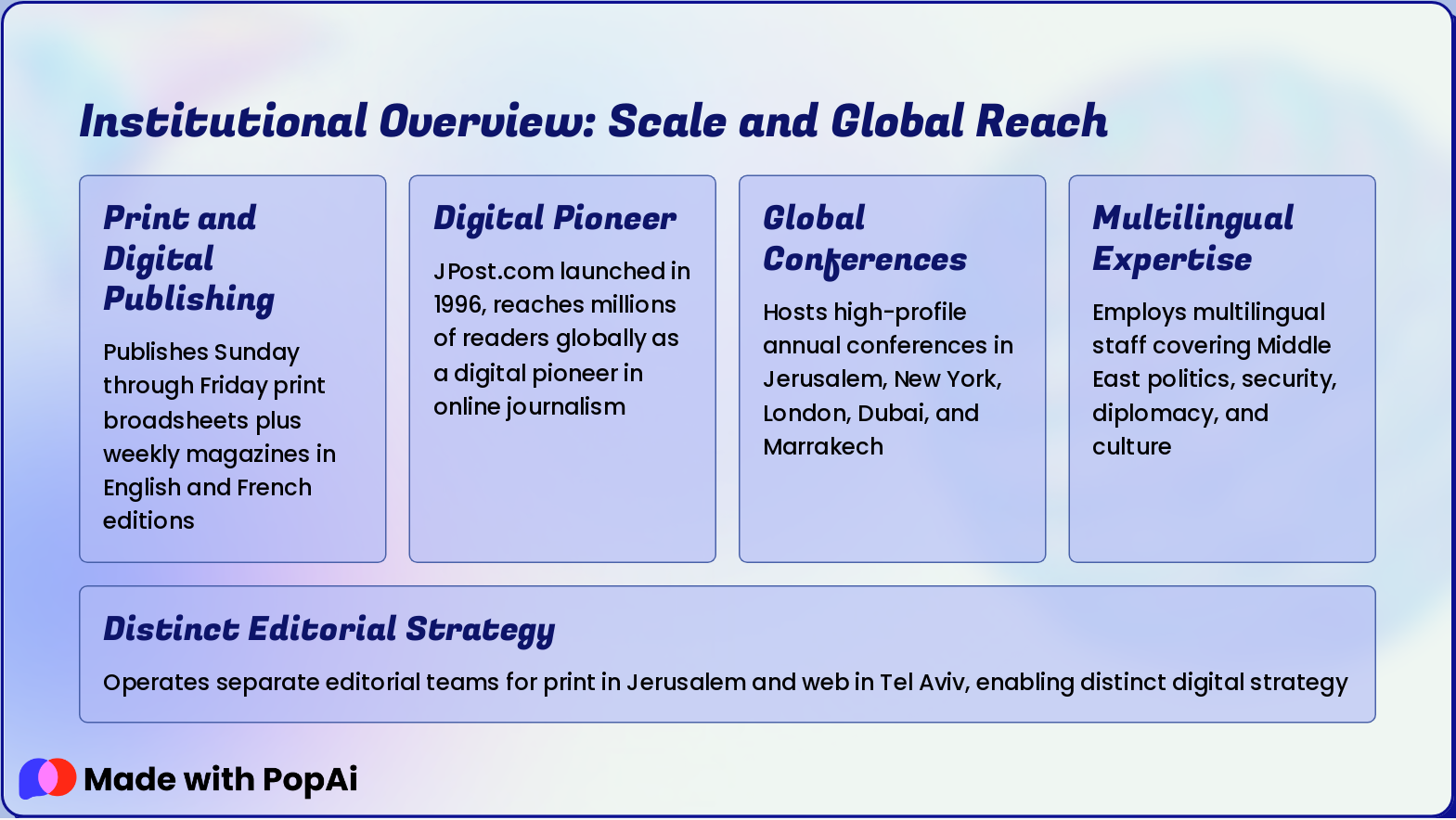
Slide 4: Institutional Overview: Scale and Global Reach
- Print and Digital Publishing: Publishes Sunday through Friday print broadsheets plus weekly magazines in English and French editions
- Digital Pioneer: JPost.com launched in 1996, reaches millions of readers globally as a digital pioneer in online journalism
- Global Conferences: Hosts high-profile annual conferences in Jerusalem, New York, London, Dubai, and Marrakech
- Multilingual Expertise: Employs multilingual staff covering Middle East politics, security, diplomacy, and culture
- Distinct Editorial Strategy: Operates separate editorial teams for print in Jerusalem and web in Tel Aviv, enabling distinct digital strategy
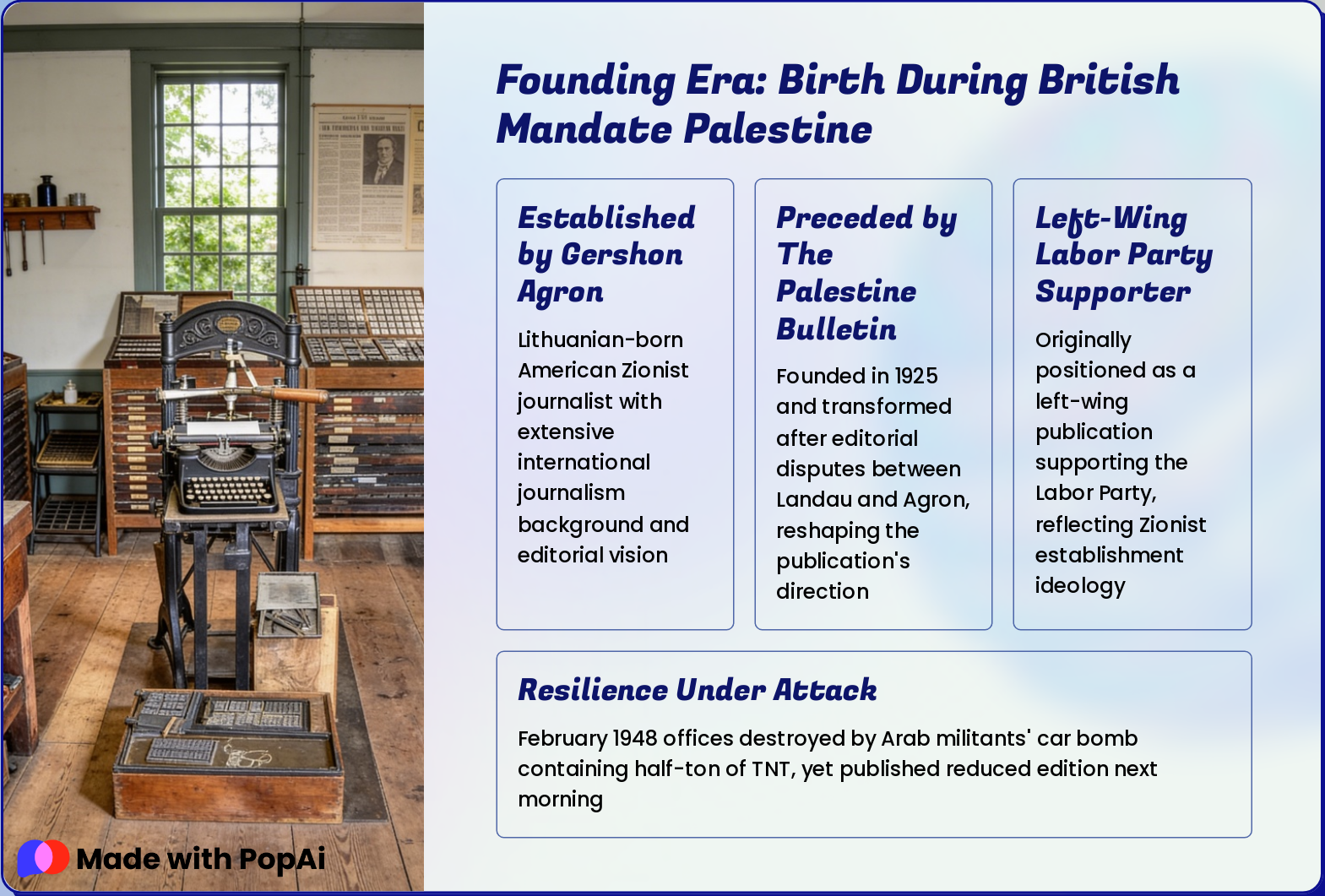
Slide 5: Founding Era: Birth During British Mandate Palestine
- Established by Gershon Agron: Lithuanian-born American Zionist journalist with extensive international journalism background and editorial vision
- Preceded by The Palestine Bulletin: Founded in 1925 and transformed after editorial disputes between Landau and Agron, reshaping the publication's direction
- Left-Wing Labor Party Supporter: Originally positioned as a left-wing publication supporting the Labor Party, reflecting Zionist establishment ideology
- Resilience Under Attack: February 1948 offices destroyed by Arab militants' car bomb containing half-ton of TNT, yet published reduced edition next morning
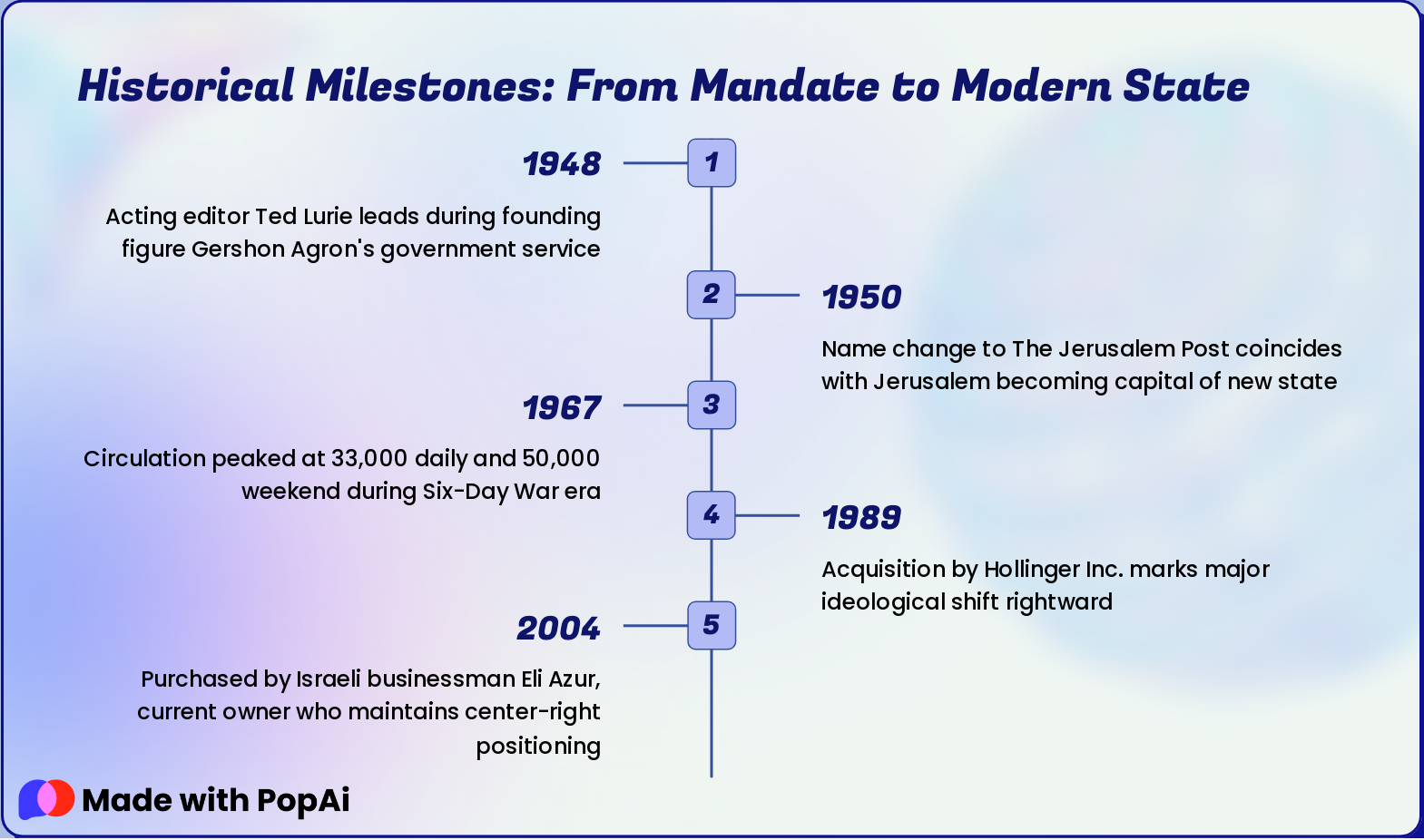
Slide 6: Historical Milestones: From Mandate to Modern State
- 1948: Acting editor Ted Lurie leads during founding figure Gershon Agron's government service
- 1950: Name change to The Jerusalem Post coincides with Jerusalem becoming capital of new state
- 1967: Circulation peaked at 33,000 daily and 50,000 weekend during Six-Day War era
- 1989: Acquisition by Hollinger Inc. marks major ideological shift rightward
- 2004: Purchased by Israeli businessman Eli Azur, current owner who maintains center-right positioning
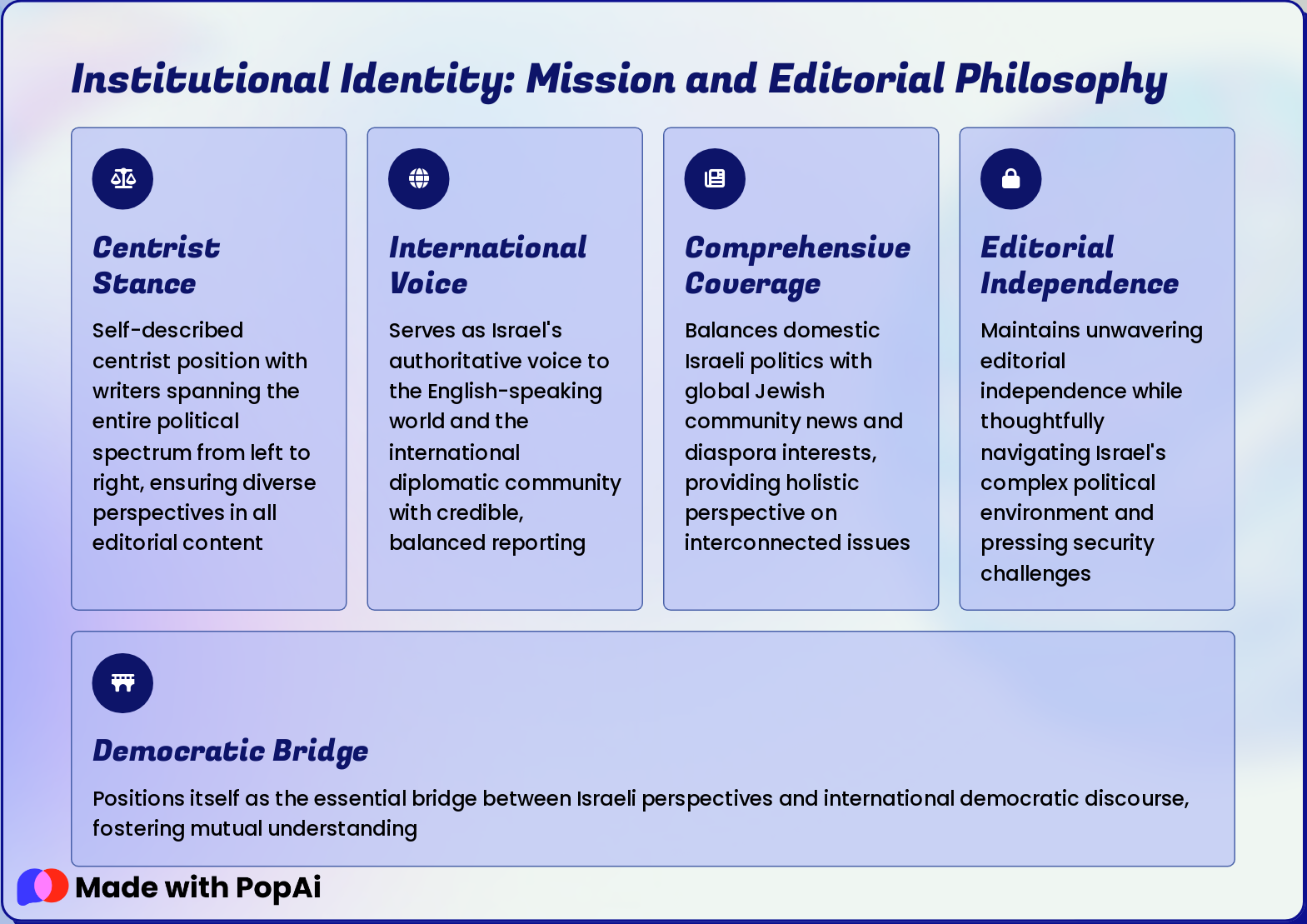
Slide 7: Institutional Identity: Mission and Editorial Philosophy
- Centrist Stance: Self-described centrist position with writers spanning the entire political spectrum from left to right, ensuring diverse perspectives in all editorial content
- International Voice: Serves as Israel's authoritative voice to the English-speaking world and the international diplomatic community with credible, balanced reporting
- Comprehensive Coverage: Balances domestic Israeli politics with global Jewish community news and diaspora interests, providing holistic perspective on interconnected issues
- Editorial Independence: Maintains unwavering editorial independence while thoughtfully navigating Israel's complex political environment and pressing security challenges
- Democratic Bridge: Positions itself as the essential bridge between Israeli perspectives and international democratic discourse, fostering mutual understanding
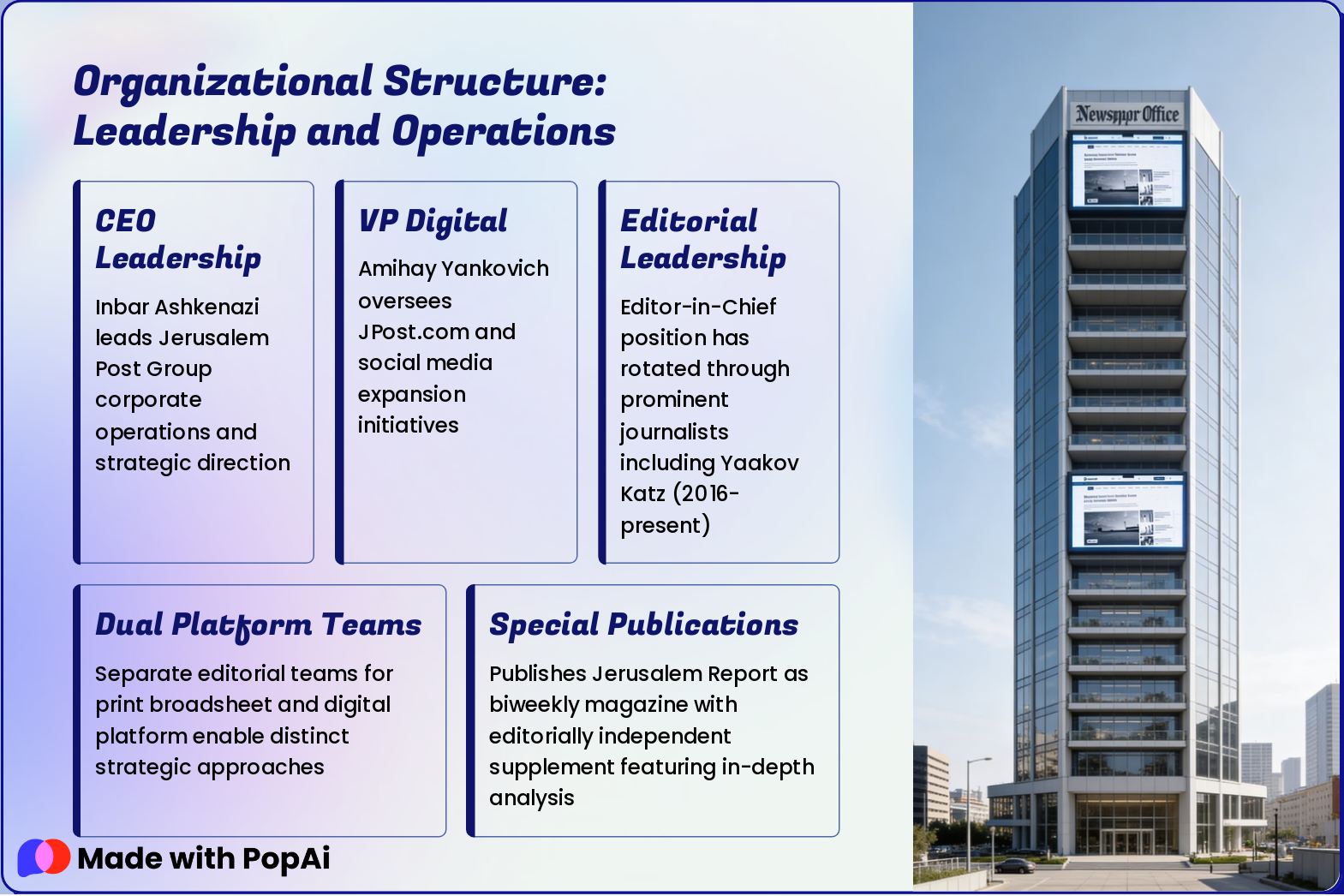
Slide 8: Organizational Structure: Leadership and Operations
- CEO Leadership: Inbar Ashkenazi leads Jerusalem Post Group corporate operations and strategic direction
- VP Digital: Amihay Yankovich oversees JPost.com and social media expansion initiatives
- Editorial Leadership: Editor-in-Chief position has rotated through prominent journalists including Yaakov Katz (2016-present)
- Dual Platform Teams: Separate editorial teams for print broadsheet and digital platform enable distinct strategic approaches
- Special Publications: Publishes Jerusalem Report as biweekly magazine with editorially independent supplement featuring in-depth analysis
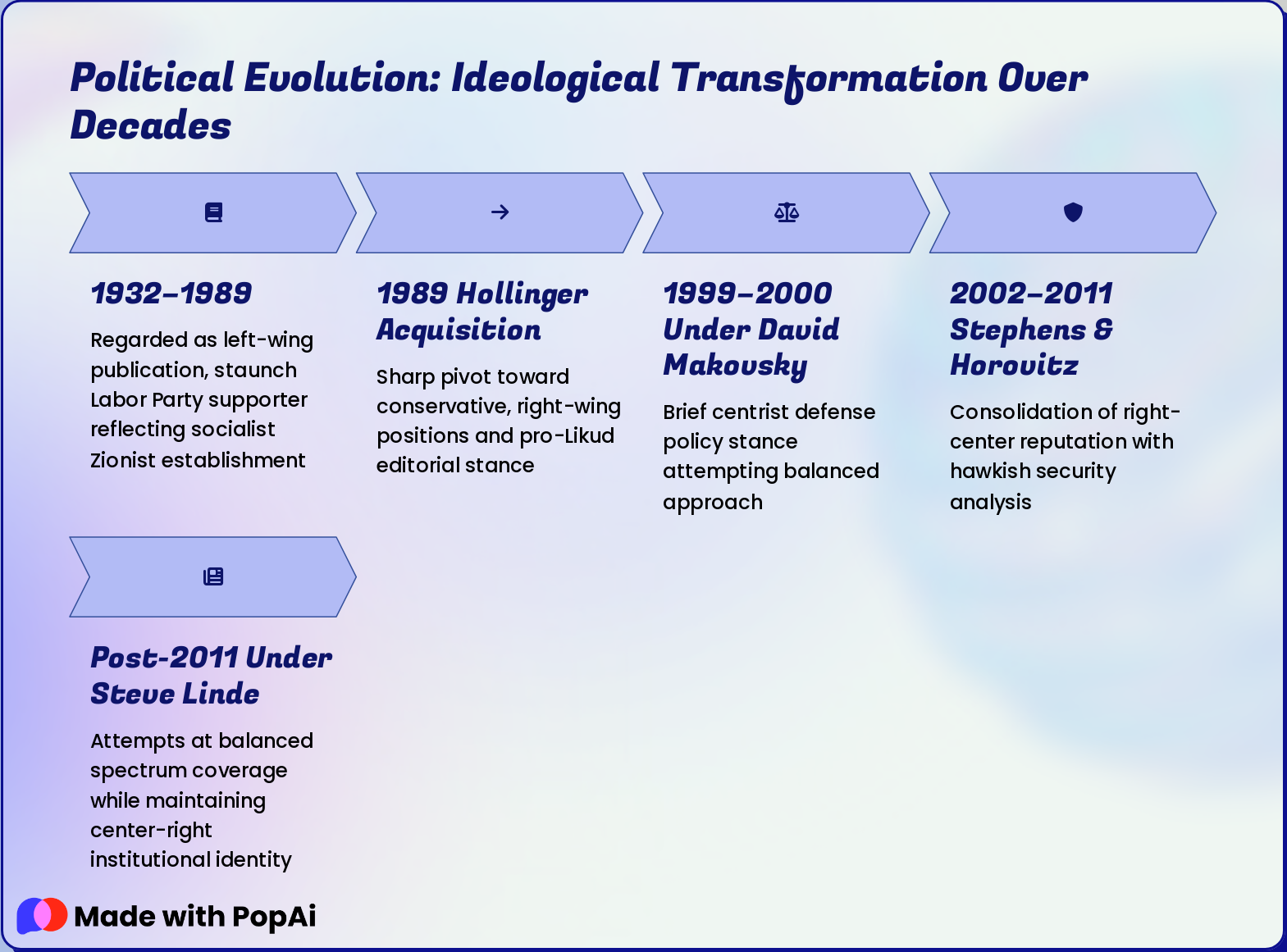
Slide 9: Political Evolution: Ideological Transformation Over Decades
- 1932–1989: Regarded as left-wing publication, staunch Labor Party supporter reflecting socialist Zionist establishment
- 1989 Hollinger Acquisition: Sharp pivot toward conservative, right-wing positions and pro-Likud editorial stance
- 1999–2000 Under David Makovsky: Brief centrist defense policy stance attempting balanced approach
- 2002–2011 Stephens & Horovitz: Consolidation of right-center reputation with hawkish security analysis
- Post-2011 Under Steve Linde: Attempts at balanced spectrum coverage while maintaining center-right institutional identity
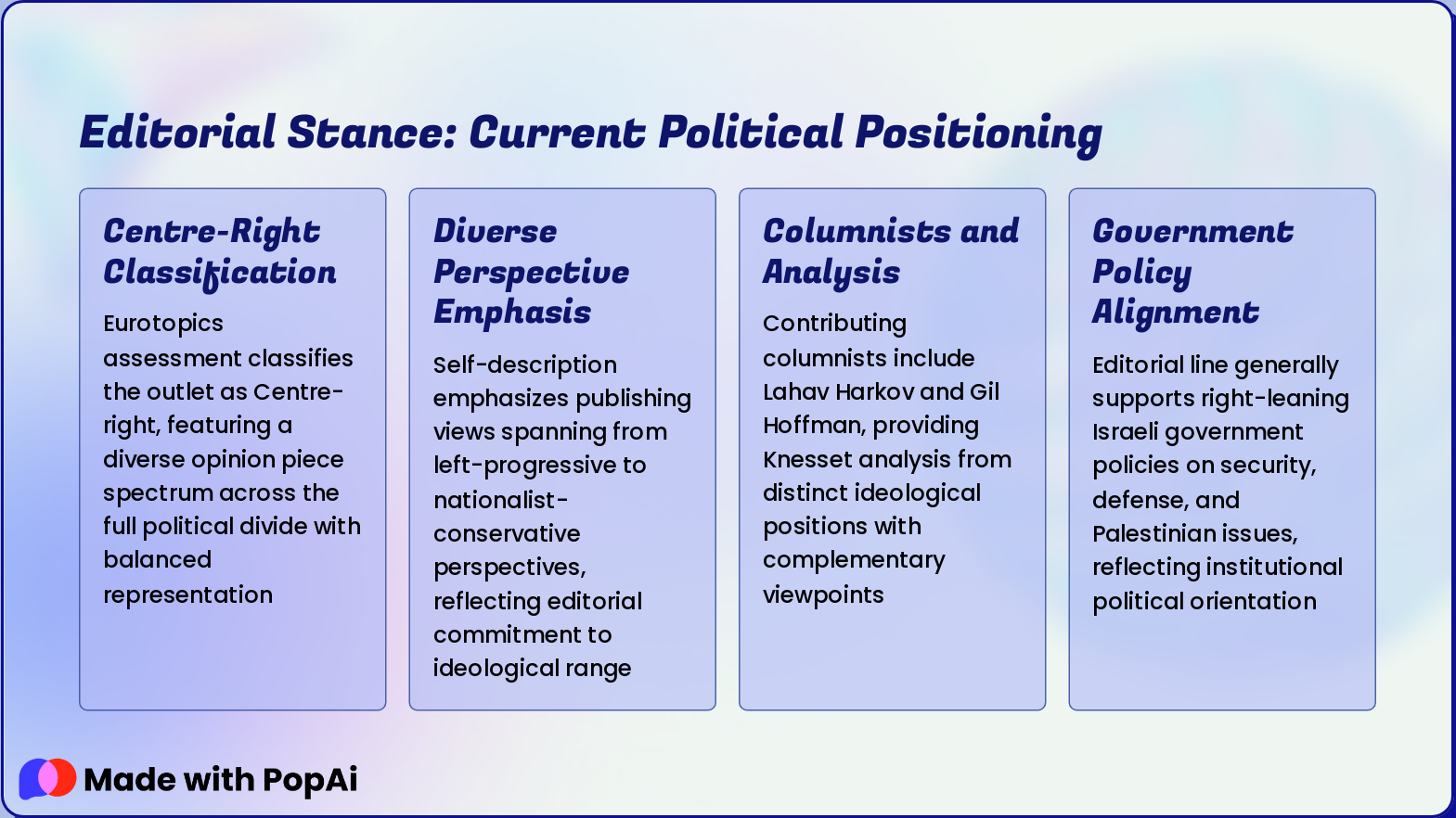
Slide 10: Editorial Stance: Current Political Positioning
- Centre-Right Classification: Eurotopics assessment classifies the outlet as Centre-right, featuring a diverse opinion piece spectrum across the full political divide with balanced representation
- Diverse Perspective Emphasis: Self-description emphasizes publishing views spanning from left-progressive to nationalist-conservative perspectives, reflecting editorial commitment to ideological range
- Columnists and Analysis: Contributing columnists include Lahav Harkov and Gil Hoffman, providing Knesset analysis from distinct ideological positions with complementary viewpoints
- Government Policy Alignment: Editorial line generally supports right-leaning Israeli government policies on security, defense, and Palestinian issues, reflecting institutional political orientation
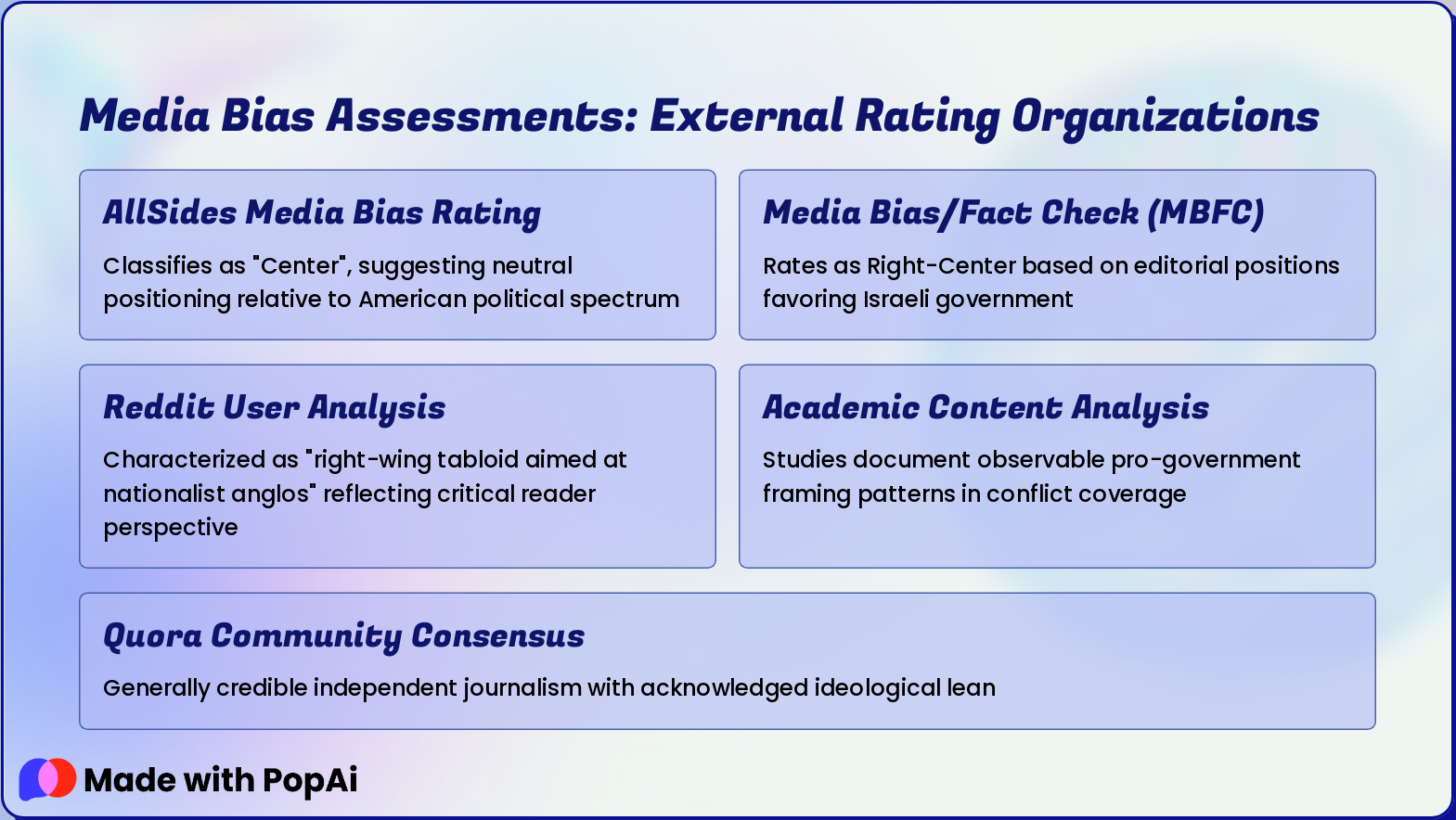
Slide 11: Media Bias Assessments: External Rating Organizations
- AllSides Media Bias Rating: Classifies as "Center", suggesting neutral positioning relative to American political spectrum
- Media Bias/Fact Check (MBFC): Rates as Right-Center based on editorial positions favoring Israeli government
- Reddit User Analysis: Characterized as "right-wing tabloid aimed at nationalist anglos" reflecting critical reader perspective
- Academic Content Analysis: Studies document observable pro-government framing patterns in conflict coverage
- Quora Community Consensus: Generally credible independent journalism with acknowledged ideological lean
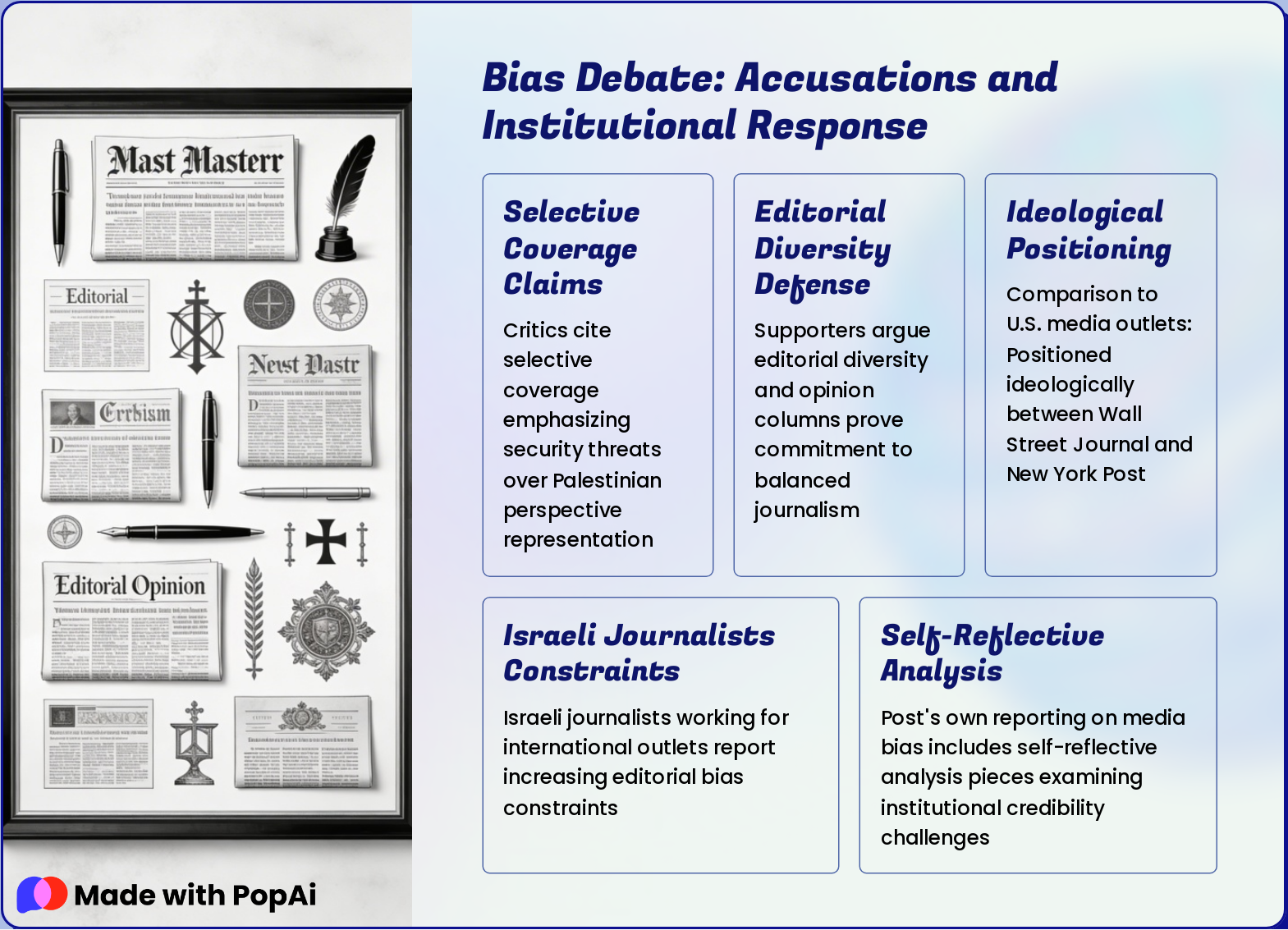
Slide 12: Bias Debate: Accusations and Institutional Response
- Selective Coverage Claims: Critics cite selective coverage emphasizing security threats over Palestinian perspective representation
- Editorial Diversity Defense: Supporters argue editorial diversity and opinion columns prove commitment to balanced journalism
- Ideological Positioning: Comparison to U.S. media outlets: Positioned ideologically between Wall Street Journal and New York Post
- Israeli Journalists Constraints: Israeli journalists working for international outlets report increasing editorial bias constraints
- Self-Reflective Analysis: Post's own reporting on media bias includes self-reflective analysis pieces examining institutional credibility challenges
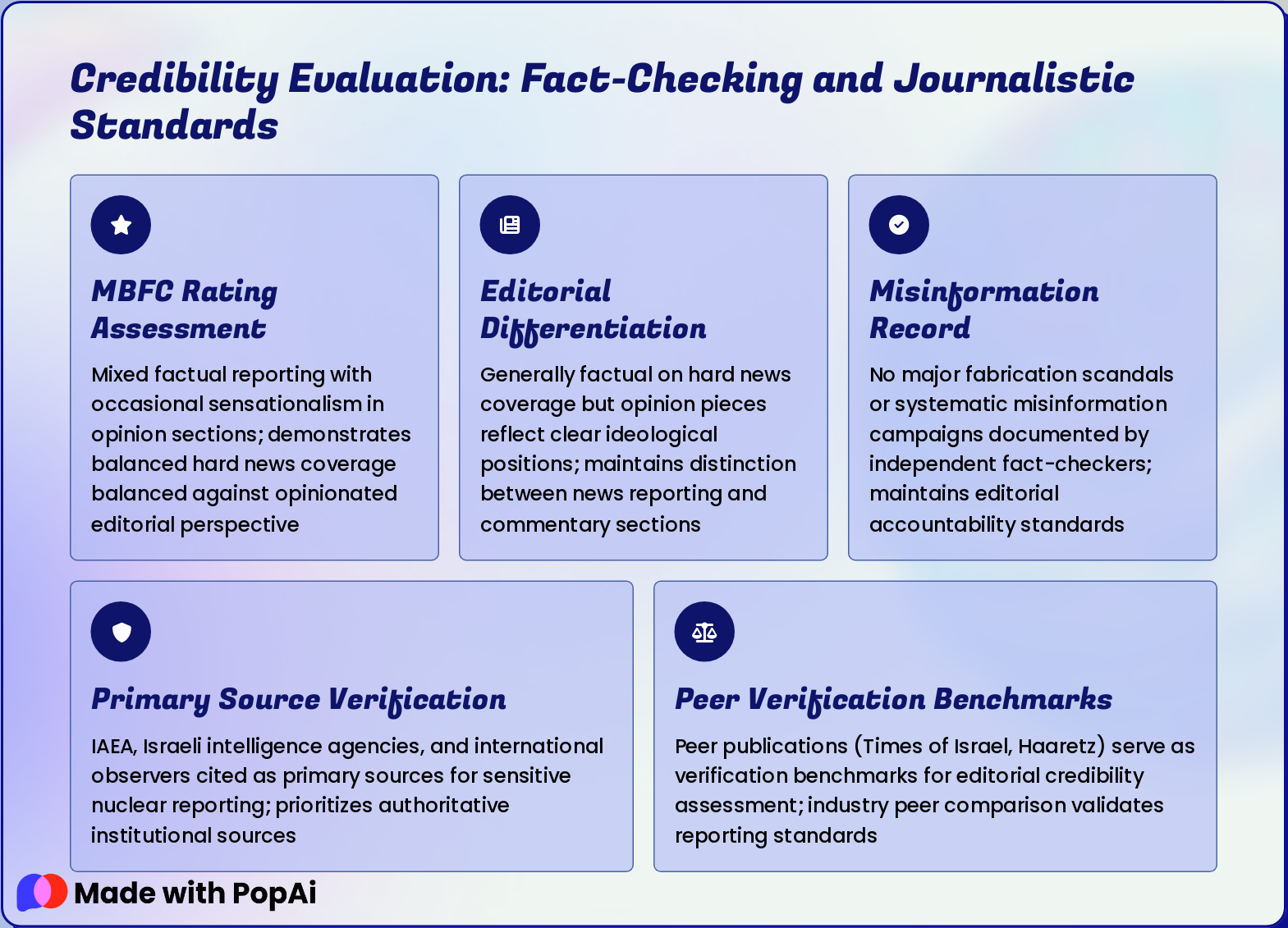
Slide 13: Credibility Evaluation: Fact-Checking and Journalistic Standards
- MBFC Rating Assessment: Mixed factual reporting with occasional sensationalism in opinion sections; demonstrates balanced hard news coverage balanced against opinionated editorial perspective
- Editorial Differentiation: Generally factual on hard news coverage but opinion pieces reflect clear ideological positions; maintains distinction between news reporting and commentary sections
- Misinformation Record: No major fabrication scandals or systematic misinformation campaigns documented by independent fact-checkers; maintains editorial accountability standards
- Primary Source Verification: IAEA, Israeli intelligence agencies, and international observers cited as primary sources for sensitive nuclear reporting; prioritizes authoritative institutional sources
- Peer Verification Benchmarks: Peer publications (Times of Israel, Haaretz) serve as verification benchmarks for editorial credibility assessment; industry peer comparison validates reporting standards
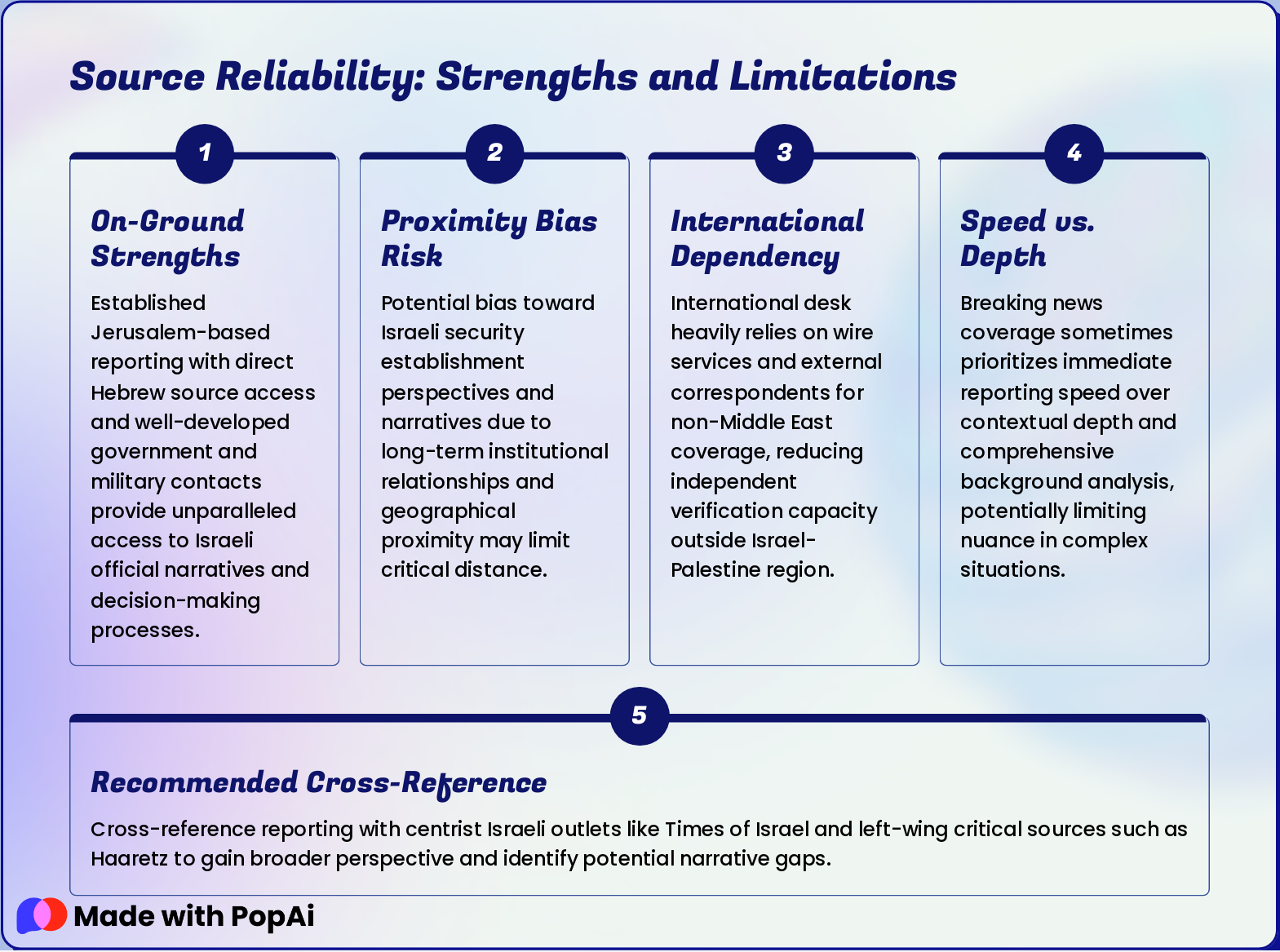
Slide 14: Source Reliability: Strengths and Limitations
- On-Ground Strengths: Established Jerusalem-based reporting with direct Hebrew source access and well-developed government and military contacts provide unparalleled access to Israeli official narratives and decision-making processes.
- Proximity Bias Risk: Potential bias toward Israeli security establishment perspectives and narratives due to long-term institutional relationships and geographical proximity may limit critical distance.
- International Dependency: International desk heavily relies on wire services and external correspondents for non-Middle East coverage, reducing independent verification capacity outside Israel-Palestine region.
- Speed vs. Depth: Breaking news coverage sometimes prioritizes immediate reporting speed over contextual depth and comprehensive background analysis, potentially limiting nuance in complex situations.
- Recommended Cross-Reference: Cross-reference reporting with centrist Israeli outlets like Times of Israel and left-wing critical sources such as Haaretz to gain broader perspective and identify potential narrative gaps.
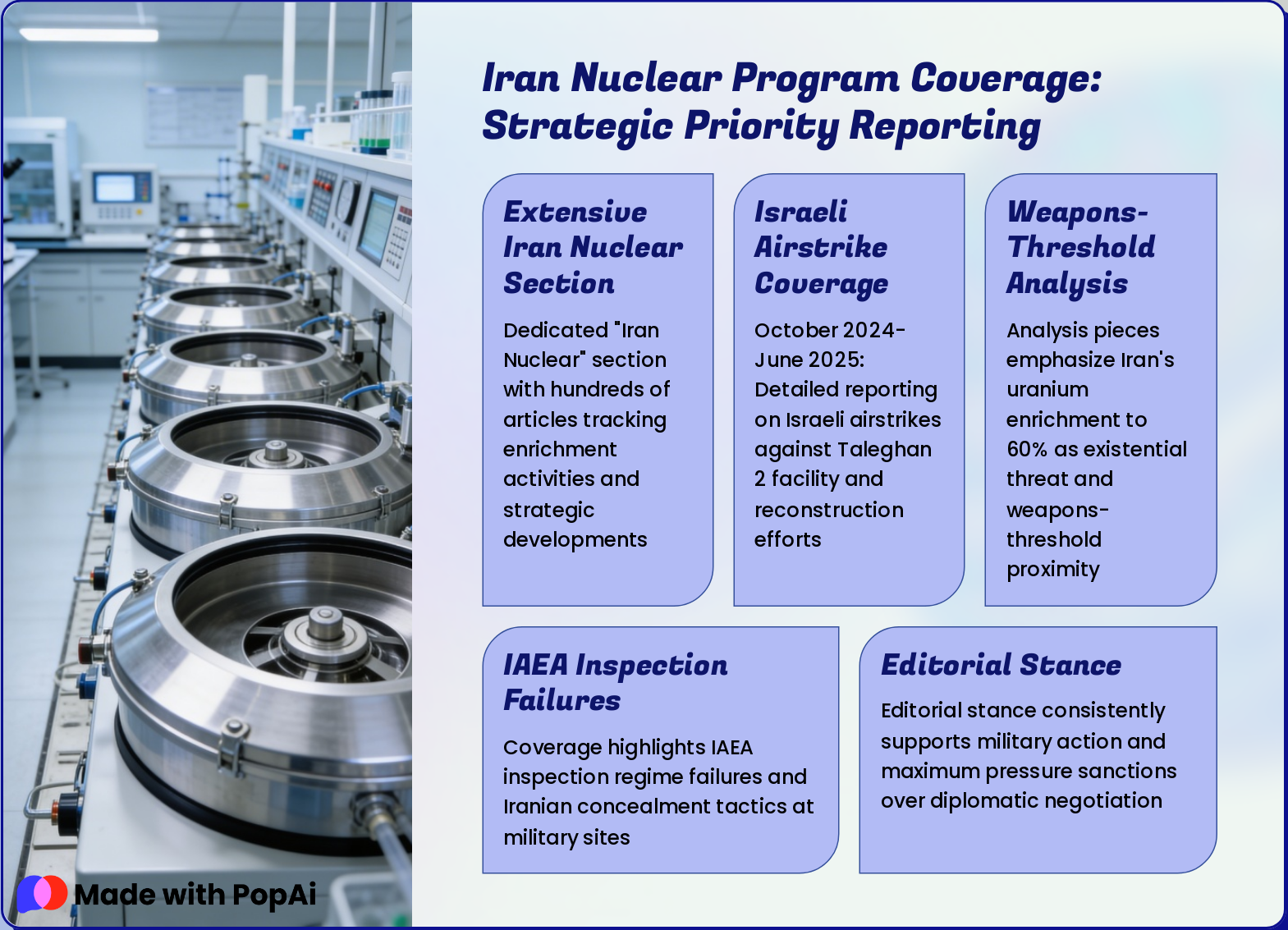
Slide 15: Iran Nuclear Program Coverage: Strategic Priority Reporting
- Extensive Iran Nuclear Section: Dedicated "Iran Nuclear" section with hundreds of articles tracking enrichment activities and strategic developments
- Israeli Airstrike Coverage: October 2024-June 2025: Detailed reporting on Israeli airstrikes against Taleghan 2 facility and reconstruction efforts
- Weapons-Threshold Analysis: Analysis pieces emphasize Iran's uranium enrichment to 60% as existential threat and weapons-threshold proximity
- IAEA Inspection Failures: Coverage highlights IAEA inspection regime failures and Iranian concealment tactics at military sites
- Editorial Stance: Editorial stance consistently supports military action and maximum pressure sanctions over diplomatic negotiation
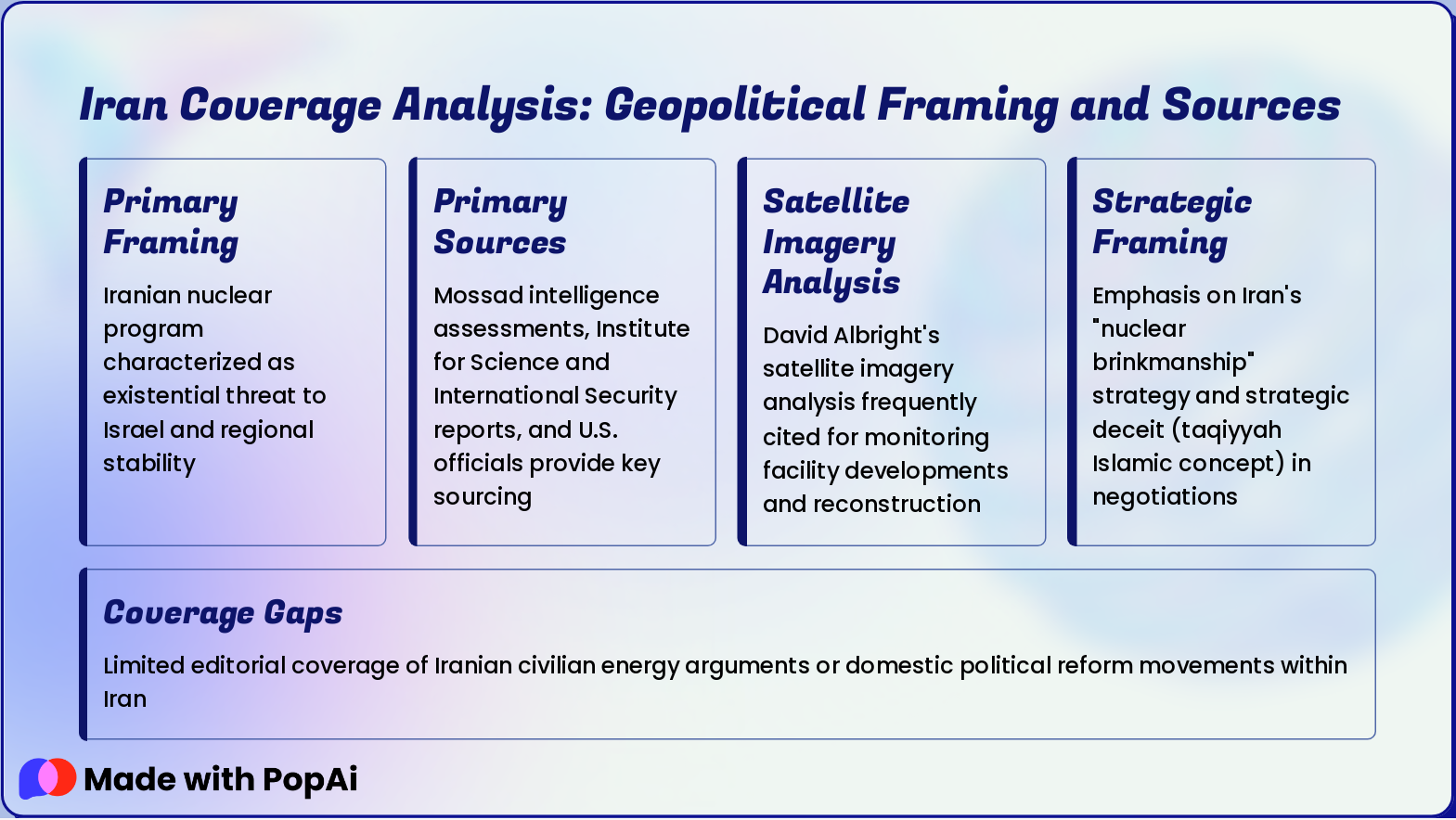
Slide 16: Iran Coverage Analysis: Geopolitical Framing and Sources
- Primary Framing: Iranian nuclear program characterized as existential threat to Israel and regional stability
- Primary Sources: Mossad intelligence assessments, Institute for Science and International Security reports, and U.S. officials provide key sourcing
- Satellite Imagery Analysis: David Albright's satellite imagery analysis frequently cited for monitoring facility developments and reconstruction
- Strategic Framing: Emphasis on Iran's "nuclear brinkmanship" strategy and strategic deceit (taqiyyah Islamic concept) in negotiations
- Coverage Gaps: Limited editorial coverage of Iranian civilian energy arguments or domestic political reform movements within Iran
Slide 17: Somaliland Recognition: Historic Diplomatic Coverage
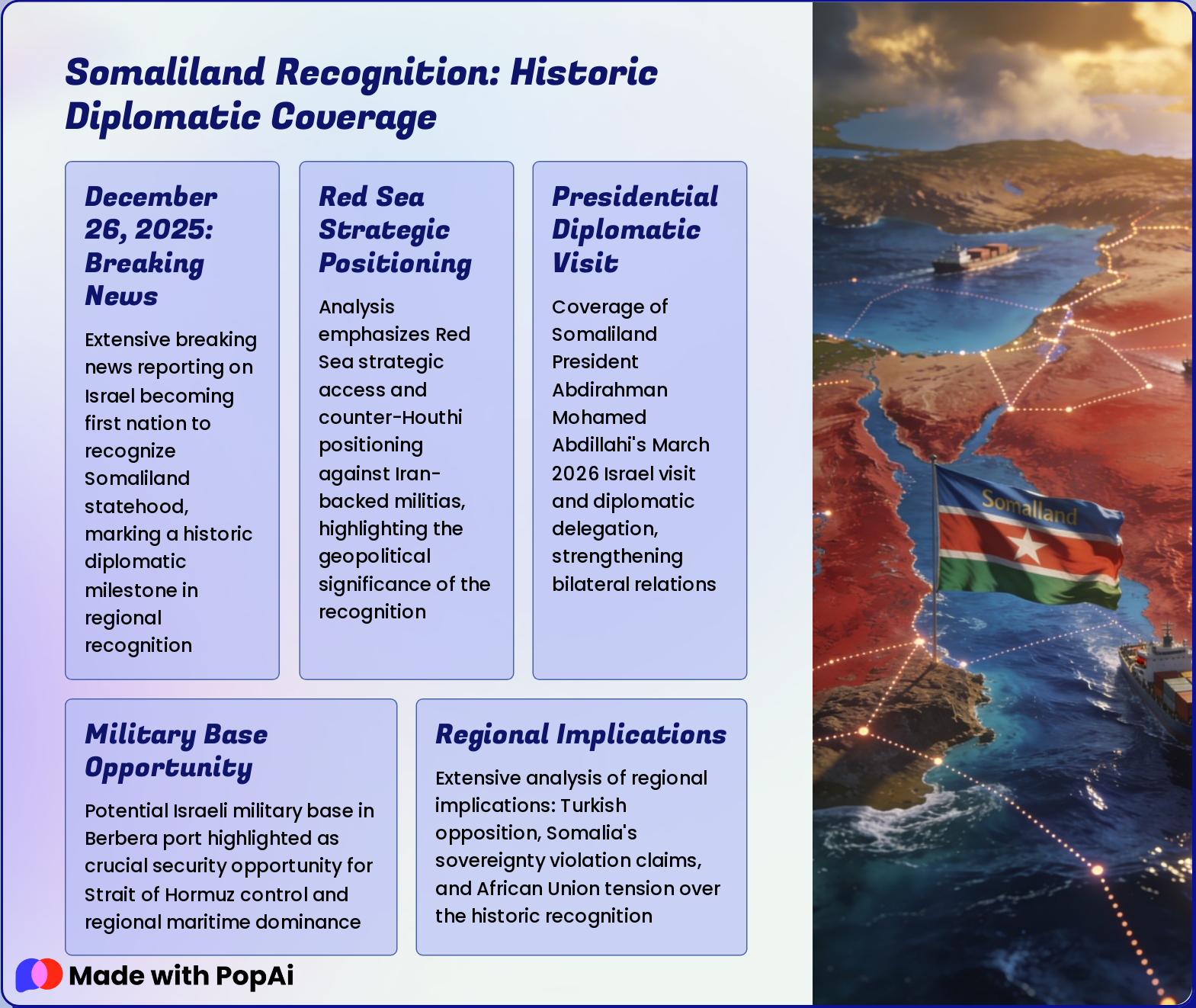
- December 26, 2025: Breaking News: Extensive breaking news reporting on Israel becoming first nation to recognize Somaliland statehood, marking a historic diplomatic milestone in regional recognition
- Red Sea Strategic Positioning: Analysis emphasizes Red Sea strategic access and counter-Houthi positioning against Iran-backed militias, highlighting the geopolitical significance of the recognition
- Presidential Diplomatic Visit: Coverage of Somaliland President Abdirahman Mohamed Abdillahi's March 2026 Israel visit and diplomatic delegation, strengthening bilateral relations
- Military Base Opportunity: Potential Israeli military base in Berbera port highlighted as crucial security opportunity for Strait of Hormuz control and regional maritime dominance
- Regional Implications: Extensive analysis of regional implications: Turkish opposition, Somalia's sovereignty violation claims, and African Union tension over the historic recognition
Slide 18: Somaliland Geopolitical Analysis: Jerusalem Post Editorial Perspective
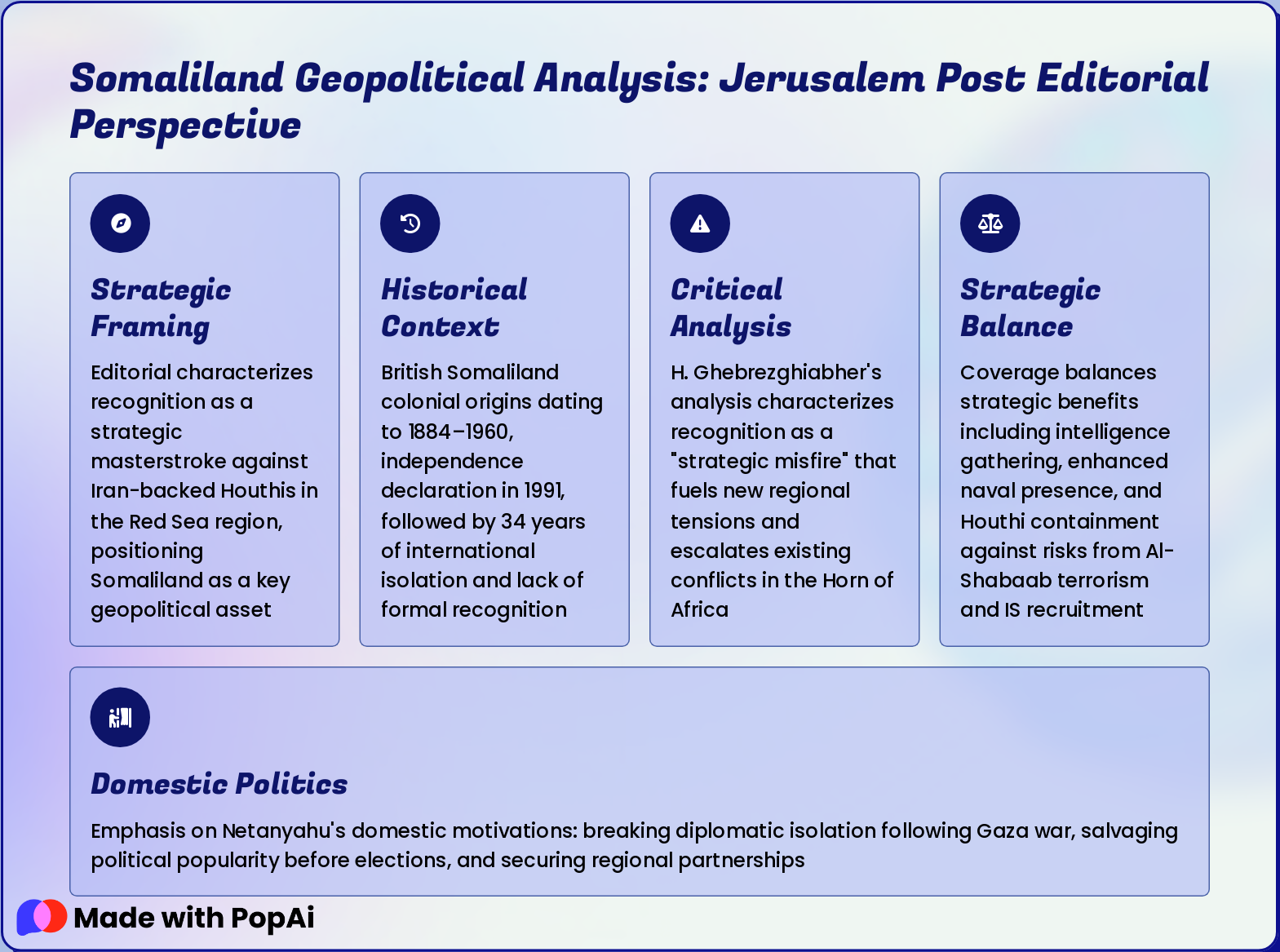
- Strategic Framing: Editorial characterizes recognition as a strategic masterstroke against Iran-backed Houthis in the Red Sea region, positioning Somaliland as a key geopolitical asset
- Historical Context: British Somaliland colonial origins dating to 1884–1960, independence declaration in 1991, followed by 34 years of international isolation and lack of formal recognition
- Critical Analysis: H. Ghebrezghiabher's analysis characterizes recognition as a "strategic misfire" that fuels new regional tensions and escalates existing conflicts in the Horn of Africa
- Strategic Balance: Coverage balances strategic benefits including intelligence gathering, enhanced naval presence, and Houthi containment against risks from Al-Shabaab terrorism and IS recruitment
- Domestic Politics: Emphasis on Netanyahu's domestic motivations: breaking diplomatic isolation following Gaza war, salvaging political popularity before elections, and securing regional partnerships
Slide 19: Ownership History: Editorial Control and Independence
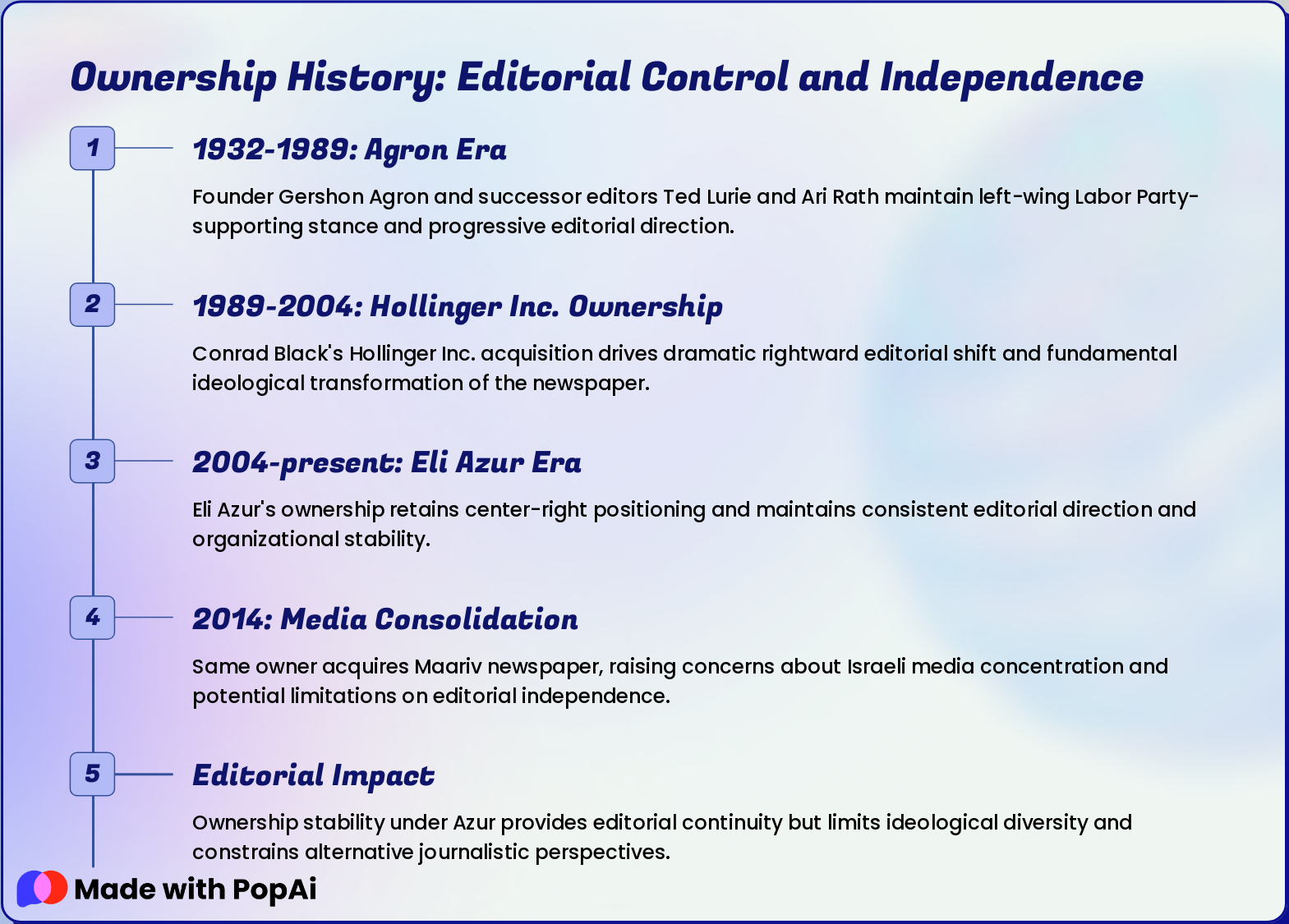
- 1932-1989: Agron Era: Founder Gershon Agron and successor editors Ted Lurie and Ari Rath maintain left-wing Labor Party-supporting stance and progressive editorial direction.
- 1989-2004: Hollinger Inc. Ownership: Conrad Black's Hollinger Inc. acquisition drives dramatic rightward editorial shift and fundamental ideological transformation of the newspaper.
- 2004-present: Eli Azur Era: Eli Azur's ownership retains center-right positioning and maintains consistent editorial direction and organizational stability.
- 2014: Media Consolidation: Same owner acquires Maariv newspaper, raising concerns about Israeli media concentration and potential limitations on editorial independence.
- Editorial Impact: Ownership stability under Azur provides editorial continuity but limits ideological diversity and constrains alternative journalistic perspectives.
Slide 20: Digital Transformation: JPost.com and Social Media Presence
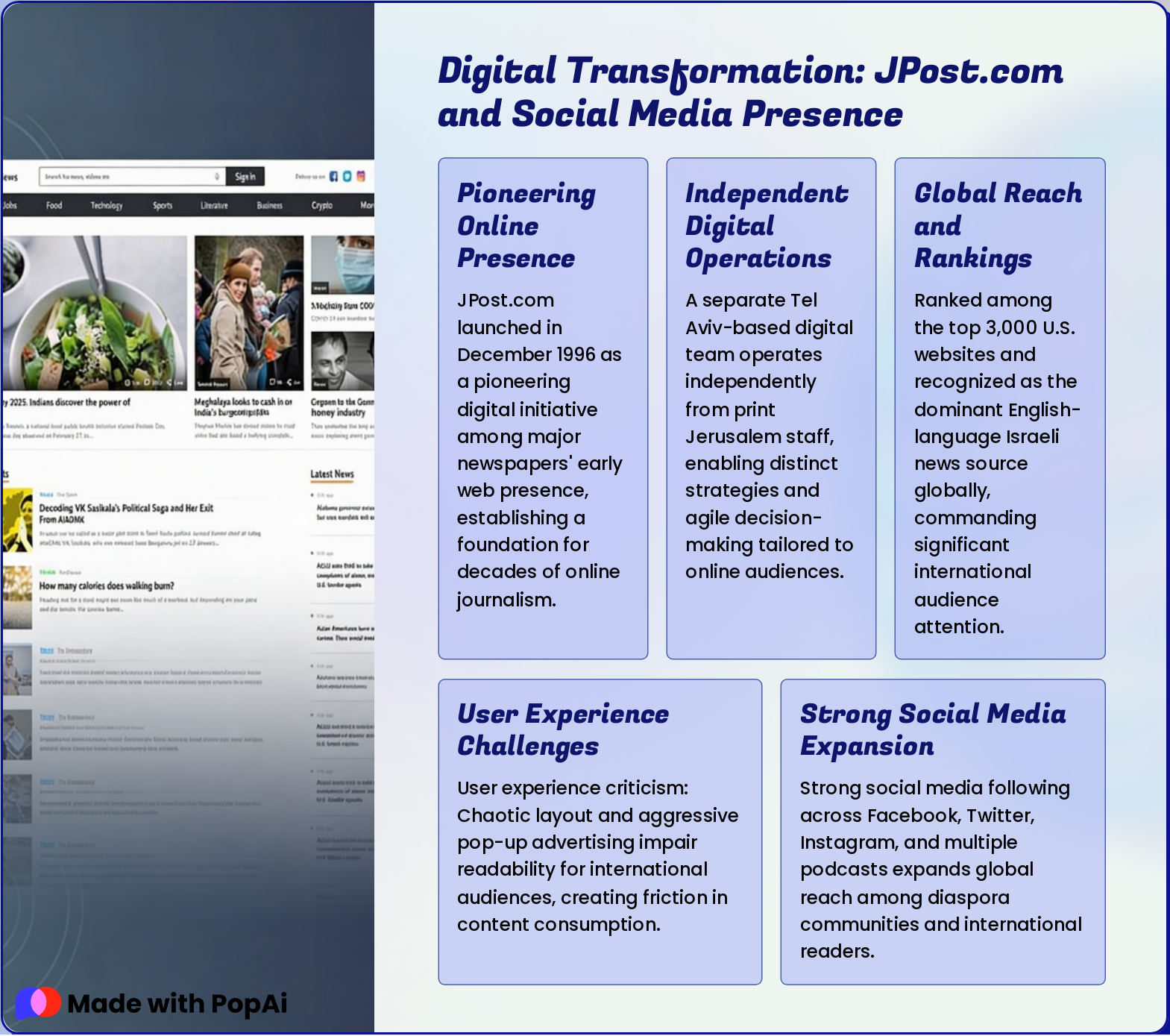
- Pioneering Online Presence: JPost.com launched in December 1996 as a pioneering digital initiative among major newspapers' early web presence, establishing a foundation for decades of online journalism.
- Independent Digital Operations: A separate Tel Aviv-based digital team operates independently from print Jerusalem staff, enabling distinct strategies and agile decision-making tailored to online audiences.
- Global Reach and Rankings: Ranked among the top 3,000 U.S. websites and recognized as the dominant English-language Israeli news source globally, commanding significant international audience attention.
- User Experience Challenges: User experience criticism: Chaotic layout and aggressive pop-up advertising impair readability for international audiences, creating friction in content consumption.
- Strong Social Media Expansion: Strong social media following across Facebook, Twitter, Instagram, and multiple podcasts expands global reach among diaspora communities and international readers.
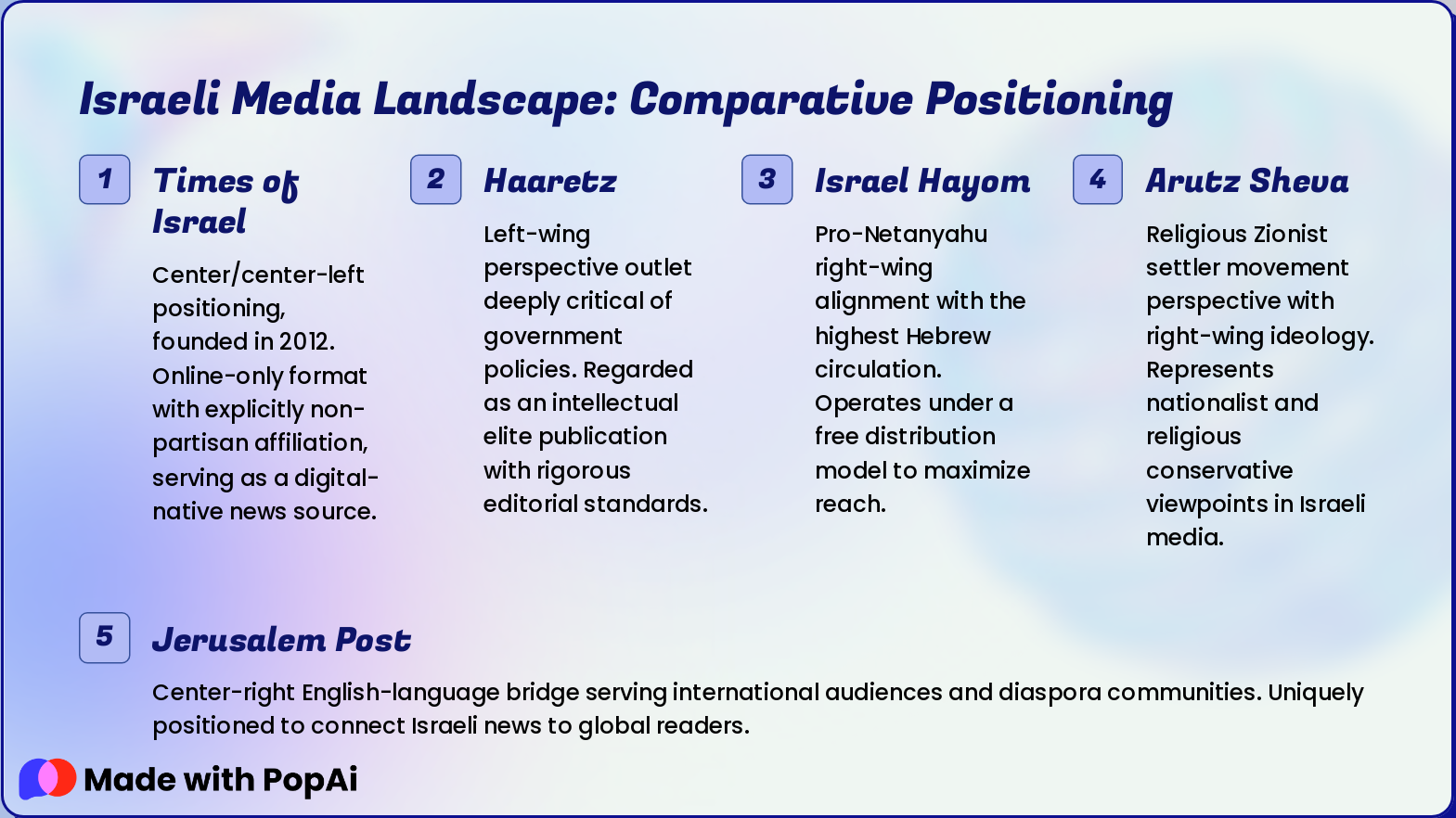
Slide 21: Israeli Media Landscape: Comparative Positioning
- Times of Israel: Center/center-left positioning, founded in 2012. Online-only format with explicitly non-partisan affiliation, serving as a digital-native news source.
- Haaretz: Left-wing perspective outlet deeply critical of government policies. Regarded as an intellectual elite publication with rigorous editorial standards.
- Israel Hayom: Pro-Netanyahu right-wing alignment with the highest Hebrew circulation. Operates under a free distribution model to maximize reach.
- Arutz Sheva: Religious Zionist settler movement perspective with right-wing ideology. Represents nationalist and religious conservative viewpoints in Israeli media.
- Jerusalem Post: Center-right English-language bridge serving international audiences and diaspora communities. Uniquely positioned to connect Israeli news to global readers.
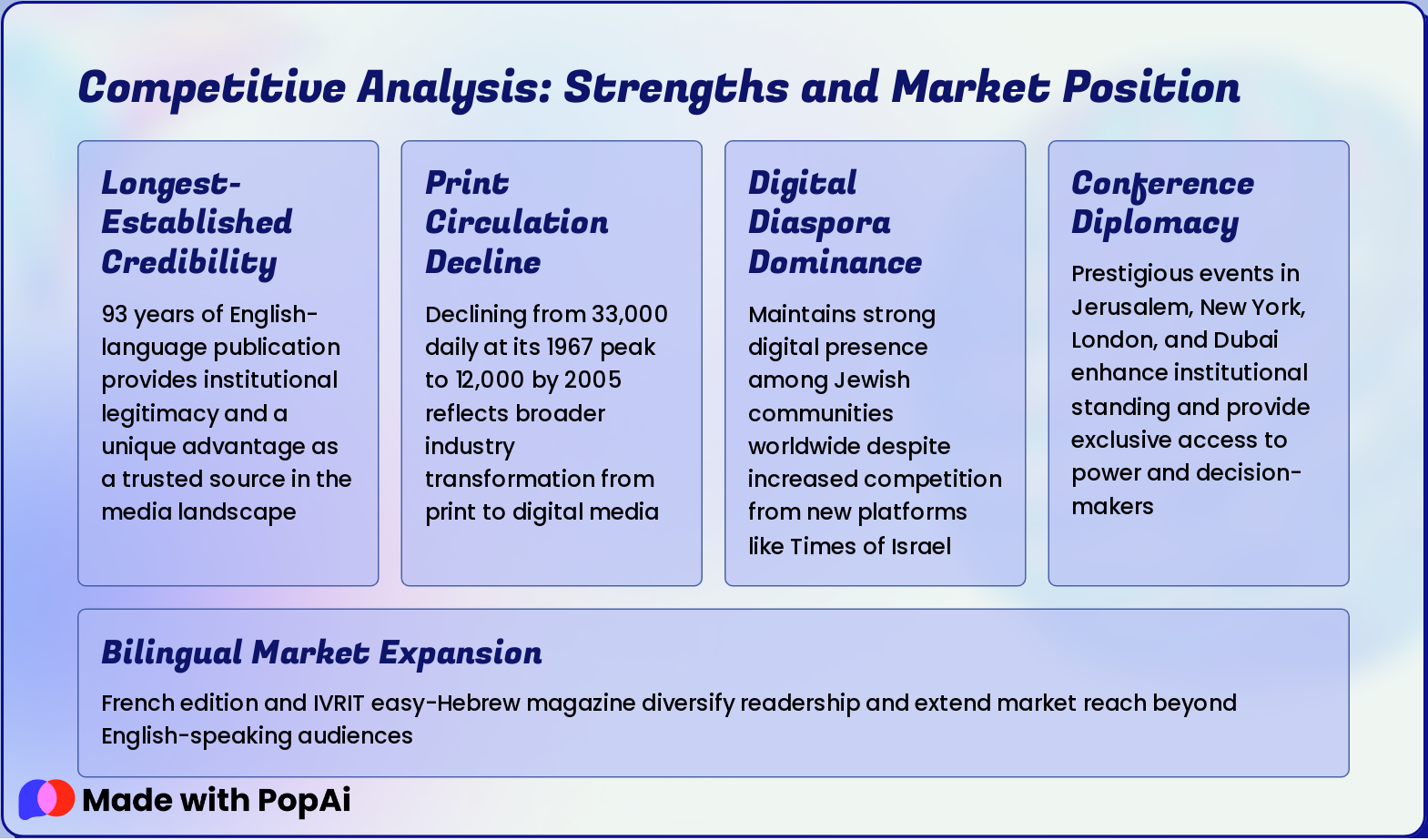
Slide 22: Competitive Analysis: Strengths and Market Position
- Longest-Established Credibility: 93 years of English-language publication provides institutional legitimacy and a unique advantage as a trusted source in the media landscape
- Print Circulation Decline: Declining from 33,000 daily at its 1967 peak to 12,000 by 2005 reflects broader industry transformation from print to digital media
- Digital Diaspora Dominance: Maintains strong digital presence among Jewish communities worldwide despite increased competition from new platforms like Times of Israel
- Conference Diplomacy: Prestigious events in Jerusalem, New York, London, and Dubai enhance institutional standing and provide exclusive access to power and decision-makers
- Bilingual Market Expansion: French edition and IVRIT easy-Hebrew magazine diversify readership and extend market reach beyond English-speaking audiences
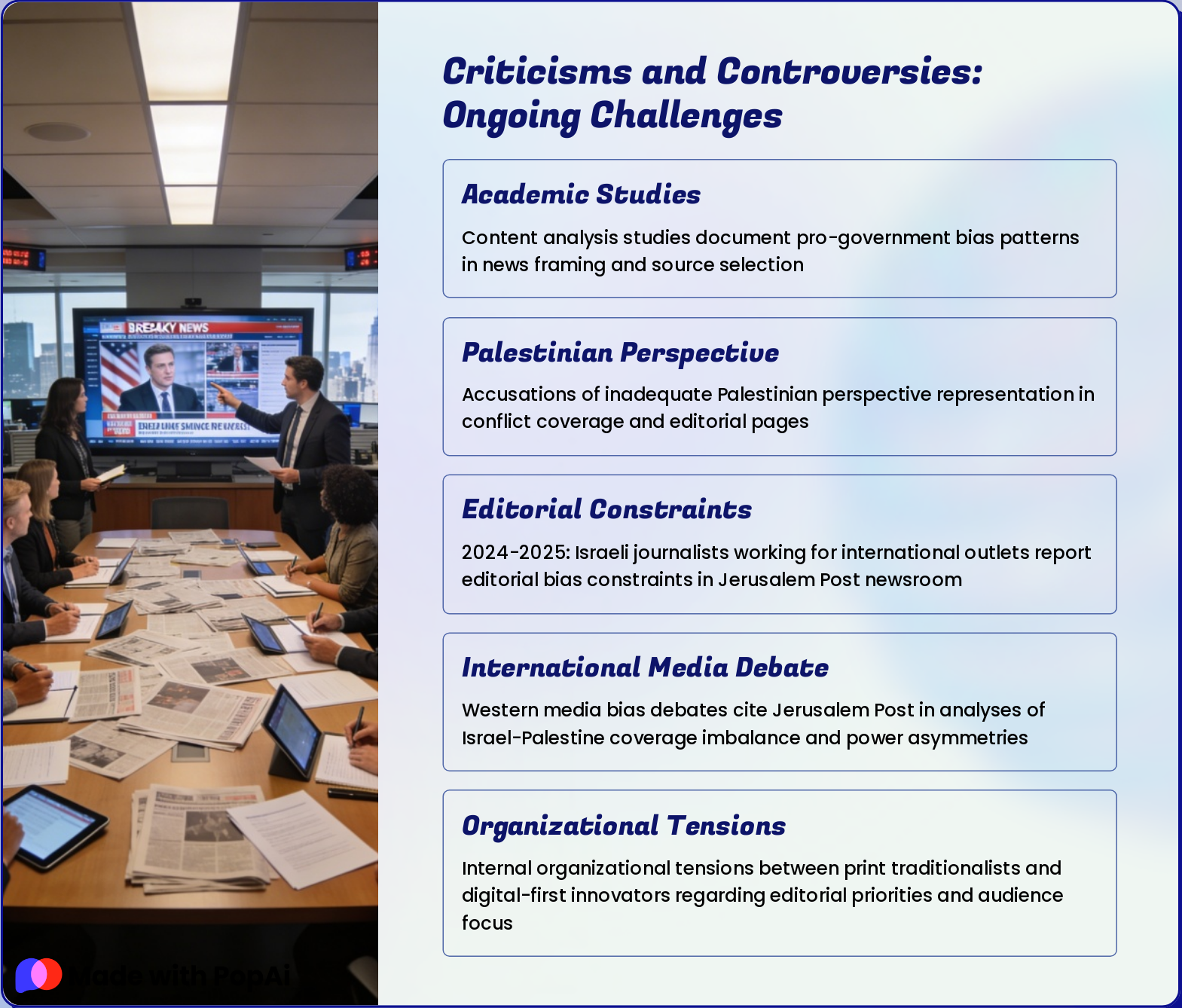
Slide 23: Criticisms and Controversies: Ongoing Challenges
- Academic Studies: Content analysis studies document pro-government bias patterns in news framing and source selection
- Palestinian Perspective: Accusations of inadequate Palestinian perspective representation in conflict coverage and editorial pages
- Editorial Constraints: 2024-2025: Israeli journalists working for international outlets report editorial bias constraints in Jerusalem Post newsroom
- International Media Debate: Western media bias debates cite Jerusalem Post in analyses of Israel-Palestine coverage imbalance and power asymmetries
- Organizational Tensions: Internal organizational tensions between print traditionalists and digital-first innovators regarding editorial priorities and audience focus
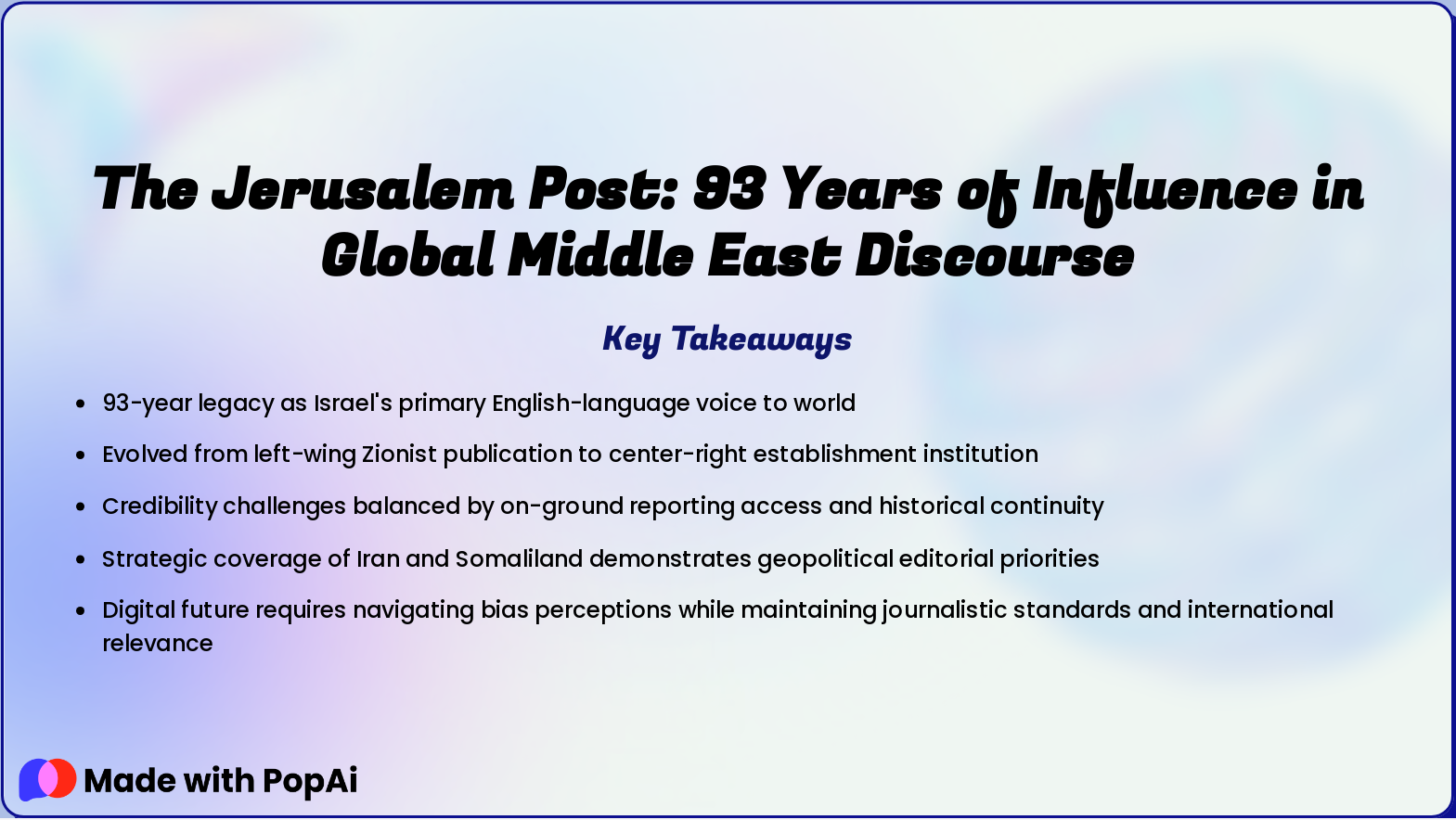
Slide 24: The Jerusalem Post: 93 Years of Influence in Global Middle East Discourse
93-year legacy as Israel's primary English-language voice to world
Evolved from left-wing Zionist publication to center-right establishment institution
Credibility challenges balanced by on-ground reporting access and historical continuity
Strategic coverage of Iran and Somaliland demonstrates geopolitical editorial priorities
Digital future requires navigating bias perceptions while maintaining journalistic standards and international relevance
- 93-year legacy as Israel's primary English-language voice to world
- Evolved from left-wing Zionist publication to center-right establishment institution
- Credibility challenges balanced by on-ground reporting access and historical continuity
- Strategic coverage of Iran and Somaliland demonstrates geopolitical editorial priorities
- Digital future requires navigating bias perceptions while maintaining journalistic standards and international relevance