Car Dealership Cleaning Service Pricing: Data-Driven AI PowerPoint Analysis

Published May 25, 2026
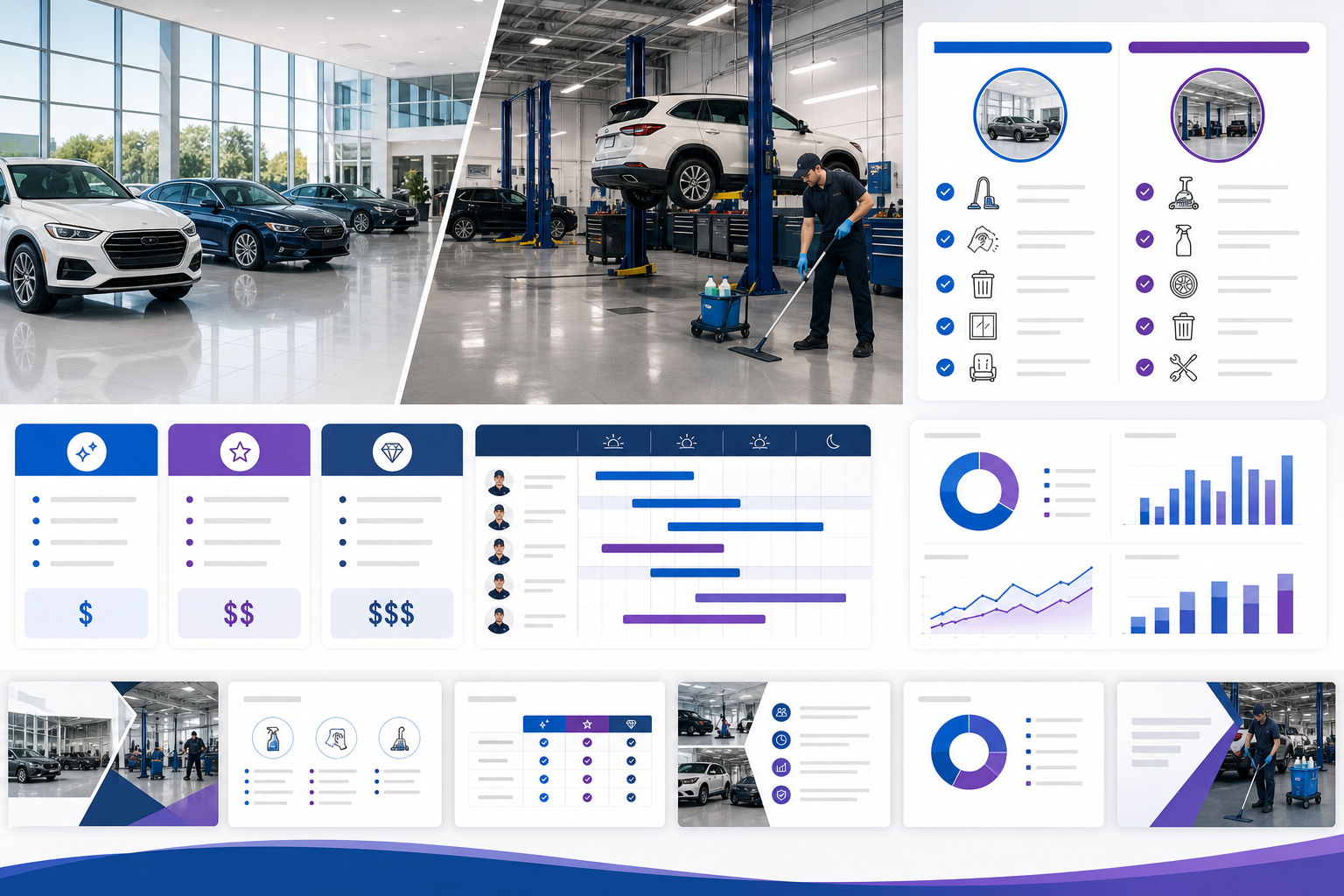
car dealership cleaning service pricing analysis dashboard for showroom and service bay proposal
A dealership cleaning proposal works best when pricing is tied to zones, traffic, labor, and visible service standards.

Car dealership cleaning service pricing is hard to defend when the prospect sees only a monthly number. Owners, sales managers, and operations teams in commercial cleaning need a clearer way to explain why a showroom, restroom core, service lane, and customer lounge require different labor assumptions.

This guide shows how to turn site-walk notes into a data-driven PowerPoint analysis that feels practical, not overbuilt. If you already have measurements, photos, and scope notes, PopAi AI Presentation can help structure the pricing story into slides your dealership client can actually review.

Why Car Dealership Cleaning Service Pricing Is Different

This section explains why dealership facilities should not be priced like standard offices or retail stores.

Dealerships combine high-gloss retail and industrial cleaning

A dealership is really several facilities in one. The showroom must look brand-ready for walk-in buyers, the service drive gets oil, tire marks, and weather exposure, and the back offices need predictable janitorial routines. Treating the whole property as one square-foot rate hides the work that actually drives cost.

The biggest pricing mistake is using a generic office cleaning benchmark without adjusting for surfaces, traffic, and customer visibility. A 25,000-square-foot office and a 25,000-square-foot dealership may share the same size, but they rarely share the same cleaning frequency or quality expectations.

The decision-maker wants proof, not a cleaning lecture

Dealer principals and general managers usually care about three outcomes: a clean buying environment, fewer complaints, and minimal disruption to sales and service operations. Your presentation should connect every pricing line to one of those outcomes.

Price becomes easier to accept when the buyer can see the operational logic behind it: zone, task, frequency, labor, and risk.

Use zones before you use rates

Start the pricing conversation with facility zones. A simple model can separate the showroom, customer lounge, restrooms, sales offices, service reception, service bays, parts counter, exterior entry glass, and employee areas. Each zone has a different cleaning standard and frequency.

  • Showroom: visible floors, dusting, desks, glass, display vehicles, and presentation areas.
  • Service drive: tire residue, moisture, customer path safety, and frequent spot cleaning.
  • Restrooms: fixture count, consumables, odor control, and inspection frequency.
  • Glass and entries: fingerprints, weather exposure, and brand impression.

Data to Collect Before Car Dealership Cleaning Service Pricing

Good pricing starts with field data that explains labor demand and avoids vague assumptions.

Build a site-walk checklist

Before creating slides, collect the facts that change the bid. At minimum, capture square footage by zone, floor material, restroom fixture count, customer traffic patterns, weekly operating hours, service bay count, entry-glass surfaces, trash points, and security access constraints.

Also ask what the dealership has disliked about past vendors. Complaints about missed fingerprints, wet service-lane floors, or inconsistent restroom checks often reveal the premium tasks your proposal must emphasize.

AI PowerPoint cleaning proposal with dealership zones and service pricing inputs
Organize site data into proposal-ready pricing inputs before choosing the final monthly rate.

Use labor data as a reality check

The U.S. Bureau of Labor Statistics publishes Occupational Employment and Wage Statistics for janitors and cleaners by state and metro area. Instead of relying on a national average, use local wage data as a check on whether your staffing assumptions are realistic for the dealership’s market.

For example, in a sample bid model, a 20,000-square-foot showroom with 12 restroom fixtures, 9 major glass entry panels, and a 6-day operating schedule created a very different labor plan than the same square footage cleaned three nights per week. The square footage did not change; the service frequency and visible-touch workload did.

Separate measurable assumptions from judgment calls

Some inputs are measurable: square footage, fixtures, visits per week, and consumable points. Others are judgment calls: finish expectations, inspection tolerance, and how quickly a dealership wants mid-day issues addressed. Your deck should label both clearly.

Pro Tip

Use PopAi AI Presentation to turn your site-walk checklist into a structured deck outline, then review every pricing assumption before sending it to the client.

How AI PowerPoint Analysis Turns Pricing Data Into a Client Story

An AI-assisted deck helps translate operational detail into a concise business case the dealership can approve.

From spreadsheet rows to executive slides

Commercial cleaning bids often fail because the spreadsheet is technically correct but visually exhausting. AI for PowerPoint is useful when it groups your raw inputs into client-facing sections: site overview, cleaning challenge, recommended scope, labor model, pricing options, and implementation plan.

In a hands-on workflow, a 70-row pricing worksheet can be summarized into a 10-slide proposal without deleting the logic. The main deck shows the decision path, while detailed line items move to the appendix for procurement or facilities review.

Use AI for structure, not fake certainty

AI should not invent labor rates, square footage, or dealership benchmarks. Its job is to organize verified inputs, spot missing assumptions, and draft plain-English explanations. The final number still depends on your site walk, local labor market, margin targets, and service promise.

Use AI to make the bid easier to understand. Do not use it to make unverified numbers look more precise than they are.

Prompts that produce useful pricing slides

Strong prompts describe the facility, buyer, and decision goal. Weak prompts ask for a generic cleaning proposal. Try giving the AI a structured brief like this:

  • “Create a 10-slide PowerPoint outline for a luxury car dealership cleaning proposal.”
  • “Use these zones: showroom, service drive, restrooms, lounge, offices, parts counter, and exterior entry glass.”
  • “Explain pricing drivers without revealing internal margin.”
  • “Include three package options: essential, standard, and premium.”

A Practical Pricing Model for Dealership Cleaning Decks

This model helps you present a quote that is transparent enough to trust but not so detailed that it overwhelms the buyer.

Show three pricing layers

A clear dealership proposal usually separates pricing into base janitorial service, specialty recurring tasks, and optional enhancements. This lets the client compare service levels without forcing you to discount the core scope.

Pricing layer What it includes Why it matters in the deck
Base service Routine floors, trash, restrooms, offices, lounge, and touchpoints Anchors the monthly operational cost
Specialty tasks Glass detailing, showroom floor care, service-lane spot work, periodic deep cleaning Explains visible quality differences
Optional enhancements Day porter coverage, event preparation, after-service inspections, consumable management Gives the dealership control over service level

Use a sample workload calculation

In one proposal model, the cleaning company estimated 2.5 labor hours per weeknight for showroom, offices, restrooms, and customer lounge cleaning, plus a 4-hour weekly detail block for glass and showroom floor attention. That creates a visible staffing logic before supply costs, supervision, overhead, and margin are added.

This kind of calculation is not a universal rate. It is a defensible framework. The exact hours should change based on traffic, layout, dealership brand standard, local wages, and whether cleaning happens during open hours or after close.

car dealership cleaning pricing PowerPoint slide with service tiers and monthly quote options
Package options help the dealership choose a service level without reducing the value of the core scope.

What to Put in the PowerPoint Proposal

The best deck answers the buyer’s main question quickly: why this scope, why this price, and why your team?

Recommended 10-slide structure

  1. Title and client context: dealership name, facility type, proposal date.
  2. Current cleaning challenges: visible issues and operational risks from the site walk.
  3. Facility zone map: showroom, service, restrooms, offices, and customer areas.
  4. Recommended cleaning scope: task categories and frequency.
  5. Labor and scheduling plan: when work happens and who supervises it.
  6. Quality control process: inspections, reporting, escalation, and corrective action.
  7. Pricing options: essential, standard, premium, or base plus add-ons.
  8. Implementation timeline: kickoff, supplies, access, first inspection.
  9. Proof and credibility: relevant facility experience, references, or before-after examples.
  10. Decision slide: recommended option and next step.

Make the pricing slide simple

The pricing slide should not look like an accounting ledger. Show the monthly package, what is included, key exclusions, and optional upgrades. If procurement needs itemized detail, place it in an appendix instead of interrupting the sales story.

A before-and-after deck review often reveals the same pattern: the first draft spends too many slides on company history and too few on the dealership’s specific facility. Move generic company credentials later and put site-specific findings in the first third of the deck.

Common Mistakes That Make Dealership Cleaning Quotes Look Expensive

A quote feels expensive when the buyer cannot connect the number to risk reduction, presentation quality, or operational effort.

Mistake 1: Hiding the scope behind one monthly price

A single number with no supporting logic invites comparison against the cheapest vendor. Break the proposal into zones and service outcomes so the dealership understands what they would lose by choosing a lower scope.

Mistake 2: Ignoring open-hours disruption

Cleaning during dealership hours may require quieter equipment, tighter safety controls, and staff who can work around customers. After-hours cleaning may involve alarm codes, key control, and supervision costs. Either way, the schedule affects the price.

Mistake 3: Overpromising specialty work

Showroom floor care, high-traffic glass, and service-lane residue should be scoped carefully. If you include them casually in the base price, the account can become unprofitable or inconsistent.

Mistake 4: Sending a deck that looks generic

Dealerships are brand-sensitive environments. Use photos, zone labels, and client-specific observations. A generic template says “vendor”; a site-specific analysis says “partner.”

FAQ: Car Dealership Cleaning Service Pricing

These are the questions cleaning providers usually face before finalizing a dealership proposal.

Should a dealership cleaning quote be priced per square foot or per visit?

Use both. Per-square-foot pricing helps benchmark the facility, while per-visit pricing shows the operational reality of labor, frequency, supplies, and specialty tasks. In a client deck, show the dealership an all-in monthly number, then break it into zones and visit assumptions.

What data should I collect before building the PowerPoint analysis?

Collect square footage by zone, restroom fixture count, showroom glass area, service bay count, weekly traffic pattern, operating hours, required frequencies, local labor rates, supplies, and any compliance-sensitive areas. Photos and floor plans make the pricing story easier to defend.

How can AI help without inventing inaccurate pricing?

AI should structure, compare, and explain your data; it should not replace your site walk-through. Use it to turn field notes into a pricing matrix, identify missing assumptions, draft slide narratives, and prepare client-friendly visuals based on your verified inputs.

How many slides should a dealership cleaning proposal include?

Most dealership decision-makers can absorb 8 to 12 slides: problem, site overview, cleaning zones, scope, staffing model, pricing options, risk controls, proof, and next steps. Add an appendix only when procurement needs detailed line items.

Create your presentation with one click now

Turn dealership site notes, pricing assumptions, and service tiers into a polished proposal deck faster.

Create with PopAi
Maya Chen

Maya writes about AI-assisted presentation workflows for sales, operations, and service businesses. Her work focuses on turning messy business inputs into clear proposal narratives, pricing decks, and client-ready decision materials.

Related Articles