Presentation Summary
An in-depth analysis of Trump's 48-hour ultimatum to Iran, exploring strategic threats, regional implications, and global economic impacts amid the escalating Middle East crisis.
Full Presentation Transcript
Slide 1: Trump's 48-Hour Ultimatum to Iran
Analysis of Strategic Threats, Regional Implications, and Global Economic Impact in the Escalating Middle East Crisis - March 2026
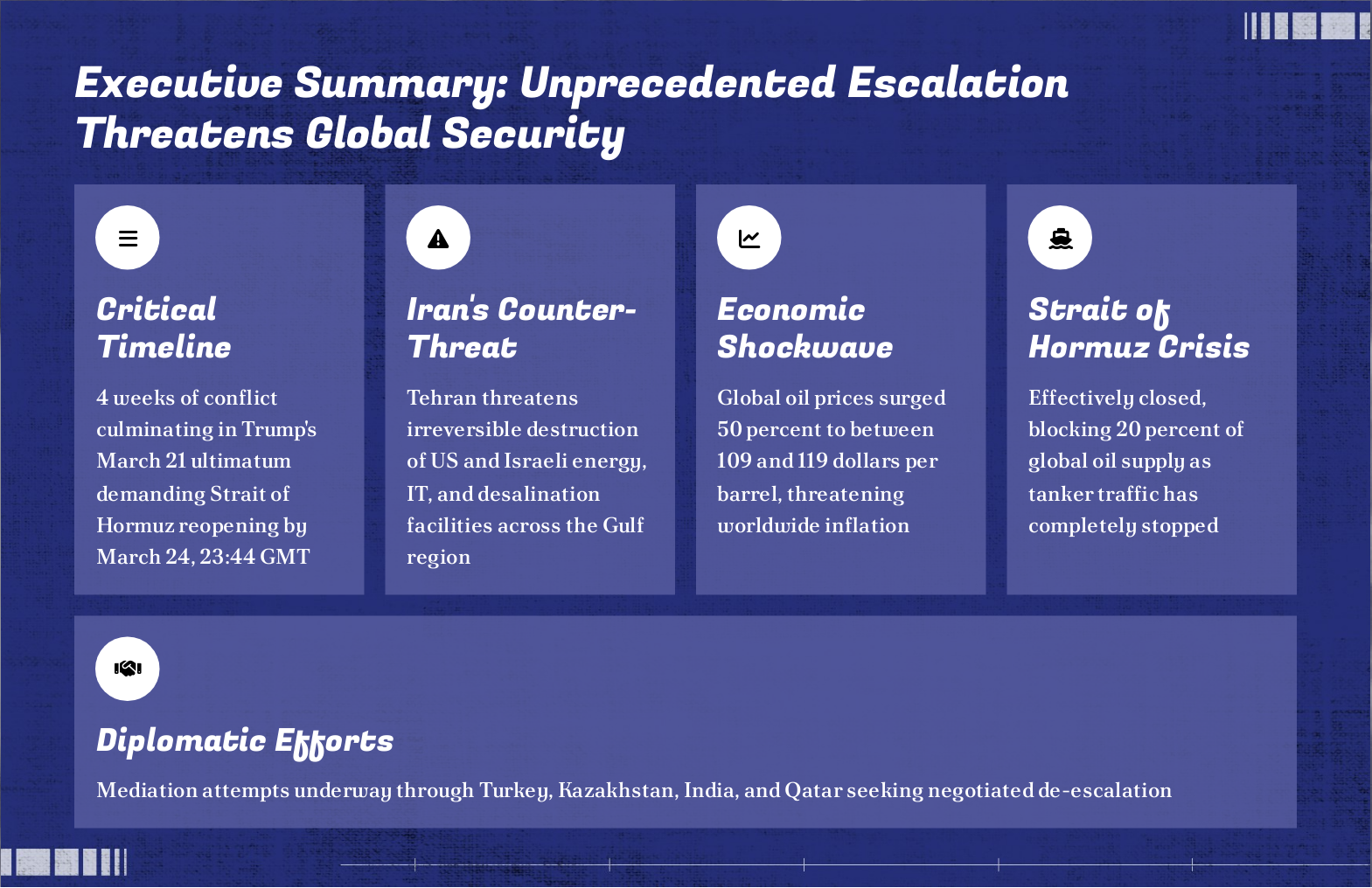
Slide 2: Executive Summary: Unprecedented Escalation Threatens Global Security
- Critical Timeline: 4 weeks of conflict culminating in Trump's March 21 ultimatum demanding Strait of Hormuz reopening by March 24, 23:44 GMT
- Iran's Counter-Threat: Tehran threatens irreversible destruction of US and Israeli energy, IT, and desalination facilities across the Gulf region
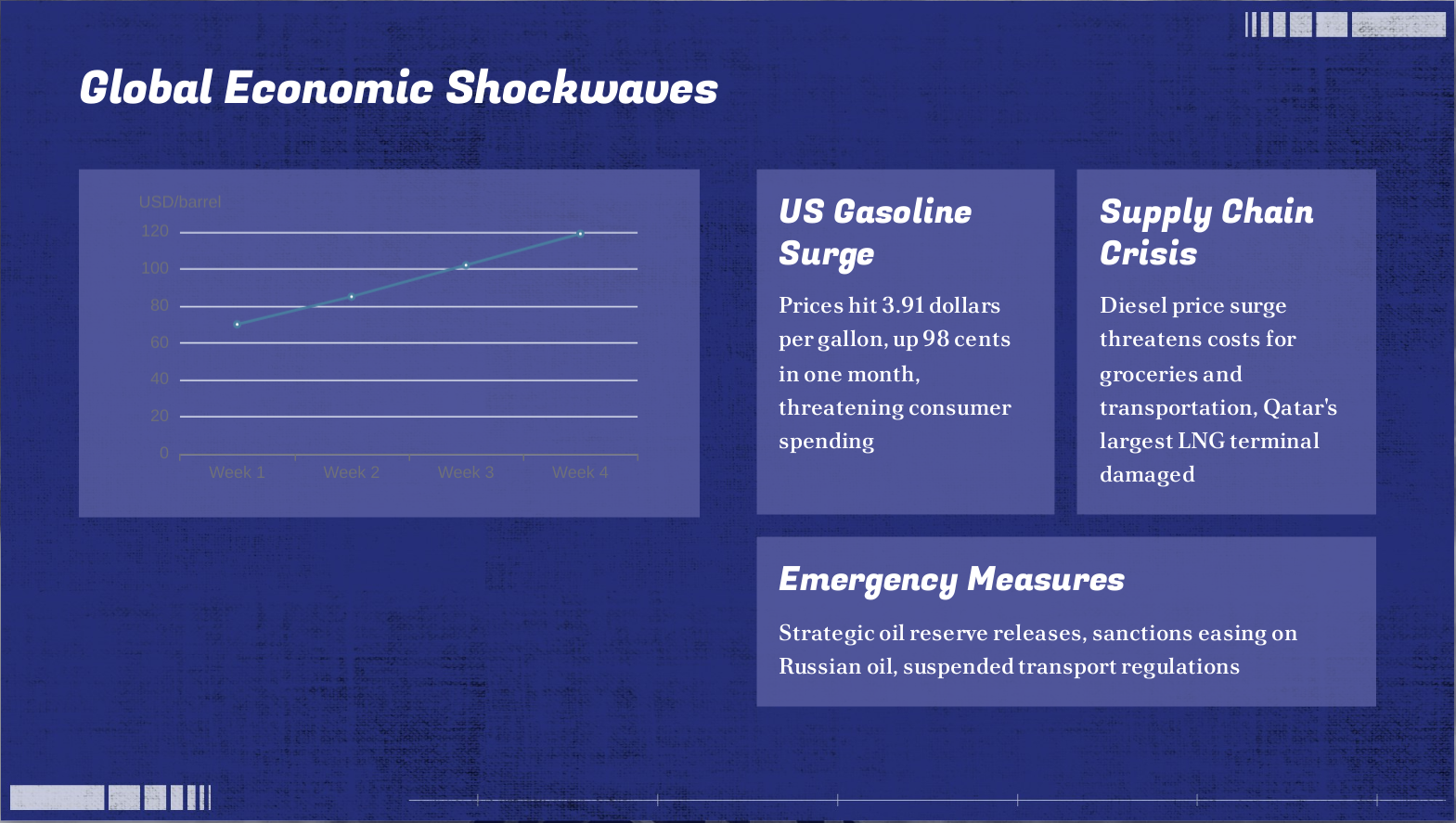
- Economic Shockwave: Global oil prices surged 50 percent to between 109 and 119 dollars per barrel, threatening worldwide inflation
- Strait of Hormuz Crisis: Effectively closed, blocking 20 percent of global oil supply as tanker traffic has completely stopped
- Diplomatic Efforts: Mediation attempts underway through Turkey, Kazakhstan, India, and Qatar seeking negotiated de-escalation
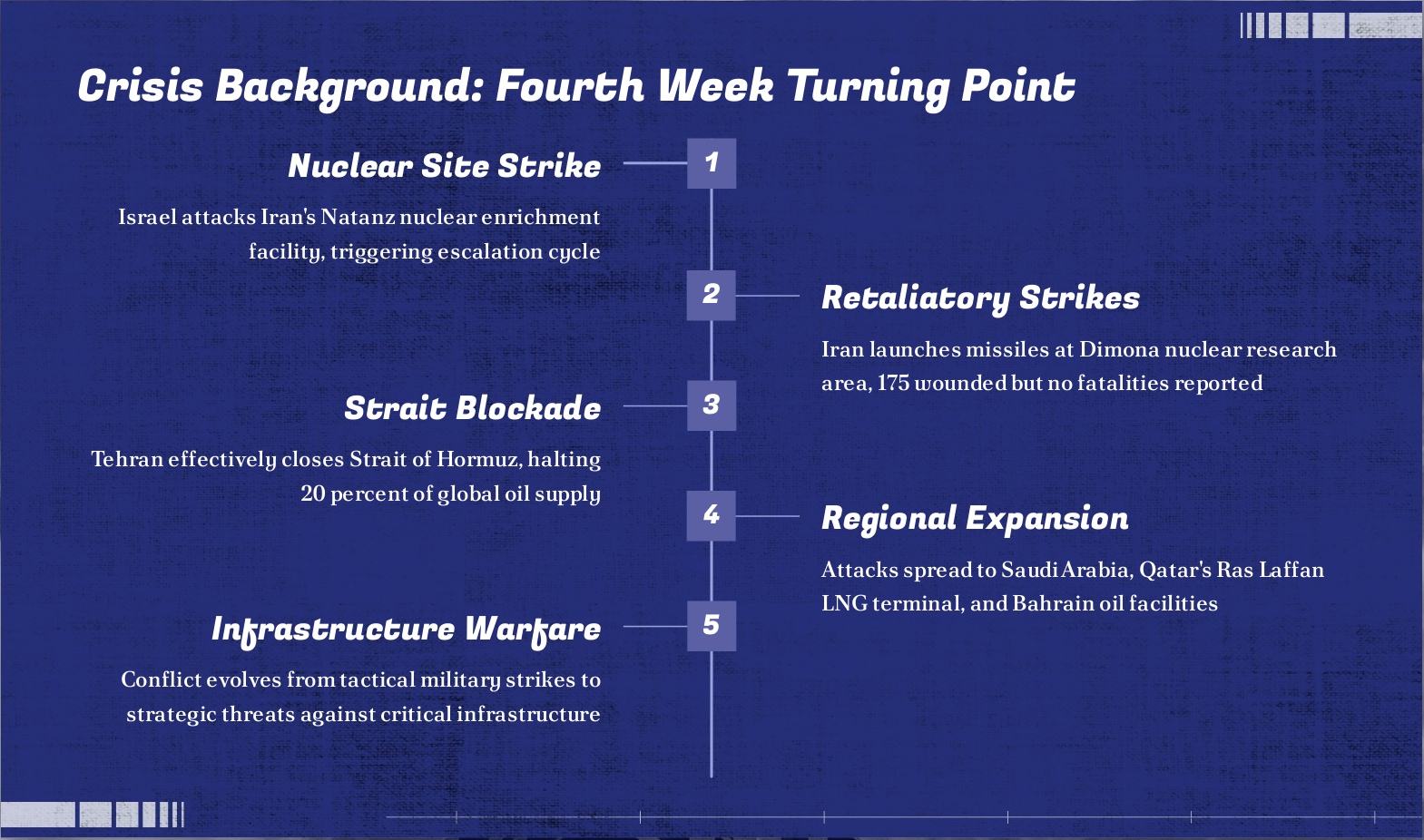
Slide 3: Crisis Background: Fourth Week Turning Point
- Nuclear Site Strike: Israel attacks Iran's Natanz nuclear enrichment facility, triggering escalation cycle
- Retaliatory Strikes: Iran launches missiles at Dimona nuclear research area, 175 wounded but no fatalities reported
- Strait Blockade: Tehran effectively closes Strait of Hormuz, halting 20 percent of global oil supply
- Regional Expansion: Attacks spread to Saudi Arabia, Qatar's Ras Laffan LNG terminal, and Bahrain oil facilities
- Infrastructure Warfare: Conflict evolves from tactical military strikes to strategic threats against critical infrastructure
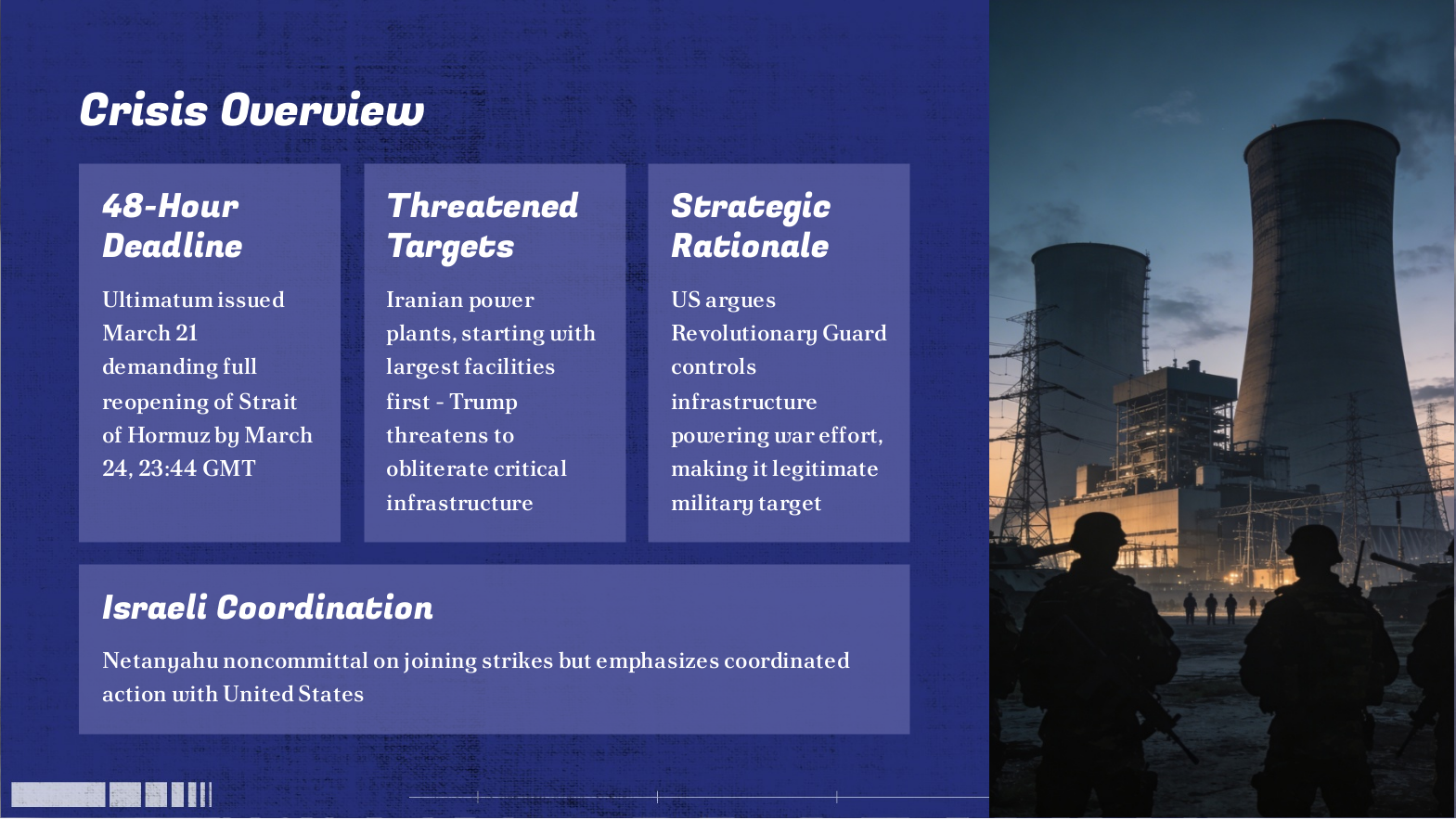
Slide 4: Crisis Overview
- 48-Hour Deadline: Ultimatum issued March 21 demanding full reopening of Strait of Hormuz by March 24, 23:44 GMT
- Threatened Targets: Iranian power plants, starting with largest facilities first - Trump threatens to obliterate critical infrastructure
- Strategic Rationale: US argues Revolutionary Guard controls infrastructure powering war effort, making it legitimate military target
- Israeli Coordination: Netanyahu noncommittal on joining strikes but emphasizes coordinated action with United States
Slide 5: Security Threats to Gulf Energy Infrastructure
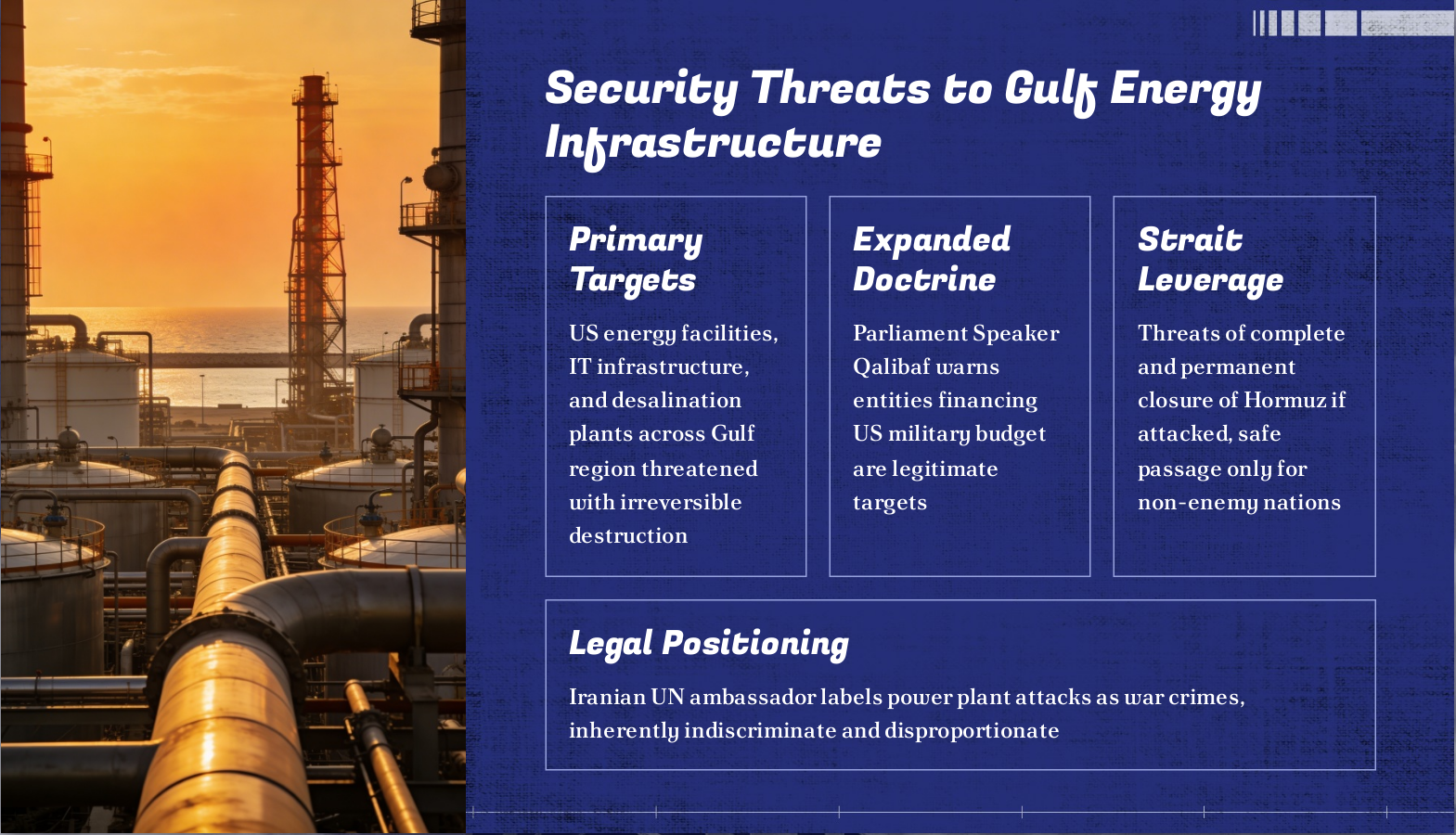
- Primary Targets: US energy facilities, IT infrastructure, and desalination plants across Gulf region threatened with irreversible destruction
- Expanded Doctrine: Parliament Speaker Qalibaf warns entities financing US military budget are legitimate targets
- Strait Leverage: Threats of complete and permanent closure of Hormuz if attacked, safe passage only for non-enemy nations
- Legal Positioning: Iranian UN ambassador labels power plant attacks as war crimes, inherently indiscriminate and disproportionate
Slide 6: Regional Military Escalation: Multi-Front Conflict
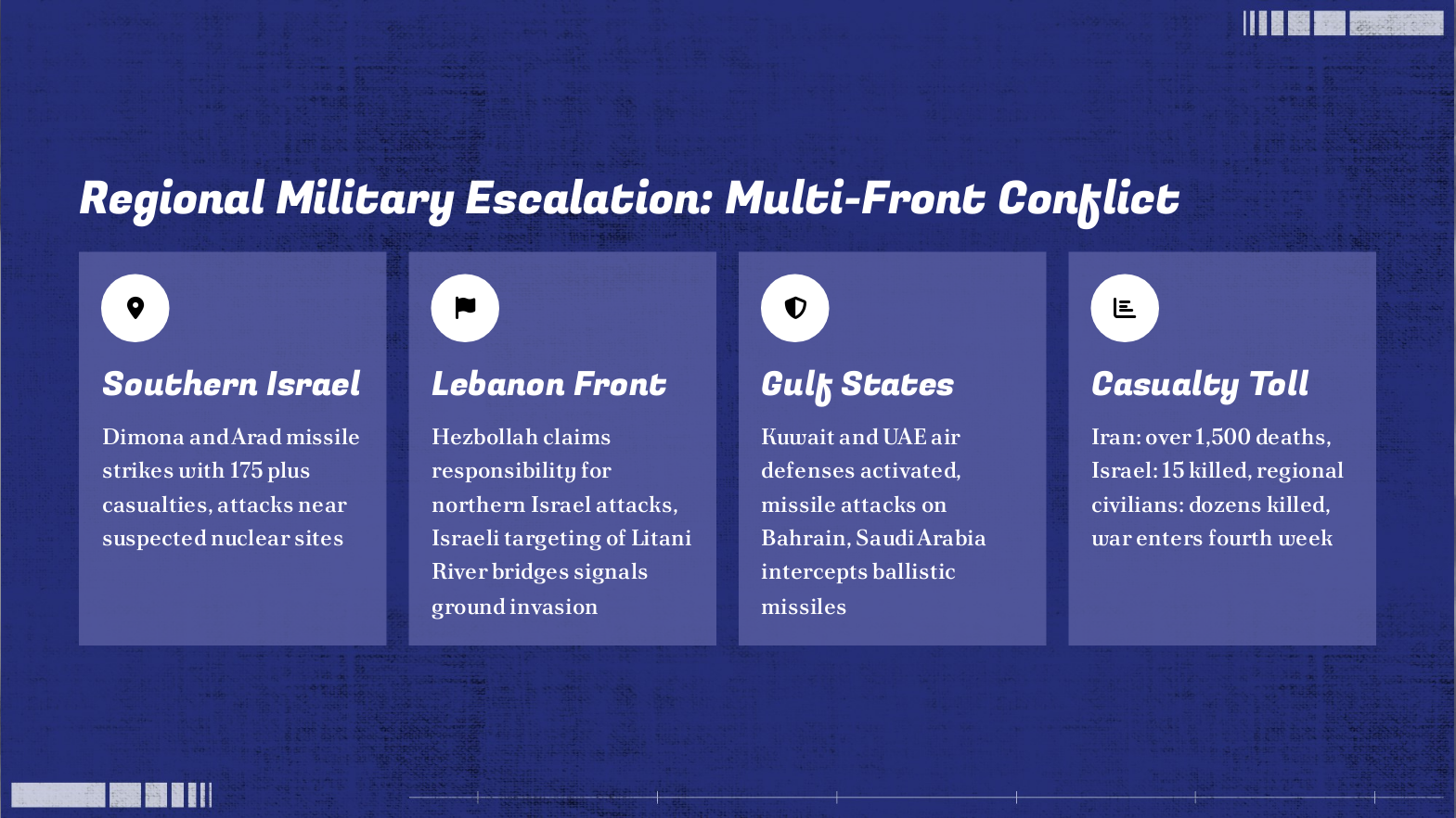
- Southern Israel: Dimona and Arad missile strikes with 175 plus casualties, attacks near suspected nuclear sites
- Lebanon Front: Hezbollah claims responsibility for northern Israel attacks, Israeli targeting of Litani River bridges signals ground invasion
- Gulf States: Kuwait and UAE air defenses activated, missile attacks on Bahrain, Saudi Arabia intercepts ballistic missiles
- Casualty Toll: Iran: over 1,500 deaths, Israel: 15 killed, regional civilians: dozens killed, war enters fourth week
Slide 7: Global Economic Shockwaves
- US Gasoline Surge: Prices hit 3.91 dollars per gallon, up 98 cents in one month, threatening consumer spending
- Supply Chain Crisis: Diesel price surge threatens costs for groceries and transportation, Qatar's largest LNG terminal damaged
- Emergency Measures: Strategic oil reserve releases, sanctions easing on Russian oil, suspended transport regulations
Slide 8: Diplomatic Mediation Landscape
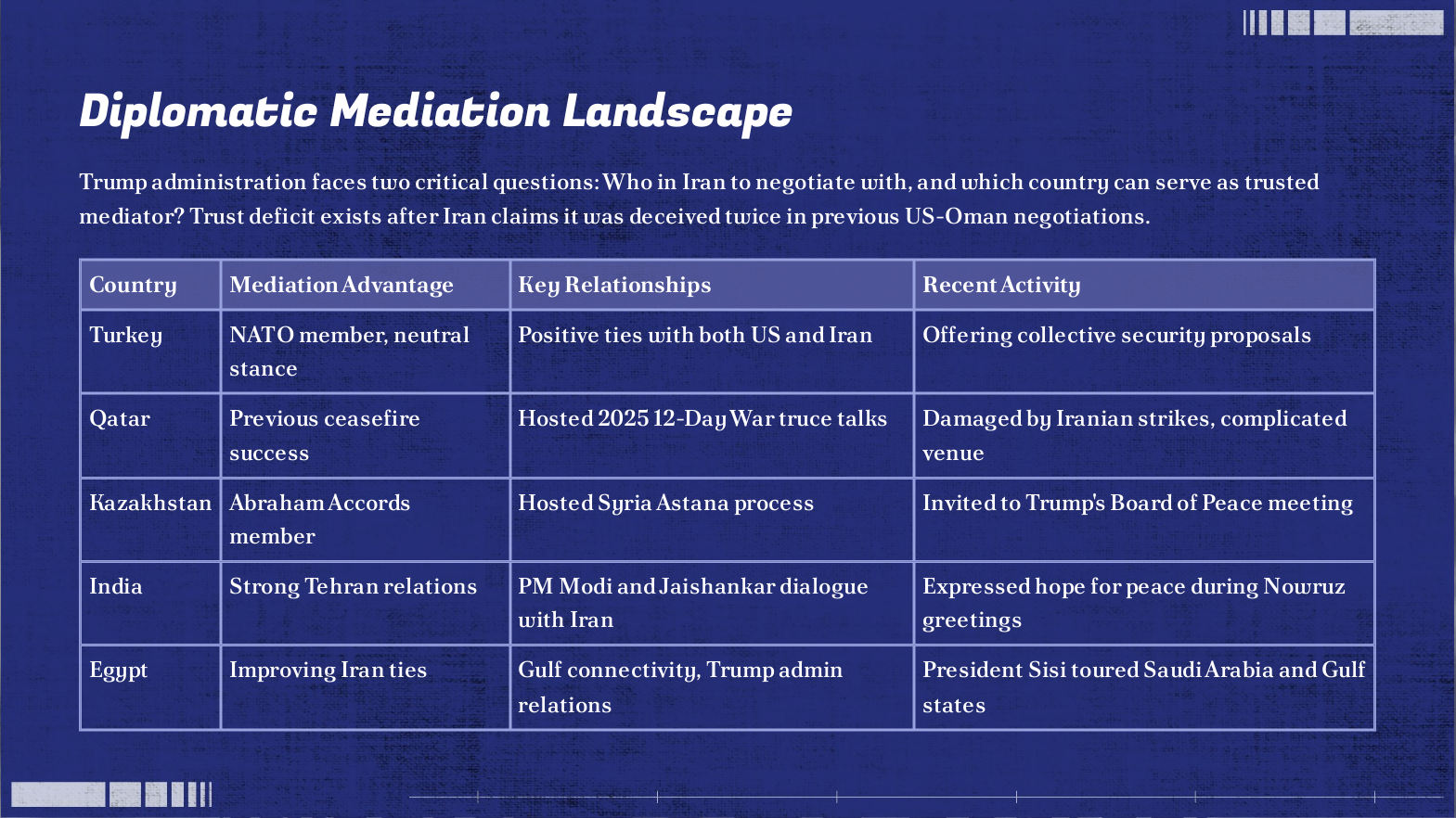
Trump administration faces two critical questions: Who in Iran to negotiate with, and which country can serve as trusted mediator? Trust deficit exists after Iran claims it was deceived twice in previous US-Oman negotiations.
- Country: Turkey, Mediation Advantage: NATO member, neutral stance, Key Relationships: Positive ties with both US and Iran, Recent Activity: Offering collective security proposals
- Country: Qatar, Mediation Advantage: Previous ceasefire success, Key Relationships: Hosted 2025 12-Day War truce talks, Recent Activity: Damaged by Iranian strikes, complicated venue
- Country: Kazakhstan, Mediation Advantage: Abraham Accords member, Key Relationships: Hosted Syria Astana process, Recent Activity: Invited to Trump's Board of Peace meeting
- Country: India, Mediation Advantage: Strong Tehran relations, Key Relationships: PM Modi and Jaishankar dialogue with Iran, Recent Activity: Expressed hope for peace during Nowruz greetings
- Country: Egypt, Mediation Advantage: Improving Iran ties, Key Relationships: Gulf connectivity, Trump admin relations, Recent Activity: President Sisi toured Saudi Arabia and Gulf states
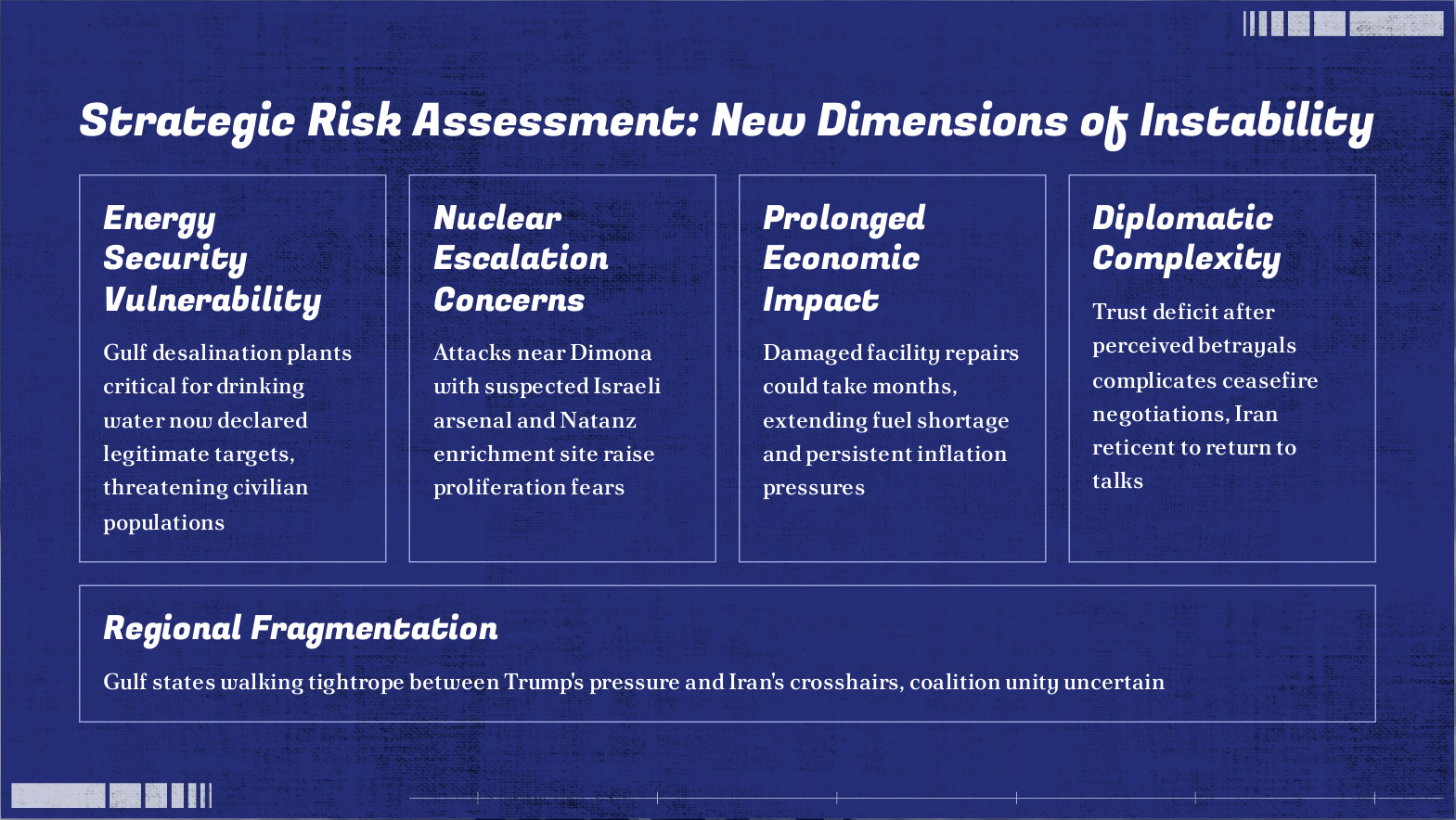
Slide 9: Strategic Risk Assessment: New Dimensions of Instability
- Energy Security Vulnerability: Gulf desalination plants critical for drinking water now declared legitimate targets, threatening civilian populations
- Nuclear Escalation Concerns: Attacks near Dimona with suspected Israeli arsenal and Natanz enrichment site raise proliferation fears
- Prolonged Economic Impact: Damaged facility repairs could take months, extending fuel shortage and persistent inflation pressures
- Diplomatic Complexity: Trust deficit after perceived betrayals complicates ceasefire negotiations, Iran reticent to return to talks
- Regional Fragmentation: Gulf states walking tightrope between Trump's pressure and Iran's crosshairs, coalition unity uncertain
Slide 10: Critical 48-Hour Window Ahead
Critical 48-Hour Window Ahead The March 24 deadline could determine the path between wider infrastructure war or negotiated de-escalation in the Middle East crisis.