Presentation Summary
Transforming the Future of Hospitality Through Conscious Travel and Environmental Stewardship Understanding current market trends and why 83% of global travelers demand responsible travel options today. Certification standards, operational best practices, and measurable impacts of green hospitality initiatives worldwide. Transportation strategies and on-ground actions that significantly lower emissions while enhancing guest experiences. Direct spending strategies and community-based tourism models that multiply benefits 3-5 times for local communities. Majority of travelers now consider sustai
Full Presentation Transcript
Slide 1: Sustainable Tourism: How to Travel Responsibly
Transforming the Future of Hospitality Through Conscious Travel and Environmental Stewardship
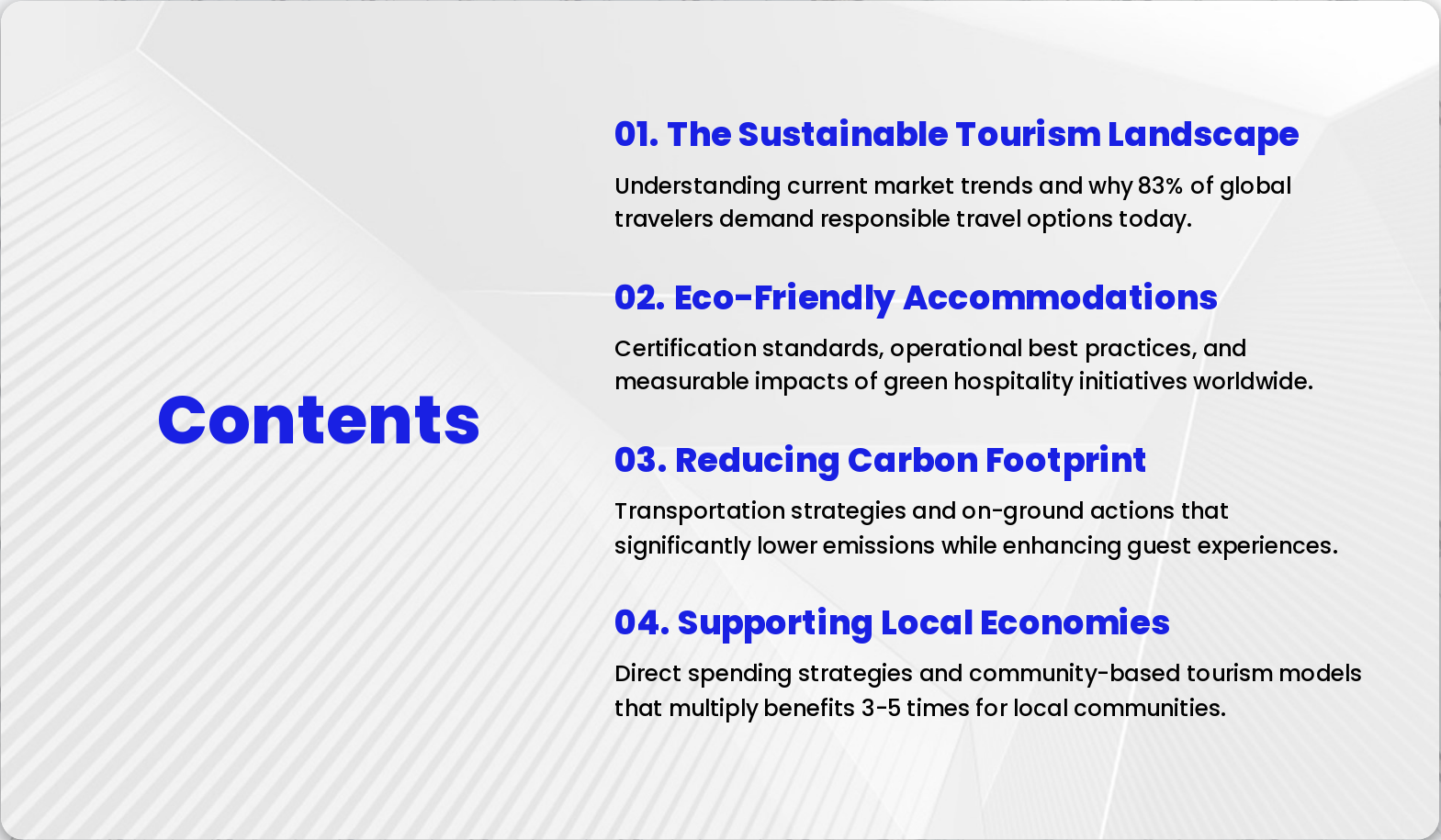
Slide 2: Contents
- The Sustainable Tourism Landscape: Understanding current market trends and why 83% of global travelers demand responsible travel options today.
- Eco-Friendly Accommodations: Certification standards, operational best practices, and measurable impacts of green hospitality initiatives worldwide.
- Reducing Carbon Footprint: Transportation strategies and on-ground actions that significantly lower emissions while enhancing guest experiences.
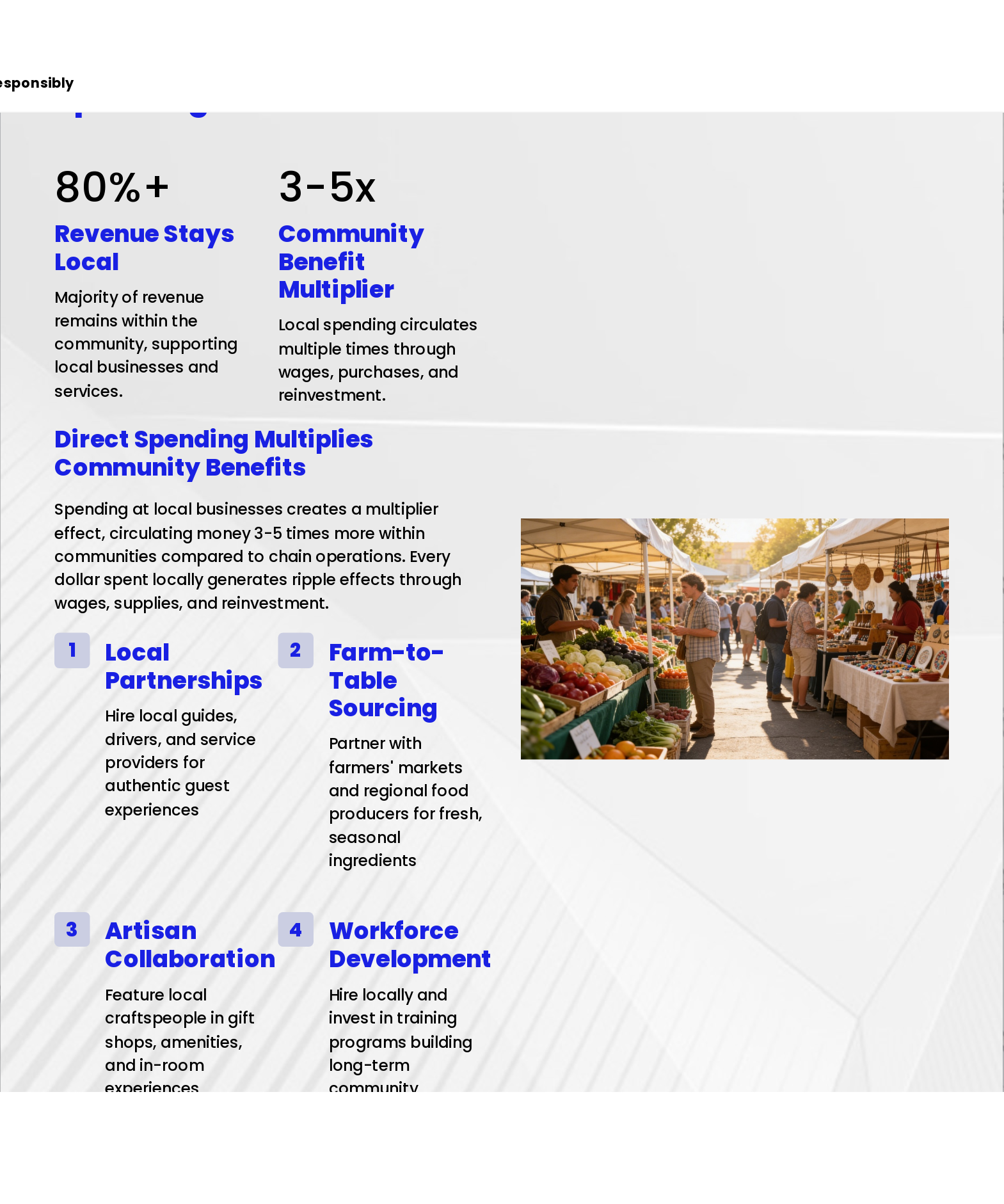
- Supporting Local Economies: Direct spending strategies and community-based tourism models that multiply benefits 3-5 times for local communities.
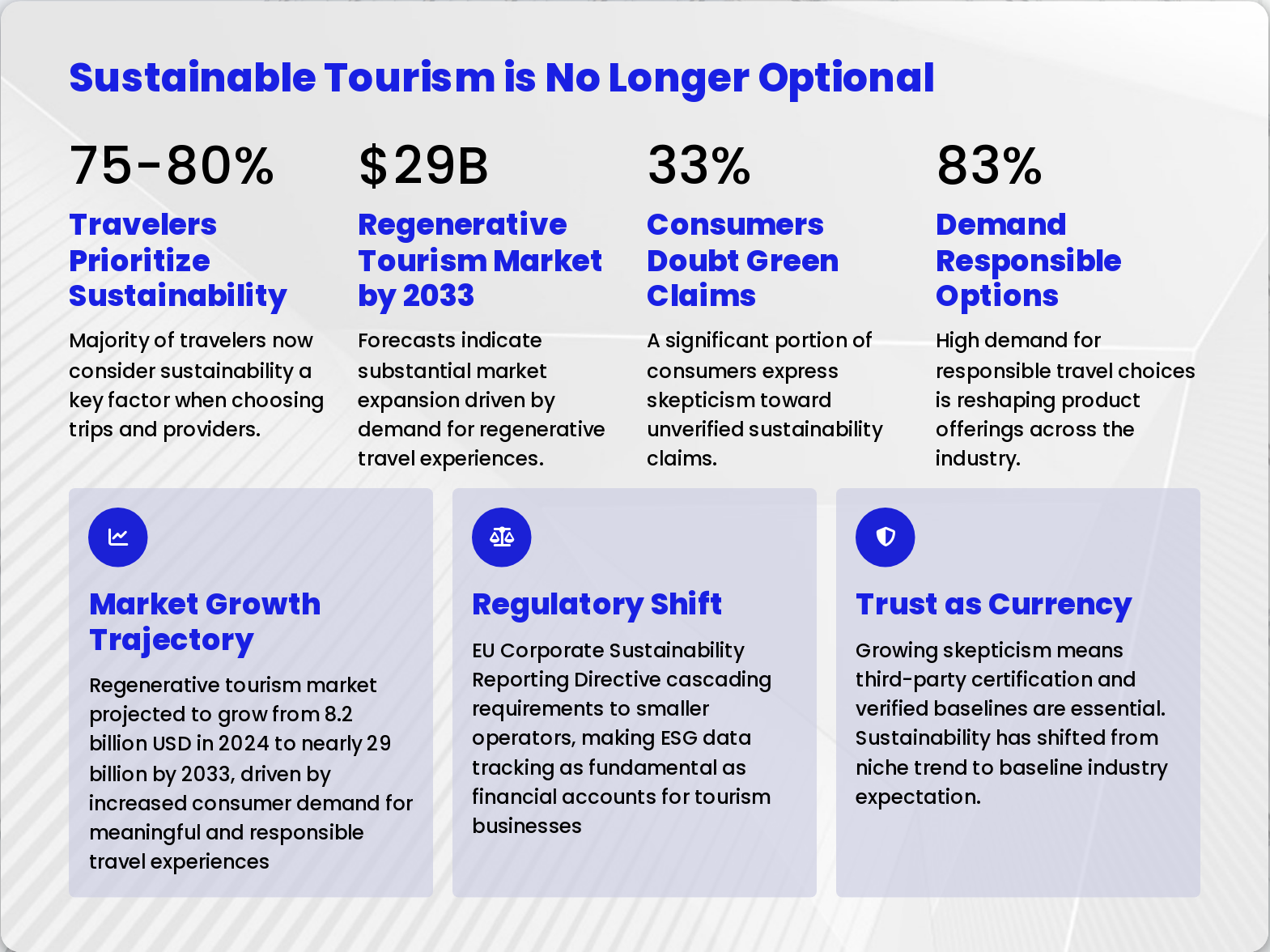
Slide 3: Sustainable Tourism is No Longer Optional
- 75-80% — Travelers Prioritize Sustainability
- $29B — Regenerative Tourism Market by 2033
- 33% — Consumers Doubt Green Claims
- 83% — Demand Responsible Options
- Market Growth Trajectory: Regenerative tourism market projected to grow from 8.2 billion USD in 2024 to nearly 29 billion by 2033, driven by increased consumer demand for meaningful and responsible travel experiences
- Regulatory Shift: EU Corporate Sustainability Reporting Directive cascading requirements to smaller operators, making ESG data tracking as fundamental as financial accounts for tourism businesses
- Trust as Currency: Growing skepticism means third-party certification and verified baselines are essential. Sustainability has shifted from niche trend to baseline industry expectation.
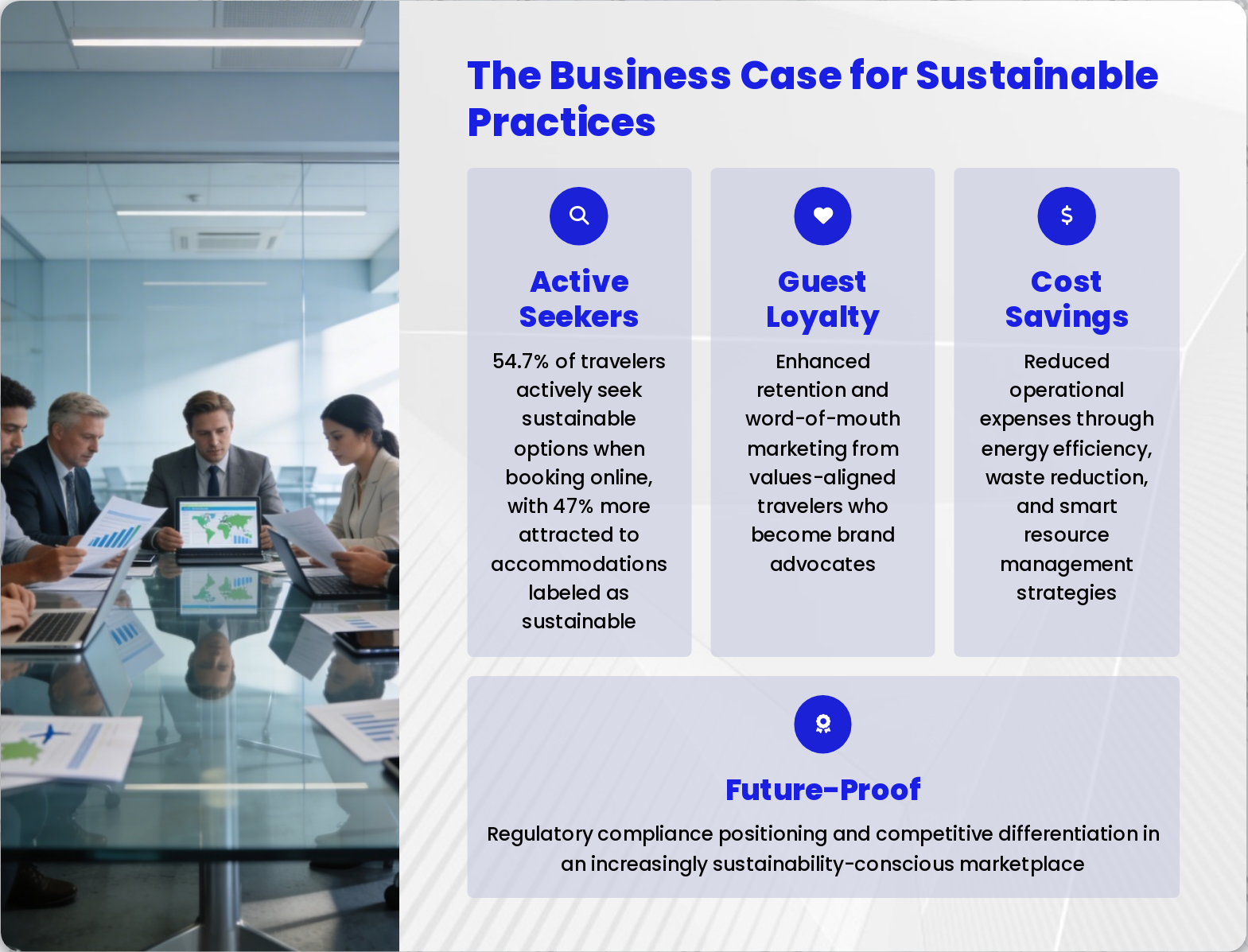
Slide 4: The Business Case for Sustainable Practices
- Active Seekers: 54.7% of travelers actively seek sustainable options when booking online, with 47% more attracted to accommodations labeled as sustainable
- Guest Loyalty: Enhanced retention and word-of-mouth marketing from values-aligned travelers who become brand advocates
- Cost Savings: Reduced operational expenses through energy efficiency, waste reduction, and smart resource management strategies
- Future-Proof: Regulatory compliance positioning and competitive differentiation in an increasingly sustainability-conscious marketplace
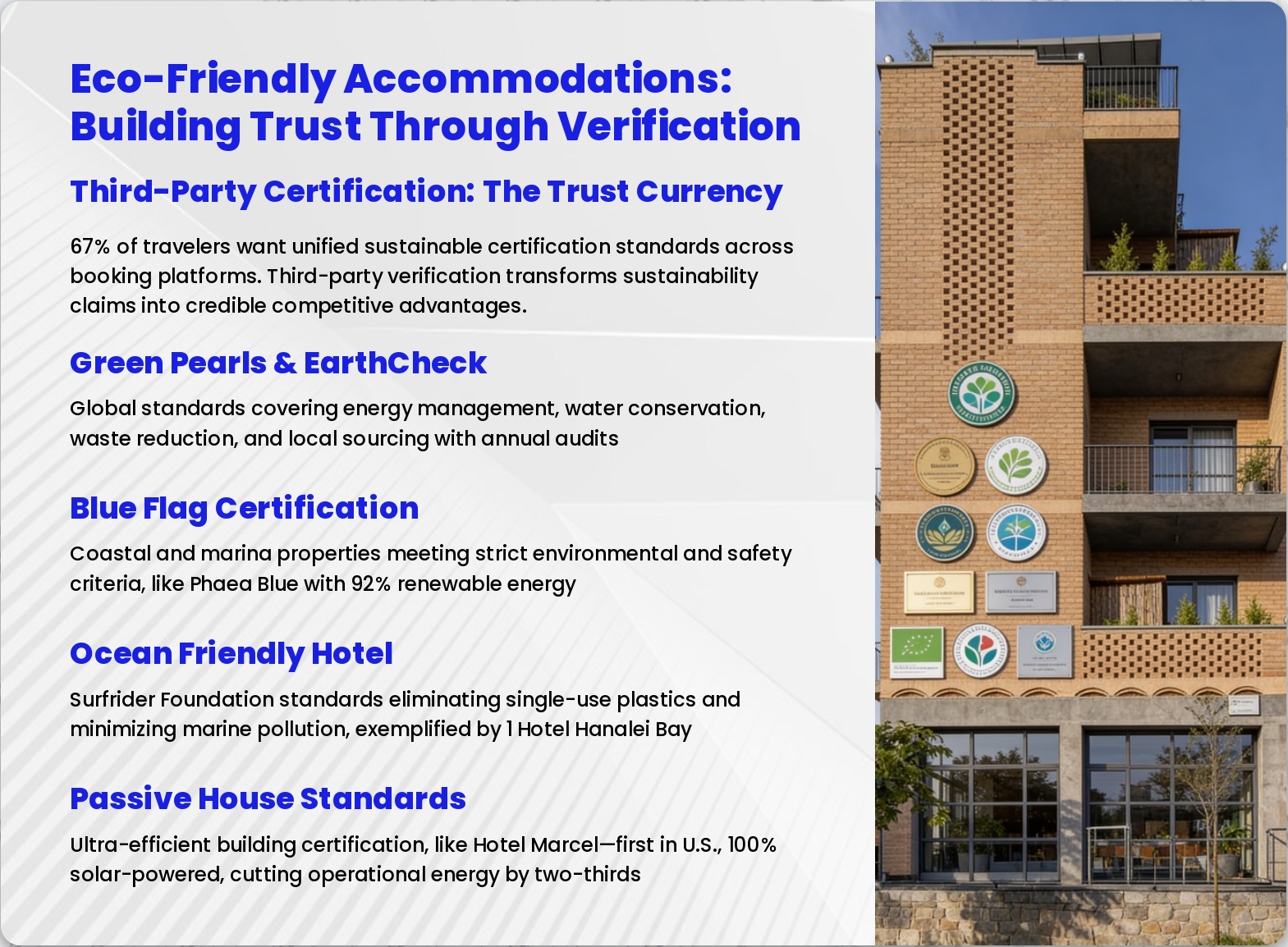
Slide 5: Eco-Friendly Accommodations: Building Trust Through Verification
- Green Pearls & EarthCheck: Global standards covering energy management, water conservation, waste reduction, and local sourcing with annual audits
- Blue Flag Certification: Coastal and marina properties meeting strict environmental and safety criteria, like Phaea Blue with 92% renewable energy
- Ocean Friendly Hotel: Surfrider Foundation standards eliminating single-use plastics and minimizing marine pollution, exemplified by 1 Hotel Hanalei Bay
- Passive House Standards: Ultra-efficient building certification, like Hotel Marcel—first in U.S., 100% solar-powered, cutting operational energy by two-thirds
67% of travelers want unified sustainable certification standards across booking platforms. Third-party verification transforms sustainability claims into credible competitive advantages.
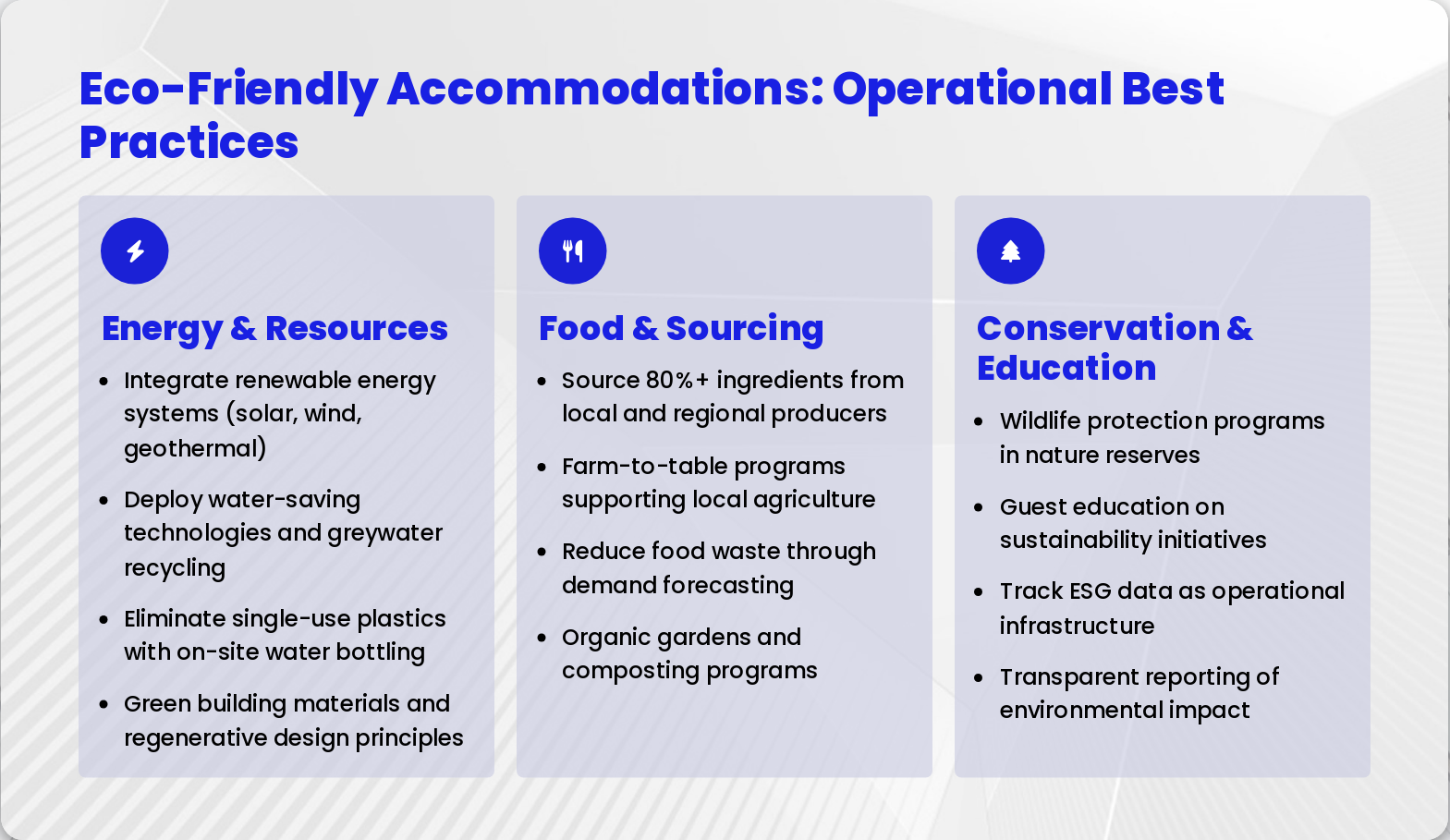
Slide 6: Eco-Friendly Accommodations: Operational Best Practices
- Energy & Resources: Integrate renewable energy systems (solar, wind, geothermal)
- Food & Sourcing: Source 80%+ ingredients from local and regional producers
- Conservation & Education: Wildlife protection programs in nature reserves
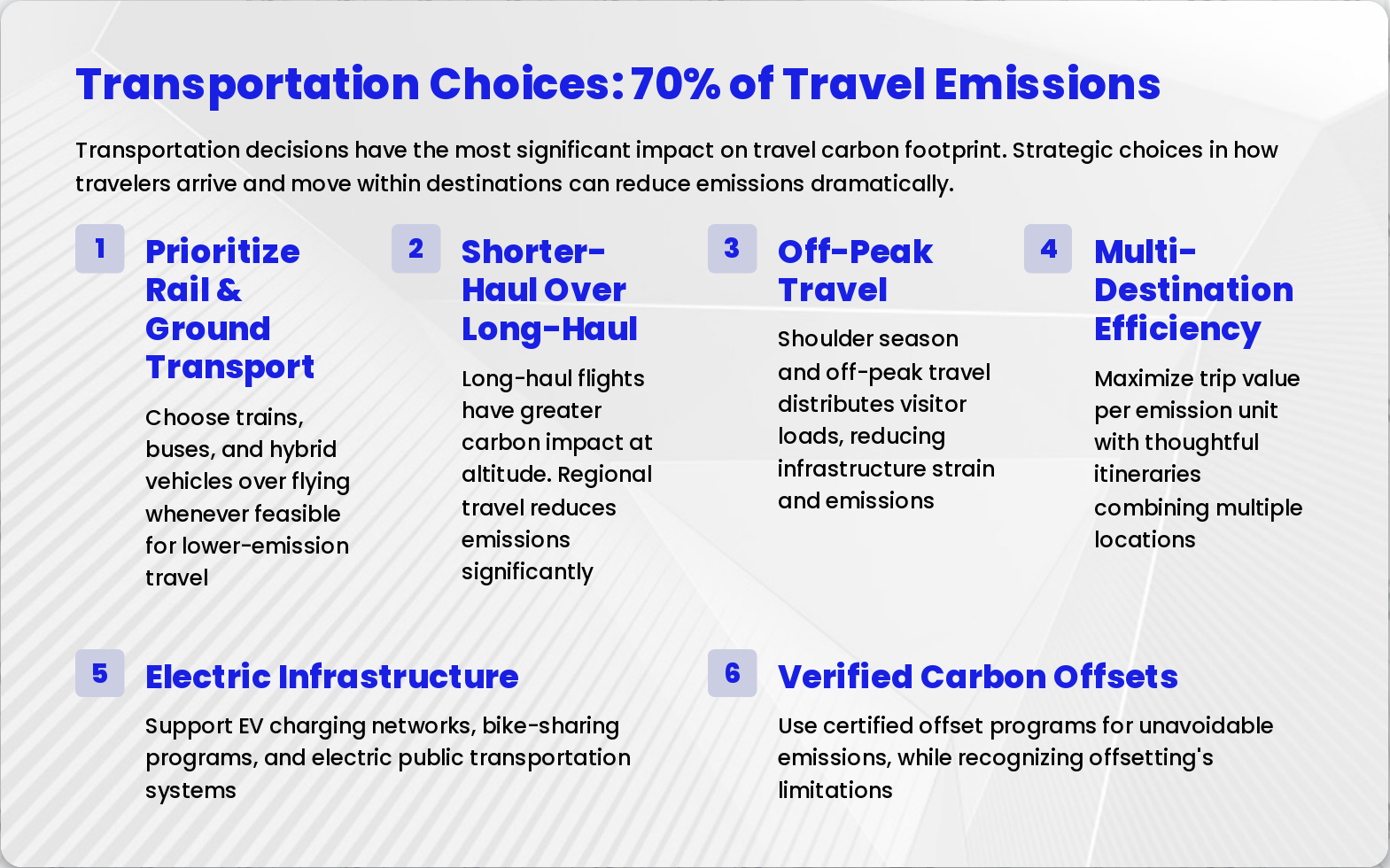
Slide 7: Transportation Choices: 70% of Travel Emissions
- Prioritize Rail & Ground Transport: Choose trains, buses, and hybrid vehicles over flying whenever feasible for lower-emission travel
- Shorter-Haul Over Long-Haul: Long-haul flights have greater carbon impact at altitude. Regional travel reduces emissions significantly
- Off-Peak Travel: Shoulder season and off-peak travel distributes visitor loads, reducing infrastructure strain and emissions
- Multi-Destination Efficiency: Maximize trip value per emission unit with thoughtful itineraries combining multiple locations
- Electric Infrastructure: Support EV charging networks, bike-sharing programs, and electric public transportation systems
- Verified Carbon Offsets: Use certified offset programs for unavoidable emissions, while recognizing offsetting's limitations
Transportation decisions have the most significant impact on travel carbon footprint. Strategic choices in how travelers arrive and move within destinations can reduce emissions dramatically.
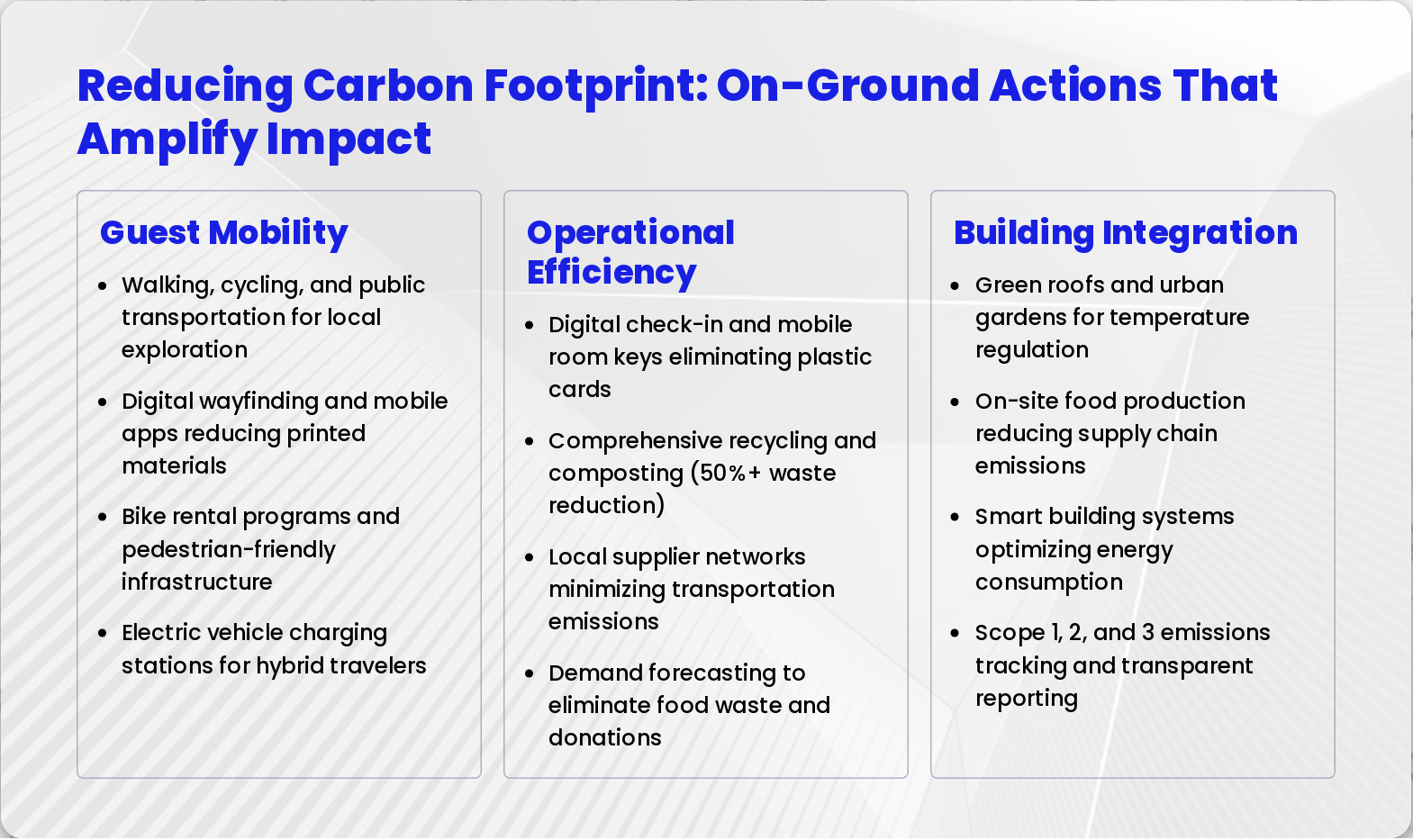
Slide 8: Reducing Carbon Footprint: On-Ground Actions That Amplify Impact
- Guest Mobility: Walking, cycling, and public transportation for local exploration
- Operational Efficiency: Digital check-in and mobile room keys eliminating plastic cards
- Building Integration: Green roofs and urban gardens for temperature regulation
Slide 9: Supporting Local Economies Through Strategic Spending
- 80%+ — Revenue Stays Local
- 3-5x — Community Benefit Multiplier
- Local Partnerships: Hire local guides, drivers, and service providers for authentic guest experiences
- Farm-to-Table Sourcing: Partner with farmers' markets and regional food producers for fresh, seasonal ingredients
- Artisan Collaboration: Feature local craftspeople in gift shops, amenities, and in-room experiences
- Workforce Development: Hire locally and invest in training programs building long-term community capacity
Spending at local businesses creates a multiplier effect, circulating money 3-5 times more within communities compared to chain operations. Every dollar spent locally generates ripple effects through wages, supplies, and reinvestment.
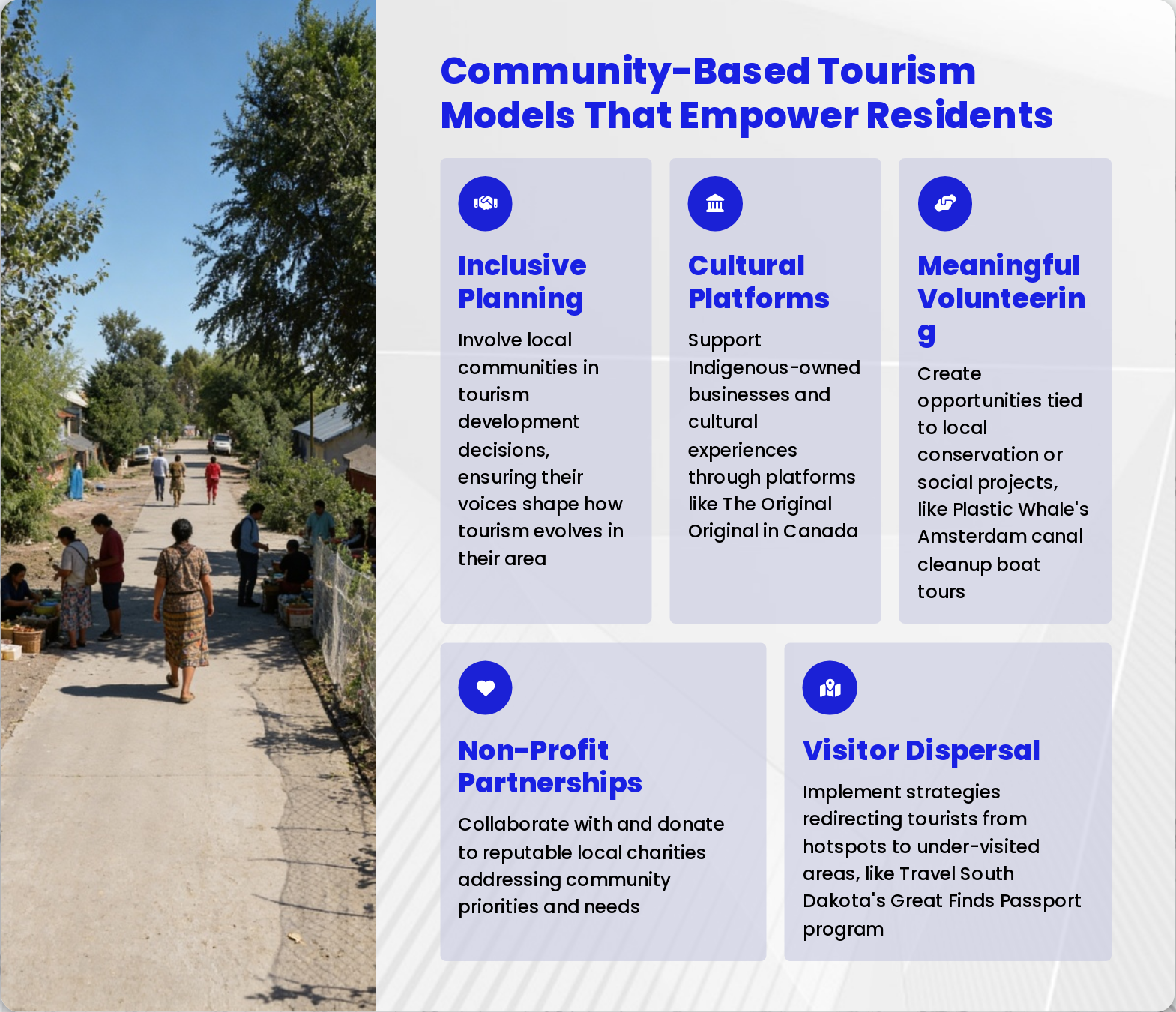
Slide 10: Community-Based Tourism Models That Empower Residents
- Inclusive Planning: Involve local communities in tourism development decisions, ensuring their voices shape how tourism evolves in their area
- Cultural Platforms: Support Indigenous-owned businesses and cultural experiences through platforms like The Original Original in Canada
- Meaningful Volunteering: Create opportunities tied to local conservation or social projects, like Plastic Whale's Amsterdam canal cleanup boat tours
- Non-Profit Partnerships: Collaborate with and donate to reputable local charities addressing community priorities and needs
- Visitor Dispersal: Implement strategies redirecting tourists from hotspots to under-visited areas, like Travel South Dakota's Great Finds Passport program
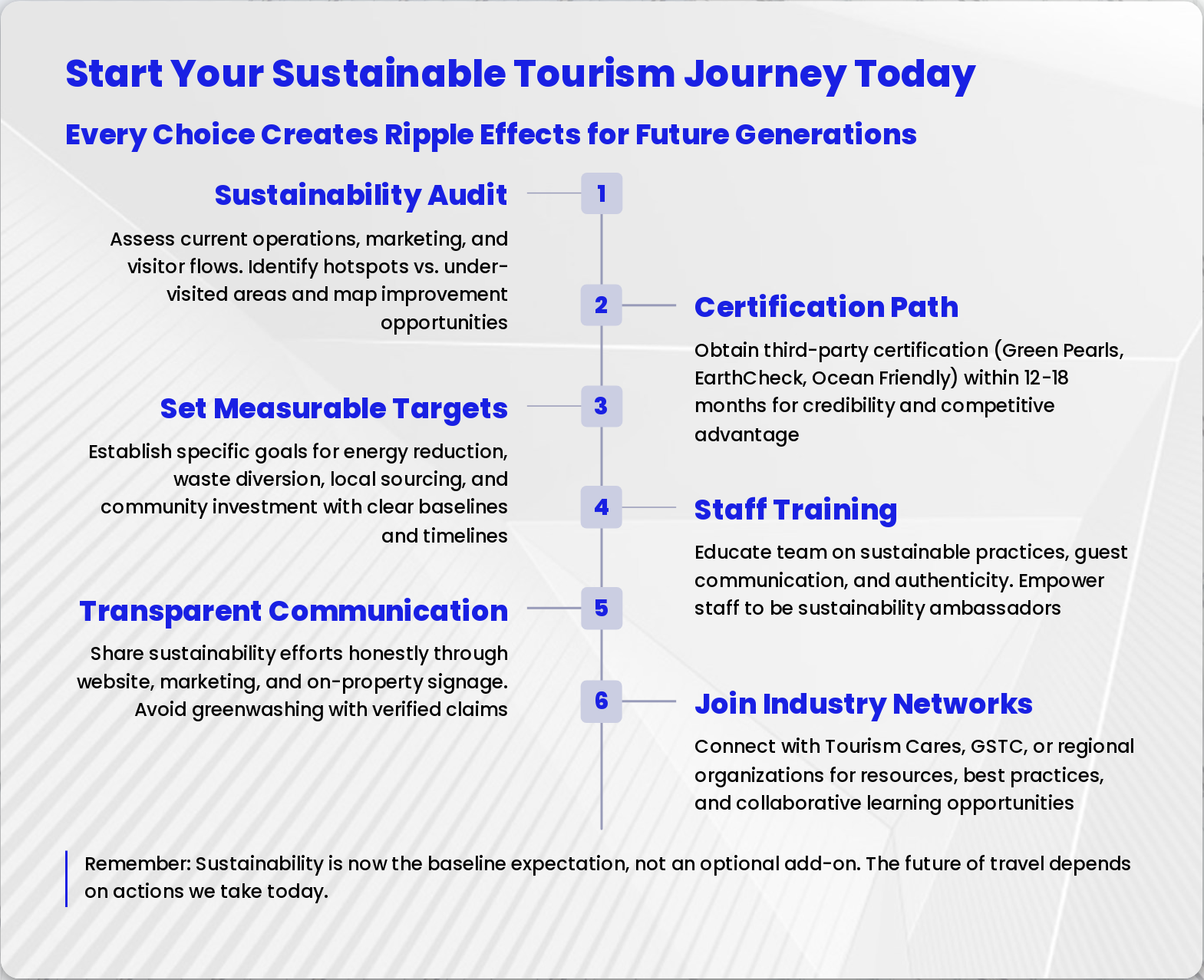
Slide 11: Start Your Sustainable Tourism Journey Today
- Sustainability Audit: Assess current operations, marketing, and visitor flows. Identify hotspots vs. under-visited areas and map improvement opportunities
- Certification Path: Obtain third-party certification (Green Pearls, EarthCheck, Ocean Friendly) within 12-18 months for credibility and competitive advantage
- Set Measurable Targets: Establish specific goals for energy reduction, waste diversion, local sourcing, and community investment with clear baselines and timelines
- Staff Training: Educate team on sustainable practices, guest communication, and authenticity. Empower staff to be sustainability ambassadors
- Transparent Communication: Share sustainability efforts honestly through website, marketing, and on-property signage. Avoid greenwashing with verified claims
- Join Industry Networks: Connect with Tourism Cares, GSTC, or regional organizations for resources, best practices, and collaborative learning opportunities
Remember: Sustainability is now the baseline expectation, not an optional add-on. The future of travel depends on actions we take today.