Presentation Summary
A practical guide to intentional living through the KonMari method and digital minimalism for enhanced productivity and well-being Understanding how physical and digital chaos impacts stress levels, cognitive function, and overall life quality. Marie Kondo's revolutionary framework for transforming spaces through joy-sparking decisions and systematic category-based tidying. Reclaiming mental bandwidth and authentic connection by intentionally curating technology use aligned with personal values. Science-backed benefits and a practical 30-day roadmap to implement minimalism in your life startin
Full Presentation Transcript
Slide 1: Minimalism: Decluttering Your Life
A practical guide to intentional living through the KonMari method and digital minimalism for enhanced productivity and well-being
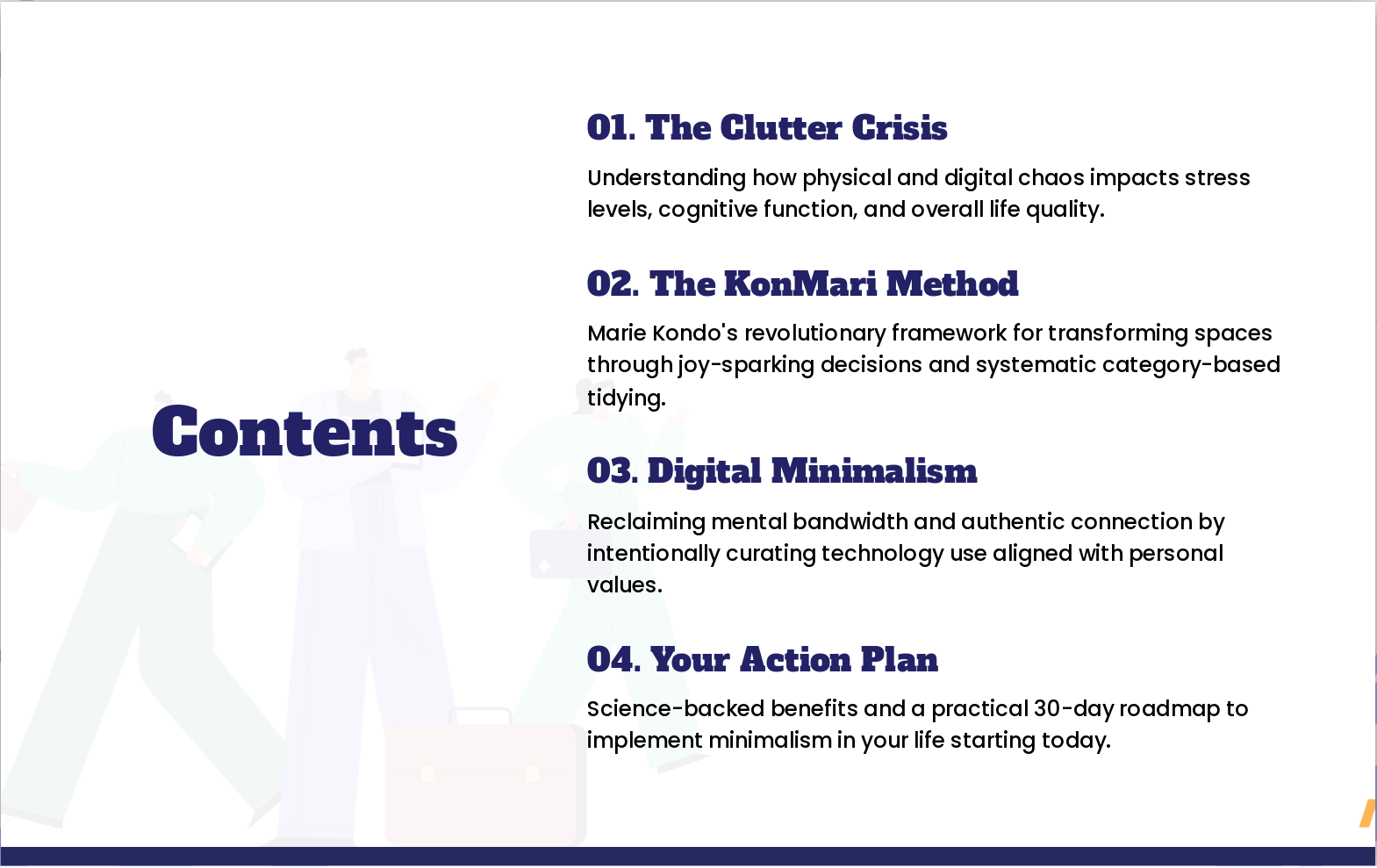
Slide 2: Contents
- The Clutter Crisis: Understanding how physical and digital chaos impacts stress levels, cognitive function, and overall life quality.
- The KonMari Method: Marie Kondo's revolutionary framework for transforming spaces through joy-sparking decisions and systematic category-based tidying.
- Digital Minimalism: Reclaiming mental bandwidth and authentic connection by intentionally curating technology use aligned with personal values.
- Your Action Plan: Science-backed benefits and a practical 30-day roadmap to implement minimalism in your life starting today.
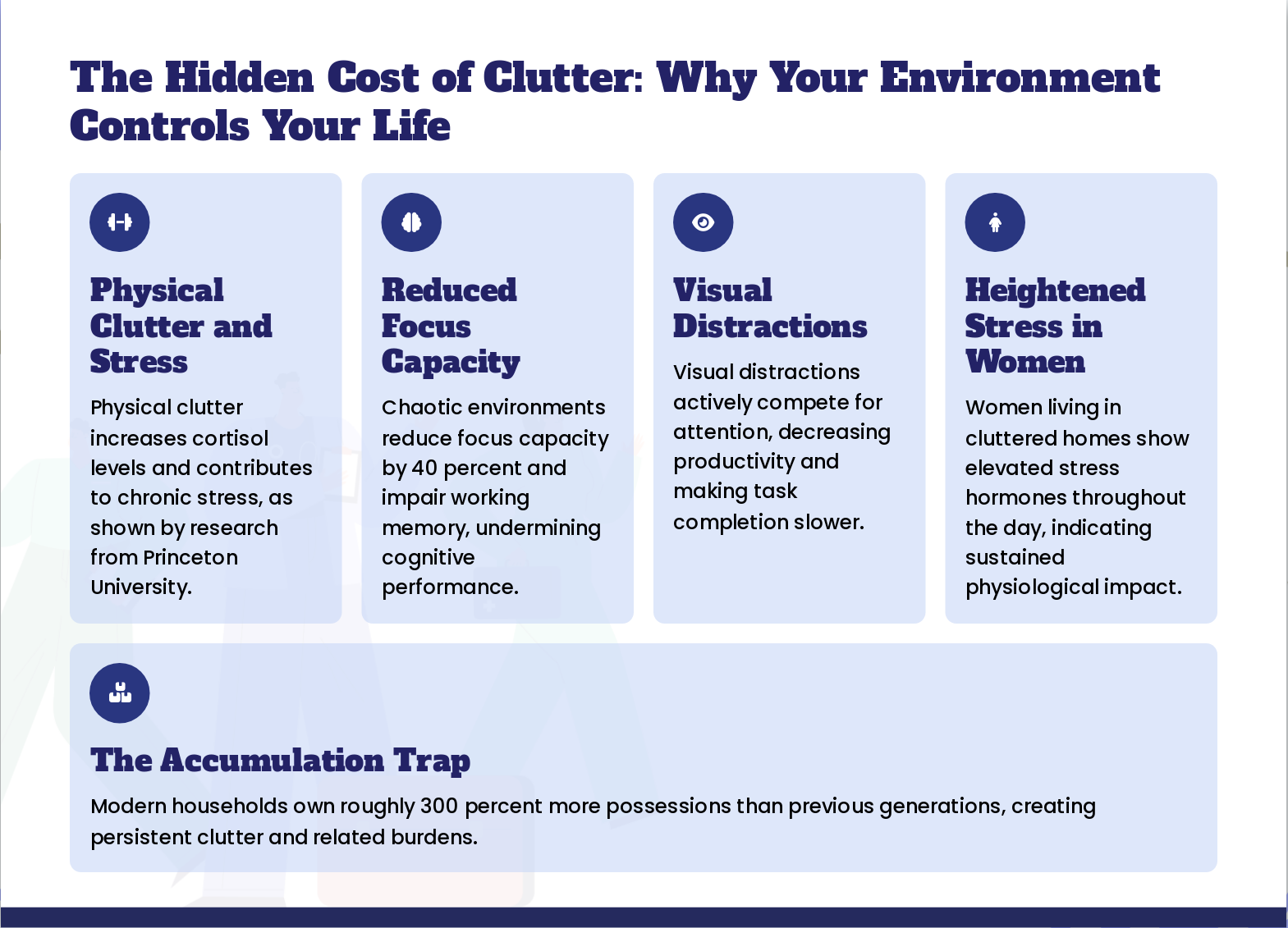
Slide 3: The Hidden Cost of Clutter: Why Your Environment Controls Your Life
- Physical Clutter and Stress: Physical clutter increases cortisol levels and contributes to chronic stress, as shown by research from Princeton University.
- Reduced Focus Capacity: Chaotic environments reduce focus capacity by 40 percent and impair working memory, undermining cognitive performance.
- Visual Distractions: Visual distractions actively compete for attention, decreasing productivity and making task completion slower.
- Heightened Stress in Women: Women living in cluttered homes show elevated stress hormones throughout the day, indicating sustained physiological impact.
- The Accumulation Trap: Modern households own roughly 300 percent more possessions than previous generations, creating persistent clutter and related burdens.
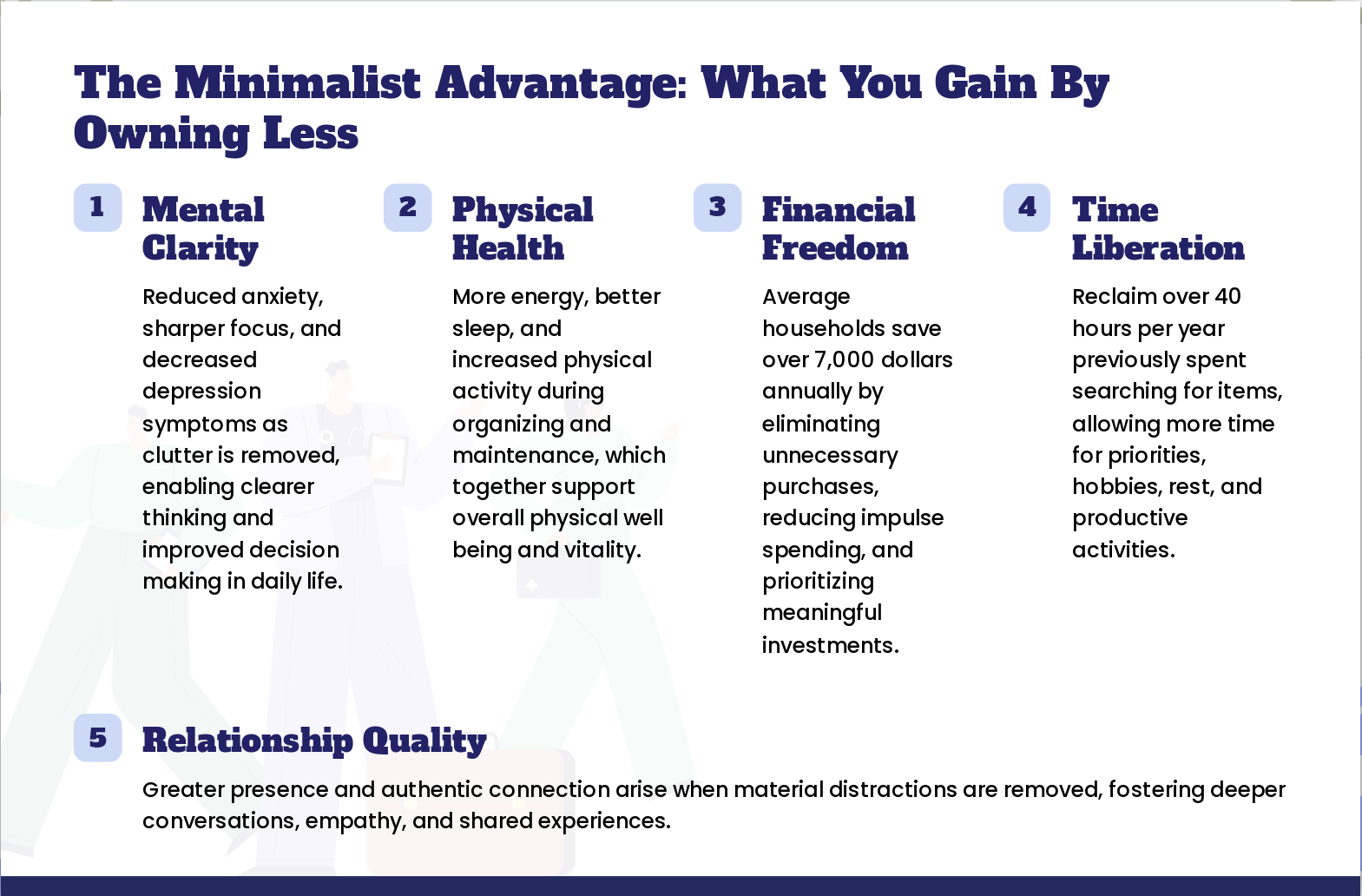
Slide 4: The Minimalist Advantage: What You Gain By Owning Less
- Mental Clarity: Reduced anxiety, sharper focus, and decreased depression symptoms as clutter is removed, enabling clearer thinking and improved decision making in daily life.
- Physical Health: More energy, better sleep, and increased physical activity during organizing and maintenance, which together support overall physical well being and vitality.
- Financial Freedom: Average households save over 7,000 dollars annually by eliminating unnecessary purchases, reducing impulse spending, and prioritizing meaningful investments.
- Time Liberation: Reclaim over 40 hours per year previously spent searching for items, allowing more time for priorities, hobbies, rest, and productive activities.
- Relationship Quality: Greater presence and authentic connection arise when material distractions are removed, fostering deeper conversations, empathy, and shared experiences.
Slide 5: The KonMari Method: Revolutionary Tidying Framework
- Keep, Don't Discard: Tidying is reframed as an act of selection: focus on choosing what to keep rather than concentrating on what to throw away, cultivating intentional ownership and clarity in every possession.
- Does It Spark Joy?: The central question emphasizes emotional resonance over mere utility: evaluate each item by whether it sparks joy, allowing feelings to guide decisions and strengthen your relationship with belongings.
- Tidy by Category: Organize by category rather than location to achieve a comprehensive transformation; this approach ensures consistency across the home and prevents partial, ineffective tidying efforts.
- One-Time Intensive Process: Perform tidying as a concentrated, one-time event to create a lasting mindset shift; the intensive process builds momentum and reinforces new habits that sustain order over time.
- Envision Ideal Lifestyle: Begin by imagining your ideal lifestyle and align possessions to that vision; clarity about desired daily life guides practical decisions and results in a home that supports your intentions.
Slide 6: The KonMari Five Categories: Systematic Decluttering Order
- Category 1: Clothing: Clothing is easiest to assess for emotional attachment and helps build decision-making muscle through frequent, clear choices.
- Category 2: Books: Books are moderately difficult; evaluate current relevance rather than past intentions and keep those you will actually read or reference.
- Category 3: Papers: Discard almost everything in papers; retain only active, essential documents such as current bills, contracts, and tax records.
- Category 4: Komono (Miscellaneous): Komono covers miscellaneous items—kitchen, bathroom, garage, and other subcategories—tackle systematically by subarea to avoid overwhelm.
- Category 5: Sentimental Items: Saved for last, sentimental items require the strongest decision-making skills and are easier to judge after practicing earlier categories.
Slide 7: KonMari Core Techniques: The Power of Touch
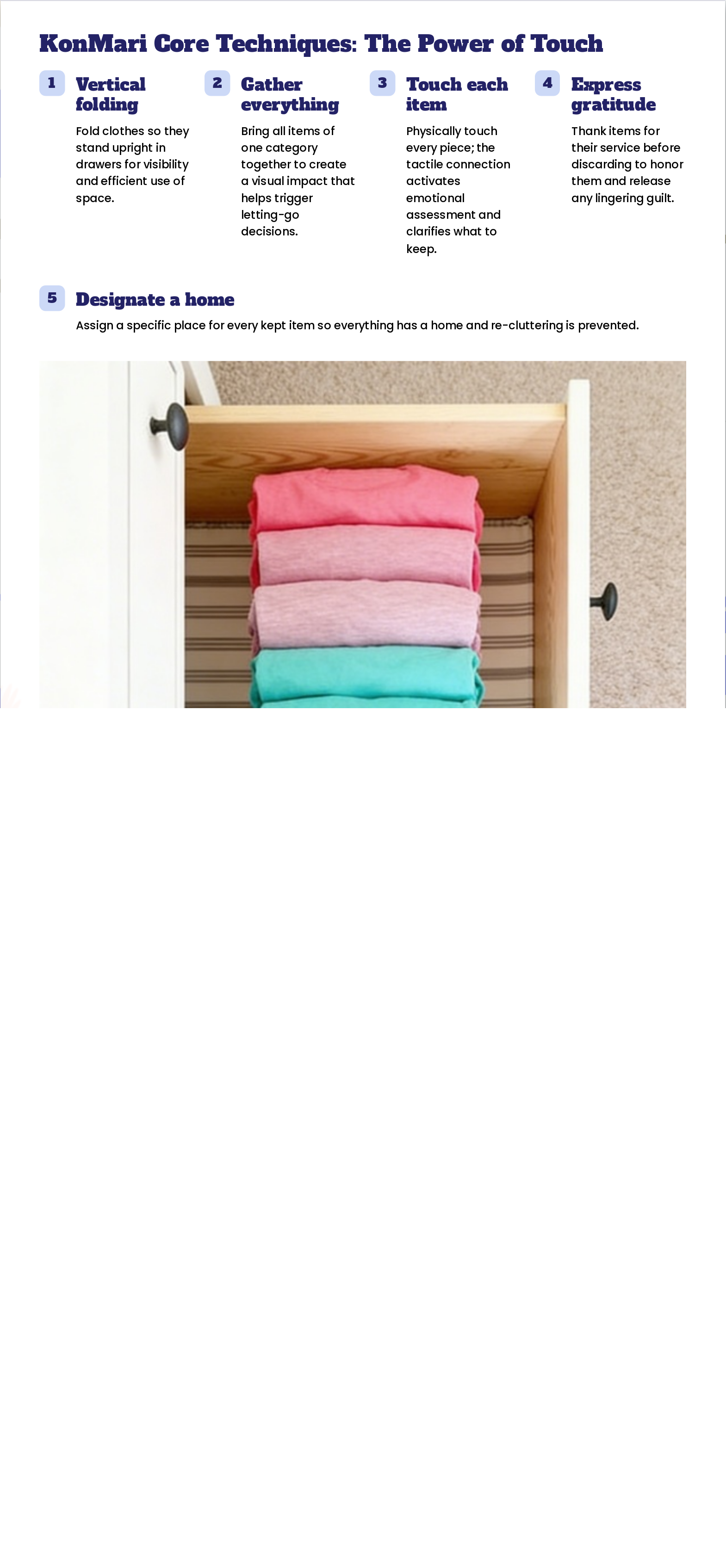
- Vertical folding: Fold clothes so they stand upright in drawers for visibility and efficient use of space.
- Gather everything: Bring all items of one category together to create a visual impact that helps trigger letting-go decisions.
- Touch each item: Physically touch every piece; the tactile connection activates emotional assessment and clarifies what to keep.
- Express gratitude: Thank items for their service before discarding to honor them and release any lingering guilt.
- Designate a home: Assign a specific place for every kept item so everything has a home and re-cluttering is prevented.
Slide 8: Digital Minimalism: Philosophy for the Attention Economy
- Focused Purpose: Focus online time on carefully selected activities that support your values and willingly miss out on everything else.
- Design Problem: Apps are engineered for addiction, fragmenting attention and eroding opportunities for solitude and deep thought.
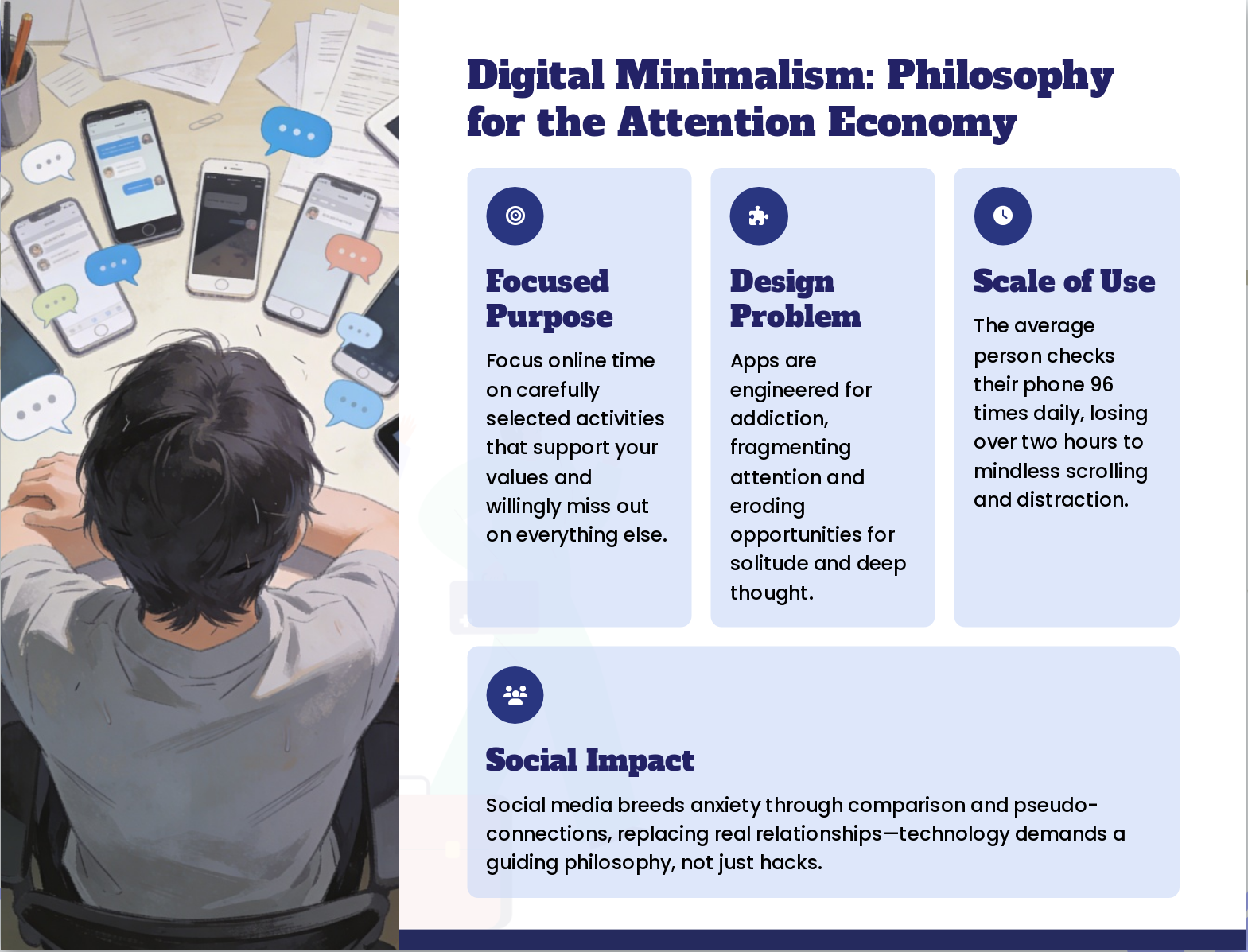
- Scale of Use: The average person checks their phone 96 times daily, losing over two hours to mindless scrolling and distraction.
- Social Impact: Social media breeds anxiety through comparison and pseudo-connections, replacing real relationships—technology demands a guiding philosophy, not just hacks.
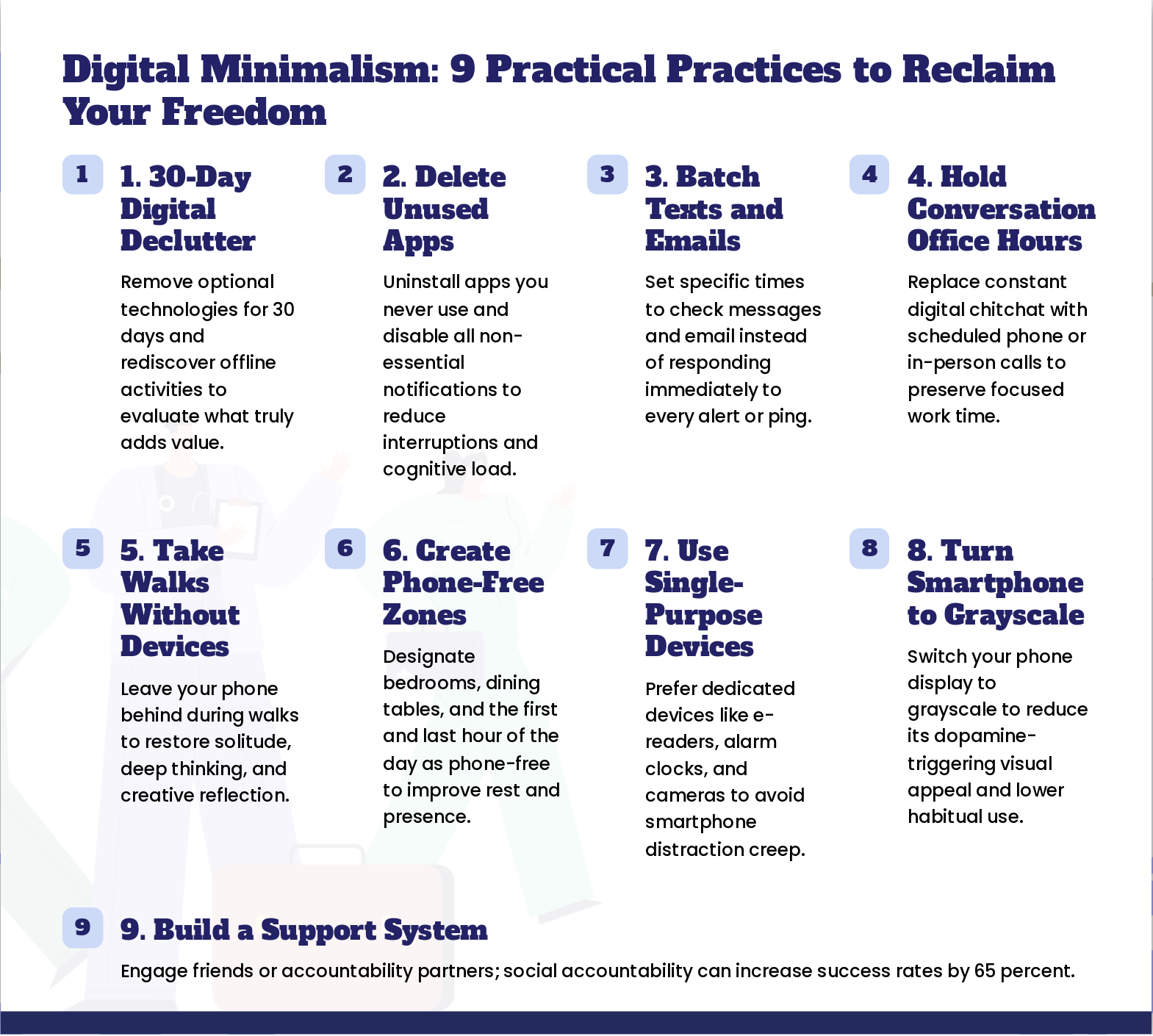
Slide 9: Digital Minimalism: 9 Practical Practices to Reclaim Your Freedom
- 30-Day Digital Declutter: Remove optional technologies for 30 days and rediscover offline activities to evaluate what truly adds value.
- Delete Unused Apps: Uninstall apps you never use and disable all non-essential notifications to reduce interruptions and cognitive load.
- Batch Texts and Emails: Set specific times to check messages and email instead of responding immediately to every alert or ping.
- Hold Conversation Office Hours: Replace constant digital chitchat with scheduled phone or in-person calls to preserve focused work time.
- Take Walks Without Devices: Leave your phone behind during walks to restore solitude, deep thinking, and creative reflection.
- Create Phone-Free Zones: Designate bedrooms, dining tables, and the first and last hour of the day as phone-free to improve rest and presence.
- Use Single-Purpose Devices: Prefer dedicated devices like e-readers, alarm clocks, and cameras to avoid smartphone distraction creep.
- Turn Smartphone to Grayscale: Switch your phone display to grayscale to reduce its dopamine-triggering visual appeal and lower habitual use.
- Build a Support System: Engage friends or accountability partners; social accountability can increase success rates by 65 percent.
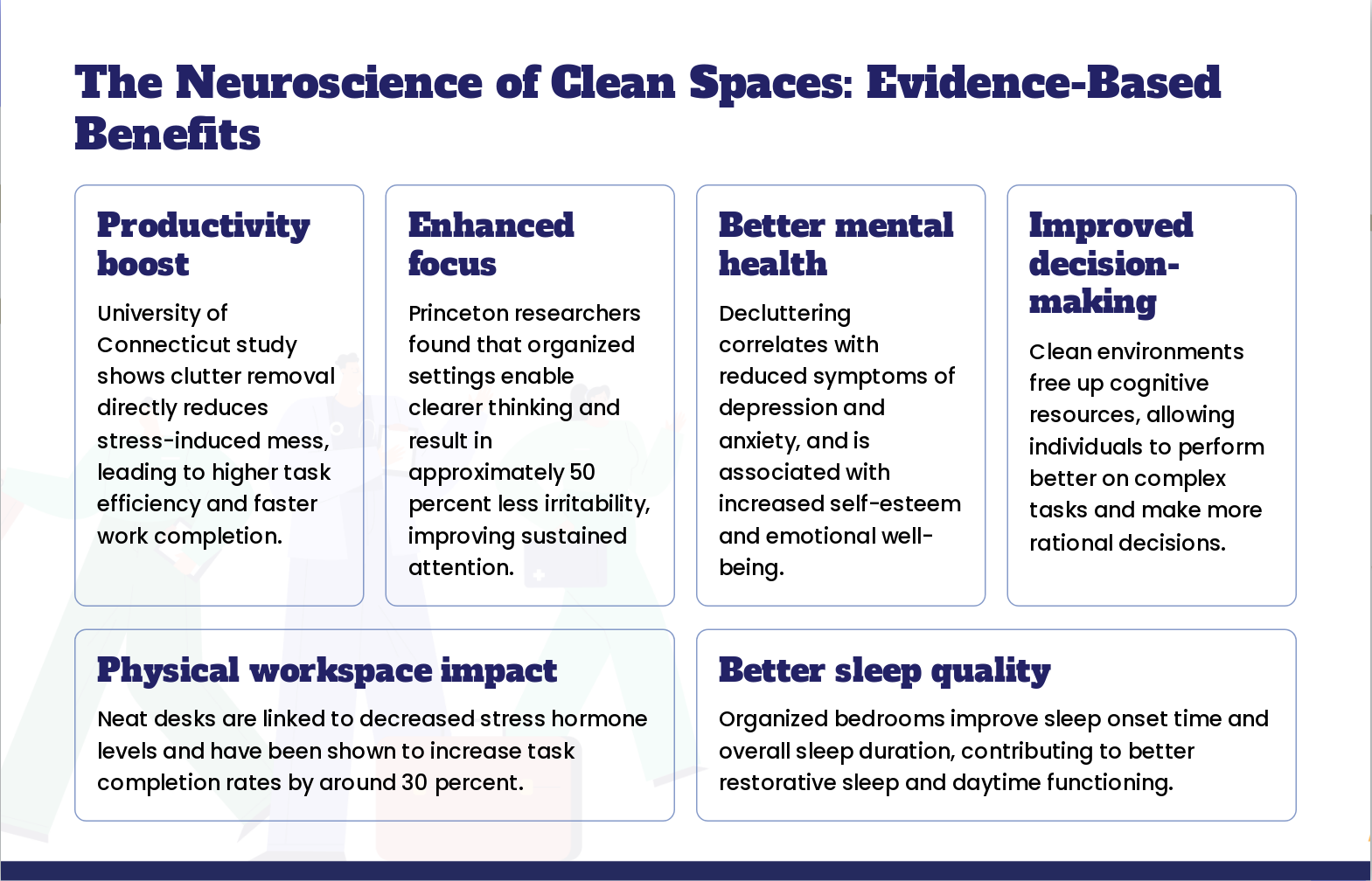
Slide 10: The Neuroscience of Clean Spaces: Evidence-Based Benefits
- Productivity boost: University of Connecticut study shows clutter removal directly reduces stress-induced mess, leading to higher task efficiency and faster work completion.
- Enhanced focus: Princeton researchers found that organized settings enable clearer thinking and result in approximately 50 percent less irritability, improving sustained attention.
- Better mental health: Decluttering correlates with reduced symptoms of depression and anxiety, and is associated with increased self-esteem and emotional well-being.
- Improved decision-making: Clean environments free up cognitive resources, allowing individuals to perform better on complex tasks and make more rational decisions.
- Physical workspace impact: Neat desks are linked to decreased stress hormone levels and have been shown to increase task completion rates by around 30 percent.
- Better sleep quality: Organized bedrooms improve sleep onset time and overall sleep duration, contributing to better restorative sleep and daytime functioning.
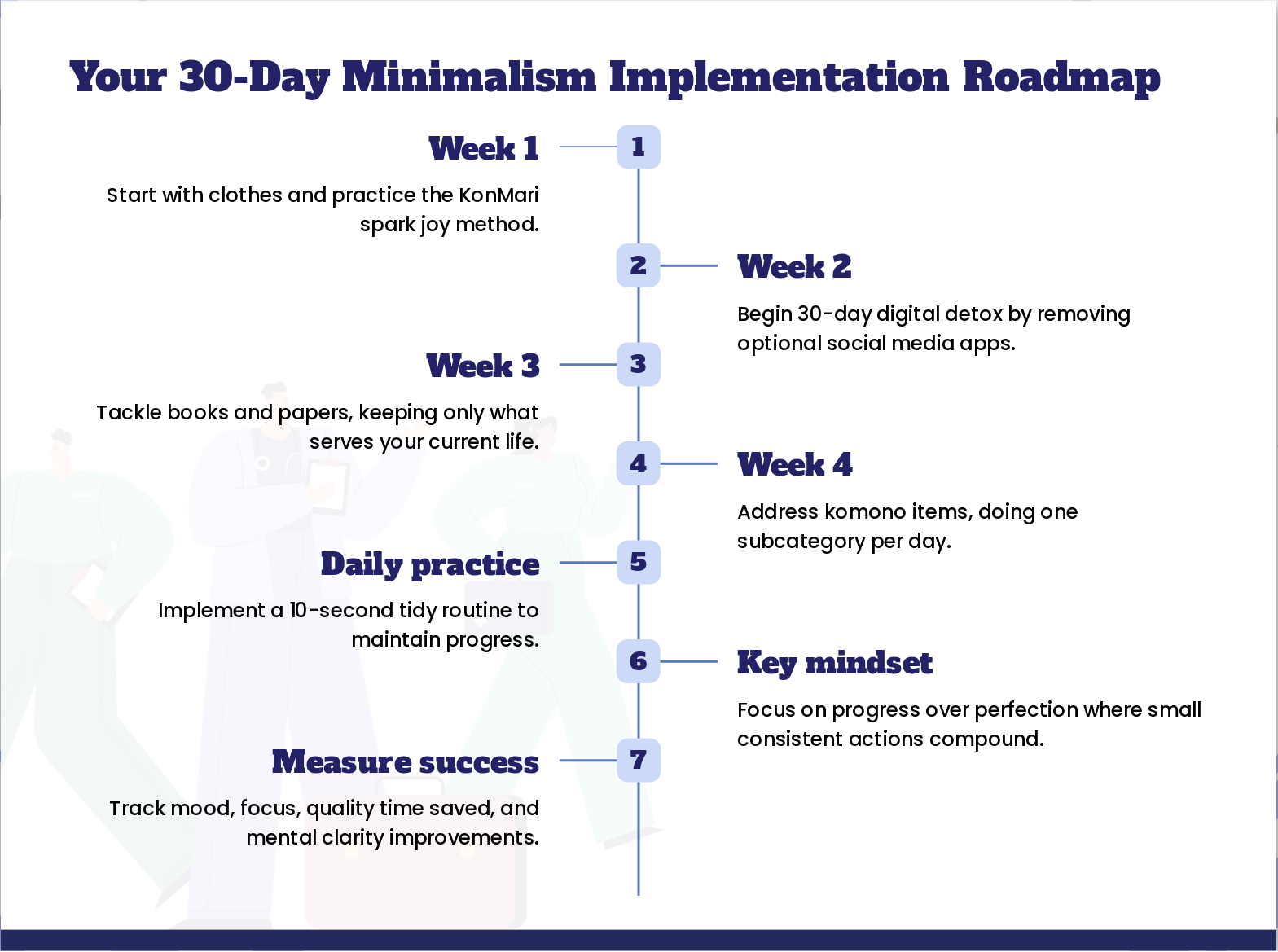
Slide 11: Your 30-Day Minimalism Implementation Roadmap
- Week 1: Start with clothes and practice the KonMari spark joy method.
- Week 2: Begin 30-day digital detox by removing optional social media apps.
- Week 3: Tackle books and papers, keeping only what serves your current life.
- Week 4: Address komono items, doing one subcategory per day.
- Daily practice: Implement a 10-second tidy routine to maintain progress.
- Key mindset: Focus on progress over perfection where small consistent actions compound.
- Measure success: Track mood, focus, quality time saved, and mental clarity improvements.
Slide 12: Living Intentionally: Your Clutter-Free Life Starts Today
Living Intentionally: Your Clutter-Free Life Starts Today Minimalism is choosing what adds value and releasing what doesn't. Take your first action within 24 hours.