Presentation Summary
Learn about Kotter's proven 8-step framework for leading organizational transformation in HR and leadership development.
Full Presentation Transcript
Slide 1: Kotter's 8-Step Change Model
A Proven Framework for Leading Organizational Transformation in HR and Leadership Development
Slide 2: Contents
- Why Change Fails: Understanding the challenges and statistical evidence behind organizational change initiatives and the need for systematic approaches.
- Creating Urgency: Building the compelling case for change and establishing the foundational sense of urgency across the organization.
- Forming Coalition: Assembling powerful guiding teams with the right mix of leadership, expertise, and influence to drive transformation.
- Communicating Vision: Developing and communicating the change vision through every channel to drive understanding and alignment across teams.
- Short-Term Wins: Generating visible successes to build momentum, prove the change is working, and sustain organizational commitment.
- Implementation Roadmap: Practical framework for HR leaders to apply all eight steps and sustain transformation over time.
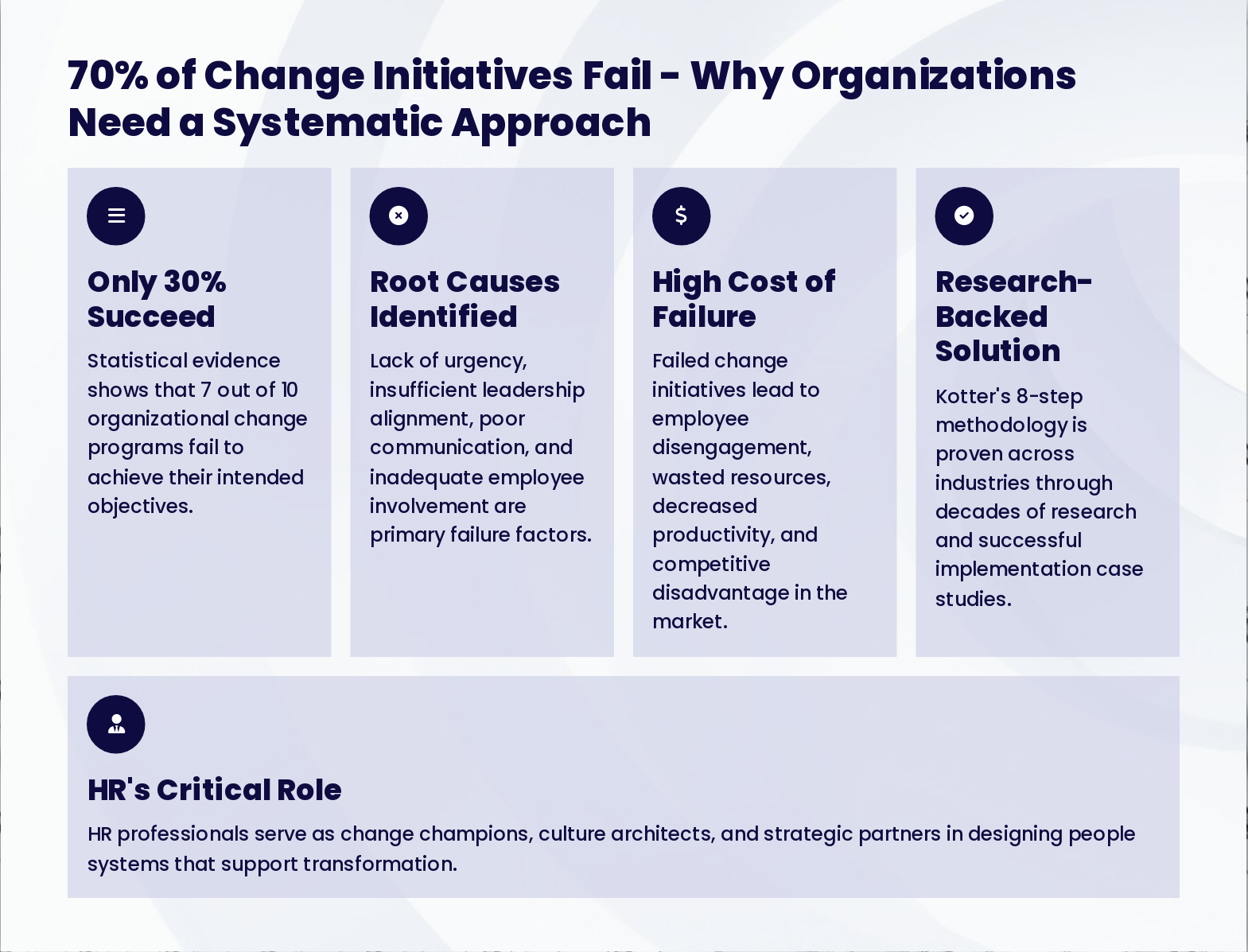
Slide 3: 70% of Change Initiatives Fail - Why Organizations Need a Systematic Approach
- Only 30% Succeed: Statistical evidence shows that 7 out of 10 organizational change programs fail to achieve their intended objectives.
- Root Causes Identified: Lack of urgency, insufficient leadership alignment, poor communication, and inadequate employee involvement are primary failure factors.
- High Cost of Failure: Failed change initiatives lead to employee disengagement, wasted resources, decreased productivity, and competitive disadvantage in the market.
- Research-Backed Solution: Kotter's 8-step methodology is proven across industries through decades of research and successful implementation case studies.
- HR's Critical Role: HR professionals serve as change champions, culture architects, and strategic partners in designing people systems that support transformation.
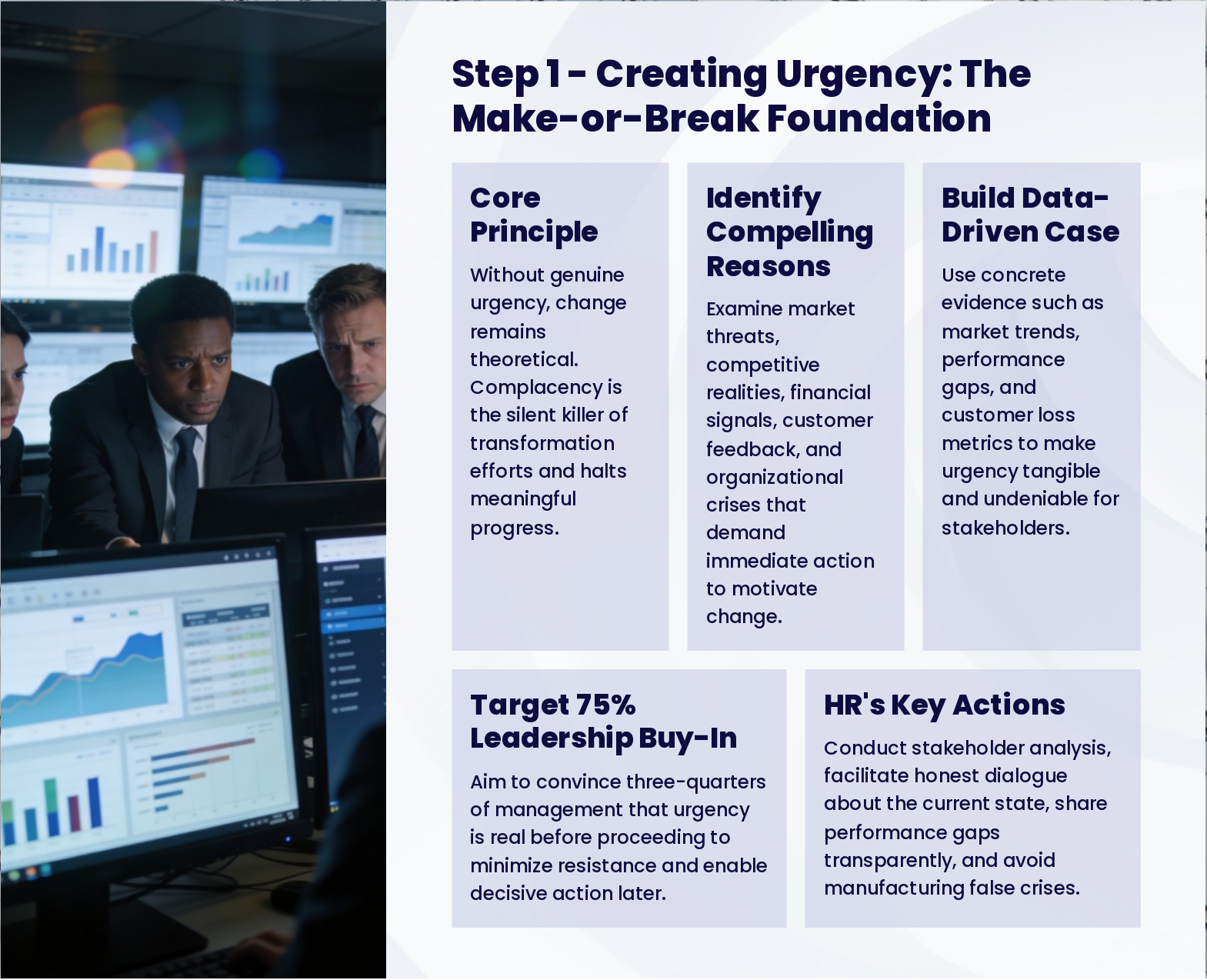
Slide 4: Step 1 - Creating Urgency: The Make-or-Break Foundation
- Core Principle: Without genuine urgency, change remains theoretical. Complacency is the silent killer of transformation efforts and halts meaningful progress.
- Identify Compelling Reasons: Examine market threats, competitive realities, financial signals, customer feedback, and organizational crises that demand immediate action to motivate change.
- Build Data-Driven Case: Use concrete evidence such as market trends, performance gaps, and customer loss metrics to make urgency tangible and undeniable for stakeholders.
- Target 75% Leadership Buy-In: Aim to convince three-quarters of management that urgency is real before proceeding to minimize resistance and enable decisive action later.
- HR's Key Actions: Conduct stakeholder analysis, facilitate honest dialogue about the current state, share performance gaps transparently, and avoid manufacturing false crises.
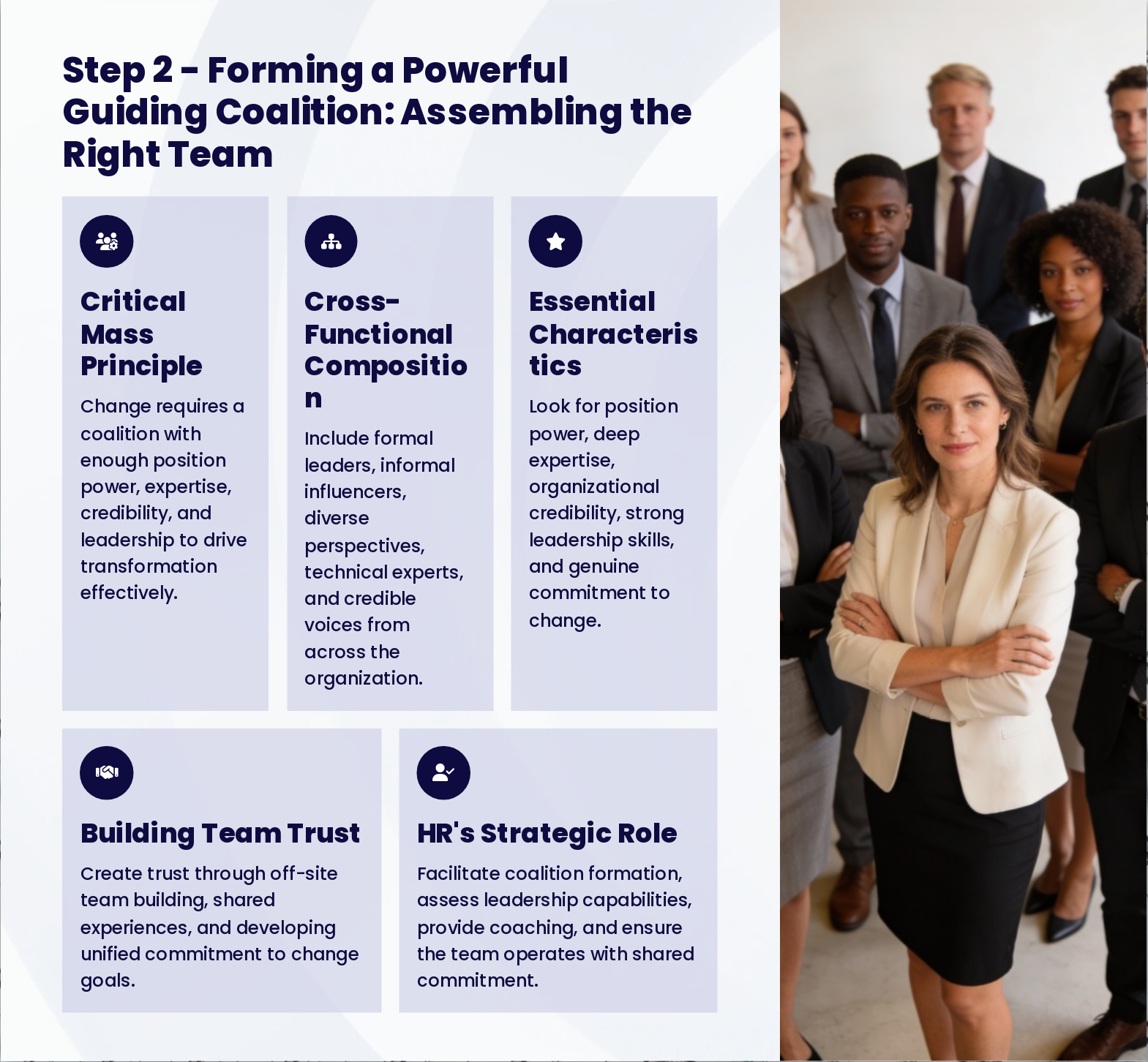
Slide 5: Step 2 - Forming a Powerful Guiding Coalition: Assembling the Right Team
- Critical Mass Principle: Change requires a coalition with enough position power, expertise, credibility, and leadership to drive transformation effectively.
- Cross-Functional Composition: Include formal leaders, informal influencers, diverse perspectives, technical experts, and credible voices from across the organization.
- Essential Characteristics: Look for position power, deep expertise, organizational credibility, strong leadership skills, and genuine commitment to change.
- Building Team Trust: Create trust through off-site team building, shared experiences, and developing unified commitment to change goals.
- HR's Strategic Role: Facilitate coalition formation, assess leadership capabilities, provide coaching, and ensure the team operates with shared commitment.
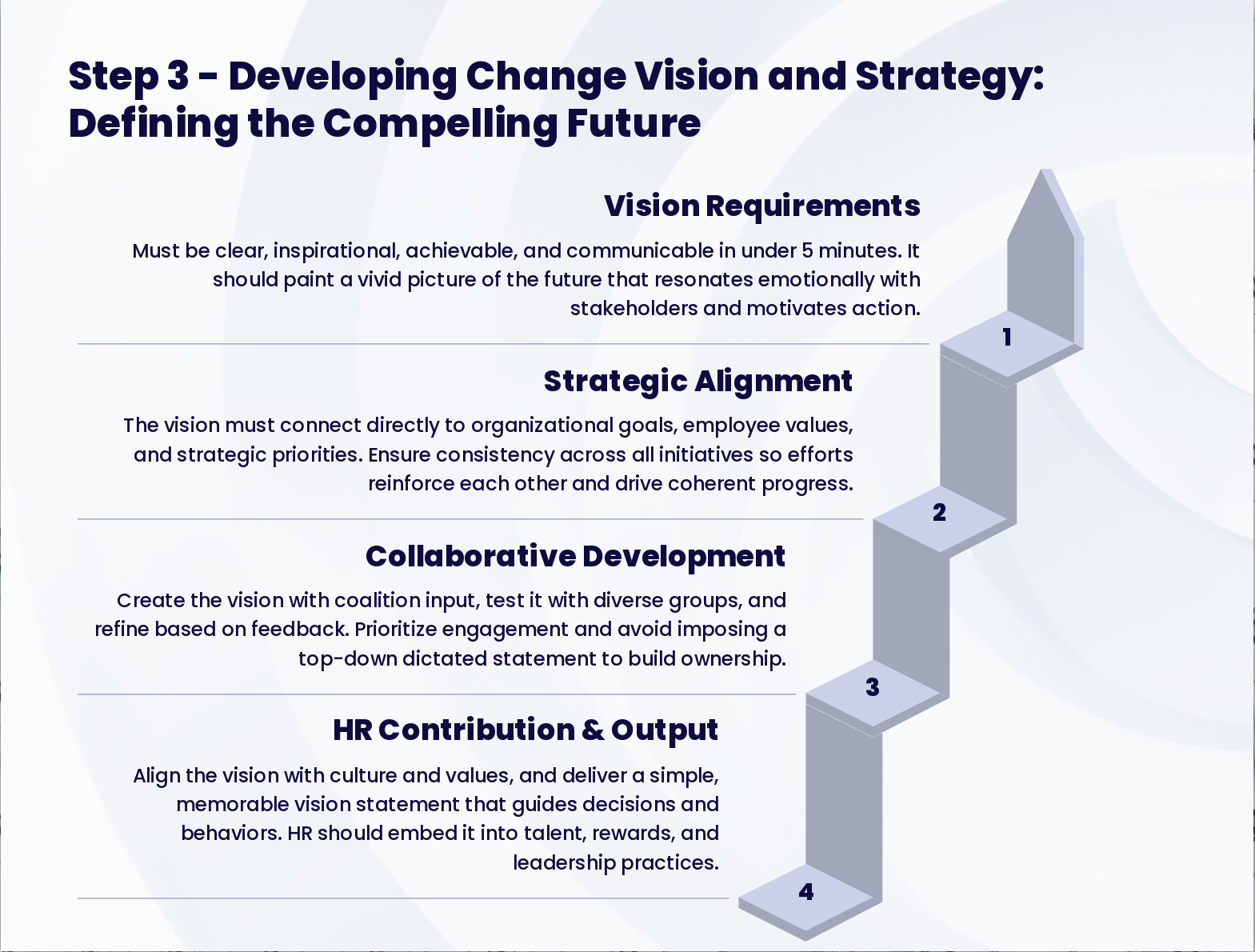
Slide 6: Step 3 - Developing Change Vision and Strategy: Defining the Compelling Future
- Vision Requirements: Must be clear, inspirational, achievable, and communicable in under 5 minutes. It should paint a vivid picture of the future that resonates emotionally with stakeholders and motivates action.
- Strategic Alignment: The vision must connect directly to organizational goals, employee values, and strategic priorities. Ensure consistency across all initiatives so efforts reinforce each other and drive coherent progress.
- Collaborative Development: Create the vision with coalition input, test it with diverse groups, and refine based on feedback. Prioritize engagement and avoid imposing a top-down dictated statement to build ownership.
- HR Contribution & Output: Align the vision with culture and values, and deliver a simple, memorable vision statement that guides decisions and behaviors. HR should embed it into talent, rewards, and leadership practices.
Slide 7: Step 4 - Communicating the Vision: Driving Understanding Through Every Channel
- Communication Imperative: Under-communication by a factor of 10 is the norm. You cannot over-communicate during change.
- Multi-Channel Strategy: Use town halls, team meetings, emails, intranet, informal conversations, and symbolic leadership actions consistently.
- Walk the Talk: Leadership behavior speaks louder than words. Ensure leaders model the vision in every decision and action.
- Continuous Repetition: Repeat the vision continuously through every available platform until everyone can recite it.
- Two-Way Dialogue: Create forums for questions, address doubts, and encourage honest feedback about concerns.
- HR Communication Toolkit: Develop templates, train managers as communicators, and measure employee understanding regularly.
Slide 8: Step 5 - Empowering Broad-Based Action: Removing Barriers to Execution
- Identify Obstacles: Find systems, structures, skills gaps, and supervisors that block change. Make barrier removal a priority.
- Address Structural Barriers: Update outdated processes, realign performance systems, remove rigid hierarchies, and redesign workflows that hinder progress.
- Close Skill Gaps: Provide training, resources, coaching, and support for new behaviors and competencies required for change success.
- HR Interventions: Redesign performance management, update job descriptions, provide learning resources, reward innovation, and tolerate intelligent failures.
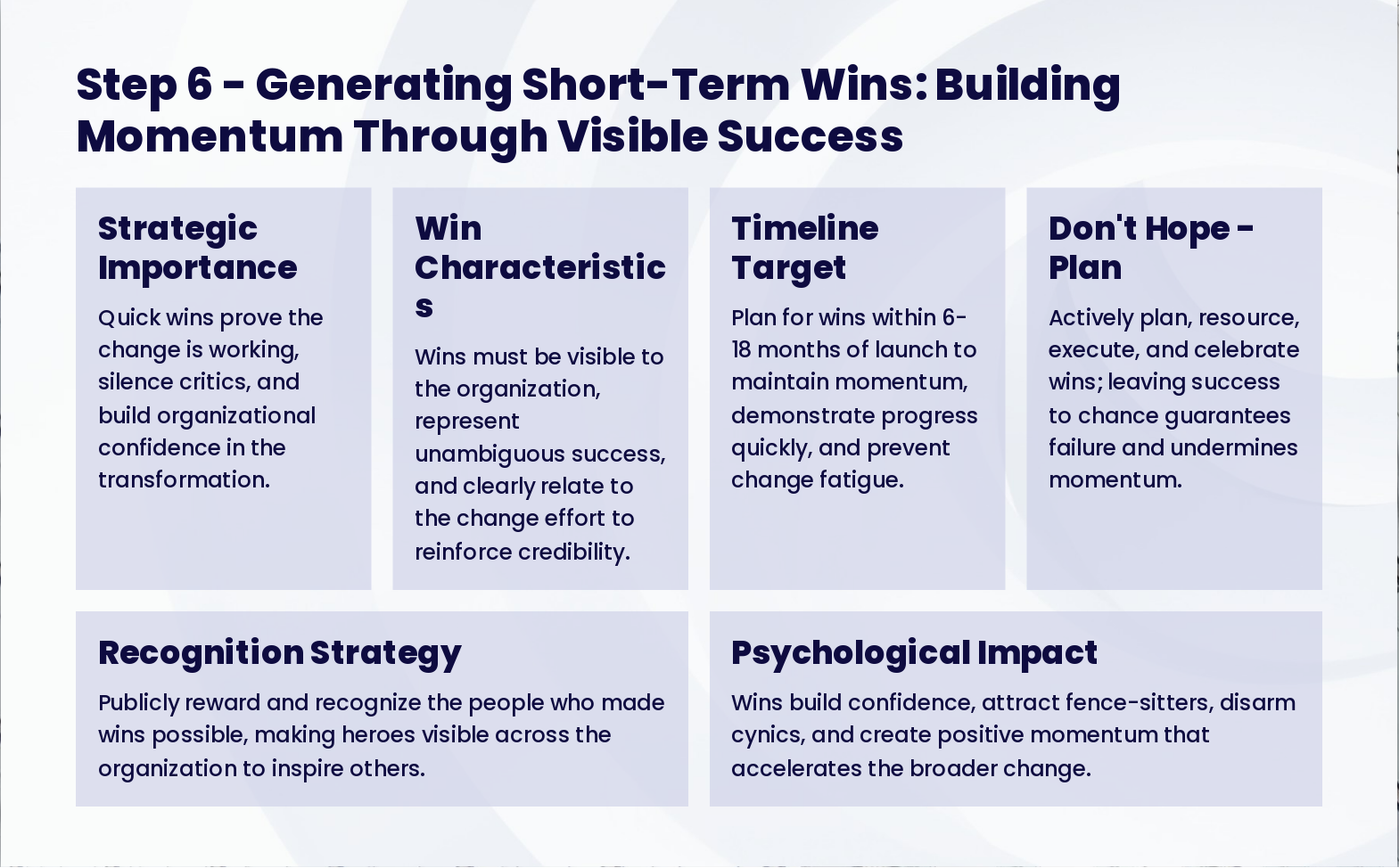
Slide 9: Step 6 - Generating Short-Term Wins: Building Momentum Through Visible Success
- Strategic Importance: Quick wins prove the change is working, silence critics, and build organizational confidence in the transformation.
- Win Characteristics: Wins must be visible to the organization, represent unambiguous success, and clearly relate to the change effort to reinforce credibility.
- Timeline Target: Plan for wins within 6-18 months of launch to maintain momentum, demonstrate progress quickly, and prevent change fatigue.
- Don't Hope - Plan: Actively plan, resource, execute, and celebrate wins; leaving success to chance guarantees failure and undermines momentum.
- Recognition Strategy: Publicly reward and recognize the people who made wins possible, making heroes visible across the organization to inspire others.
- Psychological Impact: Wins build confidence, attract fence-sitters, disarm cynics, and create positive momentum that accelerates the broader change.
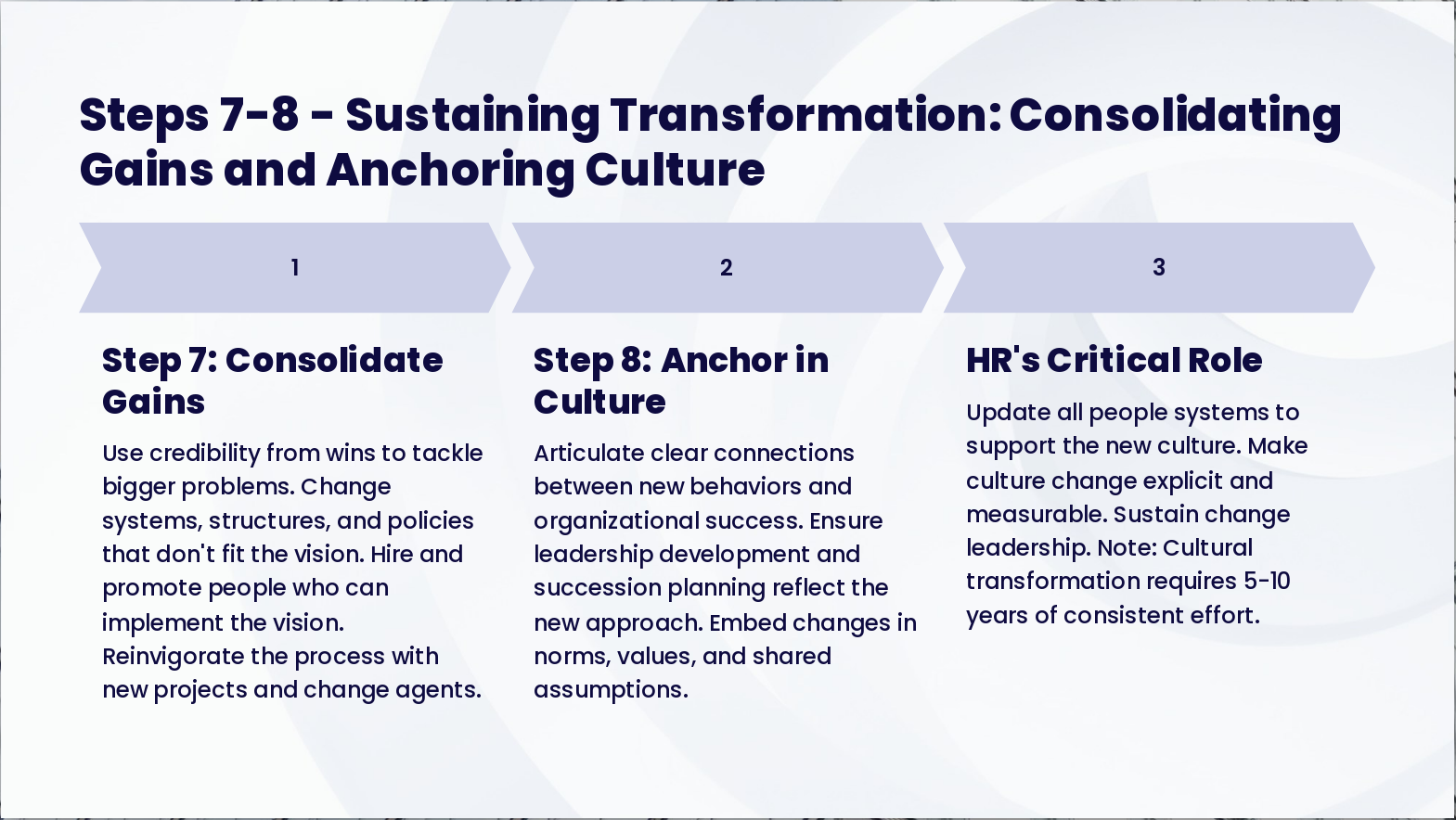
Slide 10: Steps 7-8 - Sustaining Transformation: Consolidating Gains and Anchoring Culture
- Step 7: Consolidate Gains: Use credibility from wins to tackle bigger problems. Change systems, structures, and policies that don't fit the vision. Hire and promote people who can implement the vision. Reinvigorate the process with new projects and change agents.
- Step 8: Anchor in Culture: Articulate clear connections between new behaviors and organizational success. Ensure leadership development and succession planning reflect the new approach. Embed changes in norms, values, and shared assumptions.
- HR's Critical Role: Update all people systems to support the new culture. Make culture change explicit and measurable. Sustain change leadership. Note: Cultural transformation requires 5-10 years of consistent effort.
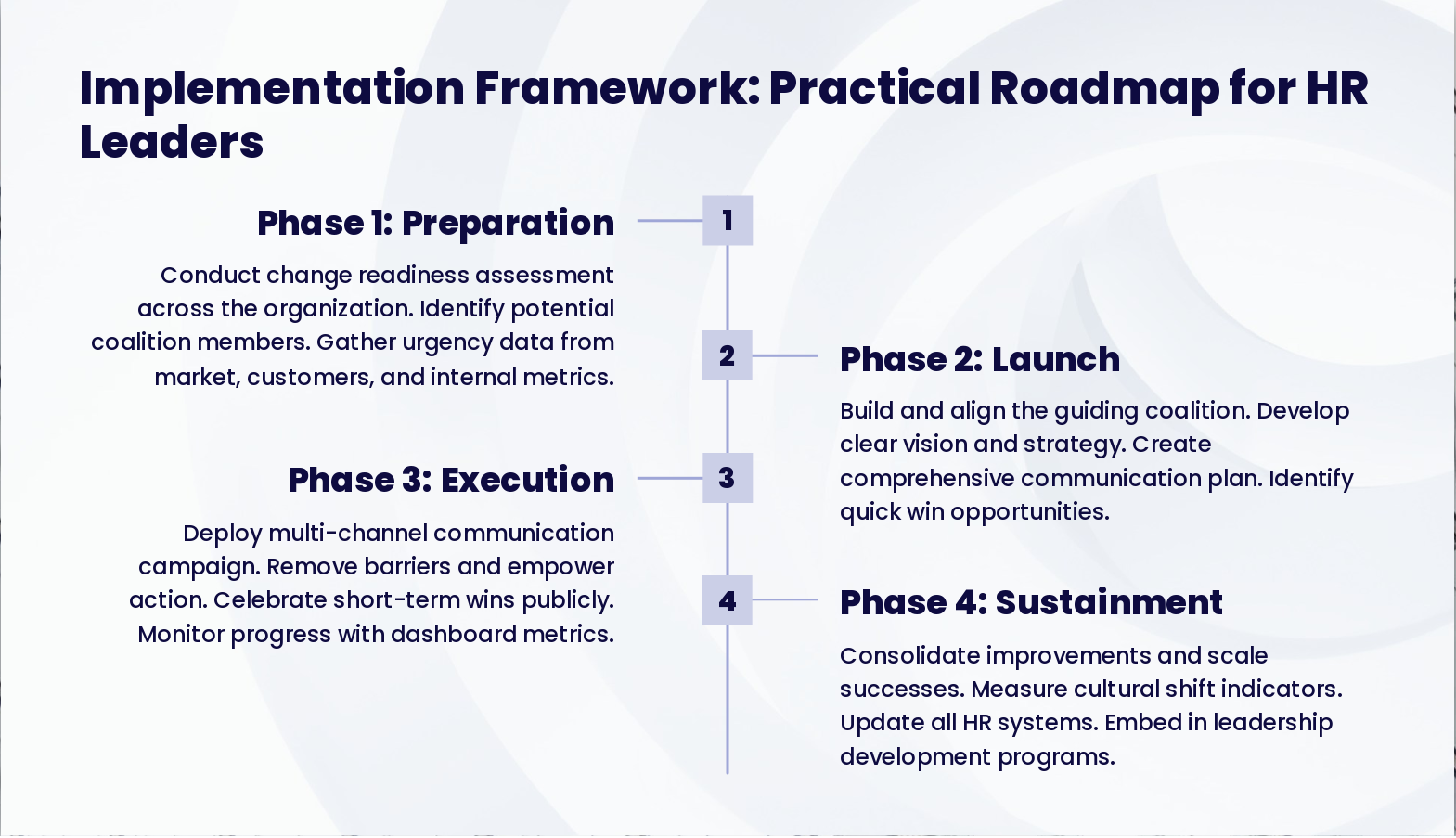
Slide 11: Implementation Framework: Practical Roadmap for HR Leaders
- Phase 1: Preparation: Conduct change readiness assessment across the organization. Identify potential coalition members. Gather urgency data from market, customers, and internal metrics.
- Phase 2: Launch: Build and align the guiding coalition. Develop clear vision and strategy. Create comprehensive communication plan. Identify quick win opportunities.
- Phase 3: Execution: Deploy multi-channel communication campaign. Remove barriers and empower action. Celebrate short-term wins publicly. Monitor progress with dashboard metrics.
- Phase 4: Sustainment: Consolidate improvements and scale successes. Measure cultural shift indicators. Update all HR systems. Embed in leadership development programs.
Slide 12: Leading Change Successfully
Leading Change Successfully Remember: Change is sequential, leadership-driven, and requires sustained commitment. HR's role is strategic and essential.