Presentation Summary
A Science-Based Guide to 16/8 and 5:2 Methods, Autophagy, and Sustainable Wellness Comparing 16/8 time-restricted eating versus 5:2 weekly cycling approaches for optimal lifestyle integration. Understanding autophagy, cellular recycling, and the metabolic benefits that drive intermittent fasting effectiveness. Identifying common challenges, management strategies, and critical exclusions for who should avoid fasting. Diet Industry Crisis : The $72 billion annual industry continues to grow while obesity rates keep rising, showing that massive investment in short-term diets has not solved long-te
Full Presentation Transcript
Slide 1: Intermittent Fasting: Methods and Benefits
A Science-Based Guide to 16/8 and 5:2 Methods, Autophagy, and Sustainable Wellness
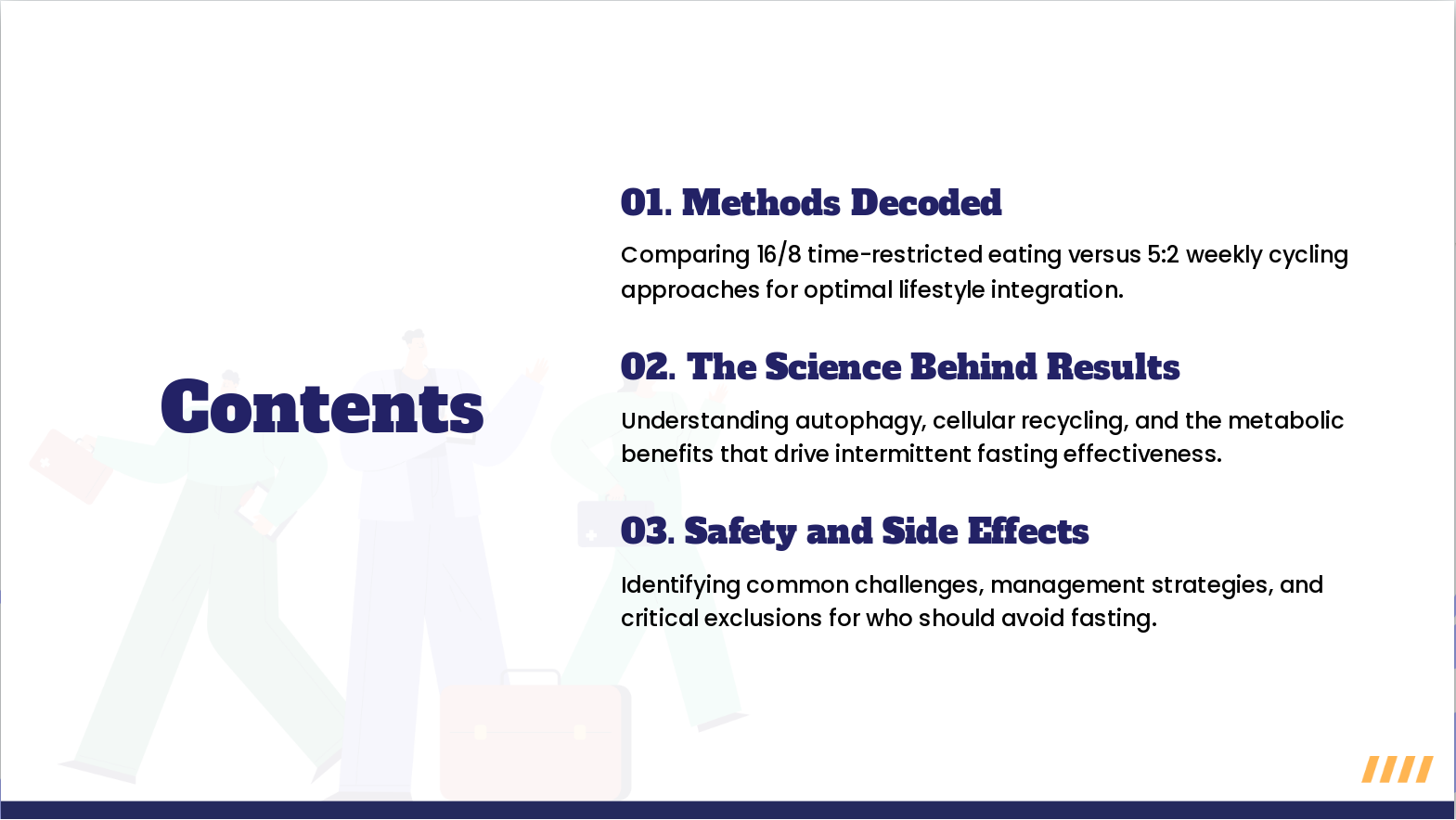
Slide 2: Contents
- Methods Decoded: Comparing 16/8 time-restricted eating versus 5:2 weekly cycling approaches for optimal lifestyle integration.
- The Science Behind Results: Understanding autophagy, cellular recycling, and the metabolic benefits that drive intermittent fasting effectiveness.
- Safety and Side Effects: Identifying common challenges, management strategies, and critical exclusions for who should avoid fasting.
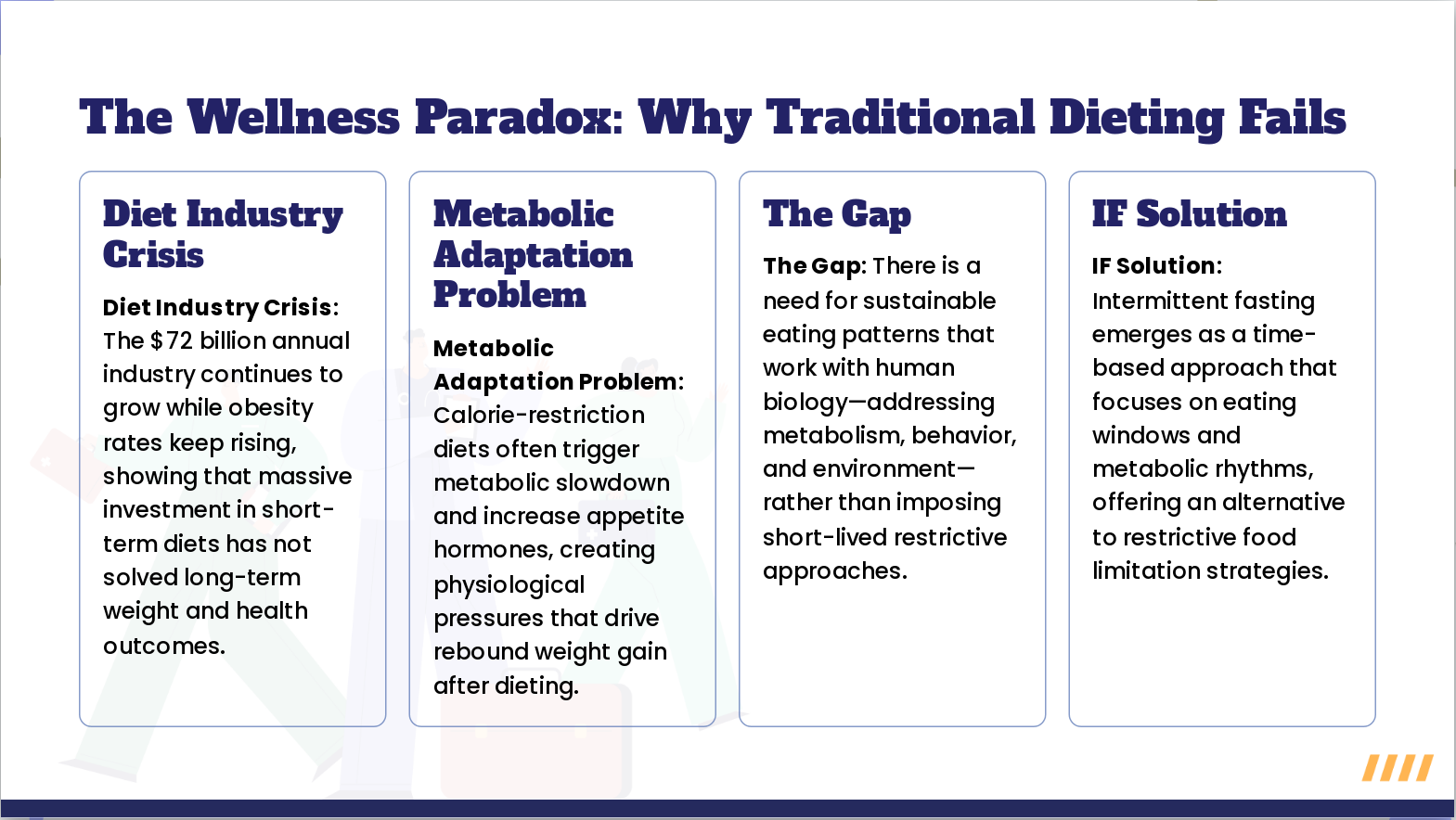
Slide 3: The Wellness Paradox: Why Traditional Dieting Fails
- Diet Industry Crisis: Diet Industry Crisis : The $72 billion annual industry continues to grow while obesity rates keep rising, showing that massive investment in short-term diets has not solved long-term weight and health outcomes.
- Metabolic Adaptation Problem: Metabolic Adaptation Problem : Calorie-restriction diets often trigger metabolic slowdown and increase appetite hormones, creating physiological pressures that drive rebound weight gain after dieting.
- The Gap: The Gap : There is a need for sustainable eating patterns that work with human biology—addressing metabolism, behavior, and environment—rather than imposing short-lived restrictive approaches.
- IF Solution: IF Solution : Intermittent fasting emerges as a time-based approach that focuses on eating windows and metabolic rhythms, offering an alternative to restrictive food limitation strategies.
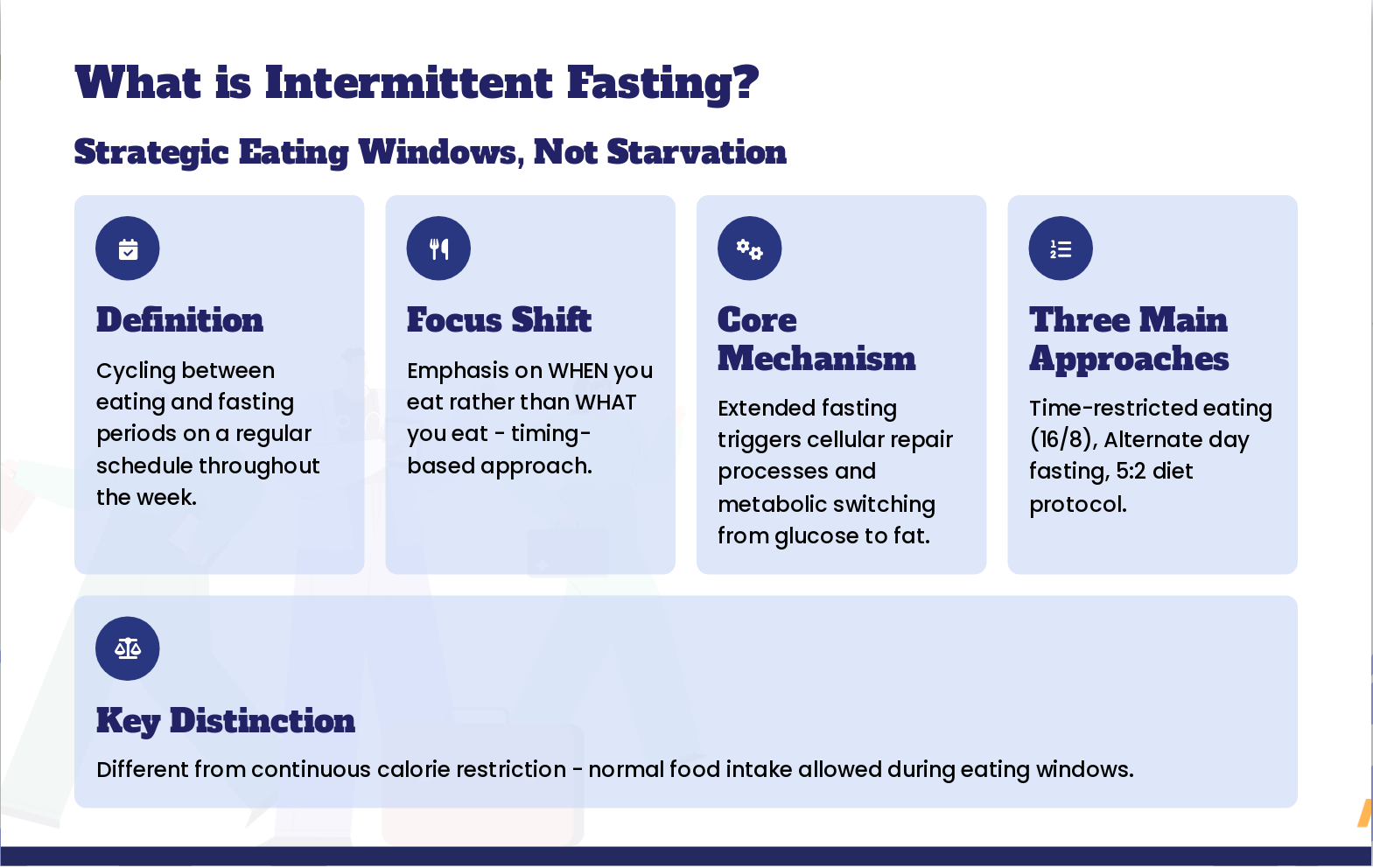
Slide 4: What is Intermittent Fasting?
- Definition: Cycling between eating and fasting periods on a regular schedule throughout the week.
- Focus Shift: Emphasis on WHEN you eat rather than WHAT you eat - timing-based approach.
- Core Mechanism: Extended fasting triggers cellular repair processes and metabolic switching from glucose to fat.
- Three Main Approaches: Time-restricted eating (16/8), Alternate day fasting, 5:2 diet protocol.
- Key Distinction: Different from continuous calorie restriction - normal food intake allowed during eating windows.
Slide 5: 16/8 Method: Daily Fasting Protocol
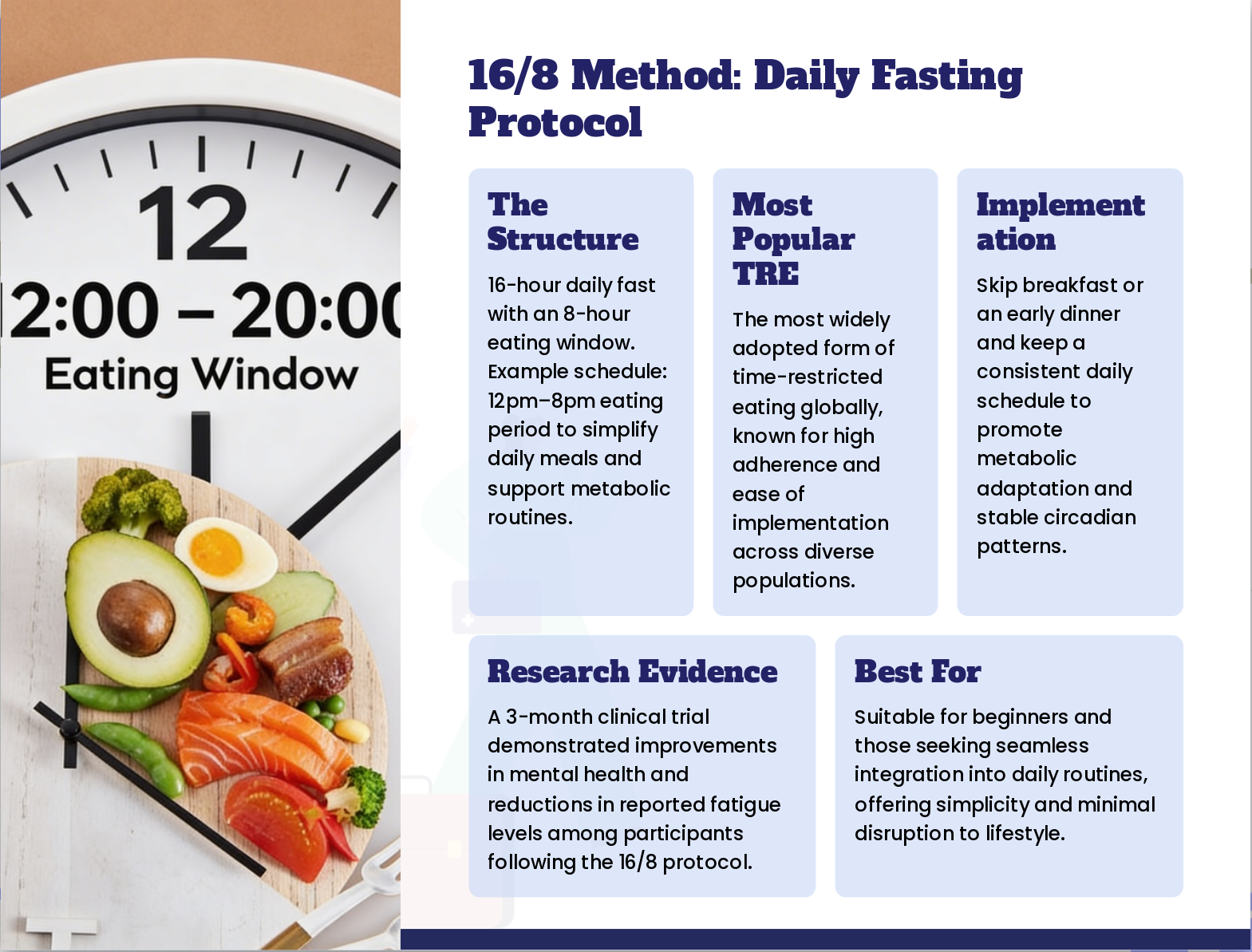
- The Structure: 16-hour daily fast with an 8-hour eating window. Example schedule: 12pm–8pm eating period to simplify daily meals and support metabolic routines.
- Most Popular TRE: The most widely adopted form of time-restricted eating globally, known for high adherence and ease of implementation across diverse populations.
- Implementation: Skip breakfast or an early dinner and keep a consistent daily schedule to promote metabolic adaptation and stable circadian patterns.
- Research Evidence: A 3-month clinical trial demonstrated improvements in mental health and reductions in reported fatigue levels among participants following the 16/8 protocol.
- Best For: Suitable for beginners and those seeking seamless integration into daily routines, offering simplicity and minimal disruption to lifestyle.
Slide 6: 5:2 Diet: Weekly Calorie Cycling
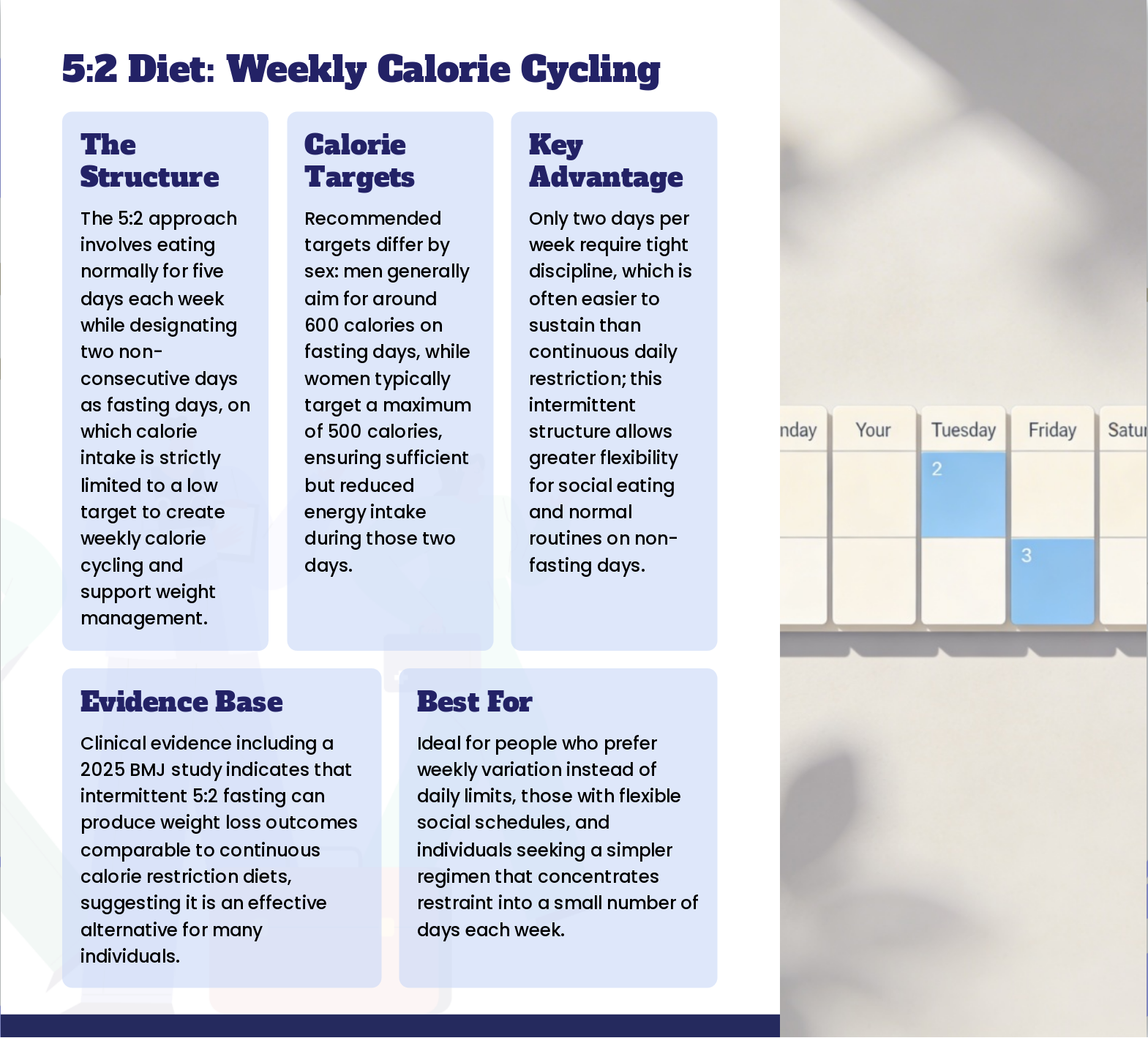
- The Structure: The 5:2 approach involves eating normally for five days each week while designating two non-consecutive days as fasting days, on which calorie intake is strictly limited to a low target to create weekly calorie cycling and support weight management.
- Calorie Targets: Recommended targets differ by sex: men generally aim for around 600 calories on fasting days, while women typically target a maximum of 500 calories, ensuring sufficient but reduced energy intake during those two days.
- Key Advantage: Only two days per week require tight discipline, which is often easier to sustain than continuous daily restriction; this intermittent structure allows greater flexibility for social eating and normal routines on non-fasting days.
- Evidence Base: Clinical evidence including a 2025 BMJ study indicates that intermittent 5:2 fasting can produce weight loss outcomes comparable to continuous calorie restriction diets, suggesting it is an effective alternative for many individuals.
- Best For: Ideal for people who prefer weekly variation instead of daily limits, those with flexible social schedules, and individuals seeking a simpler regimen that concentrates restraint into a small number of days each week.
Slide 7: Head-to-Head Comparison: 16/8 vs 5:2
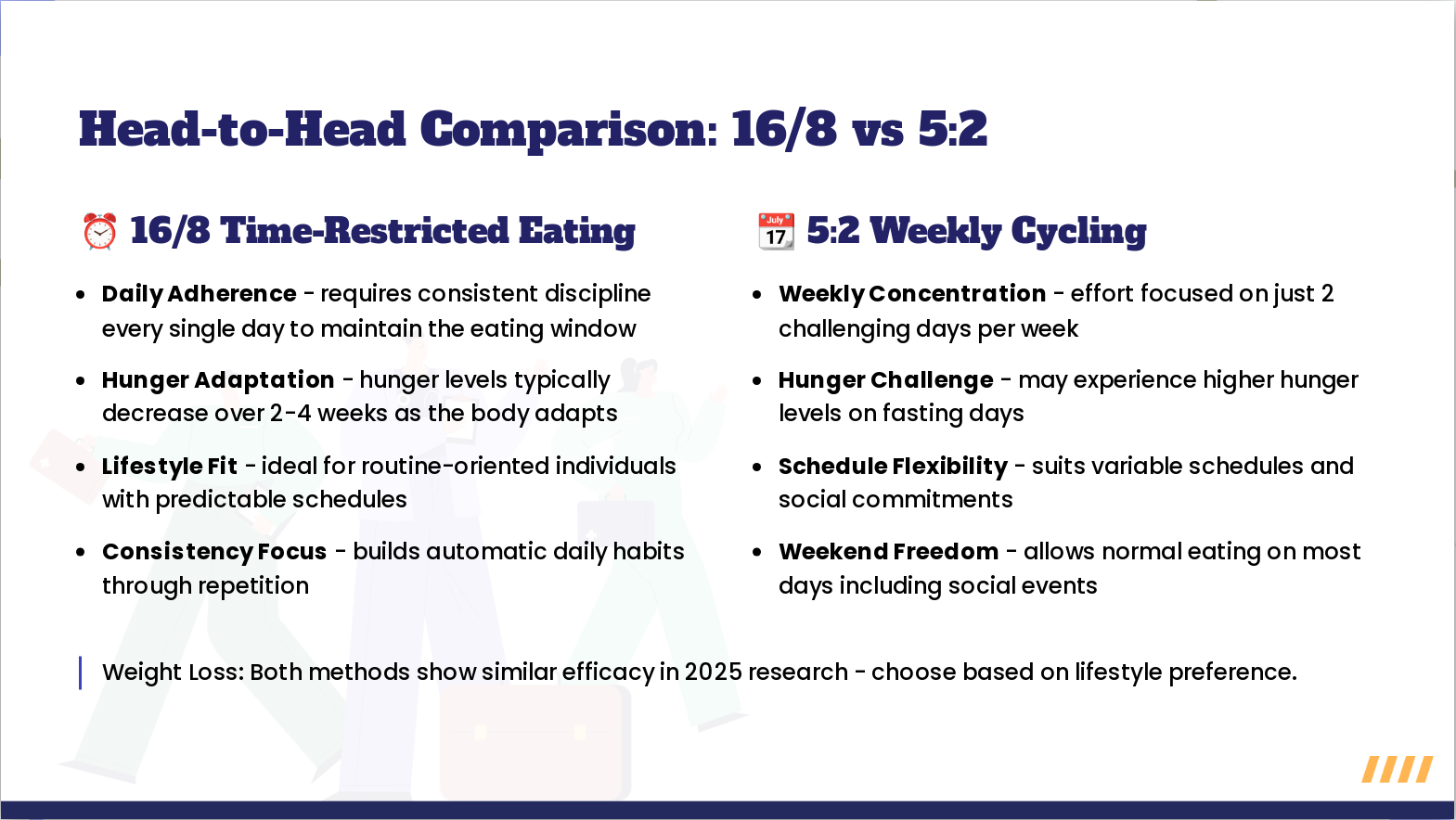
Daily Adherence - requires consistent discipline every single day to maintain the eating window
Hunger Adaptation - hunger levels typically decrease over 2-4 weeks as the body adapts
Lifestyle Fit - ideal for routine-oriented individuals with predictable schedules
Consistency Focus - builds automatic daily habits through repetition
Weekly Concentration - effort focused on just 2 challenging days per week
Hunger Challenge - may experience higher hunger levels on fasting days
Schedule Flexibility - suits variable schedules and social commitments
Weekend Freedom - allows normal eating on most days including social events
Weight Loss: Both methods show similar efficacy in 2025 research - choose based on lifestyle preference.
- Daily Adherence - requires consistent discipline every single day to maintain the eating window
- Hunger Adaptation - hunger levels typically decrease over 2-4 weeks as the body adapts
- Lifestyle Fit - ideal for routine-oriented individuals with predictable schedules
- Consistency Focus - builds automatic daily habits through repetition
- Weekly Concentration - effort focused on just 2 challenging days per week
- Hunger Challenge - may experience higher hunger levels on fasting days
- Schedule Flexibility - suits variable schedules and social commitments
- Weekend Freedom - allows normal eating on most days including social events
Slide 8: Autophagy: Your Cellular Recycling System
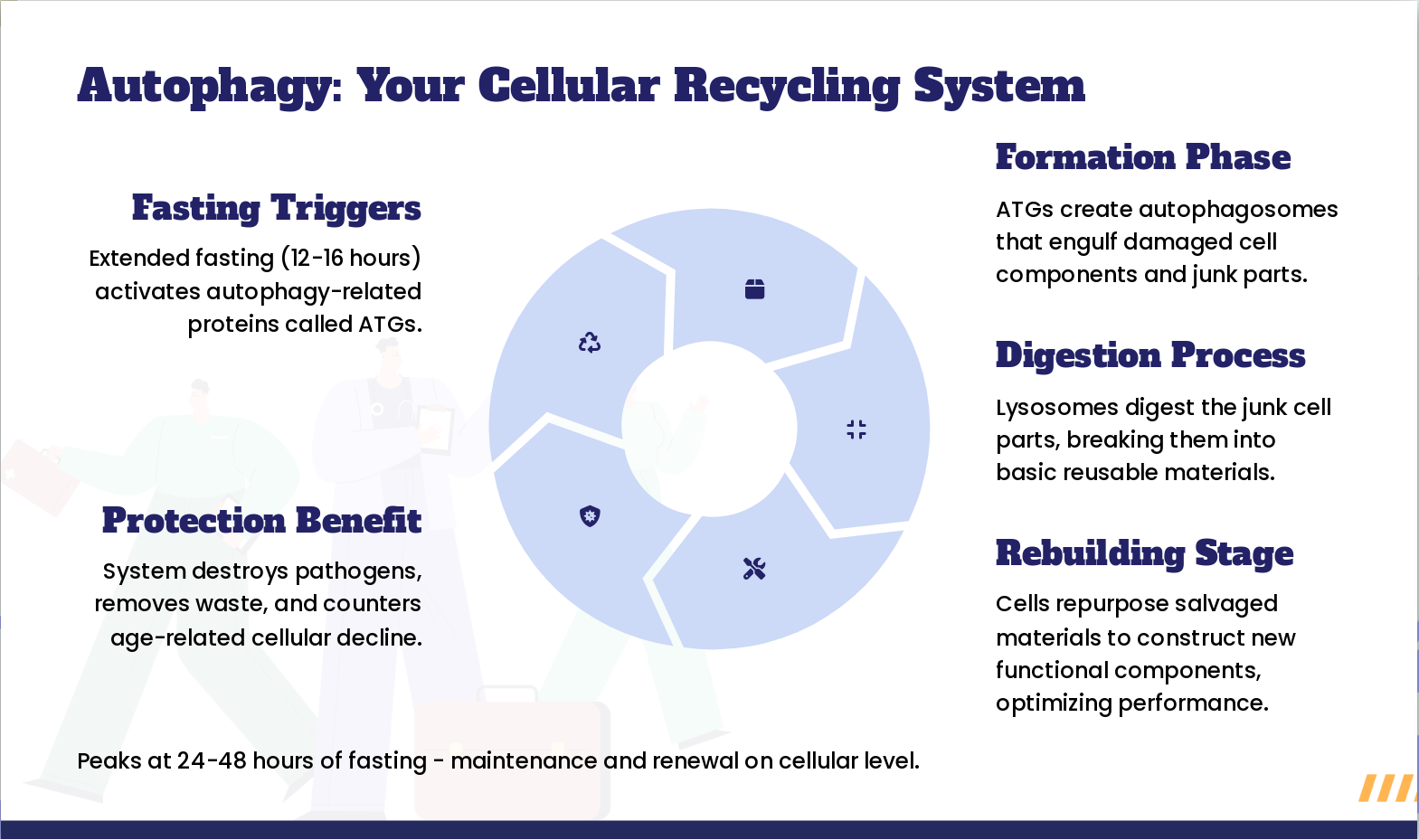
- Fasting Triggers: Extended fasting (12-16 hours) activates autophagy-related proteins called ATGs.
- Formation Phase: ATGs create autophagosomes that engulf damaged cell components and junk parts.
- Digestion Process: Lysosomes digest the junk cell parts, breaking them into basic reusable materials.
- Rebuilding Stage: Cells repurpose salvaged materials to construct new functional components, optimizing performance.
- Protection Benefit: System destroys pathogens, removes waste, and counters age-related cellular decline.
Peaks at 24-48 hours of fasting - maintenance and renewal on cellular level.
Slide 9: Evidence-Based Benefits: Beyond Weight Loss
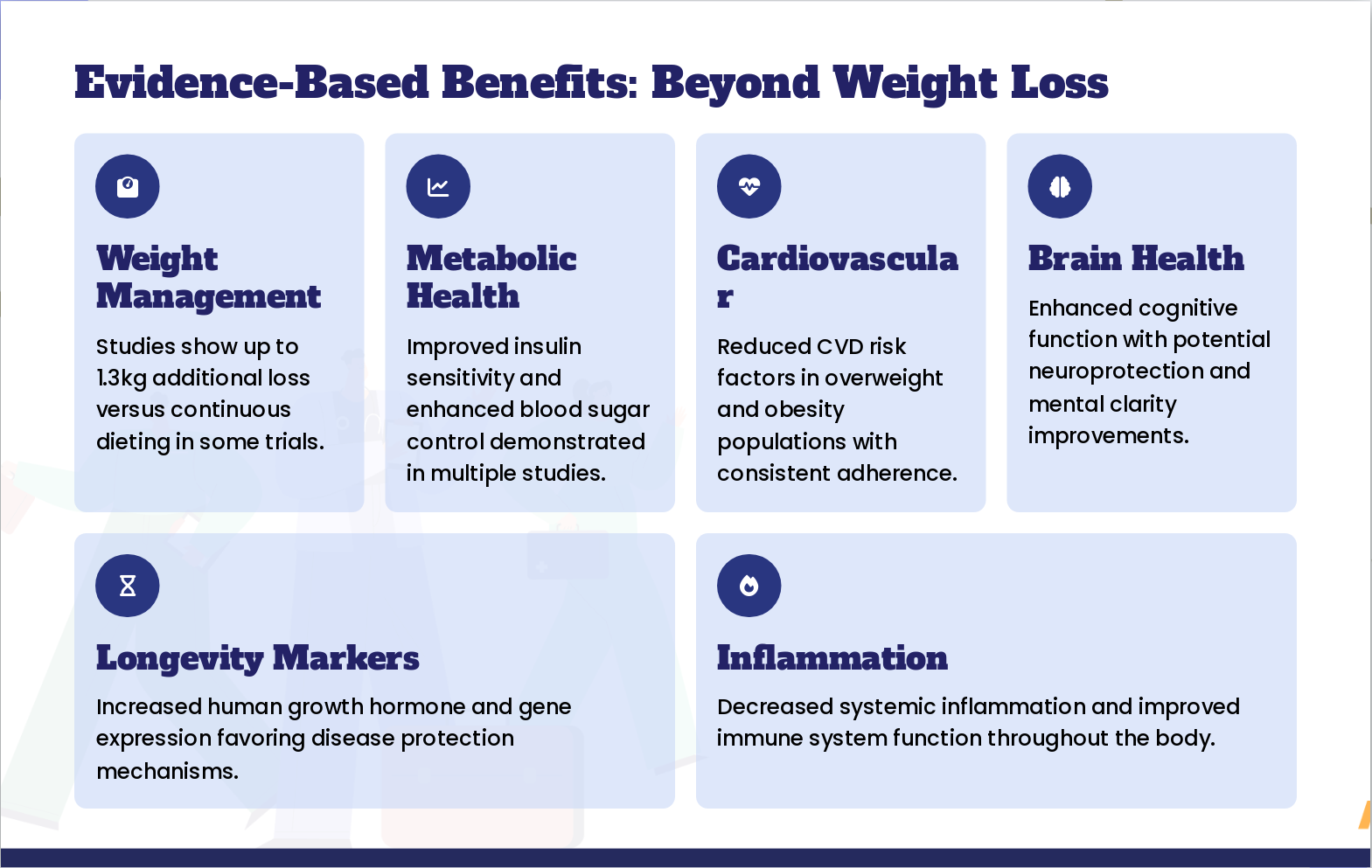
- Weight Management: Studies show up to 1.3kg additional loss versus continuous dieting in some trials.
- Metabolic Health: Improved insulin sensitivity and enhanced blood sugar control demonstrated in multiple studies.
- Cardiovascular: Reduced CVD risk factors in overweight and obesity populations with consistent adherence.
- Brain Health: Enhanced cognitive function with potential neuroprotection and mental clarity improvements.
- Longevity Markers: Increased human growth hormone and gene expression favoring disease protection mechanisms.
- Inflammation: Decreased systemic inflammation and improved immune system function throughout the body.
Slide 10: Side Effects Reality Check: Common Challenges
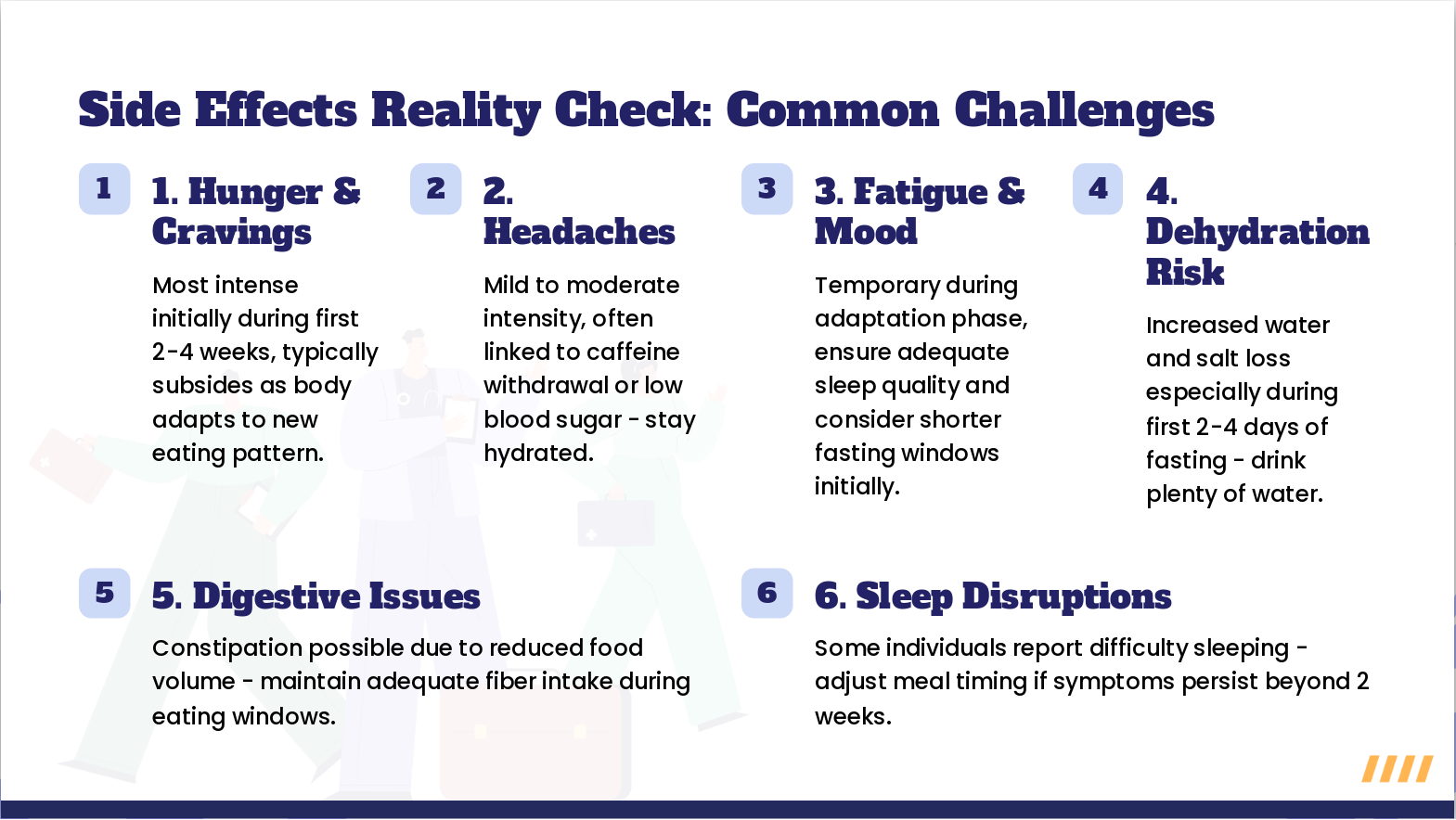
- Hunger & Cravings: Most intense initially during first 2-4 weeks, typically subsides as body adapts to new eating pattern.
- Headaches: Mild to moderate intensity, often linked to caffeine withdrawal or low blood sugar - stay hydrated.
- Fatigue & Mood: Temporary during adaptation phase, ensure adequate sleep quality and consider shorter fasting windows initially.
- Dehydration Risk: Increased water and salt loss especially during first 2-4 days of fasting - drink plenty of water.
- Digestive Issues: Constipation possible due to reduced food volume - maintain adequate fiber intake during eating windows.
- Sleep Disruptions: Some individuals report difficulty sleeping - adjust meal timing if symptoms persist beyond 2 weeks.
Slide 11: Critical Safety Exclusions: Who Should NOT Fast
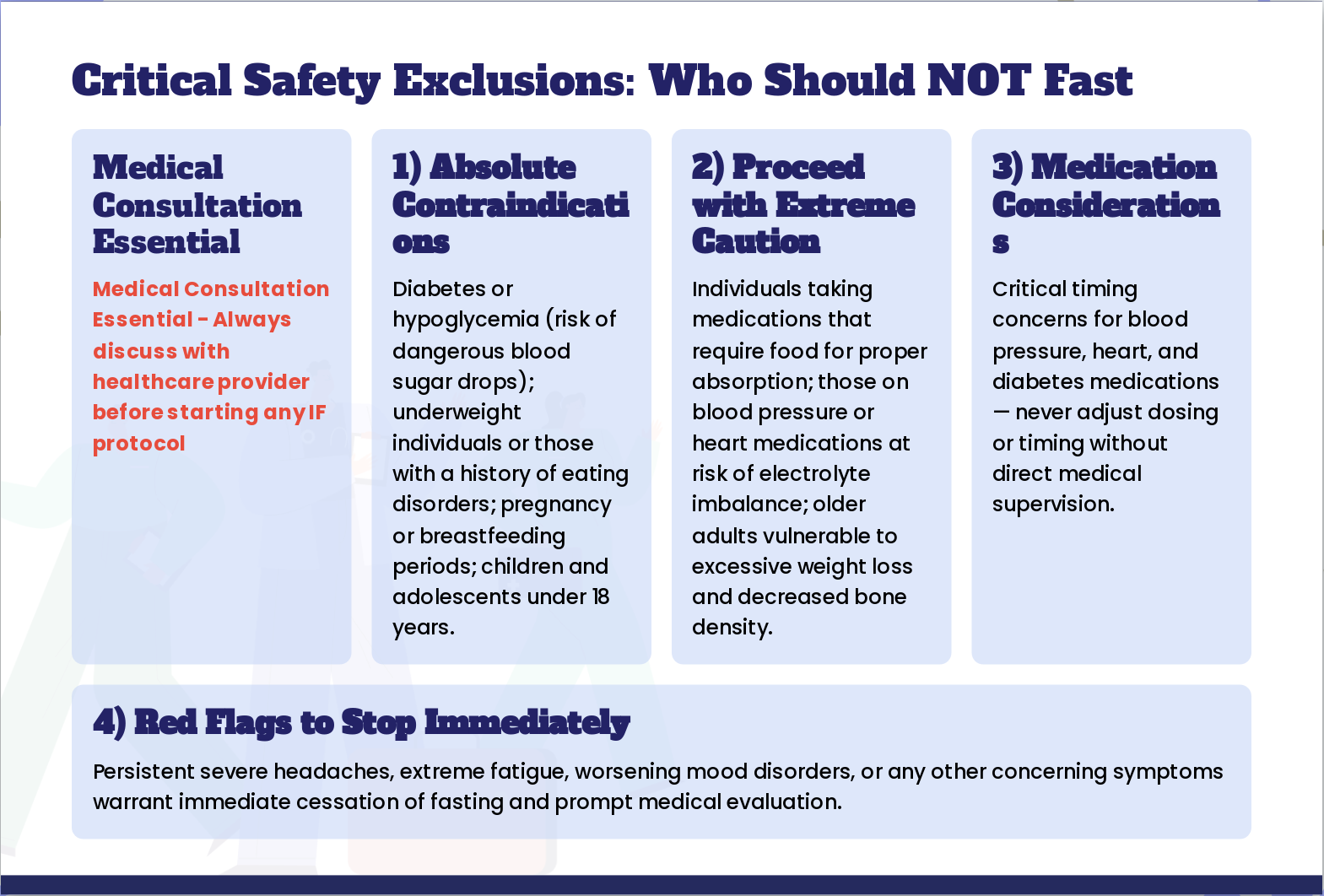
- Medical Consultation Essential: Medical Consultation Essential - Always discuss with healthcare provider before starting any IF protocol
- Absolute Contraindications: Diabetes or hypoglycemia (risk of dangerous blood sugar drops); underweight individuals or those with a history of eating disorders; pregnancy or breastfeeding periods; children and adolescents under 18 years.
- Proceed with Extreme Caution: Individuals taking medications that require food for proper absorption; those on blood pressure or heart medications at risk of electrolyte imbalance; older adults vulnerable to excessive weight loss and decreased bone density.
- Medication Considerations: Critical timing concerns for blood pressure, heart, and diabetes medications — never adjust dosing or timing without direct medical supervision.
- Red Flags to Stop Immediately: Persistent severe headaches, extreme fatigue, worsening mood disorders, or any other concerning symptoms warrant immediate cessation of fasting and prompt medical evaluation.
Slide 12: Strategic Recommendations: Your Action Plan
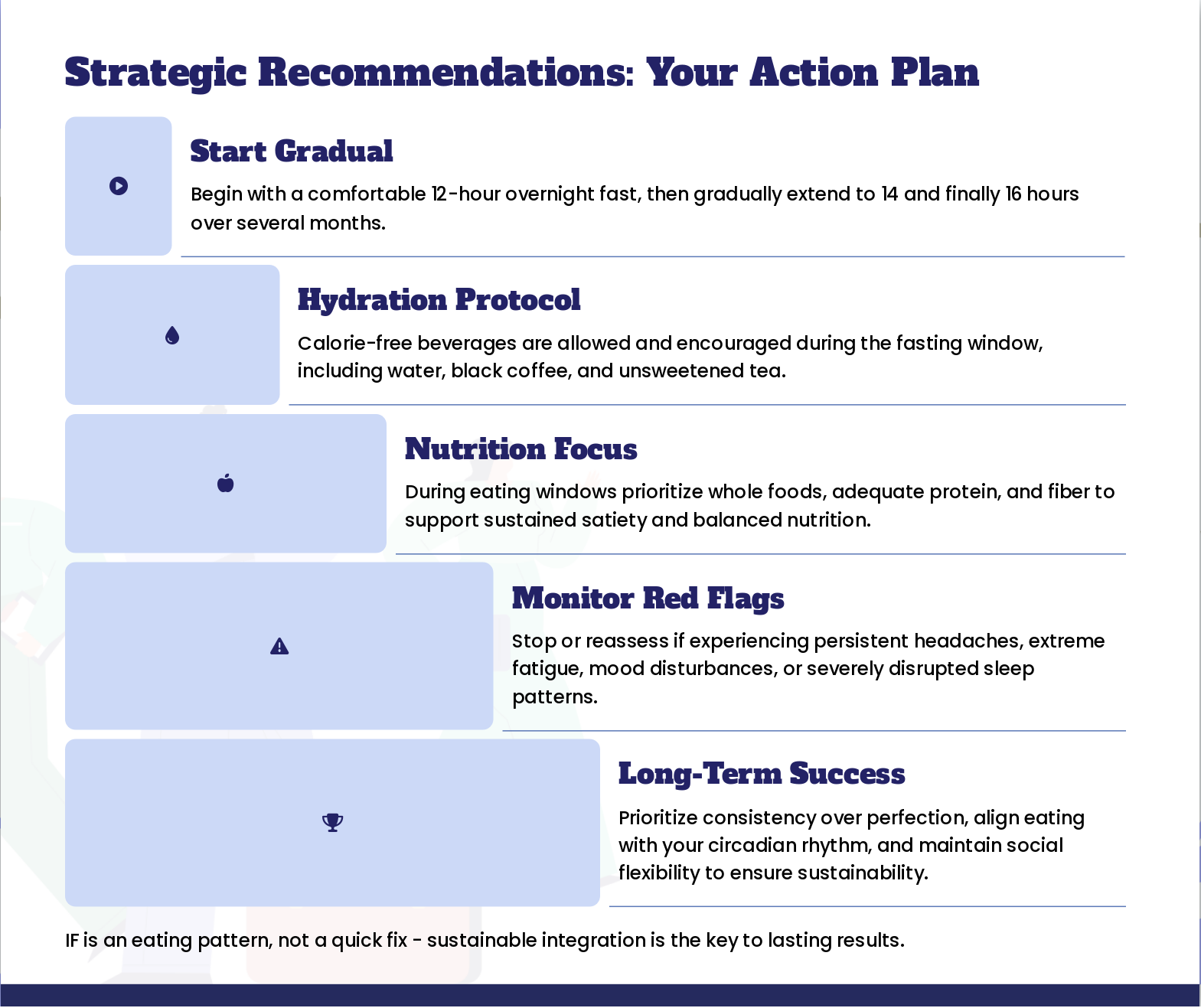
- Start Gradual: Begin with a comfortable 12-hour overnight fast, then gradually extend to 14 and finally 16 hours over several months.
- Hydration Protocol: Calorie-free beverages are allowed and encouraged during the fasting window, including water, black coffee, and unsweetened tea.
- Nutrition Focus: During eating windows prioritize whole foods, adequate protein, and fiber to support sustained satiety and balanced nutrition.
- Monitor Red Flags: Stop or reassess if experiencing persistent headaches, extreme fatigue, mood disturbances, or severely disrupted sleep patterns.
- Long-Term Success: Prioritize consistency over perfection, align eating with your circadian rhythm, and maintain social flexibility to ensure sustainability.
IF is an eating pattern, not a quick fix - sustainable integration is the key to lasting results.