Presentation Summary
Nature, Sustainability, and Smart Living Converge to Transform Modern Spaces Through Innovation Eco-conscious choices and bio-based alternatives reshape material selection for responsible design. Nature integration enhances wellness through plants, natural light, and organic elements indoors. AI-powered automation and connected technologies transform daily living with seamless convenience. Earth tones and vibrant accents define 2025's aesthetic with warmth and sophistication. Reclaimed timber, recycled metals, and post-consumer plastics are increasingly adopted in furniture and finishes, movin
Full Presentation Transcript
Slide 1: Interior Design Trends 2025
Nature, Sustainability, and Smart Living Converge to Transform Modern Spaces Through Innovation
Slide 2: Contents
- Sustainable Materials: Eco-conscious choices and bio-based alternatives reshape material selection for responsible design.
- Biophilic Design: Nature integration enhances wellness through plants, natural light, and organic elements indoors.
- Smart Home Integration: AI-powered automation and connected technologies transform daily living with seamless convenience.
- Color Palettes: Earth tones and vibrant accents define 2025's aesthetic with warmth and sophistication.
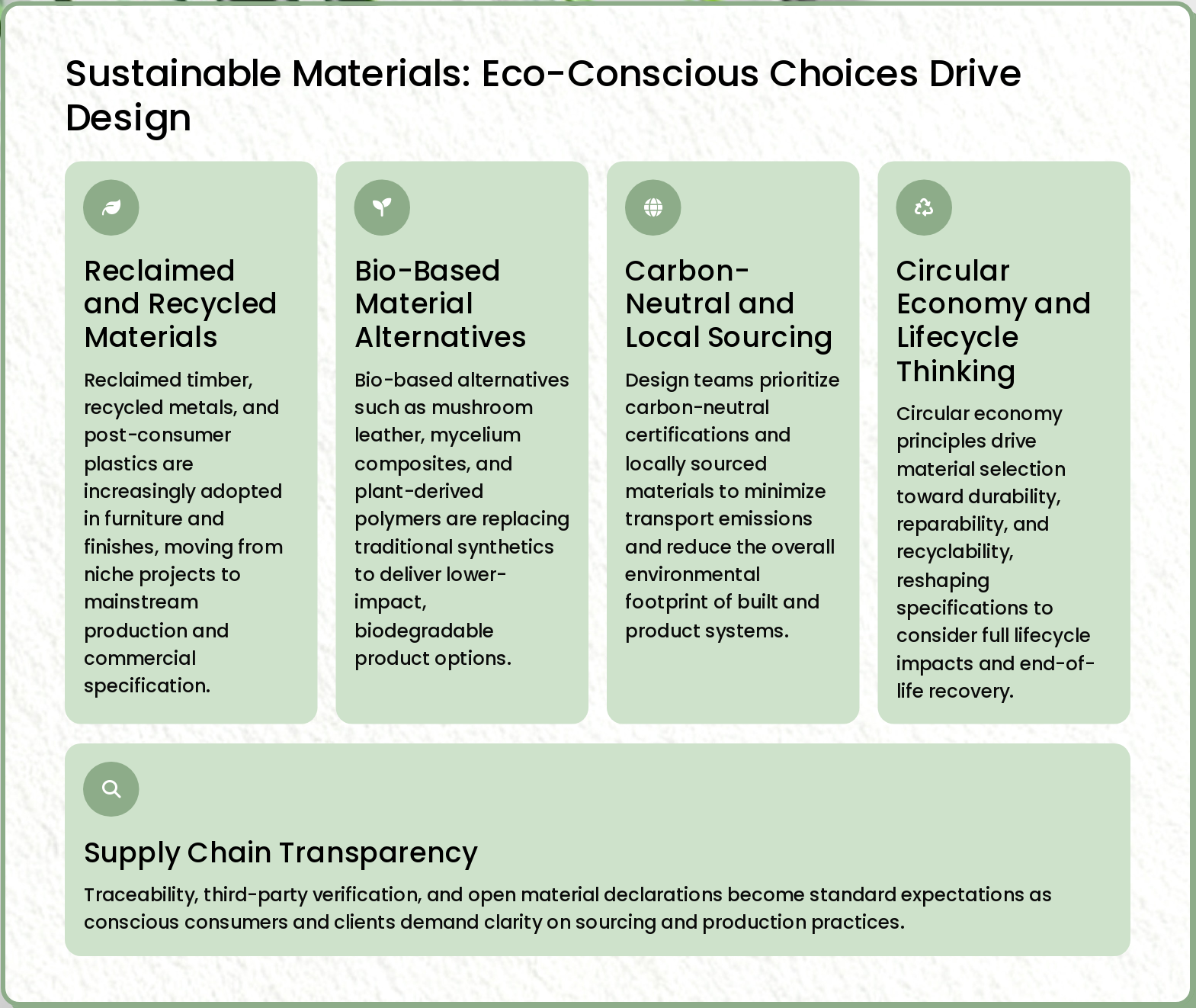
Slide 3: Sustainable Materials: Eco-Conscious Choices Drive Design
- Reclaimed and Recycled Materials: Reclaimed timber, recycled metals, and post-consumer plastics are increasingly adopted in furniture and finishes, moving from niche projects to mainstream production and commercial specification.
- Bio-Based Material Alternatives: Bio-based alternatives such as mushroom leather, mycelium composites, and plant-derived polymers are replacing traditional synthetics to deliver lower-impact, biodegradable product options.
- Carbon-Neutral and Local Sourcing: Design teams prioritize carbon-neutral certifications and locally sourced materials to minimize transport emissions and reduce the overall environmental footprint of built and product systems.
- Circular Economy and Lifecycle Thinking: Circular economy principles drive material selection toward durability, reparability, and recyclability, reshaping specifications to consider full lifecycle impacts and end-of-life recovery.
- Supply Chain Transparency: Traceability, third-party verification, and open material declarations become standard expectations as conscious consumers and clients demand clarity on sourcing and production practices.
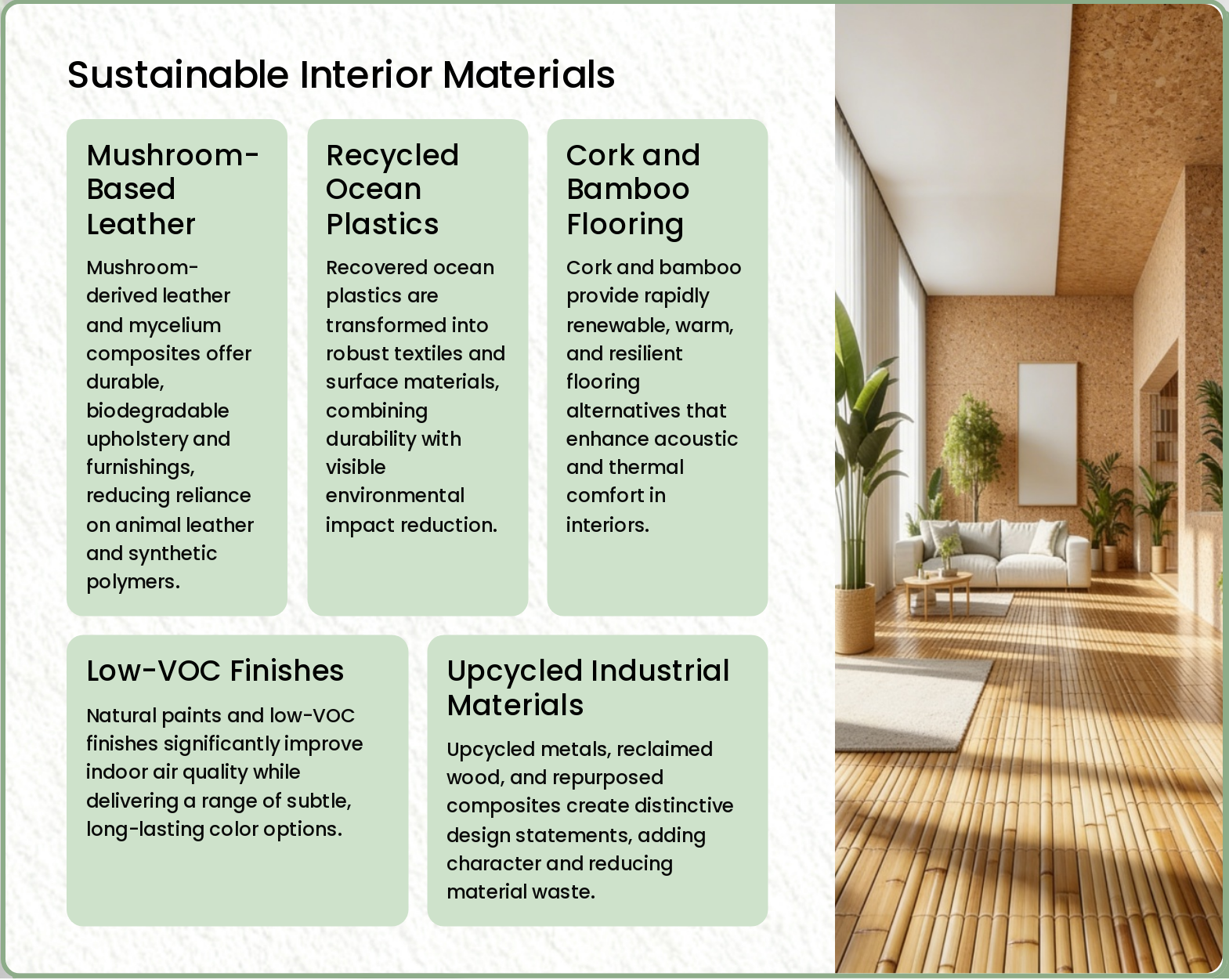
Slide 4: Sustainable Interior Materials
- Mushroom-Based Leather: Mushroom-derived leather and mycelium composites offer durable, biodegradable upholstery and furnishings, reducing reliance on animal leather and synthetic polymers.
- Recycled Ocean Plastics: Recovered ocean plastics are transformed into robust textiles and surface materials, combining durability with visible environmental impact reduction.
- Cork and Bamboo Flooring: Cork and bamboo provide rapidly renewable, warm, and resilient flooring alternatives that enhance acoustic and thermal comfort in interiors.
- Low-VOC Finishes: Natural paints and low-VOC finishes significantly improve indoor air quality while delivering a range of subtle, long-lasting color options.
- Upcycled Industrial Materials: Upcycled metals, reclaimed wood, and repurposed composites create distinctive design statements, adding character and reducing material waste.
Slide 5: Biophilic Design
Nature integration enhances health and productivity.
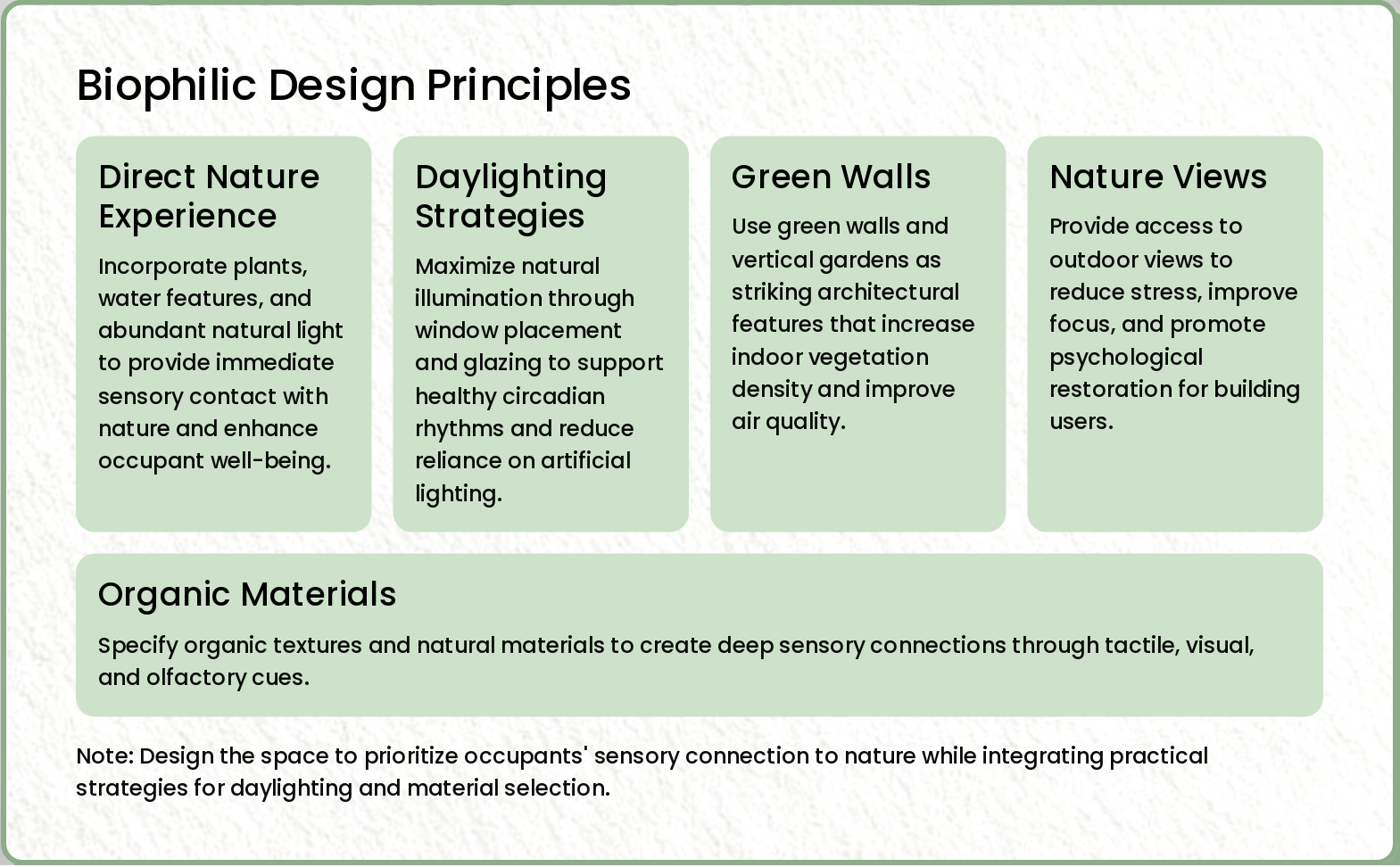
Slide 6: Biophilic Design Principles
- Direct Nature Experience: Incorporate plants, water features, and abundant natural light to provide immediate sensory contact with nature and enhance occupant well-being.
- Daylighting Strategies: Maximize natural illumination through window placement and glazing to support healthy circadian rhythms and reduce reliance on artificial lighting.
- Green Walls: Use green walls and vertical gardens as striking architectural features that increase indoor vegetation density and improve air quality.
- Nature Views: Provide access to outdoor views to reduce stress, improve focus, and promote psychological restoration for building users.
- Organic Materials: Specify organic textures and natural materials to create deep sensory connections through tactile, visual, and olfactory cues.
Note: Design the space to prioritize occupants' sensory connection to nature while integrating practical strategies for daylighting and material selection.
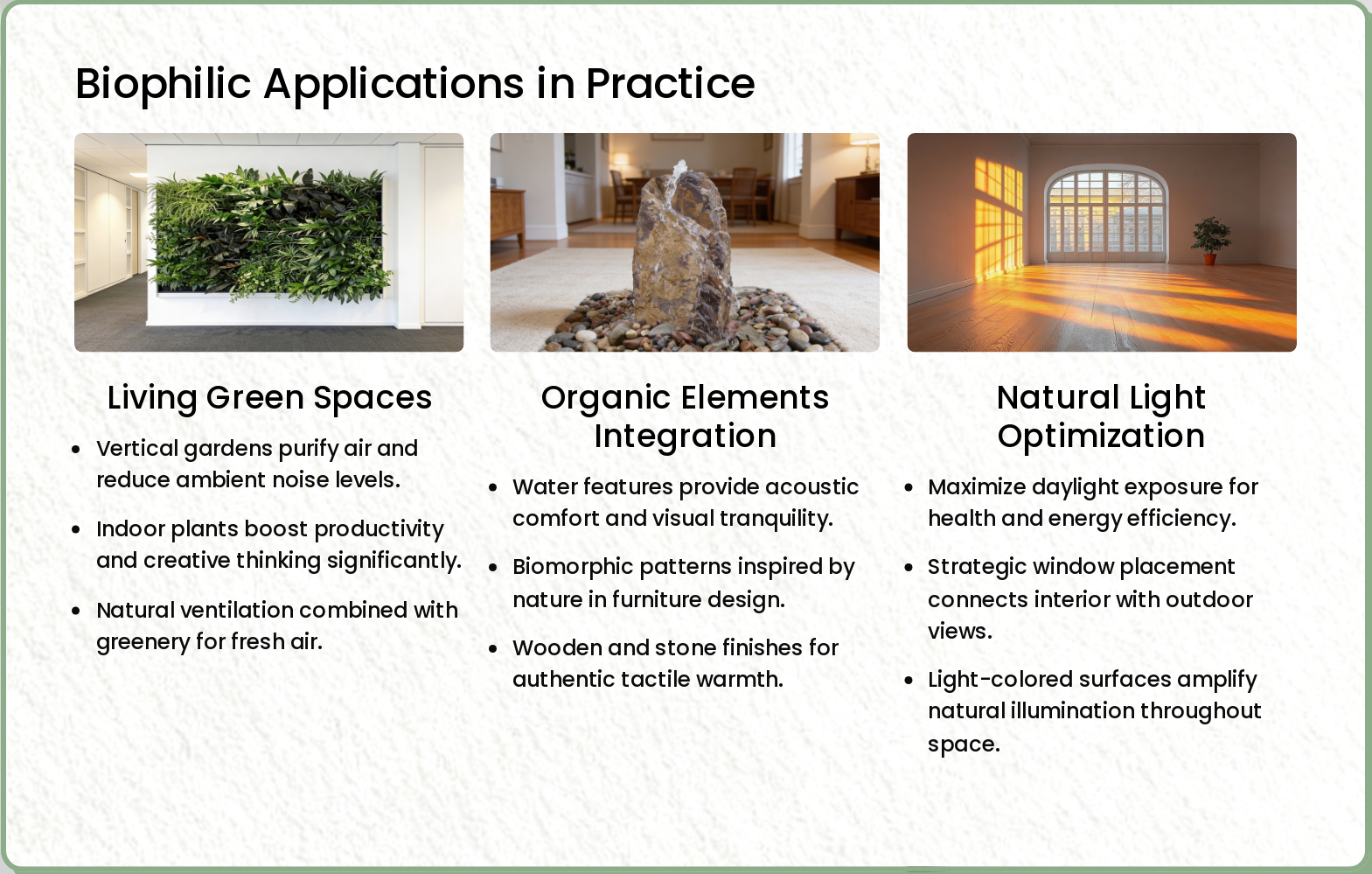
Slide 7: Biophilic Applications in Practice
- Living Green Spaces: Vertical gardens purify air and reduce ambient noise levels.
- Organic Elements Integration: Water features provide acoustic comfort and visual tranquility.
- Natural Light Optimization: Maximize daylight exposure for health and energy efficiency.
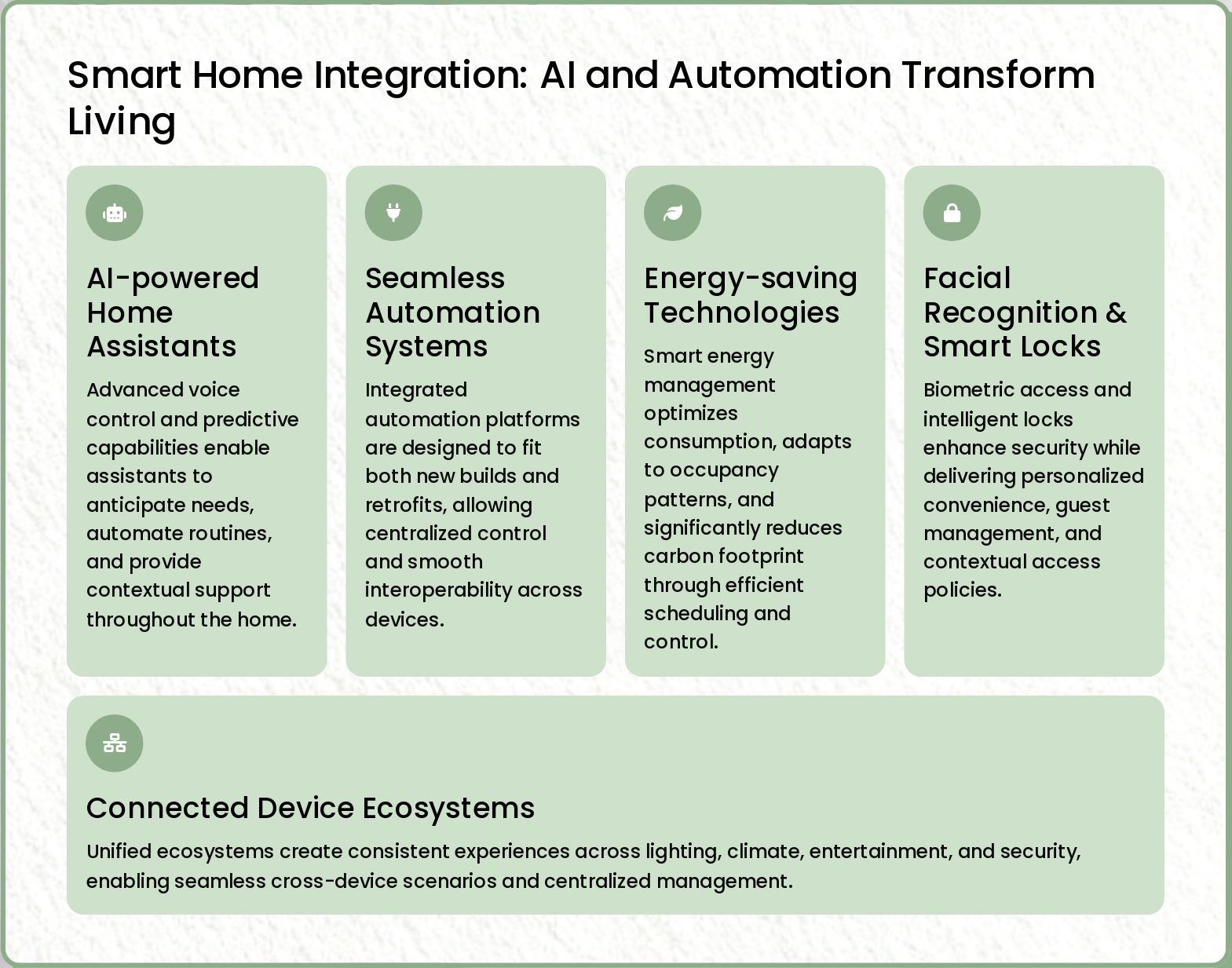
Slide 8: Smart Home Integration: AI and Automation Transform Living
- AI-powered Home Assistants: Advanced voice control and predictive capabilities enable assistants to anticipate needs, automate routines, and provide contextual support throughout the home.
- Seamless Automation Systems: Integrated automation platforms are designed to fit both new builds and retrofits, allowing centralized control and smooth interoperability across devices.
- Energy-saving Technologies: Smart energy management optimizes consumption, adapts to occupancy patterns, and significantly reduces carbon footprint through efficient scheduling and control.
- Facial Recognition & Smart Locks: Biometric access and intelligent locks enhance security while delivering personalized convenience, guest management, and contextual access policies.
- Connected Device Ecosystems: Unified ecosystems create consistent experiences across lighting, climate, entertainment, and security, enabling seamless cross-device scenarios and centralized management.
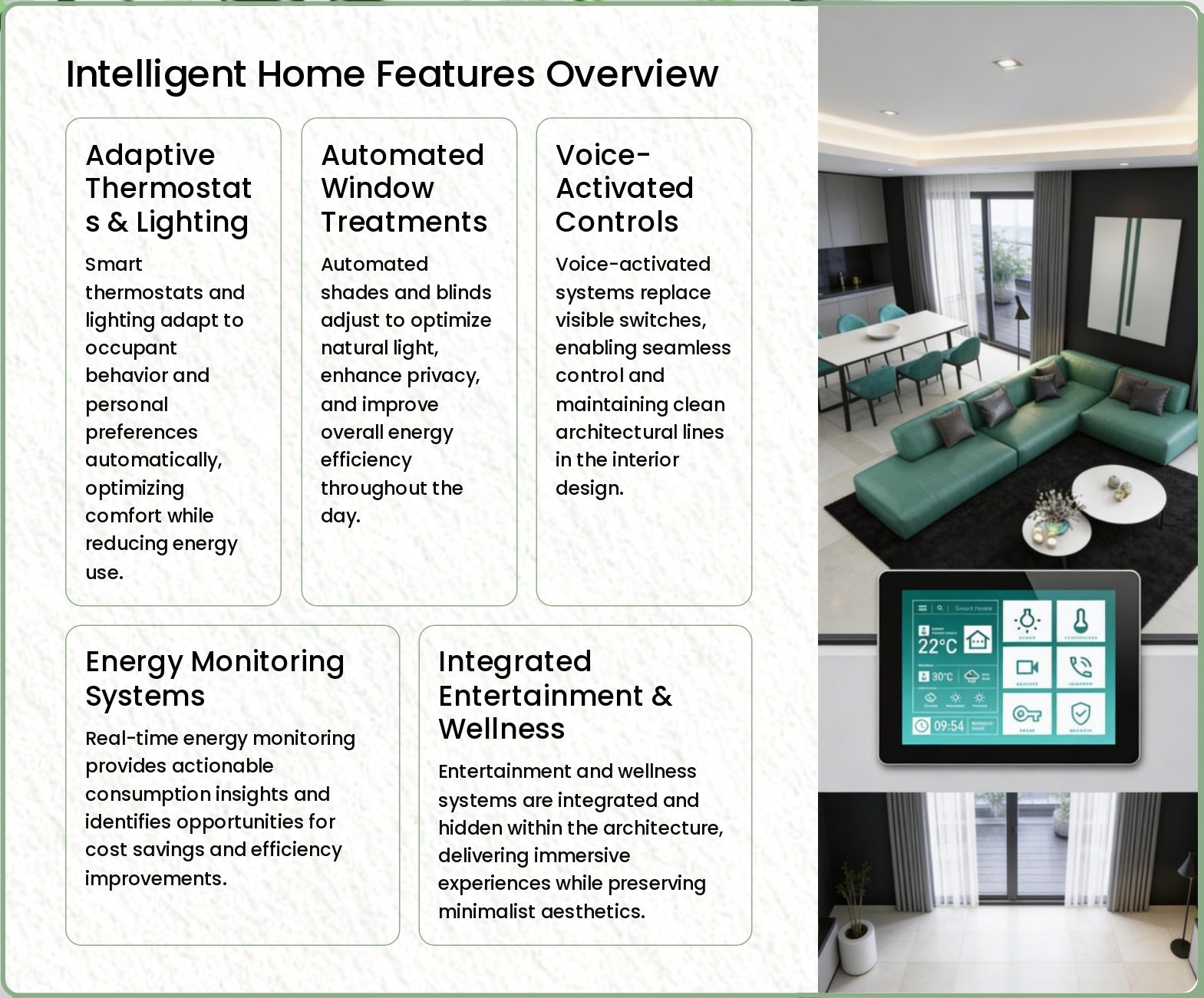
Slide 9: Intelligent Home Features Overview
- Adaptive Thermostats & Lighting: Smart thermostats and lighting adapt to occupant behavior and personal preferences automatically, optimizing comfort while reducing energy use.
- Automated Window Treatments: Automated shades and blinds adjust to optimize natural light, enhance privacy, and improve overall energy efficiency throughout the day.
- Voice-Activated Controls: Voice-activated systems replace visible switches, enabling seamless control and maintaining clean architectural lines in the interior design.
- Energy Monitoring Systems: Real-time energy monitoring provides actionable consumption insights and identifies opportunities for cost savings and efficiency improvements.
- Integrated Entertainment & Wellness: Entertainment and wellness systems are integrated and hidden within the architecture, delivering immersive experiences while preserving minimalist aesthetics.
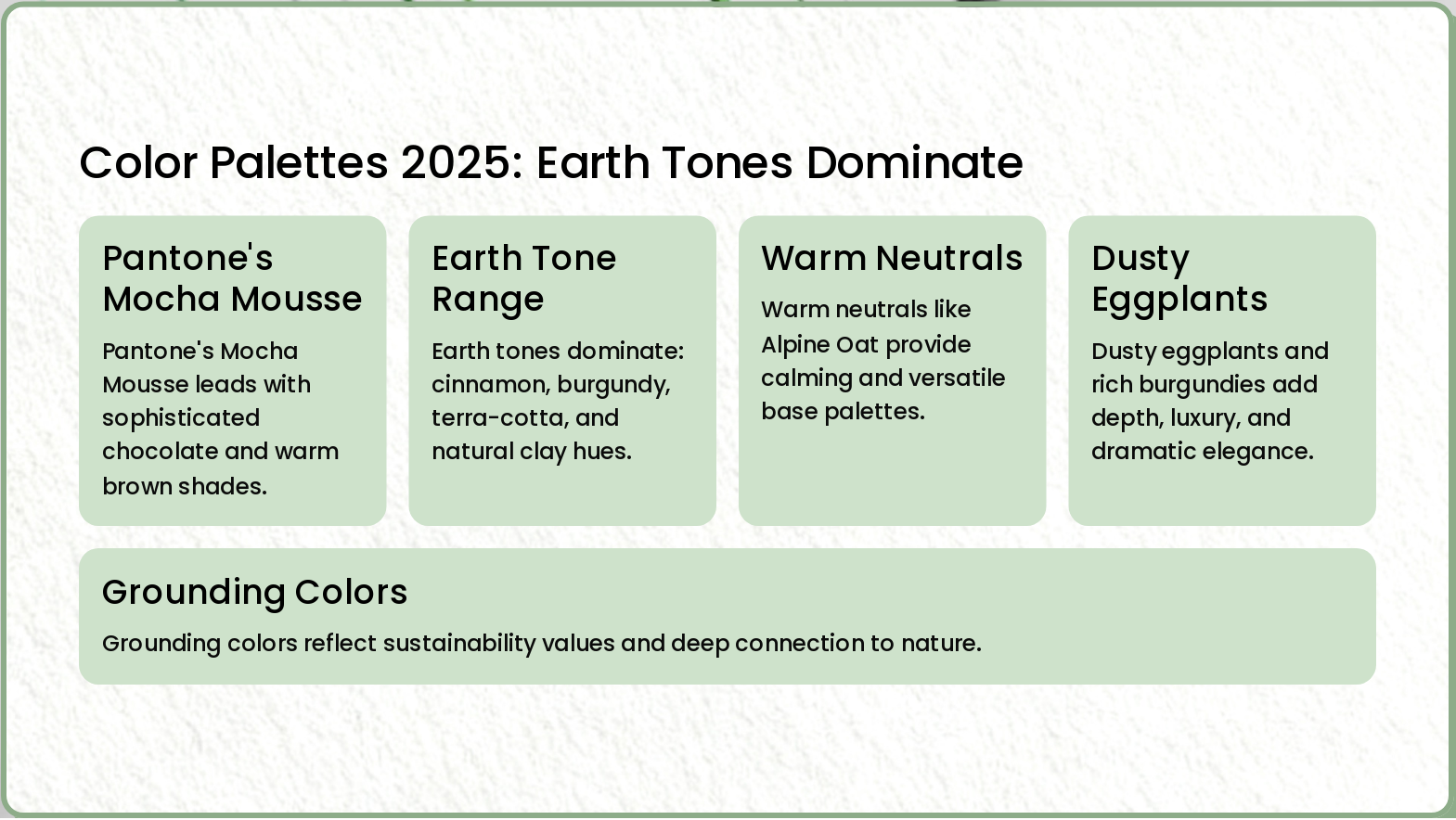
Slide 10: Color Palettes 2025: Earth Tones Dominate
- Pantone's Mocha Mousse: Pantone's Mocha Mousse leads with sophisticated chocolate and warm brown shades.
- Earth Tone Range: Earth tones dominate: cinnamon, burgundy, terra-cotta, and natural clay hues.
- Warm Neutrals: Warm neutrals like Alpine Oat provide calming and versatile base palettes.
- Dusty Eggplants: Dusty eggplants and rich burgundies add depth, luxury, and dramatic elegance.
- Grounding Colors: Grounding colors reflect sustainability values and deep connection to nature.
Slide 11: Thank You
Thank You 2025 Design Harmonizes Sustainability, Wellness, and Technology for Healthier Living Spaces