Presentation Summary
Explore the rise of K-Pop as a global phenomenon and its profound impact on culture, economics, and youth identity. Discover how K-Pop transformed artist-audience relationships and its multi-billion dollar influence on South Korea's economy.
Full Presentation Transcript
Slide 1: The Impact of K-Pop on Global Culture
From Regional Genre to Worldwide Phenomenon: A Sociology and Media Studies Perspective on the Hallyu Wave
Slide 2: Contents
- The Global K-Pop Phenomenon: An overview of K-Pop's unprecedented rise with 89 million fans across 113 countries and record-breaking market achievements.
- The Trainee System: Examining the rigorous manufacturing process behind K-Pop idols, from auditions to debut, and its ethical implications.
- Fandom Culture Revolution: How K-Pop redefined artist-audience relationships, transforming fans from passive consumers to active co-creators and activists.
- Economic Impact of Hallyu Wave: Quantifying the multi-billion dollar economic impact across tourism, merchandise, and global brand partnerships driving South Korea's cultural economy.
- BTS & BLACKPINK Success Blueprint: Case studies of how these groups achieved global superstardom through strategic positioning, collaborations, and digital mastery.
- Sociological Implications & Future Outlook: Analyzing K-Pop's impact on youth culture, identity formation, and the sustainability challenges facing the industry ahead.
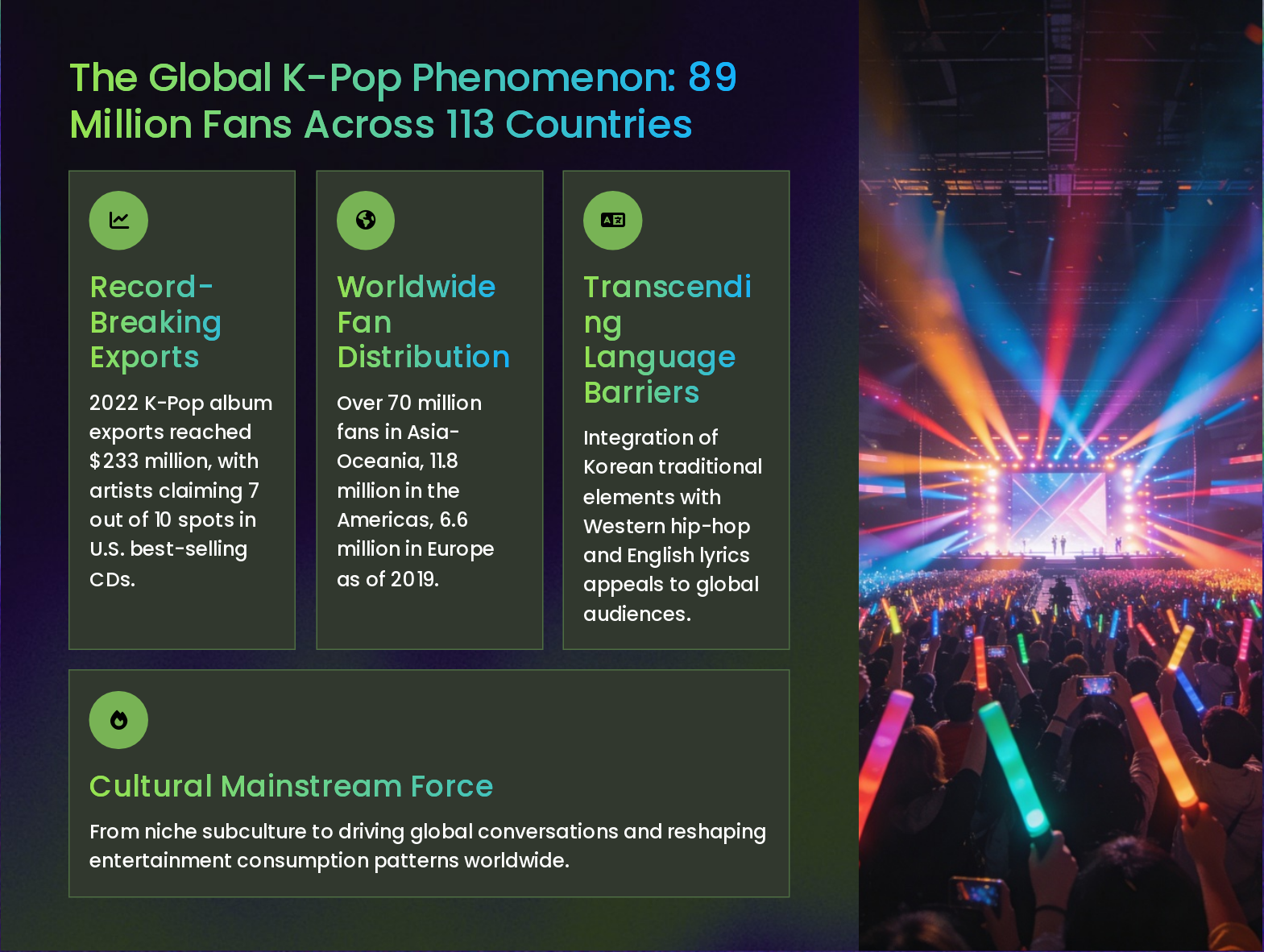
Slide 3: The Global K-Pop Phenomenon: 89 Million Fans Across 113 Countries
- Record-Breaking Exports: 2022 K-Pop album exports reached $233 million, with artists claiming 7 out of 10 spots in U.S. best-selling CDs.
- Worldwide Fan Distribution: Over 70 million fans in Asia-Oceania, 11.8 million in the Americas, 6.6 million in Europe as of 2019.
- Transcending Language Barriers: Integration of Korean traditional elements with Western hip-hop and English lyrics appeals to global audiences.
- Cultural Mainstream Force: From niche subculture to driving global conversations and reshaping entertainment consumption patterns worldwide.
Slide 4: The Trainee System: Rigorous Manufacturing Process Behind 'Perfect Idols'
- Entry and Selection: Aspiring idols enter through open auditions, street casting, or company competitions, starting as young as 11 years old.
- Training Intensity: 6-12 hours daily of vocal, dance, language, and media training for 2-7 years before potential debut.
- Global Talent Scouting: BLACKPINK includes members from Korea, New Zealand, Australia, Thailand; NCT and GOT7 feature Japanese, Chinese, Canadian members.
- Quality Control Process: Only top performers debut after continuous monthly evaluations, creating intense competition among trainees.
- Ethical Concerns: Notoriously harsh conditions raise physical and mental health issues, creating societal pressures around body image and perfectionism.
Slide 5: Fandom Culture: From Passive Consumers to Active Co-Creators
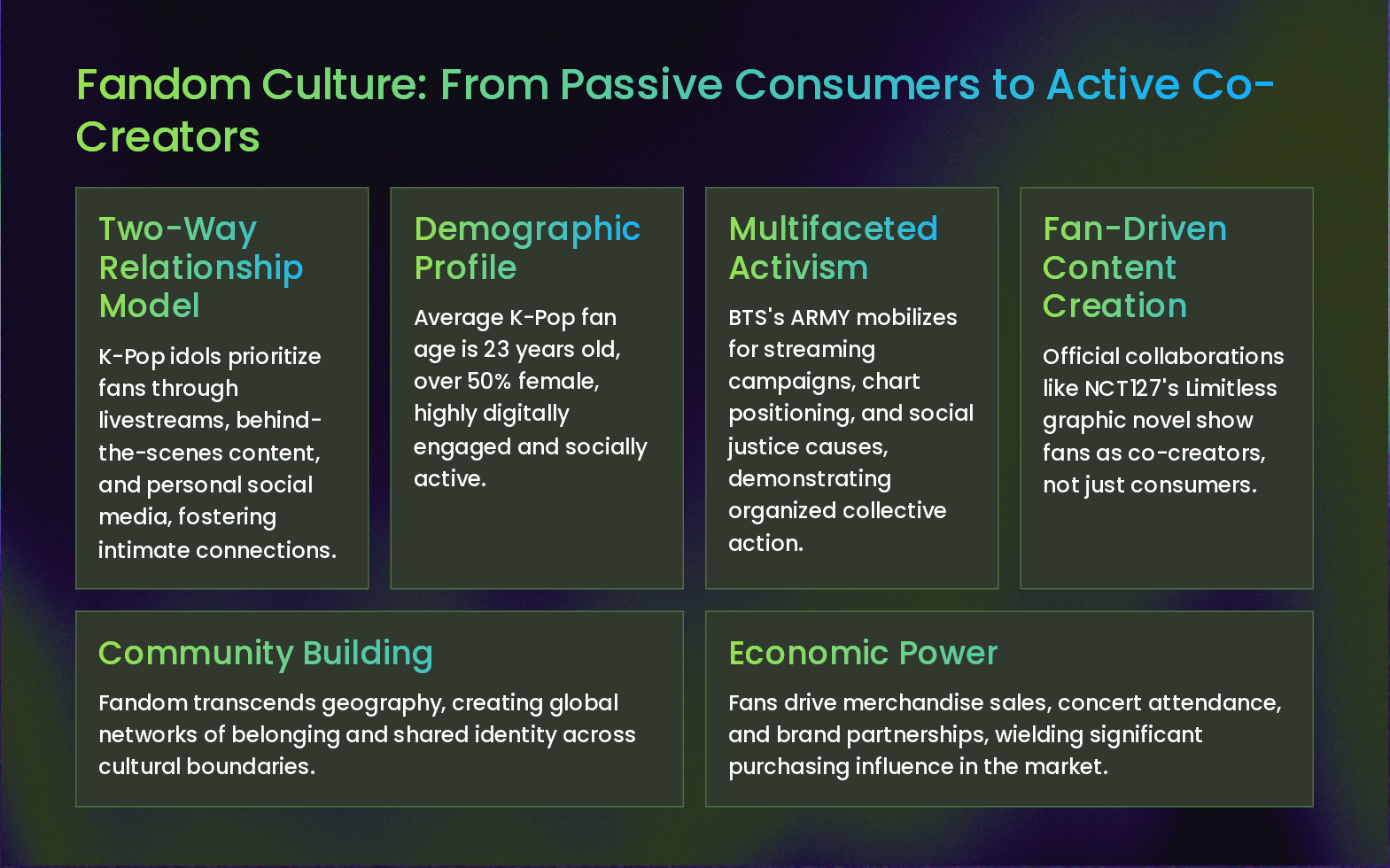
- Two-Way Relationship Model: K-Pop idols prioritize fans through livestreams, behind-the-scenes content, and personal social media, fostering intimate connections.
- Demographic Profile: Average K-Pop fan age is 23 years old, over 50% female, highly digitally engaged and socially active.
- Multifaceted Activism: BTS's ARMY mobilizes for streaming campaigns, chart positioning, and social justice causes, demonstrating organized collective action.
- Fan-Driven Content Creation: Official collaborations like NCT127's Limitless graphic novel show fans as co-creators, not just consumers.
- Community Building: Fandom transcends geography, creating global networks of belonging and shared identity across cultural boundaries.
- Economic Power: Fans drive merchandise sales, concert attendance, and brand partnerships, wielding significant purchasing influence in the market.
Slide 6: Economic Impact: The Hallyu Wave Generates Billions
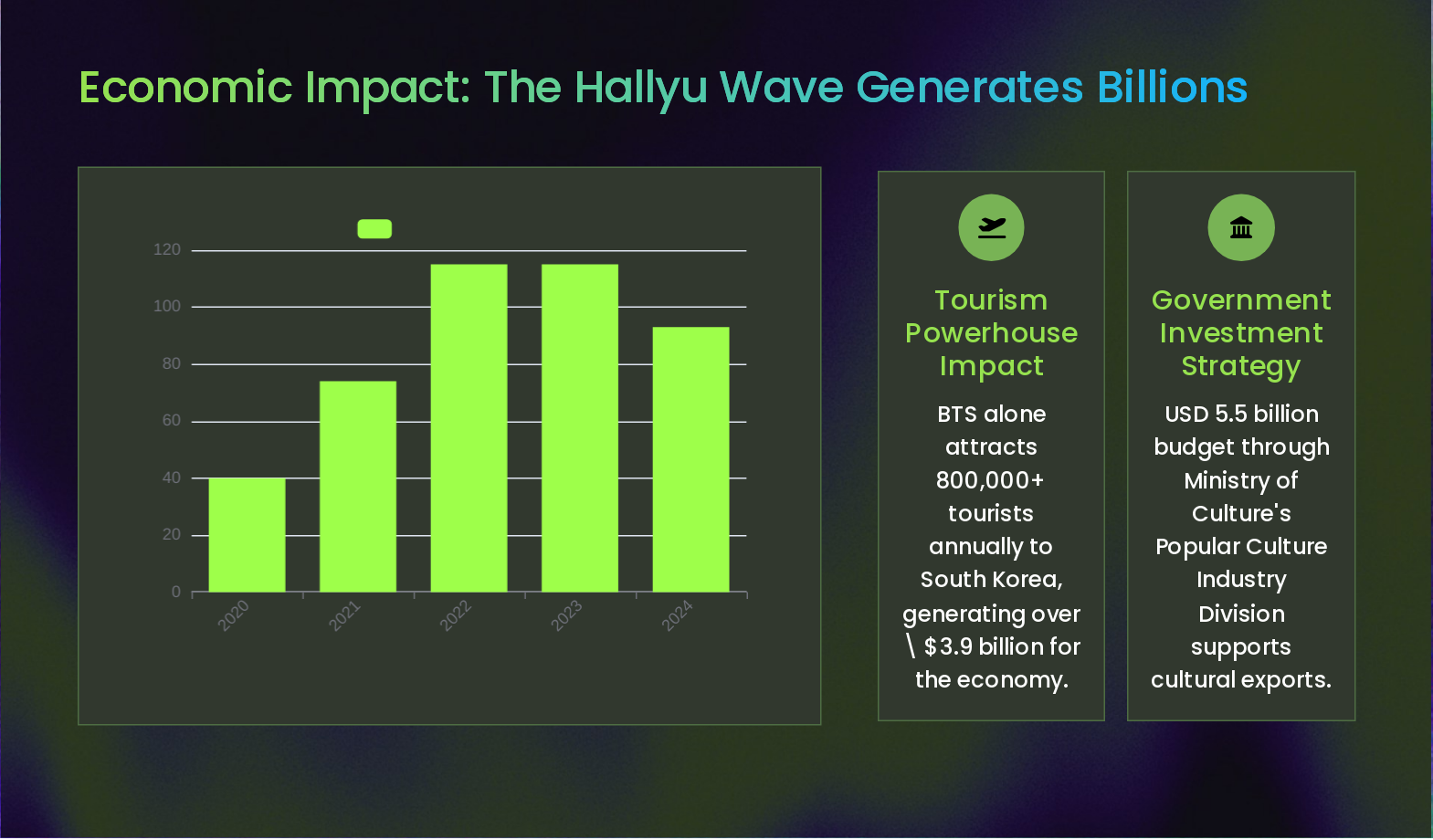
- Tourism Powerhouse Impact: BTS alone attracts 800,000+ tourists annually to South Korea, generating over \ $3.9 billion for the economy.
- Government Investment Strategy: USD 5.5 billion budget through Ministry of Culture's Popular Culture Industry Division supports cultural exports.
Slide 7: Case Study: BTS & BLACKPINK - Blueprint for Global Superstardom
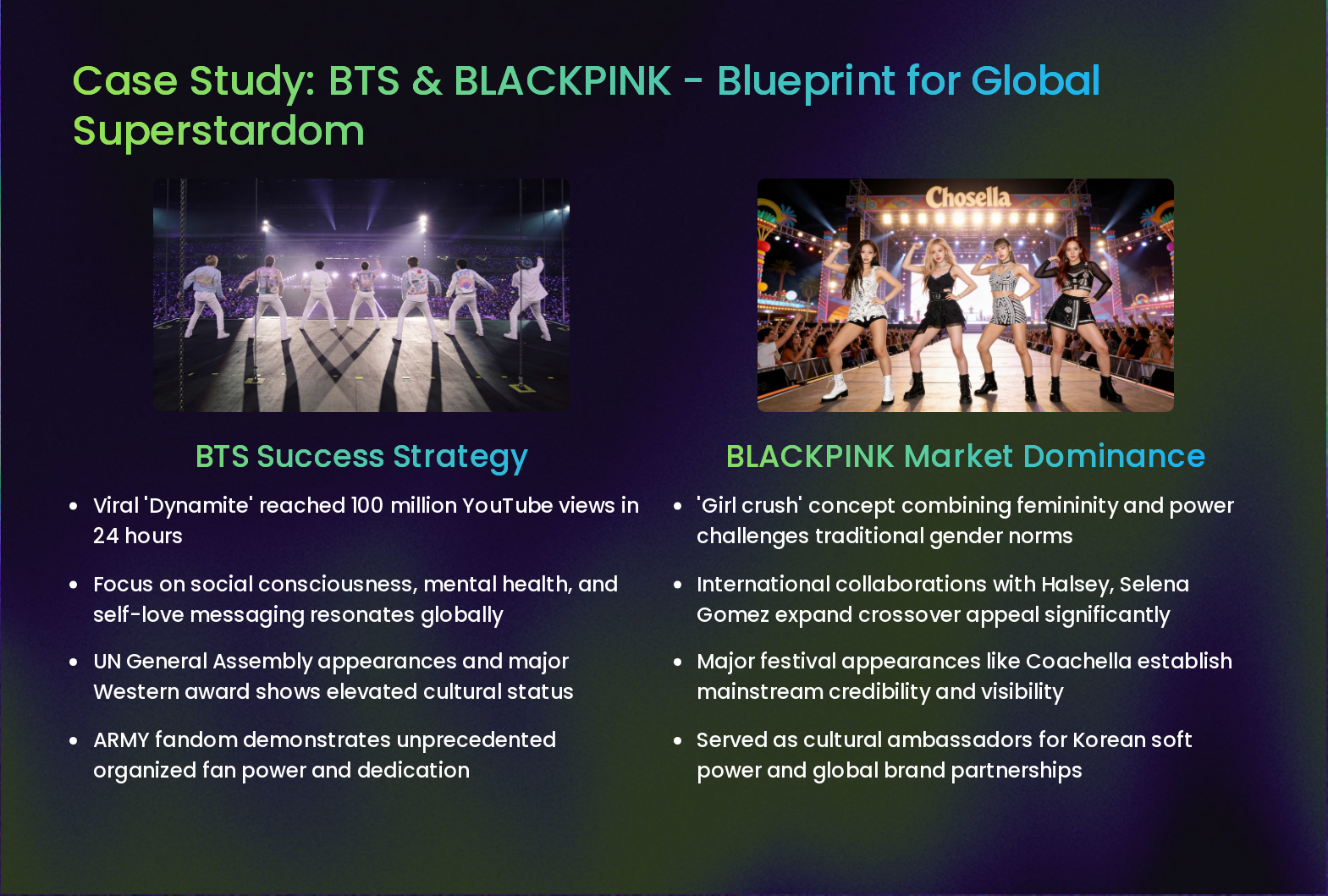
- BTS Success Strategy: Viral 'Dynamite' reached 100 million YouTube views in 24 hours
- BLACKPINK Market Dominance: 'Girl crush' concept combining femininity and power challenges traditional gender norms
Slide 8: Sociological Implications: K-Pop's Impact on Youth Culture and Identity
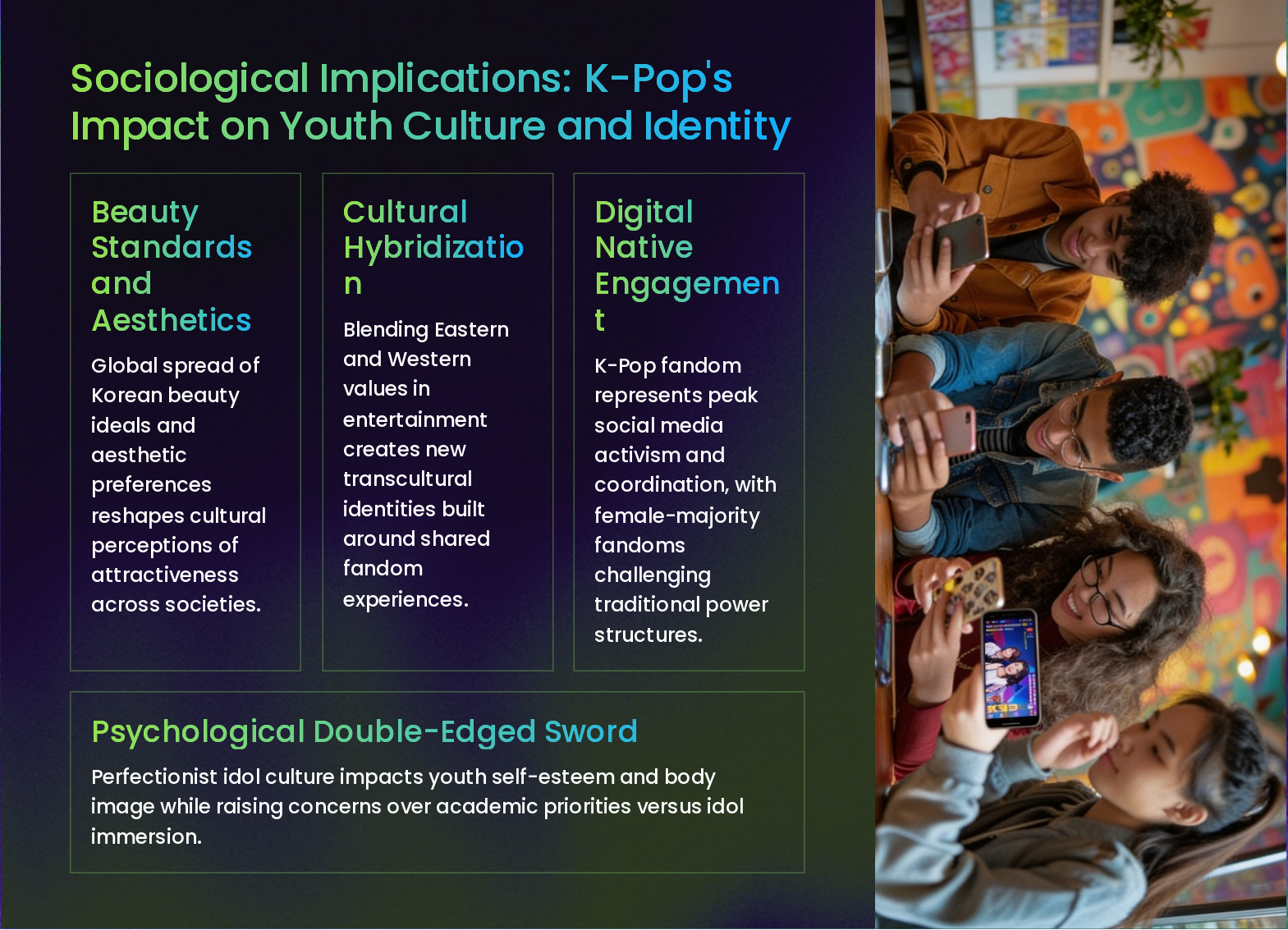
- Beauty Standards and Aesthetics: Global spread of Korean beauty ideals and aesthetic preferences reshapes cultural perceptions of attractiveness across societies.
- Cultural Hybridization: Blending Eastern and Western values in entertainment creates new transcultural identities built around shared fandom experiences.
- Digital Native Engagement: K-Pop fandom represents peak social media activism and coordination, with female-majority fandoms challenging traditional power structures.
- Psychological Double-Edged Sword: Perfectionist idol culture impacts youth self-esteem and body image while raising concerns over academic priorities versus idol immersion.
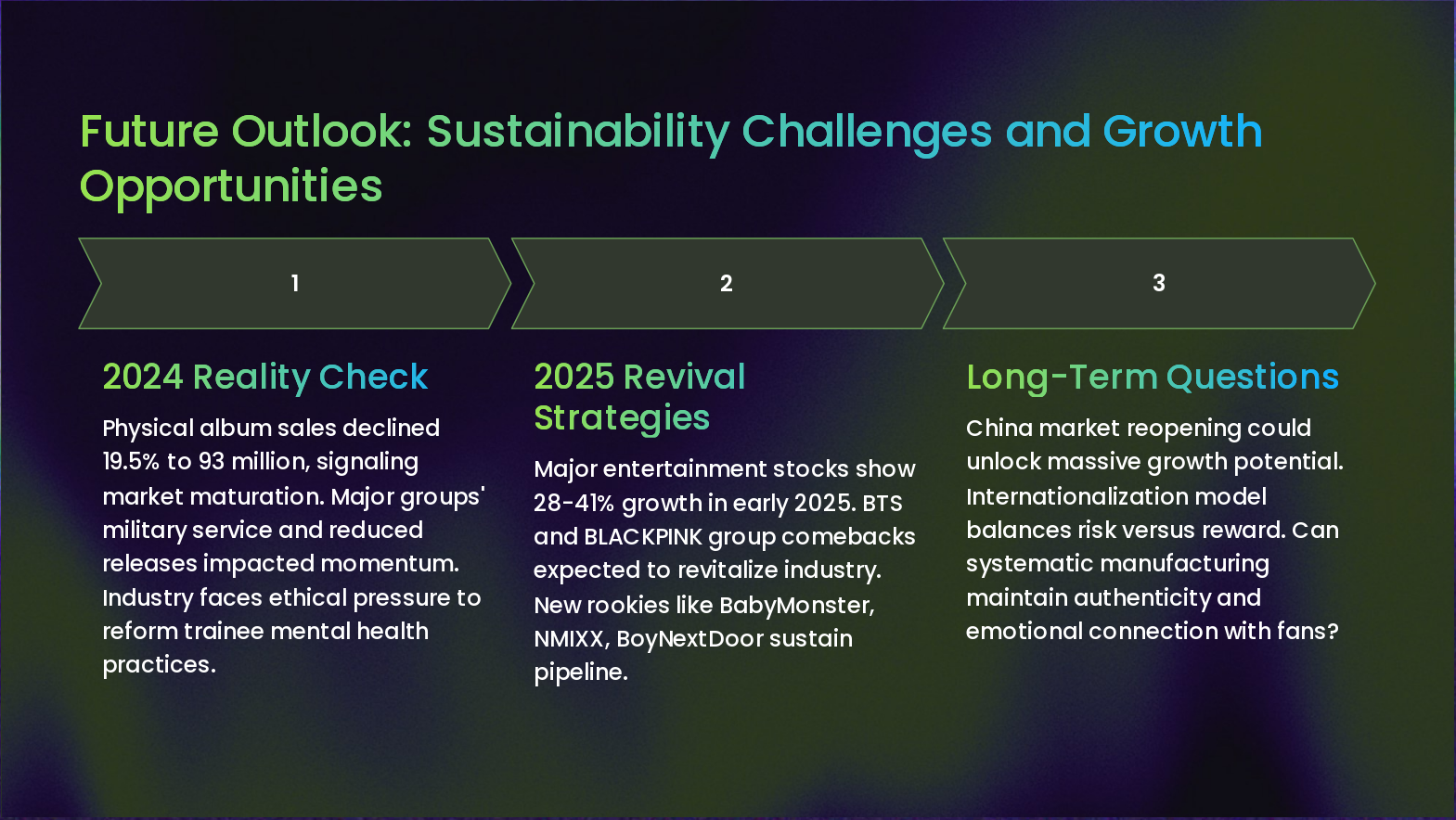
Slide 9: Future Outlook: Sustainability Challenges and Growth Opportunities
- 2024 Reality Check: Physical album sales declined 19.5% to 93 million, signaling market maturation. Major groups' military service and reduced releases impacted momentum. Industry faces ethical pressure to reform trainee mental health practices.
- 2025 Revival Strategies: Major entertainment stocks show 28-41% growth in early 2025. BTS and BLACKPINK group comebacks expected to revitalize industry. New rookies like BabyMonster, NMIXX, BoyNextDoor sustain pipeline.
- Long-Term Questions: China market reopening could unlock massive growth potential. Internationalization model balances risk versus reward. Can systematic manufacturing maintain authenticity and emotional connection with fans?
Slide 10: Thank You For Your Attention
Thank You For Your Attention The Hallyu Wave continues to reshape global culture, demonstrating how systematic cultural production can drive worldwide influence and economic impact.