
Presentation Summary
Explore the science behind jaw tension, learn evidence-based release techniques, and understand how proper jaw release can improve chewing, speech, sleep quality, and pain management.
Full Presentation Transcript
Slide 1: Deep Jaw Release: A Comprehensive Guide to Anatomical Understanding and Practical Liberation Techniques
Unlock the science behind jaw tension, master evidence-based release techniques, and discover how proper jaw release improves chewing, speech, sleep quality, and pain management
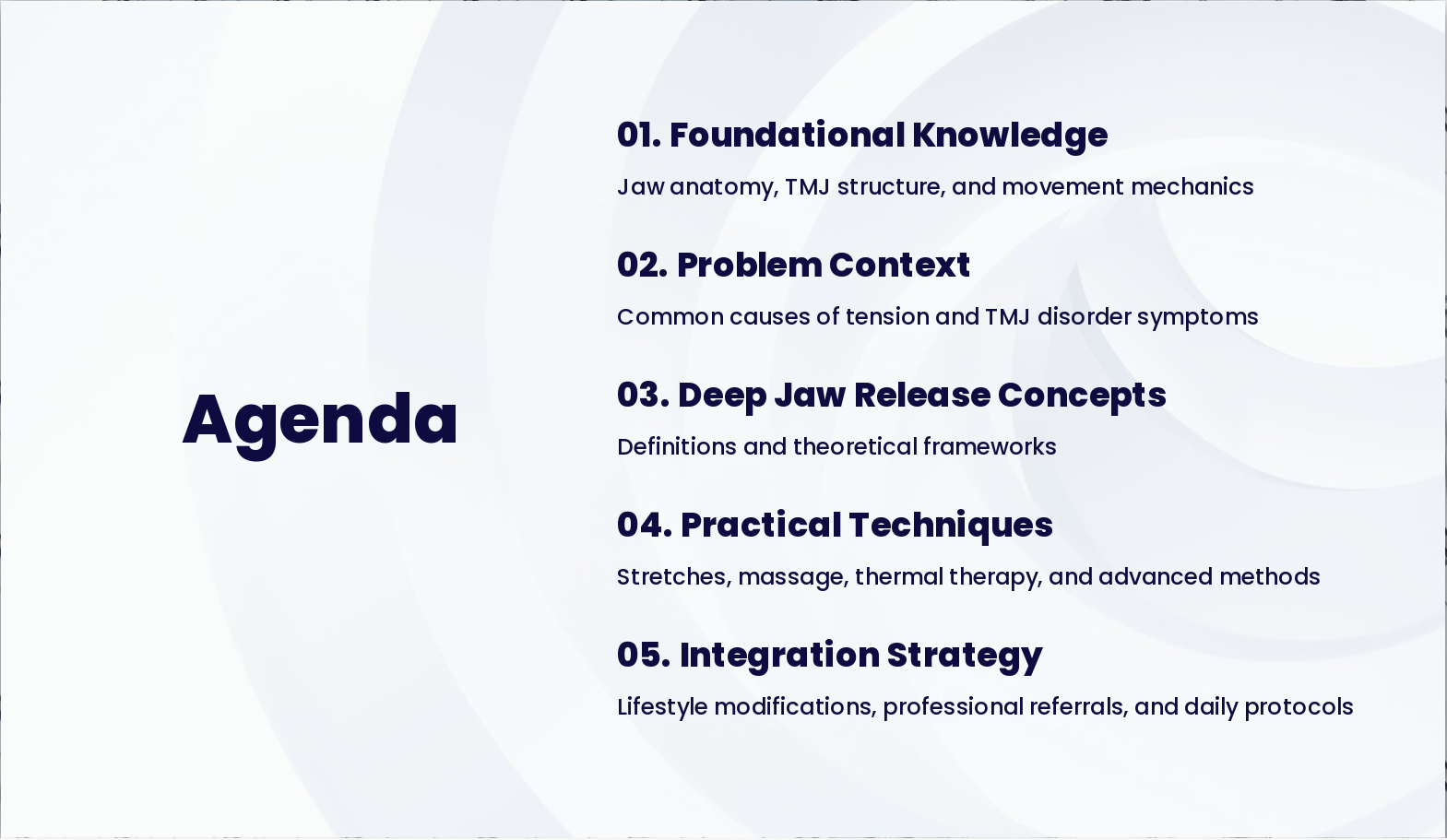
Slide 2: Agenda
- Foundational Knowledge: Jaw anatomy, TMJ structure, and movement mechanics
- Problem Context: Common causes of tension and TMJ disorder symptoms
- Deep Jaw Release Concepts: Definitions and theoretical frameworks
- Practical Techniques: Stretches, massage, thermal therapy, and advanced methods
- Integration Strategy: Lifestyle modifications, professional referrals, and daily protocols
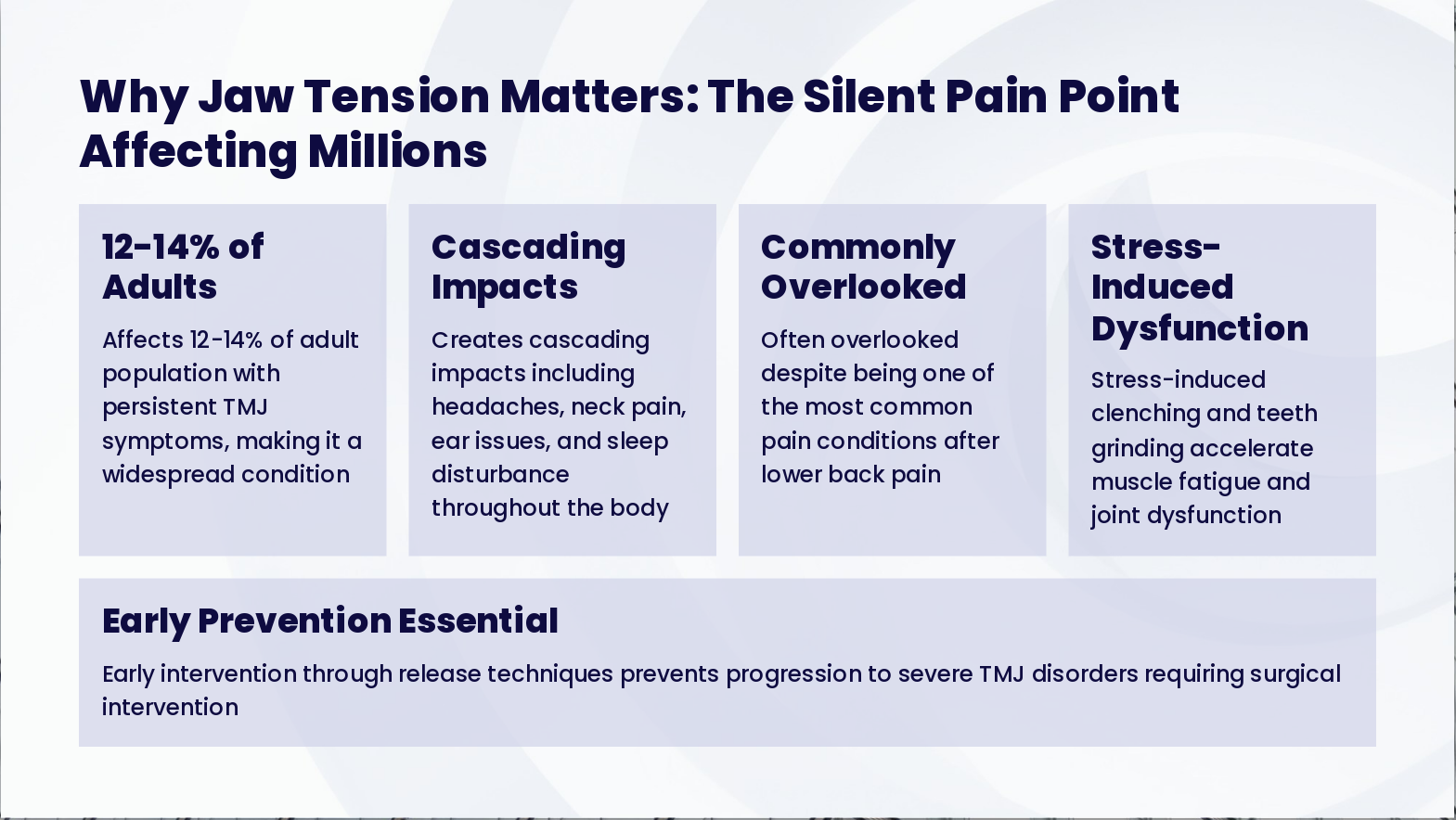
Slide 3: Why Jaw Tension Matters: The Silent Pain Point Affecting Millions
- 12-14% of Adults: Affects 12-14% of adult population with persistent TMJ symptoms, making it a widespread condition
- Cascading Impacts: Creates cascading impacts including headaches, neck pain, ear issues, and sleep disturbance throughout the body
- Commonly Overlooked: Often overlooked despite being one of the most common pain conditions after lower back pain
- Stress-Induced Dysfunction: Stress-induced clenching and teeth grinding accelerate muscle fatigue and joint dysfunction
- Early Prevention Essential: Early intervention through release techniques prevents progression to severe TMJ disorders requiring surgical intervention
Slide 4: Jaw Anatomy Overview: The Complex Biomechanical Architecture of Mandibular Movement
- Three Primary Muscle Groups: Muscles of mastication, depressor muscles, and accessory muscles orchestrate all jaw movements with coordinated precision and functional efficiency.
- Temporomandibular Joint Structure: The TMJ is a hinged articulation with dual actions: rotation enables initial opening, while translation facilitates full opening and dynamic mandibular movement.
- Articular Disc Function: The unique anatomical articular disc acts as a shock absorber between the femoral condyle and glenoid fossa, enabling optimal load distribution and joint protection.
- Proprioceptive Feedback System: Specialized receptors throughout the jaw anatomy provide proprioceptive feedback, enabling precise jaw positioning and sophisticated force modulation during function.
- High-Demand Muscle Regions: Muscular tension concentrates in regions of high demand, particularly the masseter and temporalis muscles, making them primary targets for therapeutic release and intervention.
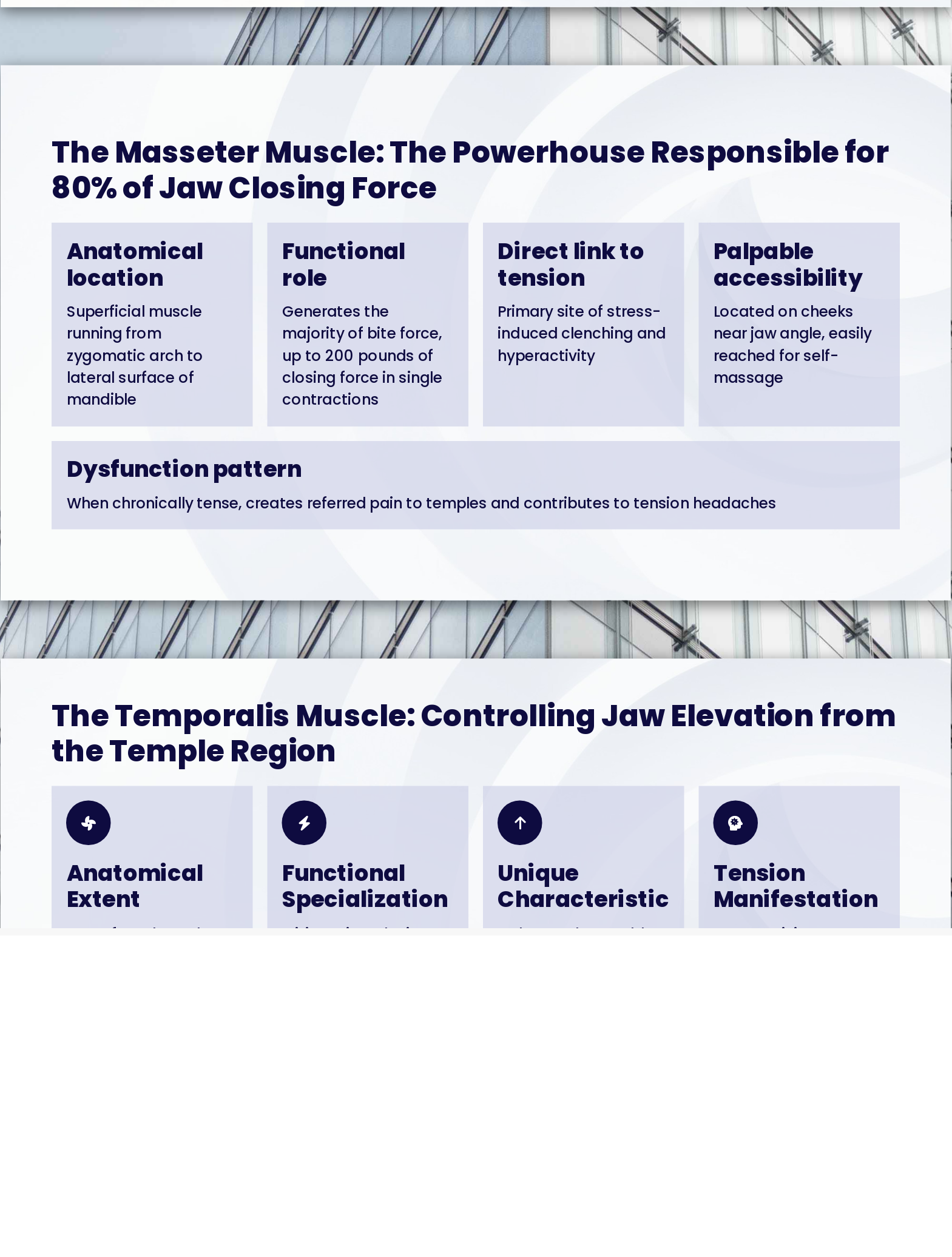
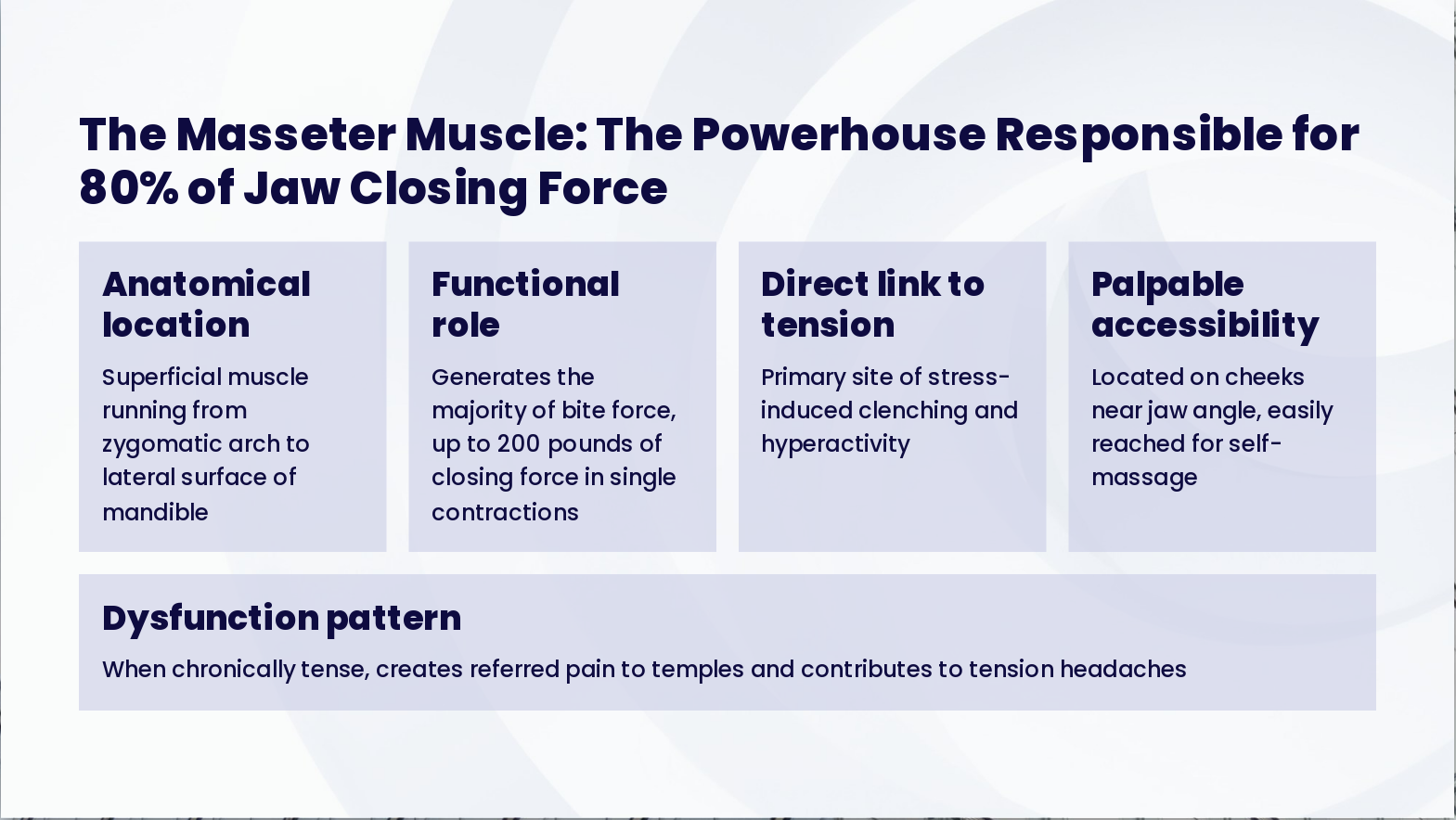
Slide 5: The Masseter Muscle: The Powerhouse Responsible for 80% of Jaw Closing Force
- Anatomical location: Superficial muscle running from zygomatic arch to lateral surface of mandible
- Functional role: Generates the majority of bite force, up to 200 pounds of closing force in single contractions
- Direct link to tension: Primary site of stress-induced clenching and hyperactivity
- Palpable accessibility: Located on cheeks near jaw angle, easily reached for self-massage
- Dysfunction pattern: When chronically tense, creates referred pain to temples and contributes to tension headaches
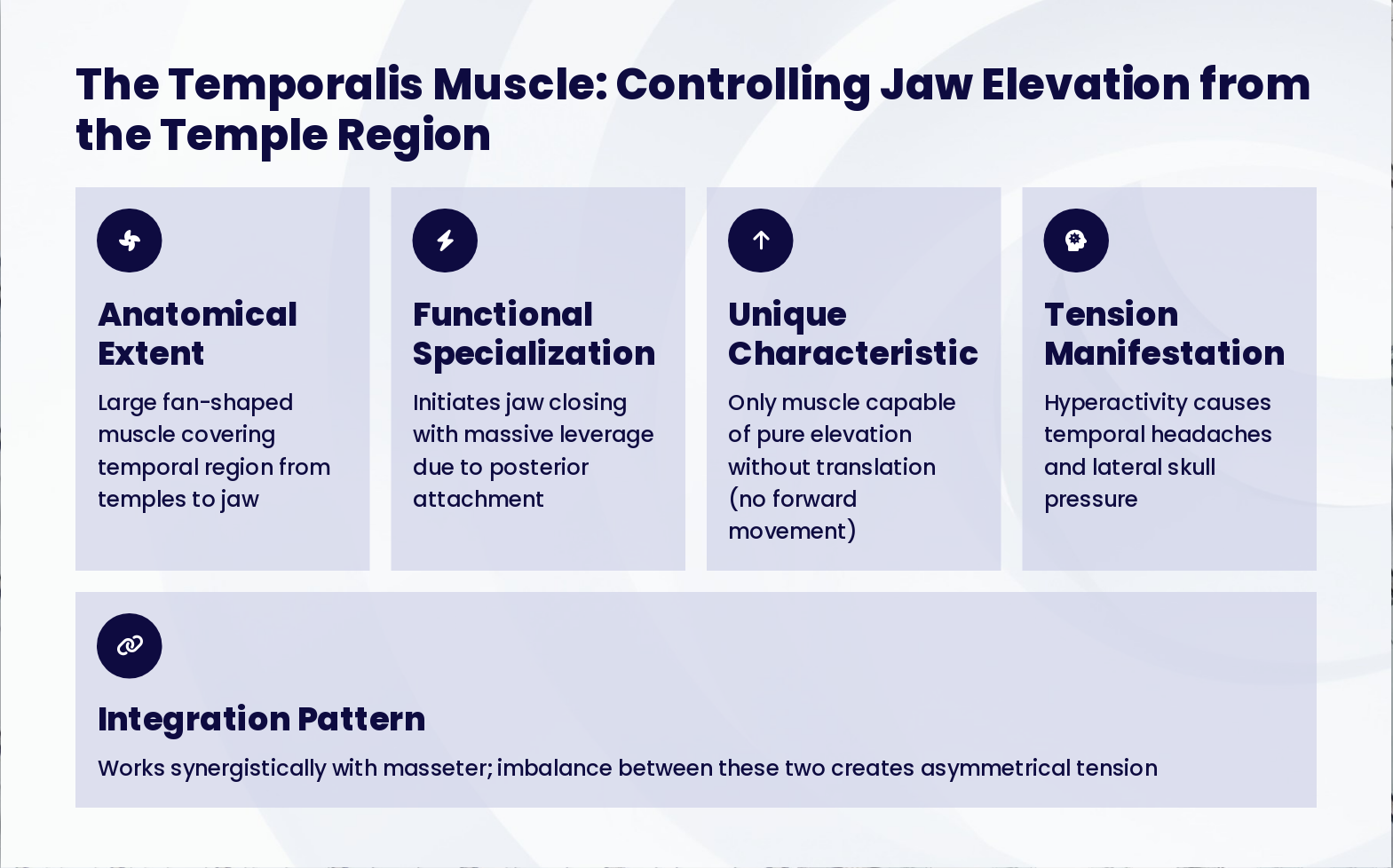
Slide 6: The Temporalis Muscle: Controlling Jaw Elevation from the Temple Region
- Anatomical Extent: Large fan-shaped muscle covering temporal region from temples to jaw
- Functional Specialization: Initiates jaw closing with massive leverage due to posterior attachment
- Unique Characteristic: Only muscle capable of pure elevation without translation (no forward movement)
- Tension Manifestation: Hyperactivity causes temporal headaches and lateral skull pressure
- Integration Pattern: Works synergistically with masseter; imbalance between these two creates asymmetrical tension
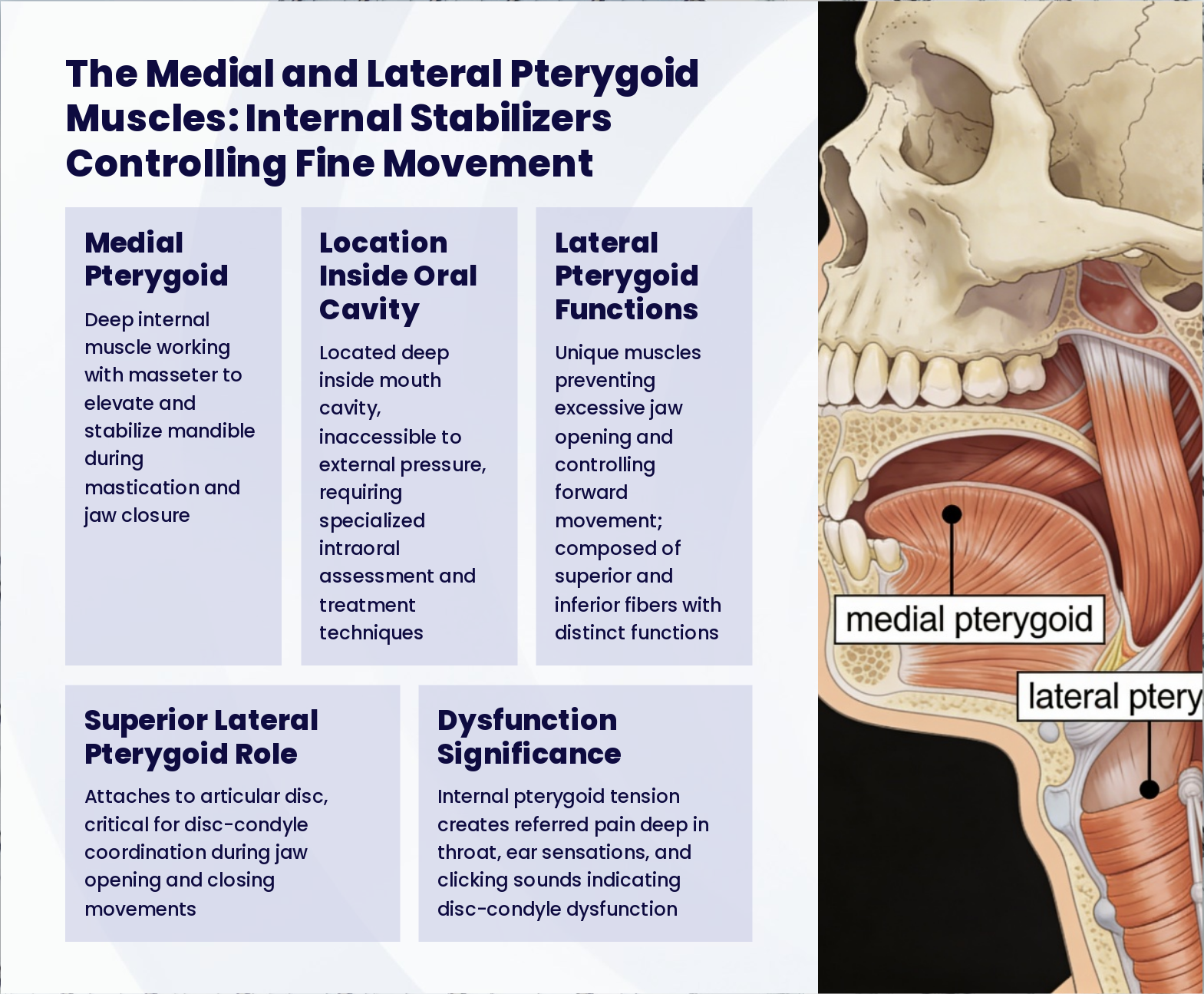
Slide 7: The Medial and Lateral Pterygoid Muscles: Internal Stabilizers Controlling Fine Movement
- Medial Pterygoid: Deep internal muscle working with masseter to elevate and stabilize mandible during mastication and jaw closure
- Location Inside Oral Cavity: Located deep inside mouth cavity, inaccessible to external pressure, requiring specialized intraoral assessment and treatment techniques
- Lateral Pterygoid Functions: Unique muscles preventing excessive jaw opening and controlling forward movement; composed of superior and inferior fibers with distinct functions
- Superior Lateral Pterygoid Role: Attaches to articular disc, critical for disc-condyle coordination during jaw opening and closing movements
- Dysfunction Significance: Internal pterygoid tension creates referred pain deep in throat, ear sensations, and clicking sounds indicating disc-condyle dysfunction
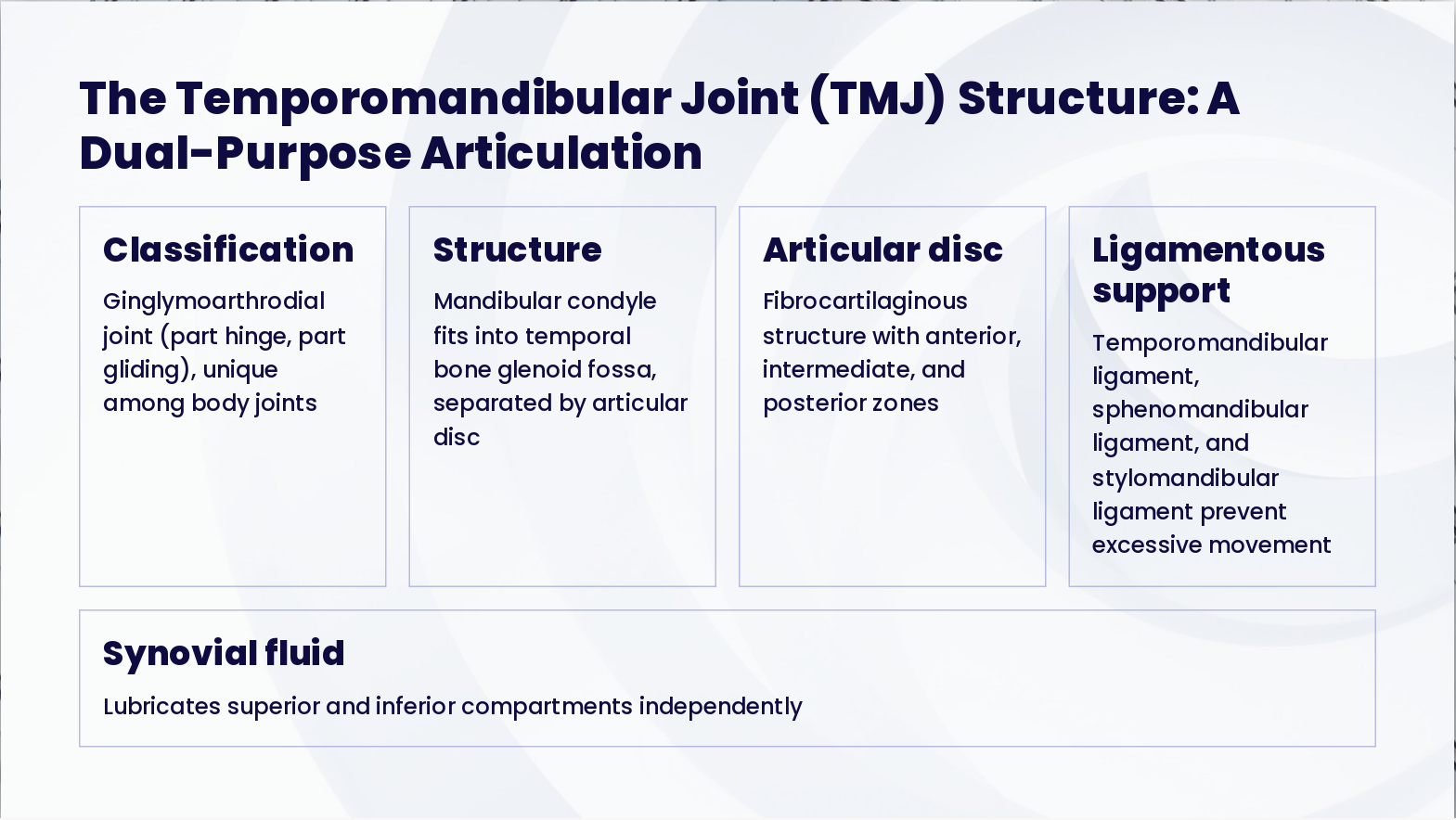
Slide 8: The Temporomandibular Joint (TMJ) Structure: A Dual-Purpose Articulation
- Classification: Ginglymoarthrodial joint (part hinge, part gliding), unique among body joints
- Structure: Mandibular condyle fits into temporal bone glenoid fossa, separated by articular disc
- Articular disc: Fibrocartilaginous structure with anterior, intermediate, and posterior zones
- Ligamentous support: Temporomandibular ligament, sphenomandibular ligament, and stylomandibular ligament prevent excessive movement
- Synovial fluid: Lubricates superior and inferior compartments independently
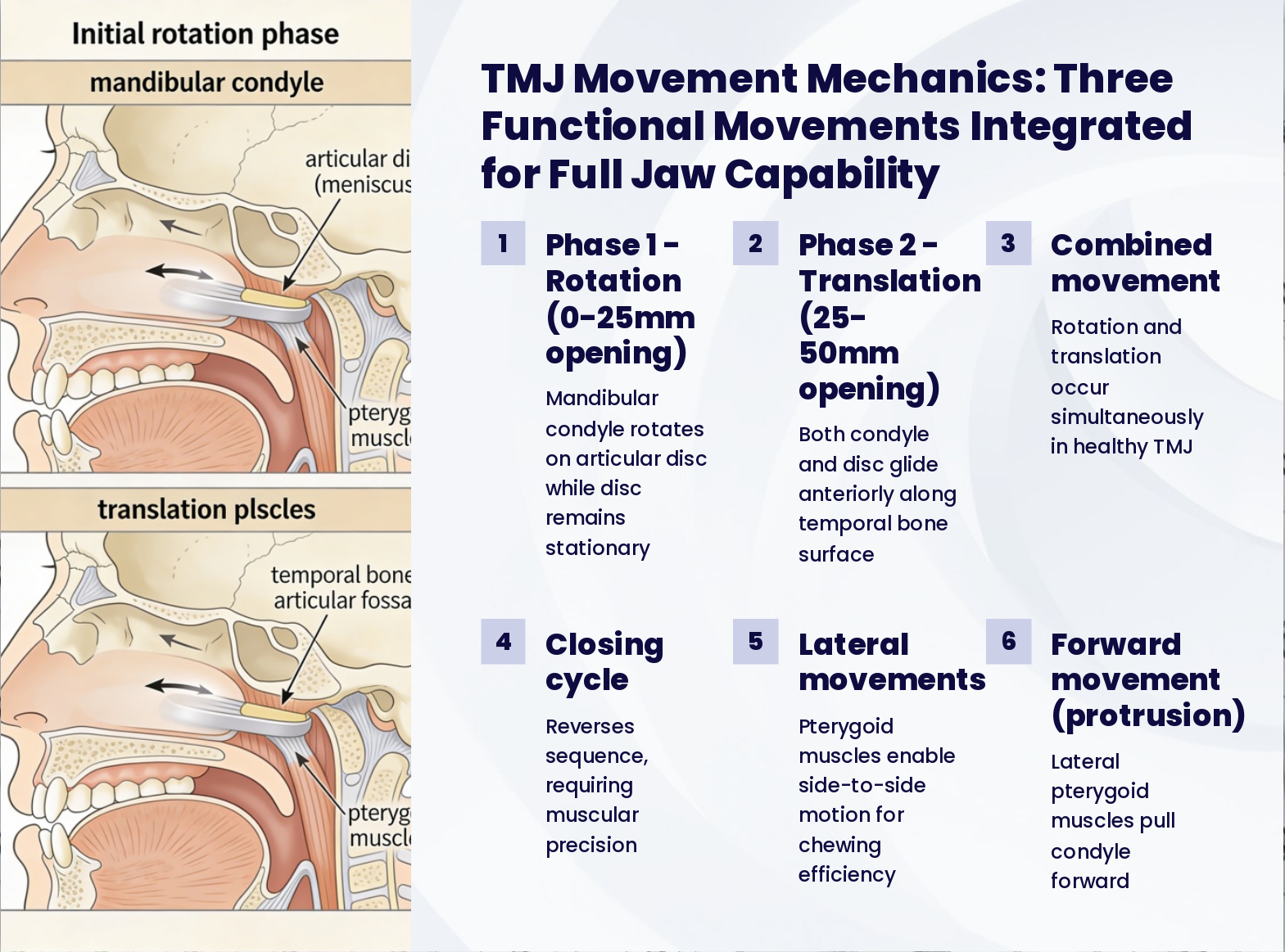
Slide 9: TMJ Movement Mechanics: Three Functional Movements Integrated for Full Jaw Capability
- Phase 1 - Rotation (0-25mm opening): Mandibular condyle rotates on articular disc while disc remains stationary
- Phase 2 - Translation (25-50mm opening): Both condyle and disc glide anteriorly along temporal bone surface
- Combined movement: Rotation and translation occur simultaneously in healthy TMJ
- Closing cycle: Reverses sequence, requiring muscular precision
- Lateral movements: Pterygoid muscles enable side-to-side motion for chewing efficiency
- Forward movement (protrusion): Lateral pterygoid muscles pull condyle forward
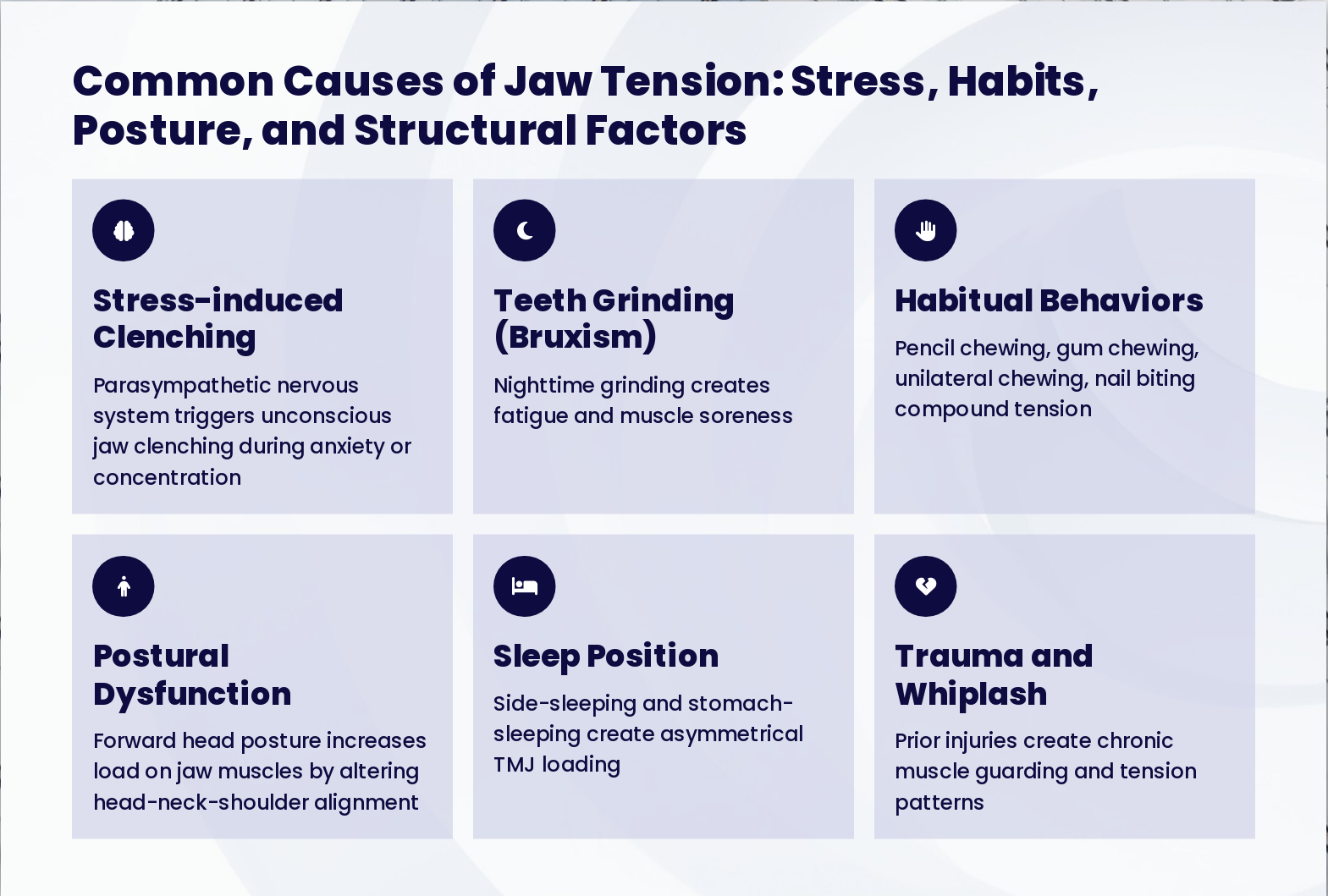
Slide 10: Common Causes of Jaw Tension: Stress, Habits, Posture, and Structural Factors
- Stress-induced Clenching: Parasympathetic nervous system triggers unconscious jaw clenching during anxiety or concentration
- Teeth Grinding (Bruxism): Nighttime grinding creates fatigue and muscle soreness
- Habitual Behaviors: Pencil chewing, gum chewing, unilateral chewing, nail biting compound tension
- Postural Dysfunction: Forward head posture increases load on jaw muscles by altering head-neck-shoulder alignment
- Sleep Position: Side-sleeping and stomach-sleeping create asymmetrical TMJ loading
- Trauma and Whiplash: Prior injuries create chronic muscle guarding and tension patterns
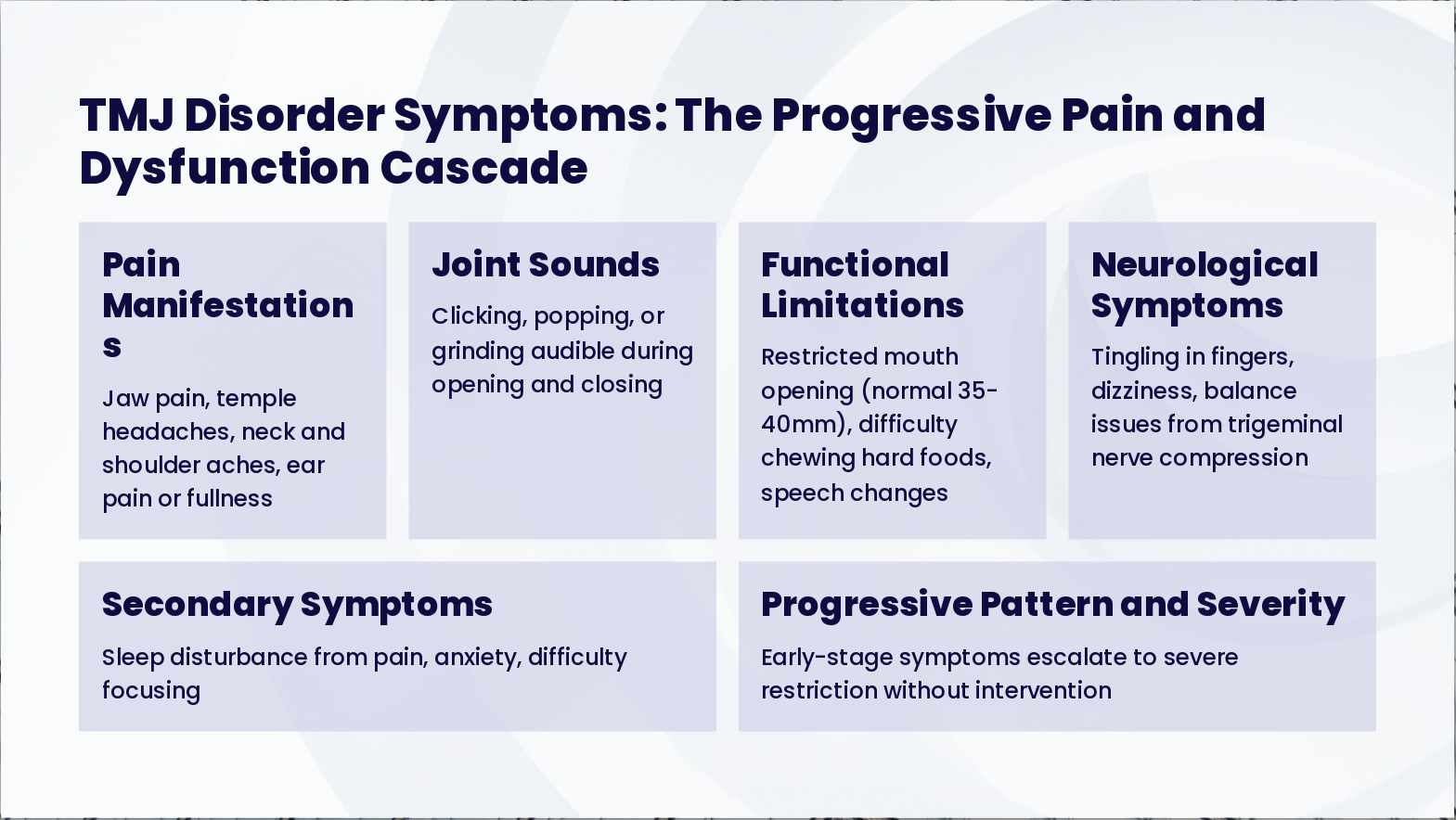
Slide 11: TMJ Disorder Symptoms: The Progressive Pain and Dysfunction Cascade
- Pain Manifestations: Jaw pain, temple headaches, neck and shoulder aches, ear pain or fullness
- Joint Sounds: Clicking, popping, or grinding audible during opening and closing
- Functional Limitations: Restricted mouth opening (normal 35-40mm), difficulty chewing hard foods, speech changes
- Neurological Symptoms: Tingling in fingers, dizziness, balance issues from trigeminal nerve compression
- Secondary Symptoms: Sleep disturbance from pain, anxiety, difficulty focusing
- Progressive Pattern and Severity: Early-stage symptoms escalate to severe restriction without intervention
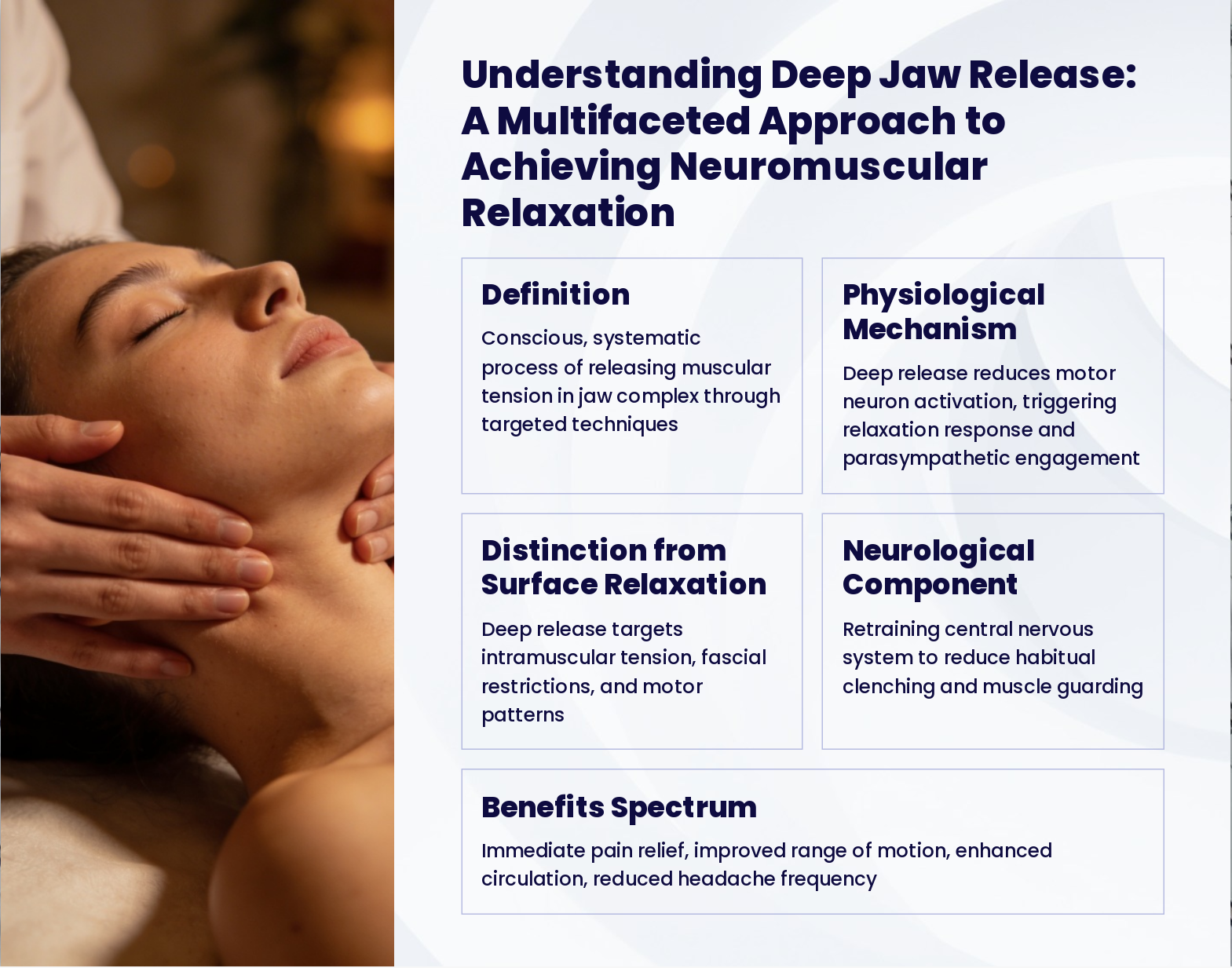
Slide 12: Understanding Deep Jaw Release: A Multifaceted Approach to Achieving Neuromuscular Relaxation
- Definition: Conscious, systematic process of releasing muscular tension in jaw complex through targeted techniques
- Physiological Mechanism: Deep release reduces motor neuron activation, triggering relaxation response and parasympathetic engagement
- Distinction from Surface Relaxation: Deep release targets intramuscular tension, fascial restrictions, and motor patterns
- Neurological Component: Retraining central nervous system to reduce habitual clenching and muscle guarding
- Benefits Spectrum: Immediate pain relief, improved range of motion, enhanced circulation, reduced headache frequency
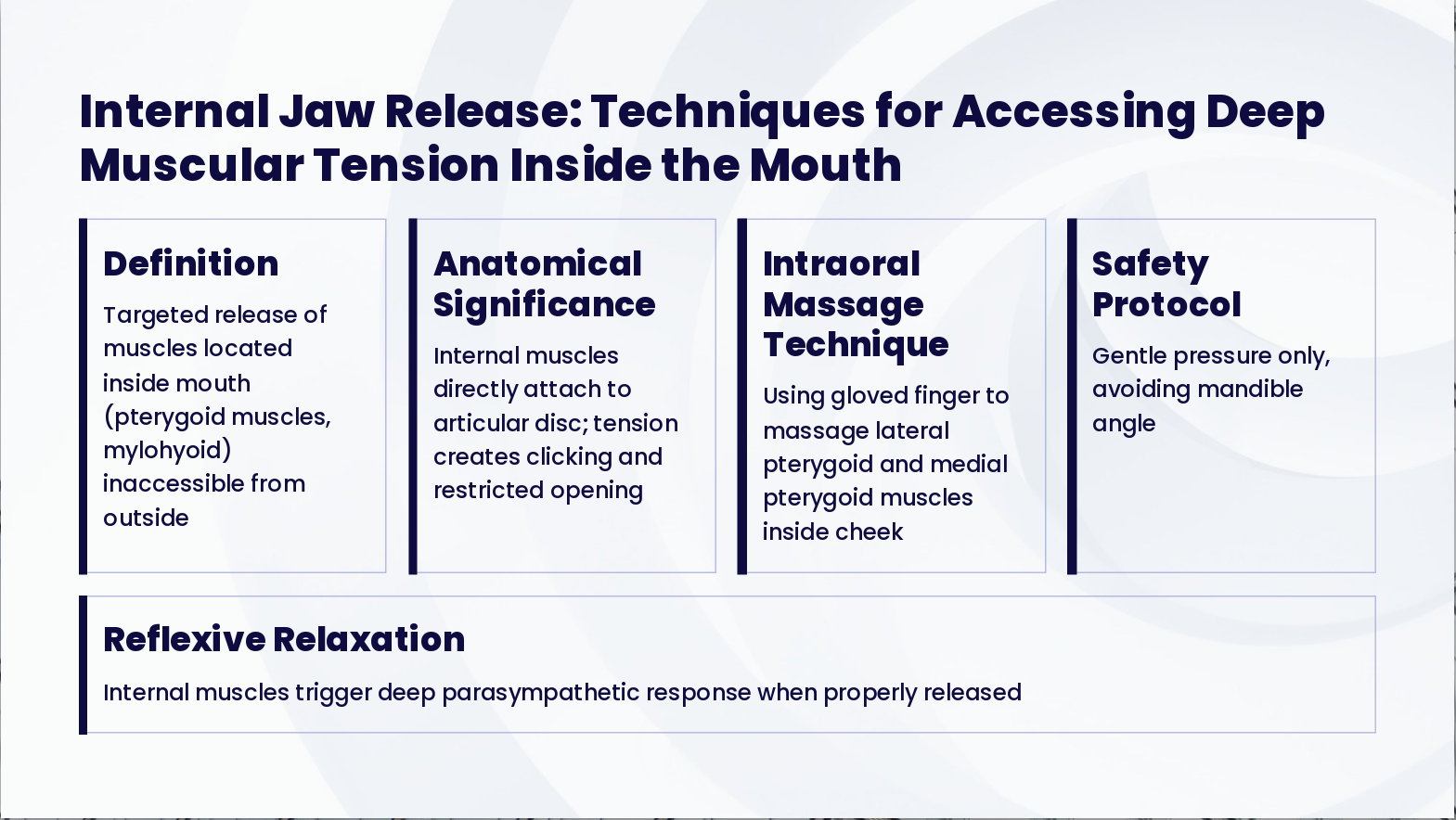
Slide 13: Internal Jaw Release: Techniques for Accessing Deep Muscular Tension Inside the Mouth
- Definition: Targeted release of muscles located inside mouth (pterygoid muscles, mylohyoid) inaccessible from outside
- Anatomical Significance: Internal muscles directly attach to articular disc; tension creates clicking and restricted opening
- Intraoral Massage Technique: Using gloved finger to massage lateral pterygoid and medial pterygoid muscles inside cheek
- Safety Protocol: Gentle pressure only, avoiding mandible angle
- Reflexive Relaxation: Internal muscles trigger deep parasympathetic response when properly released
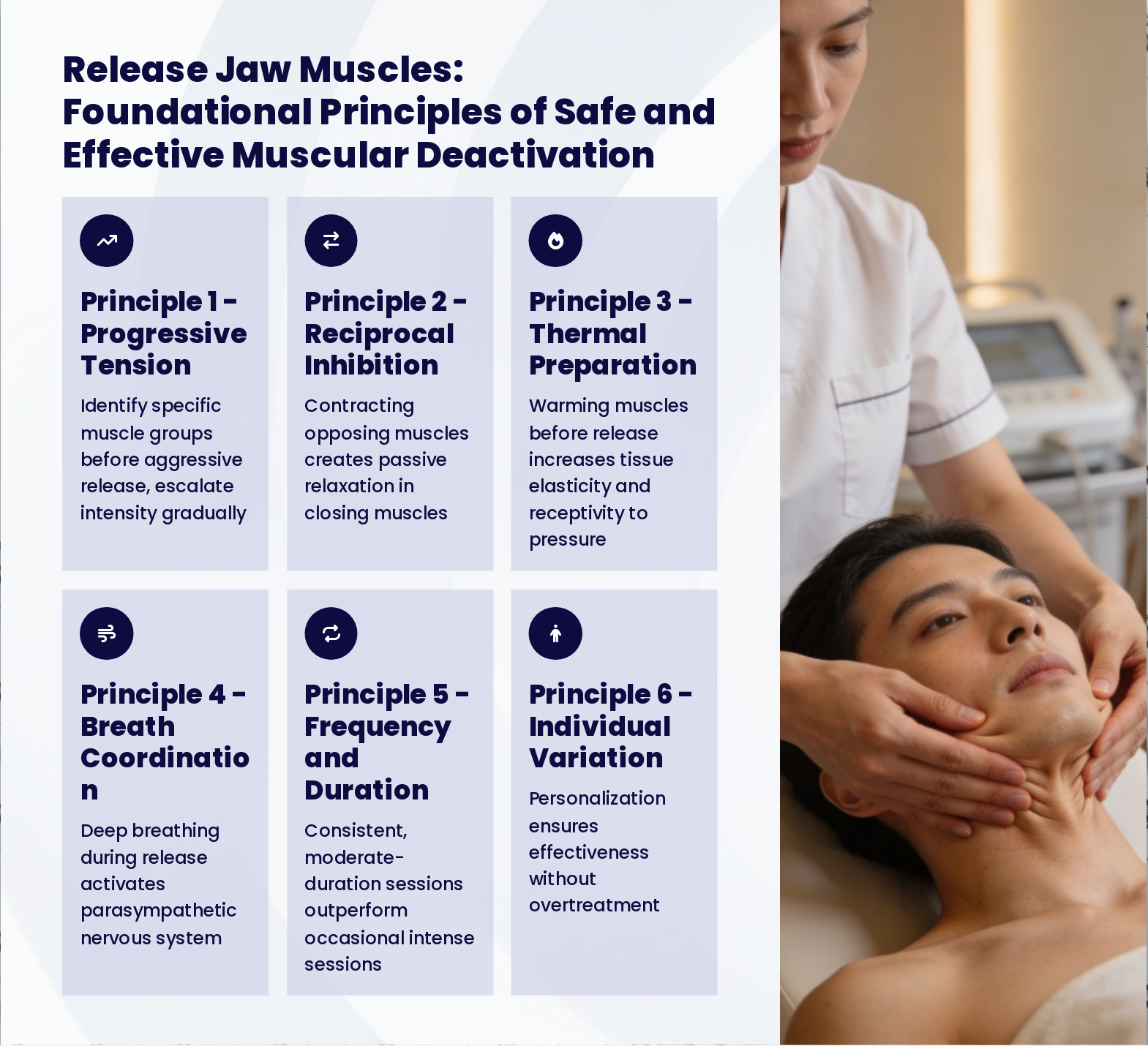
Slide 14: Release Jaw Muscles: Foundational Principles of Safe and Effective Muscular Deactivation
- Principle 1 - Progressive Tension: Identify specific muscle groups before aggressive release, escalate intensity gradually
- Principle 2 - Reciprocal Inhibition: Contracting opposing muscles creates passive relaxation in closing muscles
- Principle 3 - Thermal Preparation: Warming muscles before release increases tissue elasticity and receptivity to pressure
- Principle 4 - Breath Coordination: Deep breathing during release activates parasympathetic nervous system
- Principle 5 - Frequency and Duration: Consistent, moderate-duration sessions outperform occasional intense sessions
- Principle 6 - Individual Variation: Personalization ensures effectiveness without overtreatment
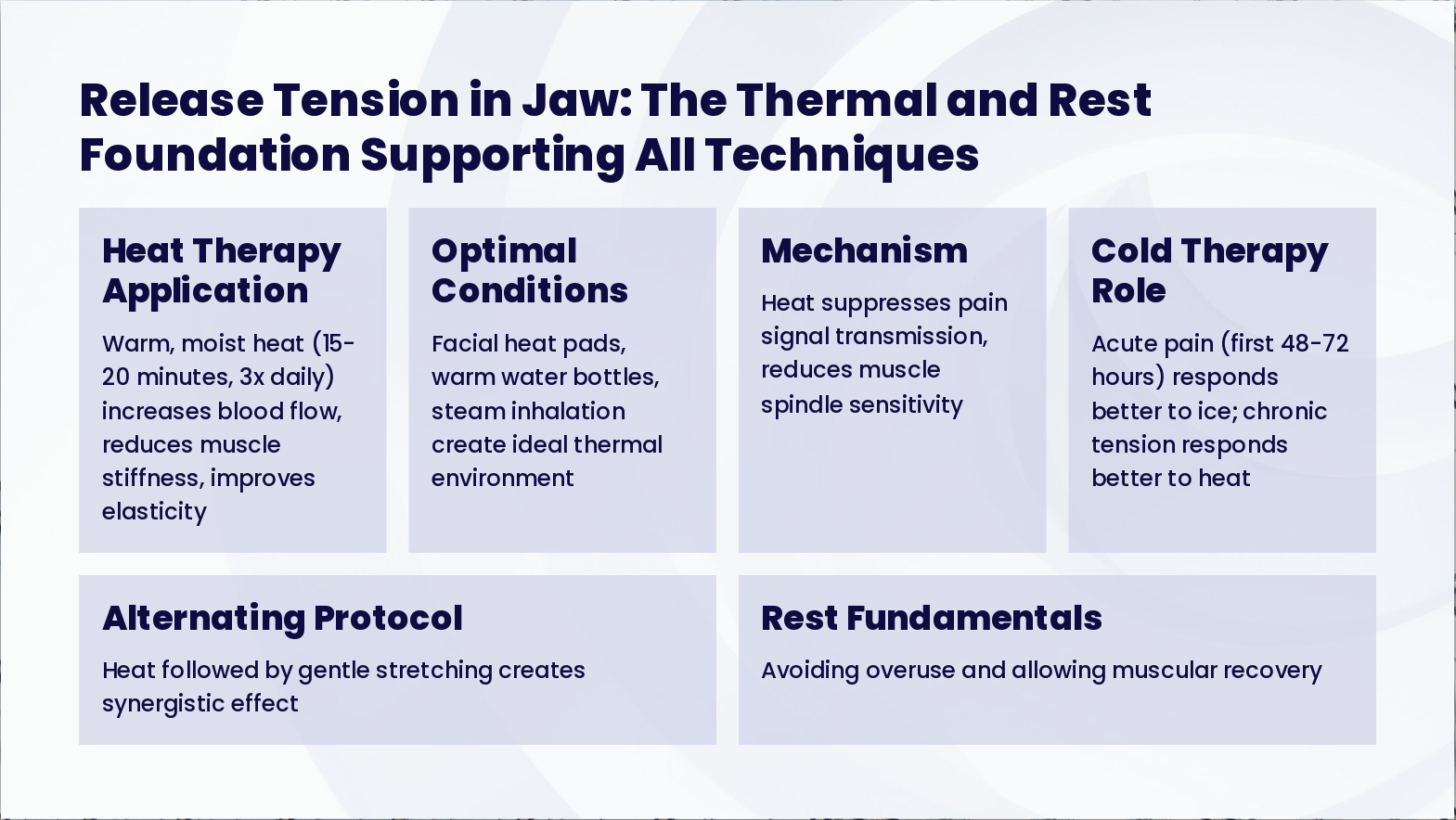
Slide 15: Release Tension in Jaw: The Thermal and Rest Foundation Supporting All Techniques
- Heat Therapy Application: Warm, moist heat (15-20 minutes, 3x daily) increases blood flow, reduces muscle stiffness, improves elasticity
- Optimal Conditions: Facial heat pads, warm water bottles, steam inhalation create ideal thermal environment
- Mechanism: Heat suppresses pain signal transmission, reduces muscle spindle sensitivity
- Cold Therapy Role: Acute pain (first 48-72 hours) responds better to ice; chronic tension responds better to heat
- Alternating Protocol: Heat followed by gentle stretching creates synergistic effect
- Rest Fundamentals: Avoiding overuse and allowing muscular recovery
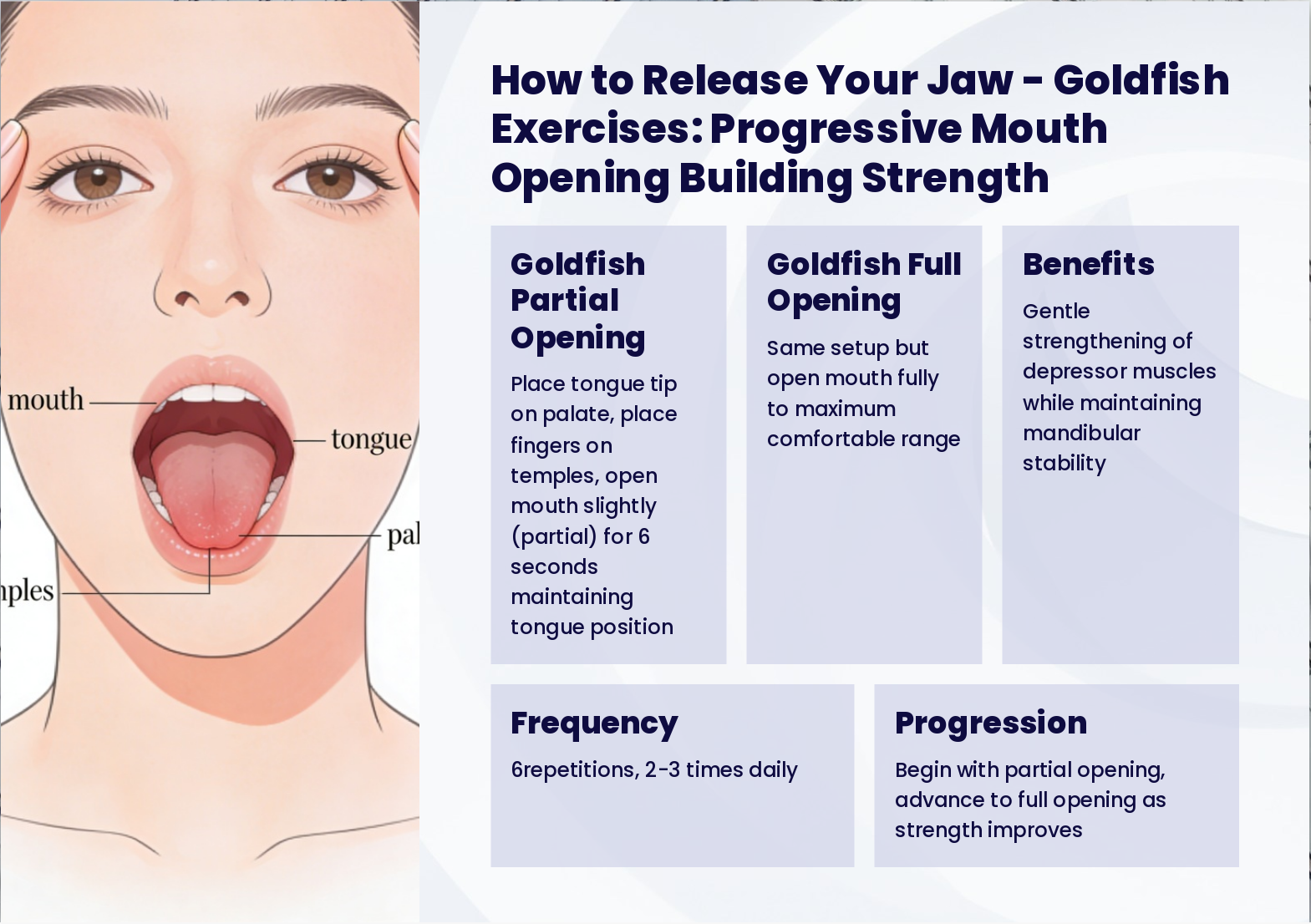
Slide 16: How to Release Your Jaw - Goldfish Exercises: Progressive Mouth Opening Building Strength
- Goldfish Partial Opening: Place tongue tip on palate, place fingers on temples, open mouth slightly (partial) for 6 seconds maintaining tongue position
- Goldfish Full Opening: Same setup but open mouth fully to maximum comfortable range
- Benefits: Gentle strengthening of depressor muscles while maintaining mandibular stability
- Frequency: 6repetitions, 2-3 times daily
- Progression: Begin with partial opening, advance to full opening as strength improves
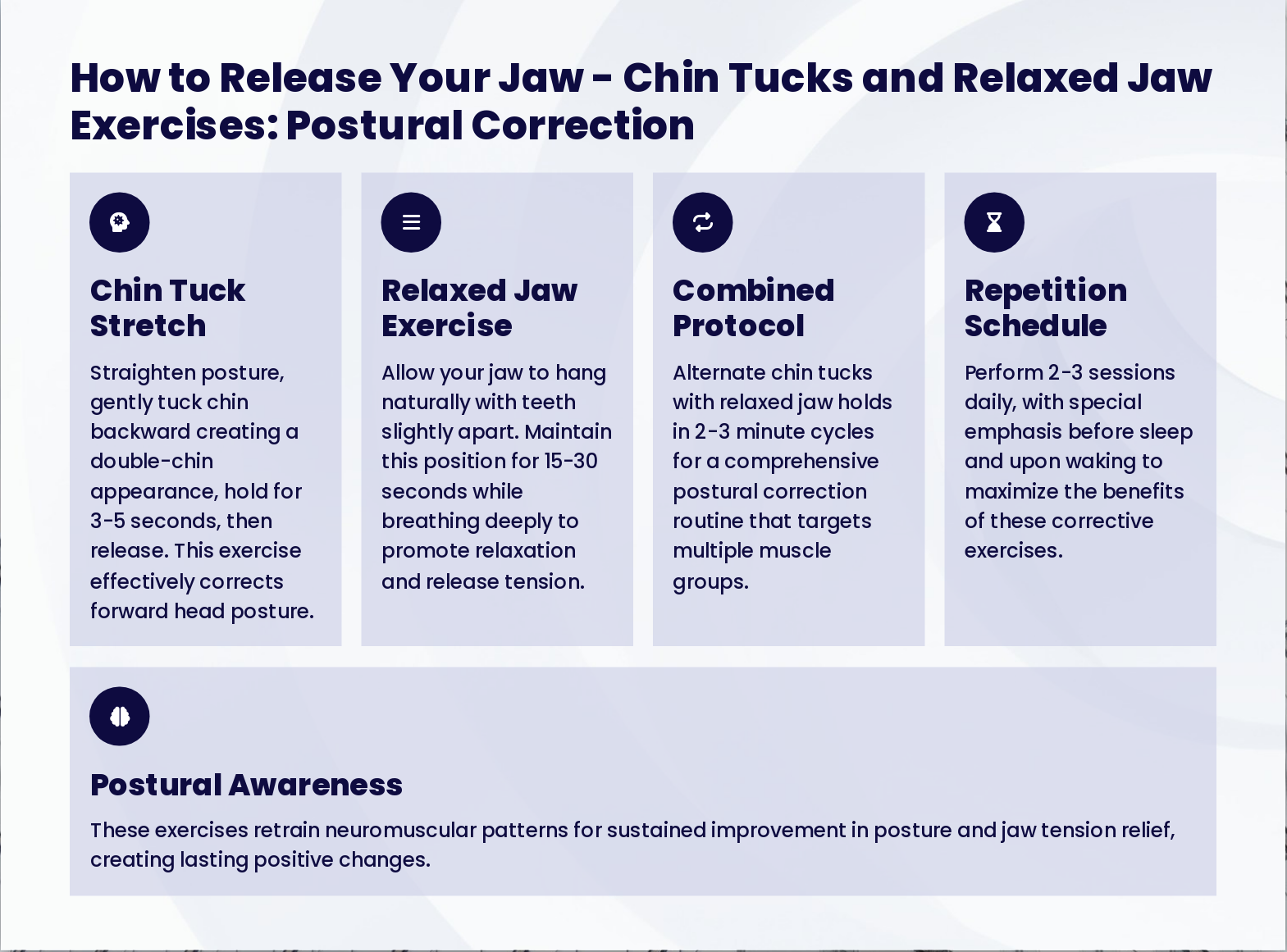
Slide 17: How to Release Your Jaw - Chin Tucks and Relaxed Jaw Exercises: Postural Correction
- Chin Tuck Stretch: Straighten posture, gently tuck chin backward creating a double-chin appearance, hold for 3-5 seconds, then release. This exercise effectively corrects forward head posture.
- Relaxed Jaw Exercise: Allow your jaw to hang naturally with teeth slightly apart. Maintain this position for 15-30 seconds while breathing deeply to promote relaxation and release tension.
- Combined Protocol: Alternate chin tucks with relaxed jaw holds in 2-3 minute cycles for a comprehensive postural correction routine that targets multiple muscle groups.
- Repetition Schedule: Perform 2-3 sessions daily, with special emphasis before sleep and upon waking to maximize the benefits of these corrective exercises.
- Postural Awareness: These exercises retrain neuromuscular patterns for sustained improvement in posture and jaw tension relief, creating lasting positive changes.
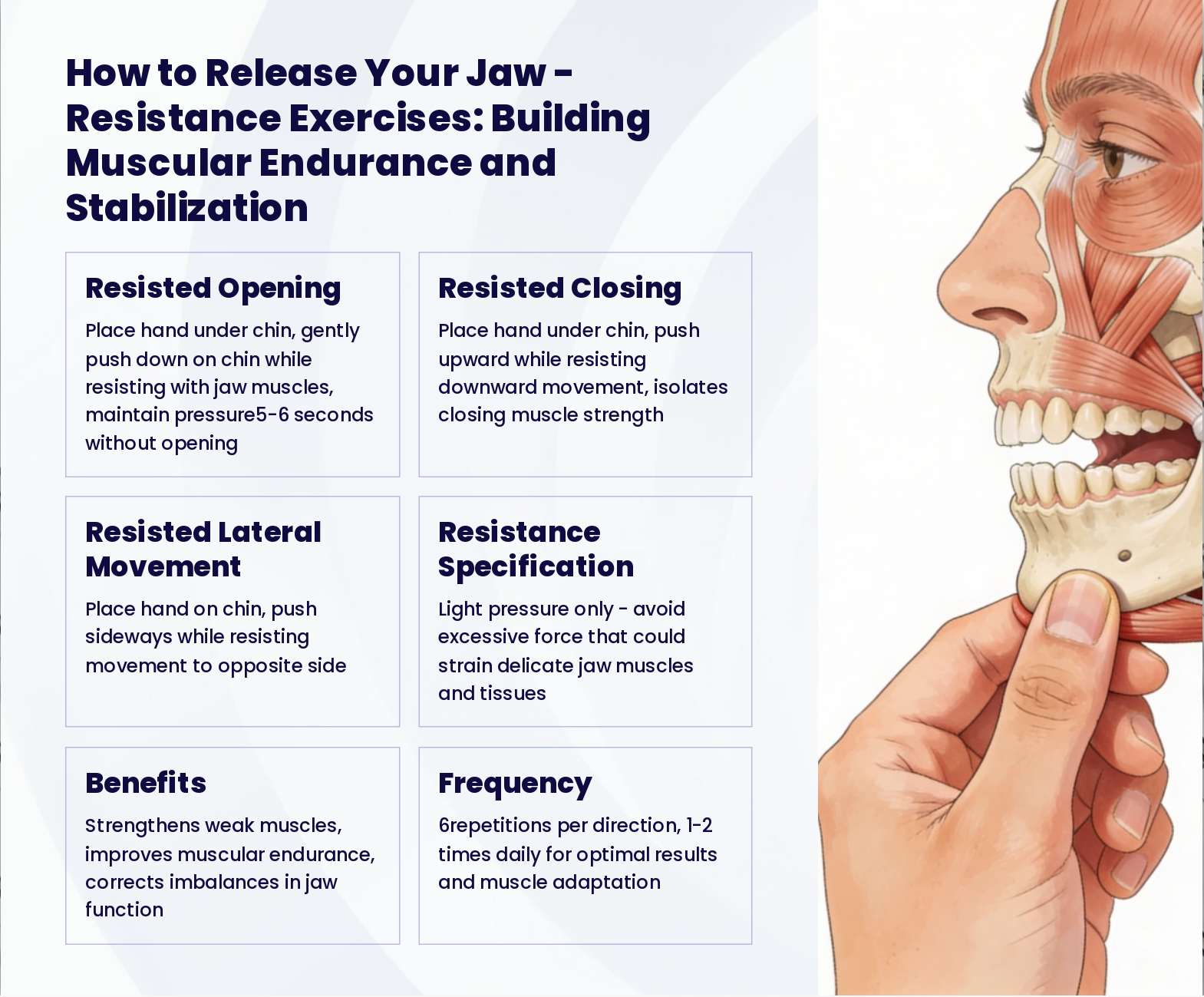
Slide 18: How to Release Your Jaw - Resistance Exercises: Building Muscular Endurance and Stabilization
- Resisted Opening: Place hand under chin, gently push down on chin while resisting with jaw muscles, maintain pressure5-6 seconds without opening
- Resisted Closing: Place hand under chin, push upward while resisting downward movement, isolates closing muscle strength
- Resisted Lateral Movement: Place hand on chin, push sideways while resisting movement to opposite side
- Resistance Specification: Light pressure only - avoid excessive force that could strain delicate jaw muscles and tissues
- Benefits: Strengthens weak muscles, improves muscular endurance, corrects imbalances in jaw function
- Frequency: 6repetitions per direction, 1-2 times daily for optimal results and muscle adaptation
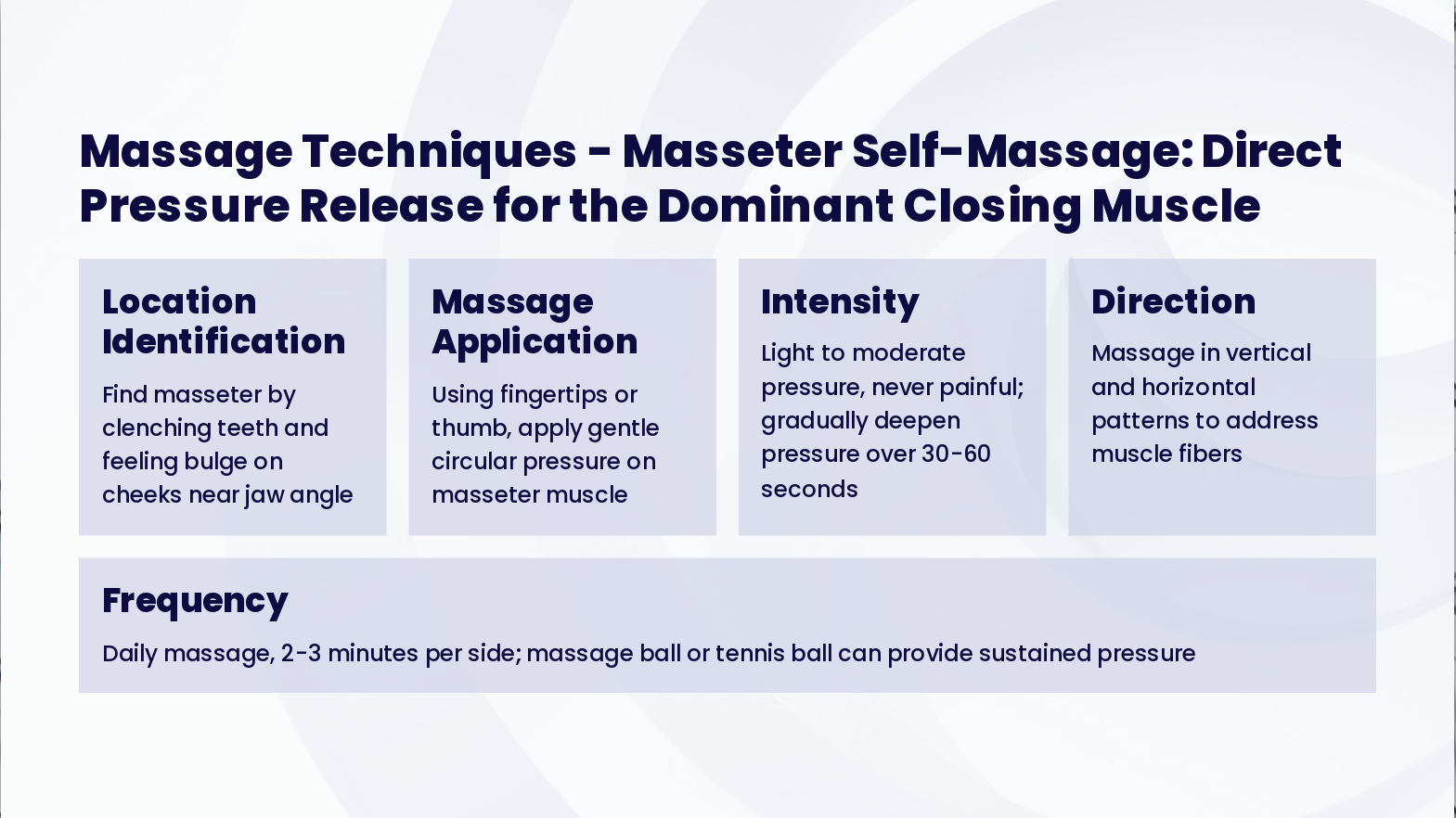
Slide 19: Massage Techniques - Masseter Self-Massage: Direct Pressure Release for the Dominant Closing Muscle
- Location Identification: Find masseter by clenching teeth and feeling bulge on cheeks near jaw angle
- Massage Application: Using fingertips or thumb, apply gentle circular pressure on masseter muscle
- Intensity: Light to moderate pressure, never painful; gradually deepen pressure over 30-60 seconds
- Direction: Massage in vertical and horizontal patterns to address muscle fibers
- Frequency: Daily massage, 2-3 minutes per side; massage ball or tennis ball can provide sustained pressure
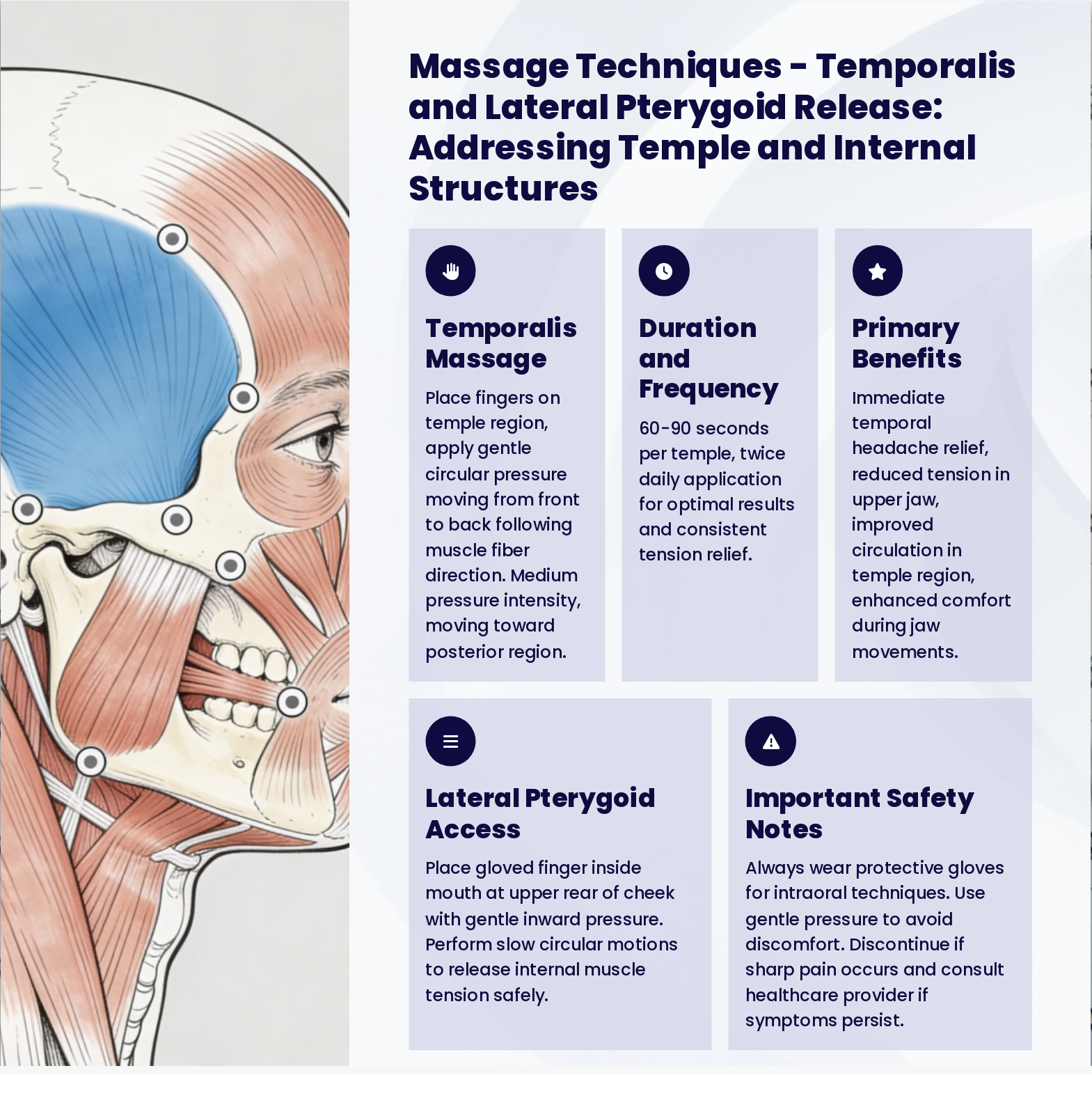
Slide 20: Massage Techniques - Temporalis and Lateral Pterygoid Release: Addressing Temple and Internal Structures
- Temporalis Massage: Place fingers on temple region, apply gentle circular pressure moving from front to back following muscle fiber direction. Medium pressure intensity, moving toward posterior region.
- Duration and Frequency: 60-90 seconds per temple, twice daily application for optimal results and consistent tension relief.
- Primary Benefits: Immediate temporal headache relief, reduced tension in upper jaw, improved circulation in temple region, enhanced comfort during jaw movements.
- Lateral Pterygoid Access: Place gloved finger inside mouth at upper rear of cheek with gentle inward pressure. Perform slow circular motions to release internal muscle tension safely.
- Important Safety Notes: Always wear protective gloves for intraoral techniques. Use gentle pressure to avoid discomfort. Discontinue if sharp pain occurs and consult healthcare provider if symptoms persist.
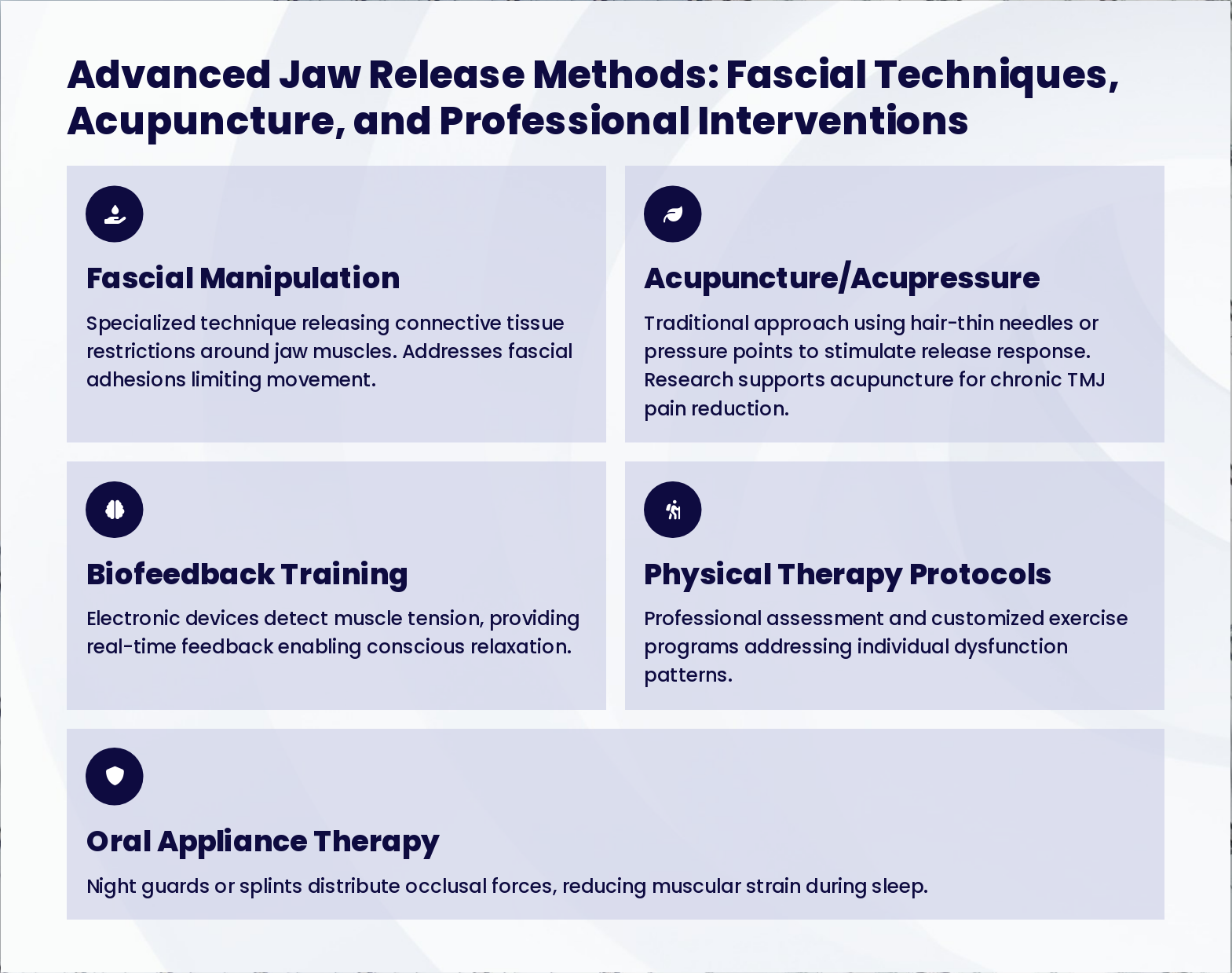
Slide 21: Advanced Jaw Release Methods: Fascial Techniques, Acupuncture, and Professional Interventions
- Fascial Manipulation: Specialized technique releasing connective tissue restrictions around jaw muscles. Addresses fascial adhesions limiting movement.
- Acupuncture/Acupressure: Traditional approach using hair-thin needles or pressure points to stimulate release response. Research supports acupuncture for chronic TMJ pain reduction.
- Biofeedback Training: Electronic devices detect muscle tension, providing real-time feedback enabling conscious relaxation.
- Physical Therapy Protocols: Professional assessment and customized exercise programs addressing individual dysfunction patterns.
- Oral Appliance Therapy: Night guards or splints distribute occlusal forces, reducing muscular strain during sleep.
Slide 22: Lifestyle Modifications and Prevention Strategies: Sustainable Behavioral Change Preventing Recurrence
- Stress Management: Meditation, deep breathing, and mindfulness techniques reduce unconscious clenching during tension, promoting jaw relaxation and preventing stress-related symptoms.
- Sleep Optimization: Back-sleeping position with supportive pillow alignment prevents asymmetrical loading on the jaw, ensuring balanced rest and reducing nighttime strain.
- Dietary Choices: Soft foods, proper hydration, and avoiding excessive chewing reduce overall jaw workload, promoting healing and preventing exacerbation of symptoms.
- Posture Awareness: Maintaining neutral head position and avoiding forward head posture reduces temporal muscle load, preventing compensatory jaw tension.
- Activity Modification: Eliminate jaw-stressing habits including gum chewing, pencil biting, nail biting, and excessive phone cradling to prevent chronic tension.
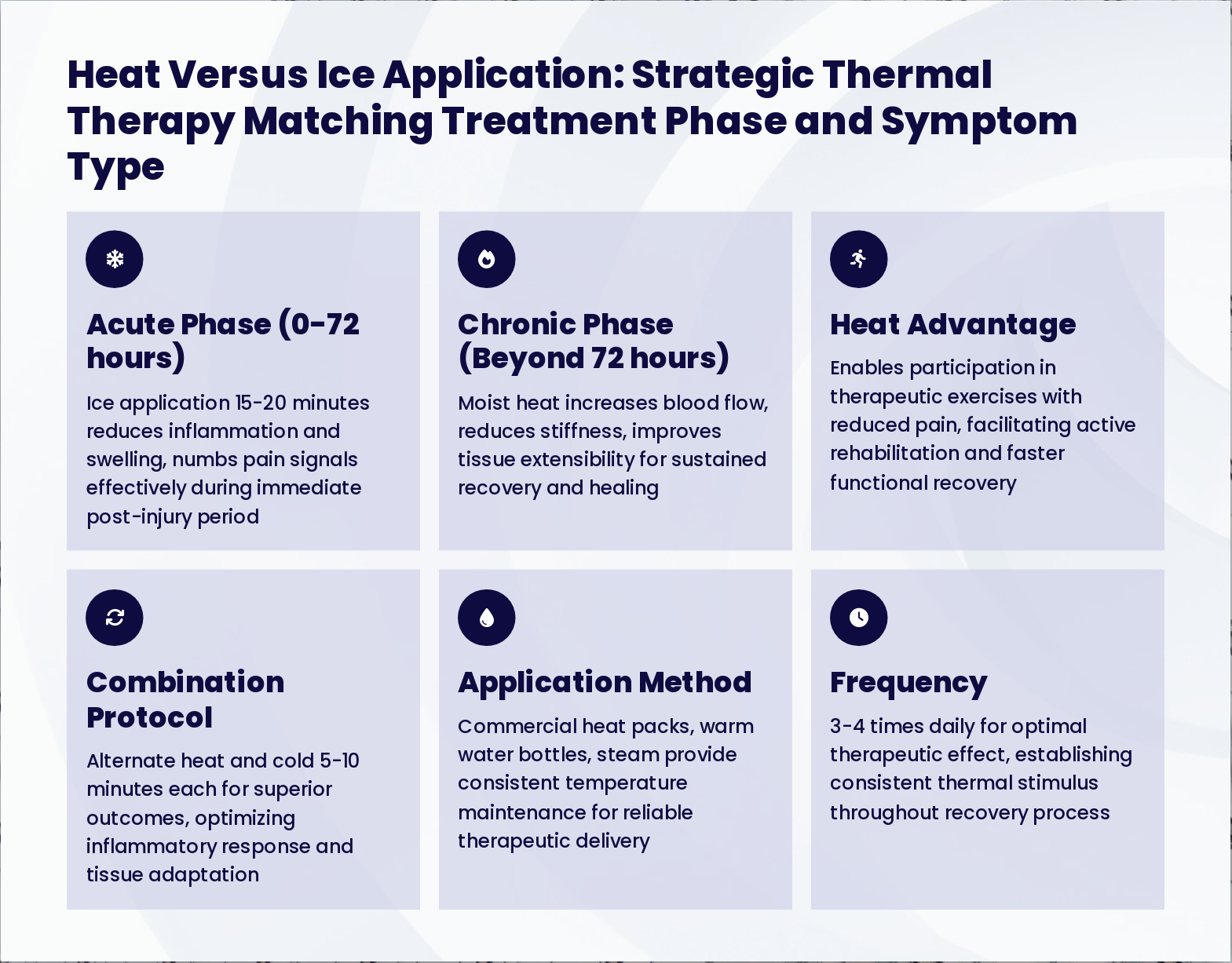
Slide 23: Heat Versus Ice Application: Strategic Thermal Therapy Matching Treatment Phase and Symptom Type
- Acute Phase (0-72 hours): Ice application 15-20 minutes reduces inflammation and swelling, numbs pain signals effectively during immediate post-injury period
- Chronic Phase (Beyond 72 hours): Moist heat increases blood flow, reduces stiffness, improves tissue extensibility for sustained recovery and healing
- Heat Advantage: Enables participation in therapeutic exercises with reduced pain, facilitating active rehabilitation and faster functional recovery
- Combination Protocol: Alternate heat and cold 5-10 minutes each for superior outcomes, optimizing inflammatory response and tissue adaptation
- Application Method: Commercial heat packs, warm water bottles, steam provide consistent temperature maintenance for reliable therapeutic delivery
- Frequency: 3-4 times daily for optimal therapeutic effect, establishing consistent thermal stimulus throughout recovery process
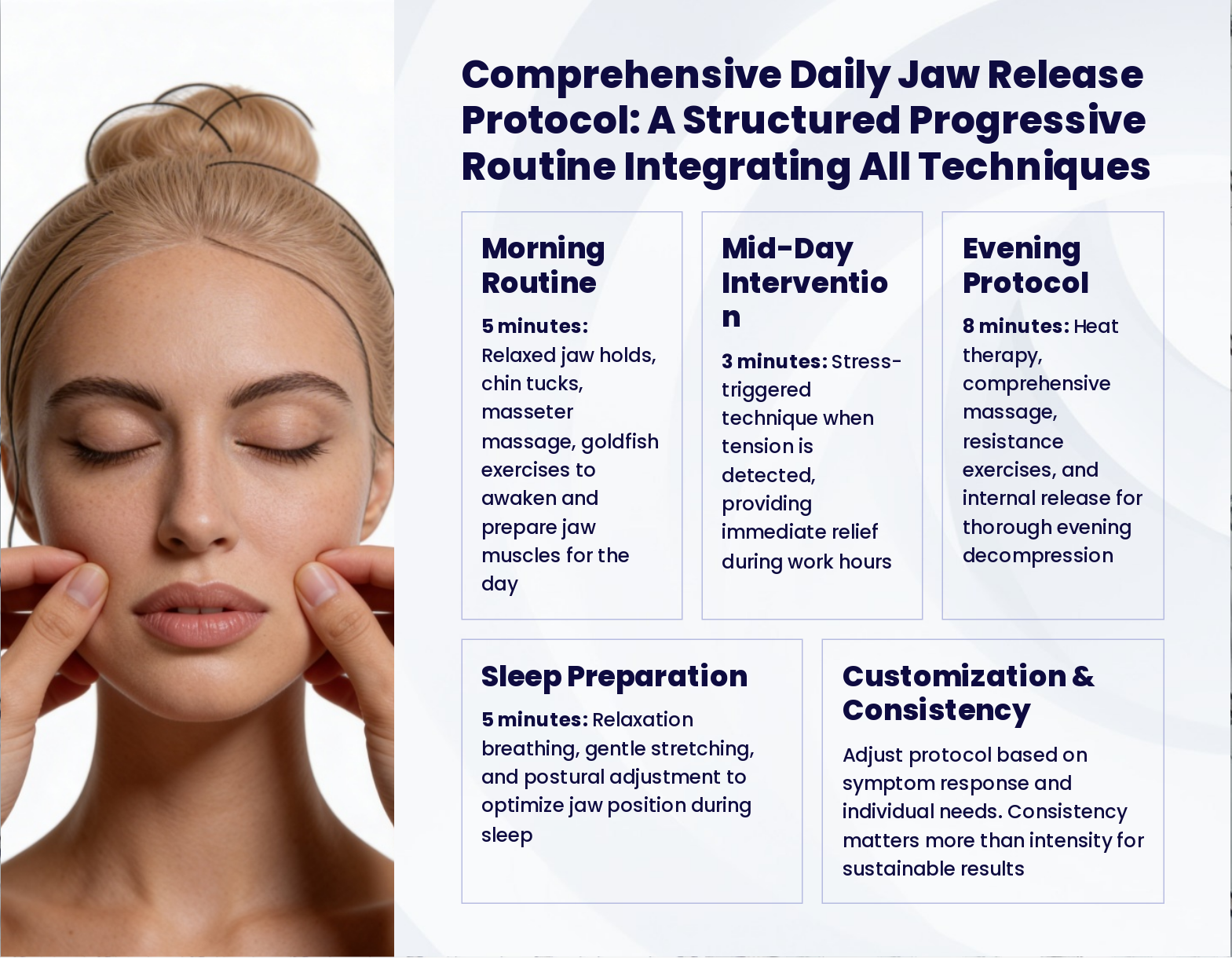
Slide 24: Comprehensive Daily Jaw Release Protocol: A Structured Progressive Routine Integrating All Techniques
- Morning Routine: 5 minutes: Relaxed jaw holds, chin tucks, masseter massage, goldfish exercises to awaken and prepare jaw muscles for the day
- Mid-Day Intervention: 3 minutes: Stress-triggered technique when tension is detected, providing immediate relief during work hours
- Evening Protocol: 8 minutes: Heat therapy, comprehensive massage, resistance exercises, and internal release for thorough evening decompression
- Sleep Preparation: 5 minutes: Relaxation breathing, gentle stretching, and postural adjustment to optimize jaw position during sleep
- Customization & Consistency: Adjust protocol based on symptom response and individual needs. Consistency matters more than intensity for sustainable results
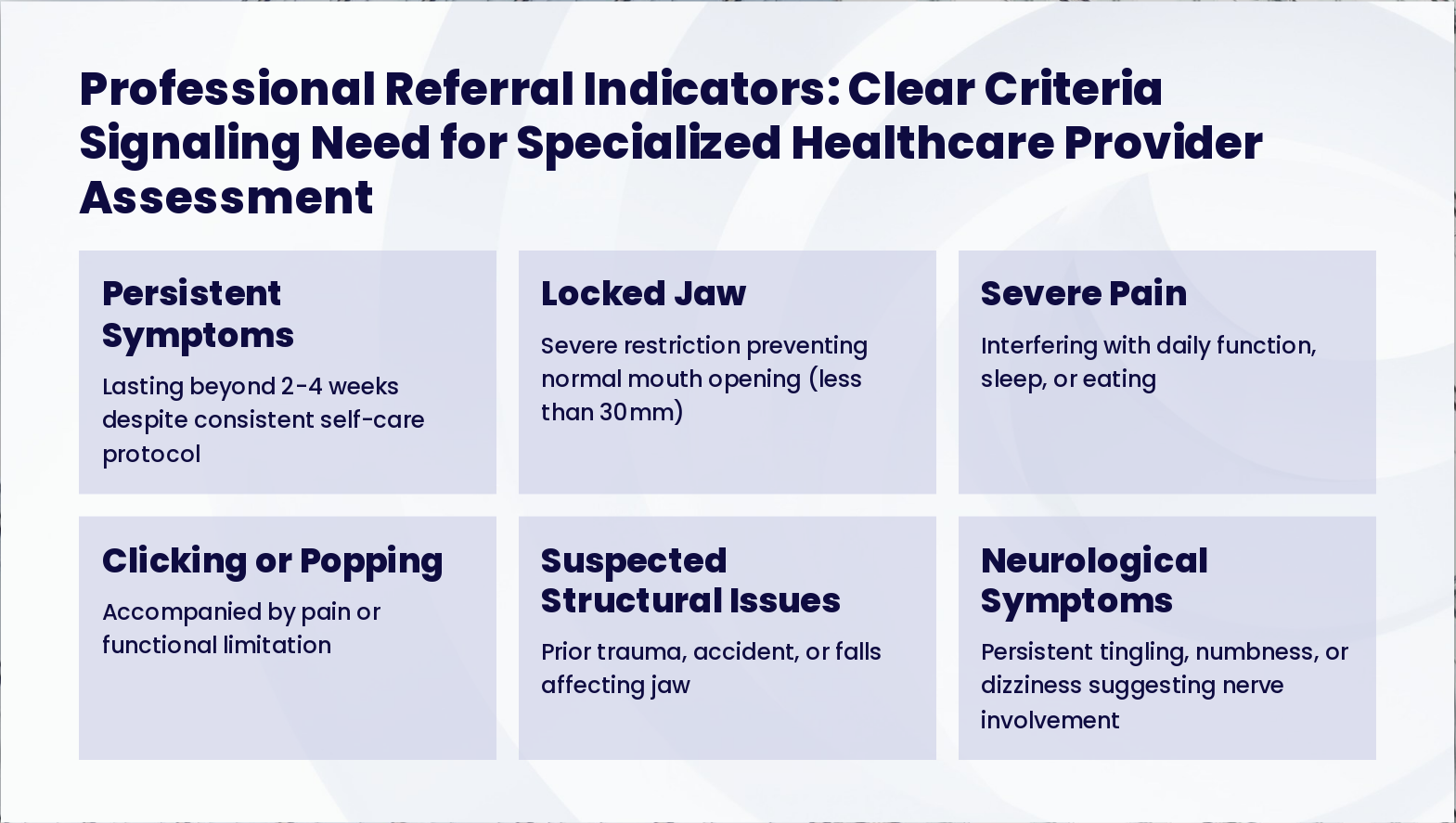
Slide 25: Professional Referral Indicators: Clear Criteria Signaling Need for Specialized Healthcare Provider Assessment
- Persistent Symptoms: Lasting beyond 2-4 weeks despite consistent self-care protocol
- Locked Jaw: Severe restriction preventing normal mouth opening (less than 30mm)
- Severe Pain: Interfering with daily function, sleep, or eating
- Clicking or Popping: Accompanied by pain or functional limitation
- Suspected Structural Issues: Prior trauma, accident, or falls affecting jaw
- Neurological Symptoms: Persistent tingling, numbness, or dizziness suggesting nerve involvement
Slide 26: Key Takeaways for Sustainable Jaw Health
Empower yourself through understanding and implementation of these techniques for lasting control over your jaw health and function.