Presentation Summary
Explore the essential etiquette and customs in Japan, from bowing to business manners, ensuring a respectful and enriching cultural experience.
Full Presentation Transcript
Slide 1: A Cultural Guide to Japan
Master Essential Etiquette and Customs for Tourists and Expats Visiting the Land of the Rising Sun
Slide 2: Contents
- Understanding Wa Harmony: Foundation of Japanese culture prioritizing collective well-being and social harmony over individual desires.
- Bowing Etiquette Mastery: Learn three levels of bowing and the language of respect through body movement.
- Dining and Chopstick Rules: Essential rituals and critical do's and don'ts for respectful dining experiences.
- Onsen Bathing Culture: Sacred hot spring traditions, step-by-step etiquette, and common bathing rules.
- Business Manners Overview: Hierarchy, consensus-building culture, and professional conduct in Japanese workplace settings.
Slide 3: Why Japanese Etiquette Matters: The Foundation of 'Wa' (Harmony)
- Wa (Social Harmony): All Japanese customs rooted in 'wa' concept - prioritizing collective well-being and group needs over individual desires. This principle guides every interaction.
- Transformative Experience: Understanding etiquette elevates your journey from simple tourist to respectful guest, creating meaningful connections and authentic cultural experiences.
- Four Essential Areas: This guide covers the critical pillars: Bowing etiquette, Dining and chopstick rules, Onsen bathing culture, Business manners and workplace protocols.
- Mistake Prevention: Practical tips throughout help you avoid common cultural faux pas and navigate Japan with confidence and cultural intelligence.
Slide 4: Bowing Etiquette: The Language of Respect
- Three Levels of Bowing: Casual (15° slight head nod) for peers and acquaintances, used in informal everyday greetings and brief encounters.
- Key Rules to Follow: Keep back straight and look at the ground about one foot ahead to show humility and focus during the bow.
- Context Matters: Deeper bows signify higher respect levels and are used for formal ceremonies, elders, or authority figures to convey sincerity.
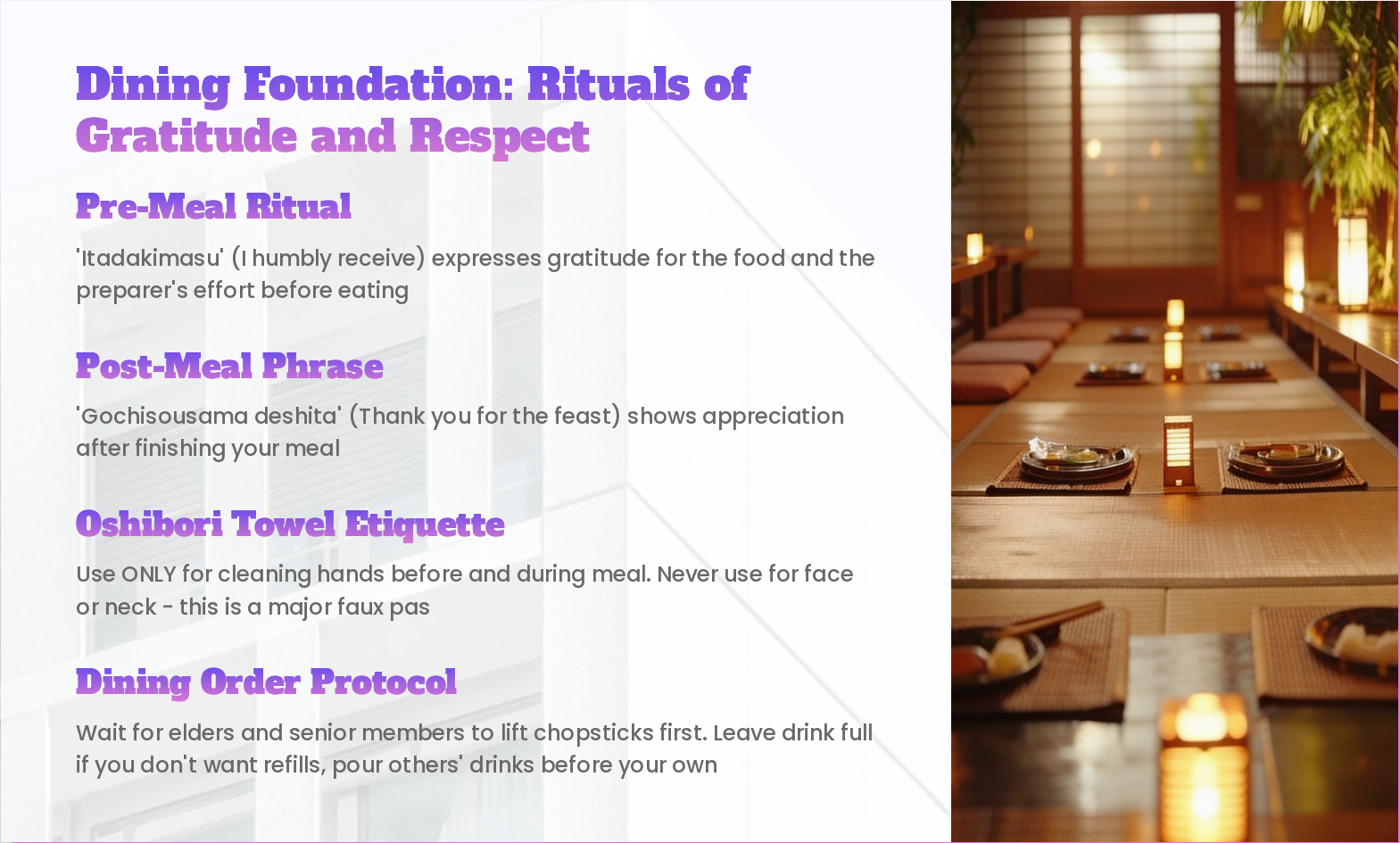
Slide 5: Dining Foundation: Rituals of Gratitude and Respect
- Pre-Meal Ritual: 'Itadakimasu' (I humbly receive) expresses gratitude for the food and the preparer's effort before eating
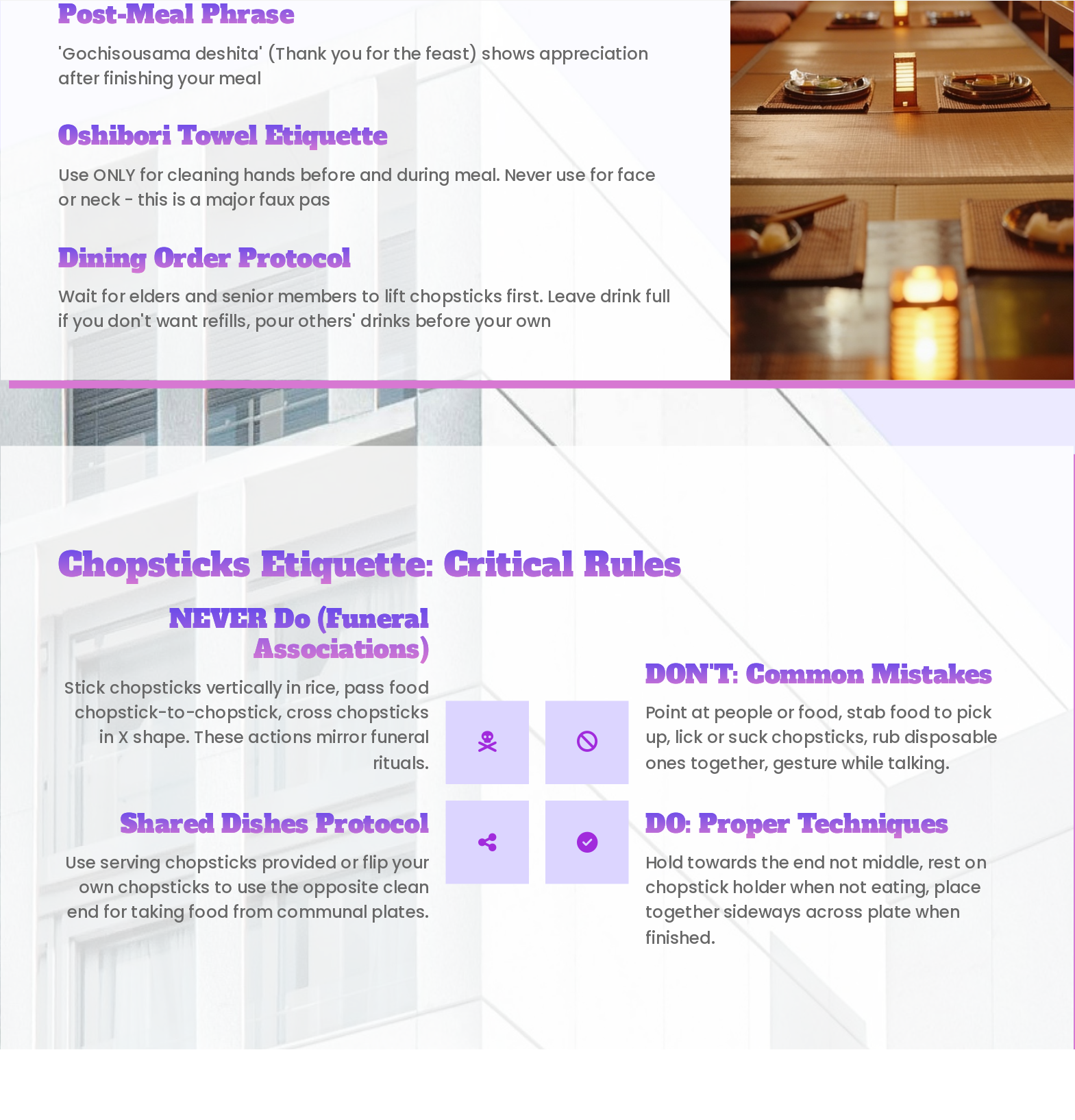
- Post-Meal Phrase: 'Gochisousama deshita' (Thank you for the feast) shows appreciation after finishing your meal
- Oshibori Towel Etiquette: Use ONLY for cleaning hands before and during meal. Never use for face or neck - this is a major faux pas
- Dining Order Protocol: Wait for elders and senior members to lift chopsticks first. Leave drink full if you don't want refills, pour others' drinks before your own
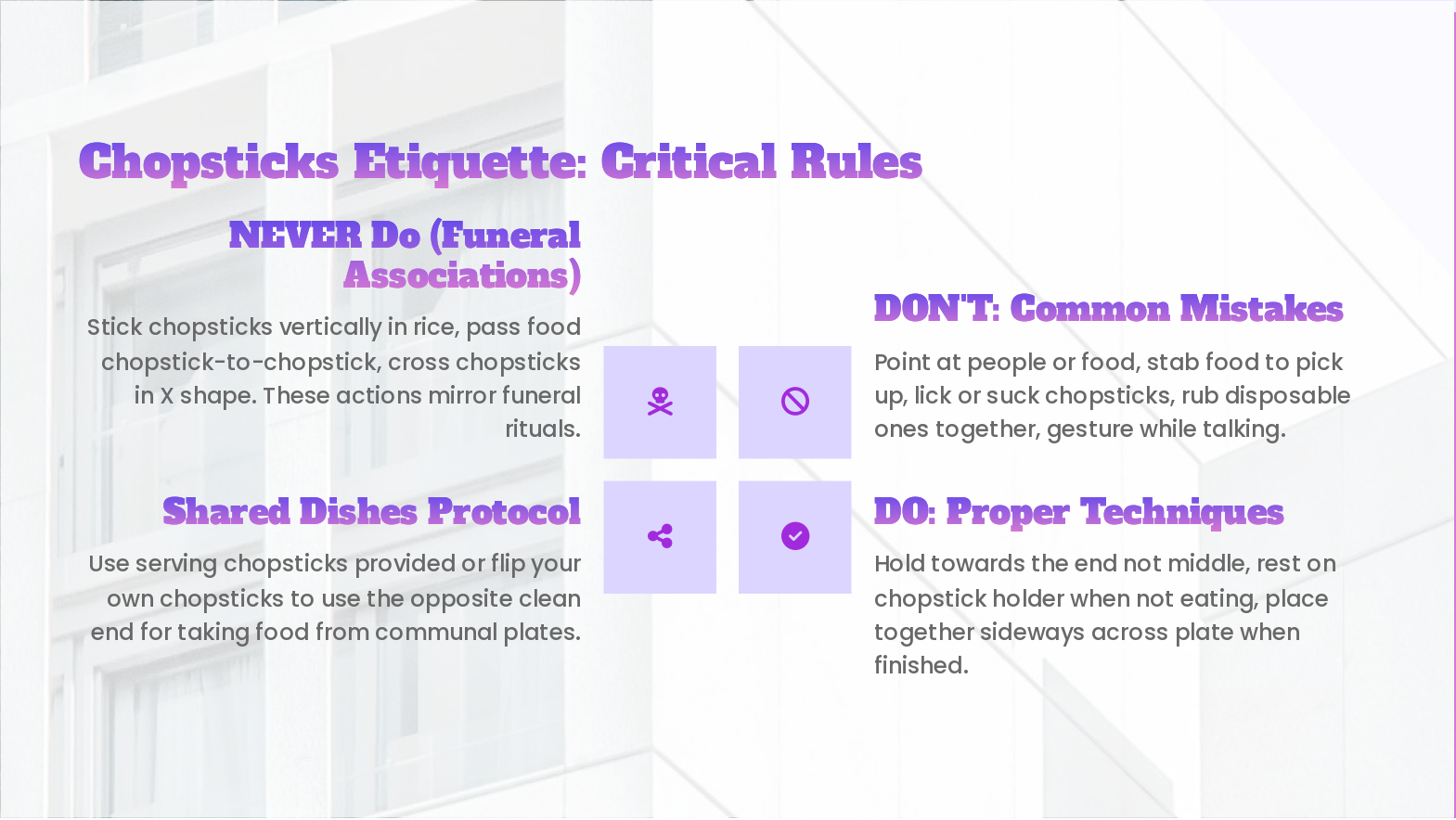
Slide 6: Chopsticks Etiquette: Critical Rules
- NEVER Do (Funeral Associations): Stick chopsticks vertically in rice, pass food chopstick-to-chopstick, cross chopsticks in X shape. These actions mirror funeral rituals.
- DON'T: Common Mistakes: Point at people or food, stab food to pick up, lick or suck chopsticks, rub disposable ones together, gesture while talking.
- DO: Proper Techniques: Hold towards the end not middle, rest on chopstick holder when not eating, place together sideways across plate when finished.
- Shared Dishes Protocol: Use serving chopsticks provided or flip your own chopsticks to use the opposite clean end for taking food from communal plates.
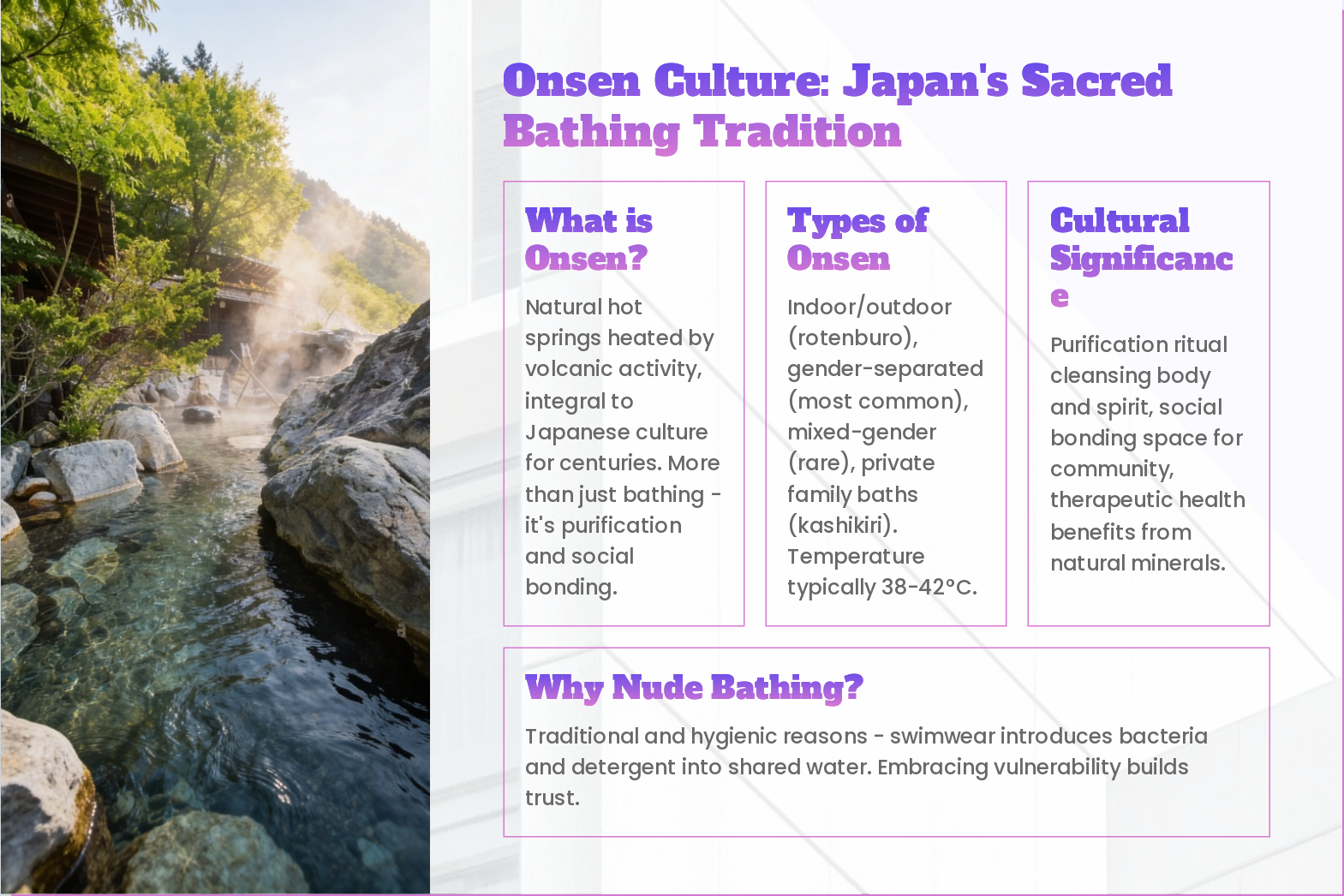
Slide 7: Onsen Culture: Japan's Sacred Bathing Tradition
- What is Onsen?: Natural hot springs heated by volcanic activity, integral to Japanese culture for centuries. More than just bathing - it's purification and social bonding.
- Types of Onsen: Indoor/outdoor (rotenburo), gender-separated (most common), mixed-gender (rare), private family baths (kashikiri). Temperature typically 38-42°C.
- Cultural Significance: Purification ritual cleansing body and spirit, social bonding space for community, therapeutic health benefits from natural minerals.
- Why Nude Bathing?: Traditional and hygienic reasons - swimwear introduces bacteria and detergent into shared water. Embracing vulnerability builds trust.
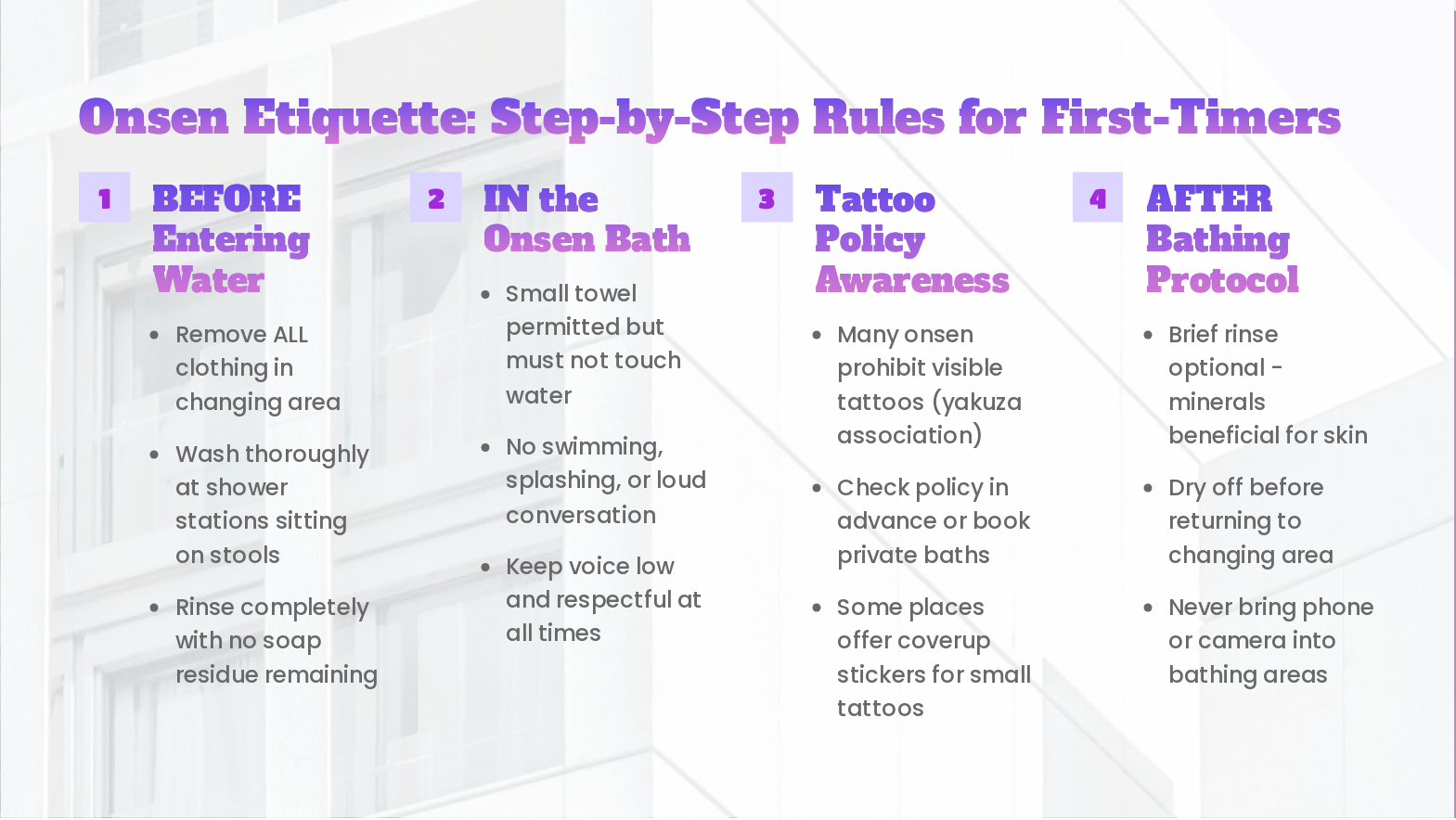
Slide 8: Onsen Etiquette: Step-by-Step Rules for First-Timers
- BEFORE Entering Water: Remove ALL clothing in changing area
- IN the Onsen Bath: Small towel permitted but must not touch water
- Tattoo Policy Awareness: Many onsen prohibit visible tattoos (yakuza association)
- AFTER Bathing Protocol: Brief rinse optional - minerals beneficial for skin
Slide 9: Business Manners: Hierarchy and Decision-Making Culture
- Hierarchy Rules: Age equals seniority. Always greet the most senior person first and offer your business card to them first. Respect flows upward.
- Meeting Room Seating (Kamiza): The highest-ranking person sits furthest from the door (the most protected position). Lower ranks sit closer to the entrance based on seniority.
- 'Nemawashi' Consensus-Building: Real decisions are made through informal behind-the-scenes discussions BEFORE formal meetings. Patience is essential.
- Punctuality and Dress Code: Being late is serious disrespect - arrive 5-10 minutes early. Men wear dark conservative suits; women wear similar professional attire.
Slide 10: Business Card Exchange (Meishi): Extension of Your Identity
- Presenting Your Card: Use both hands with Japanese side facing recipient, stand and bow slightly, state name clearly. Never hand out casually
- Receiving Cards Properly: Accept with both hands, read carefully showing interest in details, place on table during meeting not in pocket immediately
- Card Placement Hierarchy: Arrange received cards on table in order of seniority matching seating positions. This shows respect for rank structure
- After Meeting Storage: Store in business card holder never wallet. Never write on cards in front of giver. Damaging or losing is serious offense
Slide 11: Common Mistakes to Avoid: Quick Reference for Travelers
- Footwear and Gift Errors: Wearing outdoor shoes on tatami or indoor floors
- Chopstick and Public Taboos: Sticking chopsticks vertically in a bowl of rice
- Respect and Business Failures: Failing to bow when others bow to you in greeting
Slide 12: Navigate Japan with Cultural Intelligence
Navigate Japan with Cultural Intelligence Remember: 'Wa' harmony guides all interactions. Japanese people are forgiving of foreigners who show genuine effort and respect.